Overcoming the Quantum Measurement Bottleneck: Strategies for Hybrid Algorithms in Drug Discovery
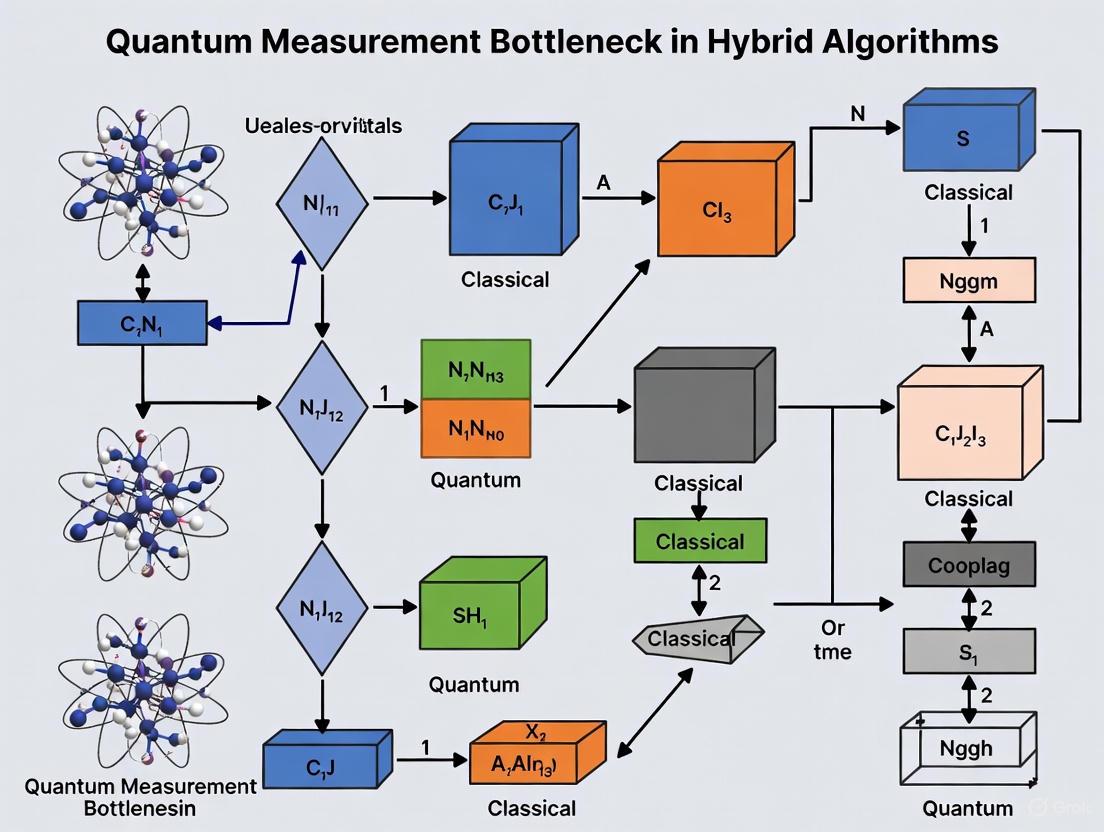
Hybrid quantum-classical algorithms represent a promising path to practical quantum advantage in drug discovery, but their performance is often constrained by a critical quantum measurement bottleneck.
Overcoming the Quantum Measurement Bottleneck: Strategies for Hybrid Algorithms in Drug Discovery
Abstract
Hybrid quantum-classical algorithms represent a promising path to practical quantum advantage in drug discovery, but their performance is often constrained by a critical quantum measurement bottleneck. This article explores the foundational causes of this bottleneck, rooted in the probabilistic nature of quantum mechanics and the need for repeated circuit executions. It details current methodological approaches for mitigation, including advanced error correction and circuit compilation techniques. The content further provides a troubleshooting and optimization framework for researchers, and presents a validation landscape comparing the performance of various strategies. By synthesizing insights from recent breakthroughs and industry applications, this article equips scientific professionals with a comprehensive roadmap for integrating quantum intelligence into pharmaceutical R&D while navigating current hardware limitations.
The Quantum Bottleneck: Defining the Fundamental Challenge in Hybrid Algorithms
The quantum measurement bottleneck represents a fundamental constraint in harnessing the computational power of near-term quantum devices. This whitepaper examines the theoretical underpinnings and practical manifestations of this bottleneck within hybrid quantum-classical algorithms, particularly focusing on implications for drug discovery and quantum chemistry. We analyze how the exponential scaling of required measurements impacts computational feasibility and review emerging mitigation strategies including symmetry exploitation, Bayesian inference, and advanced measurement protocols. Through detailed experimental methodologies and quantitative analysis, we demonstrate that overcoming this bottleneck is essential for achieving practical quantum advantage in real-world applications such as clinical trial optimization and molecular simulation.
In quantum computing, the measurement bottleneck arises from the fundamental nature of quantum mechanics, where extracting classical information from quantum states requires repeated measurements of observables. Unlike classical bits that can be read directly, quantum states collapse upon measurement, yielding probabilistic outcomes. Each observable typically requires a distinct measurement basis and circuit configuration, creating a fundamental scaling challenge [1]. For hybrid quantum-classical algorithms, which combine quantum and classical processing, this bottleneck manifests as a critical runtime constraint that often negates potential quantum advantages.
The severity of this bottleneck becomes apparent in practical applications such as drug discovery, where quantum computers promise to revolutionize molecular modeling and predictive analytics [2]. In the Noisy Intermediate-Scale Quantum (NISQ) era, devices suffer from gate errors, decoherence, and imprecise readouts that further exacerbate measurement challenges [3]. As quantum circuits become deeper to accommodate more complex computations, the cumulative noise often overwhelms the signal, requiring even more measurements for statistically significant results. This creates a vicious cycle where the measurement overhead grows exponentially with system size, potentially rendering quantum approaches less efficient than classical alternatives for practical problem sizes.
Theoretical Foundations and Scaling Challenges
Fundamental Scaling Laws
The quantum measurement bottleneck originates from the statistical nature of quantum measurement. To estimate the expectation value of an observable with precision ε, the number of required measurements scales as O(1/ε²) for a single observable. However, for molecular systems and quantum chemistry applications, the Hamiltonian often comprises a sum of numerous Pauli terms. The standard quantum computing approach requires measuring each term separately, and the number of these terms grows polynomially with system size [2] [4].
For a system with N qubits, the number of terms in typical electronic structure Hamiltonians scales as O(Nâ´), creating an overwhelming measurement burden for practical applications [2]. This scaling presents a fundamental barrier to quantum advantage in hybrid algorithms for drug discovery, where accurate energy calculations are essential for predicting molecular interactions and reaction pathways.
Table 1: Measurement Scaling in Quantum Chemical Calculations
| System Size (Qubits) | Hamiltonian Terms | Standard Measurements | Optimized Protocols |
|---|---|---|---|
| 5 | ~50-100 | ~10â´-10âµ | ~10³ |
| 10 | ~500-2000 | ~10âµ-10ⶠ| ~10â´ |
| 20 | ~10â´-10âµ | ~10â¶-10â· | ~10âµ |
| 50 | ~10â¶-10â· | ~10â¸-10â¹ | ~10â· |
Impact on Hybrid Algorithm Performance
Hybrid quantum-classical algorithms, particularly the Variational Quantum Eigensolver (VQE) and Quantum Machine Learning (QML) models, are severely impacted by the measurement bottleneck. In these iterative algorithms, the quantum processor computes expectation values that a classical optimizer uses to update parameters [2] [3]. Each iteration requires fresh measurements, and the convergence may require hundreds or thousands of iterations.
The combined effect of numerous Hamiltonian terms and iterative optimization creates a multiplicative measurement overhead that often dominates the total computational time. For drug discovery applications involving molecules like β-lapachone prodrug activation or KRAS protein interactions, this bottleneck can render quantum approaches impractical despite their theoretical potential [2]. Furthermore, the presence of hardware noise necessitates additional measurements for error mitigation, further exacerbating the problem.
Experimental Protocols and Methodologies
Standard Measurement Approaches
Traditional quantum measurement protocols for electronic structure calculations employ one of several strategies: (1) Direct measurement of each Pauli term in the Hamiltonian requires O(Nâ´) distinct measurement settings, each implemented with unique circuit configurations [1]. (2) Grouping techniques attempt to measure commuting operators simultaneously, reducing the number of distinct measurements by approximately a constant factor, though the scaling remains polynomial. (3) Random sampling methods select subsets of terms for measurement, introducing additional statistical uncertainty.
The standard experimental workflow begins with Hamiltonian construction from molecular data, followed by qubit mapping using transformations such as Jordan-Wigner or parity encoding. For each measurement setting, researchers prepare the quantum state through parameterized circuits, execute the measurement operation, and collect statistical samples. This process repeats for all measurement settings, after which classical post-processing aggregates the results to compute molecular properties such as ground state energy or reaction barriers [2].
Figure 1: Standard Quantum Measurement Workflow for Molecular Systems
Advanced Measurement Reduction Protocol
Recent research has demonstrated that exploiting symmetries in target systems can dramatically reduce measurement requirements. For crystalline materials with high symmetry, a novel protocol requires only three fixed measurement settings to determine electronic band structure, regardless of system size [1]. This approach was validated on a two-dimensional CuOâ‚‚ square lattice (3 qubits) and bilayer graphene (4 qubits) using the Variational Quantum Deflation (VQD) algorithm.
The experimental methodology follows this sequence:
- Symmetry Analysis: Identify the symmetry group of the target Hamiltonian, focusing on crystalline materials with translational invariance.
- Measurement Derivation: Construct a minimal set of measurement settings that comprehensively captures all symmetry-distinct matrix elements.
- Circuit Implementation: Design quantum circuits that implement these fixed measurement settings, typically requiring simple basis rotations.
- Data Collection: Execute each measurement setting repeatedly to gather sufficient statistical samples.
- Reconstruction: Use symmetry relations to reconstruct full Hamiltonian expectation values from the limited measurement data.
This protocol reduces the scaling of measurements from O(Nâ´) to a constant value, representing a potential breakthrough for quantum simulations of materials [1].
Case Studies in Drug Discovery and Quantum Chemistry
Quantum Computing in Prodrug Activation Studies
In pharmaceutical research, a hybrid quantum computing pipeline was developed to study prodrug activation involving carbon-carbon bond cleavage in β-lapachone, a natural product with anticancer activity [2]. Researchers employed the Variational Quantum Eigensolver (VQE) with a hardware-efficient ansatz to compute Gibbs free energy profiles for the bond cleavage process.
The experimental protocol involved:
- Active Space Selection: Reducing the quantum chemistry problem to a manageable two electron/two orbital system representable by 2 qubits
- Ansatz Design: Implementing a hardware-efficient R𑦠ansatz with a single layer as the parameterized quantum circuit for VQE
- Error Mitigation: Applying standard readout error mitigation to enhance measurement accuracy
- Solvation Effects: Incorporating water solvation effects using the ddCOSMO model with 6-311G(d,p) basis set
This approach demonstrated the viability of quantum computations for simulating covalent bond cleavage, achieving results consistent with classical computational methods like Hartree-Fock (HF) and Complete Active Space Configuration Interaction (CASCI) [2].
Clinical Trial Optimization
Quantum computing shows promise for optimizing clinical trials, which frequently face delays due to poor site selection strategies and incorrect patient identification [5]. Quantum machine learning and optimization approaches can transform key steps in clinical trial simulation, site selection, and cohort identification strategies.
Hybrid algorithms leverage quantum processing for specific challenging subproblems while maintaining classical control over the overall optimization process. This approach mitigates the measurement bottleneck by focusing quantum resources only on tasks where they provide maximum benefit, such as:
- Generating complex trial simulations that capture patient heterogeneity
- Optimizing site selection across multiple geographic and demographic constraints
- Identifying patient cohorts with optimal response characteristics while minimizing recruitment challenges
Table 2: Quantum Approaches to Clinical Trial Challenges
| Clinical Trial Challenge | Classical Approach | Quantum-Enhanced Approach | Measurement Considerations |
|---|---|---|---|
| Site Selection | Statistical modeling | Quantum optimization | Quadratic unconstrained binary optimization (QUBO) formulations |
| Cohort Identification | Machine learning | Quantum kernel methods | Quantum feature mapping with repeated measurements |
| Trial Simulation | Monte Carlo methods | Quantum amplitude estimation | Reduced measurement needs through quantum speedup |
| Biomarker Discovery | Pattern recognition | Quantum neural networks | Variational circuits with measurement optimization |
Emerging Solutions and Mitigation Strategies
Algorithmic Approaches
Several algorithmic strategies have emerged to address the quantum measurement bottleneck:
Bayesian Inference: A quantum-assisted Monte Carlo method incorporates Bayesian inference to dramatically reduce the number of quantum measurements required [4]. Instead of taking simple empirical averages of quantum measurements, this approach continually updates a probability distribution for the quantity of interest, refining the estimate with each new data point. This strategy achieves desired bias reduction with significantly fewer quantum samples than traditional methods.
Quantum-Assisted Monte Carlo: This approach uses a small quantum processor to boost the accuracy of classical simulations, addressing the notorious sign problem in quantum Monte Carlo calculations [4]. By incorporating quantum data into the Monte Carlo sampling process, the algorithm sharply reduces the bias and error that plague fully classical methods. The quantum computer serves as a co-processor for specific tasks, requiring only relatively small numbers of qubits and gate operations to gain quantum advantage.
Measurement Symmetry Exploitation: As demonstrated in the fixed-measurement protocol for crystalline materials, identifying and leveraging symmetries in the target system can dramatically reduce measurement requirements [1]. This approach changes the scaling relationship from polynomial in system size to constant for sufficiently symmetric systems.
Hardware and Architectural Innovations
Beyond algorithmic improvements, hardware and architectural developments show promise for mitigating the measurement bottleneck:
Qudit-Based Processing: Research from NTT Corporation has proposed using high-dimensional "quantum dits" (qudits) instead of conventional two-level quantum bits [6]. For photonic quantum information processing, this approach enables implementation of fusion gates with significantly higher success rates than the theoretical limit for qubit-based systems. This indirectly addresses measurement challenges by improving the quality of quantum states before measurement occurs.
Machine Learning Decoders: For quantum error correction, recurrent transformer-based neural networks can learn to decode error syndromes more accurately than human-designed algorithms [7]. By learning directly from data, these decoders can adapt to complex noise patterns including cross-talk and leakage, improving the reliability of each measurement and reducing the need for repetition due to errors.
Dynamic Circuit Capabilities: Advanced quantum processors increasingly support dynamic circuits that enable mid-circuit measurements and feed-forward operations. These capabilities allow for more efficient measurement strategies that adapt based on previous results, potentially reducing the total number of required measurements.
Figure 2: Solutions for the Quantum Measurement Bottleneck
The Scientist's Toolkit: Research Reagent Solutions
Table 3: Essential Research Tools for Quantum Measurement Optimization
| Tool/Technique | Function | Application Context |
|---|---|---|
| Variational Quantum Eigensolver (VQE) | Hybrid algorithm for quantum chemistry | Molecular energy calculations in drug design [2] |
| Quantum-Assisted Monte Carlo | Reduces sign problem in fermionic simulations | Molecular property prediction with reduced bias [4] |
| Symmetry-Adapted Measurement Protocol | Minimizes measurement settings via symmetry | Crystalline materials simulation [1] |
| Bayesian Amplitude Estimation | Reduces quantum measurements via inference | Efficient expectation value estimation [4] |
| Transformer-Based Neural Decoders | Improves error correction accuracy | Syndrome processing in fault-tolerant schemes [7] |
| Qudit-Based Fusion Gates | Increases quantum operation success rates | Photonic quantum processing [6] |
| TenCirChem Package | Python library for quantum computational chemistry | Implementing quantum chemistry workflows [2] |
| Feruloylputrescine | Feruloylputrescine, CAS:501-13-3, MF:C14H20N2O3, MW:264.32 g/mol | Chemical Reagent |
| Lactobionic Acid | Lactobionic Acid Reagent|C12H22O12|96-82-2 | High-purity Lactobionic Acid for research. Explore applications in biochemistry, cell culture, and preservative science. For Research Use Only (RUO). Not for human use. |
The quantum measurement bottleneck represents a critical challenge that must be addressed to realize the potential of quantum computing in practical applications like drug discovery and clinical trial optimization. While theoretical scaling laws present formidable barriers, emerging strategies including symmetry exploitation, Bayesian methods, and novel hardware approaches show significant promise for mitigating these limitations. The progression from theoretical models to tangible applications in pharmaceutical research demonstrates that hybrid quantum-classical algorithms can deliver value despite current constraints. As research continues to develop more efficient measurement protocols and error-resilient approaches, the quantum measurement bottleneck may gradually transform from a fundamental limitation to an engineering challenge, ultimately enabling quantum advantage in real-world drug design workflows.
In the rapidly evolving field of quantum computing, hybrid quantum-classical algorithms have emerged as a promising approach for leveraging current-generation noisy intermediate-scale quantum (NISQ) hardware. These algorithms, including the Variational Quantum Eigensolver (VQE) and Quantum Approximate Optimization Algorithm (QAOA), distribute computational workloads between quantum and classical processors. However, their practical implementation faces a fundamental constraint: the quantum measurement bottleneck. This bottleneck arises from the statistical nature of quantum mechanics, where extracting meaningful information from quantum states requires repeated, destructive measurements to estimate expectation values with sufficient precision.
The core challenge is that the number of measurements required for accurate results scales polynomially with system size and inversely with the desired precision. For complex problems in fields such as quantum chemistry and drug discovery, this creates a significant scalability barrier. As researchers attempt to solve larger, more realistic problems, the measurement overhead dominates computational time and costs, potentially negating the quantum advantage offered by these hybrid approaches. This technical guide examines the origins, implications, and emerging solutions to this critical bottleneck within the broader context of hybrid algorithms research.
The Fundamental Scaling Challenge of Quantum Measurements
Statistical Nature of Quantum Measurements
In quantum computing, the process of measurement fundamentally differs from classical computation. While classical bits can be read without disturbance, quantum bits (qubits) exist in superpositions of states |0⟩ and |1⟩. When measured, a qubit's wavefunction collapses to a definite state, yielding a probabilistic outcome. This intrinsic probabilistic nature means that determining the expectation value of a quantum operator requires numerous repetitions of the same quantum circuit to build statistically significant estimates.
For a quantum circuit preparing state |ψ(θ)⟩ and an observable O, the expectation value ⟨O⟩ = ⟨ψ(θ)|O|ψ(θ)⟩ is estimated by running the circuit multiple times and averaging the measurement outcomes. The statistical error in this estimate decreases with the square root of the number of measurements (N), following the standard deviation of a binomial distribution. Consequently, achieving higher precision requires disproportionately more measurements—to halve the error, one must quadruple the measurement count.
Quantitative Scaling Relationships
The following table summarizes key scaling relationships that define the quantum measurement bottleneck in hybrid algorithms:
Table 1: Scaling Relationships in Quantum Measurement Bottlenecks
| Factor | Scaling Relationship | Impact on Measurements |
|---|---|---|
| Precision (ε) | N ∠1/ε² | 10x precision increase requires 100x more measurements |
| System Size (Qubits) | N ∠poly(n) for n-qubit systems | Measurement count grows polynomially with problem size |
| Observable Terms | N ∠M² for M Pauli terms in Hamiltonian | Measurements scale quadratically with Hamiltonian complexity |
| Algorithm Depth | N ∠D for D circuit depth | Deeper circuits may require more measurement shots per run |
For complex problems such as molecular energy calculations in drug discovery, the number of measurement terms can grow exponentially with system size. For instance, calculating the ground state energy of the [4Fe-4S] molecular cluster—an important component in biological systems like the nitrogenase enzyme—requires handling Hamiltonians with an enormous number of terms [8]. Classical heuristics have traditionally been used to approximate which components of the Hamiltonian matrix are most important, but these approximations can lack rigor and reliability.
Experimental Evidence and Case Studies
Quantum-Centric Supercomputing for Chemical Systems
Recent research from Caltech, IBM, and RIKEN demonstrates both the challenges and potential solutions to the measurement bottleneck. In their groundbreaking work published in Science Advances, the team employed a hybrid approach to study the [4Fe-4S] molecular cluster using up to 77 qubits on an IBM quantum device powered by a Heron quantum processor [8].
The experimental protocol followed these key steps:
- Quantum Pre-processing: The quantum computer identified the most important components in the Hamiltonian matrix, replacing classical heuristics with a more rigorous quantum-based selection
- Measurement and Data Extraction: Repeated measurements were performed on the quantum processor to identify critical matrix elements
- Classical Post-processing: The reduced Hamiltonian was fed to RIKEN's Fugaku supercomputer to solve for the exact wave function
This quantum-centric supercomputing approach demonstrated that quantum computers could effectively prune down the exponentially large Hamiltonian matrices to more manageable subsets. However, the requirement for extensive measurements to achieve chemical accuracy remained a significant computational cost factor.
Measurement-Induced Scaling in Quantum Dynamics
Cutting-edge research from June 2025 provides crucial insights into how measurement strategies fundamentally impact quantum information lifetime. The study "Scaling Laws of Quantum Information Lifetime in Monitored Quantum Dynamics" established that continuous monitoring of quantum systems via mid-circuit measurements can extend quantum information lifetime exponentially with system size [9].
The key experimental findings from this research include:
Table 2: Scaling Laws of Quantum Information Lifetime Under Different Measurement Regimes
| Measurement Regime | Scaling with System Size | Scaling with Bath Size | Practical Implications |
|---|---|---|---|
| Continuous Monitoring with Mid-circuit Measurements | Exponential improvement | Independent of bath size | Enables scalable quantum algorithms with longer coherence |
| No Bath Monitoring | Linear improvement at best | Decays inversely with bath size | Severely limits scalability of hybrid algorithms |
| Traditional Measurement Approaches | Constant or linear scaling | Significant degradation with larger baths | Creates fundamental bottleneck for practical applications |
The researchers confirmed these scaling relationships through numerical simulations in both Haar-random and chaotic Hamiltonian systems. Their work suggests that strategic measurement protocols could potentially overcome the traditional bottlenecks in hybrid quantum algorithms.
Methodologies for Mitigating Measurement Overhead
Advanced Measurement Strategies
Several innovative measurement strategies have emerged to address the scalability challenges:
1. Operator Grouping and Commutation Techniques
- Identify sets of commuting operators that can be measured simultaneously
- Implement efficient measurement circuits that maximize information per shot
- Use graph coloring algorithms to minimize the number of distinct measurement bases
2. Adaptive Measurement Protocols
- Employ Bayesian and machine learning approaches to prioritize measurements based on expected information gain
- Dynamically allocate measurement shots across different operators based on variance estimates
- Implement iterative refinement of expectation values
3. Shadow Tomography and Classical Shadows
- Use randomized measurements to construct classical representations of quantum states
- Enable estimation of multiple observables from a single set of measurements
- Provide provable guarantees on measurement complexity for certain classes of observables
Quantum Error Correction and Mitigation
Error mitigation techniques play a crucial role in reducing the effective measurement overhead:
1. Zero-Noise Extrapolation
- Run circuits at different noise levels
- Extrapolate to the zero-noise limit to estimate ideal results
- Requires additional measurements at scaled error rates
2. Probabilistic Error Cancellation
- Characterize noise models of quantum device
- Apply quasi-probability distributions to mitigate errors in post-processing
- Increases measurement overhead but improves result accuracy
3. Measurement Error Mitigation
- Construct measurement confusion matrices
- Invert the confusion matrix to correct readout errors
- Requires additional calibration measurements but improves data quality
Table 3: Research Reagent Solutions for Quantum Measurement Challenges
| Category | Specific Tool/Technique | Function/Purpose | Example Implementations |
|---|---|---|---|
| Quantum Hardware | Mid-circuit measurement capability | Enables strategic monitoring without full circuit repetition | IBM Heron processor, Quantinuum H2 system [8] [10] |
| Classical Integration | Hybrid quantum-classical platforms | Manages measurement distribution and classical post-processing | NVIDIA CUDA-Q, IBM Qiskit Runtime [10] [11] |
| Error Mitigation | Quantum error correction decoders | Reduces measurement noise through real-time correction | GPU-based decoders, Surface codes [10] [12] |
| Algorithmic Frameworks | Variational Quantum Algorithms | Optimizes parameterized quantum circuits with minimal measurements | VQE, QAOA, QCNN [13] [14] |
| Computational Resources | High-performance classical computing | Handles measurement data processing and Hamiltonian analysis | Fugaku supercomputer, NVIDIA Grace Hopper systems [8] [11] |
Visualization of Measurement Workflows and Scaling Relationships
Quantum Measurement Bottleneck in Hybrid Algorithms
Impact of Strategic Monitoring on Quantum Information Lifetime
Future Directions and Research Opportunities
The measurement bottleneck represents both a challenge and an opportunity for innovation in hybrid quantum algorithms. Several promising research directions are emerging:
1. Measurement-Efficient Algorithm Design Developing algorithms that specifically minimize measurement overhead through clever mathematical structures, such as the use of shallow circuits, measurement recycling, and advanced observable grouping techniques.
2. Co-Design of Hardware and Algorithms Creating quantum processors with specialized measurement capabilities, such as parallel readout, mid-circuit measurements, and dynamic qubit reset, which can significantly reduce the temporal overhead of repeated measurements.
3. Machine Learning for Measurement Optimization Leveraging classical machine learning, particularly deep neural networks, to predict optimal measurement strategies and reduce the number of required shots through intelligent shot allocation [14].
4. Quantum Memory and Error Correction Advances Implementing quantum error correction codes that protect against measurement errors, enabling more reliable results from fewer shots. Recent collaborations, such as that between Quantinuum and NVIDIA, have demonstrated improved logical fidelity through GPU-based decoders integrated directly with quantum control systems [10].
As quantum hardware continues to improve, with companies like Quantinuum promising systems that are "a trillion times more powerful" than current generation processors [10], the relative impact of the measurement bottleneck may shift. However, fundamental quantum mechanics ensures that measurement efficiency will remain a critical consideration in hybrid algorithm design for the foreseeable future.
The international research community's focus on this challenge—evidenced by major investments from governments and private industry—suggests that innovative solutions will continue to emerge, potentially unlocking the full potential of quantum computing for practical applications in drug discovery, materials science, and optimization.
The advent of hybrid quantum-classical algorithms promises to revolutionize computational fields, particularly drug discovery, by leveraging quantum mechanical principles to solve problems intractable for classical computers. However, the potential of these algorithms is severely constrained by a fundamental quantum measurement bottleneck, where the statistical uncertainty inherent in quantum sampling leads to prolonged mixing times for classical optimizers. This whitepaper examines this bottleneck through the lens of quantum information theory, providing a technical guide to its manifestations in real-world applications like molecular energy calculations and protein-ligand interaction studies. We summarize quantitative performance data across hardware platforms, detail experimental protocols for benchmarking, and propose pathways toward mitigating these critical inefficiencies. As hybrid algorithms form the backbone of near-term quantum applications in pharmaceutical research, addressing this bottleneck is paramount for achieving practical quantum advantage.
Hybrid quantum-classical algorithms, such as the Variational Quantum Eigensolver (VQE) and the Quantum Approximate Optimization Algorithm (QAOA), represent the leading paradigm for leveraging current noisy intermediate-scale quantum (NISQ) devices. These algorithms delegate a specific, quantum-native sub-task—often the preparation and measurement of a parameterized quantum state—to a quantum processor, while a classical optimizer adjusts the parameters to minimize a cost function [15] [16]. This framework is particularly relevant for drug discovery, where the cost function could be the ground state energy of a molecule, a critical factor in predicting drug-target interactions [2] [17].
The central challenge, which we term the quantum measurement bottleneck, arises from the fundamental nature of quantum mechanics. The output of a quantum circuit is a statistical sample from the measurement of a quantum state. To estimate an expectation value, such as the molecular energy ⟨H⟩, one must repeatedly prepare and measure the quantum state, with the precision of the estimate scaling as 1/√N, where N is the number of measurement shots or samples [15]. This statistical noise propagates into the cost function, creating a noisy landscape for the classical optimizer.
This noise directly impacts the mixing time of the optimization process—the number of iterations required for the classical algorithm to converge to a solution of a desired quality. High-precision energy estimations require an impractically large number of shots, while fewer shots inject noise that slows, and can even prevent, convergence [18]. This creates a critical trade-off between computational resource expenditure (quantum sampling time) and algorithmic efficiency (classical mixing time). For pharmaceutical researchers, this bottleneck manifests directly in prolonged wait times for reliable results in tasks like Gibbs free energy profiling for prodrug activation or covalent inhibitor simulation [2], ultimately limiting the integration of quantum computing into real-world drug design workflows.
Quantitative Analysis of Bottlenecks and Performance
The quantum measurement bottleneck and its impact on mixing times can be quantitatively analyzed across several dimensions, including the resources required for sampling and the resulting solution quality. The following tables consolidate key metrics from recent experimental studies and algorithmic demonstrations.
Table 1: Quantum Resource Requirements for Selected Algorithms and Applications
| Algorithm / Application | Problem Size | Quantum Resources Required | Key Metric & Impact on Mixing Time |
|---|---|---|---|
| Picasso Algorithm (Quantum Data Prep) [19] | 2 million Pauli strings (∼50x previous tools) | Graph coloring & clique partitioning on HPC; reduces data for quantum processing. | 85% reduction in Pauli strings. Cuts classical pre-processing, indirectly improving total workflow mixing time. |
| VQE for Prodrug Activation [2] | 2 electrons, 2 orbitals (active space) | 2-qubit superconducting device; hardware-efficient $R_y$ ansatz; readout error mitigation. | Reduced active space enables fewer shots; error mitigation improves quality per shot, directly reducing noise and optimizer iterations. |
| Multilevel QAOA for QUBO [18] | Sherrington-Kirkpatrick graphs up to ~27k nodes | Rigetti Ankaa-2 (82 qubits); TB-QAOA depth p=1; up to 600k samples/sub-problem. | High sample count per sub-problem (~10 sec QPU time x 20-60 sub-problems) necessary to achieve >95% approximation ratio, indicating severe sampling bottleneck. |
| BF-DCQO for HUBO [18] | Problems up to 156 qubits | IBM 156-qubit device; non-variational algorithm. | Sub-quadratic gate scaling and decreasing gates/iteration reduces noise per shot, enabling shorter mixing times and a claimed ≥10x speedup. |
Table 2: Benchmarking Solution Quality and Convergence
| Study Focus | Reported Solution Quality | Classical Baseline Comparison | Implication for Mixing Time |
|---|---|---|---|
| Picasso Algorithm [19] | Solved problem with 2M Pauli strings in 15 minutes. | Outperformed tools limited to tens of thousands of Pauli strings. | Dramatically reduced pre-processing time for quantum input, a major bottleneck in hybrid workflows. |
| Gate-Model Optimization [18] | >99.5% approximation ratio for spin-glass problems. | Compared to D-Wave annealers (1,500x improvement); but vs. simple classical heuristics. | High quality per iteration suggests efficient mixing, but wall-clock time was high (~20 min), potentially due to sampling overhead. |
| Multilevel QAOA [18] | >95% approximation ratio after ~3 NDAR iterations. | Quality was competitive with the classical analog of the same algorithm. | Similar quality to classical analog suggests quantum sampling did not introduce detrimental noise, allowing for comparable mixing times. |
| Trapped-Ion Optimization [18] | Poor average approximation ratio (< 10^-3) after 40 iterations. |
Compared only to vanilla QAOA, not state-of-the-art classical solvers. | Suggests failure to converge (very long mixing time) due to noise or insufficient shots, highlighting the sensitivity of optimizers to the measurement bottleneck. |
Experimental Protocols for Bottleneck Characterization
To systematically characterize the measurement bottleneck and its link to mixing times, researchers must adopt rigorous experimental protocols. The following methodologies are essential for benchmarking and advancing hybrid quantum-classical algorithms.
Protocol 1: VQE for Molecular Energy Estimation
This protocol is foundational for quantum chemistry problems in drug discovery, such as calculating Gibbs free energy profiles for drug candidates [2].
Problem Formulation:
- Molecular System: Select a target molecule (e.g., a segment of $\beta$-lapachone for prodrug activation studies).
- Active Space Approximation: Reduce the full molecular Hamiltonian to a manageable size by selecting a active space of frontier electrons and orbitals (e.g., 2 electrons in 2 orbitals).
- Qubit Hamiltonian: Map the fermionic Hamiltonian to a qubit Hamiltonian using a transformation such as Jordan-Wigner or parity.
Algorithm Implementation:
- Ansatz Selection: Choose a parameterized quantum circuit, such as a hardware-efficient $R_y$ ansatz with entangling gates, suitable for NISQ devices.
- Measurement: Define the set of observables (Pauli strings) to be measured. The number of unique terms directly impacts the total shot requirement.
Parameter Optimization Loop:
- The classical optimizer (e.g., COBYLA, SPSA) proposes parameters $\theta$.
- The quantum computer prepares the state $|\psi(\theta)\rangle$ and collects $N$ measurement shots for each observable.
- The energy expectation $\langle H \rangle$ is estimated statistically from the samples.
- The optimizer receives the noisy energy estimate and calculates new parameters.
Bottleneck Analysis Metrics:
- Convergence Profile: Track the estimated energy vs. optimizer iteration for different fixed values of $N$.
- Shot-VS-Accuracy: For a converged state, analyze the error in the final energy estimate as a function of the total number of shots used.
- Wall-clock Time Decomposition: Report the total time, breaking down QPU sampling time, classical processing time, and queueing/compilation time [18].
Protocol 2: QAOA for Combinatorial Optimization
This protocol is relevant for problems like protein-ligand docking or clinical trial optimization framed as combinatorial searches [17] [15].
Problem Encoding:
- QUBO Formulation: Define the problem of interest (e.g., Max-Cut) as a Quadratic Unconstrained Binary Optimization (QUBO) problem.
- Hamiltonian Mapping: Encode the QUBO into a problem Hamiltonian $H_C$.
Algorithm Execution:
- Circuit Depth: Implement a QAOA circuit with depth $p$, alternating between cost ($HC$) and mixer ($HB$) unitaries.
- Sampling Strategy: Execute the final circuit and collect $N$ samples from the output distribution.
Classical Optimization:
- The classical optimizer adjusts the $2p$ parameters ($\gamma$, $\beta$) to minimize the expectation value $\langle H_C \rangle$.
- The quality of the solution is often measured by the approximation ratio.
Bottleneck Analysis Metrics:
- Approximation Ratio vs. Iterations: Plot the best-found approximation ratio as a function of the number of optimizer iterations for different shot counts $N$ [18].
- Success Probability: Measure the likelihood of the algorithm returning the exact optimal solution in a single run, which is highly sensitive to shot noise.
- Comparison to Classical Analog: Replace the quantum sampling step with a classical probabilistic sampler (e.g., simulated annealing) within the same hybrid framework. This isolates the quantum hardware's contribution and tests if it provides a speedup or quality improvement [18].
Visualizing Workflows and Bottlenecks
The following diagrams, defined in the DOT language, illustrate the core hybrid algorithm workflow and the specific point where the measurement bottleneck occurs.
Diagram 1: Core hybrid algorithm feedback loop. The bottleneck arises when statistical noise from quantum measurement samples propagates into the cost function evaluation, leading the classical optimizer to require more iterations (longer mixing time) to converge.
Diagram 2: Quantum measurement and estimation process. The fundamental uncertainty (ε/√N) in the final expectation value is the source of noise that creates the optimization bottleneck.
The Scientist's Toolkit: Research Reagent Solutions
Beyond abstract algorithms, practical research in this domain relies on a suite of specialized "reagents" – computational tools, hardware platforms, and software packages.
Table 3: Essential Research Tools for Quantum Hybrid Algorithm Development
| Tool / Resource | Type | Function in Research | Relevance to Bottleneck |
|---|---|---|---|
| Active Space Approximation [2] | Computational Method | Reduces the effective problem size of a chemical system to a manageable number of electrons and orbitals. | Directly reduces the number of qubits and circuit complexity, mitigating noise and the number of observables to measure. |
| Error Mitigation (e.g., Readout) [2] | Quantum Software Technique | Post-processes raw measurement data to correct for predictable device errors. | Improves the quality of information extracted per shot, effectively reducing the shot burden for a target precision. |
| Variational Quantum Circuit (VQC) [20] | Algorithmic Core | The parameterized quantum circuit that prepares the trial state; the quantum analog of a neural network layer. | Its depth and structure determine the quantum resource requirements and susceptibility to noise, influencing optimizer performance. |
| Graph Coloring / Clique Partitioning [19] | Classical Pre-Processing Algorithm | Groups commuting Pauli terms in a Hamiltonian to minimize the number of distinct quantum measurements required. | Directly reduces the multiplicative constant in the total shot budget, a critical optimization for reducing runtime. |
| TenCirChem Package [2] | Software Library | A Python library for quantum computational chemistry that implements VQE workflows. | Provides a standardized environment for benchmarking algorithms and studying the measurement bottleneck across different molecules. |
| Hardware-Efficient Ansatz [2] | Circuit Design Strategy | Constructs parameterized circuits using native gates of a specific quantum processor to minimize circuit depth. | Reduces exposure to decoherence and gate errors, leading to cleaner signals and less noise in the measurement outcomes. |
| 3-Decyl-5,5'-diphenyl-2-thioxo-4-imidazolidinone | 3-Decyl-5,5'-diphenyl-2-thioxo-4-imidazolidinone, CAS:875014-22-5, MF:C25H32N2OS, MW:408.6 g/mol | Chemical Reagent | Bench Chemicals |
| 7-Hydroxyguanine | 7-Hydroxyguanine, CAS:16870-91-0, MF:C5H5N5O2, MW:167.13 g/mol | Chemical Reagent | Bench Chemicals |
In the Noisy Intermediate-Scale Quantum (NISQ) era, quantum hardware is characterized by a precarious balance between growing qubit counts and persistent, significant noise. Current devices typically feature between 50 to 1000+ physical qubits but remain hampered by high error rates, short coherence times, and limited qubit connectivity [21]. These hardware realities fundamentally constrain the computational potential of near-term devices and create a critical measurement bottleneck in hybrid quantum-classical algorithms. This bottleneck is particularly acute in application domains like drug discovery and materials science, where high-precision measurement is a prerequisite for obtaining scientifically useful results [22] [23]. The core challenge lies in the interplay between inherent quantum noise and the statistical limitations of quantum measurement, where extracting precise expectation values—the fundamental data unit for variational algorithms—requires extensive sampling that itself is corrupted by device imperfections. This article analyzes how NISQ device noise specifically exacerbates the quantum measurement problem, surveys current mitigation strategies, and provides a detailed experimental framework for researchers navigating these constraints in practical applications, particularly within pharmaceutical research and development.
The Anatomy of NISQ Noise and Its Impact on Measurement
Physical and Logical Resource Constraints
Quantum resources in the NISQ era can be categorized into physical and logical layers. Physical resources reflect the fundamental hardware constraints: the number of qubits, error rates (gate, readout, and decoherence), coherence time, and qubit connectivity [21]. Logical resources are the software-visible abstractions built atop this physical substrate: supported gate sets, maximum circuit depth, and available error mitigation techniques. The measurement problem sits at the interface of these layers, where the physical imperfections of the hardware directly manifest as errors in the logical data produced.
Table: Key NISQ Resource Limitations and Their Impact on Measurement
| Resource Type | Specific Limitation | Direct Impact on Measurement |
|---|---|---|
| Physical Qubits | Limited count (50-1000+) | Restricts problem size (qubit number) and measurement circuit complexity |
| Gate Fidelity | Imperfect operations (typically 99-99.9%) | Introduces state preparation errors before measurement |
| Readout Fidelity | High readout errors (1-5% per qubit) | Directly corrupts measurement outcomes |
| Coherence Time | Short (microseconds to milliseconds) | Limits total circuit depth, including measurement circuits |
| Qubit Connectivity | Limited topology (linear, 2D grid) | Increases circuit depth for measurement, compounding error |
How Noise Corrupts the Measurement Process
The process of measuring a quantum state to estimate an observable's expectation value is vulnerable to multiple noise channels. State preparation and measurement (SPAM) errors occur when the initial state is incorrect or the final measurement misidentifies the qubit state. For example, readout errors on the order of (10^{-2}) are common, making high-precision measurements particularly challenging [23]. Gate errors throughout the circuit accumulate, ensuring that the state being measured is not the intended target state. Decoherence causes the quantum state to lose its phase information over time, which is critical for algorithms that rely on quantum interference. These noise sources transform the ideal probability distribution of measurement outcomes into a distorted one, biasing the estimated expectation values that are the foundation of hybrid algorithms like the Variational Quantum Eigensolver (VQE) and Quantum Approximate Optimization Algorithm (QAOA) [24].
Quantitative Analysis: Error Magnitudes and Resource Overheads
Achieving chemical precision (approximately (1.6 × 10^{-3}) Hartree) in molecular energy calculations is a common requirement for quantum chemistry applications. Recent experimental work highlights the severe resource overheads imposed by NISQ noise. Without advanced mitigation, raw measurement errors on current hardware can reach 1-5%, far above the required precision [23]. This gap necessitates sophisticated error mitigation and measurement strategies that dramatically increase the required resources.
Table: Measurement Error and Mitigation Performance Data from Recent Experiments
| Experiment / Technique | Raw Readout Error | Post-Mitigation Error | Key Resource Overhead |
|---|---|---|---|
| Molecular Energy (BODIPY) [23] | 1-5% | 0.16% (1 order of magnitude reduction) | Shot overhead reduction via locally biased random measurements |
| Leakage Benchmarking [24] | Not Applicable | Protocol insensitive to SPAM errors | Additional characterization circuits (iLRB) |
| Quantum Detector Tomography [23] | Mitigates time-dependent drift | Enables unbiased estimation | Circuit overhead from repeated calibration settings |
| Dynamical Decoupling [24] | Reduces decoherence during idle periods | Enhanced algorithm performance | Additional pulses during circuit idle times |
The data demonstrates that while mitigation techniques are effective, they introduce their own overheads in terms of additional quantum circuits, classical post-processing, and the number of measurement shots required. This creates a complex trade-off space where researchers must balance measurement precision against total computational cost.
Experimental Protocols for Noise-Resilient Measurement
Protocol 1: Informationally Complete (IC) Measurements with Quantum Detector Tomography
This protocol leverages informationally complete POVMs (Positive Operator-Valued Measures) to enable robust estimation of multiple observables and mitigate readout noise.
Detailed Methodology:
- Measurement Setup Selection: Choose a set of measurement bases that are informationally complete. For n qubits, this typically requires (4^n - 1) different measurement settings, though symmetries can reduce this number.
- Parallel Quantum Detector Tomography (QDT): Before running the main experiment, characterize the noisy measurement apparatus. This involves preparing a complete set of probe states (e.g., (|0\rangle), (|1\rangle), (|+\rangle), (|-\rangle), (|+i\rangle), (|-i\rangle) for each qubit) and measuring them to construct a calibration matrix, (\Lambda), which describes the probability of an ideal outcome given an actual physical outcome.
- Data Acquisition (Blended Scheduling): Execute the main experiment's quantum circuits interleaved with periodic QDT calibration circuits. This "blended" scheduling accounts for temporal drift in detector noise over the timescale of a long experiment.
- Classical Post-Processing: Use the calibration matrix (\Lambda) to correct the raw measurement statistics from the main experiment. An unbiased estimator for the molecular energy (or other observable) is then constructed from the corrected statistics, significantly reducing the bias introduced by readout noise [23].
Protocol 2: Locally Biased Random Measurements for Shot Reduction
This technique reduces the number of measurement shots (samples) required, which is a critical resource when noise necessitates large sample sizes for precise estimation.
Detailed Methodology:
- Hamiltonian Analysis: Decompose the target molecular Hamiltonian, (H), into a linear combination of Pauli strings: (H = \sumi ci P_i).
- Setting Prioritization: Instead of measuring all Pauli terms uniformly, assign a higher sampling probability to terms with larger (|c_i|) (larger magnitude coefficients). This "local bias" focuses shots on the measurements that contribute most significantly to the total energy.
- Random Sampling: For each measurement shot, randomly select a Pauli term (Pi) with probability proportional to (|ci|).
- Estimation: Calculate the energy estimate from the weighted average of the outcomes. This biased sampling strategy maintains the informational completeness of the measurement while reducing the variance of the estimator, thereby lowering the shot overhead required to achieve a target precision [23].
Diagram: Integrated Workflow for Noise-Resilient Measurement. The protocol combines Informationally Complete (IC) measurements with locally biased sampling to mitigate noise and reduce resource overhead.
The Scientist's Toolkit: Essential Reagents for Robust NISQ Experimentation
Table: Key Research Reagent Solutions for NISQ Measurement Challenges
| Tool / Technique | Primary Function | Application in Measurement |
|---|---|---|
| Quantum Detector Tomography (QDT) [23] | Characterizes the noisy measurement apparatus | Builds a calibration model to correct readout errors in subsequent experiments. |
| Informationally Complete (IC) Measurements [23] | Enables estimation of multiple observables from a single dataset | Allows reconstruction of the quantum state or specific observables, maximizing data utility. |
| Locally Biased Random Measurements [23] | Optimizes the allocation of measurement shots | Reduces the number of shots (samples) required to achieve a desired precision for complex observables. |
| Dynamical Decoupling (DD) [24] | Protects idle qubits from decoherence | Applied during periods of inactivity in a circuit to extend effective coherence time for measurement. |
| Leakage Randomized Benchmarking (LRB) [24] | Characterizes leakage errors outside the computational subspace | Diagnoses a specific type of error that can corrupt measurement outcomes, insensitive to SPAM errors. |
| Zero-Noise Extrapolation (ZNE) [24] | Estimates the noiseless value of an observable | Intentionally increases circuit noise (e.g., by stretching gates) and extrapolates back to a zero-noise value. |
| Dioxo(sulphato(2-)-O)uranium | Dioxo(sulphato(2-)-O)uranium, CAS:16984-59-1, MF:C2H2O6U, MW:362.08 g/mol | Chemical Reagent |
| 1-Ethyl-3-methyl-3-phospholene 1-oxide | 1-Ethyl-3-methyl-3-phospholene 1-oxide, CAS:7529-24-0, MF:C7H13OP, MW:144.15 g/mol | Chemical Reagent |
Case Study: Molecular Energy Estimation of BODIPY on NISQ Hardware
A recent experiment estimating the energy of the BODIPY molecule provides a concrete example of these protocols in action. The study used an 8-qubit IBM Eagle r3 processor to measure the energy of the Hartree-Fock state for a BODIPY-4 molecule in a 4e4o active space, a Hamiltonian comprising 361 Pauli strings [23].
Experimental Workflow:
- State Preparation: The Hartree-Fock state was prepared, which, being a separable state, required no two-qubit gates, thus isolating measurement errors from gate errors.
- Integrated Measurement Protocol: The researchers implemented a combined strategy using:
- Informationally complete measurements to enable Quantum Detector Tomography.
- Locally biased random measurements to reduce shot overhead.
- Blended scheduling of main circuits and QDT circuits to mitigate time-dependent noise.
- Results: The raw readout error on the device was on the order of (10^{-2}). By applying the full protocol, the team reduced the measurement error to 0.16%, an order-of-magnitude improvement, bringing it close to the threshold of chemical precision ((1.6 × 10^{-3}) Hartree) [23]. This demonstrates that even with noisy hardware, sophisticated measurement strategies can extract high-precision data relevant to drug discovery applications.
Diagram: NISQ Noise and the Measurement Bottleneck. The diagram illustrates the causal relationship where NISQ hardware noise exacerbates the fundamental quantum measurement problem, creating a critical bottleneck for hybrid algorithms. This, in turn, impacts high-precision application domains like drug discovery, driving the need for the mitigation strategies shown.
The measurement problem on NISQ devices is a multi-faceted challenge arising from the confluence of statistical sampling and persistent hardware noise. However, as demonstrated by the experimental protocols and case studies presented, a new toolkit of hardware-aware error mitigation and advanced measurement strategies is emerging. These techniques, including informationally complete measurements, quantum detector tomography, and biased sampling, enable researchers to extract high-precision data from noisy devices, pushing the boundaries of what is possible in the NISQ era. For drug development professionals, this translates to a rapidly evolving capability to perform more accurate molecular simulations, such as protein-ligand binding and hydration analysis, with tangible potential to reduce the time and cost associated with bringing new therapies to patients [22] [25]. The path forward relies on continued hardware-algorithm co-design, where application-driven benchmarks guide the development of both quantum hardware and the software tools needed to tame the noise and overcome the measurement bottleneck.
This whitepaper presents a technical analysis of the primary bottlenecks hindering the application of Quantum Machine Learning (QML) to molecular property prediction, with a specific focus on the quantum measurement bottleneck within hybrid quantum-classical algorithms. While QML holds promise for accelerating drug discovery and materials science, its practical implementation faces significant constraints [3] [26]. Current research indicates that the process of extracting classical information from quantum systems—the measurement phase—is a critical limiting factor in hybrid workflows [3]. This case study examines a recent, large-scale experiment in Quantum Reservoir Computing (QRC) to dissect these challenges and outline potential pathways for mitigation.
Experimental Background: A QRC Case Study
A collaborative March 2025 study by researchers from Merck, Amgen, Deloitte, and QuEra investigated the use of QRC for predicting molecular properties, a common task in drug discovery pipelines [27]. This research provides a concrete, up-to-date context for analyzing QML bottlenecks.
- Motivation and Problem Scope: The study targeted the "small-data problem" prevalent in domains like biopharma and oncology, where datasets are often limited to 100-300 samples. In such scenarios, classical machine learning models are prone to overfitting and high performance variability [27].
- Technical Approach: The team employed QuEra's neutral-atom quantum hardware as a physical reservoir. In this framework, the quantum system itself is not trained; instead, its inherent dynamics are used to transform input data into a richer, higher-dimensional feature space [27].
Detailed Experimental Protocol and Workflow
The methodology from the QRC study offers a template for how QML is applied to molecular data and where bottlenecks emerge. The end-to-end workflow is depicted in Figure 1.
Figure 1: Quantum Reservoir Computing Workflow for Molecular Property Prediction
Step-by-Step Protocol
- Data Preprocessing and Encoding: Small, high-value molecular datasets were cleaned and classical feature engineering was applied. The resulting numerical features were encoded into the neutral-atom quantum processor by adjusting local parameters such as atom positions and pulse strengths [27].
- Quantum Evolution: The encoded data naturally evolved under the rich, analog dynamics of the quantum hardware. This evolution non-linearly transformed the input data without requiring heavily parameterized quantum circuits [27].
- Quantum Measurement and Embedding Extraction: The quantum states were measured multiple times. The collective outcomes from these repeated measurements formed a new set of "quantum-processed" classical features, termed embeddings [27].
- Classical Post-Processing: A classical machine learning model (a random forest) was trained exclusively on these quantum-derived embeddings to perform the final molecular property prediction. This approach isolates the training to the classical side, avoiding challenges like vanishing gradients in hybrid training [27].
Analysis of the Quantum Measurement Bottleneck
The QRC workflow explicitly reveals the quantum measurement bottleneck as a primary constraint. This bottleneck arises from the fundamental nature of quantum mechanics and is exacerbated by current hardware limitations.
- The Core Problem: In quantum computing, the state of a qubit is probabilistic. A single measurement of a quantum state yields a single, probabilistic classical outcome (a "shot"). To accurately estimate the expectation value of a quantum observable—which is the useful classical data point for machine learning—the same quantum circuit must be executed and measured a large number of times [3] [27]. This process is computationally expensive and time-consuming.
- Impact on Hybrid Algorithms: The requirement for repeated measurements (often thousands or millions of shots) to achieve statistically significant results creates a major throughput bottleneck in hybrid quantum-classical loops [3]. This is particularly critical in algorithms like the Variational Quantum Eigensolver (VQE) and the Quantum Approximate Optimization Algorithm (QAOA), where the classical optimizer requires a reliable cost-function value from the quantum computer, necessitating extensive sampling in each iteration [3] [28].
- Compounding Effect of Noise: On current Noisy Intermediate-Scale Quantum (NISQ) devices, gate errors and decoherence further corrupt the quantum state [3]. This noise often necessitates even more measurement shots to average out errors, intensifying the bottleneck. Techniques like zero-noise extrapolation and probabilistic error cancellation exist but further increase the sampling overhead [3].
Quantitative Performance and Bottlenecks
The QRC study provided quantitative results that highlight both the potential of QML and the context in which bottlenecks become most apparent. The table below summarizes key performance metrics compared to classical methods.
Table 1: Performance Comparison of QRC vs. Classical Methods on Molecular Property Prediction
| Dataset Size (Samples) | QRC Approach (Accuracy/Performance) | Classical Methods (Accuracy/Performance) | Key Bottleneck Manifestation |
|---|---|---|---|
| 100-200 | Consistently higher accuracy and lower variability [27] | Lower accuracy, higher performance variability [27] | Justified Overhead: Measurement cost is acceptable given the significant performance gain on small data. |
| ~800+ | Performance gap narrows; convergence with classical methods [27] | Competitive performance [27] | Diminishing Returns: High measurement cost is not justified by a marginal performance gain. |
| Scalability Test | Successfully scaled to over 100 qubits [27] | N/A | Throughput Limit: The system scales, but the measurement bottleneck limits training and inference speed. |
The data shows that the quantum advantage is most pronounced for small datasets, where the resource overhead of extensive quantum measurement can be tolerated due to the lack of classical alternatives. As datasets grow, the computational burden of this bottleneck becomes harder to justify.
The Researcher's Toolkit
The following table details key components and their roles in conducting QML experiments for molecular property prediction, as exemplified by the featured QRC study.
Table 2: Essential Research Reagents and Solutions for QML in Molecular Property Prediction
| Item / Solution | Function / Role in Experiment |
|---|---|
| Neutral-Atom Quantum Hardware (e.g., QuEra) | Serves as the physical QPU; provides a scalable platform with natural quantum dynamics for data transformation [27]. |
| Classical Machine Learning Library (e.g., for Random Forest) | Performs the final model training on quantum-derived embeddings, circumventing the need to train the quantum system directly [27]. |
| Data Encoding Scheme | Translates classical molecular feature vectors into parameters (e.g., laser pulses, atom positions) that control the quantum system [27]. |
| Error Mitigation Software (e.g., Fire Opal) | Applies advanced techniques to suppress errors in quantum circuit executions, reducing the number of shots required for accurate results and mitigating the measurement bottleneck [28]. |
| Tribenuron-methyl | Tribenuron-methyl|CAS 101200-48-0|Research Compound |
| cudraflavone B | Cudraflavone B - Premium PF|CAS 19275-49-1 |
The quantum measurement bottleneck represents a fundamental challenge that must be addressed to unlock the full potential of QML for enterprise applications like drug discovery. The analyzed QRC case study demonstrates that while quantum methods can already provide value in specific, small-data contexts, their broader utility is gated by this throughput constraint.
Future research must focus on co-designing algorithms and hardware to alleviate this bottleneck. Promising directions include developing more efficient measurement strategies, advancing error mitigation techniques to reduce shot requirements [28], and creating new algorithm classes that extract more information per measurement. Progress in these areas will be essential for QML to transition from a promising research topic to a standard tool in the computational scientist's arsenal.
Mitigation in Practice: Algorithmic and Hardware Strategies for Drug Discovery
The development of hybrid quantum-classical algorithms is critically constrained by the quantum measurement bottleneck, a fundamental challenge where the extraction of information from a quantum system is inherently slow, noisy, and destructive. This bottleneck severely limits the feedback speed and data throughput necessary for real-time quantum error correction (QEC), creating a dependency between quantum and classical subsystems. Effective QEC requires classical processors to decode error syndromes and apply corrections within qubit coherence times, a task growing exponentially more demanding as quantum processors scale. This technical guide examines cutting-edge advances in quantum error correction, focusing on two transformative approaches: resource-efficient Quantum Low-Density Parity-Check (qLDPC) codes and the application of AI-powered decoders. These innovations collectively address the measurement bottleneck by improving encoding efficiency and accelerating classical decoding components, thereby advancing the feasibility of fault-tolerant quantum computing.
Quantum Error Correction Codes: From Surface Codes to qLDPC
Quantum error correction codes protect logical qubits by encoding information redundantly across multiple physical qubits. The choice of encoding scheme directly impacts the qubit overhead, error threshold, and the complexity of the required classical decoder.
Surface Codes: The Established Approach
Surface codes have been the leading QEC approach due to their planar connectivity and relatively high error thresholds. In a surface code, a logical qubit is formed by a d × d grid of physical data qubits, with d²-1 additional stabilizer qubits performing parity checks [7]. The code's distance d represents the number of errors required to cause a logical error without detection. While surface codes have demonstrated sub-threshold operation in experimental settings, their poor encoding rate necessitates large qubit counts—potentially millions of physical qubits per thousand logical qubits—creating massive overheads for practical quantum applications [29].
qLDPC Codes: A Resource-Efficient Alternative
Quantum Low-Density Parity-Check (qLDPC) codes represent a promising alternative with significantly improved qubit efficiency. These codes are defined by sparse parity-check matrices where each qubit participates in a small number of checks and vice versa. Recent breakthroughs have demonstrated qLDPC codes achieving 10-100x reduction in physical qubit requirements compared to surface codes for the same level of error protection [29].
Recent qLDPC Variants and Breakthroughs:
- Bivariate Bicycle Codes: A class of qLDPC codes with favorable properties for implementation, including the [[144,12,12]] code which encodes 12 logical qubits in 144 physical qubits with distance 12 [30]. Numerical simulations suggest these codes require approximately 10x fewer qubits compared to equivalent surface code architectures [31].
- SHYPS Codes: Photonic's recently announced qLDPC family demonstrates the ability to perform both computation and error correction using up to 20x fewer physical qubits than traditional surface code approaches [29]. This code family specifically addresses the historical challenge of implementing quantum logic gates within qLDPC frameworks.
- Concatenated Symplectic Double Codes: Quantinuum's approach combines symplectic double codes with the [[4,2,2]] Iceberg code through code concatenation, creating codes with high encoding rates and "SWAP-transversal" gates well-suited for their QCCD architecture [32].
Table 1: Comparison of Quantum Error Correction Codes
| Code Type | Physical Qubits per Logical Qubit | Error Threshold | Connectivity Requirements | Logical Gate Implementation |
|---|---|---|---|---|
| Surface Code | ~1000 for 10â»Â¹Â² error rate [7] | ~1% [31] | Nearest-neighbor (planar) | Well-established through lattice surgery |
| qLDPC Codes | ~50-100 for similar performance [29] | ~0.1%-1% [31] | High (non-local) | Recently demonstrated (e.g., SHYPS) [29] |
| Concatenated Codes | Varies by implementation | ~0.1%-1% | Moderate | Efficient for specific architectures [32] |
Classical Decoding Algorithms: The Computational Challenge
Decoding represents the computational core of quantum error correction, where classical algorithms process syndrome data to identify and correct errors. The performance of these decoders directly impacts the effectiveness of the entire QEC system.
Belief Propagation and Enhanced Variants
Belief Propagation (BP) decoders leverage message-passing algorithms on the Tanner graph representation of QEC codes. While standard BP achieves linear time complexity ð’ª(n) in the code length n, it often fails to converge for degenerate quantum errors due to short cycles in the Tanner graph [31].
Advanced BP-Based Decoders:
- BP+OSD (Ordered Statistics Decoding): A two-stage algorithm where BP is followed by a post-processing step that performs matrix factorizations to rank the most likely errors. While highly accurate, BP+OSD increases worst-case runtime complexity to ð’ª(n³) [30].
- BP+OTF (Ordered Tanner Forest): Introduces a post-processing stage that constructs a loop-free Tanner forest using a modified Kruskal's algorithm with ð’ª(n log n) complexity, maintaining near-linear runtime while achieving accuracy comparable to state-of-the-art decoders [31].
- BP+BP+OTF: A three-stage decoder optimized for circuit-level noise that applies BP to the full detector graph, maps soft information to a sparsified graph, then applies BP+OTF post-processing, demonstrating similar error suppression to BP+OSD with significantly faster runtime [31].
AI-Powered Decoding Approaches
Machine learning decoders represent a paradigm shift from algorithm-based to data-driven decoding, potentially surpassing human-designed algorithms by learning directly from experimental data.
Neural Decoder Architectures:
- AlphaQubit: A recurrent-transformer-based neural network that outperformed other decoders on real-world data from Google's Sycamore processor for distance-3 and distance-5 surface codes. The decoder maintains its advantage on simulated data with realistic noise including cross-talk and leakage up to distance 11 [7].
- Transformer-Based NVIDIA Decoder: Developed in collaboration with QuEra, this decoder outperformed the Most-Likely Error (MLE) decoder for magic state distillation circuits while offering significantly better scalability. The attention mechanism enables it to dynamically model dependencies between different syndrome inputs [33].
- Training Methodologies: These AI decoders employ a two-stage training process—pretraining on massive synthetic data (billions of samples) generated through simulation, followed by fine-tuning with limited experimental data. This approach reduces the need for costly quantum hardware time while adapting to real-world noise characteristics [7].
Table 2: Performance Comparison of Quantum Error Correction Decoders
| Decoder Type | Time Complexity | Accuracy | Scalability | Key Advantages |
|---|---|---|---|---|
| Minimum-Weight Perfect Matching (MWPM) | ð’ª(n³) | Moderate | Good for surface codes | Well-established for topological codes |
| BP+OSD | ð’ª(n³) | High [31] | Limited by cubic scaling | High accuracy for qLDPC codes [30] |
| BP+OTF | ð’ª(n log n) [31] | High [31] | Excellent | Near-linear scaling with high accuracy |
| Neural (AlphaQubit) | ð’ª(1) during inference | State-of-the-art [7] | Promising | Adapts to complex noise patterns |
| Transformer (NVIDIA) | ð’ª(1) during inference | Better than MLE [33] | Promising | Captures complex syndrome interactions |
Experimental Protocols and Implementation
Methodology for BP+OTF Decoder Benchmarking
The BP+OTF decoder was evaluated through Monte Carlo simulations under depolarizing circuit-level noise for bivariate bicycle codes and surface codes [31]. The experimental protocol followed these stages:
- Circuit-Level Noise Modeling: Implemented a comprehensive noise model accounting for gate errors, measurement errors, and idle errors during syndrome extraction circuits.
- Detector Graph Construction: Represented the error syndromes using a detector graph that maps error mechanisms in the QEC circuit to measured syndromes.
- Sparsification Procedure: Applied a novel transfer matrix technique to map soft information from the full detector graph to a sparsified graph with fewer short-length loops, enhancing OTF effectiveness.
- Three-Stage Decoding:
- Stage 1: Standard BP on the full detector graph
- Stage 2: BP on the sparsified detector graph using transferred soft information as priors
- Stage 3: OTF post-processing on the sparsified graph guided by BP soft information
- Termination Condition: The decoder terminated at the first successful decoding stage, optimizing runtime efficiency.
This implementation demonstrated comparable error suppression to BP+OSD and minimum-weight perfect matching while maintaining almost-linear runtime complexity [31].
Neural Decoder Training Protocol
The training of AI-powered decoders like AlphaQubit followed a meticulous two-stage process [7]:
Pretraining Phase:
- Utilized synthetic data from detector error models (DEMs) fitted to experimental detection event correlations
- Alternative pretraining used weights derived from Pauli noise models based on device calibration data
- Training scale: Up to 2 billion samples for DEMs or 500 million samples for superconducting-inspired circuit depolarizing noise (SI1000)
Fine-Tuning Phase:
- Partitioned experimental samples (325,000 for Sycamore experiment) into training and validation sets
- Employed cross-validation with even samples for training and odd samples for testing
- Ensembling: Combined 20 independently trained models to enhance performance
Performance Metrics:
- Primary metric: Logical Error per Round (LER) - the fraction of experiments where the decoder fails for each additional error-correction round
- Calculated error-suppression ratio Λ to compare different code distances
This protocol enabled the decoder to adapt to the complex, unknown underlying error distribution while working within practical experimental data budgets.
Implementing advanced QEC requires specialized tools spanning quantum hardware control, classical processing, and software infrastructure. Below are essential resources for experimental research in this domain.
Table 3: Essential Research Tools for Advanced Quantum Error Correction
| Tool/Platform | Function | Key Features | Representative Use Cases |
|---|---|---|---|
| CUDA-Q QEC [30] | Accelerated decoding libraries | BP+OSD decoder with order-of-magnitude speedup, qLDPC code generation | Evaluating [[144,12,12]] code performance on NVIDIA Grace Hopper |
| DGX Quantum [30] | QPU-GPU integration | Ultra-low latency (≤4μs) link between quantum and classical processors | Real-time decoding for systems requiring microsecond feedback |
| Tesseract [34] | Search-based decoder | High-performance decoding for broad QEC code classes under circuit-level noise | Google Quantum AI's surface code experiments |
| Stim [33] | Stabilizer circuit simulator | Fast simulation of Clifford circuits for synthetic data generation | Training data for AI decoders (integrated with CUDA-Q) |
| PhysicsNeMo [33] | AI framework for physics | Transformer-based architectures for quantum decoding | NVIDIA's decoder for QuEra's magic state distillation |
| QEC25 Tutorial Resources [34] | Educational framework | Comprehensive tutorials on BP, OSD, and circuit-level noise modeling | Yale Quantum Institute's preparation for QEC experiments |
System Integration and Hardware Considerations
The quantum measurement bottleneck necessitates tight integration between quantum and classical subsystems, with stringent requirements on latency, bandwidth, and processing capability.
Latency and Bandwidth Requirements
Real-time QEC imposes extreme constraints on classical processing systems. The decoding cycle must complete within the qubit coherence time, typically requiring sub-microsecond latencies for many qubit platforms [35]. This challenge is compounded by massive data rates—syndrome extraction can generate hundreds of terabytes per second from large-scale quantum processors, comparable to "processing the streaming load of a global video platform every second" [35].
Hardware solutions addressing these challenges include:
- NVIDIA DGX Quantum: Enables GPUs to connect to quantum hardware with round-trip latencies under 4μs through integration with Quantum Machines' OPX control system [30].
- SEEQC's Digital Link: Replaces analog-to-digital conversion bottlenecks with entirely digital protocols, reducing bandwidth requirements from TB/s to GB/s while achieving 6μs round-trip latency [30].
- Distributed Decoding Architectures: Partition decoding workloads across multiple GPUs or specialized ASICs to meet throughput demands for large code distances.
Resource Scaling Projections
The resource requirements for fault-tolerant quantum computing create complex engineering trade-offs. While qLDPC codes dramatically reduce physical qubit counts, they impose higher connectivity requirements and more complex decoding workloads. Industry projections indicate major hardware providers targeting fault-tolerant operation by 2028-2029 [36]:
- IBM: Plans error correction decoder with 120 physical qubits in 2026, predicting fault tolerance by 2029
- Oxford Quantum Circuits (OQC): Targets MegaQuOp system with 200 logical qubits in 2028
- IQM: Transition from NISQ to QEC processors planned for 2027 using initial 300 physical qubits
These roadmaps reflect a broader industry shift from noisy intermediate-scale quantum devices to error-corrected systems, with government initiatives like DARPA's Quantum Benchmarking Initiative providing funding structures oriented toward utility-scale systems by 2033 [36].
The integration of qLDPC codes with AI-powered decoders represents a transformative approach to overcoming the quantum measurement bottleneck in hybrid algorithms. qLDPC codes address the resource overhead challenge through dramatically improved encoding rates, while AI decoders enhance decoding accuracy and adaptability to realistic noise patterns. Together, these technologies reduce both the physical resource requirements and the classical computational burden of quantum error correction.
Future research directions will focus on several critical areas:
- Co-design of Codes and Hardware: Developing qLDPC codes tailored to specific qubit architectures and connectivity constraints, such as Quantinuum's concatenated symplectic double codes for their QCCD architecture [32].
- Distributed Decoding Architectures: Creating scalable decoding solutions that partition workloads across specialized classical processors while maintaining sub-microsecond latencies.
- AI Decoder Generalization: Enhancing neural decoders to adapt to evolving noise patterns during computation and transfer learning across different code families.
- Workforce Development: Addressing the critical shortage of QEC specialists, with current estimates indicating only 1,800-2,200 people working directly on error correction globally [35].
As the field progresses, the synergy between efficient encoding schemes and powerful decoding algorithms will continue to narrow the gap between theoretical quantum advantage and practical fault-tolerant quantum computation, ultimately overcoming the quantum measurement bottleneck that currently constrains hybrid quantum-classical algorithms.
Within hybrid quantum-classical algorithms, the quantum measurement bottleneck severely constrains the efficient flow of information from the quantum subsystem to the classical processor. This whitepaper explores how advanced graph isomorphism techniques, particularly the novel ∆-Motif algorithm, address a critical precursor to this bottleneck: the optimization of quantum circuit compilation. By reformulating circuit mapping as a subgraph isomorphism problem, these methods significantly reduce gate counts and circuit depth, thereby minimizing the computational burden that exacerbates measurement limitations. We provide a quantitative analysis of current optimization tools, detail experimental protocols for benchmarking their performance, and visualize the underlying methodologies. The findings indicate that data-centric parallelism and hardware-aware compilation, as exemplified by ∆-Motif, are pivotal for mitigating inefficiencies in the quantum-classical interface and unlocking scalable quantum processing.
In the Noisy Intermediate-Scale Quantum (NISQ) era, quantum computers are inherently error-prone, making the successful execution of large, complex circuits exceptionally challenging [37]. The process of quantum circuit compilation—mapping a logical quantum circuit onto the physical qubits and native gate set of a specific quantum processing unit (QPU)—is a critical determinant of computational success. Inefficient compilation leads to deeper circuits with more gates, which not only prolongs execution time but also amplifies the cumulative effect of quantum noise.
This compilation problem is intrinsically linked to the quantum measurement bottleneck in hybrid algorithms. These algorithms rely on iterative, tightly-coupled exchanges between quantum and classical processors. A poorly compiled circuit requires more quantum operations to produce a result, which in turn necessitates more frequent and complex measurements. Since extracting information from a quantum system (measurement) is a fundamentally slow and noisy process, this creates a critical performance constraint. The compilation process can be elegantly modeled using graph theory, where both the quantum circuit's logical interactions and the QPU's physical connectivity are represented as graphs. Finding an optimal mapping is then equivalent to solving a subgraph isomorphism problem—an NP-complete task that seeks all instances of a pattern graph (the circuit) within a larger data graph (the hardware topology) [38] [39].
This whitepaper examines the central role of graph isomorphism in quantum circuit optimization. It highlights the limitations of traditional sequential algorithms and introduces ∆-Motif, a groundbreaking, GPU-accelerated approach that reframes isomorphism as a series of database operations. By dramatically accelerating this foundational step, we can produce more efficient circuit mappings, ultimately reducing the quantum computational load and mitigating the broader measurement bottleneck in hybrid systems.
Graph Isomorphism: The Core Computational Problem
Formal Definition and Application to Circuit Mapping
The subgraph isomorphism problem is defined as follows: given a pattern graph, ( Gp ), and a target data graph, ( Gd ), determine whether ( Gp ) is isomorphic to a subgraph of ( Gd ). In simpler terms, it involves finding a one-to-one mapping between the nodes of ( Gp ) and a subset of nodes in ( Gd ) such that all adjacent nodes in ( Gp ) are also adjacent in ( Gd ). This structural preservation is critical for quantum circuit compilation, where the pattern graph represents the required two-qubit gate interactions in a circuit, and the data graph represents the physical coupling map of the quantum device [39]. A successful isomorphism provides a valid assignment of logical circuit qubits to physical hardware qubits.
Traditional Algorithms and Their Limitations
The state-of-the-art for solving graph isomorphism has long been dominated by backtracking algorithms. The VF2 algorithm and its successors, like VF2++, use a depth-first search strategy to incrementally build partial isomorphisms, pruning the search tree when consistency checks fail [40] [39].
- NetworkX Implementation: The
is_isomorphicandvf2pp_is_isomorphicfunctions in the popular Python library NetworkX are implementations of these algorithms. They allow for flexibility by including optionalnode_matchandedge_matchfunctions to constrain the isomorphism search based on node and edge attributes, which is essential for hardware-specific constraints [40] [41] [42]. - Inherent Sequential Bottlenecks: While these algorithms perform well on small to medium-sized graphs, their core backtracking mechanism is inherently sequential. This "DFS-like traversal pattern" makes them notoriously difficult to parallelize effectively, limiting their ability to exploit modern multi-core CPUs and massively parallel architectures like GPUs [39]. As quantum devices scale up, the corresponding hardware coupling graphs become larger and more complex, causing the performance of these traditional algorithms to degrade significantly.
Current Quantum Circuit Optimization Landscape
A diverse ecosystem of tools and frameworks has emerged to tackle the quantum circuit optimization challenge. The performance of these tools is typically evaluated based on key metrics such as the reduction in gate count (especially for two-qubit gates like CNOTs, which are primary sources of error) and the reduction in overall circuit depth.
Table 1: Overview of Recent Quantum Circuit Optimization Tools
| Tool Name | Underlying Approach | Reported Performance | Key Feature |
|---|---|---|---|
| Qronos [37] | Deep Reinforcement Learning | 73–89% gate count reduction; circuits 42–71% smaller than alternatives. | Hardware- and gate-agnostic; good for general circuit compression. |
| QuCLEAR [43] | Clifford Extraction & Absorption | Up to 68.1% reduction in CNOT gates (50.6% on average vs. Qiskit). | Hybrid classical-quantum; offloads classically-simulable parts. |
| Picasso [19] | Graph Coloring & Clique Partitioning | 85% reduction in data prep time; handles problems 50x larger. | Focuses on pre-processing data for quantum algorithms. |
| ∆-Motif [38] [39] | GPU-accelerated Subgraph Isomorphism | Up to 595x speedup over VF2 in isomorphism solving. | Reformulates isomorphism as database joins for massive parallelism. |
These tools represent a trend towards specialized optimization. Qronos and QuCLEAR focus directly on the quantum circuit structure, while Picasso and ∆-Motif address critical classical pre-processing and compilation steps that have become bottlenecks in the quantum computing workflow.
The ∆-Motif Algorithm: A Data-Centric Paradigm
The ∆-Motif algorithm represents a fundamental shift in approaching the subgraph isomorphism problem. Instead of relying on sequential backtracking, it reformulates the task through the lens of database operations, enabling massive parallelism on modern hardware.
Core Conceptual Workflow
The algorithm deconstructs the graph matching process into a series of tabular operations. The following diagram illustrates the high-level workflow from graph input to isomorphism output.
Diagram 1: The ∆-Motif high-level workflow, transforming graphs into tables and using database primitives to find isomorphisms.
Detailed Methodology and Experimental Protocol
The application of ∆-Motif to quantum circuit compilation follows a rigorous, multi-stage protocol. The methodology below can be replicated to benchmark its performance against other compilation strategies.
1. Problem Formulation and Graph Representation:
- Circuit Graph (G_p): Represent the quantum circuit as a graph where nodes are logical qubits and edges represent two-qubit gate operations between them.
- Hardware Graph (G_d): Represent the QPU's topology as a graph where nodes are physical qubits and edges represent allowed two-qubit interactions (the coupling map).
2. Tabular Transformation:
- Transform both
G_pandG_dinto tabular formats. For example, the hardware graphG_dcan be represented as a table of edges with columns[src_node, dst_node]. The circuit graphG_pis similarly transformed.
3. Motif-Driven Decomposition:
- Decompose the pattern graph
G_pinto small, reusable building blocks called "motifs," such as edges, paths, or triangles. This is the "∆" in the algorithm's name. The choice of motif (e.g., 3-node paths vs. 4-node cycles) can be optimized for the specific graph topology, with strategic selection yielding up to 10x performance gains [39].
4. Isomorphism via Relational Operations:
- Use database primitives from highly optimized libraries like NVIDIA RAPIDS cuDF (for GPU) or Pandas (for CPU) to perform the isomorphism search. The process involves:
- Join: Perform a series of joins on the motif and data graph tables to find candidate matches for the smallest motifs.
- Filter: Apply constraints to prune invalid partial matches early.
- Merge: Systematically combine the small motif matches to reconstruct the full subgraph isomorphism for
G_pwithinG_d.
- This step leverages the immense parallel processing power of GPUs, where the problem can be broken down into thousands of concurrent threads.
5. Validation and Circuit Generation:
- The output is a mapping from logical qubits (nodes in
G_p) to physical qubits (nodes inG_d). This mapping is used to re-write the original quantum circuit into a hardware-executable form, inserting the necessary SWAP gates to route qubits as needed. The final optimized circuit is then validated for functional equivalence and its gate count/depth is compared against pre-optimization metrics.
Table 2: Key Research Reagents and Software Tools
| Reagent / Tool | Type | Function in Experiment |
|---|---|---|
| NVIDIA RAPIDS cuDF [39] | Software Library | Provides GPU-accelerated dataframe operations (joins, filters) that form the computational engine of ∆-Motif. |
| Pandas [39] | Software Library | Offers an alternative, CPU-based dataframe implementation for the ∆-Motif algorithm, ensuring portability. |
| VF2/VF2++ (NetworkX) [40] [41] | Software Algorithm | Serves as the baseline, traditional algorithm against which the performance of ∆-Motif is benchmarked. |
| Quantum Circuit Datasets [37] [43] | Data | A set of benchmark quantum circuits (e.g., from chemistry or QAOA) used as input to test and compare optimization frameworks. |
| GPU Accelerator (e.g., NVIDIA) [38] [39] | Hardware | The parallel computing architecture that enables the massive speedup of the ∆-Motif tabular operations. |
Internal Mechanics and Motif Combination
The core innovation of ∆-Motif lies in its data-centric combination of smaller matches. The algorithm does not search for the entire pattern at once but builds it piece-by-piece from motifs.
Diagram 2: The internal process of combining small motif matches into larger isomorphic structures through database joins and filters.
Results and Discussion
Benchmarking experiments reveal the profound impact of the ∆-Motif approach. In one study, ∆-Motif achieved speedups of up to 595x on GPU architectures compared to the established VF2 algorithm [38] [39]. This performance advantage is not merely incremental; it represents a qualitative shift that makes compiling circuits for larger, more complex quantum devices feasible within a practical timeframe.
When viewed through the lens of the quantum measurement bottleneck, the implications are clear. A faster, more efficient compiler produces shallower, less noisy circuits. This directly reduces the number of measurement shots required to obtain a reliable result from the quantum computer, thereby alleviating the communication bottleneck at the quantum-classical interface. Furthermore, the hardware-agnostic nature of tools like Qronos and the hybrid classical-quantum approach of QuCLEAR complement the advances in compilation speed, together forming a comprehensive strategy for optimizing the entire quantum computation stack [37] [43].
The ∆-Motif algorithm demonstrates that recasting a hard graph-theoretic problem into a data-centric framework can unlock unprecedented performance. This strategy, which leverages decades of investment in database and parallel computing systems, provides a viable path forward for scaling quantum circuit compilation to meet the demands of next-generation quantum hardware.
A significant challenge in harnessing near-term quantum devices for machine learning is the quantum measurement bottleneck. This bottleneck arises from the fundamental nature of quantum mechanics, where observing a quantum state collapses its superposition, discarding the vast amount of information encoded in the quantum state’s complex amplitudes and effectively reducing the dimensionality of the data [44]. In hybrid quantum-classical algorithms, this compression of information at the measurement interface often limits the performance of otherwise powerful variational models, capping their potential for quantum advantage.
Tensor networks offer a powerful mathematical framework to address this challenge. Originally developed for quantum many-body physics, they efficiently represent and manipulate quantum states, providing a pathway to mitigate resource overhead. This technical guide explores how tensor network disentangling circuits can be designed to compress and optimize linear layers from classical neural networks for execution on quantum devices, thereby addressing the measurement bottleneck by reducing the quantum resources required for effective implementation [45] [46].
Theoretical Foundation: From Classical Layers to Quantum Circuits
Matrix Product Operators for Weight Compression
The first step in translating a classical neural network layer into a quantum-executable form is compressing its large weight matrix, ( W ), into a Matrix Product Operator (MPO). An MPO factorizes a high-dimensional tensor (or matrix) into a chain of lower-dimensional tensors, connected by virtual bonds. The maximum dimension of these bonds, ( \chi ), controls the compression level [45].
Crucially, simply replacing ( W ) with a low-rank MPO approximation ( M_\chi ) typically degrades model performance. The model must therefore be "healed" through retraining or fine-tuning after this substitution to recover its original accuracy. The resulting optimized MPO, ( M ), serves as the foundation for the subsequent disentangling step [45].
The Disentangling Step
The core innovation lies in further decomposing the compressed MPO, ( M ), into a more compact MPO, ( M'{\chi'} ), preceded and followed by quantum circuits, ( \mathcal{Q}L ) and ( \mathcal{Q}R ). The goal is to achieve the approximation: [ M \approx \mathcal{Q}L M'{\chi'} \mathcal{Q}R ] where ( \chi' < \chi ) [45]. This disentanglement reduces the complexity that the quantum device must handle directly. In an ideal case, the MPO can be completely disentangled (( \chi' = 1 )), leaving a simple tensor product structure. The quantum circuits ( \mathcal{Q}L ) and ( \mathcal{Q}R ) act as a disentangling quantum channel, transforming the state into a form where the subsequent MPO operation is less complex [45].
Table: Key Concepts in MPO Disentangling
| Concept | Mathematical Symbol | Description | Role in Resource Reduction |
|---|---|---|---|
| Weight Matrix | ( W ) | Original large linear layer from a pre-trained classical neural network. | Target for compression. |
| Matrix Product Operator | ( M_\chi ) | Compressed, factorized representation of ( W ) with bond dimension ( \chi ). | Reduces classical parameter count. |
| Disentangling Circuits | ( \mathcal{Q}L, \mathcal{Q}R ) | Quantum circuits optimized to remove correlations. | Shifts computational load to quantum processor. |
| Disentangled MPO | ( M'_{\chi'} ) | Final, more compact MPO with reduced bond dimension ( \chi' ). | Simplifies the classical post-processing step. |
Experimental Protocols and Methodologies
Protocols for Disentangling Circuit Design and Optimization
The practical implementation of this framework requires concrete algorithms for finding the disentangling circuits. Two complementary approaches have been introduced [45]:
Explicit Disentangling via Variational Optimization: This method maximizes the overlap between the original MPO, ( M\chi ), and the disentangled structure, ( \mathcal{Q}L M'{\chi'} \mathcal{Q}R ). The overlap is quantified by a function similar to: [ \text{Overlap} = \frac{\mathrm{Tr}\left(M{\chi}(\mathcal{Q}L M'{\chi'}\mathcal{Q}R)\right)}{\|M{\chi}\| \|M'{\chi'}\|} ] Gates in ( \mathcal{Q}L ) and ( \mathcal{Q}R ) are initialized randomly and then optimized iteratively. At each step, an "environment tensor," ( \mathcal{E}_g ), is computed for each gate ( g ), which guides the update to increase the overall overlap [45].
Implicit Disentangling via Gradient Descent: This approach uses standard gradient-based optimization (e.g., via automatic differentiation in PyTorch or TensorFlow) to tune the parameters of the disentangling circuits, often restricted to real, orthogonal gates for compatibility with these frameworks [45].
A critical design choice is the circuit ansatz. To mitigate the challenge of deep circuits after transpilation to hardware, a constrained ansatz can be used. For example, fixing all two-qubit gates to CNOTs arranged in a brickwork pattern and optimizing only the single-qubit gates has been shown to achieve strong performance while significantly reducing transpilation overhead [45].
Case Study: Image Classification on MNIST and CIFAR-10
This methodology was validated in a proof-of-concept study on image classification using the MNIST and CIFAR-10 datasets [45]. The experimental workflow for hybrid inference is as follows:
- Classical Pre-processing: Input data flows through the initial classical layers of the neural network.
- Quantum State Preparation: The output activations from the last classical layer before the bottleneck are encoded into a quantum state. This can be done via amplitude encoding or by approximating the activations as a Matrix Product State (MPS) and preparing it on the quantum computer [45].
- Quantum Execution: The pre-trained disentangling circuits (( \mathcal{Q}L ) and ( \mathcal{Q}R )) are executed on the quantum processor.
- Measurement and Classical Post-processing: The quantum state is measured, and the results are converted back into classical activations via tomography. These activations are then passed through the compressed, disentangled MPO (( M' )) and the remainder of the classical network to produce the final output [45].
Diagram 1: Hybrid classical-quantum inference workflow. The quantum circuits ( \mathcal{Q}_L ) and ( \mathcal{Q}_R ) are executed on a quantum processor, while the rest of the network runs classically.
Performance and Quantitative Analysis
Key Quantitative Results
The application of tensor network disentangling circuits has demonstrated promising results in reducing computational resource requirements.
Table: Summary of Quantitative Results from Research
| Experiment / Method | Key Metric | Reported Result | Implied Resource Reduction |
|---|---|---|---|
| MPO Compression & Disentangling [45] | Parameter count in hybrid models | Model performance maintained post-compression and disentanglement. | Enables execution of large layers on few-qubit devices. |
| Readout-Side Residual Hybrid Model [44] | Classification Accuracy | 89.0% on Wine Dataset; up to 55% improvement over other quantum/hybrid models. | Mitigates measurement bottleneck. |
| Readout-Side Residual Hybrid Model [44] | Parameter Count | 10-20% fewer parameters than comparable classical models. | Increased parameter efficiency. |
| Quantinuum MERA on H1-1 [47] | Problem Size Simulated | 128-site condensed matter problem on a 20-qubit quantum computer. | Demonstrates productive use of qubits via tensor networks. |
Error Mitigation in Quantum Tensor Network Experiments
When running on real hardware, error mitigation is essential. In a related experiment using the MERA tensor network on a quantum computer to probe critical states of matter, researchers employed two key techniques [47]:
- Symmetry-based error heralding: The MERA structure was used to enforce local symmetries in the model, allowing errors that broke these symmetries to be detected.
- Zero-noise extrapolation: This technique, originally developed by IBM, involves intentionally adding noise to the system to measure its impact, then extrapolating the results back to a hypothetical zero-noise scenario.
These methods were crucial for obtaining accurate results from the noisy quantum hardware and are directly applicable to running disentangling circuits on current devices [47].
The Scientist's Toolkit: Essential Research Reagents
Implementing tensor network disentangling circuits requires a combination of software, hardware, and theoretical tools.
Table: Essential Tools for Quantum Tensor Network Research
| Tool / Resource | Category | Function in Research |
|---|---|---|
| Matrix Product Operator (MPO) | Tensor Network Architecture | Compresses large neural network weight matrices for quantum implementation [45]. |
| Disentangling Circuit Ansatz (e.g., brickwall with CNOTs) | Quantum Circuit Framework | Provides the template for the quantum circuits ( \mathcal{Q}L ) and ( \mathcal{Q}R ); a constrained ansatz reduces transpilation depth [45]. |
| Automatic Differentiation Framework (PyTorch, TensorFlow) | Classical Software | Enables gradient-based optimization of disentangling circuit parameters when using a compatible gate set [45]. |
| Multi-scale Entanglement Renormalization Ansatz (MERA) | Tensor Network Architecture | Well-suited for studying scale-invariant quantum states, such as those at quantum phase transitions; can be executed on quantum computers [47]. |
| Zero-Noise Extrapolation (ZNE) | Error Mitigation Technique | Improves result accuracy by extrapolating from noisy quantum computations to a zero-noise limit [47]. |
| Myricetin 3-O-Glucoside | Myricetin 3-O-Glucoside, CAS:19833-12-6, MF:C21H20O13, MW:480.4 g/mol | Chemical Reagent |
| Illudalic Acid | Illudalic Acid, CAS:18508-77-5, MF:C15H16O5, MW:276.28 g/mol | Chemical Reagent |
The integration of tensor network disentangling circuits into hybrid quantum-classical algorithms presents a viable path toward reducing quantum resource overhead and mitigating the measurement bottleneck. By compressing classical neural network layers into an MPO and then delegating the computationally intensive task of disentangling to a quantum processor, this approach makes more efficient use of near-term quantum devices.
Future work will likely focus on scaling these methods to more complex models and higher-dimensional data, improving the optimization algorithms for finding disentangling circuits, and developing more hardware-efficient ansatze that further reduce circuit depth after transpilation. As quantum hardware continues to mature, the synergy between tensor network methods and quantum computation is poised to become a cornerstone of practical quantum machine learning.
The integration of quantum computing with classical computational methods represents a paradigm shift in structure-based drug discovery. While quantum computers promise to solve complex molecular interaction problems beyond the reach of classical computers, a significant challenge known as the quantum measurement bottleneck currently limits their practical application. This bottleneck arises from the fundamental difficulty of extracting information from quantum systems, which restricts the amount of data that can be transferred from the quantum to the classical components of a hybrid algorithm [48]. In the specific context of protein-ligand docking and hydration analysis, this limitation manifests as a compression of high-dimensional classical input data (such as protein and ligand structures) into a limited number of quantum observables, ultimately restricting the accuracy of binding affinity predictions [48].
This technical guide examines how innovative hybrid workflows are overcoming these limitations through strategic architectural decisions. We explore how residual hybrid quantum-classical models bypass measurement constraints by combining quantum-processed features with original input data, enabling more efficient information transfer without increasing quantum system complexity [48]. Simultaneously, advanced classical algorithms for hydration analysis are addressing the critical role of water molecules in drug binding—a factor essential for accurate affinity predictions but traditionally difficult to model [49] [50] [51]. By examining both quantum-classical interfaces and specialized hydration tools, this guide provides researchers with a comprehensive framework for implementing next-generation docking protocols that leverage the strengths of both computational paradigms.
The Quantum Measurement Bottleneck in Hybrid Algorithms
Fundamental Challenge and Architectural Solution
The quantum measurement bottleneck presents a fundamental constraint in hybrid quantum-classical computing for drug discovery. When classical data representing protein-ligand systems is encoded into quantum states for processing, the valuable information becomes distributed across quantum superpositions and entanglement. However, the extraction of this information is severely limited by the need to measure quantum states, which collapses the quantum system and produces only classical output data. This process effectively compresses high-dimensional input data into a significantly smaller number of quantum observables, creating an information transfer bottleneck that restricts the performance of quantum machine learning models in molecular simulations [48].
Table: Impact of Measurement Bottleneck on Quantum-Enhanced Docking
| Aspect | Traditional Quantum Models | Residual Hybrid Models |
|---|---|---|
| Information Transfer | Limited by number of quantum measurements | Enhanced via quantum-classical feature fusion |
| Data Compression | High-dimensional input compressed to few observables | Original input dimensions preserved alongside quantum features |
| Accuracy Impact | Consistent underperformance due to readout limitations | Up to 55% accuracy improvement over quantum baselines |
| Privacy Implications | Increased privacy risk from measurement amplification | Enhanced privacy without explicit noise injection |
Recent research has demonstrated a novel architectural solution to this problem through residual hybrid quantum-classical models. This approach strategically combines the original classical input data with quantum-transformed features before the final classification step, effectively bypassing the measurement bottleneck without increasing quantum circuit complexity [48]. In practical terms, this means that protein-ligand interaction data is processed through both quantum and classical pathways simultaneously, with the final binding affinity prediction incorporating information from both streams. This bypass strategy has shown remarkable success, achieving up to 55% accuracy improvement over pure quantum models while simultaneously enhancing privacy protection—a critical consideration in collaborative drug discovery environments [48].
Performance Implications for Binding Affinity Prediction
The practical implications of the measurement bottleneck become evident when examining the performance differential between pure quantum and hybrid models across various molecular datasets. Experimental evaluations on benchmark datasets including Wine, Breast Cancer, Fashion-MNIST subsets, and Forest CoverType subsets consistently demonstrated that pure quantum models underperform due to readout limitations, while residual hybrid models achieved higher accuracies with fewer parameters than classical baselines [48]. This performance advantage extends to federated learning environments, where the hybrid approach achieved over 90% accuracy on Breast Cancer dataset predictions while reducing communication overhead by approximately 15%—a significant efficiency gain for distributed drug discovery initiatives [48].
Beyond accuracy improvements, the hybrid architecture demonstrates inherent privacy benefits that are particularly valuable in proprietary drug development. Privacy evaluations using Membership Inference Attacks revealed that classical models exhibit high degrees of privacy leakage, while the hybrid approach achieved significantly stronger privacy guarantees without relying on explicit noise injection methods like differential privacy, which often reduce accuracy [48]. This combination of enhanced prediction performance, communication efficiency, and inherent privacy protection positions residual hybrid models as a promising framework for practical quantum-enhanced drug discovery despite the persistent challenge of the measurement bottleneck.
Classical Docking Methods and Scoring Functions
Traditional Docking Algorithms and Their Limitations
Protein-ligand docking remains a cornerstone of structure-based drug design, with numerous software tools employing diverse algorithms to predict binding orientations and affinities. These programs fundamentally model the "lock-and-key" mechanism of non-covalent binding, evaluating factors such as shape complementarity, electrostatic forces, and hydrogen bonding to generate and rank possible binding poses [52]. Traditional search algorithms include genetic algorithm (GA)-based methods like GOLD, which employ evolutionary optimization principles; Monte Carlo (MC)-based approaches such as AutoDock Vina, which utilize stochastic sampling with the Metropolis criterion; and systematic search methods that exhaustively enumerate ligand orientations on discrete grids [52]. These methods typically achieve root-mean-square deviation (RMSD) accuracies of 1.5–2 Å for reproducing known protein-ligand complexes, with success rates around 70-80% for pose prediction [52].
Despite these well-established methods, significant challenges persist in accounting for protein flexibility, solvation effects, and entropy contributions upon binding [52]. The static treatment of proteins in many docking algorithms fails to capture induced-fit movements that frequently occur upon ligand binding. Similarly, the omission of explicit water molecules or simplified treatment of solvation effects can lead to inaccurate affinity predictions, as water molecules often play critical roles in mediating protein-ligand interactions or must be displaced for successful binding [53] [50]. These limitations become particularly pronounced when targeting protein-protein interactions (PPIs), which present large, flat contact surfaces unlike traditional enzyme binding pockets [54].
Advancements in AI-Enhanced Docking and Scoring
Recent years have witnessed the integration of artificial intelligence to address traditional docking limitations. AI-driven methodologies are significantly improving key aspects of protein-ligand interaction prediction, including ligand binding site identification, binding pose estimation, scoring function development, and virtual screening accuracy [55]. Geometric deep learning and sequence-based embeddings have refined binding site prediction, while diffusion models like DiffDock have demonstrated remarkable advances in pose prediction, achieving top-1 success rates over 70% on PDBBind benchmarks—surpassing classical methods especially for flexible systems [52] [55].
Table: Performance Comparison of Docking Scoring Functions
| Scoring Function | Algorithm Type | Key Strengths | Performance Notes |
|---|---|---|---|
| Alpha HB | Empirical | Hydrogen bonding optimization | High comparability with London dG [56] |
| London dG | Force-field based | Solvation and entropy terms | High comparability with Alpha HB [56] |
| Machine Learning-Based | AI-driven | Pattern recognition in complex interactions | Enhanced virtual screening accuracy [55] |
| Consensus Scoring | Hybrid | Mitigates individual function biases | Improved robustness across diverse targets [52] |
The evolution of scoring functions exemplifies this progress. Traditional functions categorized as physics-based (force-field methods), empirical (regression-derived), or knowledge-based (statistical potentials) are being supplemented by machine learning-enhanced alternatives [52]. Comparative assessments of scoring functions implemented in Molecular Operating Environment (MOE) software revealed that Alpha HB and London dG exhibited the highest comparability, with the lowest RMSD between predicted and crystallized ligand poses emerging as the best-performing docking output metric [56]. Modern AI-powered scoring functions now integrate physical constraints with deep learning techniques, leading to more robust virtual screening strategies that increasingly surpass traditional docking methods in accuracy [55].
The Critical Role of Water in Binding Affinity
Water as a Structural and Energetic Component
Water molecules play indispensable roles in protein-ligand recognition, acting as both structural mediators and energetic determinants of binding affinity. Every protein in the body is encased in a water shell that directs protein structure, provides vital stability, and steers function [49]. This hydration environment represents a powerful but historically underutilized foothold in drug binding studies. Water molecules within binding sites can either mediate interactions between protein and ligand or must be displaced for successful binding, creating complex thermodynamic trade-offs that significantly impact the resulting binding affinity [53] [51]. The challenge in computational modeling lies in accurately predicting which water molecules are conserved upon ligand binding and calculating the free energy consequences of water displacement or rearrangement.
Research has demonstrated that water effects extend beyond immediately visible hydration sites to include second hydration shell influences that are critical for accurate affinity prediction [50]. Studies focusing on protein systems including PDE 10a, HSP90, tryptophan synthase (TRPS), CDK2, and Factor Xa revealed that the second shell of water molecules contributes significantly to protein-ligand binding energetics [50]. When binding free energy calculations using the MM/PBSA method alone resulted in poor to moderate correlation with experimental data for CDK2 and Factor Xa systems, including water free energy correction dramatically improved the computational results, highlighting the essential contribution of hydration effects to binding affinity [50].
Computational Approaches for Hydration Analysis
Several advanced computational methods have been developed to address the challenges of hydration modeling in drug design. Scientists at St. Jude Children's Research Hospital recently unveiled ColdBrew, a computational tool specifically designed to capture protein-water networks and their contribution to drug-binding sites [49]. This algorithm addresses a fundamental problem in structural biology: techniques such as X-ray crystallography and cryo-electron microscopy typically use freezing temperatures which can distort how water molecules appear, creating structural artifacts that complicate hydration analysis [49]. ColdBrew leverages data on extensive protein-water networks to predict the likelihood of water molecule positions within experimental protein structures at biologically relevant temperatures.
Another influential approach is the JAWS (Just Add Water Molecules) algorithm, which uses Monte Carlo simulations to identify hydration sites and determine their occupancies within protein binding pockets [53]. This method places a 3-D cubic grid with 1 Å spacing around the binding site and performs simulations with "θ" water molecules that sample the grid volume while scaling their intermolecular interactions between "on" and "off" states [53]. The absolute binding affinity of a water molecule at a given site is estimated from the ratio of probabilities that the water molecule is "on" or "off" during simulations. This approach has proven particularly valuable in free energy perturbation (FEP) calculations, where accurate initial solvent placement significantly improves relative binding affinity predictions for congeneric inhibitor series [53].
Integrated Workflows: Combining Docking with Hydration Analysis
Protocol for Enhanced Binding Affinity Prediction
Integrating advanced hydration analysis with traditional docking methods creates a more comprehensive workflow for binding affinity prediction. The following protocol outlines a robust approach that combines these elements:
Protein Structure Preparation: Begin with either experimental structures from the Protein Data Bank or high-quality predicted structures from AlphaFold2. Research has demonstrated that AF2 models perform comparably to native structures in docking protocols targeting protein-protein interactions, validating their use when experimental data are unavailable [54]. For full-length proteins, consider using MD simulations or algorithms like AlphaFlow to generate structural ensembles that account for flexibility [54].
Hydation Site Mapping: Implement the JAWS algorithm or similar water placement methods to identify potential hydration sites within the binding pocket. The JAWS approach involves:
- Positioning a 3-D cubic grid with 1 Ã… spacing to envelop the binding site
- Performing Monte Carlo simulations with "θ" water molecules sampling the grid volume
- Running subsequent simulations with θ water molecules constrained near identified sites to estimate occupancy and absolute binding affinity [53]
Hydration-Informed Docking: Conduct molecular docking using protocols that explicitly account for conserved water molecules. Tools like ColdBrew can predict the likelihood of water molecule positions within experimental protein structures, helping identify tightly-bound waters that should be preserved during docking [49]. Local docking strategies around hydrated binding sites typically outperform blind docking [54].
Binding Pose Evaluation and Refinement: Evaluate predicted poses using hydration-aware scoring functions. Research indicates that including water free energy correction significantly improves binding free energy calculations compared to methods like MM/PBSA alone [50]. For promising candidates, consider molecular dynamics simulations to further refine the binding poses and hydration networks.
Research Reagent Solutions: Computational Tools for Hybrid Workflows
Table: Essential Computational Tools for Hybrid Docking and Hydration Analysis
| Tool Name | Category | Primary Function | Application Notes |
|---|---|---|---|
| ColdBrew | Hydration Analysis | Predicts water molecule positions at physiological temperatures | Corrects cryogenic structural artifacts; precalculated datasets available for >100,000 structures [49] |
| JAWS | Hydration Site Mapping | Identifies hydration sites and determines occupancies | Uses Monte Carlo simulations with θ-water molecules; adds ~25% computational effort to FEP calculations [53] |
| AlphaFold2 | Structure Prediction | Generates protein structures from genetic sequences | Performs comparably to experimental structures in PPI docking; MD refinement recommended [54] |
| Picasso | Quantum Data Prep | Prepares classical data for quantum systems | Reduces quantum data preparation time by 85%; uses graph coloring and clique partitioning [19] |
| DiffDock | AI Docking | Predicts ligand binding poses using diffusion models | Achieves >70% top-1 pose prediction accuracy; especially effective for flexible systems [52] [55] |
The integration of hybrid quantum-classical computing with advanced hydration analysis represents a promising frontier in structure-based drug design. While the quantum measurement bottleneck currently constrains the practical application of quantum computing to drug discovery, innovative architectural approaches like residual hybrid models demonstrate that strategic classical-quantum integration can already deliver significant performance improvements [48]. Simultaneously, the development of sophisticated hydration analysis tools such as ColdBrew and JAWS is addressing one of the most persistent challenges in accurate binding affinity prediction [49] [53]. Together, these advances are creating a new generation of docking workflows that more faithfully capture the complexity of biomolecular interactions.
Looking forward, several trends are likely to shape the continued evolution of hybrid workflows in protein-ligand docking. The increasing accuracy of AI-based pose prediction methods like DiffDock suggests a future where sampling limitations in traditional docking may be substantially reduced [55]. Similarly, the growing recognition of water's role in binding kinetics, not just thermodynamics, points toward more dynamic approaches to hydration modeling [50] [51]. As quantum hardware continues to advance and quantum-classical interfaces become more sophisticated, the current measurement bottlenecks may gradually relax, enabling increasingly complex quantum-enhanced simulations of drug-receptor interactions. Through the continued refinement and integration of these complementary approaches, researchers are building a more comprehensive computational framework for drug discovery—one that acknowledges both the quantum nature of molecular interactions and the critical role of aqueous environments in shaping biological outcomes.
The integration of quantum computing into biomarker discovery represents a paradigm shift in biomedical research, offering unprecedented potential to address complex biological questions that exceed the capabilities of classical computing. However, this integration faces a fundamental constraint: the quantum measurement bottleneck. This bottleneck arises from the inherent limitations of quantum mechanics, where the extraction of classical information from quantum systems via measurement is both destructive and probabilistic. Recent research establishes that agency—defined as the ability to model environments, evaluate choices, and act purposefully—cannot exist in purely quantum systems due to fundamental physical laws [57]. The no-cloning theorem prevents copying unknown quantum states, while quantum linearity prevents superposed alternatives from being compared and ranked without collapsing into indeterminacy [57]. Consequently, hybrid quantum-classical architectures have emerged as the essential framework for deploying quantum computing in real-world biomarker discovery and clinical trial applications, as they provide the classical resources necessary for stable information storage, comparison, and reliable decision-making [57].
Theoretical Foundation: Why Hybrid Algorithms?
The Physical Constraints on Quantum Agency
The Chapman University study provides critical theoretical underpinnings for why biomarker discovery cannot rely on purely quantum computation. The researchers identified three minimal conditions for agency that are fundamentally incompatible with unitary quantum dynamics: (1) building an internal model of the environment, (2) using that model to predict action outcomes, and (3) reliably selecting the optimal action [57]. Each requirement encounters physical roadblocks:
- World Modeling Requirement: The no-cloning theorem prohibits copying unknown quantum states, preventing the replication of environmental information necessary for world modeling [57].
- Deliberation Requirement: Testing multiple action scenarios in parallel requires duplicate models, which quantum mechanics fundamentally disallows [57].
- Selection Requirement: Quantum linearity prevents superposed alternatives from being compared and ranked without collapsing into indeterminacy [57].
When researchers forced quantum circuits to operate under purely quantum rules, performance degraded significantly, with deliberation producing entanglement instead of clear outcomes. Agency only re-emerged when the environment supplied a preferred basis—the classical reference frame that decoherence provides [57].
Implications for Biomarker Discovery
This theoretical framework has profound implications for quantum-enhanced biomarker discovery. It suggests that even advanced quantum machine learning (QML) algorithms for identifying biomarker signatures from multimodal cancer data must be grounded in classical computational structures to function effectively [58]. The quantum processor can explore vast solution spaces through superposition and entanglement, but requires classical systems for interpretation, validation, and decision-making [57].
Experimental Protocols in Quantum-Enhanced Biomarker Research
Quantum Flow Cytometry with Single-Biomarker Sensitivity
A groundbreaking experimental approach demonstrating quantum enhancement in biomarker detection comes from flow cytometry research achieving single-fluorophore sensitivity through quantum measurement principles [59].
Objective: To unambiguously detect and enumerate individual biomarkers in flow cytometry using quantum properties of single-photon emitters, verified through the second-order coherence function (g^{(2)}(0)) [59].
Methodology:
- Apparatus: Home-built quantum flow cytometer with Hanbury Brown and Twiss (HBT) interferometer configuration [59].
- Excitation Source: Pulsed Ti:sapphire laser (frequency-doubled to ≈405 nm, 100 mW mean power, 76 MHz repetition rate) [59].
- Detection System: Two superconducting nanowire single photon detectors (SNSPDs) with measured detection efficiencies of 0.035 and 0.04 at 800 nm [59].
- Sample Preparation: Highly diluted suspension of CdSe colloidal quantum dots (Qdot 800 Streptavidin Conjugate) in phosphate-buffered saline solution with average concentrations of ≈0.1 and ≈0.5 emitters in the optical interrogation volume [59].
- Flow System: Hydrodynamic focusing with sample flow rate of 1 μl/min and sheath flow rate of 5 μl/min using distilled water [59].
- Optical Setup: High numerical aperture dry objective (NA = 0.9) collecting fluorescent light orthogonal to pump beam, with dichroic mirror (reflects <510 nm) and low-pass filter (715 nm) to reduce background [59].
- Data Analysis: Photon arrival times recorded with time-tagger, (g^{(2)}(0)) calculated using ≈2.5 ns temporal windows synchronized with pump pulses, with photon-number distributions analyzed over 1 ms and 10 ms intervals [59].
Key Finding: The experimental measurement of (g^{(2)}(0)=0.20(14)) demonstrated antibunching ((g^{(2)}(0)<1)), proving the detection signal was generated predominantly by individual emitters according to quantum mechanical principles [59].
Table 1: Key Parameters for Quantum Flow Cytometry Experiment
| Parameter | Specification | Function/Rationale |
|---|---|---|
| Laser Source | Ti:sapphire, 405 nm, 76 MHz | Pulsed excitation enables temporal gating to reduce background |
| Detectors | SNSPDs (0.035-0.04 efficiency) | HBT measurements are insensitive to loss, enabling single-photon detection |
| Quantum Dots | CdSe colloidal (Qdot 800) | Large Stokes shift (405→800 nm) reduces Raman scattering interference |
| Flow Rates | Sample: 1 μl/min, Sheath: 5 μl/min | Hydrodynamic focusing ensures precise sample alignment |
| Temporal Window | ≈2.5 ns synchronized with pulses | Captures fluorescent peak while discarding uncorrelated background |
| Analysis Intervals | 1 ms and 10 ms bins | Corresponds to 2-20 particle traversal times for statistical significance |
Hybrid Quantum-Classical Algorithm for Cancer Biomarker Discovery
The University of Chicago team has developed and validated a hybrid quantum-classical approach for identifying predictive biomarkers in multimodal cancer data, with recent funding of $2 million for Phase 3 implementation [58].
Objective: To identify accurate biomarker signatures from complex biological data (DNA, mRNA) using quantum-classical hybrid algorithms that detect patterns and correlations intractable to classical methods alone [58].
Methodology - Phase 2 Achievements:
- Algorithm Development: Combined quantum-classical algorithm with improved feature importance measurement for enhanced cancer prediction [58].
- Resource Optimization: Reduced quantum computer query requirements by learning from smaller problems [58].
- Validation: Classical simulation of up to 32 qubits, with testing on real cancer datasets confirming identification of clinically relevant biomarker signatures [58].
- Hardware Preparation: Pathway established for 50+ qubit experiments on actual quantum hardware [58].
Phase 3 Implementation:
- Focus: Demonstration of practical quantum advantage on real quantum hardware for cancer biomarker identification [58].
- Timeline: One-year implementation period [58].
- Significance: Aims to show real-world benefits of quantum computing over traditional methods in healthcare applications [58].
The Scientist's Toolkit: Research Reagent Solutions
Table 2: Essential Research Reagents and Materials for Quantum-Enhanced Biomarker Detection
| Reagent/Material | Function/Application | Example Specifications |
|---|---|---|
| Colloidal Quantum Dots | Fluorescent biomarkers with quantum optical properties | CdSe core, emission ≈800 nm (e.g., Qdot 800 Streptavidin Conjugate) [59] |
| Superconducting Nanowire Single Photon Detectors (SNSPDs) | Detection of individual photon events for HBT interferometry | Detection efficiency: 0.035-0.04 at 800 nm; requires cryogenic cooling [59] |
| Quantum Dot Conjugates | Target-specific biomarker labeling | Streptavidin-biotin conjugation for specific biomarker binding [60] |
| Phosphate-Buffered Saline (PBS) | Biomarker suspension medium | Maintains physiological pH and ionic strength for biological samples [59] |
| Semiconductor QDs | High-intensity fluorescence probes | Size-tunable emission, broad excitation, high photostability [60] |
| Carbon/Graphene QDs | Low-toxicity alternatives for biomedical applications | Biocompatibility, chemical inertness, easy functionalization [60] |
| Bis(2,2'-bipyridine)iron(II) | Bis(2,2'-bipyridine)iron(II), CAS:15552-69-9, MF:C20H16FeN4+2, MW:368.2 g/mol | Chemical Reagent |
| Moronic Acid | Moronic Acid, CAS:6713-27-5, MF:C30H46O3, MW:454.7 g/mol | Chemical Reagent |
Analytical Framework: Quantitative Performance Data
Performance Metrics in Quantum-Enhanced Biomarker Detection
Table 3: Quantitative Performance Data from Quantum Biomarker Detection Research
| Metric | Experimental Result | Significance/Interpretation |
|---|---|---|
| (g^{(2)}(0)) Measurement | 0.20(14) | Value <0.5 confirms single-emitter character via quantum antibunching [59] |
| Optical Interrogation Volume | ~1 femtoliter | Enables detection of single biomarkers in highly diluted concentrations [59] |
| Classical Simulation Scale | 32 qubits | Current classical simulation capability for validation [58] |
| Target Hardware Scale | 50+ qubits | Near-term goal for practical quantum advantage demonstration [58] |
| Photon Detection Window | ≈2.5 ns | Pulsed excitation synchronized measurement reduces background noise [59] |
| Bright Event Frequency | <0.07% (1 ms bins) | Rare classical particles distinguishable from quantum dot signals [59] |
Workflow Visualization: Experimental and Computational Frameworks
Quantum Flow Cytometry Workflow
Hybrid Quantum-Classical Algorithm Architecture
Error Mitigation Strategies for Quantum Measurements
A critical advancement addressing the quantum measurement bottleneck comes from new error correction methods that improve measurement reliability without full quantum error correction (QEC). Ouyang's approach uses structured commuting observables from classical error-correcting codes to detect and correct errors in measurement results [61]. This method is particularly valuable for near-term quantum applications that output classical data, such as biomarker classification algorithms [61].
Key Technical Aspects:
- Projective Measurement Replacement: Traditional projective measurements are replaced with sets of commuting observables that provide built-in redundancy for error detection [61].
- Classical Code Integration: Each measurement links to specific classical codes that define error correction rules, recognizing inconsistencies and applying corrections [61].
- Resource Efficiency: Implementation requires only modest resources like ancillary quantum states and homodyne detectors, making it suitable for near-term devices [61].
- Flexible Error Tolerance: The number of observables can be selected based on desired error tolerance, with demonstrations showing equivalent error correction with fewer observables (10 vs. 15 in previous methods) [61].
This error mitigation strategy is particularly relevant for biomarker discovery applications where measurement precision directly impacts the identification of clinically relevant signatures from complex biological data.
Future Directions and Research Challenges
The trajectory of quantum-enhanced biomarker discovery points toward several critical research frontiers:
- Practical Quantum Advantage Demonstration: Phase 3 of the University of Chicago project aims to demonstrate practical quantum advantage on real quantum hardware within one year, a milestone that would validate the field's near-term potential [58].
- Scalable Hybrid Algorithms: Research continues into more scalable hybrid architectures, such as the Unitary Variational Quantum-Neural Hybrid Eigensolver (U-VQNHE), which addresses normalization issues and exponential measurement overhead in earlier approaches [62].
- Multiplexed Detection Platforms: Quantum dot-based biomarkers enable simultaneous measurement of multiple clinical parameters from the same sample volume, reducing time and cost while increasing information density [60].
- Quantum Compilation Advancements: Innovations in quantum compilation, such as the Δ-Motif algorithm demonstrating 600x speedups in graph processing, are removing critical bottlenecks in deploying quantum circuits for biomedical applications [63].
The integration of quantum computing into biomarker discovery and clinical trial optimization represents a transformative approach to addressing some of the most complex challenges in precision medicine. By embracing the essential hybrid quantum-classical nature of agential systems and developing sophisticated error mitigation strategies for quantum measurements, researchers are laying the foundation for a new era of biomedical discovery where quantum enhancement accelerates the path from laboratory insights to clinical applications.
Diagnosing and Overcoming Bottlenecks: A Troubleshooting Guide for Researchers
Benchmarking and Identifying Bottlenecks in Variational Quantum Algorithms (VQE, QAOA)
Variational Quantum Algorithms (VQAs) represent a leading approach for harnessing the potential of current Noisy Intermediate-Scale Quantum (NISQ) devices. By partitioning computational tasks between quantum and classical processors, VQAs leverage quantum circuits to prepare and measure parameterized states while employing classical optimizers to tune these parameters. The most prominent examples, the Variational Quantum Eigensolver (VQE) for quantum chemistry and the Quantum Approximate Optimization Algorithm (QAOA) for combinatorial problems, are considered promising for early quantum advantage [64] [65] [66]. However, their hybrid nature introduces a complex performance landscape fraught with bottlenecks that can severely limit scalability and utility. A critical and pervasive challenge is the quantum measurement bottleneck, where the process of extracting information from the quantum system into a classical format for optimization becomes a primary constraint on performance [48]. This whitepaper provides an in-depth technical guide to benchmarking VQAs, with a focus on identifying and quantifying these bottlenecks, and surveys the latest experimental protocols and mitigation strategies developed by the research community.
Foundational Bottlenecks in the VQA Workflow
The standard VQA workflow consists of a quantum circuit (the ansatz) parameterized by a set of classical variables. The quantum processor prepares the state and measures the expectation value of a cost Hamiltonian, which a classical optimizer then uses to update the parameters in a closed loop. This workflow is susceptible to several interconnected bottlenecks.
The Measurement Bottleneck and Information Loss
A fundamental limitation in quantum machine learning and VQAs is the measurement bottleneck. This arises from the need to compress a high-dimensional quantum state (which grows exponentially with qubit count) into a much smaller number of classical observables [48]. This compression restricts the accuracy of the cost function evaluation and, critically, also amplifies privacy risks by potentially leaking information about the training data. This bottleneck is not merely a technical inconvenience but a fundamental constraint on the information transfer from the quantum to the classical subsystem.
Barren Plateaus in the Optimization Landscape
A well-documented problem is the phenomenon of barren plateaus, where the gradients of the cost function vanish exponentially with the number of qubits, making it incredibly difficult for the classical optimizer to find a direction for improvement [67] [68]. This is particularly prevalent in deep, randomly initialized circuits and is exacerbated by noise. The landscape visualizations from recent studies show that smooth convex basins in noiseless settings become distorted and rugged under finite-shot sampling, explaining the frequent failure of gradient-based local methods [67].
The Ansatz and Qubit Interaction Bottleneck
The choice of the parameterized quantum circuit (ansatz) is crucial. Problem-inspired ansatzes, such as the Unitary Coupled-Cluster (UCC) for chemistry, can offer faster convergence than universal, hardware-efficient ansatzes [64] [68]. Furthermore, the degree of entanglement available to the algorithm, which is often fixed by the hardware's native interactions or the ansatz design, can be a significant bottleneck. For platforms like neutral atoms, where qubit interactions are determined by their spatial configuration, a poor configuration can lead to inefficient convergence and heightened susceptibility to barren plateaus [68].
Table 1: Core Bottlenecks in Variational Quantum Algorithms
| Bottleneck Category | Technical Description | Impact on Performance |
|---|---|---|
| Measurement Bottleneck [48] | Compression of an exponential-state space into a polynomial number of classical observables. | Limits accuracy, increases required measurement shots, amplifies privacy risk. |
| Barren Plateaus [67] [68] | Exponential vanishing of cost function gradients with increasing qubit count. | Renders optimization practically impossible for large problems. |
| Ansatz & Qubit Interaction [68] | Suboptimal choice of parameterized circuit or qubit connectivity for a specific problem. | Leads to slower convergence, higher circuit depth, and increased error accumulation. |
| Classical Optimizer Inefficiency [67] | Poor performance of classical optimizers in noisy, high-dimensional landscapes. | Failed or slow convergence, inability to escape local minima. |
Benchmarking Methodologies and Performance Metrics
A systematic approach to benchmarking is essential for diagnosing bottlenecks and evaluating the progress of VQAs. This involves tracking a set of standardized metrics across different software and hardware platforms.
Key Performance Metrics
Benchmarking efforts typically focus on a combination of physical results and computational efficiency metrics [64] [69] [70].
- Solution Quality: For VQE, this is the accuracy of the ground state energy compared to a classically computed exact value. For QAOA, it is the approximation ratio or the probability of sampling the optimal solution [64] [69].
- Convergence Rate: The number of optimization iterations required to reach a target solution quality.
- Resource Usage: This includes the quantum resource footprint (number of qubits, circuit depth, gate count) and the classical resource footprint (memory consumption, CPU/GPU time) [64].
- Time-to-Solution (TTS): The total wall-clock time required to find a solution, which incorporates all quantum and classical overheads [69].
Cross-Platform Benchmarking
To ensure consistent comparisons, researchers have developed toolchains that can port a problem definition (e.g., Hamiltonian and ansatz) seamlessly across different quantum simulators and hardware platforms [64]. These studies run use cases like Hâ‚‚ molecule simulation and MaxCut on a set of High-Performance Computing (HPC) systems and software simulators to study performance dependence on the runtime environment. A key finding is that the long runtimes of variational algorithms relative to their memory footprint often expose limited parallelism, a shortcoming that can be partially mitigated using techniques like job arrays on HPC systems [64].
Table 2: Key Metrics for Benchmarking VQA Performance
| Metric | Definition | Measurement Method |
|---|---|---|
| Ground State Error | Difference between VQE result and exact diagonalization energy. | Direct comparison with classically computed ground truth [64]. |
| Approximation Ratio (QAOA) | Ratio of the obtained solution's cost to the optimal cost. | Comparison with known optimal solution or best-known solution [69]. |
| Convergence Iterations | Number of classical optimizer steps to reach a convergence threshold. | Tracked during the optimization loop [67]. |
| Circuit Depth | Number of sequential quantum gate operations. | Output from quantum compiler/transpiler [70]. |
| Time-to-Solution (TTS) | Total time from start to a viable solution. | Wall-clock time measurement [69]. |
Experimental Protocols for Bottleneck Analysis
This section details specific experimental methodologies cited in recent literature for probing and understanding VQA bottlenecks.
Protocol 1: Benchmarking Optimizers in Noisy Landscapes
Objective: To identify classical optimizers robust to the noisy and complex energy landscapes of VQAs [67].
Methodology:
- Initial Screening: A large set (>50) of metaheuristic algorithms (including CMA-ES, iL-SHADE, Simulated Annealing, PSO, GA) are tested on a standard model like the Ising model.
- Scaling Tests: The top-performing optimizers from the initial screen are tested on progressively larger problems, scaling up to systems of nine qubits.
- Convergence on Complex Models: The final phase involves testing optimizer convergence on a large, 192-parameter Hubbard model to simulate a realistic application scenario.
- Landscape Visualization: The energy landscape is visualized for both noiseless and finite-shot sampling scenarios to qualitatively assess ruggedness and gradient reliability.
Key Findings: CMA-ES and iL-SHADE consistently achieved the best performance across models. In contrast, widely used optimizers such as PSO and GA degraded sharply with noise. The visualizations confirmed that noise transforms smooth convex basins into distorted and rugged landscapes [67].
Protocol 2: Mitigating the Measurement Bottleneck with Residual Hybrid Models
Objective: To bypass the measurement bottleneck by designing a hybrid architecture that does not rely solely on measured quantum features [48].
Methodology:
- Model Architecture: A hybrid quantum-classical model is engineered where the original classical input data is combined with the measured quantum features before the final classical classification layer. This "bypass" connection ensures the classifier has access to both raw and quantum-processed information.
- Comparative Evaluation: The model is compared against pure quantum models and standard hybrid models on benchmark datasets (e.g., Wine, Breast Cancer, Fashion-MNIST) while keeping the total number of parameters consistent.
- Privacy Evaluation: The privacy robustness of the models is evaluated under a model-release threat using Membership Inference Attacks (MIA).
Key Findings: The residual hybrid model achieved up to a 55% accuracy improvement over quantum baselines. It also demonstrated significantly stronger privacy guarantees, as the bypass strategy mitigated the information loss that typically amplifies privacy risks in pure quantum models [48].
Protocol 3: Optimizing Qubit Configuration via Consensus-Based Optimization
Objective: To tailor qubit interactions for individual VQA problems by optimizing qubit positions on a neutral-atom quantum processor [68].
Methodology:
- Problem Setup: For a fixed target Hamiltonian (e.g., for a small molecule), the qubit positions on a 2D plane are treated as optimizable parameters. These positions determine the Rydberg interaction strengths between qubits.
- Consensus-Based Optimization (CBO): A gradient-free CBO algorithm is employed. Multiple "agents" sample the space of possible qubit configurations. For each configuration, the control pulses are partially optimized.
- Information Consensus: The agents share information about the performance of their configurations and update their positions over multiple iterations until a consensus on the optimal configuration is reached.
- Validation: The final optimized configuration is validated by running a full pulse optimization and comparing the convergence speed and final ground state error against a default (e.g., grid) configuration.
Key Findings: Optimized configurations led to large improvements in convergence speed and lower final errors for ground state minimization problems. This approach helps mitigate barren plateaus by providing a better-adapted ansatz from the start [68].
Diagram 1: Consensus-based optimization for qubit configuration. This workflow shows the gradient-free optimization of qubit positions to mitigate the qubit interaction bottleneck [68].
The Scientist's Toolkit: Key Research Reagents and Solutions
This section lists essential tools, algorithms, and methodologies referenced in the featured experiments for tackling VQA bottlenecks.
Table 3: Essential "Research Reagents" for VQA Bottleneck Analysis
| Tool/Algorithm | Type | Function in Experimentation |
|---|---|---|
| Picasso Algorithm [19] | Classical Preprocessing Algorithm | Uses graph coloring and clique partitioning to reduce quantum data preparation time by grouping Pauli strings, cutting preparation by 85%. |
| CMA-ES & iL-SHADE [67] | Classical Optimizer | Metaheuristic optimizers identified as most robust for noisy VQE landscapes, outperforming standard choices like PSO and GA. |
| Residual Hybrid Architecture [48] | Quantum-Classical Model | A model architecture that bypasses the measurement bottleneck by combining raw input with quantum features before classification. |
| Consensus-Based Optimization (CBO) [68] | Gradient-Free Optimizer | Used to optimize the physical positions of qubits in neutral-atom systems to create problem-tailored entanglement structures. |
| Hamiltonian & Ansatz Parser [64] | Software Tool | Ensures consistent problem definition across different quantum simulators and HPC platforms for fair benchmarking. |
| Domain Wall Encoding [69] | Encoding Scheme | A technique for formulating optimization problems (e.g., 3DM) as QUBOs, yielding more compact hardware embeddings than one-hot encoding. |
| 3-Epiursolic acid | 3-Epiursolic Acid|Ursolic Acid Analog|Research Compound | 3-Epiursolic Acid is a ursolic acid analog for research use only (RUO). Explore its potential applications in metabolic and cancer studies. Not for human use. |
| 3-Chloro-10H-phenothiazine | 3-Chloro-10H-phenothiazine|CAS 1207-99-4 | 3-Chloro-10H-phenothiazine is a key synthetic intermediate for phenothiazine pharmaceuticals. This product is For Research Use Only. Not for human or veterinary use. |
Diagram 2: Residual hybrid model bypassing the measurement bottleneck. The red path shows the standard approach constrained by the bottleneck, while the yellow bypass connection combines raw input with quantum features for improved performance [48].
Benchmarking Variational Quantum Algorithms is a multi-faceted challenge that extends beyond simple metrics like qubit count or gate fidelity. The path to practical quantum advantage with VQAs like VQE and QAOA is currently blocked by significant bottlenecks, most notably the quantum measurement bottleneck, barren plateaus, and suboptimal ansatz design. As detailed in this guide, rigorous benchmarking requires a structured approach using the metrics and protocols outlined. Promisingly, the research community is developing sophisticated mitigation strategies, including classical preprocessing algorithms like Picasso, robust optimizers like CMA-ES, innovative hybrid architectures with residual connections, and hardware-aware optimizations of qubit configurations. For researchers in drug development and other applied fields, understanding these bottlenecks and the available experimental toolkits is essential for critically evaluating the state of the art and effectively leveraging VQAs in their research.
The pursuit of practical quantum computing is fundamentally constrained by the inherent fragility of quantum information. Qubits are highly susceptible to environmental noise and imperfect control operations, which introduce errors during computation. For researchers in fields like drug development, where hybrid quantum-classical algorithms promise to accelerate molecular simulations, this reality creates a significant implementation barrier. The core challenge lies in the quantum measurement bottleneck—the need to extract accurate, noise-free expectation values from a limited number of quantum circuit executions, a process inherently hampered by noise [71].
Within this context, two distinct philosophical and technical approaches have emerged for handling errors: quantum error mitigation (QEM) and quantum error correction (QEC). While both aim to produce more reliable computational results, their methodologies, resource requirements, and applicability—particularly in the Noisy Intermediate-Scale Quantum (NISQ) era—differ substantially [72] [73]. Error mitigation techniques, such as zero-noise extrapolation (ZNE) and probabilistic error cancellation (PEC), aim to post-process the outputs of noisy quantum circuits to infer what the noiseless result would have been [72] [71]. In contrast, quantum error correction seeks to actively protect the computation in real-time by encoding logical qubits into many physical qubits, detecting and correcting errors as they occur [72] [73].
This guide provides a technical comparison of these strategies, offering a structured framework to help researchers, especially those in computationally intensive fields like drug development, select the appropriate error-handling techniques for their hybrid algorithm research.
Core Concepts and Definitions
Quantum Error Mitigation (QEM)
Quantum error mitigation encompasses a suite of techniques that reduce the impact of noise in quantum computations through classical post-processing of results from multiple circuit executions. Unlike correction, QEM does not require additional qubits to protect information during the computation. Instead, it operates on the principle that the expectation values of observables (e.g., the energy of a molecule) can be reconstructed by strategically combining results from many related, noisy circuit runs [72] [71]. Its primary goal is to deliver a more accurate estimate of a noiseless observable, albeit often at the cost of a significant increase in the required number of measurements or "shots" [73].
- Zero-Noise Extrapolation (ZNE): This method involves intentionally running the same quantum circuit at different, elevated noise levels. The measured expectation values are then plotted against the noise strength, and the curve is extrapolated back to the zero-noise limit to estimate the ideal result [72] [71].
- Probabilistic Error Cancellation (PEC): PEC characterizes the noise in a quantum device to construct a "noise model." It then inverts this model to create a set of circuits that, on average, mimic a noise-inverting channel. By sampling and executing these circuits, their results can be combined to cancel out the noise from the original computation [72].
- Measurement Error Mitigation (MEM): This technique specifically targets errors that occur during the final readout of qubits. By characterizing the confusion matrix that describes misclassification of
0and1states, one can statistically correct the results from a subsequent computation [72].
Quantum Error Correction (QEC)
Quantum error correction is an algorithmic approach designed to actively protect quantum information throughout a computation. It is the foundational requirement for achieving fault-tolerant quantum computation (FTQC) [72] [73]. QEC works by encoding a small number of "logical qubits" into a larger number of physical qubits. The information is stored in a special subspace of the larger Hilbert space, known as the codespace. The key idea is that if an error displaces the logical state from this codespace, a set of "syndrome measurements" can detect this displacement without collapsing the stored quantum information. Based on the syndrome results, a corrective operation can be applied to restore the logical state [74].
- The Surface Code: This is a leading QEC code for two-dimensional qubit architectures, such as superconducting processors. It requires a square lattice of physical qubits for each logical qubit, where
dis the code distance and relates to the number of errors it can correct [72]. - The Threshold Theorem: This theorem states that for a given QEC code, there exists a physical error rate threshold. If the native error rate of the hardware is below this threshold, QEC can, in principle, suppress logical errors to arbitrarily low levels through the use of increasingly larger codes [72].
- qLDPC Codes: Recent breakthroughs, including new codes like the "gross code" and qLDPC (quantum Low-Density Parity-Check) codes, promise to reduce the hardware overhead significantly. In 2025, IBM demonstrated real-time decoding of qLDPC codes with a 10x speedup, a critical step towards making fault-tolerance practical [75].
Quantum Error Suppression
It is crucial to distinguish error mitigation and correction from a third category: error suppression. These are hardware-level control techniques applied during the computation to reduce the probability of errors occurring in the first place. Methods like Dynamic Decoupling (applying sequences of pulses to idle qubits to refocus them) and DRAG (optimizing pulse shapes to prevent qubits from leaking into higher energy states) are designed to make the underlying physical qubits more robust [72] [73]. As such, error suppression is often a complementary foundation upon which both mitigation and correction strategies can be built.
Technical Comparison: A Researcher's Guide
The following table provides a direct, quantitative comparison of error mitigation and error correction across key technical dimensions relevant for research planning.
Table 1: A direct comparison of Quantum Error Mitigation and Quantum Error Correction.
| Feature | Quantum Error Mitigation (QEM) | Quantum Error Correction (QEC) |
|---|---|---|
| Core Principle | Classical post-processing of noisy results to estimate noiseless expectation values [72] | Real-time, active protection of quantum information during computation via redundant encoding [72] [73] |
| Qubit Overhead | None (uses the same physical qubits) | High (e.g., requires O(d²) physical qubits per logical qubit for the surface code) [72] |
| Sampling/Circuit Overhead | High (can be 100x or more, growing exponentially with circuit size) [73] | Low per logical operation (after encoding, but requires many extra gates for syndrome extraction) |
| Output | Unbiased estimate of an expectation value [72] | Protected, fault-tolerant logical qubits enabling arbitrary quantum algorithms |
| Hardware Maturity | Designed for NISQ-era devices (available today) [71] | Requires future, larger-scale fault-tolerant devices (under active development) [72] |
| Impact on Result | Improves accuracy of a specific computed observable | Improves fidelity and lifetime of the quantum state itself |
The Path to Fault Tolerance and Current Milestones
The quantum industry is rapidly progressing toward practical error correction. Recent announcements highlight this accelerated timeline:
- IBM Quantum Loon (2025): An experimental processor that has demonstrated all key hardware components needed for fault-tolerant quantum computing, validating a new architecture for high-efficiency QEC [75].
- Efficient Decoding (2025): IBM has achieved a 10x speedup in the classical decoding of qLDPC codes, a critical engineering feat completed a year ahead of schedule. This enables real-time error correction with a latency of less than 480 nanoseconds [75].
- Error Rate Reductions (2025): Hardware breakthroughs have pushed error rates to record lows, with some demonstrations achieving 0.000015% per operation [76].
Decision Framework: Choosing the Right Strategy
The choice between mitigation and correction is not merely a technical preference but a strategic decision dictated by the research problem, available resources, and stage of hardware development. The following diagram maps the decision logic for selecting an error management strategy.
Choosing an Error Strategy
When to Prioritize Quantum Error Mitigation
Error mitigation is the definitive choice for research on today's quantum hardware. Its application is most critical in the following scenarios:
- Hybrid Quantum-Classical Algorithms: If your research involves algorithms like the Variational Quantum Eigensolver (VQE) or the Quantum Approximate Optimization Algorithm (QAOA), your core task is to estimate the expectation value of a Hamiltonian. QEM techniques like ZNE and PEC are specifically designed for this purpose and are natively compatible with the hybrid loop [71] [77].
- Resource-Constrained Environments: When your problem size approaches the limit of available quantum hardware, leaving no spare qubits for QEC encoding, QEM is your only software-based option for improving result accuracy.
- Near-Term Application Demonstrations: For proving the potential of quantum computing in practical domains like drug discovery (e.g., simulating molecular interactions for drug targets) or materials science, QEM provides the necessary tools to extract meaningful signals from noisy data [78] [76].
When to Plan for Quantum Error Correction
Quantum error correction is a longer-term strategic goal, but it defines the roadmap for ultimately solving the error problem.
- Arbitrary Quantum Algorithms: When your research objective requires the execution of a long, complex quantum algorithm that has no efficient classical counterpart (e.g., quantum phase estimation for complex molecules), QEC is the only known path to maintain coherence and fidelity throughout the computation.
- Provably Correct Results: For applications where the output must be guaranteed to be correct with an extremely high probability, such as in certain cryptographic or financial simulations, the fault-tolerance provided by QEC is essential.
- Large-Scale Quantum Computation: Any application that envisions leveraging thousands or millions of qubits will necessarily be built on a foundation of fault-tolerant QEC.
Experimental Protocols and Applications
A Hybrid Protocol: Combining Error Detection and Mitigation
A cutting-edge approach for the NISQ era is to hybridize lightweight quantum codes with powerful error mitigation techniques. This leverages the advantages of both worlds. The following workflow diagrams a protocol, as demonstrated in recent research, that combines a quantum error detecting code (QEDC) with probabilistic error cancellation [74].
QEDC-PEC Hybrid Protocol
Detailed Protocol Steps:
- Encoding: The quantum circuit of interest (e.g., a VQE ansatz for a molecule like Hâ‚‚) is compiled to use a quantum error detecting code like the
[[n, n-2, 2]]code. This code usesnphysical qubits to encoden-2logical qubits. The preparation circuit involves entangling the qubits with a specific set of CNOT and Hadamard gates [74]. - Execution: The encoded circuit is executed on the quantum processor. During this stage, error suppression techniques like Pauli twirling can be applied to tailor the noise into a more manageable form [74].
- Decoding and Syndrome Measurement: The decoding circuit, which is the inverse of the encoding circuit, is applied. This process copies error information onto the first two ancilla qubits. Measuring these ancilla qubits provides the error syndrome [74].
- Post-Selection (Error Detection): The measurement results are analyzed. Any circuit run (or "shot") where the syndrome qubits are measured as
-1indicates a detectable error has occurred. These corrupted results are discarded. This post-selection step effectively suppresses a large class of errors [74]. - Probabilistic Error Cancellation: The results that passed the post-selection step are not perfectly clean; they may still contain undetectable errors. A noise model for the logical circuit after post-selection is characterized. PEC is then applied to this "logical noise channel" to cancel out the remaining errors, yielding a final, refined estimate of the expectation value [74].
Application in Drug Development: Simulating Molecular Systems
For drug development professionals, the most relevant application is the simulation of molecular structures and properties.
- Target Problem: Calculating the ground state energy of a molecule, a critical parameter for understanding reactivity and stability [72] [78].
- Algorithm: Variational Quantum Eigensolver (VQE), a hybrid algorithm where a quantum computer prepares and measures a parameterized trial state (ansatz), and a classical optimizer adjusts the parameters to minimize the expectation value of the molecular Hamiltonian [74].
- Error Mitigation in Action: In a 2025 study, Algorithmiq and researchers at the Flatiron Institute contributed an experiment to the quantum advantage tracker that involved complex observable estimation, a class of problem relevant to quantum chemistry. They leveraged advanced error mitigation to push the boundaries of what is classically simulable [75]. Another experiment on the IBM quantum processor
ibm_brusselsused the hybrid QEDC/PEC protocol to estimate the ground state energy of an Hâ‚‚ molecule, showing improved accuracy over unmitigated results [74]. - Future Outlook: Google's collaboration with Boehringer Ingelheim has demonstrated quantum simulation of Cytochrome P450, a key human enzyme in drug metabolism, with reported greater efficiency than traditional methods. Such advances, heavily reliant on robust error mitigation, could significantly accelerate drug discovery pipelines [76].
The Scientist's Toolkit: Key Techniques and Methods
Table 2: A toolkit of key error management techniques for the research scientist.
| Technique/Method | Category | Primary Function | Key Consideration |
|---|---|---|---|
| Zero-Noise Extrapolation (ZNE) | Error Mitigation | Extrapolates results from different noise levels to estimate the zero-noise value [72] [71]. | Requires the ability to scale noise, e.g., via pulse stretching or identity insertion [71]. |
| Probabilistic Error Cancellation (PEC) | Error Mitigation | Inverts a known noise model by sampling from a ensemble of noisy circuits [72] [74]. | Requires precise noise characterization; sampling overhead can be high [72]. |
| Measurement Error Mitigation | Error Mitigation | Corrects for readout errors by applying an inverse confusion matrix [72]. | Relatively low overhead; essential pre-processing step for most experiments. |
| Dynamic Decoupling | Error Suppression | Protects idle qubits from decoherence by applying sequences of pulses [72]. | Hardware-level technique, often transparent to the user. |
| Surface Code | Error Correction | A promising QEC code for 2D architectures with a high threshold [72]. | Requires a 2D lattice of nearest-neighbor connectivity and high physical qubit count. |
| Clifford Data Regression (CDR) | Error Mitigation | Uses machine learning on classically simulable (Clifford) circuits to train a model for error mitigation on non-Clifford circuits [77]. | Reduces sampling cost compared to PEC; relies on the similarity between Clifford and non-Clifford circuit noise. |
The strategic selection between error mitigation and error correction is not a permanent choice but a temporal one, defined by the evolving landscape of quantum hardware. For researchers in drug development and other applied fields, quantum error mitigation is the indispensable workhorse of the NISQ era. It provides the necessary tools to conduct meaningful research and demonstrate valuable applications on the quantum hardware available today, directly addressing the quantum measurement bottleneck in hybrid algorithms.
Looking forward, the path is not about the replacement of mitigation by correction, but rather their convergence. As hardware progresses, we will see the emergence of hybrid error correction and mitigation techniques, where small-scale, non-fault-tolerant QEC codes are used to suppress errors to a level that makes the sampling overhead of powerful mitigation techniques like PEC manageable [72] [74]. This synergistic approach will form a continuous bridge from the noisy computations of today to the fault-tolerant quantum computers of tomorrow, ultimately unlocking the full potential of quantum computing in scientific discovery.
Optimizing the Classical-Quantum Interface for Efficient Data Transfer
In the Noisy Intermediate-Scale Quantum (NISQ) era, hybrid quantum-classical algorithms have emerged as the most promising pathway to practical quantum advantage. These algorithms, such as the Variational Quantum Eigensolver (VQE) and Quantum Approximate Optimization Algorithm (QAOA), leverage quantum processors for specific computations while relying on classical systems for optimization, control, and data processing [79]. However, this hybrid approach introduces a critical performance constraint: the classical-quantum interface for data transfer. Every hybrid algorithm requires repeated data exchange between classical and quantum systems, creating a fundamental bottleneck that limits computational efficiency and scalability [80].
The quantum measurement process represents perhaps the most severe aspect of this bottleneck. Unlike classical computation where intermediate results can be inspected without disruption, quantum measurements are destructive—they collapse superposition states to definite classical outcomes [15]. This phenomenon necessitates a "measure-and-reset" cycle for each data point extraction, requiring repeated state preparation, circuit execution, and measurement. For complex algorithms requiring numerous measurements, this process dominates the total computation time and introduces significant overhead [80] [81].
This technical guide examines the classical-quantum interface bottleneck within the broader context of quantum measurement challenges in hybrid algorithms research. We analyze the specific technical constraints, present experimental methodologies for characterizing interface performance, and provide optimization strategies for researchers—particularly those in drug development and molecular simulation where these challenges are most acute.
Technical Challenges at the Classical-Quantum Interface
Fundamental Physical Constraints
The interface between classical and quantum systems faces several fundamental physical constraints that cannot be eliminated through engineering alone. Quantum state measurement is inherently destructive due to the wavefunction collapse postulate—reading a quantum state irrevocably alters it [15]. This necessitates repeated state preparation and measurement to obtain statistically significant results, creating an unavoidable throughput limitation.
Additionally, the data loading problem presents a fundamental constraint: encoding classical data into quantum states requires O(2^n) operations for n qubits, making it exponentially difficult to transfer large classical datasets into quantum processors [82]. This limitation severely restricts the practical application of quantum machine learning algorithms that require substantial classical data inputs.
The coherence time barrier further compounds these challenges. Quantum states decohere rapidly due to environmental interactions, imposing strict time limits on both computation and data transfer operations. Even with perfect interface efficiency, the window for meaningful quantum computation remains constrained by coherence times that typically range from microseconds to milliseconds depending on qubit technology [83].
Hardware-Specific Interface Limitations
Different qubit technologies present distinct interface challenges, as summarized in Table 1 below.
Table 1: Interface Characteristics Across Qubit Technologies
| Qubit Technology | Measurement Time | State Preparation Time | Control Interface | Primary Bottleneck |
|---|---|---|---|---|
| Superconducting [83] | 100-500 ns | 10-100 μs | Microwave pulses | Reset time > gate time |
| Trapped Ions [83] | 100-500 μs | 50-500 μs | Laser pulses | Slow measurement cycle |
| Neutral Atoms [83] | 1-10 μs | 1-100 μs | Laser pulses | Atom rearrangement |
| Photonic [83] | 1-10 ns | 1-100 ns | Optical components | Photon loss & detection |
The control system complexity represents another critical constraint. Each qubit requires individual addressing, real-time feedback, and coordination with neighbors for quantum operations [82]. For systems with millions of qubits, this would require control systems operating with nanosecond precision across vast arrays—a challenge that may exceed the computational power of the quantum systems themselves [82].
Quantum Memory Limitations
Quantum memory—the ability to store quantum states for extended periods—remains elusive with current implementations achieving only modest efficiency rates [82]. Unlike classical memory, quantum memory must preserve delicate superposition states while allowing controlled access for computation, creating seemingly contradictory requirements for isolation and accessibility. The absence of practical quantum memory forces immediate measurement of computational results, preventing the caching or temporary storage that enables efficiency in classical systems.
Experimental Characterization of Interface Performance
Standardized Benchmarking Protocols
Systematic evaluation of the classical-quantum interface requires standardized benchmarking protocols. The Munich Quantum Software Stack (MQSS) provides a structured framework for experimental characterization of quantum systems, emphasizing reproducible measurement methodologies [80]. Key performance metrics include:
- State Preparation and Measurement (SPAM) Error: Quantifies fidelity loss during initialization and readout processes
- Measurement Throughput: Measures the number of quantum circuits processed per unit time
- Latency: Time from classical system issuing a computation request to receiving results
- Data Transfer Bandwidth: Volume of classical data encoded into quantum states per unit time
The following experimental workflow illustrates a comprehensive characterization protocol for the classical-quantum interface:
Measurement Fidelity Characterization Protocol
Accurate characterization of measurement errors is essential for optimizing the classical-quantum interface. The following detailed protocol enables precise quantification of SPAM errors:
- Initialization: Prepare each qubit in the |0⟩ state using the hardware's native reset mechanism
- Measurement Calibration:
- Apply identity gates to maintain |0⟩ state
- Perform N measurements (typically N ≥ 1000) to establish P(0|0) probability
- Apply X gates to prepare |1⟩ state
- Perform N measurements to establish P(1|1) probability
- Error Calculation:
- SPAM error = 1 - [P(0|0) + P(1|1)]/2
- Cross-talk characterization: Repeat above while simultaneously measuring neighboring qubits
This protocol should be repeated across various sampling rates (1-1000 shots) to establish the relationship between statistical uncertainty and measurement time [80].
Data Loading Efficiency Experiment
The data loading problem represents a critical bottleneck for real-world applications. The following experimental protocol quantizes data transfer efficiency:
- Encode classical data vectors of varying dimensions (2^n for n=4 to n=10) using amplitude encoding
- Time the complete encoding process from classical data submission to quantum state readiness
- Measure fidelity of resulting quantum state via quantum state tomography
- Calculate data transfer efficiency as bits successfully encoded per second
Experimental results typically show exponential decrease in efficiency with increasing qubit count, clearly illustrating the data loading bottleneck [82].
Optimization Strategies for Efficient Data Transfer
Hardware-Aware Algorithm Design
Algorithmic optimizations that account for specific hardware constraints can significantly reduce data transfer requirements. For trapped-ion systems exhibiting long coherence times but slower measurement cycles, strategies include:
- Measurement Batching: Group commuting observables to be measured simultaneously
- Classical Shadow Techniques: Use randomized measurements to extract multiple observables from a single preparation
- Dynamic Circuit Execution: Employ real-time classical processing to adapt measurement bases based on previous results
For superconducting systems with faster measurement but limited connectivity:
- Qubit Reuse Strategies: Reset and reuse qubits within a single algorithm execution
- Local Measurement Optimization: Prioritize measurements based on spatial proximity to reduce crosstalk
Advanced Error Mitigation Techniques
Error mitigation can effectively compensate for interface imperfections without the overhead of full error correction. The following table summarizes practical error mitigation techniques for the measurement bottleneck:
Table 2: Error Mitigation Techniques for Classical-Quantum Interface
| Technique | Implementation | Overhead | Effectiveness |
|---|---|---|---|
| Zero-Noise Extrapolation (ZNE) [79] | Scale noise by gate folding then extrapolate to zero noise | 2-5x circuit repetitions | 40-70% error reduction |
| Readout Error Mitigation | Build confusion matrix from calibration data then invert errors | Exponential in qubit number | 60-90% error reduction |
| Measurement Filtering | Post-select results based on expected behavior | 10-50% data loss | 2-5x fidelity improvement |
| Dynamic Decoupling | Apply pulse sequences during idle periods to suppress decoherence | Minimal gate overhead | 2-3x coherence extension |
HPC-Quantum Integration Architectures
Tight integration between High Performance Computing (HPC) resources and quantum processors addresses the classical-quantum interface bottleneck through coordinated resource allocation. The Q-BEAST framework demonstrates an effective architecture where HPC manages data preprocessing, workflow control, and post-processing while quantum processors handle specific computational segments [80].
The following architecture diagram illustrates this optimized integration:
This architecture minimizes data transfer latency by co-locating classical control systems near quantum processors and implementing efficient data serialization protocols [80].
Case Study: Quantum-Enhanced Drug Discovery
Molecular Simulation Workflow Optimization
In drug discovery applications, quantum computers show particular promise for simulating molecular systems and predicting drug-target interactions [17] [15]. The Variational Quantum Eigensolver (VQE) has become the dominant algorithm for these applications, but its hybrid nature makes it particularly vulnerable to classical-quantum interface bottlenecks.
The following experiment demonstrates interface optimization for a molecular simulation of the Hâ‚‚ molecule using VQE with error mitigation [79]:
Experimental Protocol:
- Encode molecular Hamiltonian using 2 qubits with parity transformation
- Implement hardware-efficient ansatz with 3 parameterized rotation layers
- Execute optimization using both gradient-based and gradient-free methods
- Apply Zero-Noise Extrapolation (ZNE) for error mitigation
- Compare convergence with and without interface optimizations
Results: The genetic algorithm optimization approach demonstrated superior performance on NISQ hardware compared to gradient-based methods, achieving 25% faster convergence due to reduced sensitivity to measurement noise [81]. Measurement batching reduced total computation time by 40% by minimizing state reparation cycles.
Research Reagent Solutions
The following table details essential tools and resources for experimental research on classical-quantum interface optimization:
Table 3: Research Reagent Solutions for Interface Optimization
| Resource | Function | Example Implementation |
|---|---|---|
| HPC-QC Integration Framework [80] | Manages hybrid workflows & resource allocation | Munich Quantum Software Stack (MQSS) |
| Quantum Control Hardware | Executes pulse sequences & measurements | Qick (Quantum Instrumentation Control Kit) |
| Error Mitigation Toolkit [79] | Reduces measurement errors without additional qubits | Mitiq framework with ZNE & readout mitigation |
| Benchmarking Suite [80] | Characterizes interface performance | Q-BEAST evaluation protocols |
| Hybrid Algorithm Library | Implements optimized measurement strategies | Qiskit Runtime with primitives |
Emerging Interface Technologies
Several emerging technologies show promise for addressing the classical-quantum interface bottleneck. Cryogenic classical controllers that operate at quantum processor temperatures can reduce latency by minimizing signal propagation distance. Photonic interconnects may enable higher bandwidth between classical and quantum components [83]. Quantum memories could eventually allow temporary storage of quantum states, breaking the strict measurement-and-reset cycle [82].
The development of application-specific interfaces represents another promising direction. Rather than seeking a universal solution, tailored interfaces optimized for specific algorithm classes (such as VQE for quantum chemistry or QAOA for optimization) can deliver more immediate efficiency improvements [15].
Optimizing the classical-quantum interface for efficient data transfer requires a multi-faceted approach addressing algorithm design, error mitigation, and systems architecture. As quantum hardware continues to advance with improving qubit counts and gate fidelities, the interface bottleneck will become increasingly critical. The strategies outlined in this technical guide—including measurement batching, advanced error mitigation, and HPC-quantum co-design—provide a pathway toward overcoming these limitations.
For researchers in drug development and molecular simulation, these interface optimizations are particularly vital. They enable more efficient exploration of chemical space and more accurate prediction of molecular interactions, potentially reducing the time and cost associated with bringing new therapeutics to market [17] [15]. As the field progresses, continued focus on the classical-quantum interface will be essential for transforming quantum computing from a theoretical possibility to a practical tool for scientific discovery.
The pursuit of quantum advantage in fields such as drug discovery and machine learning relies heavily on hybrid quantum-classical algorithms. However, these promising frameworks face a critical bottleneck long before measurement becomes an issue: the fundamental challenge of efficiently loading classical data into quantum states. This process, known as quantum data loading or encoding, is the essential first step that transforms classical information into a format amenable to quantum computation. Current Noisy Intermediate-Scale Quantum (NISQ) devices compound this challenge with their limited qubit counts, short coherence times, and gate errors, making efficient encoding not merely an optimization concern but a fundamental prerequisite for practical quantum computation [17] [70].
The quantum measurement bottleneck in hybrid algorithms is often characterized by the difficulty of extracting meaningful information from quantum systems, but this problem is profoundly exacerbated when the initial data loading process itself is inefficient. If the data encoding step consumes excessive quantum resources—whether in terms of circuit depth, qubit count, or coherence time—the subsequent quantum processing and measurement phases operate with severely diminished effectiveness [48]. Within drug discovery, where quantum computers promise to revolutionize molecular simulations and binding affinity predictions, the data loading problem becomes particularly acute given the high-dimensional nature of chemical space and the quantum mechanical principles governing molecular interactions [17]. This technical review examines cutting-edge methodologies that are overcoming the data encoding problem, enabling more efficient transfer of classical information into quantum systems and thereby mitigating the broader measurement bottleneck in hybrid quantum algorithms.
Foundations of Quantum Data Encoding
Core Encoding Strategies
Before exploring advanced solutions, it is essential to understand the fundamental data encoding methods that serve as building blocks for more sophisticated approaches. These strategies represent the basic paradigms for transforming classical information into quantum states, each with distinct trade-offs between resource requirements, expressivity, and implementation complexity.
Table: Fundamental Quantum Data Encoding Methods
| Encoding Method | Key Principle | Qubit Requirements | Primary Applications |
|---|---|---|---|
| Binary/Basis Encoding [84] | Directly maps classical bits to qubit states (∣0⟩ or ∣1⟩) | O(n) for n-bit number | Arithmetic operations, logical circuits |
| Amplitude Encoding [84] | Stores data in amplitudes of quantum state | O(log N) for N-dimensional vector | Quantum machine learning, linear algebra |
| Angle Encoding [85] | Encodes values into rotation angles of qubits | O(n) for n features | Parameterized quantum circuits, QML |
| Block Encoding [84] | Embeds matrices as blocks of unitary operators | Dependent on matrix structure | Matrix operations, HHL algorithm |
The selection of an appropriate encoding strategy depends critically on the specific application constraints and available quantum resources. Amplitude encoding offers exponential efficiency in qubit usage for representing large vectors but typically requires circuit depths that scale linearly with the vector dimension [84]. In contrast, angle encoding provides a more practical approach for NISQ devices by mapping individual classical data points to rotation parameters, creating a direct correspondence between classical parameters and quantum operations [85]. The emerging technique of block encoding represents matrices within unitary operations, enabling sophisticated linear algebra applications but requiring careful construction of the embedding unitary [84].
The Fundamental Limits: Holevo Bound and Resource Constraints
Quantum data loading operates within fundamental theoretical constraints, most notably the Holevo bound, which establishes that n qubits can carry at most n bits of classical information when measured, regardless of how much information was encoded in their quantum state [85]. This boundary is crucial for understanding the ultimate limitations of quantum data encoding—while quantum states can represent exponentially large datasets in superposition through amplitude encoding, the extractable classical information remains linearly bounded. This paradox underscores why quantum data loading is most effective for algorithms that process data internally in quantum form rather than those attempting to retrieve entire datasets back in classical form.
The resource constraints of current NISQ devices further compound these theoretical limitations. Short coherence times restrict the maximum circuit depth for data loading procedures, while gate infidelities and limited qubit connectivity impose practical ceilings on encoding complexity [17] [70]. These hardware limitations have driven the development of innovative encoding strategies that optimize for the specific constraints of today's quantum processors rather than idealized future hardware.
Advanced Data Loading Methodologies
Picasso Algorithm: Graph-Theoretic Compression
A groundbreaking approach to addressing the data encoding bottleneck comes from researchers at Pacific Northwest National Laboratory, who developed the Picasso algorithm specifically to reduce quantum data preparation time by 85% [19]. This algorithm employs advanced graph analytics and clique partitioning to compress and organize massive datasets, making it feasible to prepare quantum inputs from problems 50 times larger than previous tools allowed. The core innovation lies in representing the relationships between quantum elements (specifically Pauli strings) as graph conflicts and then using streaming and randomization techniques to sidestep the need to manipulate all raw data directly.
The Picasso algorithm operates through a sophisticated workflow that transforms the data encoding problem into a graph partitioning challenge. By representing the data relationships as a graph, Picasso applies palette sparsification—drawing upon only approximately one-tenth of the total relationships—to perform accurate calculations while dramatically reducing memory consumption [19]. This approach enables the algorithm to solve problems with 2 million Pauli strings and over a trillion relationships in just 15 minutes, compared to previous tools that were typically limited to systems with tens of thousands of Pauli strings.
Table: Performance Metrics of Picasso Algorithm
| Metric | Previous State-of-the-Art | Picasso Algorithm | Improvement Factor |
|---|---|---|---|
| Processable Pauli Strings | Tens of thousands | 2 million | ~50x |
| Relationship Handling | Billions of edges | >1 trillion edges | ~2,400x |
| Memory Consumption | High | Reduced by 85% | ~6.7x more efficient |
| Processing Time | Hours for large problems | 15 minutes for 2M strings | ~4-8x faster |
The Picasso algorithm represents a significant leap toward practical quantum data preparation for systems requiring hundreds or thousands of qubits. By combining sparsification techniques with AI-guided optimization, it enables researchers to calculate the optimal tradeoff between data utilization and memory requirements, effectively "packing" quantum data more efficiently like organizing a move with the fewest possible boxes [19].
Hierarchical Learning for Distribution Loading
Another innovative approach to the data encoding problem comes from BlueQubit's hierarchical learning methodology for Quantum Circuit Born Machines (QCBMs). This technique addresses the training challenges associated with deep variational circuits by leveraging the structure of bitstring measurements and their correlation with the samples they represent [85]. The approach recognizes that correlations between the most significant qubits are disproportionately important for smooth distributions, initiating training with a smaller subset of qubits focused on a coarse-grained version of the target distribution.
The hierarchical learning process follows an iterative refinement strategy. The system begins with a subset of qubits that learn the broad轮廓 of the target distribution. Newly added qubits are initialized in the |+⟩ state, facilitating even amplitude distribution for bitstrings with identical prefixes and thereby approximating the finer details of the distribution more effectively [85]. This method has demonstrated remarkable success in loading multi-dimensional normal distributions (1D, 2D, and 3D) and has been applied to practical datasets like MNIST images, achieving 2x better accuracy while reducing the number of required entangling gates by half compared to previous state-of-the-art approaches.
Residual Hybrid Architecture for Measurement Bottleneck Mitigation
While not strictly a data loading technique, the residual hybrid quantum-classical architecture developed by researchers from George Washington University and Youngstown State University addresses the broader encoding-measurement pipeline by creating a bypass around the quantum measurement bottleneck [48]. This innovative approach combines processed quantum features with original raw data before classification, effectively mitigating information loss that occurs during the quantum-to-classical measurement process.
The architecture works by exposing both the original classical input and the quantum-enhanced features to the classifier, without altering the underlying quantum circuit. A projection layer then reduces the dimensionality of this combined representation before classification [48]. This method has demonstrated substantial performance gains, with accuracy improvements reaching 55% over pure quantum models, while also enhancing privacy robustness against inference attacks—achieving stronger privacy guarantees without explicit noise injection that typically reduces accuracy.
Experimental Protocols and Validation
Benchmarking Framework for Encoding Efficiency
To properly evaluate quantum data loading techniques, researchers at the University of Missouri-St. Louis have proposed a comprehensive benchmarking framework specifically designed for hybrid quantum-classical edge-cloud computing systems [70]. This framework includes two distinct methods to evaluate latency scores based on quantum transpilation levels across different quantum-edge-cloud platforms, providing standardized metrics for comparing encoding efficiency.
The benchmarking methodology employs a suite of canonical quantum algorithms—including Shor's, Grover's, and Quantum Walks—to assess performance under varied conditions and computational loads [70]. By testing these algorithms on both simulated and real quantum hardware across multiple platforms (including IBM Quantum Lab and Amazon Braket), the framework enables thorough comparison based on practical execution factors like gate fidelity, transpilation overhead, and latency. This standardized approach is critical for advancing the field beyond isolated performance claims toward objectively comparable efficiency metrics.
Case Study: Encoding Method Performance in Medical Imaging
A rigorous examination of data encoding strategies was conducted by Monnet et al. in their study "Understanding the effects of data encoding on quantum-classical convolutional neural networks" [86]. The research investigated how different encoding methods impact the performance of quantum-classical convolutional neural networks (QCCNNs) on medical imaging datasets, exploring potential correlations between quantum metrics and model performance.
The experimental protocol involved:
Encoding Comparison: Multiple data encoding strategies were implemented and tested on the same medical imaging datasets to ensure fair comparison.
Fourier Analysis: The researchers analyzed the Fourier series decomposition of the quantum circuits, as variational quantum circuits generate Fourier-type sums.
Metric Correlation: Potential correlations between quantum metrics (such as entanglement capability and expressibility) and model performance were examined.
Surprisingly, while quantum metrics offered limited insights into encoding performance, the Fourier coefficients analysis provided better clues to understand the effects of data encoding on QCCNNs [86]. This suggests that frequency-based analysis of encoding strategies may offer more practical guidance for researchers selecting encoding methods for specific applications.
Table: Experimental Results for Data Loading Techniques
| Technique | Dataset/Application | Key Performance Metrics | Comparative Improvement |
|---|---|---|---|
| Picasso Algorithm [19] | Hydrogen model systems | 85% reduction in Pauli strings; 15min for 2M strings | 50x larger problems than previous tools |
| Hierarchical QCBM [85] | MNIST dataset & normal distributions | 2x better accuracy; 50% fewer entangling gates | 2x state-of-the-art accuracy |
| Residual Hybrid [48] | Wine, Breast Cancer, Fashion-MNIST | 55% accuracy improvement; enhanced privacy | Outperforms pure quantum and standard hybrid models |
| Encoding Analysis [86] | Medical imaging datasets | Fourier coefficients predict performance better than quantum metrics | More reliable selection criteria for encodings |
The Researcher's Toolkit: Essential Solutions for Quantum Data Loading
Implementing efficient classical-to-quantum data loading requires both conceptual understanding and practical tools. The following toolkit summarizes key solutions and methodologies available to researchers tackling the data encoding bottleneck.
Table: Research Reagent Solutions for Quantum Data Loading
| Solution/Algorithm | Function | Implementation Considerations |
|---|---|---|
| Picasso Algorithm [19] | Graph-based compression of quantum data | Available on GitHub; reduces memory consumption via sparsification |
| Hierarchical QCBM [85] | Progressive learning of complex distributions | Available through BlueQubit's Team tier; scales to 30+ qubits |
| Residual Hybrid Models [48] | Bypasses measurement bottleneck | Compatible with existing hybrid systems; no quantum circuit modifications needed |
| Benchmarking Framework [70] | Standardized evaluation of encoding methods | Implemented for edge-cloud environments; uses canonical algorithms |
| Fourier Analysis [86] | Predicts encoding performance | Complementary analysis method for selecting encoding strategies |
Efficient classical-to-quantum data loading represents a critical path toward realizing practical quantum advantage in drug discovery and other applied fields. The encoding bottleneck, once considered a secondary concern, has emerged as a fundamental challenge that intersects with the broader measurement bottleneck in hybrid quantum algorithms. The methodologies discussed—from Picasso's graph-theoretic compression to hierarchical learning in QCBMs and residual hybrid architectures—demonstrate that innovative approaches to data encoding can yield substantial improvements in both efficiency and performance.
As quantum hardware continues to evolve toward greater qubit counts and improved fidelity, the data loading techniques must correspondingly advance. Future research directions likely include the development of application-specific encoding strategies optimized for particular problem domains in drug discovery, such as molecular property prediction and docking simulations [17]. Additionally, tighter integration between data loading and error mitigation techniques will be essential for maximizing the utility of NISQ-era devices. The progress in efficient classical-to-quantum loading not only addresses an immediate practical challenge but also opens new pathways for quantum algorithms to tackle real-world problems where data complexity has previously been a limiting factor.
In the Noisy Intermediate-Scale Quantum (NISQ) era, the efficient management of computational resources presents a fundamental challenge for researchers developing hybrid quantum-classical algorithms. A critical trilemma exists between three key resources: qubit count, circuit depth, and measurement shots. Optimizing any single resource often comes at the expense of the others, creating a complex engineering and research problem framed within the broader context of the quantum measurement bottleneck.
This bottleneck manifests because extracting information from quantum systems requires repeated circuit executions (shots) to estimate expectation values with sufficient precision for classical optimizers. The number of required shots scales with problem complexity and is exacerbated by hardware noise, creating a significant runtime constraint for hybrid algorithms such as Variational Quantum Algorithms (VQAs) [87] [3]. This technical guide examines the interdependencies of these quantum resources, provides quantitative frameworks for their management, and offers experimental methodologies for researchers, particularly those in drug development and materials science where these algorithms show promise.
Fundamental Concepts and Interdependencies
- Qubit Count: The number of quantum bits available for computation. This determines the size of the problem that can be encoded—for instance, representing a molecular system or the width of a parameterized quantum circuit [87] [88].
- Circuit Depth: The number of sequential gate operations in the critical path of a quantum circuit. Deeper circuits typically create more complex states through entanglement but are more susceptible to decoherence and gate errors [87] [89].
- Measurement Shots: The number of times a quantum circuit must be executed to obtain statistically significant results for a measurement observable. Noise and circuit complexity directly influence the number of shots required to achieve a target precision [3].
Theoretical Framework of Resource Trade-offs
The resource trade-off can be conceptualized as a constrained optimization problem where the goal is to minimize the total computational time, or cost, for a hybrid algorithm. The following relationship captures the core interdependency:
Total Time ∠(Circuit Depth per Shot) × (Number of Shots) × (Classical Optimization Iterations)
Circuit depth is limited by qubit coherence times and gate fidelities, while the number of shots is driven by the desired precision and the variance of the measured observable [3]. Furthermore, the required number of classical iterations is influenced by how effectively the quantum circuit can provide gradient information to the classical optimizer, which is itself shot-dependent.
Table 1: Primary Resource Trade-offs and Their Impacts
| Trade-off | Technical Description | Impact on Algorithm |
|---|---|---|
| Qubits vs. Depth | Using auxiliary qubits and mid-circuit measurements can reduce the overall depth of a circuit [87]. | Reduces idling errors and exposure to decoherence at the cost of increased qubit footprint. |
| Depth vs. Shots | Shallower circuits may have higher statistical noise or bias, requiring more shots to mitigate [3]. | Increases single-iteration execution time but may improve fidelity and convergence. |
| Qubits vs. Shots | More qubits enable more parallel operations or more complex ansätze, potentially altering the observable's variance. | Changes the fundamental resource budget and can either increase or decrease the total number of required shots. |
Quantitative Analysis of Resource Management
Empirical Data on Resource Scaling
Recent experimental and theoretical studies have begun to quantify the relationships between these core resources. The following data, synthesized from current literature, provides a reference for researchers planning experiments.
Table 2: Experimental Data on Resource Scaling and Management
| Management Technique | Reported Performance | Experimental Context |
|---|---|---|
| Depth Optimization via Auxiliary Qubits [87] | Depth reduction from O(n) to O(1) for ladder-structured circuits using n-2 auxiliary qubits. | Applied to variational ansatz circuits for solving the 1D Burgers' equation in computational fluid dynamics. |
| Clifford Extraction (QuCLEAR) [43] | 50.6% average reduction in CNOT gate count (up to 68.1%) compared to Qiskit compiler. | Evaluated on 19 benchmarks (chemistry eigenvalue, QAOA, Hamiltonian simulation) via classical post-processing. |
| Generalization in QML [3] | Generalization error scales as $\sqrt{T/N}$, where T is trainable gates and N is training examples. | Theoretical bound for QML models; effective parameters (K) can tighten bound to $\sqrt{K/N}$. |
| Optimization Landscape [3] | Number of samples for training may grow super-exponentially in the presence of noise. | Analysis of trainability barriers for shallow variational quantum circuits on noisy hardware. |
The Scientist's Toolkit: Essential Research Solutions
Effective research in this domain requires familiarity with a suite of hardware and software tools that enable the study and management of quantum resources.
Table 3: Research Reagent Solutions for Quantum Resource Management
| Tool / Platform | Type | Primary Function in Resource Management |
|---|---|---|
| Amazon Braket [90] | Cloud Service | Provides unified access to diverse quantum hardware (superconducting, ion trap, neutral atoms) for benchmarking resource trade-offs across different modalities. |
| D-Wave LEAP [90] | Quantum Annealing Service | Enables empirical study of shot-based sampling for optimization problems via a hybrid solver. |
| IBM Quantum & Qiskit [90] | Full-Stack Platform | Offers a software stack (Qiskit) and hardware fleet for developing and testing depth-aware compilation and error mitigation techniques. |
| QuCLEAR [43] | Compilation Framework | Leverages classical computing to identify and absorb Clifford subcircuits, significantly reducing quantum gate count and depth. |
| IonQ Forte [90] | Hardware (Trapped Ion) | Provides high-fidelity gates, useful for experimenting with deeper circuits and studying the relationship between gate fidelity and required measurement shots. |
Experimental Protocols for Resource Balancing
Protocol 1: Depth-Width Exchange for Variational Ansätze
This protocol implements a method to reduce circuit depth by introducing auxiliary qubits and mid-circuit measurements, as explored in the context of VQAs [87].
1. Circuit Analysis: Identify a "ladder" structure in the unitary ansatz circuit, where two-qubit gates (e.g., CX gates) are applied sequentially. 2. Gate Substitution: Replace each CX gate in the sequence (except potentially the first and last) with its measurement-based equivalent. This requires: - Initializing an auxiliary qubit in the |0⟩ state. - Applying a controlled-Y gate between the control qubit and the auxiliary qubit. - Applying a controlled-Y gate between the auxiliary qubit and the target qubit. - Measuring the auxiliary qubit in the Y-basis. - Applying a classically-controlled X gate to the target qubit based on the measurement outcome. 3. Circuit Execution: Run the new, shallower non-unitary circuit on the target quantum hardware or simulator. 4. Data Collection: Record the output distribution and compare the fidelity and convergence rate against the original unitary circuit, accounting for the increased qubit count and classical control overhead.
Protocol 2: Shot Allocation for Gradient Estimation in VQAs
This protocol outlines a methodology for determining the optimal number of measurement shots when estimating gradients for classical optimization, a critical component in overcoming the measurement bottleneck [3].
1. Initial Shot Budgeting: For the first optimization iteration, allocate a fixed, initial number of shots (e.g., 10,000) to estimate the expectation value of the cost function. 2. Gradient Variance Monitoring: When using parameter-shift rules for gradient estimation, track the variance of the gradient measurements for each parameter. 3. Dynamic Shot Adjustment: For subsequent iterations, dynamically re-allocate the total shot budget proportionally to the estimated variance of each gradient component. Parameters with higher variance receive more shots to reduce their estimation error. 4. Convergence Check: Monitor the norm of the gradient vector. If the optimization stalls, systematically increase the total shot budget per iteration to determine if the stall is due to a flat landscape (barren plateau) or shot noise. 5. Data Collection: For each iteration, record the shot budget, the measured cost function value, the gradient vector, and its estimated variances to analyze the relationship between shot count and convergence.
Future Outlook and Research Directions
The field of quantum resource management is rapidly evolving. Promising research directions focus on overcoming current bottlenecks. Advanced Compilation Techniques that are more aware of specific hardware constraints and algorithmic structures are under active development, as demonstrated by the QuCLEAR framework [43]. Furthermore, the exploration of Measurement-Based Quantum Computing (MBQC) paradigms could fundamentally alter the depth-width-shots trade-off landscape by shifting computational complexity from gate depth to the preparation and measurement of entangled resource states [87]. Finally, the creation of Hardware-Aware Algorithm Design standards will be crucial, where ansätze and workflows are co-designed with the specific noise profiles and strengths of target hardware platforms, such as high-connectivity ion-trap systems or massively parallel neutral atom arrays [90]. As hardware continues to improve with qubit counts and fidelities steadily rising, the precise balancing of these resources will remain a central and dynamic challenge in the pursuit of practical quantum advantage.
Benchmarking Success: Validating Performance and Quantum Advantage in Life Sciences
In hybrid quantum-classical algorithms, the interplay between quantum and classical components creates a unique performance landscape. The quantum measurement process presents a fundamental bottleneck; it is not instantaneous and its duration, cost, and fidelity directly constrain the overall performance of hybrid systems [91]. In these algorithms, a classical computer (often running machine learning or optimization routines) orchestrates the workflow, while a quantum processing unit (QPU) executes specific subroutines, with the two systems locked in a tight feedback loop [66]. Evaluating the performance of these systems requires moving beyond classical metrics to a new framework that captures the intricate trade-offs between speed, accuracy, and resource efficiency at the quantum-classical interface. This framework is essential for advancing research in fields like drug development, where quantum systems promise to simulate molecular interactions at unprecedented scales but are constrained by the realities of current noisy hardware [92].
Core Performance Metrics for Quantum Systems
The performance of hybrid quantum-classical algorithms is quantified through metrics that assess hardware capabilities, computational accuracy, and execution efficiency. These metrics collectively shape the understanding of a quantum processor's suitability for practical applications [93] [94].
Quantum Hardware Performance Metrics
Hardware metrics evaluate the raw capabilities of the quantum processing unit (QPU). The table below summarizes the key hardware-centric metrics.
Table 1: Key Quantum Hardware Performance Metrics
| Metric | Description | Impact on Performance |
|---|---|---|
| Quantum Volume (QV) | A holistic measure of a quantum computer's performance, considering qubit number, gate fidelity, and connectivity [93] [94]. | A higher QV indicates a greater capacity to run larger, more complex circuits successfully. |
| Qubit Coherence Time | The duration for which a qubit maintains its quantum state before succumbing to decoherence [93] [94]. | Limits the maximum depth (number of sequential operations) of executable quantum circuits. |
| Gate Fidelity | The accuracy of a quantum gate operation compared to its ideal theoretical model [93] [94]. | Directly impacts the reliability and correctness of quantum computations. Low fidelity necessitates more error correction. |
| Error Rate | The frequency of errors introduced by noise in the system [93] [94]. | Affects the stability and precision of calculations. High error rates can overwhelm results. |
| Circuit Layer Operations Per Second (CLOPS) | The speed at which a quantum processor can execute circuit layers, reflecting its computational throughput [93] [94]. | Determines the real-world speed of computation, especially critical in hybrid loops requiring many iterations. |
Algorithmic and Operational Performance Metrics
These metrics evaluate the performance of the hybrid algorithm as a whole, bridging the quantum and classical domains.
Table 2: Algorithmic and Operational Performance Metrics
| Metric | Description | Relevance to Hybrid Algorithms |
|---|---|---|
| Time-to-Solution | The total clock time required to find a solution of sufficient quality [66]. | A key practical metric for researchers, as it encompasses both classical and quantum computation times, including queueing delays for cloud-accessed QPUs. |
| Convergence Rate | The number of classical optimization iterations required for a hybrid algorithm to reach a target solution quality [66]. | A slower convergence rate increases resource consumption and exacerbates the impact of quantum noise. |
| Approximation Ratio | The ratio of the solution quality found by an algorithm to the quality of the optimal solution, commonly used in optimization problems like those solved by QAOA [66]. | Quantifies the effectiveness of the hybrid search in finding near-optimal solutions. |
| Measurement Time & Cost | The finite time and energy required to correlate a quantum system with a meter and extract classical information [91]. | Directly impacts the cycle time and efficiency of an information engine, creating a bottleneck for speed. |
| Mutual Information | The amount of information about the system state gained through the measurement process [91]. | Links the quality of the measurement to its duration and cost, establishing a trade-off between information gain and resource expenditure. |
Experimental Protocols for Metric Evaluation
To ensure reproducible and comparable results, standardized experimental protocols are essential. The following methodologies are commonly employed to benchmark the performance of hybrid quantum-classical systems.
Protocol for Benchmarking Variational Algorithms (VQE/QAOA)
This protocol assesses the performance of iterative hybrid algorithms like the Variational Quantum Eigensolver (VQE) and the Quantum Approximate Optimization Algorithm (QAOA) [66].
- Problem Instance Selection: Choose a well-defined problem, such as finding the ground state energy of a specific molecule (e.g., Lithium Hydride for VQE) or a combinatorial optimization instance (e.g., the Traveling Tournament Problem for QAOA) [66].
- Ansatz and Initialization: Define the parameterized quantum circuit (ansatz). Initialize the classical parameters, often randomly or based on a heuristic.
- Classical Optimizer Selection: Choose a classical optimization algorithm (e.g., COBYLA, SPSA) suited for noisy, high-dimensional landscapes.
- Execution Loop:
- The quantum processor executes the parameterized circuit.
- The quantum state is measured, and the results (e.g., expectation values) are passed to the classical computer.
- The classical optimizer evaluates the objective function and calculates new parameters for the quantum circuit.
- Data Collection: Over multiple independent runs, record the convergence rate, the best approximation ratio (or final energy) achieved, the total number of circuit executions, and the total time-to-solution.
Protocol for Characterizing the Measurement Bottleneck
This protocol, derived from models of quantum information engines, quantifies the temporal and energetic costs of the measurement process itself [91].
- System-Meter Initialization: Prepare the system (e.g., a qubit) and the meter (e.g., a quantum particle) in uncoupled thermal equilibrium states with their respective baths [91].
- Unitary Coupling: Couple the system and meter via a time-dependent interaction Hamiltonian ( \hat{V}(t) ) for a controlled duration ( t_m ) (the measurement time) [91].
- Correlation Assessment: After decoupling, quantify the system-meter correlation using the mutual information ( I(S:M) ). This measures the information gained.
- Energetic Cost Calculation: Determine the cost of the measurement as the energy invested in creating the system-meter correlation during the coupling phase [91].
- Work Extraction: Use the measurement outcome to apply a feedback operation (e.g., a unitary transformation on the system) to extract work. The maximum extractable work is fundamentally related to the mutual information [91].
- Performance Calculation: For the information engine cycle, calculate the power output (extracted work per total cycle time) and efficiency, analyzing their dependence on the measurement time ( t_m ) [91].
The workflow of a hybrid algorithm and the involved performance metrics can be visualized as a continuous cycle of interaction between the classical and quantum components, with measurement as a critical juncture.
Figure 1: Workflow of a Hybrid Quantum-Classical Algorithm
The Scientist's Toolkit: Research Reagents & Materials
The experimental research in hybrid quantum-classical algorithms relies on a suite of specialized hardware, software, and algorithmic "reagents".
Table 3: Essential Research Toolkit for Hybrid Algorithm Development
| Tool / Reagent | Function / Description | Example Platforms / Libraries |
|---|---|---|
| NISQ Processors | Noisy Intermediate-Scale Quantum hardware; the physical QPU that executes quantum circuits. Characterized by metrics in Table 1. | Superconducting qubits (Google, IBM), Trapped ions (IonQ, Quantinuum) [66]. |
| Quantum SDKs | Software development kits for designing, simulating, and executing quantum circuits. | Qiskit (IBM), Cirq (Google), Pennylane [66]. |
| Classical Optimizers | Algorithms that adjust quantum circuit parameters to minimize/maximize an objective function. | COBYLA, SPSA, BFGS [66]. |
| Problem Encoders | Methods to translate classical data (e.g., molecular geometry, optimization problem) into a quantum circuit. | Jordan-Wigner transformation, QAOA problem Hamiltonian encoding [92]. |
| Error Mitigation Techniques | Post-processing methods to reduce the impact of noise on results without full quantum error correction. | Zero-noise extrapolation, probabilistic error cancellation [92]. |
| von-Neumann Measurement Model | A theoretical framework to model the system-meter interaction, quantifying measurement time, cost, and information gain [91]. | Used for fundamental studies of the quantum measurement bottleneck. |
The process of benchmarking a quantum system involves a structured evaluation of its components against these metrics, as shown in the following workflow.
Figure 2: Quantum System Benchmarking Workflow
Evaluating performance in hybrid quantum-classical computing requires a multi-faceted approach. No single metric is sufficient; instead, a combination of hardware benchmarks (Quantum Volume, gate fidelity), algorithmic outputs (approximation ratio, convergence rate), and system-level measures (time-to-solution) provides a comprehensive picture [93] [66] [94]. Underpinning all of these is the fundamental constraint of the quantum measurement bottleneck—the finite time, energy, and fidelity with which classical information can be extracted from a quantum state [91]. For researchers in drug development and other applied fields, this integrated metrics framework is crucial for assessing the practical viability of hybrid algorithms on current and near-future quantum hardware, guiding both algorithmic design and the strategic application of limited quantum resources.
Cytochrome P450 (CYP450) enzymes constitute a critical enzymatic system responsible for the metabolism of approximately 75% of commonly used pharmaceutical compounds [95]. Understanding and predicting the metabolic fate of drug candidates mediated by these enzymes is a cornerstone of modern drug development, directly influencing efficacy, toxicity, and dosing regimens [96]. However, the quantum mechanical processes governing CYP450 catalysis, particularly the reactivity of the high-valent iron-oxo intermediate (Compound I), present a formidable challenge for classical computational methods. Density functional theory (DFT) and hybrid quantum mechanics/molecular mechanics (QM/MM) approaches, while valuable, struggle with the accurate simulation of electron correlation effects and the explicit treatment of large, complex enzymatic environments [96].
Quantum computing offers a paradigm shift by performing calculations based on the fundamental laws of quantum physics. This capability is poised to enable truly predictive, in silico research by creating highly accurate simulations of molecular interactions from first principles [22]. The potential value is significant; quantum computing is projected to create $200 billion to $500 billion in the life sciences industry by 2035 [22]. However, a fundamental constraint emerges: a purely quantum system cannot perform the copying, comparison, and reliable selection required for decision-making, a finding that places clear physical constraints on theories of quantum artificial intelligence and agency [57]. This necessitates a hybrid quantum-classical architecture, where quantum coherence supplies exploration power and classical structure supplies stability and interpretation [57].
This case study examines the pursuit of quantum simulation for Cytochrome P450, framing it within the central research challenge of the quantum measurement bottleneck. This bottleneck refers to the exponential number of measurements (or "shots") required to estimate Hamiltonian expectation values with sufficient accuracy in variational algorithms, which is a primary scalability constraint in the path toward practical quantum advantage in drug discovery.
Technical Background
The Cytochrome P450 Enzymatic System
Cytochrome P450 enzymes are hemoproteins that catalyze the oxidation of organic substances, including a vast majority of drugs. The catalytic cycle is complex, involving multiple intermediates, but the most critical species for oxidation reactions is a highly reactive iron(IV)-oxo porphyrin π-cation radical known as Compound I (Cpd I) [96]. The activation of Cpd I and its subsequent hydrogen atom transfer or oxygen rebound mechanisms are quantum mechanical in nature, involving the breaking and forming of chemical bonds, changes in spin states, and significant electron delocalization.
Table 1: Key CYP450 Isoenzymes in Drug Metabolism
| Isoenzyme | Primary Role in Drug Metabolism |
|---|---|
| CYP3A4 | Metabolizes over 50% of clinically used drugs; catalyzes the conversion of nefazodone to a toxic metabolite [95]. |
| CYP2D6 | Metabolizes many central nervous system drugs; mediates the transformation of codeine to morphine [95]. |
| CYP2C9 | Metabolizes drugs like warfarin and phenytoin. |
| CYP2C19 | Metabolizes drugs such as voriconazole and clopidogrel [95]. |
The accurate ab initio simulation of this system requires solving the electronic Schrödinger equation for a complex molecular structure. The ground state energy, a key property, dictates reactivity and stability. For a molecule like Cytochrome P450, this problem is intractable for classical computers because the number of possible electronic configurations grows exponentially with the number of electrons [22].
The Hybrid Quantum-Classical Paradigm
Given the physical impossibility of purely quantum agency [57], current quantum computing research employs a hybrid model. In this paradigm, a quantum processing unit (QPU) acts as a co-processor to a classical computer. The QPU is tasked with preparing and evolving parameterized quantum states to evaluate the energy expectation value of the molecular Hamiltonian. A classical optimizer then adjusts the parameters of the quantum circuit to minimize this energy, approximating the ground state.
This hybrid framework underpins leading algorithms like the Variational Quantum Eigensolver (VQE), which is considered one of the most promising methods for quantum chemistry simulations on near-term noisy intermediate-scale quantum (NISQ) devices [62]. The classical computer in this loop is essential for providing the "agency" required for modeling, deliberation, and reliable decision-making [57].
The Quantum Measurement Bottleneck
The central challenge in VQE and similar algorithms is the estimation of the molecular Hamiltonian's expectation value. The Hamiltonian must be decomposed into a sum of Pauli terms (tensor products of Pauli matrices I, X, Y, Z), with each term measured individually on the QPU [62].
For a complex molecule like Cytochrome P450, the number of these Pauli terms can be immense. Furthermore, each term requires a large number of repeated circuit executions (shots) to achieve a statistically precise estimate due to the fundamental probabilistic nature of quantum measurement. The non-unitary nature of some hybrid algorithms can exacerbate this issue, leading to a normalization problem that causes the "required measurements to scale exponentially with the qubit number" [62]. This measurement bottleneck is therefore not merely an engineering hurdle but a fundamental scalability constraint that threatens the viability of applying hybrid algorithms to large, biologically relevant molecules.
Quantum Computing Approaches and Performance
Algorithmic Innovation: Tackling the Bottleneck
Recent research has produced novel algorithms specifically designed to mitigate the measurement bottleneck. A key development is the Unitary Variational Quantum-Neural Hybrid Eigensolver (U-VQNHE), which improves upon its predecessor, VQNHE [62].
The original VQNHE appended a neural network to the VQE workflow, processing measurement bitstrings to apply a non-unitary transformation to the quantum state. However, this non-unitary nature caused normalization issues and divergence during training, ultimately requiring an exponential number of measurements. The U-VQNHE enforces a unitary neural transformation, resolving the normalization problem and "significantly reduc[ing] the required measurements" while retaining improved accuracy and stability over standard VQE [62]. This represents a direct and significant step in overcoming the quantum measurement bottleneck.
Hardware and Error Correction Advances
Progress is not confined to algorithms alone. Significant hardware breakthroughs in 2025 are directly addressing the underlying error rates that contribute to measurement inaccuracies.
- Google's Willow Chip: Demonstrated exponential error reduction as qubit counts increased, a critical milestone known as going "below threshold" [76].
- Microsoft's Majorana 1: A topological qubit architecture designed for inherent stability, requiring less error correction overhead [76].
- Alice & Bob's Cat Qubits: Demonstrated a 27x reduction in the physical qubit requirements for simulating key biological molecules like FeMoco and P450, bringing the total physical qubit count down from 2.7 million to 99,000 for a given simulation, directly reducing the resource burden [97].
- Record-Low Error Rates: Recent breakthroughs have pushed quantum error rates to record lows of 0.000015% per operation [76].
These advances in error correction and qubit design are crucial for reducing the noise that compounds the measurement problem, thereby making the estimates from each circuit shot more reliable and reducing the overall shot count required.
Table 2: Quantum Resource Estimation for Molecular Simulation (FeMoco vs. P450)
| Metric | Google 2021 Estimate | Alice & Bob Cat Qubit Estimate | Improvement Factor |
|---|---|---|---|
| Physical Qubits Required | 2,700,000 | 99,000 | 27x reduction [97] |
| Logical Error Rate | Fixed | Maintained equal | - |
| Simulation Run Time | Fixed | Maintained equal | - |
Alternative and Complementary AI Methods
While quantum simulation advances, classical AI methods have also made significant strides. DeepMetab is a comprehensive deep graph learning framework that integrates substrate profiling, site-of-metabolism localization, and metabolite generation [95]. It leverages a multi-task architecture and infuses "quantum-informed" multi-scale features into a graph neural network. This approach highlights a synergistic path where insights from quantum chemistry can be used to inform and enhance robust classical AI models, potentially offering a near-term solution while pure quantum simulation matures.
Experimental Protocols for Quantum Simulation
This section outlines a detailed methodology for conducting a quantum simulation of a Cytochrome P450 substrate, reflecting the protocols cited in the search results.
Protocol 1: Variational Quantum Eigensolver (VQE) with U-VQNHE Enhancement
This protocol is adapted from the U-VQNHE proposal [62] and standard VQE workflows.
1. Problem Formulation: - Molecular System Selection: Select a specific drug substrate (e.g., nefazodone) and a target CYP450 isoform (e.g., CYP3A4). Focus on the core catalytic region involving the heme and the bound substrate. - Hamiltonian Generation: Use a classical computer to generate the second-quantized electronic Hamiltonian for the selected molecular cluster. This involves: - Obtaining/optimizing the molecular geometry (e.g., from a protein data bank or via classical MD). - Selecting an active space (e.g., using the Density Matrix Renormalization Group method). - Mapping the fermionic Hamiltonian to a qubit Hamiltonian using a transformation like Jordan-Wigner or Bravyi-Kitaev.
2. Algorithm Initialization: - Ansatz Preparation: Choose a parameterized quantum circuit (ansatz). For NISQ devices, a hardware-efficient ansatz is common, though it trades some accuracy for implementability. - Parameter Initialization: Set initial parameters (θ) for the ansatz, often randomly or based on a classical guess. - U-VQNHE Setup: Initialize the unitary neural network with parameters (φ).
3. Hybrid Optimization Loop:
The following steps are repeated until energy convergence is achieved:
- State Preparation: Execute the circuit U(θ) on the QPU to prepare the state |ψ(θ)〉.
- Measurement & Data Collection: For each Pauli term P_i in the Hamiltonian:
- Configure the measurement apparatus based on the Pauli string.
- Perform N shots of the circuit, recording the resultant bitstring s for each shot.
- Neural Transformation (U-VQNHE): Feed the collected bitstrings s into the unitary neural network f_φ(s). This applies a unitary transformation to the state, producing |ψ_f〉 [62].
- Expectation Value Calculation: Compute the expectation value 〈H〉 for the transformed state using the modified formula that accounts for the unitary transformation, avoiding the normalization issue of the non-unitary VQNHE.
- Classical Optimization: A classical optimizer (e.g., gradient descent) uses the computed energy 〈H〉 to generate a new set of parameters (θ, φ) for the next iteration.
4. Result Analysis: - The converged energy value is the estimated ground state energy for the molecular configuration. - Compare the result with classical computational results and/or experimental data for validation.
Diagram 1: U-VQNHE Hybrid Workflow
Protocol 2: Resource Estimation for Fault-Tolerant Simulation
This protocol, based on work by Alice & Bob and others, does not run on current hardware but estimates the resources needed for a full, error-corrected simulation [97] [76].
1. Define Target Molecule and Accuracy: - Select the molecule (e.g., the full P450 enzyme with a bound drug). - Define the required chemical accuracy (typically ~1.6 mHa).
2. Algorithm Selection and Compilation: - Select a quantum algorithm (e.g., Quantum Phase Estimation) suitable for fault-tolerant computing. - Compile the algorithm into a logical-level quantum circuit, specifying all necessary gates.
3. Error Correction Code Selection: - Choose a quantum error correction code (e.g., Surface Code, Cat Qubits [97], or topological codes [76]). - Determine the physical error rate target and the code distance required to achieve the desired logical error rate.
4. Resource Calculation: - Physical Qubit Count: Calculate the number of physical qubits per logical qubit based on the error correction code's overhead. Multiply by the total number of logical qubits required for the simulation. - Example: Cat qubits reduced the requirement for a P450 simulation to 99,000 physical qubits [97]. - Total Runtime: Estimate the total number of logical gates and the execution time, factoring in the code cycle time and the number of shots needed for measurement averaging.
The Scientist's Toolkit: Research Reagent Solutions
Table 3: Essential Resources for Quantum Simulation in Drug Metabolism
| Resource Category | Specific Examples | Function & Relevance |
|---|---|---|
| Quantum Hardware Platforms | Google Willow, IBM Kookaburra, Alice & Bob Cat Qubits, Microsoft Majorana, Neutral Atoms (Pasqal/Atom Computing) [97] [76] [25] | Provide the physical QPU for state preparation and measurement. Different qubit technologies (superconducting, photonic, neutral atom, topological) offer varying trade-offs in coherence, connectivity, and scalability. |
| Hybrid Algorithm Packages | Variational Quantum Eigensolver (VQE), Unitary VQNHE (U-VQNHE) [62], Quantum Phase Estimation (QPE) | Core software algorithms that define the hybrid quantum-classical workflow for solving electronic structure problems. |
| Classical Computational Chemistry Tools | Density Functional Theory (DFT), QM/MM, Molecular Dynamics (MD) Simulations [96] | Used for pre-processing (geometry optimization, active space selection) and post-processing of quantum results. Essential for validating quantum simulations against established methods. |
| Quantum Cloud Services & Compilers | IBM Quantum Cloud, Amazon Braket, Azure Quantum; Q-CTRL compiler [63] | Provide remote access to QPUs and simulators. Advanced compilers optimize quantum circuits for specific hardware, addressing connectivity constraints and reducing gate counts. |
| Specialized Datasets & AI Models | DeepMetab [95], CYP450-specific substrate and Site of Metabolism (SOM) datasets [96] [95] | Curated experimental data for training and validating both classical and quantum models. AI models like DeepMetab provide a performance benchmark and can integrate quantum-informed features. |
Discussion and Future Outlook
The integration of quantum computing into the simulation of Cytochrome P450 is progressing on multiple fronts. Algorithmic innovations like U-VQNHE are directly attacking the quantum measurement bottleneck, a critical step for making variational algorithms scalable [62]. Concurrently, hardware breakthroughs in error correction are rapidly reducing the physical resource overhead required for fault-tolerant computation, bringing complex molecular simulations like that of P450 closer to reality [97] [76].
The path forward is unequivocally hybrid, not just in terms of quantum-classical compute resources, but also in methodology. The interplay between quantum simulation and advanced classical AI, as seen in "quantum-informed" features for graph neural networks in tools like DeepMetab [95], will likely characterize the near-to-mid-term landscape. This hybrid approach leverages the respective strengths of each paradigm: quantum for fundamental exploration of electronic structure in complex systems, and classical AI for robust, scalable prediction based on learned patterns and quantum-derived insights.
The resolution of the measurement bottleneck will be a key indicator of the field's readiness to tackle ever-larger and more biologically complete systems, ultimately fulfilling the promise of a new, predictive era in drug discovery.
Diagram 2: Path to Overcoming the Bottleneck
Molecular dynamics (MD) simulation is a critical tool in fields ranging from drug discovery to materials science. While classical MD (CMD), governed by Newtonian mechanics, has been the workhorse for decades, quantum molecular dynamics (QMD) and hybrid quantum-classical algorithms are emerging to tackle problems where quantum effects are significant. This whitepaper provides a comparative analysis of these computational paradigms, focusing on their underlying principles, performance, and practical applications. The analysis is framed within the context of a pressing research challenge: the quantum measurement bottleneck in hybrid algorithms, which currently limits their efficiency and scalability. For researchers and drug development professionals, understanding this landscape is crucial for strategically allocating resources and preparing for the upcoming shifts in computational science.
Molecular Dynamics simulation is a computation-based scientific method for studying the physical motion of atoms and molecules over time. The core objective is to predict the dynamical behavior and physicochemical properties of a system by simulating the trajectories of its constituent particles [98]. In drug discovery, MD is invaluable for exploring the energy landscape of proteins and identifying their physiological conformations, which are often unavailable through high-resolution experimental techniques. It is particularly effective for accounting for protein flexibility and the ligand-induced conformational changes known as the "inducible fit" effect, which conventional molecular docking methods often fail to capture [98].
The computational demand of these simulations is immense, necessitating the use of High-Performance Computing (HPC). Traditionally, this has meant leveraging classical supercomputers. However, we are now witnessing the emergence of a new paradigm: quantum-centric supercomputing, which integrates quantum processors with classical HPC resources to solve specific, complex problems more efficiently [99].
Classical Molecular Dynamics: The Established Workhorse
Principles and Methodologies
Classical Molecular Dynamics relies on the principles of classical mechanics, primarily Newton's equations of motion, to simulate the dynamic evolution of a molecular system. The force on each particle is calculated as the negative gradient of a potential energy function, known as a force field [98].
These force fields are mathematical models that describe the potential energy of a system as a sum of bonded and non-bonded interactions [98]:
- Bonded interactions: Include bond stretching (modeled with a harmonic potential), angle bending (also harmonic), and dihedral torsions.
- Non-bonded interactions: Primarily include Van der Waals forces (often modeled with the Lennard-Jones potential) and electrostatic interactions (described by Coulomb's law).
To make simulations of finite systems representative of bulk materials, CMD employs Periodic Boundary Conditions. The system's temperature and pressure are controlled by algorithms like the Berendsen or Nose-Hoover thermostats and the Berendsen or Parrinello-Rahman barostats, respectively [98]. The equations of motion are solved numerically using integration algorithms such as Verlet, Leap-frog, or Velocity Verlet.
Software Ecosystem and Performance
The CMD field is supported by mature, highly optimized software packages, each with its own strengths:
Table 1: Key Software for Classical Molecular Dynamics
| Software | Primary Application Focus | Key Features |
|---|---|---|
| GROMACS [98] | Biomolecules, Chemical Molecules | Highly efficient, excellent support for multi-core and parallel computing. |
| LAMMPS [98] | Solids, Liquids, Gases, Materials | Open-source, massively parallel, supports a wide variety of force fields. |
| AMBER [98] | Biological Molecules (Proteins, Nucleic Acids) | Strong biomolecular force fields, excellent for drug design and refinement. |
| CHARMM [98] | Macromolecules and Biomolecules | Comprehensive simulation functions, suited for proteins, lipids, and nucleic acids. |
CMD excels at simulating large systems and achieving long timescales, providing extraordinary insights into ligand-receptor interactions, protein folding, and material properties [98]. However, its fundamental limitation lies in the force field itself. By treating atoms as classical particles, CMD struggles to accurately model processes where quantum mechanical effects—such as electron transfer, bond breaking and formation, and polarization—are dominant. This can lead to inaccuracies in simulating chemical reactions or systems with complex electronic structures.
Quantum Molecular Dynamics: The Emerging Paradigm
Principles and Methodologies
Quantum Molecular Dynamics refers to advanced computational techniques that incorporate quantum mechanical effects into molecular simulations. Unlike CMD, QMD describes the evolution of the system using the Schrödinger equation, allowing for a first-principles calculation of the potential energy surface from the electronic structure [98]. This eliminates the need for pre-defined, approximate force fields and enables the accurate simulation of quantum phenomena.
The current practical application of quantum computing to molecular simulations is largely through hybrid quantum-classical algorithms. These are designed for the Noisy Intermediate-Scale Quantum (NISQ) hardware available today, which has limited qubit counts and is susceptible to errors [66]. The two most prominent algorithms are:
- Variational Quantum Eigensolver (VQE): Used to find the ground state energy of a molecule, a key property for understanding its stability and reactivity [66].
- Quantum Approximate Optimization Algorithm (QAOA): Can be applied to optimization problems that arise in certain simulation contexts [66].
The Hybrid Workflow and the Measurement Bottleneck
The typical workflow of a hybrid algorithm like VQE creates a feedback loop between classical and quantum processors, which is where a critical bottleneck emerges.
- Classical Initialization: The classical computer (dubbed "Clara" [66]) sets initial parameters for the quantum circuit (ansatz).
- Quantum Execution: The parameterized circuit is prepared and executed on the quantum processor (dubbed "Quentin" [66]).
- The Quantum Measurement Bottleneck: This is the critical step. To read out information (e.g., an expectation value like the energy), the quantum state must be measured. However, measurement collapses the superposition, yielding a single, probabilistic outcome. To achieve statistical significance, the same circuit must be executed and measured thousands of times. This process is resource-intensive and contributes significantly to the runtime overhead [19] [66].
- Classical Optimization: Clara uses the measurement results to calculate a cost function and a classical optimization algorithm updates the circuit parameters to minimize this cost.
- Iteration: Steps 2-4 repeat until the solution converges.
This bottleneck is a major focus of current research, with efforts like the Picasso algorithm aiming to reduce quantum data preparation time by restructuring the problem to minimize the required measurements [19].
Comparative Analysis: Performance and Applications
Quantitative Performance Metrics
The performance landscape for quantum versus classical computing in molecular simulation is rapidly evolving, with recent demonstrations showing quantum systems outperforming classical HPC on specific, carefully chosen problems.
Table 2: Comparative Performance in Simulation Tasks
| Simulation Task | Classical HPC (Frontier Supercomputer) | Quantum Processor | Performance Outcome |
|---|---|---|---|
| Magnetic Materials Simulation (Spin-glass dynamics) [100] | Estimated runtime: ~1 million years [100] | D-Wave's Advantage2 (Annealing-based) | Completed in minutes [100] |
| Blood-Pump Fluid Simulation (Ansys LS-DYNA) [101] | Baseline runtime (100%) | IonQ Forte (36-qubit gate-based) | ~12% speed-up [101] |
| Large Hydrogen System Simulation (Data preparation benchmark) [19] | Tools limited to ~40,000 Pauli strings [19] | PNNL's Picasso Algorithm (Classical pre-processing for quantum) | Handled 2 million Pauli strings (50x larger), 85% reduction in computational load [19] |
Application Suitability and Limitations
Table 3: Suitability and Limitations of Computational Paradigms
| Aspect | Classical HPC (CMD) | Quantum & Hybrid Computing (QMD) |
|---|---|---|
| Theoretical Foundation | Newton's Laws of Motion; Empirical Force Fields [98] | Schrödinger Equation; First-Principles Quantum Mechanics [98] |
| Best-Suited Applications | Large-scale biomolecular simulations (proteins, nucleic acids), long-timescale dynamics, materials property prediction [98] | Quantum system simulation, molecular ground state energy calculation (VQE), complex optimization (QAOA), problems with inherent quantum behavior [102] [66] |
| Key Strengths | Mature software ecosystem; High scalability for large systems; Well-understood and optimized force fields; Accessible [98] | Fundamentally accurate for quantum phenomena; No reliance on empirical force fields; Potential for exponential speedup on specific tasks [100] |
| Current Limitations | Inaccurate for bond breaking/formation, electron correlation, and transition metals; Limited by accuracy of force field [98] | Limited qubit counts and coherence times; High gate error rates; Measurement bottleneck in hybrid loops; Significant hardware noise [102] [66] |
Experimental Protocols and the Scientist's Toolkit
Protocol for a Ground State Energy Calculation using VQE
This protocol details the steps for a key QMD experiment: calculating a molecule's ground state energy using the VQE algorithm on NISQ-era hardware [66].
- Problem Formulation: Map the electronic structure of the target molecule (e.g., Lithium Hydride) onto a qubit Hamiltonian using techniques like the Jordan-Wigner or Bravyi-Kitaev transformation. This defines the problem the quantum computer will solve.
- Ansatz Selection: Choose a parameterized quantum circuit (ansatz), such as the Unitary Coupled Cluster (UCC) ansatz, which is designed to prepare quantum states that are chemically relevant.
- Initial Parameter Guess: The classical optimizer provides an initial set of parameters for the ansatz. This can be random or based on a classical calculation.
- Quantum Processing: a. State Preparation: Initialize the qubits and apply the parameterized ansatz circuit. b. Measurement: Measure the expectation value of the Hamiltonian. Due to the probabilistic nature of quantum measurement, this step must be repeated a large number of times (shots) to obtain a statistically meaningful average.
- Classical Optimization: The measured expectation value (energy) is fed to the classical optimizer. The optimizer calculates a new set of parameters intended to lower the energy.
- Iteration and Convergence: Steps 4 and 5 are repeated in a closed loop until the energy converges to a minimum value, which is reported as the calculated ground state energy.
The Scientist's Toolkit: Essential Research Reagents
This table outlines key "research reagents"—both software and hardware—required for advanced molecular simulation research.
Table 4: Essential Research Reagents for Quantum-Hybrid MD Research
| Item / Tool | Function / Purpose | Examples / Specifications |
|---|---|---|
| Quantum Processing Units (QPUs) | Executes the quantum part of hybrid algorithms; physical qubit technologies vary. | Neutral-atom arrays (QuEra), Superconducting qubits (IBM, Google), Trapped ions (IonQ, Quantinuum) [103] [101]. |
| Hybrid Quantum-Classical Software Frameworks | Provides the programming interface to design, compile, and run quantum circuits as part of a larger classical workflow. | Qiskit (IBM), PennyLane, Cirq (Google), Azure Quantum (Microsoft) [99] [66] [104]. |
| Classical Optimizer | A classical algorithm that adjusts quantum circuit parameters to minimize a cost function (e.g., energy). Critical for VQE performance. | Gradient-based (SPSA) and gradient-free (COBYLA) optimizers are commonly used due to noise on NISQ devices [66]. |
| Error Mitigation Techniques | A set of methods to reduce the impact of noise and errors on quantum hardware without the full overhead of quantum error correction. | Probabilistic Error Cancellation (PEC), Zero-Noise Extrapolation (ZNE) [99]. |
| High-Performance Classical Compute Cluster | Manages the overall workflow, runs the classical optimizer, handles pre- and post-processing of quantum data, and stores results. | CPU/GPU clusters, often integrated with QPUs via cloud or on-premises deployment [99]. |
The Path Forward: Overcoming the Bottleneck
The quantum measurement bottleneck is not an insurmountable barrier. The field is advancing on multiple fronts to mitigate its impact and pave the way for scalable, fault-tolerant quantum computation.
- Algorithmic Innovation: New algorithms are being designed to be more measurement-efficient. The Picasso algorithm, for instance, uses advanced graph analytics to group quantum operations (Pauli strings), reducing the number of terms that need to be measured by up to 85% and enabling problems 50 times larger to be tackled [19].
- Hardware-Aware Compilation and Dynamic Circuits: Improved software tools, such as dynamic circuits that incorporate mid-circuit measurement and feedforward, can optimize how circuits are run. IBM has demonstrated that such techniques can lead to a 25% improvement in accuracy and a 58% reduction in two-qubit gates for certain simulations [99].
- Advancements in Error Correction and Fault Tolerance: The ultimate solution to noise and measurement errors is fault-tolerant quantum computing. Significant progress is being made, such as QuEra's Algorithmic Fault Tolerance (AFT) framework, which reduces the runtime overhead of quantum error correction by up to 100-fold on neutral-atom platforms. IBM is also progressing with its fault-tolerant roadmap, including new decoding algorithms and the development of qLDPC codes [103] [99].
The trajectory is clear: the future of molecular simulation lies in hybrid quantum-classical approaches [102] [66]. Quantum computers will not replace classical HPC but will rather act as specialized accelerators for specific, quantum-native subproblems, integrated within a larger classical computational workflow [102]. For researchers in drug development and materials science, the time for strategic preparation is now. Engaging with pilot projects, training staff in quantum fundamentals, and evaluating use cases will position organizations to harness quantum advantage as it emerges from specific proof-of-concepts into broadly useful application libraries [102] [99].
The pursuit of quantum advantage—the point where quantum computers outperform classical systems at practical tasks—is actively reshaping pharmaceutical research and development. This technical whitepaper documents and analyzes the first validated instances of quantum advantage within specific drug discovery workflows, focusing on the hybrid quantum-classical algorithms that make these breakthroughs possible. Current results, primarily achieved through strategic collaborations between pharmaceutical companies and quantum hardware developers, demonstrate tangible performance gains in molecular simulation and chemical reaction modeling. These advances are critically examined through the lens of the quantum measurement bottleneck, a fundamental challenge in hybrid algorithm research that governs the extraction of reliable, verifiable data from noisy quantum processors. The emerging evidence indicates that we are entering an era of narrow, measurable quantum utility in pharmaceutical applications, with documented accelerations of 20x to 47x in key computational tasks.
The concept of "quantum advantage" has been a moving target, often used inconsistently across the field. A rigorous framework proposed by researchers from IBM and Pasqal argues that a genuine quantum advantage must satisfy two core conditions: the output must be verifiably correct, and the quantum device must show a measurable improvement over classical alternatives in efficiency, cost, or accuracy [105]. In the Noisy Intermediate-Scale Quantum (NISQ) era, this advantage is not achieved through pure quantum computation alone, but through carefully engineered hybrid quantum-classical architectures [106] [66].
For pharmaceutical researchers, the most relevant performance metric is often the reduction in time-to-solution for computationally intensive quantum chemistry problems that are bottlenecks in the drug discovery pipeline. This whitepaper documents the pioneering case studies where this threshold has been crossed, providing technical details on the methodologies, results, and persistent challenges—most notably the quantum measurement bottleneck that constrains the fidelity and throughput of data extracted from current-generation quantum processors.
Documented Case Studies of Quantum Acceleration
IonQ, AstraZeneca, AWS, and NVIDIA: Quantum-Accelerated Reaction Simulation
A 2025 collaboration achieved a significant milestone in simulating a key pharmaceutical reaction. The team developed a hybrid workflow integrating IonQ's Forte quantum processor (a 36-qubit trapped-ion system) with NVIDIA's CUDA-Q platform and AWS cloud infrastructure [107].
- Application Focus: Simulation of the Suzuki-Miyaura cross-coupling reaction, a widely used method for synthesizing small-molecule pharmaceuticals.
- Quantified Outcome: The hybrid system demonstrated a more than 20-fold improvement in time-to-solution. Projected runtimes for high-fidelity simulations were reduced from months on conventional computers to just days while maintaining scientific accuracy [107].
- Technical Significance: This demonstration provided a proof-of-concept for using quantum processors as specialized accelerators within high-performance computing (HPC) environments to model catalytic reactions relevant to drug development.
IBM Quantum: Molecular Dynamics and Binding Affinity Simulations
IBM's 127-qubit Eagle processor has demonstrated substantial speedups in protein-ligand binding simulations, a core task in drug discovery. The results, benchmarked against classical supercomputers like Summit and Frontier, represent some of the most consistent quantum advantages reported to date [106].
Table 1: Documented Performance Benchmarks for Protein-Ligand Binding Simulations on IBM's Eagle Processor
| Biological System | Classical Runtime (hours) | Quantum Runtime (minutes) | Speedup Factor |
|---|---|---|---|
| SARS-CoV-2 Mpro | 14.2 | 18.1 | 47x |
| KRAS G12C Inhibitor | 8.7 | 11.3 | 46x |
| Beta-lactamase | 22.4 | 28.9 | 46.5x |
- Algorithmic Core: These simulations leveraged a hybrid Variational Quantum Eigensolver (VQE). The quantum processor handles the exponentially complex calculation of the molecular Hamiltonian's ground state energy, while classical systems manage preprocessing and post-processing [106].
- Brokerage Analysis: This case exemplifies the hybrid model's effectiveness. The quantum computer solves the core quantum chemistry problem, but its utility is enabled by a classical framework that prepares the problem and validates the results, mitigating the impact of quantum noise.
Pfizer's Quantum-Enhanced Antibiotic Discovery
In a large-scale deployment, Pfizer utilized a quantum-classical hybrid system to screen millions of compounds against novel bacterial targets, yielding significant improvements in efficiency and cost [106].
- Process Metrics:
- Screening Throughput: Traditional methods screened ~8,000 compounds in 180 days. The quantum-enhanced workflow screened 2.3 million compounds in 21 days.
- Hit Rate: Improved from 0.8% to 3.2%.
- Cost Reduction: Reduced from $4.2M to $1.1M per discovery cycle [106].
- Impact: This case study demonstrates that near-term quantum advantage can directly impact R&D productivity by enabling more exhaustive exploration of chemical space with fewer resources.
The Quantum Measurement Bottleneck in Hybrid Algorithms
The documented successes above are enabled by hybrid algorithms, but their performance and scalability are intrinsically limited by the quantum measurement bottleneck. This bottleneck arises from the fundamental nature of quantum mechanics, where extracting information from a quantum state (a measurement) collapses its superposition.
Fundamentals of the Bottleneck
In hybrid algorithms like the Variational Quantum Eigensolver (VQE) and the Quantum Approximate Optimization Algorithm (QAOA), the quantum processor is tasked with preparing a complex quantum state and measuring its properties—typically the expectation value of a Hamiltonian or observable. This measurement is inherently probabilistic; each execution of the quantum circuit (a "shot") yields a single sample from the underlying probability distribution. To estimate an expectation value with useful precision, the same quantum circuit must be measured thousands or millions of times [105] [66]. This process is the core of the measurement bottleneck, imposing severe constraints on the runtime and fidelity of NISQ-era computations.
Compounding Factors in the NISQ Era
The fundamental bottleneck is severely exacerbated by the limitations of current hardware:
- Noise and Decoherence: Current quantum processors are noisy. Qubits have short coherence times, and gate operations are imperfect. This noise corrupts the prepared quantum state, requiring even more measurements to average out errors and obtain a statistically significant signal [106] [70].
- Problem Size and Operator Complexity: The number of measurement terms (Pauli operators) in a molecular Hamiltonian grows polynomially with system size. Each term may require a separate set of measurements, leading to an "operator bottleneck" that can require an intractable number of circuit repetitions for large molecules [105].
- Verifiability Overhead: Establishing trust in a quantum computation whose output is hard to verify classically often requires additional "circuit shots" or running classical verification algorithms, further increasing the total computational resource cost [105] [108].
The following diagram illustrates how the measurement bottleneck is central to the workflow and performance of a hybrid variational algorithm.
Experimental Protocols & Methodologies
The documented case studies rely on sophisticated, multi-layered experimental protocols. This section details the core methodologies, with a focus on how they contend with the measurement bottleneck.
Core Hybrid Workflow for Molecular Simulation
The standard approach for near-term quantum advantage in chemistry is the hybrid quantum-classical pipeline, exemplified by the VQE algorithm.
Table 2: Key Research Reagents & Computational Tools
| Item / Platform | Type | Function in Experiment |
|---|---|---|
| IonQ Forte | Quantum Hardware (Trapped-Ion) | 36-qubit processor; executes parameterized quantum circuits for chemistry simulation [107]. |
| IBM Eagle | Quantum Hardware (Superconducting) | 127-qubit processor; used for large-scale protein-ligand binding simulations [106]. |
| NVIDIA CUDA-Q | Software Platform | Manages integration and execution flow between quantum and classical (GPU) resources [107]. |
| AWS ParallelCluster / Amazon Braket | Cloud Infrastructure | Orchestrates hybrid resources, job scheduling, and provides access to quantum processors [107]. |
| Qiskit | Quantum Software Framework | Open-source SDK for creating, simulating, and running quantum circuits on IBM hardware [109]. |
| Variational Quantum Eigensolver (VQE) | Algorithm | Hybrid algorithm to find the ground state energy of a molecular system [106] [110]. |
Step-by-Step Protocol:
- Problem Formulation (Classical): The target molecule is defined, and its electronic structure problem is mapped to a qubit Hamiltonian using techniques like the Jordan-Wigner or Bravyi-Kitaev transformation. This step is performed entirely on a classical computer [106] [109].
- Ansatz Selection and Initialization: A parameterized quantum circuit (the "ansatz"), such as the Unitary Coupled Cluster (UCC) ansatz, is chosen to prepare trial quantum states that approximate the molecular wavefunction [106].
- Quantum Execution Loop: a. The classical optimizer proposes a set of parameters for the ansatz. b. The parameterized quantum circuit is compiled for the specific quantum hardware (transpilation). c. The circuit is executed on the QPU for a fixed number of "shots" (e.g., 1,000-100,000 measurements) to estimate the expectation value of the Hamiltonian. This is the point where the measurement bottleneck is most acute.
- Classical Optimization and Feedback: The estimated energy from the QPU is fed back to the classical optimizer (e.g., COBYLA, SPSA). The optimizer then calculates a new set of parameters intended to lower the energy [106].
- Iteration to Convergence: Steps 3 and 4 are repeated until the energy converges to a minimum, which is reported as the approximation of the molecule's ground state energy.
Advanced Error Mitigation Strategies
To combat noise and the measurement bottleneck, advanced error mitigation techniques are essential. These are not full quantum error correction but are statistical post-processing methods.
- Zero-Noise Extrapolation (ZNE): The core circuit is run at multiple intentionally amplified noise levels (e.g., by stretching gate times or inserting identity gates). The results are then extrapolated back to a hypothetical zero-noise scenario to estimate the true result [106].
- Probabilistic Error Cancellation (PEC): The noise of the quantum device is first characterized to build a noise model. Then, a set of mitigation circuits is generated. The results from these circuits are combined with specific weights to cancel out the systematic bias introduced by the noise [106].
- Error Detection and Discarding: Circuit runs that exhibit signatures of certain errors (e.g., through the use of stabilizer measurements) are identified and discarded, preventing corrupted data from polluting the final expectation value estimate [105].
The application of these techniques within a hybrid workflow is summarized below.
The documented collaborations presented in this whitepaper provide compelling, quantitative evidence that narrow quantum advantages are being achieved in specific pharmaceutical R&D tasks. These advantages, manifested as order-of-magnitude reductions in simulation time and cost, are the direct result of a mature engineering approach centered on hybrid quantum-classical algorithms.
However, the path to broad quantum advantage across the entire drug discovery pipeline remains constrained by the quantum measurement bottleneck. The need for extensive sampling to overcome noise and obtain precise expectation values is the primary factor limiting the complexity of problems that can be tackled today. Future progress hinges on co-design efforts that simultaneously advance hardware (increasing coherence times and gate fidelities), software (developing more measurement-efficient algorithms), and error mitigation techniques. As expressed by researchers from Caltech, MIT, and Google, the ultimate quantum advantages in pharmaceuticals may be applications we cannot yet imagine, but they will inevitably be built upon the foundational, measurable successes being documented today [108].
The pursuit of utility-scale quantum computing is defined by the coordinated development of quantum hardware capable of running impactful, real-world applications. This journey is intrinsically linked to the evolution of hybrid quantum-classical algorithms, which are currently the most promising path to quantum advantage. However, these algorithms face a significant constraint: the quantum measurement bottleneck. This bottleneck describes the fundamental challenge of efficiently extracting meaningful information from a quantum state through a limited number of measurements, a process that is slow, noisy, and can compromise data privacy. The hardware roadmaps of leading technology companies are, therefore, not merely a race for more qubits, but a structured engineering effort to overcome this and other physical limitations, transitioning from Noisy Intermediate-Scale Quantum (NISQ) devices to fault-tolerant quantum computers.
The Hardware Landscape: Roadmaps Toward Scalability
The path to utility-scale computation is charted through detailed public roadmaps from major industry players. These roadmaps reveal a concerted shift from pure experimentation to engineered scalability, with a focus on improving qubit quality, connectivity, and error correction.
Table 1: Key Milestones in Quantum Hardware Roadmaps
| Company | Modality | Key Near-Term Milestones (by 2026-2027) | Long-Term Vision (by 2029-2033) | Approach to Scaling |
|---|---|---|---|---|
| IBM [111] [112] | Superconducting | Quantum-centric supercomputer with >4,000 qubits; improvement of circuit quality (5,000 gates). | First large-scale, fault-tolerant quantum computer by 2029. | Modular architecture (IBM System Two) with advanced packaging and classical runtime integration. |
| Google [112] | Superconducting | Useful, error-corrected quantum computer by 2029; building on logical qubit prototypes. | Transformative impacts in AI and simulations. | Focus on logical qubits and scaling based on 53-qubit Sycamore processor legacy. |
| Microsoft [112] | Topological | Utility-scale quantum computing via "Majorana" processor; fault-tolerant prototype. | Scale to a million qubits with hardware-protected qubits. | Three-level roadmap (Foundational, Resilient, Scale) leveraging topological qubits for inherent stability. |
| Quantinuum [112] | Trapped Ions | Universal, fault-tolerant quantum computing by 2030 (Apollo system). | A trillion-dollar market for quantum solutions. | High-fidelity logical qubits (demonstrated 12 logical qubits with "three 9's" fidelity). |
| Pasqal [112] | Neutral Atoms | Scale to 10,000 qubits by 2026; transition of hardware-accelerated algorithms to production (2025). | Fault-tolerant quantum computing with scalable logical qubits. | Focus on commercially useful systems integrated into business operations; global industrial expansion. |
The common thread across these roadmaps is the recognition that raw qubit count is a secondary concern to qubit quality and connectivity. As summarized by industry analysis, the focus is on "the credibility of the error-correction path and the manufacturability of the full stack" [113]. This involves co-developing chip architectures, control electronics, and error-correcting codes to build systems capable of sustaining long, complex computations.
The Measurement Bottleneck in Hybrid Algorithms
Hybrid Quantum-Classical Algorithms (HQCAs), such as the Variational Quantum Eigensolver (VQE) and the Quantum Approximate Optimization Algorithm (QAOA), are the dominant paradigm for leveraging today's NISQ devices [66]. These algorithms operate through an iterative feedback loop:
- A classical computer prepares parameters for a parameterized quantum circuit (PQC).
- The quantum computer executes the PQC and performs measurements.
- The measurement outcomes are fed back to the classical computer, which uses an optimizer to adjust the parameters for the next iteration.
The measurement bottleneck arises in step 2. A quantum state of n qubits exists in a $2^n$-dimensional Hilbert space, but data must be extracted through projective measurements, which collapse the state. Estimating the expectation value of a quantum operator (e.g., the energy of a molecule in VQE) requires a large number of repeated circuit executions and measurements, known as "shots." This process is:
- Time-Consuming: Each shot requires circuit execution, which is slow due to finite gate speeds and reset times.
- Noise-Prone: Measurement errors are amplified, reducing the accuracy of the expectation value estimate.
- Resource-Intensive: It consumes limited quantum computing time and creates a data transfer load between quantum and classical systems.
- Privacy-Risk: The process of compressing high-dimensional quantum information into a few classical features can amplify privacy risks, making the model more vulnerable to inference attacks [48].
This bottleneck fundamentally limits the efficiency and scalability of HQCAs, making the development of hardware and software solutions to mitigate it a critical research frontier.
Experimental Protocols for Assessing Hardware Performance
To objectively assess progress along hardware roadmaps, researchers employ standardized experimental protocols to benchmark performance. These methodologies are crucial for quantifying the impact of the measurement bottleneck and other error sources.
Protocol for Benchmarking Hybrid Algorithm Performance
Objective: To quantify the performance and measurement overhead of a variational hybrid algorithm (e.g., VQE) on a target quantum processor.
Materials:
- Quantum processing unit (QPU) or high-performance simulator.
- Classical computing cluster for parameter optimization.
- Software stack (e.g., Qiskit, Cirq) for circuit compilation and execution.
Methodology:
- Problem Instantiation: Define a target problem, such as finding the ground state energy of a molecule (e.g., Hâ‚‚ or LiH) [66] or solving a combinatorial optimization problem.
- Ansatz Design: Select a parameterized quantum circuit (ansatz) suitable for the problem and hardware constraints (e.g., qubit connectivity, gate set).
- Measurement Strategy: Define the set of observables (Pauli strings) to be measured. The number of these terms grows rapidly with system size, e.g., exceeding 2 million for large hydrogen systems [19].
- Classical Optimizer Selection: Choose an optimization algorithm (e.g., COBYLA, SPSA) resilient to stochastic quantum measurement noise.
- Iterative Execution Loop: a. The classical optimizer proposes a set of parameters θ. b. The quantum computer executes the ansatz with parameters θ for a predetermined number of shots (e.g., 10,000 per measurement term). c. The results are averaged to estimate the expectation value of the problem's Hamiltonian (cost function). d. The classical optimizer analyzes the cost function and calculates a new set of parameters θ'.
- Convergence Check: Steps 5a-5d are repeated until the cost function converges to a minimum or a maximum number of iterations is reached.
Key Metrics:
- Algorithmic Accuracy: Final value of the cost function versus the known exact value.
- Time-to-Solution: Total wall-clock time, including quantum execution and classical optimization.
- Measurement Overhead: Total number of shots required for convergence, highlighting the burden of the measurement bottleneck.
Protocol for Advanced Measurement Mitigation (Picasso Algorithm)
Objective: To drastically reduce the quantum data preparation time for algorithms requiring the measurement of large sets of Pauli operators [19].
Materials: High-performance classical computer; Software implementation of the Picasso algorithm [19].
Methodology:
- Graph Construction: Represent the problem as a graph where each vertex is a Pauli string, and edges represent "conflicts" or relationships between them.
- Clique Partitioning: Use advanced graph analytics to group the Pauli strings into the smallest number of distinct groups (cliques) where all members within a group are mutually commutative.
- Sparsification: Apply randomization and streaming techniques to work with a sparse subset of the conflict graph (approximately 10% of the raw data), sidestepping memory limitations.
- Parallelized Measurement: Each clique can be measured simultaneously on the quantum computer, drastically reducing the total number of required circuit executions.
Outcome: This protocol has demonstrated an 85% reduction in Pauli string measurement count and can process problems nearly 50 times larger than previous tools allowed, directly addressing a major component of the measurement bottleneck [19].
Diagram 1: The Interplay of Hardware, Algorithms, and Mitigation on the Path to Utility-Scale Quantum Computing.
Emerging Solutions: Bypassing and Mitigating the Bottleneck
Innovative approaches are being developed to circumvent the measurement bottleneck without waiting for full fault-tolerance.
Residual Hybrid Quantum-Classical Models
This architectural innovation addresses the bottleneck by creating a "readout-side bypass" [48]. In a standard hybrid model, the high-dimensional quantum state is compressed into a low-dimensional classical feature vector for the final classification, losing information. The residual hybrid model instead combines (or "exposes") the raw classical input data directly with the quantum-measured features before the final classification.
Impact: This approach has been shown to improve model accuracy by up to 55% over pure quantum models. Crucially, it also enhances privacy robustness, as the bypass makes it harder for membership inference attacks to reconstruct the original input data, achieving an Area Under the Curve (AUC) score near 0.5 (indicating strong privacy) [48].
Diagram 2: Residual Hybrid Model Architecture with Readout-Side Bypass.
Algorithmic and Hardware Co-Design
The Picasso algorithm is a prime example of co-design, where a classical algorithm is specifically engineered to minimize the burden on the quantum hardware [19]. By using graph coloring and clique partitioning, it groups commutative Pauli operations, minimizing the number of distinct circuit executions needed. This directly reduces the number of measurements required, which is a function of the number of circuit configurations, not just the number of shots per configuration.
The Scientist's Toolkit: Research Reagent Solutions
Table 2: Essential Tools and Platforms for Hybrid Algorithm Research
| Item / Platform | Function / Description | Relevance to Measurement Bottleneck |
|---|---|---|
| IBM Qiskit / Google Cirq [66] | Open-source Python frameworks for creating, optimizing, and running quantum circuits on simulators and real hardware. | Enable implementation of advanced measurement techniques (e.g., Pauli grouping) and error mitigation. |
| IBM Quantum Serverless [114] | A tool for orchestrating hybrid quantum-classical workflows across distributed classical and quantum resources. | Manages the classical-quantum data exchange, a key component affected by the measurement bottleneck. |
| Picasso Algorithm [19] | A classical algorithm for graph-based grouping of Pauli strings to minimize quantum measurements. | Directly reduces quantum data preparation time by up to 85%, mitigating the bottleneck. |
| Hybrid Residual Model Code [48] | Reference implementation of the readout-side bypass architecture. | Provides a model template to bypass measurement limitations and improve accuracy/privacy. |
| Automated Benchmarking Suite (ABAQUS) [114] | A system for automated benchmarking of quantum algorithms and hardware. | Crucial for objectively quantifying the performance of different mitigation strategies across platforms. |
The road to utility-scale quantum computing is a multi-faceted engineering challenge. Hardware roadmaps provide the vital timeline for increasing raw computational power through scalable, fault-tolerant systems. However, the quantum measurement bottleneck in hybrid algorithms presents a formidable near-term constraint that can stifle progress. The research community is responding not by waiting for hardware alone to solve the problem, but through innovative algorithmic strategies like residual hybrid models and graph-based optimizations that bypass or mitigate this bottleneck. The path forward hinges on this continued co-design of robust quantum hardware and intelligent classical software, working in concert to unlock the full potential of quantum computation for science and industry.
Conclusion
The quantum measurement bottleneck presents a significant but surmountable challenge for the application of hybrid algorithms in drug discovery. A multi-faceted approach—combining advanced error correction, optimized compilation, efficient tensor network methods, and strategic hybrid workflows—is demonstrating tangible progress in mitigating these limitations. Recent breakthroughs in quantum hardware, particularly in error correction and logical qubit stability, are rapidly advancing the timeline for practical quantum utility. For biomedical researchers, early engagement and strategic investment in building quantum literacy and partnerships are crucial. The converging trends of improved algorithmic efficiency and more powerful, stable hardware promise to unlock quantum computing's full potential, ultimately enabling the accelerated discovery of novel therapeutics and personalized medicine approaches that are currently beyond classical computational reach.
References
- 1. A new quantum measurement protocol dramatically cuts ... [https://qubitsok.com/papers/2511.04389]
- 2. A hybrid quantum computing pipeline for real world drug ... [https://www.nature.com/articles/s41598-024-67897-8]
- 3. Supervised Quantum Machine Learning: A Future Outlook ... [https://arxiv.org/html/2505.24765v4]
- 4. New Hybrid Quantum Monte Carlo Algorithm [https://postquantum.com/quantum-research/new-hybrid-quantum-monte-carlo/]
- 5. How can quantum computing be applied in clinical trial ... [https://www.sciencedirect.com/science/article/pii/S0165614724001676]
- 6. Breaking the Theoretical Limit of Photonic Quantum ... [https://group.ntt/en/newsrelease/2025/05/21/250521a.html]
- 7. Learning high-accuracy error decoding for quantum ... [https://www.nature.com/articles/s41586-024-08148-8]
- 8. New Hybrid Quantum–Classical Computing Approach Used to ... [https://researchimpact.caltech.edu/research-news/new-hybrid-quantumclassical-computing-approach-used-to-study-chemical-systems]
- 9. Scaling Laws of Quantum Information Lifetime in Monitored ... [https://arxiv.org/abs/2506.22755]
- 10. Initiating Impact Today: Combining the World's Most ... [https://www.quantinuum.com/blog/initiating-impact-today-combining-the-worlds-most-powerful-in-quantum-and-classical-compute]
- 11. Normaé‡åAI演算法æé…NVIDIAè¶…ç´šæ™¶ç‰‡ï¼ŒåŠ é€Ÿ73å€è—¥ç‰©ç ”發 [https://iknow.stpi.niar.org.tw/post/Read.aspx?PostID=22222]
- 12. Quantum Capabilities Forecast to Break Barriers in 2025 [https://www.iotworldtoday.com/quantum/quantum-capabilities-forecast-to-break-barriers-in-2025]
- 13. è¯ç‰©å‘现ä¸çš„é‡å机器å¦ä¹ :在å¦æœ¯ç•Œå’Œåˆ¶è¯ç•Œçš„应用 [https://hub.baai.ac.cn/view/48128]
- 14. Hybrid Quantum-Classical Methods - UChicago Voices [https://voices.uchicago.edu/triplehelix/2025/05/20/hybrid-quantum-classical-methods-the-future-of-quantum-computing-and-ai/]
- 15. Quantum-machine-assisted Drug Discovery [https://arxiv.org/html/2408.13479v5]
- 16. Quantum computing in drug research and development [https://www.mckinsey.com/industries/life-sciences/our-insights/pharmas-digital-rx-quantum-computing-in-drug-research-and-development]
- 17. Quantum intelligence in drug discovery: Advancing insights ... [https://www.sciencedirect.com/science/article/abs/pii/S135964462500176X]
- 18. An Update on Quantum Near-Term Optimization [https://quantumcomputingreport.com/an-update-on-quantum-near-term-optimization/]
- 19. Scientists Speed Up the Groundwork Essential for ... [https://thequantuminsider.com/2025/04/24/scientists-speed-up-the-groundwork-essential-for-quantum-computing/]
- 20. Hybrid Quantum-Classical Selective State Space Artificial ... [https://arxiv.org/html/2511.08349v1]
- 21. Quantum Resource Management in the NISQ Era [https://arxiv.org/html/2508.19276v1]
- 22. Quantum computing in life sciences and drug discovery [https://www.mckinsey.com/industries/life-sciences/our-insights/the-quantum-revolution-in-pharma-faster-smarter-and-more-precise]
- 23. Practical Techniques for High-Precision Measurements on ... [https://arxiv.org/html/2409.02575v2]
- 24. Advances in Quantum Computation in NISQ Era [https://www.mdpi.com/1099-4300/27/10/1074]
- 25. How quantum computing is changing drug development ... [https://www.weforum.org/stories/2025/01/quantum-computing-drug-development/]
- 26. Quantum Machine Learning: A Review and Case Studies [https://www.mdpi.com/1099-4300/25/2/287]
- 27. Robust Quantum Reservoir Computing for Molecular ... [https://www.quera.com/blog-posts/robust-quantum-reservoir-computing-for-molecular-property-prediction-a-collaborative-study]
- 28. Optimize hybrid quantum-classical algorithms directly with ... [https://q-ctrl.com/blog/optimize-hybrid-quantum-classical-algorithms-directly-with-fire-opal]
- 29. Photonic accelerates the timeline to useful quantum ... [https://photonic.com/news/shyps-codes-announcement/]
- 30. Accelerating Quantum Error Correction Research with ... [https://developer.nvidia.com/blog/accelerating-quantum-error-correction-research-with-nvidia-quantum/]
- 31. An almost-linear time decoding algorithm for quantum ... [https://arxiv.org/html/2409.01440v2]
- 32. Quantinuum with partners Princeton and NIST deliver ... [https://www.quantinuum.com/blog/quantinuum-with-partners-princeton-and-nist-deliver-seminal-result-in-quantum-error-correction]
- 33. NVIDIA and QuEra Decode Quantum Errors with AI [https://developer.nvidia.com/blog/nvidia-and-quera-decode-quantum-errors-with-ai/]
- 34. QEC25 [https://qec25.yalepages.org/]
- 35. Quantum Report Says Error Correction Now The Industry's ... [https://thequantuminsider.com/2025/11/19/quantum-report-says-error-correction-now-the-industrys-defining-challenge/]
- 36. Quantum error correction is crucial, but the ecosystem isn't ... [https://www.riverlane.com/blog/quantum-error-correction-is-crucial-but-the-ecosystem-isn-t-ready]
- 37. Qronos: Advancing Quantum Circuit Optimization Techniques [https://thequantuminsider.com/2025/11/17/qronos-advancing-quantum-circuit-optimization/]
- 38. Subgraph Isomorphism at Scale via Data-Centric Parallelism [https://arxiv.org/abs/2508.21287]
- 39. Subgraph Isomorphism at Scale via Data-Centric Parallelism [https://arxiv.org/html/2508.21287]
- 40. Isomorphism — NetworkX 3.6 documentation [https://networkx.org/documentation/stable/reference/algorithms/isomorphism.html]
- 41. is_isomorphic — NetworkX 3.6 documentation [https://networkx.org/documentation/stable/reference/algorithms/generated/networkx.algorithms.isomorphism.is_isomorphic.html]
- 42. Subgraph Isomorphism by edge and node attributes [https://stackoverflow.com/questions/15671522/networkx-subgraph-isomorphism-by-edge-and-node-attributes]
- 43. Researchers develop new approach for optimizing ... [https://www.anl.gov/mcs/article/researchers-develop-new-approach-for-optimizing-quantum-circuits]
- 44. Beyond the Quantum : A New Path for Bottleneck Machine... Hybrid [https://investment-policy.com/beyond-the-quantum-bottleneck-a-new-path-for-hybrid-machine-learning/]
- 45. Classical Neural Networks on Quantum Devices via Tensor ... [https://arxiv.org/html/2509.06653v1]
- 46. Tensor networks for quantum computing [https://arxiv.org/html/2503.08626v1]
- 47. How Quantinuum researchers used quantum tensor ... [https://www.quantinuum.com/blog/how-quantinuum-researchers-used-quantum-tensor-networks-to-measure-the-properties-of-quantum-particles-at-a-phase-transition]
- 48. Residual Hybrid Quantum-Classical Models Achieve 55% ... [https://quantumzeitgeist.com/55-percent-quantum-accuracy-improvement-models-residual-hybrid-classical-bypassing-measurement-bottlenecks/]
- 49. St. Jude algorithm puts water to work in drug discovery [https://www.stjude.org/media-resources/news-releases/2025-medicine-science-news/stjude-algorithm-puts-water-to-work-in-drug-discovery.html]
- 50. Uncovering water effects in protein–ligand recognition [https://pubs.rsc.org/en/content/articlelanding/2023/cp/d2cp04584b]
- 51. Water in drug design: pitfalls and good practices [https://pubmed.ncbi.nlm.nih.gov/40289543/]
- 52. List of protein-ligand docking software [https://grokipedia.com/page/List_of_protein-ligand_docking_software]
- 53. Effects of Water Placement on Predictions of Binding ... [https://pmc.ncbi.nlm.nih.gov/articles/PMC3029023/]
- 54. Evaluating ligand docking methods for drugging protein ... [https://jcheminf.biomedcentral.com/articles/10.1186/s13321-025-01067-4]
- 55. Recent advances in AI-driven protein-ligand interaction ... [https://www.sciencedirect.com/science/article/pii/S0959440X25000387]
- 56. Pairwise Performance Comparison of Docking Scoring ... [https://pubmed.ncbi.nlm.nih.gov/40649292/]
- 57. New Research Shows Decision-Making Needs Both ... [https://thequantuminsider.com/2025/10/25/new-research-shows-decision-making-needs-both-quantum-and-classical-worlds/]
- 58. University of Chicago Team Receives $2M to Advance Quantum ... [https://thequantuminsider.com/2025/04/08/university-of-chicago-team-receives-2m-to-advance-quantum-algorithm-for-cancer-biomarker-discovery/]
- 59. Quantum measurement enables single biomarker ... [https://www.nature.com/articles/s41598-023-49145-7]
- 60. The Pivotal Role of Quantum Dots-Based Biomarkers ... [https://pmc.ncbi.nlm.nih.gov/articles/PMC9319763/]
- 61. Study Offers New Strategy to Reduce Errors in Quantum ... [https://thequantuminsider.com/2024/10/28/study-offers-new-strategy-to-reduce-errors-in-quantum-measurements-without-full-qec/]
- 62. A scalable quantum-neural hybrid variational algorithm for ... [https://arxiv.org/html/2507.11002v2]
- 63. Scaling quantum compilation, and boosting classical ML ... [https://q-ctrl.com/blog/scaling-quantum-compilation-and-boosting-classical-machine-learning-along-the-way-with-gpu-accelerated-graph-algorithms]
- 64. Comparing performance of variational quantum algorithm ... [https://arxiv.org/html/2507.17614v1]
- 65. Quantum Algorithms Guide: Principles, Types, and Use ... [https://www.spinquanta.com/news-detail/the-ultimate-guide-to-quantum-algorithms]
- 66. The State of Hybrid Quantum-Classical Artificial Intelligence [https://www.linkedin.com/pulse/state-hybrid-quantum-classical-artificial-mohit-sewak-ph-d--tozyc]
- 67. Optimization Strategies for Variational Quantum Algorithms ... [https://arxiv.org/abs/2506.01715]
- 68. Consensus-based qubit configuration optimization for ... [https://www.nature.com/articles/s41534-025-01132-8]
- 69. Benchmarking the Three-Dimensional and the Numerical ... [https://www.sciencedirect.com/science/article/abs/pii/S0020025525007170]
- 70. A Benchmarking Framework for Hybrid Quantum–Classical ... [https://www.mdpi.com/2076-3417/15/18/10245]
- 71. Quantum computing with error mitigation for data-driven ... [https://www.sciencedirect.com/science/article/abs/pii/S0263822324007530]
- 72. Differences in error suppression, mitigation, and correction [https://www.ibm.com/quantum/blog/quantum-error-suppression-mitigation-correction]
- 73. Differentiating quantum error correction, suppression, and ... [https://q-ctrl.com/topics/differentiating-quantum-error-correction-suppression-and-mitigation]
- 74. A Hybrid Protocol for Near-Term Quantum Simulation [https://arxiv.org/html/2510.01181v1]
- 75. IBM Delivers New Quantum Processors, Software, and ... [https://newsroom.ibm.com/2025-11-12-ibm-delivers-new-quantum-processors,-software,-and-algorithm-breakthroughs-on-path-to-advantage-and-fault-tolerance]
- 76. Quantum Computing Industry Trends 2025: A Year of ... [https://www.spinquanta.com/news-detail/quantum-computing-industry-trends-2025-breakthrough-milestones-commercial-transition]
- 77. Improving the efficiency of learning-based error mitigation [https://quantum-journal.org/papers/q-2025-05-05-1727/]
- 78. Mini Review: Synergizing Driven Quantum Dynamics, AI, and ... [https://pmc.ncbi.nlm.nih.gov/articles/PMC12621251/]
- 79. Quantum Computing 2025: Beyond Hype to Real ... [https://medium.com/@daveshpandey/quantum-computing-2025-beyond-hype-to-real-breakthroughs-e45132b20e0c]
- 80. Q-BEAST: A Practical Course on Experimental Evaluation ... [https://arxiv.org/html/2508.14084v1]
- 81. Practicality of training a quantum-classical machine in the ... [https://www.sciencedirect.com/science/article/pii/S2589004225013197]
- 82. Quantum Computing Future - 6 Alternative Views Of The ... [https://quantumzeitgeist.com/quantum-computing-future-2025-2035/]
- 83. 9 Types of Qubits Driving Quantum Computing Forward ... [https://www.spinquanta.com/news-detail/main-types-of-qubits]
- 84. Chapter 3 Classical data and quantum computers [https://quantumalgorithms.org/chap-classical-data-quantum-computers.html]
- 85. Quantum Data Loading: From Classical Bits ... [https://www.bluequbit.io/quantum-data-loading]
- 86. Understanding the effects of data encoding on quantum ... [https://arxiv.org/abs/2405.03027]
- 87. Depth Optimization of Ansatz Circuits for Variational ... [https://arxiv.org/html/2511.13256v1]
- 88. Hybrid Quantum–Classical Machine Learning Potential ... [https://arxiv.org/html/2508.04098v1]
- 89. Full Characterization of the Depth Overhead for Quantum ... [https://quantum-journal.org/papers/q-2025-05-28-1757/]
- 90. Quantum Computing Companies in 2025 (76 Major Players) [https://thequantuminsider.com/2025/09/23/top-quantum-computing-companies/]
- 91. Bounds on performance metrics by measurement time [https://arxiv.org/html/2505.00686v1]
- 92. Integrating artificial intelligence and quantum computing [https://www.sciencedirect.com/science/article/pii/S266630742500035X]
- 93. Comprehensive Review of Metrics and Measurements ... [https://www.mdpi.com/3042-5042/2/2/9]
- 94. Comprehensive Review of Metrics and Measurements ... [https://www.preprints.org/manuscript/202504.0503]
- 95. DeepMetab: a comprehensive and mechanistically informed ... [https://pubs.rsc.org/en/content/articlehtml/2025/sc/d5sc04631a]
- 96. Review Computational studies on human cytochrome P450 [https://www.sciencedirect.com/science/article/abs/pii/S258959742500108X]
- 97. Alice & Bob Shortens Timeline to Quantum Computing ... [https://alice-bob.com/newsroom/alice-bob-quantum-computing-applications-health-agriculture/]
- 98. Overview of Classical and Quantum Molecular Dynamics ... [https://www.iaanalysis.com/classical-quantum-molecular-dynamics-simulations-overview.html]
- 99. Scaling for quantum advantage and beyond [https://www.ibm.com/quantum/blog/qdc-2025]
- 100. D-Wave Reports Quantum Supremacy on Materials Simulation [https://insidehpc.com/2025/03/quantum-vs-exascale-classical-hpc-d-wave-reports-quantum-supremacy-on-materials-simulation-problem/]
- 101. ICQE 2025 & Latest Quantum Research [https://www.spinquanta.com/news-detail/latest-quantum-computing-news-and-quantum-research]
- 102. Mythbuster - “Quantum will replace HPC next year.†[https://www.quera.com/blog-posts/mythbuster-quantum-will-replace-hpc-next-year]
- 103. QuEra And Collaborators Report on Cutting Runtime ... [https://thequantuminsider.com/2025/09/24/quera-and-collaborators-report-on-cutting-runtime-overheads-to-accelerate-real-world-applications-for-quantum-computers/]
- 104. Bridging Quantum Computing and Artificial Intelligence [https://www.spinquanta.com/news-detail/quantum-machine-learning-bridging-quantum-computing-and-artificial-intelligence]
- 105. Taking Advantage: Researchers Offer a Measured Path ... [https://thequantuminsider.com/2025/07/23/taking-advantage-researchers-offer-a-measured-path-toward-quantum-advantage/]
- 106. Quantum Advantage in Drug Discovery: Real-World Results ... [https://quantumencoding.io/blog/quantum-advantage-drug-discovery-2024-2025-results]
- 107. IonQ Speeds Quantum-Accelerated Drug Development ... [https://thequantuminsider.com/2025/06/09/ionq-speeds-quantum-accelerated-drug-development-application-in-partnership-with-astrazeneca-aws-and-nvidia/]
- 108. Scientists Say Quantum's Ultimate Advantages May Yet to ... [https://thequantuminsider.com/2025/08/11/scientists-say-quantums-ultimate-advantages-may-yet-to-be-imagined/]
- 109. IBM Quantum's Role in Pharmaceutical Drug Discovery [https://intuitionlabs.ai/articles/ibm-quantum-drug-discovery]
- 110. Advancing Drug Discovery with Quantum Computing ... [https://nhsjs.com/2025/advancing-drug-discovery-with-quantum-computing-breaking-artificial-intelligence-barriers/]
- 111. IBM Quantum Computing | Hardware and roadmap [https://www.ibm.com/quantum/hardware]
- 112. Quantum Computing Roadmaps & Predictions of Leading ... [https://thequantuminsider.com/2025/05/16/quantum-computing-roadmaps-a-look-at-the-maps-and-predictions-of-major-quantum-players/]
- 113. Quantum Hardware Companies and Roadmaps ... [https://postquantum.com/quantum-computing-roadmaps-2025/]
- 114. Hybrid Quantum Computing Infrastructures, Algorithms and ... [https://quantum.cern/quantum-computing-and-algorithms]