Research Articles
Shot-Efficient ADAPT-VQE: Reducing Quantum Measurement Overhead for Practical Drug Discovery
This article explores the critical challenge of quantum measurement overhead in the Adaptive Variational Quantum Eigensolver (ADAPT-VQE), a promising algorithm for molecular simulation in drug development.
Commutativity-Based Grouping for Hamiltonian Measurement: Strategies to Overcome the Quantum Measurement Bottleneck in Drug Development
Efficiently estimating the expectation value of complex Hamiltonians is a critical bottleneck in variational quantum algorithms, particularly for quantum chemistry and drug discovery applications on near-term quantum hardware.
AIM-ADAPT-VQE: A Shot-Efficient Measurement Protocol for Quantum Drug Discovery
This article explores the Adaptive Informationally Complete Measurement (AIM) protocol for the Adaptive Derivative-Assembled Problem-Tailored Variational Quantum Eigensolver (ADAPT-VQE), a pivotal advancement for applying quantum computing to drug discovery.
Optimizing Gradient Measurements in Adaptive VQE: Advanced Strategies for Quantum Chemistry and Drug Discovery
Adaptive Variational Quantum Eigensolvers (ADAPT-VQE) are promising for molecular simulation on near-term quantum devices but face a critical bottleneck: the overwhelming measurement overhead required for gradient-based operator selection and parameter...
AIM-ADAPT-VQE: How Informationally Complete Measurements Are Revolutionizing Quantum Chemistry for Drug Discovery
This article explores the groundbreaking integration of informationally complete generalized measurements with the ADAPT-VQE algorithm, a synergy that dramatically reduces the quantum resource overhead essential for practical molecular simulations on...
Qubit-ADAPT-VQE: A Hardware-Efficient Path to Quantum Advantage in Drug Discovery
This article explores Qubit-ADAPT-VQE, an adaptive variational quantum algorithm that constructs hardware-efficient ansatze directly on quantum processors.
Variance-Based Shot Allocation: Maximizing Quantum Circuit Efficiency for Computational Drug Development
This article explores variance-based shot allocation, a critical technique for optimizing quantum measurement resources in the Noisy Intermediate-Scale Quantum (NISQ) era.
Shot-Efficient ADAPT-VQE: Reducing Quantum Measurement Overhead with Pauli Reuse and Variance-Based Allocation
This article explores the critical challenge of quantum measurement overhead in the Adaptive Variational Quantum Eigensolver (ADAPT-VQE), a leading algorithm for molecular simulation on near-term quantum computers.
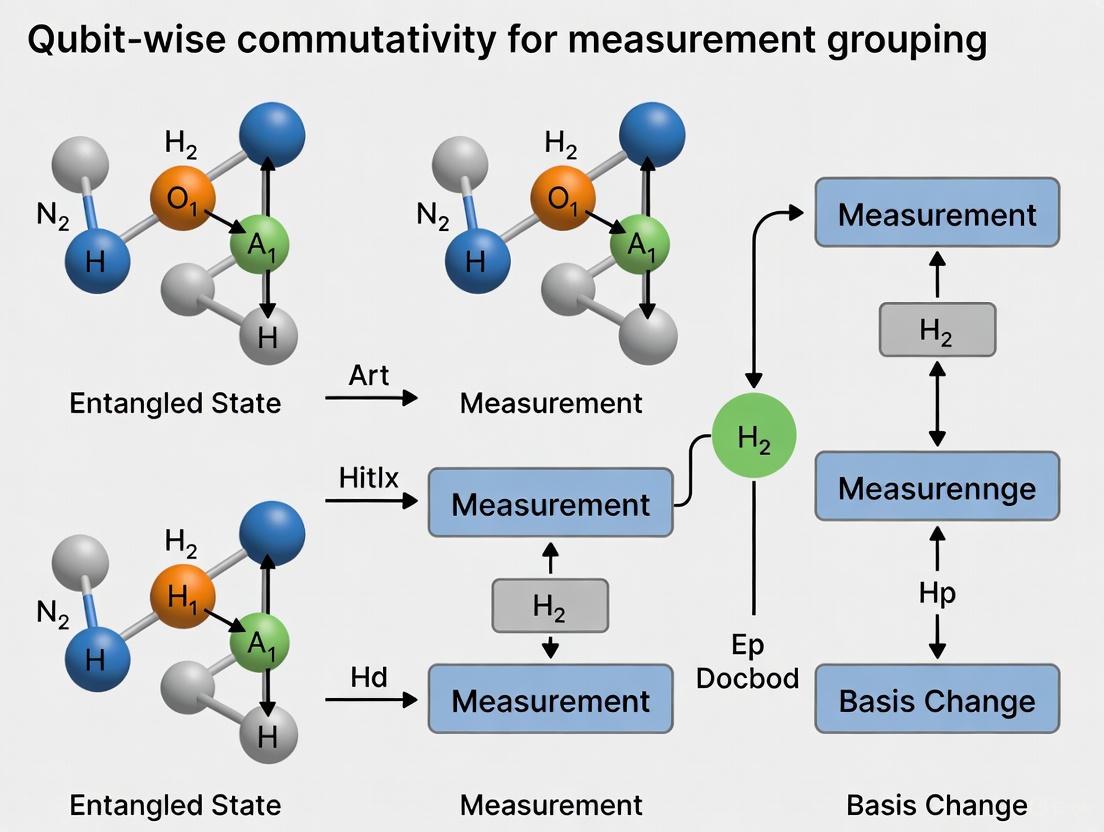
Qubit-Wise Commutativity: A Practical Guide to Quantum Measurement Optimization for Biomedical Research
This article provides a comprehensive exploration of qubit-wise commutativity (QWC) and its critical role in optimizing quantum measurements for variational algorithms like the Variational Quantum Eigensolver (VQE).
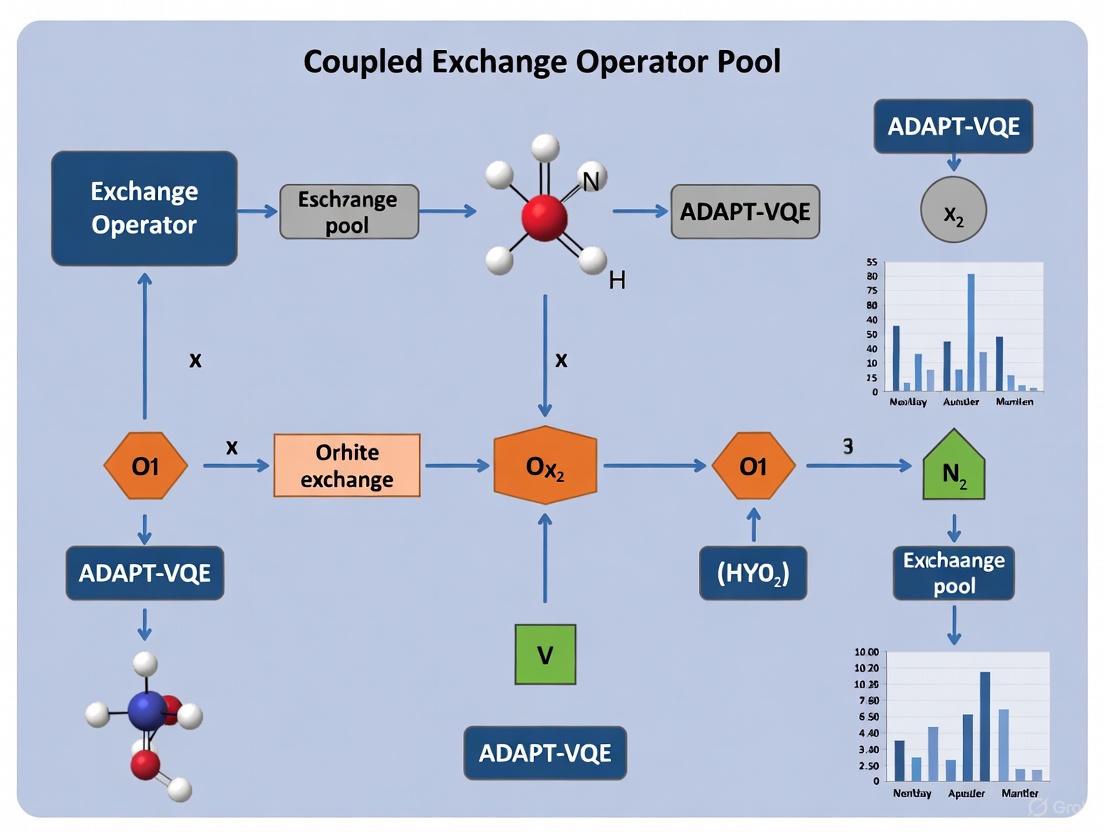
CEO-ADAPT-VQE: A Resource-Efficient Quantum Algorithm for Molecular Simulation and Drug Discovery
This article explores the Coupled Exchange Operator (CEO) pool within the ADAPT-VQE framework, a novel quantum algorithm designed for the Noisy Intermediate-Scale Quantum (NISQ) era.