Chemistry in 1932: A Revolution at the Molecular Frontier
The year that reshaped our understanding of everything from chemical bonds to the secrets of life itself.
The year 1932 arrived amidst global economic turmoil, but in the world of chemistry, it was a period of unprecedented intellectual ferment. The Annual Reports on the Progress of Chemistry for 1932, a venerable publication by the British Chemical Society, captured this pivotal moment—a year when classical chemistry was rapidly giving way to a new, modern era shaped by quantum theory and sophisticated instrumentation 1 .
This was not merely a collection of incremental advances. It was a year when scientists peered deeper into the nature of chemical bonds, harnessed new laws of physics to predict molecular behavior, and laid the groundwork for technologies that would define the 20th century. As you'll discover, the research condensed in that year's report was nothing short of a revolution happening one experiment at a time.
The New Physics of the Chemical Bond
The most profound shift in chemical thinking during this period was the full-throated embrace of quantum mechanics. For decades, chemistry had been largely a science of observation and reaction. With the advent of quantum theory, scientists finally had a language to explain why atoms bonded and how molecules behaved.
Quantum Mechanics
Pioneers like Dr. N. V. Sidgwick were at the forefront, applying the new quantum mechanical principles to explain the fundamental nature of the chemical bond 1 .
Strong Electrolytes
Scientists were moving beyond Arrhenius' classical theory to understand how ions truly behaved in solution, a puzzle that theories by Debye and Hückel were starting to solve 1 .
Molecular Structures
Techniques like X-ray crystallography and electron diffraction were used to determine the precise architecture of simple molecules 1 .
Key Theoretical Concepts in 1932
| Concept | Description | Significance |
|---|---|---|
| Quantum Mechanics | Application of wave mechanics to explain chemical bonding and molecular structure. | Moved chemistry from descriptive observations to predictive, fundamental principles. |
| Electrolyte Behavior | Investigation into the complete dissociation of strong salts and acids in solution. | Crucial for understanding corrosion, battery technology, and biological systems. |
| Chemical Kinetics | Study of the rates and mechanisms of chemical reactions. | Essential for optimizing industrial processes and understanding combustion. |
| Stereochemistry | Detailed study of the spatial arrangement of atoms within molecules. | Explained differences in reactivity, biological activity, and material properties. |
Adoption of Quantum Concepts in Chemistry (1920-1940)
A Global Chemical Awakening
While the Annual Reports provided a Western perspective, 1932 was also a landmark year for chemistry elsewhere in the world. On August 4, 1932, in Nanjing, a group of 45 Chinese chemists, including Huang Xinyan, Wang Jin, and Chen Yuguang, founded the Chinese Chemical Society 2 5 .
"The nation and its people were in a time of crisis," and that chemists had to organize to contribute to both scientific development and national salvation 2 .
This was not an isolated academic event. It was a conscious effort to build a scientific infrastructure that would support a modernizing nation. From its inception, the society prioritized the creation of academic journals, establishing the Journal of the Chinese Chemical Society to report the research of Chinese chemists to the international community 2 6 . This parallel narrative shows that the drive to advance chemistry was a truly global phenomenon in the 1930s.

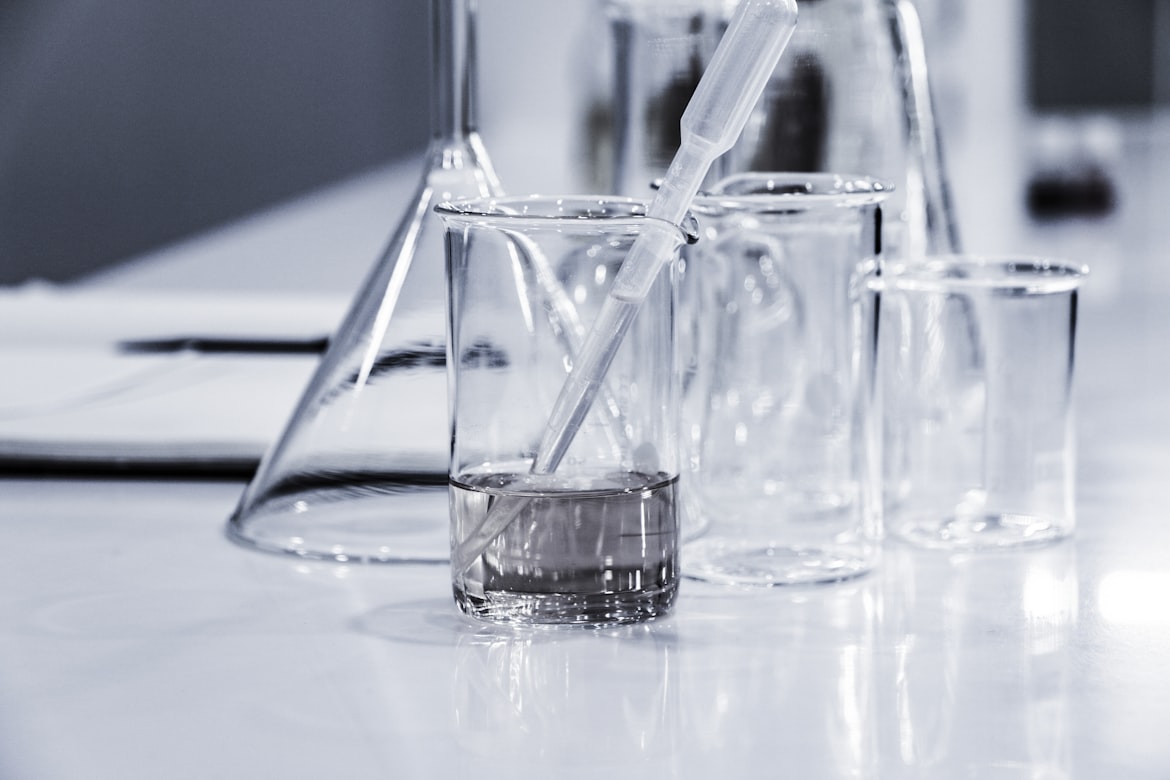
Historical laboratory equipment from the early 20th century
Key Events in 1932 Chemistry
Publication of Annual Reports
British Chemical Society publishes the Annual Reports on the Progress of Chemistry for 1932, documenting pivotal advances 1 .
Foundation of Chinese Chemical Society
August 4, 1932: 45 Chinese chemists establish the Chinese Chemical Society in Nanjing 2 5 .
Advances in Electron Diffraction
Researchers perfect electron diffraction techniques for molecular structure determination 1 .
Quantum Theory Applications
Scientists like Sidgwick apply quantum mechanics to explain chemical bonding phenomena 1 .
Experiment in Focus: Mapping Molecules with Electron Diffraction
To understand the excitement of this era, let's take an in-depth look at one of the cutting-edge techniques highlighted in the Annual Reports: determining molecular structure via electron diffraction.
In 1932, this was a revolutionary method that allowed chemists to confirm the actual bond lengths and angles in a gas-phase molecule, moving beyond mere chemical formula to a three-dimensional understanding.
Methodology: A Step-by-Step Guide
The experimental procedure, though sophisticated for its time, followed a logical sequence, as referenced in the Annual Reports' coverage of "the structure of simple molecules from spectroscopic, X-ray, and electron diffraction data" 1 .
Experimental Steps
-
VaporizationA sample was heated to produce a steady stream of vapor.
-
Electron Beam GenerationElectrons were accelerated under high voltage in a vacuum tube.
-
InteractionVapor intersected with electron beam, causing diffraction.
-
DetectionDiffracted electrons created concentric rings on photographic plate.
-
AnalysisMathematical calculations determined bond lengths and angles.
Simulated electron diffraction pattern showing concentric rings
Results and Analysis: Proving Tetrahedral Symmetry
When applied to a molecule like carbon tetrachloride (CCl₄), the electron diffraction pattern revealed a beautiful symmetry. The analysis would have confirmed that the four chlorine atoms were arranged in a perfect tetrahedron around the central carbon atom.
The data allowed for the precise calculation of the C-Cl bond length and the Cl-C-Cl bond angle, which would be found to be approximately 109.5 degrees. This was a triumphant confirmation of the theoretical predictions of stereochemistry and valence bond theory. It provided direct, physical evidence that molecules were not flat constructs on paper, but had defined, three-dimensional architectures that dictated their physical properties and chemical reactivity.
| Measurement | Value | Significance |
|---|---|---|
| C-Cl Bond Length | ~1.77 Å | Established the typical single-bond distance between carbon and chlorine. |
| Cl-C-Cl Bond Angle | ~109.5° | Experimentally confirmed the tetrahedral geometry predicted by theory. |
| Molecular Symmetry | Td (Tetrahedral) | Provided direct evidence for the 3D shape governing physical properties. |
Tetrahedral Structure
Simplified representation of tetrahedral CCl₄ molecule with central carbon (dark) and chlorine atoms (blue)
Bond Angle Visualization
Tetrahedral bond angle of approximately 109.5 degrees
The Scientist's Toolkit: Key Research Reagents & Materials
The experiments of 1932 relied on a mix of classic laboratory materials and exciting new technologies. The following table details some of the essential components that would have been featured in the research reported that year.
| Tool/Reagent | Function in Research |
|---|---|
| Strong Electrolytes (e.g., NaCl, HCl) | Used in studies of solution behavior and conductivity to test new theories of ionic dissociation. |
| Simple Gaseous Compounds (e.g., CCl₄, CH₄) | Ideal subjects for the new techniques of electron diffraction and spectroscopy to determine molecular structure. |
| Metal Catalysts (e.g., Nickel, Platinum) | Crucial for research in chemical kinetics, particularly in studying hydrogenation reactions and reaction mechanisms. |
| High-Vacuum Apparatus | Enabled the operation of electron diffraction and X-ray tubes, which required a pristine vacuum to function. |
| Photographic Plates | Served as the primary detection method for both electron diffraction patterns and spectroscopic lines, preserving data for analysis. |
Laboratory Glassware
Essential for handling chemicals, conducting reactions, and performing analyses in 1930s laboratories.

Analytical Balance
Precision instruments for accurate measurement of chemical substances, crucial for quantitative analysis.
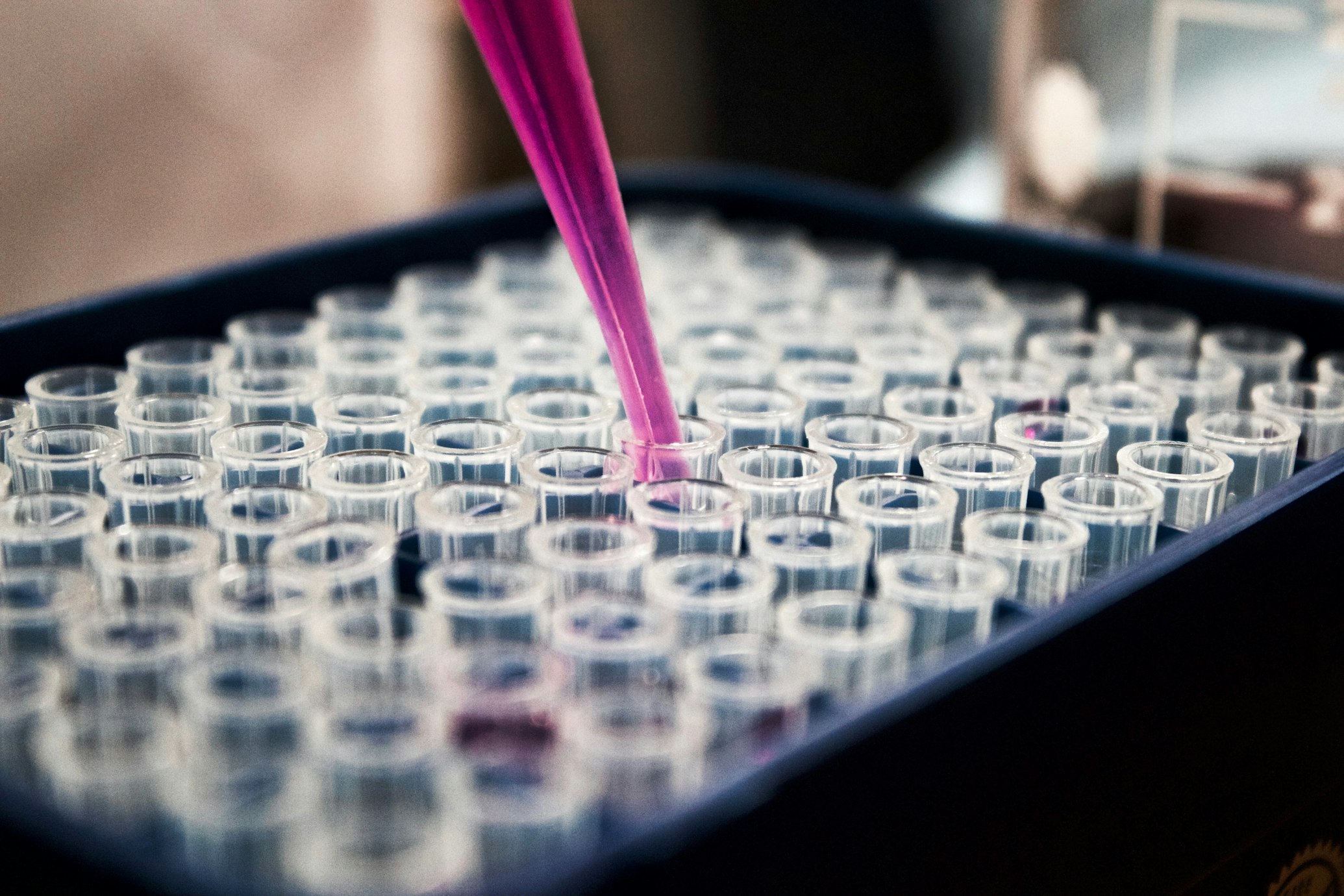
Spectroscopy Equipment
Advanced instruments for analyzing the interaction between matter and electromagnetic radiation.
A Legacy That Shaped Our World
The chemical research of 1932 was far from an academic curiosity. It laid the essential groundwork for the technological and scientific landscape of the rest of the 20th century and beyond. The push to understand strong electrolytes informed the development of better batteries and fuel cells. The insights from chemical kinetics made industrial processes like the synthetic production of ammonia and the Haber-Bosch process more efficient, impacting global agriculture 5 .
The determination of molecular structure is the very foundation of modern pharmaceutical development, materials science, and nanotechnology. The work highlighted in that year's Annual Reports—on the structure of simple molecules—was a direct precursor to our ability to design drugs that fit like keys into biological locks and to engineer materials with tailored properties.
As the Chinese chemical community demonstrated at its founding, this pursuit of chemical knowledge was also deeply intertwined with national development and resilience. During World War II, the knowledge and industrial capacity built upon this fundamental research would be called upon for everything from producing medicines to creating new fuels and materials 2 5 .
The Annual Reports on the Progress of Chemistry for 1932 thus stands as more than a historical document. It is a snapshot of a discipline in rapid, exhilarating transition, capturing the moment chemistry became a modern science and set the course for our present world.
Lasting Impact
- Foundation for modern pharmaceuticals
- Advances in materials science
- Improved industrial processes
- Development of battery technology
- Basis for nanotechnology
Fields Influenced by 1932 Chemistry Advances
Modern chemistry laboratory building on foundations established in the early 20th century