Microbial Alchemists: How Tiny Factories Are Revolutionizing Nanotechnology
In the unseen world of microorganisms, a green industrial revolution is brewing, turning toxic waste into technological treasure.
Imagine a factory that produces advanced materials at room temperature, using only biological processes, with water as its primary solvent and zero toxic waste. This isn't a futuristic dream—it's happening right now inside bacteria, fungi, and other microbes. As we face growing environmental challenges, scientists are turning to these microscopic alchemists to develop sustainable methods for creating nanoparticles that are transforming medicine, agriculture, and environmental clean-up.
Why Go Green? The Nano Revolution Needs a Sustainable Makeover
Nanotechnology, the science of the incredibly small (typically dealing with particles between 1-100 nanometers), has already revolutionized countless fields 3 . These tiny particles possess unique properties compared to their bulk counterparts, thanks to their high surface-to-volume ratio, which enhances their chemical, physical, and biological reactivity .
Conventional Methods
The conventional methods for creating these powerful nanoparticles have traditionally relied on physical and chemical processes that consume significant energy, require toxic chemicals, and generate hazardous waste 3 .
- Physical methods like pyrolysis and vapor deposition suffer from lower yields and high energy demands
- Chemical synthesis often involves toxic reagents that can leave behind harmful residues
Biological Synthesis
This environmental conundrum has fueled the search for greener alternatives, leading scientists to discover that nature's smallest engineers—microbes—have been performing nanotechnology for eons.
- Biological synthesis using microorganisms represents a cleaner, safer paradigm
- Produces nanoparticles with enhanced stability and biocompatibility
- Natural biomolecular capping prevents aggregation
The Microbial Toolkit: Nature's Nano-Factories
Various microorganisms including bacteria, actinobacteria, fungi, yeast, microalgae, and viruses have been explored for their ability to synthesize metal and metal oxide nanoparticles 3 .
| Microorganism Type | Examples | Nanoparticles Synthesized |
|---|---|---|
| Bacteria | Pseudomonas stutzeri, Lactobacillus sp., Bacillus licheniformis | Silver, Gold, Iron, Nickel, Zinc, Titanium 3 4 |
| Fungi | Gloeophyllum striatum, Fusarium oxysporum | Silver nanoparticles 7 8 |
| Extremophilic Bacteria | Geobacillus stearothermophilus (thermophilic) | Highly stable Silver nanoparticles |
| Magnetotactic Bacteria | Magnetospirillum magnetotacticum | Magnetite nanoparticles 4 |
Intracellular Synthesis
Microbial cells absorb metal ions from their environment, which then traverse the cell wall. Once inside, cellular enzymes reduce these ions into nanoclusters that eventually form nanoparticles 3 .
The process is often visible through color changes in the culture—a shift to pinkish hues may indicate gold nanoparticle formation, while brownish colors suggest silver nanoparticles 3 .
Extracellular Synthesis
In this more easily scalable approach, microbes secrete reductase enzymes and other bioactive metabolites into their surrounding culture broth. These secretions can reduce metal ions added to the solution into stable nanoparticles without requiring cell disruption 3 7 .
This method simplifies downstream processing since the nanoparticles are directly collected from the culture medium 7 .
Microbial Machineries: A Peek Inside the Production Process
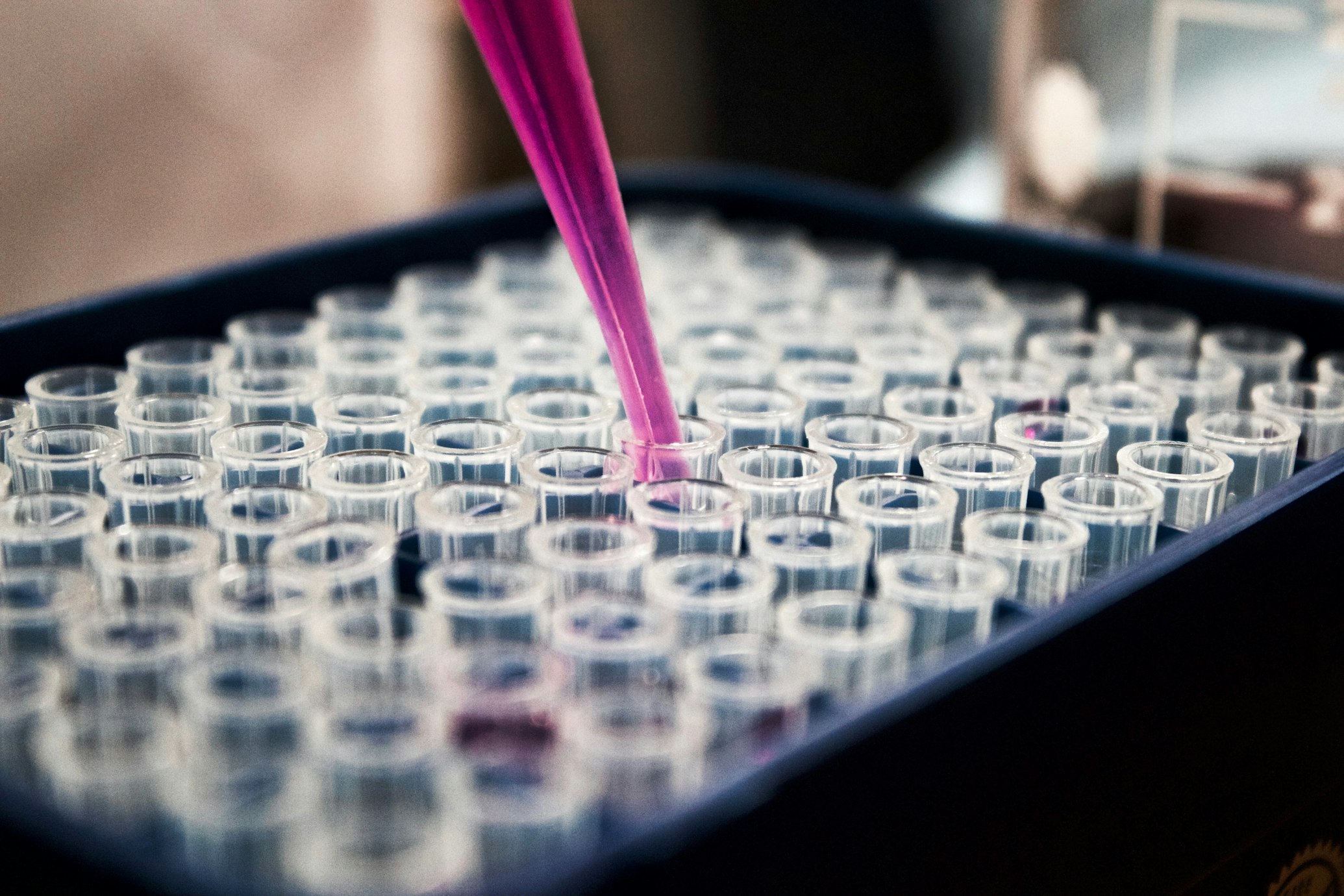
The molecular machinery behind this biological synthesis is sophisticated yet efficient. Microbial enzymes such as NADH-dependent reductases play a crucial role in reducing metal ions into their elemental forms 5 . For instance, nitrate reductase and anthraquinones from fungi like Fusarium oxysporum have been identified as key players in nanoparticle formation 5 .
Stabilizing Compounds
Proteins, peptides, and polysaccharides coat nanoparticles to prevent agglomeration and ensure uniform size distribution .
Enhanced Properties
This biological control mechanism often surpasses what's achievable through conventional physical and chemical methods 8 .
Case Study: Engineering Robust Silver Nanoparticles from a Thermophilic Bacterium
A groundbreaking 2025 study illustrates the sophisticated potential of microbial synthesis. Researchers from the University of Naples leveraged Geobacillus stearothermophilus GF16—a thermophilic bacterium isolated from the volcanic hydrothermal area of Pisciarelli, Italy—to produce exceptionally stable silver nanoparticles (AgNPs) .
Methodology: Step-by-Step Optimization
Strain Selection and Cultivation
The research began with cultivating the metal-resistant G. stearothermophilus GF16, chosen for its natural habitat in metal-rich, high-temperature environments .
Secretome Production
After 24 hours of growth, bacterial cells were removed via centrifugation. The remaining cell-free supernatant, containing the bacterial "secretome" of metabolites and enzymes, served as the bio-reactor .
Systematic Synthesis Optimization
The synthesis was meticulously optimized by varying:
- Precursor concentration (silver nitrate solution)
- Temperature
- pH
- Reaction time
Characterization and Testing
The resulting nanoparticles underwent comprehensive analysis using UV-Vis spectroscopy, electron microscopy, and thermal stability testing, followed by assessments of their antimicrobial, antioxidant, and catalytic properties .
Remarkable Results and Implications
The optimized process yielded predominantly spherical nanoparticles with exceptional uniformity, averaging just 17±5 nanometers in diameter . These biogenic AgNPs demonstrated extraordinary thermal stability, maintaining structural integrity up to 120°C—a rare feat for biologically synthesized nanomaterials .
| Parameter | Optimized Condition/Result | Significance |
|---|---|---|
| Temperature | 60°C (bacterial growth) | Leverages thermophilic nature of bacteria |
| Nanoparticle Size | 17±5 nm | Uniform, small size enhances biological activity |
| Thermal Stability | Stable up to 120°C | Exceptional for biogenic nanoparticles, broadens application potential |
| Antimicrobial Efficacy | Complete inhibition of pathogens at 100 µg/mL | Effective against both Gram-positive and Gram-negative bacteria |
| Antioxidant Activity | 79% DPPH radical scavenging | Rarely observed high level for bacterially-synthesized AgNPs |
The research team further verified the biocompatibility of these nanoparticles through hemolysis assays, where they caused less than 2% red blood cell damage—well below the safety threshold . This combination of robust synthesis, multifunctionality, and safety highlights the immense potential of extremophilic microorganisms as nano-factories.
The Scientist's Toolkit: Essential Reagents for Microbial Nano-Synthesis
Creating nanoparticles through microbial synthesis requires specific biological and chemical components.
| Research Reagent | Function in Synthesis | Specific Examples |
|---|---|---|
| Metal Salt Precursors | Source of metal ions for reduction into nanoparticles | Silver nitrate (for AgNPs), Zinc acetate (for ZnO NPs), Chloroauric acid (for gold NPs) 7 |
| Microbial Strains | Biological factories producing reducing/stabilizing agents | Geobacillus stearothermophilus (thermophilic), Pseudomonas stutzeri, Lactobacillus strains 3 4 |
| Growth Culture Media | Nutrient source to support microbial growth and metabolism | Lysogeny Broth (LB) containing tryptone, yeast extract, sodium chloride |
| Reducing Enzymes/Metabolites | Biological agents that convert metal ions to elemental form | NADH-dependent reductase, nitrate reductase, anthraquinones 5 |
| Capping/Stabilizing Agents | Biomolecules that coat nanoparticles to prevent aggregation | Proteins, peptides, polysaccharides from microbial secretome |
Beyond the Lab: Real-World Applications of Microbial Nanoparticles
The implications of microbial nanotechnology extend far beyond laboratory curiosity, with compelling applications across multiple sectors:
Environmental Remediation
Microbial nanoparticles serve as powerful catalysts for breaking down environmental pollutants. The AgNPs from G. stearothermophilus completely degraded Congo Red dye in just 20 minutes . Certain Lactobacillaceae species can detoxify heavy metals from wastewater 6 .
Medical Innovations and Precision Therapy
Zinc oxide nanoparticles synthesized from probiotic bacteria show significant promise in wound healing, anticancer therapies, and as drug delivery vehicles 6 . The unique thermal stability of nanoparticles produced by thermophiles opens new possibilities for medical devices requiring sterilization .

Challenges and Future Horizons
Despite the exciting progress, challenges remain in scaling up microbial synthesis for industrial production. Controlling the precise size and morphology of nanoparticles consistently requires further optimization, and the synthesis rates can be slower than chemical methods 6 8 .
Current Challenges
- Scaling up for industrial production
- Controlling precise size and morphology consistently
- Slower synthesis rates compared to chemical methods
- Optimizing yield and reproducibility
Future Directions
- Genetic engineering to enhance microbial synthesis capabilities 3
- Exploration of extremophiles for novel enzymatic machinery
- Development of hybrid biological-chemical approaches
- Integration with AI for optimization of synthesis parameters
Future Research Timeline
Short-term (1-2 years)
Optimization of existing microbial strains for higher yield and faster synthesis; Development of standardized protocols for reproducible nanoparticle production.
Medium-term (3-5 years)
Genetic engineering of microbial pathways for tailored nanoparticle properties; Exploration of novel extremophilic microorganisms; Scale-up to pilot production facilities.
Long-term (5+ years)
Industrial-scale microbial nano-factories; Integration with circular economy models using waste streams as feedstocks; Development of multi-functional hybrid nanomaterials.
Conclusion: The Green Nano-Future
Microbial synthesis of nanoparticles represents a powerful convergence of biotechnology and materials science that aligns with the principles of green chemistry and sustainable development. These microscopic factories operate without toxic chemicals, consume less energy, and generate biodegradable byproducts while producing nanomaterials with exceptional properties and functionality.
As research continues to unlock the full potential of bacteria, fungi, and other microorganisms as nano-factories, we move closer to a future where advanced materials are produced in harmony with nature rather than at its expense. The work being done today with microbial alchemists lays the foundation for a more sustainable technological revolution—one nanoparticle at a time.