Navigating the Precision-Cost Frontier: A 2025 Guide to Computational Trade-Offs in Drug Discovery
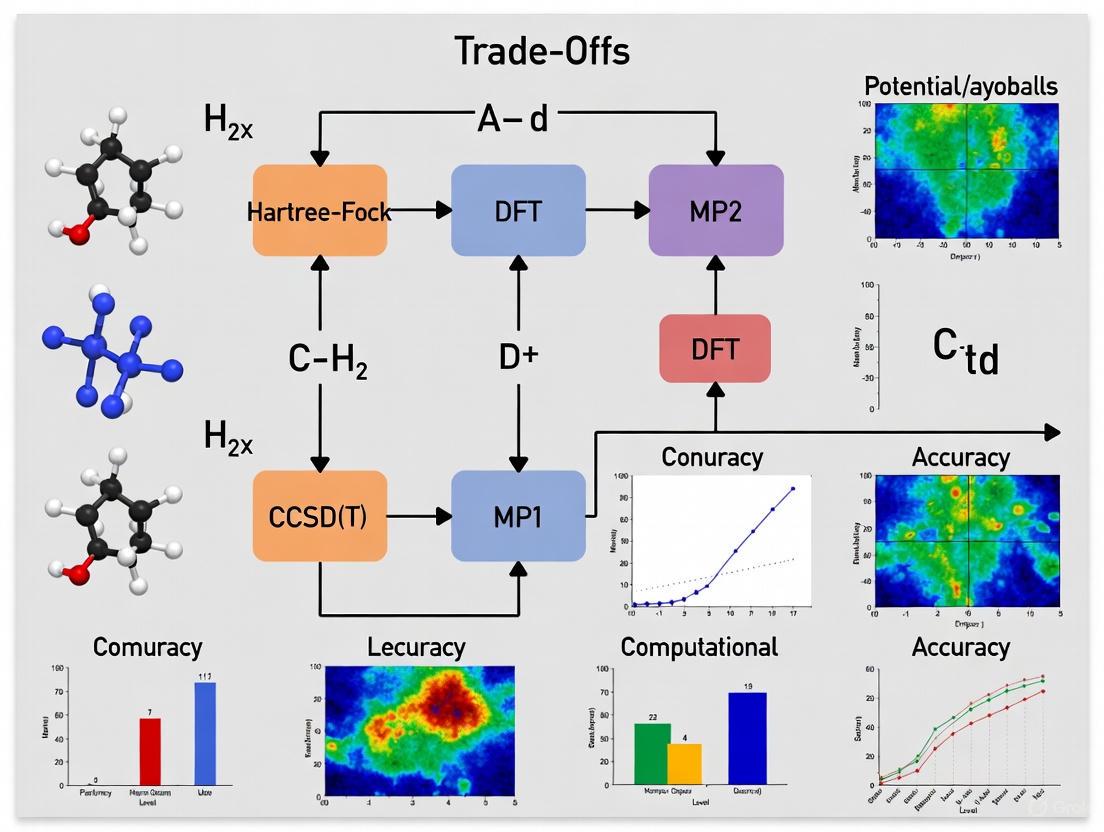
This article provides a comprehensive analysis of the critical trade-offs between computational cost and predictive accuracy in modern drug discovery.
Navigating the Precision-Cost Frontier: A 2025 Guide to Computational Trade-Offs in Drug Discovery
Abstract
This article provides a comprehensive analysis of the critical trade-offs between computational cost and predictive accuracy in modern drug discovery. Tailored for researchers and development professionals, it explores the foundational theories of computational complexity, showcases cutting-edge methodologies from generative AI to quantum-classical hybrids, and offers practical frameworks for troubleshooting and optimization. Through comparative validation of leading platforms and techniques, this guide delivers actionable insights for making strategic, resource-aware decisions that accelerate the development of novel therapeutics without compromising scientific rigor.
The Inescapable Trade-Off: Understanding Information-Computation Theory in Biomedical Research
Frequently Asked Questions (FAQs)
Q1: What are the primary factors that drive computational complexity in modern virtual screening? Computational complexity is primarily driven by the size of the chemical space being screened and the accuracy of the scoring functions used. Virtual screening libraries have expanded from millions to billions and even trillions of compounds. Screening these "gigascale" or "ultra-large" spaces requires significant computational resources, as evaluating each compound involves predicting its 3D binding pose and affinity against a target protein, a process that can be highly calculation-intensive [1]. The choice between faster, less accurate methods and slower, physics-based simulations that account for molecular flexibility creates a direct trade-off between speed and precision [1] [2].
Q2: How can researchers strategically balance the trade-off between computational cost and prediction accuracy? A successful strategy involves iterative screening and multi-pronged approaches. Instead of running the most computationally expensive simulations on an entire library, researchers can first use fast machine learning models or simplified scoring functions to filter the library down to a smaller set of promising candidates. This enriched subset can then be analyzed with more rigorous and costly methods, such as molecular dynamics simulations or free energy perturbation calculations [1] [3]. This layered strategy optimizes resource allocation by applying high-cost, high-accuracy methods only where they are most needed.
Q3: What are the common pitfalls in AI-driven binding affinity predictions, and how can they be mitigated? A major pitfall is the dependency on the quality and breadth of training data. AI models can produce false positives or negatives if the underlying data is biased or incomplete [4] [5]. To mitigate this, it is crucial to use large, experimentally validated datasets and to incorporate physics-based principles where possible. Furthermore, models should be continuously validated with experimental results in a closed-loop design-make-test-analyze (DMTA) cycle to identify and correct for model drift or inaccuracies [6] [2]. Transparency in model architecture and inputs is also key to building trust and understanding limitations [7].
Q4: What computational resources are typically required for different stages of AI-driven drug discovery? Resource requirements vary dramatically by task. Virtual screening of billion-compound libraries is often performed on high-performance computing (HPC) clusters or with cloud computing resources, sometimes leveraging GPUs for parallel processing [1] [6]. In contrast, generative AI for molecular design also requires significant GPU power for training and inference. The most computationally demanding tasks are detailed quantum chemistry calculations and free energy simulations for lead optimization, which can require weeks of computation time on specialized HPC systems [4] [6].
Q5: How does the use of experimental data integrate with and improve computational models? Experimental data is the cornerstone of reliable computational models. Data from Cellular Thermal Shift Assays (CETSA), which confirms target engagement in a physiologically relevant cellular environment, is used to validate and refine computational predictions [3]. In DMPK, high-quality experimental measurements of properties like solubility, permeability, and metabolic stability are essential for building accurate machine learning models that can predict these properties for new compounds [2]. This close integration of experimental and computational work ensures models are grounded in biological reality.
Troubleshooting Guides
Guide 1: Managing Excessive Computational Time in Virtual Screening
Problem: Virtual screening of a large compound library is taking an unacceptably long time, slowing down the research pipeline.
Solution:
- Step 1: Implement a Multi-Stage Filtering Workflow. Do not apply your most computationally expensive method to the entire library. Start with fast, lightweight filters like simple pharmacophore models or 2D similarity searches to quickly remove obvious non-binders [1] [3].
- Step 2: Leverage Pre-computed Chemical Libraries. Use commercially available or publicly accessible pre-filtered libraries (e.g., ZINC20) that contain molecules selected for drug-like properties, reducing the initial pool size [1].
- Step 3: Optimize Hardware Utilization. Ensure your docking software is configured to use GPU acceleration, which can speed up calculations by orders of magnitude compared to using CPUs alone [1] [6].
- Step 4: Utilize Active Learning. Implement machine learning-based active learning, where the model selectively chooses which compounds to evaluate with more expensive methods, focusing resources on the most informative regions of the chemical space [1].
Guide 2: Addressing Inaccurate AI/ML Predictions in ADMET Profiling
Problem: Machine learning models for ADMET (Absorption, Distribution, Metabolism, Excretion, Toxicity) properties are generating predictions that do not align with subsequent experimental results.
Solution:
- Step 1: Audit the Training Data. Investigate the data used to train the model. Ensure it is relevant to your chemical series and is of high quality. Be wary of models trained on small, noisy, or biased datasets [2] [5].
- Step 2: Assess Applicability Domain. Determine if your query molecules fall outside the "applicability domain" of the model—the chemical space on which it was trained. Predictions for molecules that are structurally novel to the model are inherently less reliable [2].
- Step 3: Refine with Experimental Data. Use a small set of in-house experimental results to fine-tune or validate the model. This can help calibrate the model to your specific project needs [2].
- Step 4: Employ Model Ensembles. Instead of relying on a single model, use an ensemble of different models or algorithms. A consensus prediction from multiple models is often more robust and accurate than any single one [3].
Guide 3: Debugging a Failed Experimental Validation of a Computational Hit
Problem: A compound predicted by computational models to be a strong binder shows no activity in a biological assay.
Solution:
- Step 1: Verify Compound Integrity. Confirm the synthesized compound's identity and purity via analytical chemistry (e.g., LC-MS, NMR). Synthesis errors or compound degradation are common reasons for failure [5].
- Step 2: Re-examine the Assay Conditions. Ensure the biochemical or cellular assay is functioning correctly and has the necessary sensitivity. Confirm that the target protein is present and in its native conformation [3].
- Step 3: Re-inspect the Predicted Binding Pose. Analyze the computational model's proposed binding mode. Look for unrealistic molecular geometries, clashes with the protein, or ignored key solvent molecules that might have led to an over-optimistic affinity score [1].
- Step 4: Probe for Off-Target Effects. Use a phenotypic assay or a broad panel screening to see if the compound is active through a different, unpredicted mechanism, which could explain the lack of activity against your intended target [7].
Quantitative Data Comparison
Table 1: Comparison of Computational Methods in Drug Discovery: Scaling of Cost and Accuracy
| Computational Method | Typical Library Size | Relative Computational Cost (CPU/GPU hours) | Key Accuracy Metrics | Primary Use Case |
|---|---|---|---|---|
| 2D Ligand-Based Similarity Search | Millions to Billions [1] | Low (CPU) | Enrichment Factor (EF) | Rapid hit identification, scaffold hopping |
| Standard Rigid Docking | Millions [1] | Medium (CPU/GPU) | Root-Mean-Square Deviation (RMSD) of pose | Structure-based virtual screening |
| Ultra-Large Library Docking | Billions to Trillions (e.g., 11B+) [1] | High (HPC/GPU Cluster) | Hit Rate, Potency (IC50) | Exploring vast, novel chemical spaces |
| AI-Based Affinity Prediction (e.g., GNNs) | Billions [4] [6] | Medium-High (GPU) | Pearson R vs. experimental data [2] | High-throughput ranking of compounds |
| Molecular Dynamics (MD) Simulations | 10s - 100s [1] | Very High (HPC) | Free Energy of Binding (ΔG), RMSD | Binding mechanism and detailed stability |
| Free Energy Perturbation (FEP) | 10s [6] | Extremely High (HPC) | ΔΔG (kcal/mol) error < 1.0 [6] | Lead optimization, relative affinity |
Table 2: Data Requirements and Infrastructure for AI/ML Model Training
| Model Type | Typical Training Data Volume | Minimum Infrastructure | Impact of Data Quality on Model Performance |
|---|---|---|---|
| QSAR/2D Property Predictors | 100s - 10,000s of data points [2] | Multi-core CPU Server | Very High. Noisy or inconsistent experimental data directly translates to poor prediction accuracy [2]. |
| Graph Neural Networks (GNNs) | 10,000s - Millions of data points [4] [6] | High-RAM GPU Server | Critical. Requires large, diverse, and well-annotated datasets. Data bias leads to limited applicability [4]. |
| Generative AI (VAEs, GANs) | 100,000s+ molecular structures [6] [5] | Multi-GPU Cluster | Fundamental. Defines the chemical space and synthesizability rules for generated molecules [5]. |
| Foundation Models for Protein Structures | Billions of amino acids (e.g., AlphaFold DB) [8] | Specialized Large-Scale GPU Cluster | Defining. Model capability is almost entirely determined by the scale and diversity of the training data. |
Experimental Protocols
Protocol 1: Iterative Workflow for Cost-Effective Ultra-Large Virtual Screening
This protocol describes a multi-stage methodology for efficiently screening gigascale chemical libraries by balancing fast machine learning and more accurate, costly molecular docking [1].
Principle: To maximize the exploration of chemical space while minimizing computational expense by applying high-fidelity methods only to a pre-enriched subset of compounds.
Step-by-Step Methodology:
- Library Preparation: Obtain a make-on-demand virtual compound library (e.g., ZINC20, Enamine REAL). Apply initial filters for drug-likeness (e.g., Lipinski's Rule of Five) and remove undesirable chemical motifs [1].
- Machine Learning-Based Pre-Screening:
- Train a ligand-based machine learning model (e.g., a graph neural network) on known active and inactive compounds for the target.
- Use this model to score and rank the entire ultra-large library. This step rapidly reduces the library size by several orders of magnitude.
- Structure-Based Docking:
- Take the top 1-10 million compounds from the ML pre-screen and subject them to molecular docking against the 3D structure of the target protein.
- Use a standard docking scoring function for a balance of speed and accuracy.
- Iterative Refinement (Optional):
- Final Selection and Experimental Validation: Select a diverse set of a few hundred to a thousand top-ranking compounds for purchase and experimental testing in a primary assay.
Diagram: Multi-Stage Virtual Screening Workflow
Protocol 2: Validating Computational Predictions with Cellular Target Engagement Assays
This protocol ensures that computationally identified hits demonstrate direct binding to the intended target in a physiologically relevant cellular context, using the Cellular Thermal Shift Assay (CETSA) as a key validation tool [3].
Principle: A compound that engages its protein target can stabilize it against thermally induced denaturation. This shift in thermal stability can be quantified as evidence of direct binding in intact cells.
Step-by-Step Methodology:
- Cell Treatment: Divide a cell culture expressing the target protein into aliquots. Treat one set with the computational hit compound (or a range of concentrations) and another set with a vehicle control (e.g., DMSO). Incubate to allow cellular uptake and binding.
- Heat Challenge: Subject the cell aliquots to a series of precise temperatures (e.g., from 40°C to 65°C) in a thermal cycler. This heat challenge denatures non-ligand-bound proteins.
- Cell Lysis and Protein Solubilization: Lyse the heated cells and separate the soluble (properly folded) protein from the insoluble (aggregated) protein.
- Protein Quantification: Quantify the amount of soluble target protein remaining at each temperature using a specific detection method, such as Western blot or a targeted proteomics approach like mass spectrometry [3].
- Data Analysis:
- Plot the fraction of soluble protein remaining against the temperature for both the compound-treated and vehicle-control samples.
- A positive target engagement is indicated by a rightward shift in the melting curve (Tm shift) of the treated sample, meaning the protein is stabilized and denatures at a higher temperature.
- The magnitude of the Tm shift can be correlated with binding affinity.
Diagram: CETSA Experimental Workflow for Validation
The Scientist's Toolkit: Research Reagent Solutions
Table 3: Key Computational and Experimental Resources for Validated Discovery
| Tool / Resource Name | Type | Primary Function in Workflow | Key Consideration for Cost-Accuracy Trade-off |
|---|---|---|---|
| ZINC20 / Enamine REAL | Virtual Compound Library | Provides access to billions of commercially available, synthesizable compounds for virtual screening [1]. | Library size directly impacts computational cost; pre-filtered subsets can save resources. |
| AutoDock-GPU, FRED | Docking Software | Performs high-throughput molecular docking to predict protein-ligand binding poses and scores [3]. | GPU acceleration is critical for speed. Scoring function choice balances speed and accuracy. |
| CETSA | Experimental Validation Assay | Confirms direct target engagement of a computational hit in a physiologically relevant cellular environment [3]. | Provides critical data to validate computational predictions, preventing pursuit of false positives. |
| Graph Neural Networks (GNNs) | Machine Learning Model | Learns from molecular graph structures to predict activity, toxicity, or other properties [4] [6]. | Requires significant labeled data for training but allows for rapid prediction once trained. |
| Molecular Dynamics (MD) Software (e.g., GROMACS, AMBER) | Simulation Software | Simulates the physical movements of atoms and molecules over time, providing insights into dynamic binding processes [1]. | Extremely high computational cost limits the number of compounds and simulation time feasible. |
| Schrödinger's FEP+ | Advanced Calculation Module | Uses free energy perturbation theory to calculate relative binding affinities with high accuracy [6]. | One of the most computationally expensive methods, reserved for final lead optimization of a few compounds. |
Troubleshooting Guides
Guide 1: Diagnosing Statistical-Computational Trade-offs in Your Experiments
Problem: My model's performance has plateaued, and increasing model complexity does not yield significant accuracy improvements.
Explanation: You have likely reached a statistical-computational gap, where the computationally feasible estimator cannot achieve the information-theoretic lower bound of statistical error. Beyond this point, additional computational resources yield diminishing returns [9].
Solution:
- Confirm the gap: Compare your model's error against known minimax lower bounds for your problem. A significant gap suggests a statistical-computational trade-off [9].
- Algorithm weakening: Consider substituting your objective with a convex relaxation, accepting a known statistical penalty for computational tractability [9].
- Hybrid methods: Implement hierarchical methods that interpolate between computationally extreme points, such as stochastic composite likelihoods [9].
Verification: The table below summarizes key indicators and solutions:
Table: Diagnostic Indicators for Statistical-Computational Trade-offs
| Indicator | Observation | Recommended Action |
|---|---|---|
| Error Plateau | Test error stops improving despite increased model parameters | Switch to convex relaxations with known statistical penalties [9] |
| Training Instability | Validation performance fluctuates wildly with small parameter changes | Implement branched residual connections with multiple schedulers [10] |
| Excessive Training Time | Model requires exponentially more time for marginal gains | Apply coreset constructions to compress data to weighted summaries [9] |
Guide 2: Resolving Computational Bottlenecks in Large-Scale Data Preprocessing
Problem: Data preprocessing is becoming the computational bottleneck in my research pipeline.
Explanation: As dataset sizes grow, serial preprocessing algorithms cannot scale effectively, creating bottlenecks that delay model training and experimentation [11].
Solution:
- Parallelization: Implement Message Passing Interface (MPI) using MPI4Py to parallelize both data preprocessing and model training stages [11].
- Data parallelism: Distribute training data across multiple processors, with each processor computing updates simultaneously [11].
- Model parallelism: For extremely large models, distribute different model components across computational resources [11].
Implementation Protocol:
- Profile your pipeline to identify specific bottleneck operations
- Implement MPI4Py to parallelize the most expensive preprocessing operations
- Balance load across processors to ensure efficient resource utilization
- For deep learning training, implement data parallelism with synchronous or asynchronous updates [11]
Expected Outcome: Research from COVID-19 data analysis demonstrated that parallelization with MPI4Py significantly reduces computational costs while maintaining model accuracy [11].
Guide 3: Managing Switching Costs in Iterative Experimentation
Problem: Frequent model adjustments and retraining are creating excessive computational overhead.
Explanation: Switching costs—penalties incurred from frequent operational adjustments—can accumulate significantly in iterative research workflows, particularly when comparing multiple approaches [12].
Solution:
- Longer commitment periods: Instead of frequent model updates, commit to longer evaluation periods (e.g., 3+ hours instead of 1-hour updates) when possible [12].
- Stable forecasts: Use probabilistic forecasting with scenario averaging to reduce sensitivity to fluctuations [12].
- Novel metrics: Implement the Scenario Distribution Change (SDC) metric to measure temporal consistency in probabilistic forecasts [12].
Workflow Optimization:
Frequently Asked Questions (FAQs)
Q1: What exactly are statistical-computational trade-offs, and why should I care about them in practical research?
Statistical-computational trade-offs describe the inherent tension between achieving the lowest possible statistical error and maintaining computationally feasible procedures. In high-dimensional data analysis, the statistically optimal estimator is often prohibitively expensive to compute, while computationally efficient methods incur a measurable statistical penalty [9]. You should care about these trade-offs because they determine the fundamental limits of what you can achieve with practical resources—understanding them helps you set realistic expectations and choose appropriate methods for your specific accuracy and computational constraints.
Q2: How can I quantitatively estimate the computational cost of achieving a certain level of accuracy in my experiments?
You can use established frameworks to quantify this relationship. The table below summarizes key metrics and approaches:
Table: Frameworks for Analyzing Statistical-Computational Trade-offs
| Framework | Key Metric | Application Scope | Practical Implementation |
|---|---|---|---|
| Oracle (Statistical Query) Model | Number of statistical queries required | Broad class of practical algorithms | Provides lower bounds without unproven hardness conjectures [9] |
| Low-Degree Polynomial Methods | Minimal degree of successful polynomial | Planted clique, sparse PCA, mixture models | Serves as proxy for computational difficulty; failure indicates no polynomial-time algorithm can succeed [9] |
| Convex Relaxation | Sample complexity or risk increase | Combinatorially hard estimators (MLE for latent variables) | Tighter relaxations require less data but more computation [9] |
Q3: Are there scenarios where I can improve both accuracy and computational cost simultaneously?
Yes, though this requires careful architectural design. In materials property prediction, researchers developed iBRNet, a deep regression neural network with branched skip connections and multiple schedulers that simultaneously reduced parameters, improved accuracy, and decreased training time [10]. The key is leveraging specific architectural innovations—branched structures with residual connections and sophisticated training schedulers—rather than simply adding more layers [10]. Similar approaches have succeeded in drug discovery applications where optimized neural network architectures outperformed both traditional machine learning and complex deep learning models [13].
Q4: What practical strategies exist for navigating the accuracy-computation trade-off in drug discovery applications?
In computer-aided drug discovery (CADD), several strategies have proven effective:
- Multi-task learning: Improves predicting performance despite data scarcity, though requires techniques like adaptive checkpointing to mitigate negative transfer from imbalanced datasets [13].
- Representation learning: Methods like ChemLM, a transformer language model with self-supervised domain adaptation on chemical molecules, enhance predictive performance for identifying potent pathoblockers [13].
- Hybrid approaches: Frameworks like TRACER integrate molecular property optimization with synthetic pathway generation, generating compounds targeting specific receptors with high reward values [13].
Q5: How do switching costs impact my research workflow, and how can I minimize them?
Switching costs—the penalties from frequent operational adjustments—create a U-shaped relationship between commitment period and performance in optimization tasks [12]. Theoretical analysis reveals that while traditional approaches favor frequent updates (1-hour commitment), incorporating switching costs makes longer commitment periods (3+ hours) optimal when combined with stable forecasts [12]. To minimize them:
- Use stochastic optimization with scenario averaging, which reduces forecast error sensitivity by up to 2.9% in grid costs compared to deterministic approaches [12].
- Implement the Scenario Distribution Change (SDC) metric to measure temporal consistency in your probabilistic forecasts [12].
- Balance commitment periods with forecast stability rather than defaulting to frequent updates [12].
Experimental Protocols
Protocol 1: Implementing Parallelized Data Preprocessing with MPI4Py
Purpose: To significantly reduce computational costs in data preprocessing and modeling stages using parallel computing concepts [11].
Materials:
- Computing cluster or multi-processor system
- MPI4Py library installed
- Dataset for preprocessing and modeling
Procedure:
- Initialize MPI environment: Set up the Message Passing Interface with the required number of processors
- Data partitioning: Distribute the dataset across available processors using scatter operations
- Parallel preprocessing: Each processor independently preprocesses its assigned data subset
- Model training implementation:
- For data parallelism: Each processor computes gradients on its data subset
- For model parallelism: Distribute model components across processors
- Synchronization: Use MPI gather operations to combine results
- Performance comparison: Compare execution time and accuracy against serial implementation
Validation: Applied successfully to COVID-19 data from Tennessee, demonstrating promising outcomes for minimizing high computational cost [11].
Protocol 2: Optimizing Neural Network Architecture under Parametric Constraints
Purpose: To simultaneously improve accuracy and reduce computational cost in materials property prediction tasks using iBRNet architecture [10].
Materials:
- Composition-based numerical vectors representing elemental fractions
- Training datasets (OQMD, AFLOWLIB, Materials Project, or JARVIS)
- Deep learning framework (TensorFlow/PyTorch)
Procedure:
- Data preparation:
- Extract composition-based features (86-dimensional vectors)
- Remove duplicates, keeping most stable structures
- Split data with stratification (81:9:10 ratio for training:validation:test)
Model architecture construction:
- Implement branched skip connections in initial layers
- Add residual connections after each stack
- Use LeakyReLU activation functions
- Employ multiple callback functions (early stopping, learning rate schedulers)
Training configuration:
- Use multiple schedulers for better convergence
- Implement adaptive checkpointing with specialization
- Monitor for signs of overfitting and negative transfer
Evaluation:
- Compare against traditional ML (Random Forest, SVM) and DL models (ElemNet, CGCNN)
- Measure training time, parameter count, and prediction accuracy
Expected Results: iBRNet demonstrated fewer parameters, faster training time with better convergence, and superior accuracy across multiple materials property datasets [10].
Research Reagent Solutions
Table: Computational Frameworks for Managing Accuracy-Cost Trade-offs
| Reagent/Framework | Function | Application Context | Key Benefit |
|---|---|---|---|
| MPI4Py | Parallelizes data preprocessing and model training | Large-scale data analysis, COVID-19 modeling [11] | Flexibility in Python data processing libraries with significant speedup |
| iBRNet | Deep regression neural network with branched skip connections | Materials property prediction, drug discovery [10] | Simultaneously improves accuracy while reducing parameters and training time |
| Convex Relaxation | Substitutes combinatorial objectives with tractable convex sets | Sparse PCA, clustering, latent variable models [9] | Provides computationally efficient algorithms with quantifiable statistical penalty |
| Coreset Constructions | Compresses data to small weighted summaries | Clustering, mixture models [9] | Enables near-optimal solutions with reduced computational burden |
| Stochastic Composite Likelihoods | Interpolates between full and pseudo-likelihood | Learning to rank, structured estimation [9] | Provides explicit trade-off between computational efficiency and statistical accuracy |
| Scenario Distribution Change (SDC) Metric | Measures temporal consistency of probabilistic forecasts | Energy management systems with switching costs [12] | Enables better balance between commitment periods and forecast stability |
The integration of artificial intelligence (AI) and complex computational models has begun to redefine preclinical drug discovery. While these tools promise to slash timelines and reduce costs, the explosive growth in computational demand is creating a new set of challenges. The infrastructure, energy, and expertise required to support this new paradigm are straining research budgets and timelines, creating a critical tension between the pursuit of accuracy and the realities of operational efficiency. This technical support center provides actionable guides and FAQs to help researchers navigate these growing pains and optimize their computational workflows.
The State of Computational Demand: Key Data
The tables below summarize the quantitative pressures facing the sector, from market growth to the direct impact on research and development (R&D).
Table 1: Market Growth and Financial Impact of AI in Pharma & Biotech
| Metric | 2024/2025 Value | 2030+ Projected Value | Key Implication for Preclinical Research |
|---|---|---|---|
| Global AI in Drug Discovery Market [14] | USD 6.3 billion (2024) | USD 16.5 billion by 2034 (CAGR 10.1%) | Rapid market expansion signals increased competition for computational resources and talent. |
| AI Spending in Pharma Industry [15] | - | ~$3 billion by 2025 | Reflects a surge in adoption to reduce the hefty time and costs of drug development. |
| Annual Value from AI for Pharma [15] | - | $350B - $410B annually by 2025 | Highlights the immense potential return, justifying upfront computational investments. |
| Preclinical CRO Market [16] | USD 6.76 billion (2025) | USD 12.21 billion by 2032 (CAGR 8.82%) | Outsourcing to specialized CROs is a growing strategy to manage complex, compute-heavy work. |
Table 2: Computational Demand's Direct Impact on R&D Timelines and Budgets
| R&D Stage | Traditional Challenge | Promise of AI/Compute | Computational Cost & Risk |
|---|---|---|---|
| Drug Discovery | Takes 14.6 years and ~$2.6B on average to bring a new drug to market [15]. | AI can reduce discovery costs by up to 40% and slash development timelines from 5 years to 12-18 months [15]. | Training models for target ID and molecular design requires massive GPU clusters, creating high infrastructure costs [17]. |
| Preclinical Research | Preclinical phase typically takes 1-2 years [18]. Accounts for part of the ~$43M average out-of-pocket non-clinical costs [18]. | AI-driven in silico toxicology can cut preclinical timelines by up to 30% and reduce animal studies [14]. | High-throughput screening and complex multi-omics data integration require scalable cloud or cluster solutions, straining IT budgets [14] [16]. |
| Overall R&D | Clinical trials alone account for ~68% of total out-of-pocket R&D expenditures [18]. | AI is projected to generate $25B in savings in clinical development alone [15]. | Global AI infrastructure demand is rapidly outpacing supply, stressing power grids and requiring trillions in investment [17]. |
Frequently Asked Questions (FAQs) and Troubleshooting Guides
FAQ 1: Our AI models for molecular design are delivering high accuracy, but the training costs are consuming over half our cloud budget. How can we reduce these costs without completely sacrificing model performance?
This is a classic accuracy-efficiency trade-off. The goal is to find a "sweet spot" where performance remains acceptable for your specific use case while computational demands are drastically reduced.
Methodology: A Tiered Optimization Protocol
- Profile and Baseline: Begin by profiling your current model's resource consumption (GPU hours, memory) and establishing its baseline performance (e.g., AUC, enrichment factor).
- Architecture Simplification: Experiment with simpler, more efficient neural network architectures (e.g., lighter-weight CNNs, graph networks) that are known for their parameter efficiency [19].
- Pre-Trained Models: Leverage transfer learning. Start with a model pre-trained on a large, general biochemical dataset and fine-tune it on your specific, smaller dataset. This requires significantly less compute than training from scratch.
- Precision Reduction: Implement mixed-precision training. Using 16-bit floating-point numbers instead of 32-bit can reduce memory usage and speed up training on supported hardware with negligible impact on accuracy [20].
- Hardware-Aware Optimization: Export your model for inference using hardware-specific quantization tools (e.g., GPTQ for NVIDIA GPUs, GGUF for CPUs). As research shows, 4-bit quantization can reduce VRAM usage by over 40%, though it may slow inference on some older GPUs due to dequantization overhead. For CPU-based deployment, GGUF formats have shown an 18x speedup in inference throughput [20].
FAQ 2: We are overwhelmed by the volume and variety of data (genomics, proteomics, imaging) in our preclinical workflows. What is a robust methodology for integrating these multi-omics data without requiring a supercomputer?
Effective multi-omics integration requires a strategic, step-wise approach to avoid computational bottlenecks.
Methodology: A Staged Multi-Omics Data Integration Pipeline
Data Preprocessing and Feature Selection:
- Tool: Use established bioinformatics libraries (e.g., SciKit-Learn in Python).
- Protocol: Independently preprocess each data modality (genomic, proteomic, etc.). This includes normalization, handling missing values, and, most critically, dimensionality reduction (e.g., using Principal Component Analysis - PCA) to extract the most informative features before integration. This step dramatically reduces the computational load for downstream models.
Intermediate Data Integration:
- Tool: Employ multi-omics integration frameworks like MOFA (Multi-Omics Factor Analysis).
- Protocol: Use MOFA to identify the common sources of variation across your different preprocessed data modalities. This model is designed to handle high-dimensional data and provides a lower-dimensional latent representation that captures the essential signal from all data types. This step is more computationally efficient than trying to train a single large model on the raw, combined data.
Downstream Predictive Modeling:
- Tool: Standard machine learning libraries (e.g., XGBoost, simple neural networks).
- Protocol: Use the latent factors from MOFA as the input features for your final predictive model (e.g., for patient stratification or toxicity prediction). Because the input is now a compact, integrated representation, the computational cost of this final step is manageable on standard hardware [14].
FAQ 3: How can we realistically incorporate quantum computing into our preclinical computational roadmap, given its early stage?
While fault-tolerant quantum computers are still years away, a practical and forward-looking approach is to explore Quantum-Hybrid Algorithms available through cloud-based Quantum-as-a-Service (QaaS) platforms.
Methodology: Piloting Quantum Computing for Molecular Simulation
- Problem Identification: Select a specific, computationally intractable problem that is a known bottleneck. A prime candidate is calculating the electronic structure of a small molecule or a critical protein-ligand interaction, a task that is exceptionally challenging for classical computers [21].
- Algorithm Selection: Choose a variational hybrid quantum-classical algorithm like the Variational Quantum Eigensolver (VQE). This algorithm splits the workload: the quantum processor handles the parts of the simulation it is naturally good at (using qubits), while a classical computer optimizes the parameters. This makes it robust against current quantum hardware noise [21].
- Platform and Execution: Use a cloud QaaS platform from providers like IBM, Microsoft, or Amazon Braket. Implement a simplified version of your chosen problem and run it on available quantum processors. The goal of this pilot is not immediate production use but to build internal expertise, benchmark performance against classical methods, and understand the potential scaling advantages for when the hardware matures [21].
- Analysis: Compare the results and computational resource requirements of the quantum-hybrid approach with your current classical methods for the same problem. Document the trade-offs in accuracy, time, and cost.
The Scientist's Toolkit: Key Research Reagent Solutions
Table 3: Essential Computational and Experimental Reagents for Modern Preclinical Research
| Item | Function in Preclinical Research | Relevance to Cost-Accuracy Trade-offs |
|---|---|---|
| AlphaFold 3 & OpenFold3 [15] [17] | AI models for highly accurate protein structure and protein-DNA interaction prediction. | Reduces the need for expensive, time-consuming experimental methods like crystallography, though running complex predictions requires substantial GPU computation [17]. |
| CETSA (Cellular Thermal Shift Assay) [3] | An experimental method to validate direct drug-target engagement in intact cells, providing physiologically relevant confirmation. | Provides high-quality, mechanistic data early on, de-risking projects and preventing costly late-stage failures due to lack of efficacy. Justifies computational predictions with empirical evidence [3]. |
| In Silico Toxicology Platforms (e.g., DeepTox) [14] | AI-powered tools that predict compound toxicity from chemical structure, using deep neural networks. | Cuts preclinical timelines by up to 30% and reduces reliance on in vivo studies, aligning with the "3Rs" and saving significant resources [14]. |
| Patient-Derived Xenograft (PDX) Models [16] | In vivo models where human tumor tissue is implanted into mice, retaining key characteristics of the original cancer. | Offers high predictive accuracy for oncology drug efficacy, but is expensive and low-throughput. Used strategically to validate the most promising candidates from in silico screens [16]. |
| QLoRA (Quantized Low-Rank Adaptation) [20] | A fine-tuning technique that efficiently adapts large AI models to new tasks with minimal memory overhead. | A key technical solution for managing compute costs. Allows researchers to specialize powerful models for their specific domain without the exorbitant cost of full retraining [20]. |
Workflow and Relationship Visualizations
The following diagrams, generated with Graphviz, illustrate core concepts and workflows discussed in this guide.
Diagram 1: Core Conflict of Computational Growth
Diagram 2: Multi-Omics Data Integration Workflow
Diagram 3: Optimization Pathways for Cost vs. Accuracy
Frequently Asked Questions (FAQs)
What are log-space calculations and why are they used in drug discovery? Log-space calculations involve performing arithmetic operations using the logarithms of values instead of the values themselves. They are essential in computational drug discovery when dealing with extremely small probabilities, such as those found in statistical models and machine learning algorithms. Working in log-space helps prevent numerical underflow, where numbers become smaller than the computer can represent, effectively becoming zero and causing calculations to fail [22].
I keep getting -inf or NaN as results from my model. What is happening?
This is a classic sign of numerical underflow. It occurs when a probability calculation involves multiplying many small numbers together; the product can become so small that it cannot be represented as a floating-point number and underflows to zero. Taking the logarithm of zero then results in negative infinity (-inf), which can propagate through your calculations as NaN (Not a Number). The solution is to refactor your calculations to work entirely in log-space, using operations like logsumexp for addition [22].
My results are inconsistent when comparing floating-point and log-space calculations. Why?
This is likely due to the inherent approximate nature of standard floating-point datatypes like FLOAT or REAL in SQL, or float in Python/NumPy. These types sacrifice exact precision for a wide range of magnitudes and can introduce small rounding errors [23]. When these tiny errors are compounded through many operations—especially in iterative algorithms—they can lead to significant inaccuracies. Using log-space calculations with high-precision floating-point types (e.g., FLOAT(53)/double precision) or fixed-precision types (e.g., DECIMAL) for critical comparisons can mitigate this [23].
Is there a performance cost to using log-space calculations?
Yes, this is a key computational trade-off. Log-space calculations replace simple multiplication with addition (which is fast), but they replace addition with the more computationally expensive logsumexp operation. This trade-off exchanges raw speed for numerical stability and accuracy. The performance impact is generally acceptable given the alternative of failed or incorrect computations, but it should be monitored in performance-critical applications [22].
Troubleshooting Guides
Problem: Numerical Underflow in Probabilistic Models
Symptoms: Your script outputs -inf, NaN, or zero for calculations that should return valid, albeit very small, probabilities.
Diagnosis: You are directly multiplying a long chain of probabilities, each less than 1.0.
Solution: Transition your entire calculation pipeline to log-space.
Verification: Re-run your model with a small, known dataset where you can calculate the correct result by hand or using high-precision arithmetic. The log-space result should match the logarithm of the expected probability.
Problem: Significant Rounding Errors in Summation
Symptoms: Summing many small numbers in log-space yields a result with low accuracy compared to a reference value.
Diagnosis: You are using the naive method to calculate log(a + b) given log(a) and log(b).
Solution: Implement the log-sum-exp trick to maximize numerical precision [22].
This function stably computes the logarithm of a sum by first factoring out the largest exponent to prevent overflow in the exp calculation.
Verification: Test the function with pairs of numbers that span a large range of magnitudes (e.g., log_a = -1000, log_b = -1200). The stable function should return a accurate result, while the naive method may underflow to -inf.
Quantitative Data Comparison
The table below compares the outcomes of different computational approaches for handling probabilities, highlighting the trade-offs.
Table 1: Comparison of Computational Approaches for Probability Calculations
| Computational Approach | Typical Use Case | Key Advantage | Key Disadvantage (Hidden Cost) | Result for Sum of 1e-100 and 1e-200 |
|---|---|---|---|---|
| Linear-Space (Standard) | Simple, well-conditioned problems | Intuitive, direct computation | High risk of numerical underflow/overflow | 0.0 (Underflow) |
| Log-Space (Naive) | Multiplicative models (e.g., HMMs) | Prevents underflow in multiplication | Inaccurate for addition operations | -inf (Calculation fails) |
| Log-Space (Stable Log-Sum-Exp) | Critical summation in log-space (e.g., log(a+b)) |
Prevents underflow and maximizes precision | Increased computational overhead | ~ -230.26 (Correct, stable result) |
Experimental Protocol: Implementing Stable Log-Space Calculations
This protocol provides a step-by-step methodology for integrating stable log-space calculations into a drug discovery pipeline, such as a molecular docking score analysis.
1. Problem Identification and Scope
- Objective: Accurately aggregate the log-likelihood scores of multiple molecular conformations without numerical failure.
- Background: The probability of a binding pose is often a product of thousands of tiny terms, making direct computation impossible.
- Input: A list of log-likelihoods or log-scores from a virtual screening tool.
2. Algorithm Selection and Implementation
- Core Operation: For a list of log-values
[l1, l2, ..., ln], computelog(exp(l1) + exp(l2) + ... + exp(ln))stably. - Recommended Algorithm: Vectorized Log-Sum-Exp.
- Justification: The subtraction of the maximum value (
max_log_val) ensures that the largest term exponentiated is 1.0, preventing overflow and improving the precision of the sum of the smaller terms [22].
3. Validation and Benchmarking
- Create a Ground Truth Dataset: Use a small set of numbers that can be summed accurately using high-precision arithmetic (e.g., Python's
decimalmodule). - Procedure:
- Calculate the true sum and its logarithm using the ground truth method.
- Calculate the result using the stable
stable_logsumexpfunction on the logarithms of the numbers. - Compare the results from step 1 and 2. The absolute difference should be within an acceptable tolerance for your application (e.g.,
1e-12).
- Performance Profiling: Measure the execution time of the
stable_logsumexpfunction against a naive linear-space sum for large arrays (e.g., N > 1,000,000) to quantify the computational overhead.
Experimental Workflow Visualization
The following diagram illustrates the logical workflow for diagnosing and resolving numerical instability in a computational experiment, positioning log-space calculation as a key decision point.
The Scientist's Toolkit: Key Research Reagents & Computational Solutions
This table details essential computational "reagents" for managing the cost-accuracy trade-off in data-intensive research.
Table 2: Essential Computational Tools for Stable Numerical Analysis
| Item / Solution | Function / Purpose | Role in Managing Trade-offs |
|---|---|---|
| Log-Sum-Exp Trick | Stably computes the logarithm of a sum of exponentials. | The primary method for achieving numerical accuracy for addition in log-space, at the cost of increased computation [22]. |
High-Precision Float (FLOAT(53)/double) |
A floating-point datatype that uses more bits (64) for storage. | Reduces rounding errors compared to single-precision floats, providing a middle ground for problems where full log-space calculation is unnecessary [23]. |
Fixed-Precision Numeric (DECIMAL/NUMERIC) |
A datatype that represents numbers with a fixed number of digits before and after the decimal point. | Eliminates rounding errors for financial and other exact calculations, but has a smaller range and can be slower for complex computations [23]. |
Specialized Math Functions (log1p, expm1) |
Accurately compute log(1 + x) and exp(x) - 1 for very small x. |
Crucial for maintaining precision in critical steps of stable algorithms (e.g., in the log-sum-exp trick), preventing loss of significant digits [22]. |
From Theory to Therapy: Implementing Cost-Effective AI and Quantum Models
Frequently Asked Questions (FAQs)
Q1: What is the core difference between traditional supervised learning and deep learning when dealing with drug development data?
A: The core difference lies in feature engineering and data structure handling. Traditional supervised learning requires researchers to manually identify and extract relevant features (e.g., molecular descriptors) from structured data before the model can learn. In contrast, deep learning uses neural networks with multiple layers to automatically learn hierarchical features directly from raw, unstructured data, such as molecular structures or biological sequences [24].
This makes deep learning particularly powerful for complex tasks in drug development like predicting drug-target interactions from raw genomic data or analyzing medical images, as it eliminates the bottleneck of manual feature engineering. However, this advantage comes at the cost of requiring large datasets and significant computational power [25] [24].
Q2: My project has very limited labeled data for a specific therapeutic area. Which strategy can help me avoid overfitting and build an accurate model?
A: Transfer learning is the most suitable strategy for this common scenario. It allows you to leverage knowledge from a pre-trained model (the "source task")—often trained on a large, general dataset—and adapt it to your specific, data-scarce "target task" [26].
For example, you can take a model pre-trained on a large public chemogenomics database and fine-tune it on your small, proprietary dataset for a specific protein target. This approach significantly reduces the computational cost and data requirements compared to training a model from scratch, while also improving the model's ability to generalize from limited data [26] [27]. A study in the manufacturing sector showed that transfer learning could improve accuracy by up to 88% while reducing computational cost and training time by 56% compared to traditional methods [26].
Q3: How do I decide when the complexity of a deep learning model is justified over a simpler supervised model?
A: The decision should be based on a trade-off between your project's requirements for accuracy, the nature and volume of your data, and the computational resources available. The following table summarizes key decision factors:
| Decision Factor | Prefer Traditional Supervised Learning | Prefer Deep Learning |
|---|---|---|
| Data Type | Structured, tabular data (e.g., assay results, physicochemical properties) [24] | Unstructured data (e.g., molecular graphs, medical images, text) [24] |
| Data Volume | Small to medium-sized datasets [24] | Large-scale datasets (thousands to millions of samples) [25] [24] |
| Computational Resources | Limited resources; standard computers [24] | Access to GPUs/TPUs and significant computing power [25] [24] |
| Need for Interpretability | High (e.g., for regulatory submissions or hypothesis generation) [25] [28] | Lower (can tolerate "black box" models for performance) [25] |
Deep learning is justified when facing highly complex, non-linear problems (e.g., de novo molecular generation) where its superior performance outweighs the costs and interpretability limitations [25] [29].
Q4: What are the specific steps to implement a transfer learning protocol for a biological image classification task?
A: Implementing transfer learning involves a systematic, multi-step process:
- Select a Pre-trained Model: Choose a model trained on a large, diverse dataset relevant to your domain. For image-based tasks in biology, a convolutional neural network (CNN) like ResNet or EfficientNet, pre-trained on a general image corpus (e.g., ImageNet), is a common and effective starting point [26].
- Freeze Layers: Preserve the knowledge of the pre-trained model by freezing the weights of its initial layers. These layers contain general feature detectors (e.g., for edges, textures) that are likely useful for your new task [26].
- Add New Layers: Replace the final, task-specific layers of the pre-trained model (the "head") with new layers tailored to your specific classification problem (e.g., a new classifier with the number of outputs matching your biological classes) [26].
- Fine-tune: Train the model on your target biological image dataset. Two common approaches exist:
- Train only the new head: Keep the base model frozen and only train the newly added layers. This is faster and reduces overfitting risk with very small datasets.
- Fine-tune the entire model: Unfreeze all layers and train the entire model at a low learning rate. This can yield higher performance if your target dataset is sufficiently large [26] [27].
Q5: What is "negative transfer" and how can I avoid it in my experiments?
A: Negative transfer is a critical issue in transfer learning where the knowledge from the source task actually reduces the model's performance on the target task instead of improving it. This typically occurs when the source and target tasks are not sufficiently related or compatible [26].
To avoid negative transfer:
- Assess Task Similarity: Carefully evaluate the relationship between your source and target tasks. The source model should have learned features that are fundamentally useful for the target. For instance, a model trained on natural images might not be a good source for a sonar signal processing task.
- Choose Source Models Wisely: Prioritize pre-trained models developed in a related biological or chemical context over completely general models when possible.
- Validate Early: Conduct small-scale pilot experiments to verify that transfer learning provides a performance boost before committing extensive resources [26].
Troubleshooting Guides
Problem: Model is Overfitting on a Small, Labeled Drug Discovery Dataset
Symptoms: The model achieves near-perfect accuracy on the training data but performs poorly on the validation set or new, unseen data.
Solutions:
- Solution 1: Apply Transfer Learning
- Action: Instead of training a model from scratch, use a pre-trained model and fine-tune it on your small dataset. This leverages generalized features learned from a larger, related dataset.
- Rationale: This is a primary use case for transfer learning, as it directly addresses the problem of limited data by starting from a robust, pre-existing knowledge base [26].
- Solution 2: Intensify Regularization
- Action: Increase the strength of regularization techniques (e.g., L1/L2 regularization, dropout layers) in your model.
- Rationale: These techniques penalize model complexity and prevent the network from memorizing the noise in the small training dataset, thereby encouraging it to learn more generalizable patterns [25].
- Solution 3: Use a Simpler Model
- Action: If you are using a deep neural network, consider switching to a traditional supervised learning algorithm like Random Forest or Support Vector Machine.
- Rationale: Traditional models often have lower capacity and are less prone to overfitting on smaller datasets. Their simplicity can be an advantage when data is scarce [24].
Problem: Exceptionally High Computational Cost and Long Training Times for a Deep Learning Model
Symptoms: Model training takes days or weeks, consumes excessive GPU memory, or is prohibitively expensive.
Solutions:
- Solution 1: Leverage Transfer Learning
- Action: Utilize a pre-trained model and fine-tune it for your specific task.
- Rationale: Fine-tuning an existing model requires far less computational power and time than training a large deep learning model from scratch, as you are not starting the learning process from a random initialization [26].
- Solution 2: Optimize Model Architecture
- Action: Explore more efficient neural network architectures (e.g., MobileNet, EfficientNet) that are designed to provide good performance with fewer parameters and computations.
- Rationale: This reduces the fundamental computational load of the model [25].
- Solution 3: Implement Hardware and Software Optimizations
- Action: Ensure you are using optimized software libraries (e.g., TensorFlow, PyTorch) and leverage hardware accelerators like GPUs or TPUs, which are specifically designed for the matrix operations central to deep learning [24].
Experimental Protocols & Workflows
Protocol 1: A Standard Workflow for Comparative Algorithm Evaluation
This protocol provides a methodology for empirically comparing supervised, deep, and transfer learning approaches on a specific drug discovery task.
1. Objective: To determine the optimal machine learning strategy that balances predictive accuracy and computational cost for a given problem (e.g., compound activity prediction).
2. Research Reagent Solutions (Key Materials):
| Item | Function & Specification |
|---|---|
| Curated Dataset | The target task dataset, split into training, validation, and test sets. Should represent the real-world data distribution. |
| Source Pre-trained Model | For transfer learning. A model like a CNN pre-trained on ImageNet for image data, or a chemical language model pre-trained on PubChem for molecular data [26]. |
| ML Framework | Software environment like Python with Scikit-learn (for traditional ML) and PyTorch/TensorFlow (for DL and TL). |
| Computational Infrastructure | Hardware with CPU and, for DL/TL, GPU (e.g., NVIDIA V100, A100) to track training time and cost. |
3. Methodology:
- Data Preprocessing: Prepare your target dataset. For traditional ML, perform feature engineering and scaling. For DL and TL, perform data normalization and augmentation if applicable.
- Model Selection & Setup:
- Supervised (SML): Train a suite of models (e.g., Random Forest, SVM, XGBoost) on the engineered features.
- Deep Learning (DL): Design and train a neural network (e.g., Multi-Layer Perceptron, CNN) from scratch on the raw or minimally processed data.
- Transfer Learning (TL): Select a pre-trained model, freeze its base layers, replace the final classification head, and fine-tune on the target dataset [26].
- Training & Evaluation: Train all models on the same training set. Evaluate on the same held-out test set using predefined metrics (e.g., AUC-ROC, Accuracy, F1-score). Crucially, record the computational cost for each model (e.g., total training time, GPU hours, energy consumption).
- Analysis: Compare the models based on the trade-off between their achieved performance on the test set and the associated computational cost.
The logical relationship and decision flow for selecting a strategy can be visualized as follows:
Protocol 2: Implementing a Transfer Learning Pipeline for Medical Image Analysis
This protocol details the steps for applying transfer learning to a task like classifying histological images, a common application in drug safety assessment.
1. Objective: To develop a high-accuracy image classifier for a specific tissue morphology using a limited set of labeled medical images.
2. Methodology:
- Step 1: Source Model Selection. Choose a pre-trained CNN model (e.g., ResNet-50) that has been trained on a large-scale natural image dataset (e.g., ImageNet). The low-level features it has learned (edges, textures) are transferable to medical images [26] [27].
- Step 2: Base Model Freezing. Remove the original final classification layer of the pre-trained model. Freeze the weights of all the remaining convolutional layers to preserve the learned feature extractors [26].
- Step 3: Custom Classifier Addition. Add a new, randomly initialized classifier on top of the frozen base. This typically consists of one or more fully connected (Dense) layers, with the final layer having a number of units equal to your specific medical image classes [26].
- Step 4: Classifier Training. Train only the newly added layers on your target medical image dataset. Use a standard optimizer and loss function (e.g., categorical cross-entropy).
- Step 5: Optional Fine-tuning. For potential performance gains, unfreeze some of the higher-level layers of the base model and continue training the entire model at a very low learning rate. This allows the model to subtly adapt its more abstract features to the medical domain [26].
The workflow for this protocol is structured as follows:
Quantitative Comparison of Algorithmic Strategies
The table below synthesizes key quantitative and qualitative factors to guide the selection of an algorithmic strategy, with a focus on the trade-off between computational cost and predictive accuracy.
| Factor | Supervised Learning (Traditional) | Deep Learning | Transfer Learning |
|---|---|---|---|
| Typical Data Volume | Small to Medium [24] | Very Large [25] [24] | Small to Medium (target task) [26] |
| Feature Engineering | Manual (required) [24] | Automatic [25] [24] | Automatic (leveraged from source) [26] |
| Computational Cost | Low [24] | Very High [25] [24] | Moderate (significantly lower than training DL from scratch) [26] |
| Training Time | Fast [24] | Slow (hours to days) [24] | Fast (relative to DL) [26] |
| Interpretability | High [25] [24] | Low ("Black Box") [25] [28] | Low to Moderate (inherits DL traits) [25] |
| Best for Data Type | Structured/Tabular [24] | Unstructured (Images, Text) [24] | Target data is scarce or related to a large source domain [26] |
| Key Advantage | Simplicity, Transparency, Works with small data [24] | State-of-the-art accuracy on complex tasks [25] | Reduces data & computational needs; improves generalization on small datasets [26] |
Hybrid AI architectures represent a transformative approach in computational science, strategically merging the data-driven power of generative models with the robust reliability of physics-based simulations. This integration creates systems capable of navigating the complex trade-offs between computational expense and predictive accuracy, a central challenge in scientific computing. By leveraging the Newtonian paradigm (first-principles physics) alongside the Keplerian paradigm (data-driven discovery), researchers can achieve unprecedented performance in applications ranging from drug discovery to advanced engineering simulations [30].
The fundamental value proposition lies in creating a synergistic relationship where each component compensates for the other's limitations. Generative models can explore vast design spaces efficiently, while physics-based simulations provide grounding in fundamental scientific principles, ensuring generated solutions remain physically plausible and scientifically valid. This technical support center provides essential guidance for researchers implementing these sophisticated architectures in their experimental workflows.
Troubleshooting Common Implementation Challenges
Data Integration & Workflow Issues
Q: Our generative model produces chemically valid molecules, but physics-based simulations reject most for poor binding affinity. How can we improve target engagement?
A: This indicates a disconnect between your generative and evaluation components. Implement a nested active learning framework with iterative refinement:
- Problem Analysis: The generative model lacks sufficient feedback from the physics-based oracle (e.g., molecular docking). It's operating in a vacuum without learning from its failures.
- Solution Protocol:
- Establish two nested active learning cycles as demonstrated in successful drug discovery workflows [31].
- In the inner cycle, use fast chemoinformatic oracles (drug-likeness, synthetic accessibility filters) to pre-screen generated molecules. Fine-tune your generative model (e.g., Variational Autoencoder) with molecules passing these filters.
- In the outer cycle, periodically evaluate accumulated molecules using the slower, high-fidelity physics-based oracle (e.g., molecular dynamics, docking simulations).
- Transfer molecules meeting physics-based thresholds to a permanent set for subsequent generative model fine-tuning.
- Technical Configuration:
- Fine-tune your generative model first on a target-specific training set to establish baseline affinity knowledge.
- Set threshold criteria for both cycles based on your accuracy requirements (e.g., docking score < -9 kcal/mol for the outer cycle).
- This creates a continuous feedback loop where the generative component progressively learns to propose candidates with higher probability of physics-based validation.
Q: Our hybrid search for relevant simulation data returns inconsistent results, sometimes missing critical previous work. How can we improve retrieval accuracy?
A: You're likely experiencing the "weakest link" phenomenon identified in hybrid search architectures [32].
- Problem Analysis: A single weak retrieval path (lexical or semantic) can degrade overall system performance. Simple fusion methods like Reciprocal Rank Fusion (RRF) may be inadequately combining results from different paradigms.
- Solution Protocol:
- First, conduct path-wise quality assessment before fusion. Evaluate the standalone performance of each retrieval method (Full-Text Search, Sparse/Dense Vector Search) on your specific dataset.
- Replace simplistic RRF with more sophisticated Tensor-based Re-ranking Fusion (TRF), which has demonstrated higher efficacy by offering semantic power at reduced computational cost [32].
- For technical document retrieval, ensure you're combining at least one lexical method (e.g., BM25-based Full-Text Search) for keyword precision with one semantic method (e.g., Dense Vector Search) for contextual understanding.
- Implementation Check:
- Verify your document chunking strategy; inappropriate chunk sizes severely impact retrieval quality.
- Ensure your embedding model is domain-appropriate (scientific text vs. general language).
- Balance the weight given to each path in your fusion algorithm based on your initial quality assessment.
Performance & Optimization Problems
Q: Our physics-based simulations remain computationally prohibitive despite AI integration, creating bottlenecks. How can we achieve promised 1000x speed improvements?
A: Significant speedups require architectural changes, not just incremental optimization.
- Problem Analysis: You may be using AI as a peripheral component rather than deeply integrating it to replace the most expensive computational segments.
- Solution Protocol:
- Replace Core Solvers: Deploy deep learning models that act as surrogates for numerical solvers. For example, in Computational Fluid Dynamics (CFD), platforms like BeyondMath's generative physics can execute full-scale 3D transient models in under 100 seconds—tasks that traditionally require hours or days on supercomputers [33].
- Employ AI-Accelerated Pre- and Post-Processing: Use AI for mesh generation and result interpretation, which can consume up to 70% of engineering time in traditional workflows.
- Leverage Specialized Hardware: Run AI inference on GPU clusters while maintaining physics simulations on HPC-optimized CPUs, using efficient workload orchestration.
- Configuration Settings:
- For aerodynamic simulations, implement a digital wind tunnel architecture that operates without traditional solver mesh [33].
- Utilize AI models trained on high-fidelity simulation data to predict system behavior without executing full simulations for every design iteration.
- Benchmark against documented performance gains: 500x faster processing in CFD workflows and 1000x improvement in simulation times have been demonstrated in industrial applications [33].
Q: Our hybrid model performs well on training data but generalizes poorly to novel molecular structures. How can we improve out-of-distribution performance?
A: This suggests overfitting and insufficient exploration of the chemical space.
- Problem Analysis: The model is likely exploiting shortcuts in the data rather than learning underlying physical principles. The generative component may be confined to a limited region of chemical space.
- Solution Protocol:
- Enhance Diversity Enforcement: In active learning cycles, explicitly reward dissimilarity from the training set and already-selected molecules. Incorporate a novelty metric into your selection criteria.
- Implement Stochastic Generators: Ensure your generative model (e.g., VAE) samples from the full latent space rather than collapsing to mode-seeking behavior.
- Physics-Based Regularization: Add penalty terms to your loss function that enforce physical constraints (e.g., energy conservation, symmetry properties) regardless of the training data distribution.
- Progressive Difficulty: Start with broader, less restrictive filters in early active learning cycles, gradually tightening criteria as the model improves.
- Validation Method:
- Test generalization on held-out datasets with distinctly different molecular scaffolds.
- Verify that the model can generate structures beyond the "training-like" examples while maintaining physical plausibility and target affinity.
Frequently Asked Questions (FAQs)
Q: In a resource-constrained environment, which component should we prioritize for accuracy: the generative model or the physics simulator?
A: Prioritize the physics simulator's accuracy. It serves as your ground truth oracle—inaccuracies here propagate through the entire learning loop. A simpler generative model with an accurate physics simulator will eventually learn correct structure-property relationships, while an excellent generative model coupled with a poor simulator will learn incorrect physics. For limited resources, consider multi-fidelity approaches: use a fast, approximate physics model for initial screening and reserve high-fidelity simulation only for promising candidates [30].
Q: How do we validate that our hybrid model isn't hallucinating physically impossible solutions?
A: Implement a three-tier validation strategy:
- Internal Consistency Checks: Ensure generated solutions obey fundamental conservation laws (mass, energy, momentum) encoded directly into the model architecture.
- Multi-fidelity Verification: Cross-check AI predictions across different physical resolutions—compare results from fast approximate models with high-fidelity simulations for a subset of cases.
- Experimental Validation: Whenever possible, conduct physical testing on a representative subset of AI-generated designs. In drug discovery, this means synthesizing and testing top candidates, as demonstrated in the CDK2 case study where 8 of 9 AI-generated molecules showed experimental activity [31].
Q: What are the most critical metrics for evaluating the trade-off between computational cost and accuracy in hybrid architectures?
A: Track these key performance indicators simultaneously:
Table: Key Performance Indicators for Hybrid AI Architectures
| Metric Category | Specific Metrics | Target Values |
|---|---|---|
| Accuracy | Prediction vs. Ground Truth Error | <5% deviation from high-fidelity simulation |
| Novelty of Generated Solutions | >30% structurally novel valid solutions | |
| Efficiency | Simulation Time Reduction | 100-1000x faster than traditional methods [33] |
| Number of Design Iterations | Ability to explore 10-100x more design options | |
| Resource | Computational Cost per Iteration | Track reduction in CPU/GPU hours |
| Memory Optimization | 42.76% fewer resources as demonstrated by TEECNet [33] |
Q: How do regulatory agencies view AI-generated candidates in validated scientific workflows?
A: Regulatory attitudes are evolving rapidly. The FDA has published guidance (January 2025) requiring detailed documentation on AI model architecture, inputs, outputs, and validation processes [34]. Key requirements include:
- Transparency and Explainability: AI systems must provide clear explanations for decisions affecting patient safety.
- Bias Mitigation: Rigorous testing to ensure equitable performance across demographic groups.
- Human Oversight: Ultimate human responsibility for critical decisions.
- Continuous Monitoring: Ongoing surveillance to maintain AI system performance.
The European Medicines Agency has similarly established AI offices and frameworks, issuing its first qualification opinion on an AI-based methodology (AIM-NASH) in March 2025 [34].
Experimental Protocols & Workflows
Standardized Protocol for Molecular Design
This protocol implements the nested active learning approach validated in successful hybrid AI drug discovery campaigns [31].
Workflow: Nested Active Learning for Molecular Design
Phase 1: Initialization & Data Preparation
- Data Representation: Convert training molecules to SMILES strings, then tokenize and one-hot encode for model input.
- Model Pre-training: Train your generative model (e.g., VAE) initially on a general molecular dataset to learn fundamental chemical principles.
- Target-Specific Fine-tuning: Further fine-tune the model on target-specific data to establish baseline affinity knowledge.
Phase 2: Nested Active Learning Cycles
- Inner Cycle (Chemical Optimization):
- Sample and generate new molecules from the current model.
- Evaluate generated molecules using fast chemoinformatic oracles (drug-likeness, synthetic accessibility, similarity filters).
- Fine-tune the model on molecules meeting threshold criteria (temporal-specific set).
- Repeat for predetermined iterations (e.g., 5-10 cycles).
- Outer Cycle (Physics Validation):
- After inner cycles complete, evaluate accumulated molecules using physics-based oracles (molecular docking, MD simulations).
- Transfer molecules meeting physics-based thresholds to permanent-specific set.
- Fine-tune model on the permanent set to reinforce successful design patterns.
- Repeat entire nested process for multiple outer cycles (e.g., 3-5 cycles).
Phase 3: Candidate Selection & Validation
- Apply stringent filtration to select top candidates from the permanent set.
- Conduct intensive molecular modeling (e.g., PELE simulations, Absolute Binding Free Energy calculations).
- Validate through experimental synthesis and bioassays.
Protocol for Hybrid Engineering Simulation
This protocol leverages AI to accelerate traditional physics-based simulations in engineering applications [33].
Workflow: AI-Accelerated Engineering Simulation
Phase 1: Surrogate Model Development
- Data Generation: Run a diverse set of high-fidelity physics simulations (CFD, FEA) to create training data covering the design space of interest.
- Model Selection: Choose appropriate architecture—Physics-Informed Neural Networks (PINNs) for embedding physical laws, or surrogate CNNs for image-based simulation data.
- Training & Validation: Train AI surrogate model to predict simulation outcomes, validating against held-out high-fidelity simulation data.
Phase 2: AI-Driven Design Exploration
- Rapid Iteration: Use the trained surrogate model to evaluate thousands of design variations in minutes instead of days.
- Multi-objective Optimization: Simultaneously optimize for multiple performance criteria (e.g., aerodynamic efficiency, structural integrity, thermal management).
- Design Space Mapping: Identify promising regions of the design space for focused investigation.
Phase 3: High-Fidelity Validation
- Select top-performing designs from AI exploration for traditional high-fidelity simulation.
- Compare AI predictions with ground truth simulations to validate accuracy.
- If discrepancy exceeds thresholds, augment training data and refine surrogate model.
Table: Essential Resources for Hybrid AI Research
| Resource Category | Specific Tools/Solutions | Function & Application |
|---|---|---|
| Generative Models | Variational Autoencoders (VAE) [31] | Molecular generation with continuous latent space for smooth interpolation |
| Generative Adversarial Networks (GANs) | High-quality molecular generation (requires careful training to avoid mode collapse) | |
| Transformer-based Models [34] | Sequence-based generation leveraging large chemical language models | |
| Physics Simulators | Molecular Dynamics (e.g., GROMACS, AMBER) | High-fidelity simulation of molecular motion and interactions |
| Docking Software (e.g., AutoDock, Schrödinger) | Prediction of ligand binding poses and affinity | |
| CFD Solvers (e.g., OpenFOAM, ANSYS) [33] | Fluid dynamics simulation for engineering applications | |
| Hybrid Frameworks | Active Learning Controllers | Manages iterative feedback between generative and physics components |
| Tensor-based Re-ranking Fusion (TRF) [32] | Advanced method for combining multiple retrieval paradigms | |
| Physics-Informed Neural Networks (PINNs) [30] | Embeds physical laws directly into neural network loss functions | |
| Infrastructure | GPU Clusters (NVIDIA) | Accelerates both AI training and physics simulations |
| HPC Environments (AWS Parallel Cluster) [35] | Managed environment for large-scale parallel computing | |
| Hybrid Search Databases (Infinity) [32] | Supports combined lexical and semantic retrieval for research data |
Visualization Standards for Accessible Scientific Communication
All diagrams and visualizations must comply with WCAG 2.1 AA contrast standards (minimum 4.5:1 for normal text) to ensure accessibility for researchers with visual impairments [36] [37]. The color palette for all diagrams is restricted to: #4285F4 (blue), #EA4335 (red), #FBBC05 (yellow), #34A853 (green), #FFFFFF (white), #F1F3F4 (light gray), #202124 (dark gray), #5F6368 (medium gray).
Implementation Guidelines:
- For nodes containing text, explicitly set
fontcolorto #202124 against light backgrounds (#F1F3F4, #FFFFFF, #FBBC05) or #FFFFFF against dark backgrounds (#4285F4, #EA4335, #34A853, #5F6368). - Use WebAIM's Contrast Checker or similar tools to validate all color combinations before publication.
- Provide alternative text descriptions for all diagrams to support screen reader users.
By adhering to these troubleshooting guidelines, experimental protocols, and accessibility standards, research teams can effectively implement hybrid AI architectures that optimally balance computational cost with predictive accuracy across diverse scientific domains.
Frequently Asked Questions (FAQs)
Q1: What is a quantum-classical hybrid model, and why is it used for problems like KRAS? A hybrid quantum-classical model combines the strengths of both quantum and classical computing to solve problems currently beyond the reach of either one alone. For challenging targets like the KRAS protein, these models use a quantum component (e.g., a Quantum Circuit Born Machine, or QCBM) to leverage quantum effects like superposition and entanglement to more efficiently explore the vast chemical space of potential drug-like molecules. The results are then processed and validated by classical components, such as Long Short-Term Memory (LSTM) networks and structure-based drug design platforms. This approach addresses the severe resource constraints of current quantum hardware while aiming for a quantum advantage in generating novel molecular structures [38] [39].
Q2: What evidence exists that quantum computing can provide an advantage in real-world drug discovery? Recent peer-reviewed research has published the first experimental "hit" for a KRAS inhibitor generated with the aid of a quantum computer. In this study, a hybrid QCBM-LSTM model was used to design molecules. Two of the synthesized compounds, ISM061-018-2 and ISM061-022, demonstrated functional inhibition of KRAS signaling in cell-based assays. Benchmarking against classical models showed that the hybrid approach provided a 21.5% improvement in the success rate of generating synthesizable and stable molecules, suggesting a tangible benefit from the quantum component [39].
Q3: What are the primary roadblocks to achieving a clear quantum advantage for optimization in drug discovery? Two major roadblocks exist:
- Proving Quantum Advantage: It remains a fundamental challenge to provide robust theoretical proof that quantum algorithms offer a speedup for optimization problems versus the best classical methods. This shifts the focus to practical, empirical benchmarking on real-world problems [38].
- Resource Limitations: Current quantum processors have high error rates and limited qubit counts. This necessitates sophisticated error mitigation and a co-design approach, where quantum resources are strategically allocated only to the parts of a problem where they are expected to provide the most benefit [38] [40].
Q4: My quantum generative model produces molecules that are not synthesizable. How can I improve output quality? This is a common issue in generative drug design. The solution lies in implementing robust classical filtering within your hybrid pipeline. The successful KRAS study used the following steps:
- Apply a "Synthesizability Filter": Use algorithms (e.g., from the Chemistry42 platform or similar) to assess and filter generated molecules for synthetic feasibility based on chemical rules and available building blocks [39].
- Incorporate a "Reward Function": During the quantum model's training, use a reward function like
P(x) = softmax(R(x)), whereR(x)is a score from a classical validator. This directly guides the model to generate molecules with desired properties [39]. - Validate Docking Post-Generation: Use structure-based virtual screening (e.g., with docking tools like AutoDock Vina) to score generated molecules for binding affinity to your target after they have been generated and filtered, which was a key step in the KRAS pipeline [41] [39].
Troubleshooting Guides
Issue 1: Poor Performance of Quantum-Enhanced Optimization
Symptoms: The hybrid algorithm (e.g., using RQAOA or QAOA) fails to find better solutions than a purely classical approach, or the solution quality plateaus.
| Possible Cause | Diagnostic Steps | Solution |
|---|---|---|
| Problem is not approximation-hard | Classically benchmark the problem instance. If classical heuristics easily find solutions close to the global optimum, the value of a quantum approach is diminished [38]. | Focus application on problem classes with a high "difficulty cliff," where classical methods struggle to get close to the optimal solution, making any improvement more valuable [38]. |
| Barren plateaus in training | Monitor the gradient of the quantum circuit's cost function during optimization; exponentially small gradients indicate a barren plateau. | Leverage problem-informed ansatzes or quantum generative models like QCBMs, which have shown some resistance to barren plateaus, to help navigate the optimization landscape [39]. |
| Hardware noise and errors | Run the circuit with different error mitigation techniques (e.g., readout error mitigation) and compare results. Significant variation indicates noise sensitivity [42]. | Implement advanced error mitigation strategies. For resource estimation, assume a significant overhead of physical qubits (potentially 100-1000x) per logical, error-corrected qubit for future fault-tolerant systems [40]. |
Issue 2: Integrating Quantum Components into a Classical Workflow
Symptoms: Workflow bottlenecks, inability to handle large-scale data, or confusion on how to split tasks between quantum and classical processors.
| Possible Cause | Diagnostic Steps | Solution |
|---|---|---|
| Inefficient workload partitioning | Profile the compute time and resource demands of each stage in your pipeline. | Adopt a co-design strategy. Use the quantum computer as a specialized accelerator for specific, complex sub-tasks. For example, use a QCBM to generate a prior distribution of molecules, and let classical models (LSTM) and filters handle the large-scale data processing and validation [38] [39]. |
| Qubit limitations for chemical simulation | Check the number of qubits required to simulate your molecular system exactly. Even small molecules may require many qubits. | Use active space approximation to reduce the problem size. One study successfully simulated a covalent bond cleavage reaction by simplifying the quantum chemistry problem to a manageable 2-qubit system, making it executable on near-term devices [42]. |
Experimental Data & Protocols
The following table summarizes benchmarking data from a study that developed KRAS inhibitors using a hybrid quantum-classical model, comparing it to a classical-only approach [39].
Table 1: Benchmarking Results for Generative Models
| Model Type | Key Feature | Success Rate (Passing Filters) | Reported Binding Affinity (SPR) | Biological Activity (Cell Assay) |
|---|---|---|---|---|
| Vanilla LSTM (Classical) | Classical generative model | Baseline | Not specified for top candidates | Not specified for top candidates |
| QCBM–LSTM (Hybrid) | 16-qubit QCBM prior | 21.5% improvement over classical LSTM | ISM061-018-2: 1.4 µM (KRAS-G12D) | IC50 in micromolar range for multiple KRAS mutants |
Table 2: Impact of Quantum Resource Scaling
| Number of Qubits | Impact on Sample Quality | Experimental Note |
|---|---|---|
| 16 qubits | Used in the successful KRAS inhibitor campaign | Sufficient for generating a useful prior distribution [39]. |
| Scaling up | Success rate for molecule generation increased | The study found an approximately linear correlation between the number of qubits and the success rate of the model [39]. |
Detailed Experimental Protocol: Quantum-Classical Generative Modeling for KRAS Inhibitors
This protocol outlines the methodology from the study that successfully generated novel KRAS inhibitors [39].
1. Training Data Curation
- Objective: Assemble a diverse and high-quality dataset to train the generative model.
- Steps:
- Collect Known Inhibitors: Compile approximately 650 known KRAS inhibitors from scientific literature.
- Virtual Screening: Use a high-throughput docking tool (e.g., VirtualFlow 2.0) to screen a massive molecular library (e.g., 100 million compounds from the Enamine REAL library). Select the top 250,000 molecules with the best docking scores.
- Generate Analogues: Use a classical algorithm (e.g., STONED) on the SELFIES representations of known inhibitors to generate ~850,000 structurally similar molecules.
- Apply Synthesizability Filter: Filter the entire combined dataset (now ~1.1 million data points) for synthesizability to ensure practical relevance.
2. Hybrid Model Training (QCBM-LSTM)
- Objective: Train the model to generate novel molecules with KRAS-inhibiting properties.
- Quantum Component (QCBM):
- Use a 16-qubit (or larger) quantum processor.
- The QCBM generates a prior probability distribution, leveraging superposition and entanglement.
- Classical Component (LSTM):
- A classical LSTM network is trained in conjunction with the QCBM.
- Training Loop:
- In each training epoch, the QCBM generates samples.
- These samples are evaluated by a reward function,
P(x) = softmax(R(x)), whereR(x)is a score from a classical validation platform (e.g., Chemistry42) that assesses drug-likeness. - The reward is used to update both the QCBM and LSTM parameters, creating a closed feedback loop that steadily improves the quality of generated molecules.
3. Molecule Generation, Selection, and Validation
- Objective: Generate and experimentally test the most promising candidates.
- Steps:
- Generate Candidates: Sample 1 million compounds from the trained models.
- Screen and Rank: Use a structure-based drug design platform (e.g., Chemistry42) to screen these molecules for pharmacological viability and rank them based on docking scores (PLI score).
- Select and Synthesize: Select the top 15 candidates for chemical synthesis.
- Experimental Validation:
- Binding Affinity: Test synthesized compounds using Surface Plasmon Resonance (SPR).
- Functional Activity: Validate the biological efficacy of compounds in cell-based assays (e.g., CellTiter-Glo viability assay, MaMTH-DS interaction assay).
Workflow and Pathway Visualizations
Diagram 1: Hybrid QCBM-LSTM Workflow
Diagram 2: Accuracy vs. Computation Trade-off
The Scientist's Toolkit: Research Reagent Solutions
Table 3: Essential Resources for a Quantum-Enhanced Drug Discovery Pipeline
| Item / Resource | Function in the Pipeline | Example from KRAS Research |
|---|---|---|
| Quantum Circuit Born Machine (QCBM) | A quantum generative model that uses superposition/entanglement to create complex probability distributions for molecular structures. | Used as a "quantum prior" to enhance the exploration of chemical space and improve the success rate of molecule generation [39]. |
| Classical Deep Learning Model (LSTM) | Models sequential data; in this context, it learns the underlying patterns of molecular structures from the training data and works with the QCBM to generate new molecules. | Integrated with the QCBM to form the core of the hybrid generative model [39]. |
| Structure-Based Drug Design Platform | A software suite for in silico validation, predicting pharmacological properties, synthesizability, and docking scores of generated molecules. | Chemistry42 was used to score, filter, and rank millions of generated compounds [39]. |
| High-Throughput Docking Software | Virtually screens massive compound libraries against a target protein structure to identify initial hits for training data. | VirtualFlow 2.0 was used to screen 100 million molecules from the Enamine REAL library [39]. |
| Cell-Based Assay Kits | Validate the biological activity and potential toxicity of synthesized hit compounds in a relevant cellular context. | CellTiter-Glo for viability assays and the MaMTH-DS platform for detecting target interaction inhibition were used [39]. |
| Active Space Approximation | A quantum chemistry technique that reduces the computational complexity of a molecular system, making it feasible for near-term quantum devices. | Used in a separate study to simulate a covalent bond cleavage reaction by focusing on a 2-electron/2-orbital system, executable on a 2-qubit quantum processor [42]. |
Frequently Asked Questions (FAQs)
Q1: What are the primary cost differences between cloud and on-premise infrastructure for research workloads?
A1: The cost structures are fundamentally different. Cloud computing typically operates on a pay-as-you-go model (Operational Expenditure, OpEx), while on-premise requires significant upfront investment (Capital Expenditure, CapEx) [43]. The table below summarizes the key differences.
Table 1: Cost Structure Comparison: Cloud vs. On-Premise
| Cost Factor | Cloud-Based | On-Premise |
|---|---|---|
| Initial Investment | Low or no upfront cost [43] | High capital expenditure (CapEx) for hardware and software [43] |
| Ongoing Costs | Operational expense (OpEx) based on usage (pay-as-you-go) [43] [44] | Ongoing costs for power, cooling, physical space, and IT staffing [43] |
| Scaling Cost Impact | Cost increases linearly with resource use; potential for unexpected fees [44] | High cost to scale, requiring new physical hardware purchases [43] |
| Maintenance Costs | Handled by the provider; no direct cost for updates/patches [43] | Internal team responsible for all updates; adds to IT staffing costs [43] |
| Financial Risk | Potential for unexpected usage and data transfer fees [44] | Risk of over-provisioning and underutilization of expensive hardware [43] |
Q2: How does each infrastructure model impact the scalability of large-scale computational experiments, like molecular docking or genomic analysis?
A2: Scalability is a critical differentiator. Cloud and hybrid models offer superior agility for fluctuating research demands [43] [45].
- Cloud-Based: Provides virtually limitless, on-demand scalability. Resources can be provisioned in minutes to handle large-scale processing and scaled down immediately after job completion, optimizing costs [43] [44]. This is ideal for unpredictable or spikey research workloads.
- On-Premise: Scalability is limited by available physical resources. Scaling up requires purchasing, installing, and configuring new hardware, a process that can take months and requires significant capital [43].
- Hybrid: Offers the greatest flexibility. It allows researchers to run baseline workloads on-premise while "bursting" to the cloud to handle peak demands or specific, resource-intensive experiments, thus balancing cost and performance [45] [46].
Q3: Our research involves sensitive patient genomic data. What are the security and compliance considerations for each deployment model?
A3: Data security and regulatory compliance (e.g., HIPAA, GDPR) are paramount.
- On-Premise: Offers full control over security measures and data, which can make it easier to customize for specific compliance needs [43]. Your institution is solely responsible for implementing and maintaining all security protocols.
- Cloud-Based: Security is a shared responsibility. The provider secures the underlying infrastructure, but your organization is responsible for securing your data, access management, and usage [43]. Reputable providers offer advanced security features and compliance certifications, but you must ensure their policies meet your requirements [44].
- Hybrid: Allows you to keep highly sensitive data in a private on-premise environment while leveraging the public cloud for less sensitive processing, helping to comply with data sovereignty laws [45].
A4: Two primary performance issues are latency and bandwidth limitations [44].
- Latency: The delay in data transfer can be a concern for real-time data processing or tightly coupled parallel computations. Performance depends on network quality and the geographical distance between your location and the cloud data center [43] [44].
- Bandwidth Limitations: Transferring large datasets (e.g., high-resolution microscopy images, genomic sequences) to and from the cloud can be slow and expensive due to data egress fees, creating a bottleneck [44].
- Troubleshooting Tip: To mitigate this, choose cloud regions closest to your data sources, leverage Content Delivery Networks (CDNs) for widely distributed data, and use cloud-native data transfer appliances for moving petabyte-scale datasets offline [44].
Q5: What is vendor lock-in, and how can it affect our long-term research flexibility and costs in the cloud?
A5: Vendor lock-in occurs when it becomes difficult or prohibitively expensive to switch cloud providers due to dependencies on proprietary technologies, APIs, or data formats [44].
- Impact: It can limit flexibility, reduce negotiating power on pricing, and complicate future infrastructure changes.
- Prevention Strategy: Adopt a multi-cloud or hybrid cloud strategy from the outset. Use containerization (e.g., Docker, Kubernetes) to package applications for portability across different environments and leverage open-source tools and standards to avoid proprietary dependencies [45].
Troubleshooting Guides
Issue: Unexpectedly High Cloud Computing Costs
Symptoms: The monthly cloud bill is significantly over budget. Charges are high for data transfer, storage, or compute instances.
Diagnosis and Resolution Protocol:
- Identify Cost Drivers: Use your cloud provider's cost management tools to analyze the bill. Identify which services (e.g., compute, storage, data egress) are the primary cost sources [46].
- Check for Resource Orphans: Look for and terminate unused resources, such as:
- Stopped (but not terminated) virtual machines (VMs).
- Unattached storage volumes (e.g., EBS disks on AWS).
- Old database instances or file snapshots.
- Optimize Running Workloads:
- Right-Sizing: Analyze VM utilization. If instances are consistently underused (e.g., <40% CPU), switch to a smaller instance type [46].
- Use Discount Models: Leverage committed-use discounts (e.g., Savings Plans, Reserved Instances) for predictable, long-running workloads like data analysis pipelines [46].
- Implement Budget Alerts: Configure automated billing alerts to trigger when costs exceed a predefined threshold, enabling proactive cost management [44].
Issue: Poor Performance of an Application Migrated from On-Premise to Cloud
Symptoms: An application that performed well on-premise runs slowly in the cloud, with high latency or slow data access.
Diagnosis and Resolution Protocol:
- Benchmark Network Latency: Use tools like
pingandtracerouteto measure latency between the cloud VM and other necessary services (e.g., database, file storage). - Validate Instance Selection: Ensure the cloud instance type (e.g., compute-optimized, memory-optimized) matches the application's requirements. A memory-intensive application will perform poorly on a general-purpose VM.
- Check Storage I/O: Monitor Input/Output Operations Per Second (IOPS). If the application is disk-I/O intensive, provision storage with sufficiently high IOPS (e.g., use SSD-based storage instead of standard hard disks).
- Review Architecture: Cloud architecture best practices may differ from on-premise. Consider refactoring the application to use native cloud services (e.g., object storage, managed databases) for better performance and scalability [47].
Issue: Scaling Limitations in a Hybrid Environment
Symptoms: Inability to seamlessly "burst" from a private cloud to a public cloud during peak demand, causing job queues or failures.
Diagnosis and Resolution Protocol:
- Verify Network Connectivity: Ensure a secure, high-bandwidth connection (like a Direct Connect or ExpressRoute) is established and operational between the on-premise data center and the public cloud [46].
- Assess Orchestration Tools: Check the container orchestration platform (e.g., Kubernetes). It must be configured with a cluster that spans both environments and has an auto-scaler enabled to provision cloud nodes when on-premise resources are exhausted [45].
- Review Authentication and Security Policies: Ensure identity and access management (IAM) policies are consistent and federated across environments so that workloads can authenticate and access resources in the public cloud without manual intervention [46].
Experimental Protocol: Benchmarking Cost vs. Accuracy for a Machine Learning Model
Objective: To empirically determine the optimal infrastructure deployment for training a predictive model in drug discovery, balancing computational cost against model accuracy.
Background: In computational research, such as Quantitative Structure-Activity Relationship (QSAR) modeling, achieving marginal gains in accuracy can require exponentially more computational resources [48]. This protocol provides a methodology for quantifying this trade-off.
Research Reagent Solutions
Table 2: Essential Materials for Computational Experimentation
| Item / Tool | Function in the Experiment |
|---|---|
| Dataset (e.g., from ChEMBL) | A curated set of chemical structures and biological activities; serves as the input data for training and validating the ML model [48]. |
| Machine Learning Library (e.g., Scikit-learn, TensorFlow) | Provides the algorithms and functions to define, train, and evaluate the predictive model [48]. |
| Containerization (Docker) | Packages the entire software environment (OS, libraries, code) into a portable image to ensure consistency across different infrastructure platforms [45]. |
| Orchestration (Kubernetes) | Automates the deployment, scaling, and management of containerized applications across the hybrid environment [45]. |
| Monitoring Stack (e.g., Prometheus, Grafana) | Collects and visualizes real-time metrics on resource utilization (CPU, memory), cost, and application performance during the experiments [49]. |
Methodology
Model and Dataset Selection:
- Select a standard ML model (e.g., Random Forest, Graph Neural Network) for a drug discovery task, such as molecular property prediction [48].
- Use a public dataset (e.g., Tox21) and preprocess it into a suitable format (e.g., SMILES strings, molecular fingerprints).
Infrastructure Configuration:
- Configure three identical software environments using Docker containers for:
- A. On-Premise Cluster: A fixed-size local compute cluster.
- B. Cloud Cluster: A virtual private cloud on a provider like AWS or Azure.
- C. Hybrid Cluster: A configuration where the on-premise cluster can burst to the cloud via Kubernetes.
- Configure three identical software environments using Docker containers for:
Experimental Execution:
- On each infrastructure, train the model with progressively larger hyperparameter searches (e.g., grid search over 10, 100, and 1000 combinations).
- For each run, record:
- Accuracy Metric: (e.g., Area Under the ROC Curve - AUC) [48].
- Total Job Time: Wall-clock time to completion.
- Computational Cost: Calculated from the resource consumption (e.g., CPU-hours, cloud service costs).
Data Analysis:
- Plot accuracy against total cost for each infrastructure type.
- Determine the "cost-optimal" point for each deployment model and identify the point of diminishing returns where cost increases significantly for minimal accuracy gains.
The workflow for this experimental protocol is as follows:
Infrastructure Decision Workflow
The following diagram outlines a logical pathway for researchers to select the most appropriate infrastructure based on their project's requirements for data sensitivity, scalability, and budget.
Scientist's Toolkit: Research Reagent Solutions
Table 1: Essential research reagents, databases, and tools for multi-target drug discovery.
| Item Name | Type | Function in Multi-Target Discovery |
|---|---|---|
| ChEMBL[ [50] [51] [52] | Database | A manually curated database of bioactive molecules with drug-like properties, used for training generative AI models and validating predictions. |
| BindingDB[ [50] [52] | Database | Provides binding affinity data for drug-target interactions, crucial for building and benchmarking polypharmacology prediction models. |
| AutoDock Vina[ [50] | Software Tool | A molecular docking program used to predict how generated small molecules bind to target protein structures and calculate binding free energies. |
| LanthaScreen Eu Kinase Binding Assay[ [53] | Experimental Assay | A fluorescence-based assay used to experimentally validate the binding of generated compounds to kinase targets in a high-throughput manner. |
| POLYGON[ [50] | AI Model | A deep generative model using reinforcement learning to de novo design compounds that inhibit two specific protein targets simultaneously. |
| MTMol-GPT[ [51] | AI Model | A generative pre-trained transformer model specialized in creating novel molecular structures for dual-target inhibition. |
| I.DOT Liquid Handler[ [54] | Laboratory Instrument | An automated non-contact dispenser that enhances reproducibility in high-throughput screening (HTS) by minimizing liquid handling variability and verifying dispensed volumes. |
Core Concepts & Quantitative Performance
FAQ: Fundamentals of Multi-Target Drug Discovery
Q1: Why is there a shift from single-target to multi-target drug discovery? Complex diseases like cancer and neurodegenerative disorders are often driven by multiple genes, proteins, and pathways operating in networks[ [50] [52]. Modulating a single target can lead to limited efficacy, drug resistance, or compensatory mechanisms by the disease network. Strategically designed multi-target drugs can produce synergistic effects, improve therapeutic outcomes, and potentially require lower doses, enhancing safety[ [52].
Q2: What is the difference between a promiscuous drug and a rationally designed multi-target drug? A multi-target drug is intentionally designed to hit a pre-selected set of targets known to contribute to the disease, aiming for a synergistic therapeutic effect. In contrast, a promiscuous drug often lacks specificity and binds to a wide range of unintended targets, which can lead to off-target effects and toxicity. The key distinction lies in the intentionality and specificity of the design[ [52].
Q3: What are the main computational strategies for generating multi-target compounds? Two primary AI-driven strategies are:
- Generative Optimization Networks (e.g., POLYGON): These models use a variational autoencoder to create a "chemical embedding" space. Reinforcement learning then samples this space, rewarding structures predicted to inhibit the target proteins and possess drug-like properties[ [50].
- Generative Pre-trained Transformers (e.g., MTMol-GPT): These language models are pre-trained on large molecular databases (like ChEMBL) to learn the "language" of chemistry. They are then fine-tuned using algorithms like Generative Adversarial Imitation Learning (GAIL) to generate novel molecular sequences (SMILES/SELFIES) tailored for dual-target activity[ [51].
Performance Metrics of AI Models
Table 2: Benchmarking performance of key generative AI models in multi-target drug discovery.
| Model | Architecture | Key Validation Metric | Reported Performance |
|---|---|---|---|
| POLYGON[ [50] | Generative Reinforcement Learning | Accuracy in classifying polypharmacology (both targets IC50 < 1 μM) | 82.5% (on 109,811+ compound-target triplets from BindingDB) |
| POLYGON[ [50] | Generative Reinforcement Learning | Experimental inhibition (synthesized compounds vs. MEK1 & mTOR) | Majority of 32 compounds showed >50% reduction in each protein activity at 1–10 μM |
| MTMol-GPT[ [51] | Generative Pre-trained Transformer | Validity of generated molecules (for DRD2 target) | 0.87 (with SMILES), 1.00 (with SELFIES representation) |
| MTMol-GPT[ [51] | Generative Pre-trained Transformer | Uniqueness of generated molecules (for HTR1A target) | 0.99 (Unique@100k) |
Experimental Protocols & Workflows
Detailed Methodology: POLYGON Model for De Novo Generation
Objective: To de novo generate novel chemical compounds that potently and selectively inhibit two predefined protein targets.
Workflow Overview: The following diagram illustrates the key stages of the POLYGON workflow, from data preparation and model training to compound generation and experimental validation.
Step-by-Step Protocol:
Model Pre-training and Chemical Embedding:
- Data Collection: Obtain a diverse set of over one million small, drug-like molecules from a database such as ChEMBL[ [50].
- Model Training: Train a Variational Autoencoder (VAE) on this dataset. The encoder learns to convert a molecular structure (as a SMILES string) into a low-dimensional vector (the "chemical embedding"), and the decoder learns to reconstruct the molecule from this vector[ [50].
- Embedding Validation: Verify that the trained model can accurately encode and decode held-out molecules. Confirm that molecules with similar biological activity (e.g., binding the same target) are located close to each other in the embedding space[ [50].
Reinforcement Learning (RL) for Multi-Target Optimization:
- Initialization: Begin by randomly sampling points from the trained chemical embedding space and decoding them into molecular structures[ [50].
- Reward Calculation: Score each generated compound using a multi-component reward function that includes[ [50]:
- R1: Predicted Inhibition of Target A: The output of a trained compound-target scoring module.
- R2: Predicted Inhibition of Target B.
- R3: Drug-Likeness and Synthesizability: Scores predicting favorable pharmacokinetics and ease of synthesis.
- Iterative Sampling and Model Refinement: Use the coordinates of high-scoring compounds to define a refined subspace within the chemical embedding. Retrain the sampling model on this subspace and repeat the sampling and scoring process over multiple iterations. This progressively steers the generation toward compounds with higher rewards (i.e., better dual-target activity and drug-like properties)[ [50].
In silico Validation via Molecular Docking:
- Target Preparation: Obtain the 3D crystal structures of the target proteins (e.g., from the Protein Data Bank). Prepare the structures by adding hydrogen atoms, assigning charges, and defining the binding site based on the location of a known inhibitor[ [50].
- Docking Simulation: Dock the top-ranked generated compounds into the active site of each target protein using software like AutoDock Vina[ [50].
- Pose and Affinity Analysis: Examine the binding pose (3D orientation) of the generated compound and ensure it is similar to that of known canonical inhibitors. A favorable (negative) calculated binding free energy (ΔG) supports the prediction of strong binding[ [50].
Experimental Validation:
- Compound Synthesis: Select the top in silico-validated compounds for chemical synthesis.
- Biochemical Activity Assays: Test the synthesized compounds in cell-free assays to measure their direct effect on target protein activity. For example, for kinases, use kinase activity or binding assays (e.g., LanthaScreen Eu Kinase Binding Assays) to determine IC50 values[ [50] [53].
- Cellular Phenotypic Assays: Proceed to cell-based assays. For example, dose tumor cells with the compounds and measure cell viability (e.g., using ATP-based assays) after 48-72 hours to confirm the functional biological effect[ [50].
Detailed Methodology: MTMol-GPT Model
Objective: To generate novel, valid molecular sequences (in SMILES/SELFIES) with desired activity against two specific targets using a transformer-based architecture.
Workflow Overview: The MTMol-GPT workflow leverages a pre-trained transformer model and a dual-discriminator system to generate and refine multi-target compounds.
Step-by-Step Protocol:
Pre-training:
- Train a Generative Pre-trained Transformer (GPT) model on a large corpus of molecular structures from the ChEMBL database, represented as SMILES or SELFIES strings. This teaches the model the fundamental rules of chemical syntax and structure[ [51].
Generative Adversarial Imitation Learning (GAIL) Fine-Tuning:
- Compound Generation: The pre-trained GPT model (Generator) produces new molecular sequences.
- Replay Buffer: Generated molecules are stored in a replay buffer, which aggregates samples from different target types.
- Dual Discriminator: A dual contrastive discriminator evaluates the generated molecules. It estimates their "realness" compared to known active molecules for the two targets (expert trajectories) and calculates a reward.
- Model Update: The generator (GPT) is updated using the GAIL algorithm to maximize the reward signal from the discriminator, encouraging it to produce molecules that are increasingly similar to the expert data for both targets. The discriminator is also updated to improve its discrimination ability[ [51].
Validation and Evaluation:
- Assess the quality of the generated molecules using standard metrics (e.g., validity, uniqueness, novelty) from platforms like MOSES[ [51].
- Perform molecular docking and pharmacophore mapping to computationally validate the binding potential and drug-like properties of the generated molecules against the intended dual targets[ [51].
Troubleshooting Common Experimental Challenges
FAQ: Computational Cost vs. Accuracy
Q1: Our virtual screening of ultra-large libraries is computationally prohibitive. How can we reduce costs? Adopt an iterative screening approach. Instead of docking billions of compounds in one go, start with a faster, less computationally intensive method—such as a machine learning-based pre-screening or a pharmacophore search—to filter the library down to a few million likely candidates. Then, apply more rigorous (and expensive) molecular docking only to this pre-filtered set[ [1]. This strategy balances the speed of ML with the accuracy of physics-based docking, optimizing the trade-off between computational cost and result quality.
Q2: The molecules generated by our AI model have high predicted affinity but are difficult to synthesize. How can we address this? Incorporate synthesizability constraints directly into the generative model's reward function. Both POLYGON and MTMol-GPT include "ease-of-synthesis" or "drug-likeness" as explicit rewards during the reinforcement learning phase[ [50] [51]. This guides the AI to prioritize regions of chemical space that contain realistically synthesizable compounds. Additionally, using fragment-based or reaction-aware de novo design rules can ensure generated molecules are built from available chemical building blocks using known reactions.
Q3: Our high-throughput screening (HTS) results suffer from low reproducibility, leading to unreliable data for model training. Implement automated liquid handling systems to minimize human error and variability. Instruments like the I.DOT Liquid Handler use non-contact dispensing and integrated volume verification (DropDetection) to ensure precision and accuracy[ [54]. Standardizing protocols across users and runs through automation significantly enhances the reproducibility of HTS data, which is critical for training robust and reliable AI models.
Q4: How can we validate that a generated compound truly engages both intended targets in a cellular environment? Computational docking provides initial evidence, but experimental validation is essential. A stepwise approach is recommended[ [50]:
- Cell-Free Binding/Activity Assays: First, use assays like kinase binding assays[ [53] to confirm the compound directly and potently binds to and inhibits each purified target protein.
- Cell-Based Target Engagement Assays: Employ techniques like Cellular Thermal Shift Assay (CETSA) to demonstrate that the compound binds to the intended targets inside cells.
- Phenotypic Assays: Finally, show that the compound produces the expected functional outcome (e.g., reduced cell viability in cancer models) and that this effect is dependent on both targets, which can be tested using genetic silencing techniques.
Practical Optimization: Avoiding Pitfalls and Maximizing Computational ROI
Frequently Asked Questions
Q1: Why does my model, which performed excellently on a small dataset, fail when deployed on full-scale production data? This is a classic sign of confusing performance with scalability. A system can be highly performant (fast and accurate) on a small scale but may not be scalable (able to maintain that performance under increased load) [55] [56]. On a small dataset, your model might not encounter the data variance, computational bottlenecks, or network latency that become critical at a larger scale.
Q2: What are the immediate technical signs that my experimental setup is confusing performance with scalability? Key indicators include [55] [56]:
- Rising Latency with Load: Your p95 and p99 latency percentiles increase dramatically as the number of concurrent requests grows, even if average latency looks good.
- Backend Failures: You see a rise in 5xx HTTP errors (like 502 Bad Gateway or 503 Service Unavailable) during peak load, indicating that services are collapsing under pressure.
- Database Locking: The database CPU hits 100% and threads begin to queue up behind slow I/O operations or write locks.
Q3: How can I estimate the computational cost of scaling a promising small-scale experiment? Frontier AI model training costs provide a reference for the exponential cost growth. For example, while a smaller model might cost thousands to train, scaling to a frontier model like GPT-4 cost an estimated $78 million in compute resources alone [57]. The table below summarizes the cost progression.
Table 1: AI Model Training Cost Benchmark (Compute Only) [57]
| Model | Organization | Year | Training Cost (Compute Only) |
|---|---|---|---|
| Transformer | 2017 | $930 | |
| GPT-3 | OpenAI | 2020 | $4.6 million |
| DeepSeek-V3 | DeepSeek AI | 2024 | $5.576 million |
| GPT-4 | OpenAI | 2023 | $78 million |
| Gemini Ultra | 2024 | $191 million |
Q4: What is the fundamental difference between a performance metric and a scalability metric? Performance is about speed and efficiency under a given load, while scalability is about the ability to handle growth [55] [56].
Table 2: Performance vs. Scalability Metrics
| Aspect | Performance | Scalability |
|---|---|---|
| Focus | Speed of a single request/operation [55] [58] | Capacity to handle increased load [55] [56] |
| Key Metrics | Latency (p50, p95, p99), Throughput (requests/sec) [56] | Elasticity, Horizontal scaling capability, Load distribution [55] |
| Optimizes For | Current resource efficiency [56] | Future growth and resilience [56] |
Q5: Can a system be scalable but not performant, and vice versa? Yes, these are two separate dimensions [55] [56].
- Performance without Scalability: A monolithic application with a single database can have very low latency for a few users but will crumble and throw 502 errors when traffic spikes, as it cannot distribute the load [55] [56].
- Scalability without Performance: A complex microservices architecture with message queues might handle 10x traffic without failing, but if a single user request has to hop through 5 different services, the end-to-end latency could be too slow for a good user experience [55] [56].
Troubleshooting Guides
Problem: Model Performance Degrades Under Heavy Computational Load
Symptoms:
- Training time increases super-linearly with dataset size.
- GPU/CPU utilization is maxed out, causing other processes to stall.
- Model accuracy drops when processing large batches of data.
Diagnostic Steps:
- Profile Resource Usage: Use profiling tools to identify bottlenecks. Is the system CPU-bound, memory-bound, or I/O-bound?
- Conduct Load Testing: Gradually ramp up the number of concurrent requests or the size of the data batch to find the system's breaking point [58].
- Analyze Scaling Laws: Refer to neural scaling laws to understand if the performance degradation is expected given the model's architecture and the available compute budget [57].
Solutions:
- Optimize Data Pipeline: Ensure data loading and pre-processing are not the bottlenecks. Use efficient data formats and parallel data loading.
- Implement Model Parallelism: For very large models, split the model across multiple GPUs to distribute the computational load [57].
- Use Efficient Architectures: Consider using Mixture-of-Experts (MoE) architectures, which activate only a subset of parameters per input, dramatically reducing computational requirements during inference [57].
Problem: Inaccurate Cost Projections for Scaling Research Experiments
Symptoms:
- Actual cloud computing bills far exceed initial projections.
- Research timelines are extended due to insufficient computational resources.
Diagnostic Steps:
- Break Down Cost Components: Analyze where the money is being spent. The major cost drivers for large-scale model training are shown in the table below.
Table 3: Breakdown of Neural Network Training Cost Components [57]
| Cost Component | Percentage of Total Cost |
|---|---|
| GPU/TPU Accelerators | 40% - 50% |
| Staff (Researchers, Engineers) | 20% - 30% |
| Cluster Infrastructure & Networking | 15% - 22% |
| Energy & Electricity | 2% - 6% |
- Audit Computational Efficiency: Measure FLOPs (floating-point operations per second) utilization. Inefficient code or poor hardware configuration can lead to low utilization, wasting resources.
Solutions:
- Leverage Hybrid Cloud: Use a hybrid cloud platform to run workloads in the most cost-effective environment and gain visibility into cost drivers [59].
- Adopt a Multi-Model Approach: "You don't need to use large language models for everything," [59]. For specific tasks, a smaller, finely-tuned model can be more cost-effective and achieve better results.
- Use Quantization and Efficient Fine-Tuning: Apply techniques like quantization to reduce the memory footprint of models and use efficient fine-tuning to speed up training, which lowers hardware costs [59].
Problem: System Becomes Unreliable During Traffic Spikes from Multi-site Collaborations
Symptoms:
- API rate limits are exceeded.
- Database connections are maxed out, leading to timeouts.
- The application becomes unresponsive for all users during peak usage.
Diagnostic Steps:
- Conduct Spike Testing: Simulate a sudden, massive increase in traffic to see how the system adapts and recovers [58].
- Check for Stateful Components: Identify if any service is storing user session data in local memory. This prevents easy horizontal scaling [55] [56].
- Review Database Configuration: Check if the database is a single point of failure and if it can handle the write/read load.
Solutions:
- Design Stateless Services: Make your backend services stateless so they can be easily cloned and scaled horizontally. Store session state in an external data store like Redis [55] [56].
- Implement Load Balancing: Use a load balancer to distribute traffic evenly across multiple service instances, preventing any single instance from being overwhelmed [55] [58].
- Use Database Read Replicas and Caching: Offload read operations to replicas. Implement caching strategies (in-memory, CDN) to reduce repeated load on the database [55] [56].
Experimental Protocols for Scalability Testing
Protocol 1: Load Testing for Computational Workflows
- Objective: To measure system performance under expected, real-world load conditions [58].
- Methodology:
- Define key performance indicators (KPIs): e.g., jobs processed per minute, average end-to-end latency.
- Using a tool like Apache JMeter or Kubernetes-based load testers, gradually ramp up the number of concurrent jobs or data processing requests.
- Continuously monitor the KPIs and system resources (CPU, memory, I/O) until the system reaches its throughput saturation point or latency exceeds a predefined threshold.
- Success Criteria: The system maintains all KPIs within acceptable limits while handling the maximum planned load.
Protocol 2: Soak Testing for Long-Running Experiments
- Objective: To uncover performance degradation and stability issues under sustained load over a long period (e.g., hours or days) [58].
- Methodology:
- Deploy the system with a configuration that is expected to handle the load.
- Apply a constant, significant load (e.g., 70-80% of maximum capacity) for an extended period (e.g., 12-48 hours).
- Monitor for memory leaks, gradual increase in latency, or database connection pool exhaustion.
- Success Criteria: No degradation of performance or stability over the entire testing period.
The Scientist's Toolkit: Research Reagent Solutions
Table 4: Essential Tools for Scalable Computational Research
| Item | Function |
|---|---|
| Hybrid Cloud Platform | Provides a common control plane to run workloads across environments, enabling cost management and flexibility [59]. |
| Profiling Tools (e.g., py-spy, TensorBoard) | Identify computational bottlenecks in code and model training loops by analyzing CPU/GPU usage and execution time. |
| Load Testing Software (e.g., Apache JMeter, k6) | Simulates multiple users or processes to test how a system behaves under various load conditions [58]. |
| Observability Stack (e.g., Prometheus, Grafana) | Provides monitoring, dashboards, and alerts to track system performance, latency, and saturation in real-time [55] [56]. |
| Distributed Data Store (e.g., Redis) | Serves as an external, high-speed data store for session state or caching, enabling stateless and scalable services [55] [56]. |
| Container Orchestration (e.g., Kubernetes) | Automates the deployment, scaling, and management of containerized applications, providing essential horizontal scalability [58]. |
Experimental Workflow: From Small-Scale to Scaled Deployment
The following diagram illustrates a robust workflow for transitioning research experiments to a scalable production environment, highlighting key decision points to avoid common mistakes.
Frequently Asked Questions (FAQs)
Q1: What is the primary advantage of using a metaheuristic like ACO for feature selection over traditional filter methods?
ACO and other metaheuristics are wrapper or hybrid methods, meaning they evaluate feature subsets by directly measuring their performance with a specific learning algorithm. This allows them to capture complex interactions between features that traditional filter methods, which rely on intrinsic statistical properties, often miss. While this leads to potentially more accurate models, it comes with a higher computational cost [60] [61].
Q2: My feature selection process is too slow for my large dataset. What strategies can I use to reduce computational time?
Several strategies can address this:
- Cost-Based Feature Selection: Treat computational cost as a direct factor in the selection process. Methods exist that balance a feature's informativeness with its computational cost, which can reduce overall runtime by orders of magnitude without significantly hurting accuracy [61].
- Pilot Simulations: For network data, you can run your feature selection algorithm on smaller, pilot versions of your networks. This can drastically reduce the cost of the selection phase, and the chosen feature set often remains effective for the full-scale network [61].
- Hybrid Algorithms: Combine ACO with a filter method. Use a fast filter method for an initial, rough feature screening, and then apply ACO to refine the selection from the reduced subset. This decreases the search space for ACO [62].
Q3: How can I explicitly balance computational cost with model accuracy in my feature selection setup?
You can adopt formal cost-based feature selection methods. These algorithms are specifically designed to find a trade-off between a feature's discriminative power (for accuracy) and its computational cost. They work by incorporating a cost vector into the selection criteria, ensuring you get a cost-efficient yet informative feature subset [61].
Q4: What are the common signs that my ACO algorithm is getting stuck in a local optimum, and how can I fix it?
Signs include a rapid stagnation of the solution quality and a lack of diversity in the feature subsets being explored. To mitigate this:
- Hybridize the Algorithm: Combine ACO with other global search strategies to enhance exploration. For example, hybridizing Particle Swarm Optimization with other algorithms has been shown to improve global search capability and avoid local traps [63].
- Parameter Tuning: Adjust parameters that control the balance between exploration (searching new areas) and exploitation (refining known good areas). The "no-free-lunch" theorem implies that parameter settings may need to be tailored to your specific problem [63].
Troubleshooting Guides
Problem: High-Dimensional Data Causes Prohibitively Long Processing Time
Issue: The feature selection process, particularly with a wrapper method like ACO, is taking too long on a dataset with hundreds or thousands of features.
Solution: Implement a multi-stage, hybrid feature selection pipeline.
Step-by-Step Instructions:
- Pre-Filtering: First, apply a fast filter method (e.g., Mutual Information, Correlation-based) to rank all features.
mutual_info_classiffromscikit-learncan be used for this initial scoring [61]. - Dimensionality Reduction: Retain only the top
Kfeatures based on the filter scores. The value ofKshould be chosen to reduce the problem size to a manageable level while preserving a pool of potentially relevant features (e.g., keep the top 20%). - Apply ACO: Run the ACO algorithm on the reduced feature subset from Step 2. This significantly shrinks the search space ACO needs to explore.
- Validate: Compare the final accuracy and computational time of the model built with features from Step 3 against using the filter method alone to ensure the wrapper step adds value.
Verification: The total time for the pre-filtering plus ACO should be less than running ACO on the full feature set, with no significant drop (or ideally, an improvement) in final model performance.
Problem: Poor Final Model Accuracy After Feature Selection
Issue: The subset of features selected by ACO is resulting in a model with low predictive accuracy.
Solution: Investigate and adjust the ACO configuration and evaluation metric.
Step-by-Step Instructions:
- Check the Objective Function: Ensure ACO's fitness function correctly evaluates feature subsets. The fitness should be based on a robust estimate of model performance, such as the average accuracy from cross-validation, not a single train-test split.
- Re-balance Exploration vs. Exploitation: ACO may be converging too quickly. Try increasing the influence of exploration by adjusting parameters like the pheromone evaporation rate. A higher rate prevents premature convergence on a single solution [63].
- Review the Classification Algorithm: Confirm that the classifier used within the ACO wrapper is appropriately tuned. An poorly performing classifier will lead ACO to select a poor feature subset.
- Consider Alternative Metaheuristics: If possible, benchmark ACO against another metaheuristic like Particle Swarm Optimization (PSO), which has been shown to be effective and may require fewer function evaluations in some contexts [64] [65].
Verification: Run the ACO algorithm multiple times with different random seeds. If the final selected feature subsets and their resulting accuracies are consistently low and similar, the algorithm may be stuck. A successful run should find a feature subset that yields high cross-validation accuracy.
Experimental Protocols
Protocol 1: Benchmarking ACO Against Other Feature Selection Methods
Objective: To compare the performance of ACO-based feature selection against filter and embedded methods in terms of model accuracy and computational cost.
Materials:
- Datasets: At least two public datasets with varying dimensions (e.g., one with ~100 features, one with >1000 features).
- Software: A machine learning library (e.g.,
scikit-learnin Python) and an ACO implementation for feature selection (e.g.,ACOFSor a custom script).
Methodology:
- Baseline Establishment: Train and evaluate a model using all features. Record accuracy and training time.
- Apply Comparators: Apply the following feature selection techniques to the dataset:
- For each method, record the number of features selected, the total time taken for feature selection, and the accuracy of a model trained on the selected features.
- Analysis: Compare the methods using a table (see Data Presentation below).
Protocol 2: Evaluating Cost-Based Feature Selection with ACO
Objective: To modify a standard ACO feature selection algorithm to incorporate computational cost and evaluate the trade-off.
Materials: As in Protocol 1.
Methodology:
- Cost Profiling: For each candidate feature, compute its average computational cost by timing its calculation over multiple iterations on your dataset.
- Algorithm Modification: Modify the ACO fitness function. The new fitness,
F', can be a combination of model accuracy (A) and feature cost (C). A simple linear combination is:F' = α * A - (1 - α) * C, whereαis a trade-off parameter between 0 and 1 [61]. - Experiment: Run the standard ACO and the cost-based ACO with different values of
α(e.g., 0.3, 0.5, 0.7, 1.0). - Analysis: For each run, record the selected features, total cost of the subset, model accuracy, and total runtime. Analyze the Pareto front of solutions that balance accuracy and cost.
Data Presentation
Table 1: Comparison of Feature Selection Method Performance on a Hypothetical Drug Discovery Dataset
This table summarizes the type of data you should collect and analyze when running experiments like Protocol 1.
| Feature Selection Method | Number of Features Selected | Model Accuracy (%) | Computational Time for Feature Selection (s) | Model Training Time (s) |
|---|---|---|---|---|
| All Features (Baseline) | 750 | 92.5 | N/A | 15.2 |
| Filter Method (Mutual Information) | 45 | 90.1 | 2.1 | 1.1 |
| Embedded Method (LASSO) | 68 | 91.8 | 5.5 | 1.8 |
| Wrapper Method (ACO) | 32 | 93.2 | 1250.4 | 0.9 |
| Hybrid (Filter + ACO) | 35 | 92.8 | 155.7 | 1.0 |
Table 2: Trade-off Analysis in Cost-Based ACO (Protocol 2)
This table shows how varying the trade-off parameter (α) affects the outcome of a cost-based ACO algorithm.
| Trade-off Parameter (α) | Total Subset Cost (arbitrary units) | Model Accuracy (%) | Key Trade-off Observation |
|---|---|---|---|
| 1.0 (Accuracy-Only) | 950 | 93.2 | Highest accuracy, but most expensive feature set. |
| 0.7 | 420 | 92.9 | Good balance: ~0.3% accuracy drop for ~56% cost reduction. |
| 0.5 | 195 | 91.5 | Moderate balance: ~1.7% accuracy drop for ~80% cost reduction. |
| 0.3 | 85 | 88.0 | Cost-driven: Significant accuracy loss for minimal cost. |
Visualizations
Diagram 1: ACO Feature Selection Workflow for Drug Discovery
Diagram 2: Cost vs. Accuracy Trade-off Analysis Logic
The Scientist's Toolkit: Key Research Reagents & Computational Solutions
| Item Name | Type | Function / Application in Context |
|---|---|---|
| Ant Colony Optimization (ACO) | Algorithm | A nature-inspired metaheuristic that uses a population of "ants" to iteratively build and evaluate feature subsets, effectively navigating large search spaces [62]. |
| Particle Swarm Optimization (PSO) | Algorithm | An alternative metaheuristic often used for comparison; inspired by bird flocking, it is known for its simplicity and effectiveness in parameter estimation and optimization [64] [65]. |
| Mutual Information (MI) | Statistical Measure | A filter method criterion that measures the dependency between a feature and the target variable, useful for fast pre-filtering of features [61]. |
| Cost-Based Selection Framework | Methodology | A modified feature selection approach that explicitly incorporates the computational cost of features into the algorithm's objective function to find cost-effective subsets [61]. |
| Nonlinear Mixed-Effects Models (NLMEM) | Statistical Model | A common class of models in pharmacometrics for analyzing longitudinal data (e.g., drug concentration over time), which often requires sophisticated optimization for parameter estimation [64]. |
Frequently Asked Questions (FAQs)
FAQ 1: What is the fundamental trade-off between computational cost and model accuracy? The core trade-off involves balancing the resources required for a computation (time, energy, financial cost) against the precision and reliability of the results. In drug discovery, this often means choosing between highly accurate but computationally expensive physics-based simulations and faster, less resource-intensive machine learning models. The optimal choice depends on the project's stage; early-phase research often benefits from faster, approximate methods to explore vast chemical spaces, while later stages may require more precise, costly simulations for validation [6] [66].
FAQ 2: When should I use a classical machine learning model over a deep learning model? Classical machine learning models with engineered features (e.g., SVM with HOG) are preferable when working with small datasets, when computational resources are limited, or when model interpretability is critical. They offer lower computational cost and can maintain competitive performance on smaller, well-defined tasks. In contrast, deep learning models typically require large, labeled datasets to perform well without overfitting but can achieve higher accuracy and better generalization on complex problems when data is abundant [67].
FAQ 3: How can context-aware models improve my research? Context-aware models improve research by adapting their predictions or logic based on specific situations or data subgroups identified within your dataset. This leads to more accurate and interpretable results than a single, one-size-fits-all model. For example, in predicting drug-target interactions, a context-aware model can automatically learn that different rules apply for different protein families or chemical compound classes, creating specialized, simpler sub-models for each context. This often results in a better overall balance of accuracy and computational efficiency [68] [69].
FAQ 4: What are heuristics and when are they useful? Heuristics are experience-based strategies or "rules of thumb" that simplify decision-making. In computational research, they are used to find satisfactory solutions faster when finding the perfect solution is computationally prohibitive. They are extremely useful for initial exploratory phases, such as rapidly filtering millions of compounds in a virtual library down to a manageable number of promising candidates for more rigorous analysis, dramatically accelerating the early stages of discovery [70] [71].
FAQ 5: How can I quantify the trade-offs between different models? Quantifying trade-offs requires benchmarking models against key performance indicators (KPIs). The table below summarizes critical metrics for a brain tumor detection study, illustrating how to compare models [67]:
Table 1: Benchmarking Model Trade-offs in a Medical Imaging Task (Brain Tumor Detection)
| Model | Validation Accuracy (Mean ± SD) | Within-Domain Test Accuracy | Cross-Domain Test Accuracy | Key Trade-off Considerations |
|---|---|---|---|---|
| SVM + HOG | 96.51% | 97% | 80% | Low computational cost, but poor generalization to unseen data domains. |
| ResNet18 (CNN) | 99.77% ± 0.00% | 99% | 95% | High accuracy and robustness, but requires more data and computational power. |
| Vision Transformer (ViT-B/16) | 97.36% ± 0.11% | 98% | 93% | Captures long-range dependencies, but high data and computational demands. |
| SimCLR (Self-Supervised) | 97.29% ± 0.86% | 97% | 91% | Reduces annotation cost, but requires complex, two-stage training. |
Troubleshooting Guides
Problem 1: My Model is Computationally Too Expensive for Widescale Use
Symptoms: Simulation or model inference times are too long for high-throughput screening. Energy consumption is prohibitively high. Deployment to edge devices or real-time systems is not feasible.
Diagnosis and Resolution:
Step 1: Identify the Bottleneck Use profiling tools to determine if the cost comes from data preprocessing, feature engineering, model training, or model inference. This will guide your mitigation strategy.
Step 2: Apply Model Simplification Techniques
- Employ Quantization: Reduce the numerical precision of your model's weights (e.g., from 32-bit floating-point to 8-bit integers). FP4 quantization has been shown to substantially reduce memory usage and computational costs for large language and diffusion models with minimal accuracy loss [72].
- Use Model Compression: Techniques like pruning (removing insignificant weights) and knowledge distillation (training a small "student" model to mimic a large "teacher" model) can create smaller, faster models.
Step 3: Leverage Hybrid Modeling Develop a hybrid workflow where a fast, approximate model does the initial heavy lifting, and a more accurate, expensive model is used only for final validation.
- Example Protocol: In a drug discovery pipeline, use a lightweight context-aware model like CA-HACO-LF [68] or a heuristic-based filter to screen a billion-compound library down to a few thousand candidates. Then, apply more computationally intensive molecular dynamics simulations or quantum chemistry calculations only to this shortlist.
Step 4: Utilize Efficient Hardware and Frameworks Implement your models using hardware-aware frameworks like TensorRT and run them on specialized accelerators (e.g., GPUs, TPUs) optimized for low-precision arithmetic [72].
Problem 2: My Model Fails to Generalize to New Data
Symptoms: High accuracy on training data but significant performance drop on validation data, test data, or data from a different source (e.g., a new assay or patient population).
Diagnosis and Resolution:
Step 1: Audit Your Data Check for data leakage (e.g., duplicate or non-independent samples between training and test sets). Ensure your training data is representative of the various contexts your model will encounter.
Step 2: Incorporate Context-Aware Learning Instead of forcing one complex model to fit all data, use an approach that automatically identifies and adapts to different contexts within your data.
- Experimental Protocol (CELA Method) [69]:
- Context Extraction: Apply unsupervised learning (e.g., dimensionality reduction with UMAP/t-SNE followed by clustering with DBSCAN) to your training data to automatically identify distinct data contexts without prior labeling.
- Feature Selection: For each identified context cluster, perform intelligent feature selection (e.g., using Ant Colony Optimization) to find the most relevant features for that specific subgroup [68].
- Train Specialized Models: Train a separate, potentially simpler, interpretable model (e.g., a logistic regression or a small genetic programming-derived model) on each context cluster.
- Inference: For a new data point, assign it to the most relevant context and use the corresponding specialized model for prediction.
- Experimental Protocol (CELA Method) [69]:
Step 3: Augment Your Data Use data augmentation techniques to artificially create more varied training examples. For medical images, this can include random rotations, flips, and contrast adjustments, which was shown to improve model generalization and mitigate overfitting [67].
Problem 3: My Model is a "Black Box" and Lacks Interpretability
Symptoms: Inability to explain or trust the model's predictions. Difficulties in extracting chemically or biologically meaningful insights from the model's output, hindering scientific discovery.
Diagnosis and Resolution:
Step 1: Choose an Intrinsically Interpretable Architecture For high-stakes decisions or where scientific insight is the goal, prefer models that are transparent by design.
- Option A: Context-Aware Evolutionary Models: Methods like CELA generate models that are often simpler and more readable than large neural networks, making it easier to understand the relationship between inputs and outputs [69].
- Option B: Informacophore-driven Models: Move beyond traditional pharmacophores. Use the "informacophore" concept, which combines minimal active chemical structures with data-driven molecular descriptors. This provides a more objective, less biased basis for understanding structure-activity relationships than human intuition alone [71].
Step 2: Employ Post-hoc Explanation Techniques For existing black-box models (e.g., deep neural networks), use techniques like SHAP or LIME to generate local explanations for individual predictions.
Step 3: Validate with Saliency Maps For image-based models (e.g., analyzing cellular assays or medical imagery), use saliency maps to visualize which parts of the input image most influenced the model's decision. This can help validate that the model is focusing on biologically relevant features [67].
Workflow and Pathway Visualizations
Diagram 1: Context-Aware Model Optimization Workflow
This diagram outlines the troubleshooting workflow for building robust, generalizable models using context-aware learning.
Diagram 2: AI-Driven Drug Discovery Hit Identification
This diagram illustrates a hybrid AI and quantum computing workflow for hit identification, optimizing the trade-off between speed and accuracy.
The Scientist's Toolkit: Key Research Reagent Solutions
Table 2: Essential Computational Tools for AI-Driven Discovery
| Tool / Reagent | Function / Application | Relevance to Cost-Accuracy Trade-offs |
|---|---|---|
| Generative AI Platforms (e.g., GALILEO) | Expands chemical space to identify novel, potent drug candidates. | Dramatically accelerates hit discovery (speed priority), achieving 100% in vitro hit rates in some cases [73]. |
| Quantum-Classical Hybrid Models (e.g., Insilico Medicine) | Enhances molecular simulation and property prediction for complex targets. | Offers higher precision for difficult problems (accuracy priority), though at higher computational cost [73]. |
| Context-Aware Evolutionary Learning (CELA) | Automatically builds interpretable models adapted to data subgroups. | Improves accuracy and generalizability without creating overly complex black-box models [69]. |
| FP4 Quantization (e.g., NVIDIA TensorRT) | Reduces model memory footprint and computational needs for inference. | Enables deployment of large models where computational resources or power are constrained [72]. |
| Informatics-Guided Pharmacophores (Informacophore) | Data-driven identification of minimal structural features required for bioactivity. | Reduces human bias, systematizes lead optimization, and focuses resources on promising chemical motifs [71]. |
| Biological Functional Assays | Empirically validates computational predictions in biological systems. | The critical "ground truth" step that justifies all prior computational approximations and determines true success [71]. |
Frequently Asked Questions
What are the most effective strategies for reducing memory costs in large-scale AI research for drug discovery? A primary strategy is to offload workloads from expensive CPU and RAM to more cost-effective hardware. Research presented at the Future of Memory and Storage conference shows that using SSD-resident hardware accelerators for computations like Approximate Nearest Neighbor Search (ANNS) can offload 90% of the CPU load. This reduces search times by approximately 33% and significantly cuts the need for costly RAM expansion by keeping vector indexes on SSDs [74]. Another method is employing hardware-accelerated memory compression, which can achieve a 1.5x compression ratio on large models like LLAMA3 without loss of accuracy, making better use of existing High Bandwidth Memory (HBM) [74].
How can we accelerate R&D pipelines without a proportional increase in financial budget? Focus on optimizing computational efficiency rather than just buying more power. A 2025 study demonstrated that using the posit floating-point format for statistical computations, common in bioinformatics, can provide up to two orders of magnitude higher accuracy with 60% lower resource utilization and a 1.3x speedup on FPGAs compared to traditional methods [75]. Furthermore, implementing scalable ETL (Extract, Transform, Load) pipeline strategies—such as incremental processing, data partitioning, and auto-scaling cloud resources—can handle growing data volumes without the cost of constant over-provisioning [76].
Our clinical trial simulations are computationally expensive. How can we balance forecast accuracy with cost? Embrace the trade-off that perfect accuracy is often not necessary for actionable insights. Research indicates that forecast computation time can be "dramatically reduced without significant impact on forecast accuracy" [77]. For trial simulations, use scenario modeling powered by AI and predictive analytics. This allows you to run numerous "what-if" scenarios to identify potential bottlenecks and optimal resource allocation, ensuring that computational resources are used strategically rather than exhaustively [78].
We need to process large, diverse datasets for real-world evidence. How can we avoid pipeline bottlenecks? Bottlenecks often arise from I/O limitations, poor query performance, and redundant data processing [76]. To address this:
- Optimize Data Formats: Convert data to columnar formats like Parquet or ORC for analytical workloads [76].
- Improve Architecture: Break monolithic pipelines into smaller, modular components and implement parallel processing where possible [76].
- Implement Data Quality Management: Establish validation checks at the point of data ingestion to prevent corrupted data from slowing down downstream processes [76].
Troubleshooting Guides
Problem: Model Training Runs Are Exceeding Available Memory
This is a common issue when working with large foundational models or complex biological data sets.
Diagnosis and Resolution:
| Step | Action | Expected Outcome |
|---|---|---|
| 1 | Profile Memory Usage: Use profiling tools to identify which parts of your model (e.g., specific layers, optimizer states) are consuming the most memory. | Isolation of the primary memory bottlenecks. |
| 2 | Apply Memory Compression: Investigate hardware-accelerated memory compression techniques. These solutions can compress workloads in just a few clock cycles, effectively increasing HBM capacity by 1.5x without losing model accuracy [74]. | Increased effective memory capacity for larger models or batch sizes. |
| 3 | Leverage Storage: For operations like vector search in RAG pipelines, shift the index storage from RAM to high-capacity SSDs. Combine this with CXL (Compute Express Link) memory expansion to offload the CPU further and improve total cost of ownership (TCO) [74]. | Reduced reliance on expensive, scalable RAM. |
| 4 | Explore Numerical Formats: Experiment with alternative numerical formats like posits for statistical computations. This can drastically reduce resource utilization and memory footprint while improving accuracy [75]. | Lower memory demand and potentially higher accuracy for statistical workloads. |
Problem: Computational Costs for Trial Scenario Modeling Are Spiraling
The need to simulate countless clinical trial scenarios can lead to unsustainable cloud and computing bills.
Diagnosis and Resolution:
| Step | Action | Expected Outcome |
|---|---|---|
| 1 | Audit Pipeline Efficiency: Conduct a performance audit of your data pipelines. Identify CPU/I/O bottlenecks, redundant data processing, and underutilized resources [76]. | A prioritized list of cost-saving opportunities. |
| 2 | Implement Incremental Processing: Instead of processing entire datasets each time, use Change Data Capture (CDC) techniques to identify and process only the data that has changed [79]. | Drastically reduced processing time and resource consumption. |
| 3 | Right-Size and Auto-Scale: Use auto-scaling tools to align computing power with actual workload patterns. Leverage spot or preemptible cloud instances for non-critical, interruptible workloads [76]. | Elimination of costs from over-provisioned and idle resources. |
| 4 | Adopt a Phased Optimization Approach: Balance quick wins (e.g., query tuning) against long-term architectural improvements. This demonstrates rapid ROI while building a foundation for sustainable costs [76]. | Continuous cost control and improved computational efficiency. |
Problem: Inefficient Data Pipelines Are Causing Delays in Analytics and Reporting
Slow data flows mean researchers and scientists cannot get timely insights, hampering R&D progress.
Diagnosis and Resolution:
| Step | Action | Expected Outcome |
|---|---|---|
| 1 | Identify the Bottleneck: Use monitoring tools to determine if the delay is in data extraction, transformation, or loading. Common causes include slow disk I/O, network latency, and inefficient queries [76]. | Clear identification of the pipeline stage causing delays. |
| 2 | Streamline Data Workflows: Eliminate redundant transformations and data movement. Implement checkpoints to allow for efficient recovery from failures without restarting the entire job [76]. | A faster, more resilient data flow. |
| 3 | Optimize Data Presentation: Convert data into columnar formats (Parquet, ORC) and use appropriate compression algorithms to speed up query performance for end-users [76]. | Faster load times for analytics dashboards and tools. |
| 4 | Implement Caching: Cache frequently accessed or computation-heavy results to serve analysts quickly without reprocessing the same data repeatedly [76]. | Reduced latency for frequent queries and reports. |
Experimental Protocols and Data
Protocol 1: Evaluating Hardware-Accelerated Memory Compression for AI Models
Objective: To quantitatively assess the performance and memory savings of implementing hardware-accelerated memory compression in a large language model (LLM) training run.
Methodology:
- Setup: Configure a training environment for a transformer-based model (e.g., LLAMA3). Use a server with HBM or LPDDR memory and an FPGA or ASIC that supports the memory compression algorithm.
- Baseline Measurement: Train the model for a set number of epochs without compression enabled. Record the peak memory usage, training time, and final model accuracy on a benchmark dataset.
- Intervention: Enable the hardware-accelerated, lossless memory compression algorithm, which operates at the cache line granularity.
- Experimental Measurement: Repeat the training run with identical parameters, recording the same metrics: peak memory usage, training time, and final accuracy.
- Analysis: Compare the memory footprint, training duration, and any change in accuracy between the baseline and experimental runs.
Expected Outcome: The experiment should demonstrate a reduction in memory footprint, aiming for the cited 1.5x compression ratio, with no statistically significant loss in model accuracy [74].
Protocol 2: Implementing a Posit-Based Accelerator for Statistical Bioinformatics
Objective: To compare the accuracy, resource utilization, and speed of statistical calculations using posit arithmetic versus traditional binary64 floating-point in a log-space environment.
Methodology:
- Selection: Choose a computationally intensive statistical bioinformatics algorithm (e.g., for phylogenetic analysis or population genetics) that is typically performed in log-space to prevent underflow.
- Development: Implement the algorithm twice: once using standard binary64 floating-point in log-space, and once using the posit numerical format directly.
- FPGA Implementation: Deploy both versions on an FPGA platform, ensuring both are optimized for the hardware.
- Benchmarking: Run both implementations on identical, large-scale genomic datasets. Measure the resource utilization (e.g., FPGA slices, LUTs), time to completion, and the numerical accuracy of the results against a known gold-standard outcome.
- Analysis: Calculate the performance per unit resource and the accuracy improvement of the posit-based implementation over the log-space binary64 method.
Expected Outcome: Based on published research, the posit-based accelerator should demonstrate up to two orders of magnitude higher accuracy, 60% lower resource utilization, and a 1.3x speedup [75].
Quantitative Data Summary
| Optimization Technique | Performance Improvement | Resource/Memory Impact | Financial Impact |
|---|---|---|---|
| SSD-Resident ANNS Accelerator [74] | ~33% faster search times; 10x faster computation. | 90% CPU offload; reduces need for large RAM. | Lower CPU costs; higher SSD ROI. |
| Hardware Memory Compression [74] | Maintains model accuracy. | 1.5x compression ratio for models like LLAMA3. | Defers costly HBM upgrades. |
| Posit vs. log-space binary64 [75] | 1.3x speedup on FPGA. | 60% lower FPGA resource utilization. | Lower cloud/energy costs per computation. |
| AI-Driven Scenario Modeling [78] | Identifies timeline bottlenecks for optimal outcomes. | More efficient use of simulation compute resources. | Mitigates rising clinical trial costs. |
The Scientist's Toolkit: Research Reagent Solutions
| Item | Function in Computational Research |
|---|---|
| SSD-Resident Hardware Accelerator | A specialized processor inside a Solid-State Drive that offloads repetitive computations (e.g., distance calculations) from the CPU, drastically speeding up data-intensive tasks like vector search while reducing load on main system resources [74]. |
| CXL (Compute Express Link) Memory | A high-speed interconnect that allows for memory expansion beyond the motherboard's capacity. It enables servers to use larger, cheaper memory pools, which is crucial for working with massive datasets in R&D [74]. |
| Posit Processing Unit (FPGA/ASIC) | A hardware unit designed to perform arithmetic using the posit number format, offering higher accuracy and lower power consumption for statistical and AI workloads compared to standard floating-point units [75]. |
| Low-Code/No-Code ETL Platform | A software tool with a visual, drag-and-drop interface that allows researchers and data scientists to build and manage data pipelines for integrating and preparing data without deep programming expertise, accelerating data preparation [79]. |
| In-Memory Cache (e.g., Redis, Memcached) | A software component that stores frequently accessed data in temporary, high-speed memory. This avoids repeated expensive computations or database queries, speeding up analytical applications and interactive dashboards [76]. |
Workflow and Architecture Diagrams
Optimized R&D Computational Workflow
Resource Allocation Strategy Map
For researchers in drug development and computational sciences, balancing the trade-off between the accuracy of results and the computational cost to achieve them is a fundamental challenge. The choice of algorithm and the underlying computing infrastructure directly dictates the feasibility, speed, and reliability of experiments. This guide provides a structured framework and practical toolkit to help you navigate these critical decisions, optimizing your research workflow for both efficiency and scientific rigor.
The Decision-Making Framework: A Step-by-Step Process
The following workflow provides a high-level, actionable pathway for selecting the right algorithms and infrastructure for your research project. It emphasizes the continuous evaluation of the primary trade-off between computational cost and result accuracy.
Step 1: Define Research Objective & Requirements
Clearly articulate the primary goal of your analysis. Are you performing target identification, lead compound optimization, or clinical trial outcome prediction? Your objective will determine the required level of accuracy and the acceptable computational budget. For instance, a high-stakes decision like predicting clinical trial outcomes demands higher accuracy, potentially justifying greater computational cost [6].
Step 2: Assess Data Characteristics
Evaluate the volume, complexity, and structure of your dataset. Is it high-dimensional 'omics data, structured patient records, or unstructured image data? This assessment directly informs the choice of algorithm. For example, large-scale phenomic screens in drug discovery may benefit from clustering algorithms like K-means, while predicting compound properties might use regression models [80] [6].
Step 3: Select Algorithm Family
Choose an algorithm family based on your problem type (e.g., classification, regression, clustering) and data assessment. The table below provides a curated list of common algorithms and their performance trade-offs. Consider starting with simpler, more interpretable models as a baseline before progressing to complex ones like ensemble methods or deep learning [80].
Step 4: Evaluate Cost-Accuracy Trade-off
This is the core of the framework. Formally evaluate the trade-off by running a cost-accuracy analysis. For example, in statistical computations, using logarithm transformations to prevent underflow carries a high cost in performance and numerical accuracy, whereas using the posit number format can offer superior accuracy and lower resource utilization [75]. Prototype your chosen algorithm on a subset of data to plot its accuracy against its computational demand (e.g., runtime, memory).
Step 5: Select Computing Infrastructure
Match your algorithmic needs to the appropriate infrastructure. A key consideration is whether to use log-space computations, which prevent numerical underflow but incur performance and accuracy costs, or to leverage emerging hardware that supports formats like posits for higher accuracy and lower resource use [75]. For large-scale AI training in drug discovery, this may involve hybrid cloud-based High-Performance Computing (HPC) systems with liquid cooling technology [81].
Step 6: Prototype and Validate
Implement a small-scale version of your full workflow. Test its end-to-end functionality and validate the results against a known benchmark or a hold-out dataset. This step is crucial for confirming that the cost-accuracy balance meets your project's requirements before committing to a full-scale run.
Step 7: Deploy and Monitor
Deploy the validated model and workflow to your production environment. Continuously monitor performance and computational cost, as data drift or changing research questions may necessitate a return to earlier steps in the framework for re-evaluation [82].
Algorithm Selection: A Comparative Analysis
Selecting the right algorithm is pivotal. The following table summarizes key machine learning algorithms, their applications, and their inherent trade-offs to guide your decision. Note that "Cost" refers to computational resource requirements.
Table 1: Machine Learning Algorithms for Drug Discovery: A Trade-off Analysis
| Algorithm | Primary Use Case | Typical Accuracy | Computational Cost | Key Strengths | Key Weaknesses |
|---|---|---|---|---|---|
| Linear/Logistic Regression [80] | Predicting continuous values (e.g., IC50), Binary classification | Moderate | Low | Simple, fast, highly interpretable | Assumes linear relationship, can be outperformed by complex models |
| Decision Trees [80] | Classification, predictive modeling | Moderate | Low | Easy to understand and interpret, handles non-linear data | Prone to overfitting without tuning (e.g., tree depth control) |
| Random Forest [80] | Classification, predictive modeling | High | Medium | Reduces overfitting via ensemble learning, robust | Less interpretable than a single tree, higher memory usage |
| K-Nearest Neighbor (KNN) [80] | Classification, predictive modeling | Moderate to High | High (during prediction) | Simple, no training phase, effective for small datasets | Slow prediction for large datasets, sensitive to irrelevant features |
| Support Vector Machine (SVM) [80] | Classification, predictive modeling | High | Medium to High | Effective in high-dimensional spaces, versatile with kernels | Memory intensive, slow for very large datasets |
| Naive Bayes [80] | Binary or multi-class classification (e.g., toxicity) | Moderate | Low | Fast, works well with small data, good for high-dimensional data | Relies on strong feature independence assumption |
| Gradient Boosting [80] | Classification, predictive modeling | Very High | High | State-of-the-art accuracy on many problems, handles complex patterns | Can be prone to overfitting, requires careful tuning, computationally expensive |
Infrastructure Selection: From Cloud to HPC
The computing infrastructure is the engine that powers your algorithms. The choice depends on the scale of data processing and model complexity.
Table 2: Computing Infrastructure Options for Research Workloads
| Infrastructure Type | Description | Best Suited For | Cost-Accuracy Consideration |
|---|---|---|---|
| Local Machines & Workstations | Standard desktops or powerful standalone workstations. | Algorithm prototyping, small-scale data analysis, and initial method development. | Low cost but limited accuracy for large models due to resource constraints. |
| Cloud Computing Platforms (e.g., AWS, Google Cloud) | On-demand, scalable virtual servers and specialized hardware (e.g., GPUs, TPUs). | Medium to large-scale experiments, distributed training of ML models, flexible projects. | Cost: Pay-as-you-go. Accuracy: Enables use of high-accuracy models that require more resources. |
| High-Performance Computing (HPC) with Liquid Cooling [81] | Dedicated, on-premise or hosted supercomputers for massive parallel processing. | Extremely compute-intensive tasks (e.g., molecular dynamics, genomics, generative AI for drug design). | High upfront/operational cost, but necessary for achieving maximum accuracy in complex simulations (e.g., physics-based drug design) [6]. |
| Hybrid Cloud/HPC Models [81] | A combination of private HPC for core workloads and public cloud for bursting peak demands. | Projects with variable computational needs, balancing data sovereignty with scalability. | Optimizes cost by using private infrastructure for base load and cloud for scaling, maintaining accuracy. |
Scientist's Toolkit: Key Research Reagent Solutions
Table 3: Essential "Reagents" for Computational Experiments
| Item / Platform | Function in the Computational Experiment |
|---|---|
| Generative Chemistry AI [6] | Generates novel molecular structures with desired properties, drastically shortening early-stage discovery timelines. |
| Phenomics-First Screening Platforms [6] | Uses AI to analyze high-content cellular imaging data to identify disease phenotypes and potential drug effects. |
| Physics-Plus-ML Design [6] | Combines molecular simulations (physics) with machine learning to optimize lead compounds for potency and selectivity. |
| Knowledge-Graph Repurposing [6] | Maps relationships between drugs, targets, diseases, and side effects to identify new uses for existing compounds. |
| Posit Arithmetic Units [75] | A hardware-level "reagent" that provides higher numerical accuracy for statistical computations compared to standard log-space calculations, improving result reliability. |
Troubleshooting Guides & FAQs
FAQ 1: My model training is taking too long and exceeding my computational budget. What can I do?
Issue: Experiment runtime is too long, causing delays and high costs.
Environment Details: Common when using complex models (e.g., Gradient Boosting, Deep Learning) on large datasets without adequate hardware.
Possible Causes & Solutions:
- Cause: Inefficient algorithm implementation or framework.
- Solution: Profile your code to identify bottlenecks. Utilize optimized libraries (e.g., CUDA for GPUs) and ensure your code is vectorized.
- Cause: Algorithm is too complex for the problem.
- Solution: Start with a simpler model (e.g., Logistic Regression or a single Decision Tree) as a baseline. You may find it achieves satisfactory accuracy much faster.
- Cause: Inadequate hardware.
- Solution: Scale your infrastructure. Migrate from a local machine to a cloud instance with GPUs or more CPUs. Consider using a distributed computing framework like Spark for very large datasets [81].
Validation Step: After implementing a fix, re-run the training on a fixed data sample and compare the runtime to the baseline. Ensure the accuracy has not dropped unacceptably.
FAQ 2: I am getting low accuracy from my model, but I cannot afford a much larger infrastructure. How can I improve it?
Issue: Model performance is unsatisfactory, but computational resources are limited.
Symptoms: Low scores on validation metrics (e.g., Accuracy, F1-Score, R²).
Step-by-Step Resolution Process:
- Diagnose the Problem: Check if the model is overfitting (performs well on training data but poorly on validation data) or underfitting (performs poorly on both).
- For Overfitting:
- Simplify the model by reducing its complexity (e.g., decrease tree depth, increase regularization).
- Use ensemble methods like Random Forest, which are naturally more robust to overfitting than a single Decision Tree [80].
- Apply feature selection to remove irrelevant variables that may be introducing noise.
- For Underfitting:
- Perform feature engineering to create more informative input variables for the model.
- Slightly increase model complexity (e.g., deepen trees, add more layers in a neural network) while monitoring for overfitting.
- Ensure your data is clean and properly preprocessed.
- Try a Different Algorithm: Switch to an algorithm known for high performance with structured data, such as Gradient Boosting [80].
Escalation Path: If these steps do not yield sufficient improvement, the core issue might be data quality or problem definition. Re-evaluate your dataset and research hypothesis.
FAQ 3: My statistical calculations are suffering from numerical underflow. How can I resolve this without sacrificing too much performance?
Issue: Probabilities or other very small numbers in repeated calculations are rounding to zero, breaking the model.
Symptoms: Calculations return zero, NaN (Not a Number), or highly inaccurate results.
Step-by-Step Resolution Process:
- Standard Approach (Log-Space): Refactor your calculations to work in log-space. This prevents underflow by representing numbers using their logarithms, converting multiplication into addition. However, this can be complex to implement and may incur a performance and accuracy cost [75].
- Advanced Approach (Posit Arithmetic): Where possible, use computational frameworks or hardware that support the posit number format. This is a recently proposed floating-point format that can handle a wider dynamic range of numbers more accurately than standard IEEE formats, often eliminating underflow without the performance penalty of log-space calculations [75].
- Hybrid Approach: For bioinformatics and other statistical applications, investigate if there are existing, optimized libraries that have already implemented robust numerical solutions for your specific domain.
Validation Step: After implementation, test your calculations with known inputs that previously caused underflow to confirm they now produce valid, non-zero results.
Benchmarking Success: Validating Performance Across Platforms and Techniques
■ FAQs: Foundational Concepts
1. What is the core trade-off between computational efficiency and predictive accuracy? Optimizing AI models involves a fundamental trade-off: increasing predictive accuracy often requires more complex models and greater computational resources, which drives up cost and latency. Conversely, optimizing for efficiency (low cost, fast inference) can sometimes necessitate a reduction in model size or complexity, potentially impacting accuracy. This balance is formalized as a multi-objective optimization problem where the goal is to find the optimal configuration that satisfies your specific constraints for accuracy, cost, and latency [83].
2. When should I not use accuracy as my primary evaluation metric? Accuracy can be misleading and should be used with caution for datasets with imbalanced classes (where one category is much more frequent than another). In such cases, a model that always predicts the majority class can achieve high accuracy while failing entirely to identify the critical, minority class [84] [85]. For example, in a medical test where only 5% of samples are positive, a model that always predicts "negative" would still be 95% accurate, but useless. For imbalanced datasets, metrics like precision and recall are more informative [84].
3. How do I choose between optimizing for precision or recall? The choice depends on the real-world cost of different types of errors [84] [85].
- Optimize for Recall when false negatives (missing a positive event) are very costly. Examples include disease detection, where failing to identify an illness is more dangerous than a false alarm, or fraud detection [84] [85].
- Optimize for Precision when false positives (false alarms) are very costly. Examples include spam classification, where incorrectly sending a legitimate email to the spam folder has a high user impact, or in targeted marketing campaigns where the cost of contacting someone not interested is significant [85].
4. What are the key computational metrics for deploying an AI service? For deployment, two metrics are paramount [86]:
- Latency: The time interval between receiving input and producing output. It is critical for user experience and real-time applications. It's often measured as an average but tail latency (p95/p99) is crucial for understanding worst-case performance at scale [86].
- Throughput: The rate at which tasks are processed (e.g., Requests Per Second, tokens per second). It indicates the system's ability to handle a high volume of requests and is key for scalability and cost-efficiency [86]. There is often a trade-off between the two; increasing batch size can improve throughput but may also raise latency [86].
■ Troubleshooting Guides
Problem: High Cloud Costs for Model Inference
Issue: Your model provides accurate results, but the cloud computing bill is becoming unsustainable.
Diagnosis and Solution Steps:
- Profile Inference Costs: Use your cloud provider's tools (e.g., AWS Cost Explorer, Azure Advisor) to break down costs by service. Identify if the primary cost driver is compute (e.g., GPU instances) or data transfer [87].
- Analyze Model Efficiency:
- Check for Underutilization: Look for idle or over-provisioned resources, which are a top cause of wasted cloud spend [87].
- Explore Model Optimization: Apply techniques like quantization (reducing numerical precision of model weights) and pruning (removing unnecessary connections in neural networks) to create a smaller, faster model with minimal accuracy loss [88].
- Select Cost-Effective Infrastructure:
- Use Spot Instances/Preemptible VMs: For fault-tolerant workloads like batch inference or training, these can offer discounts of up to 90% [87].
- Leverage ARM-based Processors: Processors like AWS Graviton can offer 20-40% better price-performance for suitable workloads [87].
- Adopt a Commitment Model: Utilize Reserved Instances or Savings Plans for predictable, steady-state workloads, potentially saving 40-70% compared to on-demand pricing [87].
Problem: Model Performs Well on Training Data but Poorly in Production
Issue: Your model has high accuracy on the test set, but its real-world performance is unsatisfactory.
Diagnosis and Solution Steps:
- Audit Your Evaluation Metrics:
- Check for Class Imbalance: If your production data is imbalanced, accuracy is a poor metric. Re-evaluate your model using a confusion matrix and calculate precision, recall, and F1 score on a test set that reflects the real-world class distribution [84] [85].
- Use the Right Metric for the Task: Ensure the metric you are optimizing for aligns with the business goal (see FAQ #3).
- Validate Data Assumptions:
- Check for Data Drift: The statistical properties of the production data may have shifted compared to your training data. Continuously monitor input data for drift.
- Ensure Proper Data Preprocessing: Confirm that the preprocessing steps (normalization, encoding, etc.) applied to production data are identical to those used during training.
- Test with a More Robust Methodology:
- Use Cross-Validation: Instead of a single train-test split, use k-fold cross-validation to get a more reliable estimate of your model's performance and ensure it generalizes well [88].
■ Quantitative Data Reference
Table 1: Core Predictive Accuracy Metrics for Classification
Based on outcomes from a confusion matrix: True Positives (TP), True Negatives (TN), False Positives (FP), False Negatives (FN).
| Metric | Formula | Interpretation | When to Use |
|---|---|---|---|
| Accuracy | (TP+TN) / (TP+TN+FP+FN) | Overall correctness of the model | Balanced classes; when all types of errors are equally important [84]. |
| Precision | TP / (TP+FP) | Correctness when the model predicts the positive class | When the cost of false positives (FP) is high [84] [85]. |
| Recall (True Positive Rate) | TP / (TP+FN) | Model's ability to find all positive instances | When the cost of false negatives (FN) is high [84] [85]. |
| F1 Score | 2 * (Precision * Recall) / (Precision + Recall) | Harmonic mean of precision and recall | Single metric to balance precision and recall; good for imbalanced datasets [84]. |
Table 2: Key Computational Efficiency & Cost Metrics
Reference data for 2025 indicates a strong trend of increasing efficiency and decreasing costs [89] [86] [87].
| Metric | Definition | Significance & Trends |
|---|---|---|
| Inference Latency | Time between input and output for a single task [86]. | Directly impacts user experience. Tail latency (p95/p99) is critical for scalability [86]. |
| Throughput | Number of tasks processed per second (e.g., tokens/sec) [86]. | Measures system capacity and scalability. Throughput = Batch Size / Latency [86]. |
| Inference Cost | Cost per million tokens processed [89]. | Drastically falling; cost for GPT-3.5-level performance fell >280x from 2022 to 2024 [89]. |
| Energy Efficiency | Energy consumed per task (Watt-hours) [86]. | Key for sustainability ("Green AI") and reducing operational expenses [86]. |
■ Experimental Protocol: A 3D Optimization Framework for Accuracy, Cost, and Latency
Objective: To determine the optimal inference configuration that balances predictive accuracy, cost, and latency under specific deployment constraints. This moves beyond simple 1D or 2D optimization [83].
Methodology:
- Stochastic Modeling: Model key inference parameters as random variables to simulate real-world variability [83]:
- Input/Output Token Lengths: Modeled as Gaussian distributions: ( \mathcal{N}(\mu{L{\text{in}}},\sigma{L{\text{in}}}^{2}) ) and ( \mathcal{N}(\mu{L{\text{out}}},\sigma{L{\text{out}}}^{2}) ) [83].
- Single-Inference Accuracy: Modeled as a Gaussian distribution: ( Ai \sim \mathcal{N}(\mu{A},\sigma_{A}^{2}) ) [83].
- Define Aggregate Performance: For a scale of ( k ) inference passes (e.g., using multiple reasoning paths), define aggregate accuracy. A common method is the "best-of-( k )" rule: ( A(k) = \max{A1, A2, \dots, A_k} ) [83].
- Calculate Cost and Latency: Compute the total cost and latency for ( k ) inferences, factoring in parallelism. Cost is often a function of total tokens processed, while latency depends on the slowest batch in a parallel setup [83].
- Monte Carlo Simulation: Run thousands of simulations to estimate the expected values of accuracy ( \hat{\mu}A(k) ), cost ( \hat{\mu}C(k) ), and latency ( \hat{\mu}_T(k) ) for different values of ( k ) [83].
- Multi-Objective Optimization (MOO): With the simulated data, formulate and solve the MOO problem to find the Pareto-optimal set of ( k ) values. A practical method is knee-point optimization on the 3D Pareto frontier, which identifies the configuration with the best trade-off [83].
■ The Scientist's Toolkit: Research Reagents & Computational Solutions
Table 3: Essential Tools for Computational Research
| Tool / Solution | Type | Primary Function |
|---|---|---|
| Optuna [88] | Open-Source Library | Automates hyperparameter tuning across multiple trials, optimizing for model performance and efficiency [88]. |
| ONNX Runtime [88] | Optimization Framework | Standardizes model optimization across different hardware and software stacks, improving inference speed [88]. |
| Intel OpenVINO [88] | Toolkit | Optimizes machine learning models for deployment on Intel hardware, using techniques like quantization and pruning [88]. |
| XGBoost [88] | ML Algorithm | An efficient and effective gradient boosting model with built-in regularization, often requiring minimal hyperparameter tuning [88]. |
| Federated Learning (FL) [90] | Learning Framework | Enables training machine learning models across decentralized devices (e.g., multiple hospitals) without sharing raw data, preserving privacy [90]. |
| FinOps Framework [87] | Organizational Practice | A cultural practice that brings together finance, technology, and business teams to manage cloud costs and drive value [87]. |
Troubleshooting Guides and FAQs for AI-Driven Drug Discovery
❯ Frequently Asked Questions
Q1: How can I reduce the high computational costs of running generative AI for de novo molecular design? A1: To optimize computational expense, consider a hybrid approach. Start with a faster, broader filter like a ligand-based pharmacophore model to narrow the chemical space before applying more computationally intensive structure-based methods like free energy perturbation calculations. Insilico Medicine's Chemistry42 platform employs such multi-parameter optimization, balancing computational cost with the quality of generated molecules [91].
Q2: Our AI-predicted molecules often have poor synthetic feasibility. How can we improve this? A2: Integrate retrosynthesis analysis tools early in the generative process. Platforms like Iktos's Spaya AI identify synthesizable routes for proposed molecules, directing your AI toward chemically tractable designs. For critical compounds, validate synthetic pathways with expert medicinal chemists to bridge the gap between in-silico design and practical synthesis [91].
Q3: What strategies can improve target identification accuracy using AI? A3: Enhance accuracy by employing multi-omics data integration. PandaOmics from Insilico Medicine combines genomic, transcriptomic, and proteomic data with real-world evidence from scientific literature and clinical trials. This cross-verification against multiple biological data layers reduces the risk of pursuing targets with poor clinical translatability [92] [93].
Q4: How do we validate AI-generated hypotheses in biological systems cost-effectively? A4: Implement a tiered validation strategy. Begin with lower-cost, higher-throughput methods like cell-free assays or microtiter plate-based cellular assays before progressing to complex phenotypic models. Companies like Anima Biotech use high-content imaging in automated systems to rapidly generate biological data for AI model training and validation without immediately resorting to expensive animal studies [91].
❯ Platform Capabilities and Technical Specifications
Table 1: Comparative Analysis of Leading AI Drug Discovery Platforms
| Platform / Company | Core Technology | Key Modules/Features | Therapeutic Pipeline Focus | Development Stage Examples |
|---|---|---|---|---|
| Exscientia [94] [95] | AI-driven automated drug design | Centaur Chemist AI platform | Oncology, immunology; 3 AI-designed drugs in Phase 1 trials [15] [95] | Precision-engineered therapeutic candidates [94] |
| Insilico Medicine [92] [96] [93] | Generative AI, Deep Learning | Pharma.AI suite: PandaOmics (target discovery), Chemistry42 (molecule design), InClinico (clinical trial prediction) [91] | Fibrosis, oncology, immunology, CNS, aging-related diseases | First generative AI-discovered drug in Phase II trials (fibrosis); 31 total programs [96] [93] |
| Schrödinger [97] [98] | Physics-based computational platform | Molecular modeling, free energy calculations, ML force fields, protein degrader design workflows (Beta) [98] | Internal pipeline + collaborative programs; high-value targets with genetic/clinical validation [97] | Proprietary and partnered drug discovery programs [97] |
| Emerging Players | ||||
| ⋅ Atomwise [91] | Deep Learning (CNN) | AtomNet platform for structure-based drug design | >235 targets with novel hits; TYK2 inhibitor for autoimmune diseases | Development candidate nominated (Oct 2023) [91] |
| ⋅ Iktos [91] | Generative AI + Robotics | Makya (generative AI), Spaya (retrosynthesis), Ilaka (workflow orchestration) | Inflammatory/autoimmune diseases, oncology, obesity | Preclinical candidates; AI/robotics integration [91] |
Table 2: Market Context and Performance Metrics for AI in Drug Discovery
| Parameter | Market Data & Forecasts | Impact on Research |
|---|---|---|
| Global Market Size | $1.94 billion (2025) → $16.49 billion (2034) at 27% CAGR [15] | Enables broader exploration of chemical/biological space |
| R&D Cost Efficiency | AI can reduce early-stage R&D costs by ~30-40% [15] [99] | Significant reduction in molecule-to-candidate cost (~$50-60M savings per candidate) [99] |
| Timeline Acceleration | AI reduces discovery timelines from 5 years to 12-18 months [15] | Case study: Early screening phases reduced from 18-24 months to 3 months [99] |
| Clinical Success Rates | Potential to improve probability of technical success from ~10% [15] | Higher-quality candidates entering preclinical development [99] |
❯ Experimental Protocol: AI-Driven Target-to-Hit Discovery
Objective: Identify and validate a novel small molecule inhibitor for a therapeutic target, optimizing the trade-off between computational resource allocation and experimental accuracy.
Materials & Reagents: Table 3: Essential Research Reagents and Computational Solutions
| Item Name | Function/Purpose | Example/Note |
|---|---|---|
| PandaOmics [92] [91] | AI-powered target identification & validation | Analyzes multi-omics data, scientific literature, and clinical data |
| Chemistry42 [91] | Generative chemistry & molecule design | Generates novel molecular structures with optimized properties |
| Schrödinger Suite [97] [98] | Physics-based molecular modeling & docking | Provides high-accuracy binding affinity predictions (e.g., FEP+) |
| Cell-free Assay Kit | Primary biochemical screening | Validates target engagement (low-cost, high-throughput) |
| High-Content Imaging System | Phenotypic screening & toxicity assessment | Detects desired phenotypic changes & off-target effects in cells |
Methodology:
Target Identification & Prioritization:
- Input: Multi-omics datasets (genomics, transcriptomics), disease association data, known pathways.
- Process: Utilize PandaOmics or similar platform to identify novel disease-relevant targets. The AI ranks targets based on novelty, druggability, and genetic evidence [92] [93].
- Cost/Accuracy Tip: Start with a broader, less computationally expensive analysis before applying more resource-intensive network biology models to shortlisted targets.
De Novo Molecular Design:
- Input: Prioritized target, its structure (experimental or AlphaFold-predicted), desired property profile (e.g., Lipinski's Rule of 5).
- Process: Use a generative platform (e.g., Chemistry42, Centaur Chemist) to create novel molecular structures.
- Cost/Accuracy Tip: Use a lower number of initial generative cycles to produce a diverse candidate set, then apply more rigorous scoring and filtering to select a manageable number (50-100) for the next phase [91].
In-Silico Validation & Prioritization:
- Input: AI-generated molecules (SMILES format or 3D structures).
- Process:
- Step A (Rapid Filtering): Apply quick ADMET (Absorption, Distribution, Metabolism, Excretion, Toxicity) filters and synthetic feasibility checks (e.g., using Iktos's Spaya) [91].
- Step B (High-Accuracy Scoring): For the top 20-30 compounds, perform rigorous molecular dynamics simulations and free energy calculations (e.g., using Schrödinger's FEP+) [97] [98] to predict binding affinity with high accuracy.
- Cost/Accuracy Tip: This tiered approach reserves the most computationally expensive methods for the most promising candidates, optimizing the trade-off.
❯ Advanced Workflow: Integrated AI and Robotic Validation
Objective: Establish a closed-loop system where AI-designed molecules are automatically synthesized and tested, with data feeding back to improve the AI models.
Workflow Diagram:
Troubleshooting Common Issues:
- Problem: Discrepancy between AI-predicted activity and experimental assay results.
- Solution: Review the training data of the AI model for bias or limited scope. Ensure the assay conditions accurately reflect the AI model's assumptions. This iterative feedback is critical for refining the platform's accuracy [91].
- Problem: High latency in the Design-Make-Test-Analyze (DMTA) cycle due to manual steps.
- Solution: Implement integrated robotic systems and orchestration software, as demonstrated by Iktos, to automate synthesis and testing, drastically reducing cycle times [91].
- Problem: AI generates chemically novel molecules but with poor drug-like properties.
For researchers and professionals in computationally intensive fields like drug development, selecting the right task scheduling algorithm is crucial. It directly influences project timelines, computational costs, and the accuracy of outcomes. This guide focuses on two prominent metaheuristics—Genetic Algorithm (GA) and Particle Swarm Optimization (PSO)—for solving NP-hard scheduling problems in environments from multi-core processors to distributed cloud systems. We frame this comparison within the critical research thesis of optimizing the trade-off between computational cost and result accuracy, providing practical troubleshooting and experimental protocols for their implementation.
Algorithm Performance: A Quantitative Comparison
The choice between GA and PSO often hinges on specific performance requirements. The following table summarizes key quantitative findings from recent studies to guide your initial selection.
Table 1: Performance Comparison of GA and PSO in Various Scheduling Environments
| Scheduling Context | Key Performance Metrics | Genetic Algorithm (GA) Performance | Particle Swarm Optimization (PSO) Performance | Source |
|---|---|---|---|---|
| Cloud Computing Task Scheduling | Execution Time & Computation Cost | Effective, but generally higher execution time and cost compared to PSO | Better performance; lower execution time and cost | [100] |
| Real-Time Multiprocessor Systems | Deadline Misses, Average Response & Turnaround Times | Zero missed deadlines; lowest average response and turnaround times | Not the primary focus in this context | [101] |
| General Scheduling | Convergence Speed | Can be slower due to computational overhead of operators | Faster convergence in many cases | [100] [102] |
| General Scheduling | Handling Multiple Objectives | Requires special mechanisms (e.g., Pareto dominance) | Naturally suited for multi-objective optimization; can be combined with Pareto ranking | [102] |
Experimental Protocols: Methodology for Algorithm Evaluation
To validate these algorithms for your specific use case, follow these detailed experimental protocols.
Protocol for Evaluating GA in Real-Time Systems
This protocol is based on studies that successfully applied GA to multiprocessor real-time systems for independent, non-preemptive tasks [101].
- Chromosome Representation: Use a decimal integer representation. For
ntasks andmprocessors, the chromosome length is2n. The firstngenes represent the task execution sequence, and the secondngenes represent the processor indices (from 1 tom) to which each task is assigned [101]. - Population Initialization: Generate the initial population of chromosomes randomly to ensure a diverse scan of the search space.
- Fitness Function: Define a fitness function that aligns with your scheduling objectives. Common goals include:
- Minimizing the total makespan (time to complete all tasks).
- Minimizing the average response time and average turnaround time.
- Achieving zero deadline misses for hard real-time constraints [101].
- Genetic Operators:
- Selection: Use operators like tournament selection to choose the fittest chromosomes for reproduction.
- Crossover: Implement effective crossover operators (e.g., two-point crossover) to create offspring from parent chromosomes.
- Mutation: Apply mutation operators (e.g., swapping genes) to a small subset of the population to maintain genetic diversity and avoid local optima [101] [103].
- Termination Condition: Run the algorithm for a fixed number of generations or until the fitness value stabilizes.
Protocol for Evaluating PSO in Distributed/Edge Systems
This protocol is suitable for task scheduling in heterogeneous environments like distributed computing systems or edge clusters [104] [102].
- Particle Encoding: Encode a particle's position to represent a potential solution. For task scheduling, the position can be a vector where each dimension corresponds to a task, and the value indicates the processor or machine assigned to that task.
- Swarm Initialization: Initialize a swarm of particles with random positions and velocities.
- Fitness Evaluation: Design a fitness function that may include:
- Position and Velocity Update: Update each particle's velocity and position using the standard PSO equations:
- Velocity Update:
v_i(t+1) = w * v_i(t) + c1 * r1 * (pbest_i - x_i(t)) + c2 * r2 * (gbest - x_i(t)) - Position Update:
x_i(t+1) = x_i(t) + v_i(t+1) - To enhance performance, incorporate nonlinear inertia weights (
w) and a shrinkage factor to balance global and local search capabilities [102].
- Velocity Update:
- Multi-Objective Handling: For multiple conflicting objectives (e.g., time vs. cost), use techniques like objective ranking or Pareto dominance to guide the swarm toward a set of optimal solutions [102].
The workflow below illustrates the core structure of a PSO algorithm adapted for multi-objective task scheduling.
Troubleshooting Common Experimental Issues
Here are answers to frequently asked questions and solutions to common problems encountered when implementing GA and PSO for scheduling.
Table 2: Essential Research Reagents & Computational Tools
| Tool/Reagent | Function in Experiment | Implementation Note |
|---|---|---|
| GA Chromosome | Represents a potential schedule (task order & processor assignment). | Use a two-part decimal integer encoding for tasks and processors [101]. |
| PSO Particle Position | Encodes a task-to-processor mapping for a potential solution. | Ensure the encoding scheme correctly maps continuous values to discrete processor choices. |
| Fitness Function | Quantifies the quality of a solution (schedule). | Carefully weight multiple objectives (e.g., time, cost) based on research goals. |
| Inertia Weight (w) in PSO | Balances global exploration and local exploitation. | Use nonlinear or adaptive inertia weights to improve convergence [102]. |
| Pareto Archive | Stores a set of non-dominated solutions in multi-objective optimization. | Essential for PSO when optimizing conflicting goals like time and cost without a single combined metric [102]. |
FAQ 1: My GA is converging to a suboptimal schedule too quickly. How can I improve its exploration?
Answer: This is a classic sign of premature convergence, often caused by a loss of population diversity.
- Troubleshooting Steps:
- Adjust Genetic Operators: Increase the mutation rate slightly to introduce more diversity. Consider using adaptive operators that change rates based on generation count or population diversity [103].
- Review Selection Pressure: If using a high-pressure selection method (e.g., elitism), ensure it is not causing the population to homogenize too rapidly. A tournament selection scheme can help manage this.
- Hybridize with Local Search: Incorporate a local search technique, such as Simulated Annealing (SA), into your GA. This creates a "memetic algorithm" that can refine solutions and help escape local optima [103] [106].
FAQ 2: My PSO finds a good solution fast but then fails to improve it significantly. What can I do?
Answer: This indicates that the swarm is stagnating, potentially trapped in a local optimum.
- Troubleshooting Steps:
- Tune Inertia and Acceleration: Re-calibrate the inertia weight (
w). A dynamically decreasingwover time helps shift from exploration to exploitation. Also, check the cognitive (c1) and social (c2) acceleration coefficients [102]. - Implement a Diversity Mechanism: Introduce strategies to maintain swarm diversity. One effective method is a Simulated Annealing-based Strengthening Diversity (SASD) strategy, which helps particles escape local optima [106].
- Consider a Hybrid Model: Combine PSO with GA. Use PSO for a rapid initial search and then apply GA's crossover and mutation operators to the best particles to refine the solutions and explore new areas of the search space [105] [100].
- Tune Inertia and Acceleration: Re-calibrate the inertia weight (
FAQ 3: How do I handle multiple, conflicting objectives like minimizing both time and cost?
Answer: Both GA and PSO can be adapted for multi-objective optimization (MOO).
- For PSO: The most common approach is to use a Pareto-based method. Particles are evaluated based on Pareto dominance, and a non-dominated archive of the best solutions is maintained. The global best (
gbest) for each particle can be selected from this archive. An "objective ranking" can also be used to guide the search [102]. - For GA: Multi-Objective Evolutionary Algorithms (MOEAs) like NSGA-II (Non-dominated Sorting Genetic Algorithm II) are standard. They use Pareto ranking and a crowding distance metric to evolve a diverse set of non-dominated solutions [106].
The following diagram outlines the high-level logical relationship when tackling multi-objective scheduling problems, leading to the choice of algorithm and final output.
FAQ 4: For a complex, large-scale scheduling problem in a distributed system, which algorithm is more suitable?
Answer: For large-scale, heterogeneous environments (e.g., distributed computing, edge clusters), a hybrid approach often yields the best results by balancing the strengths of both algorithms.
- Recommended Approach:
- Phase I - Clustering with PSO: Use an improved PSO to cluster highly communicative tasks together. This minimizes communication costs and system load [104] [105].
- Phase II - Scheduling with GA: Allocate the formed task clusters onto the appropriate processors using a GA with enhanced crossover and mutation operators. This leverages GA's strength in finding high-quality assignments in complex discrete spaces [105].
- Why it Works: This two-phase model, such as the HPSOGAK (Hybrid PSO-GA-K-means), combines PSO's efficiency in continuous optimization (for clustering) with GA's effectiveness in combinatorial problems (for assignment), leading to superior reductions in cost and response time [105].
The following table summarizes the known quantitative data on AI-designed drug candidates that had reached human clinical trials as of 2024, providing a benchmark for the industry [107].
| Clinical Trial Phase | Number of AI-Designed Candidates | Notable Outcomes & Attrition |
|---|---|---|
| Phase I | 17 | One program was terminated [107]. |
| Phase I/II | 5 | One program was discontinued [107]. |
| Phase II/III | 9 | One program reported non-significant results [107]. |
| Total in Trials | 31 | From eight leading AI-driven discovery companies [107]. |
Troubleshooting Guide: Common Challenges in AI-Drug Clinical Validation
FAQ 1: Our AI-designed molecule showed excellent in-silico and preclinical results but is failing in Phase I due to unexpected toxicity. How could we have predicted this?
Issue: The AI model was trained on incomplete toxicology data or failed to account for complex, off-target biological interactions in a living system.
Solution:
- Enhanced Data Integration: Re-train your toxicity prediction models on larger, more diverse datasets that include proteomic and transcriptomic data from relevant human tissues, not just historical compound libraries.
- Advanced Multi-Target Profiling: Implement more rigorous in-silico safety panels that predict binding affinity against a wider range of critical off-target proteins and pathways beyond the primary target.
- Iterative Feedback Loop: Establish a protocol where clinical-stage findings (like the specific toxicity observed) are immediately fed back into your AI discovery platform to improve the predictive accuracy for future programs [107] [108].
FAQ 2: The cost of computational validation for our AI-generated candidates is spiraling. How can we optimize this without sacrificing predictive accuracy?
Issue: The high computational cost of running complex molecular dynamics simulations or training large generative models is unsustainable, creating a trade-off between budget and depth of analysis.
Solution:
- Model Compression: Apply techniques like quantization (reducing numerical precision of model weights) and pruning (removing unnecessary parameters) to create smaller, faster, and cheaper-to-run models for initial screening without significant accuracy loss [109] [110].
- Cloud Cost Management: Utilize cloud Spot Instances for interruptible training jobs and implement autoscaling to automatically provision and decommission compute resources, avoiding costs from idle GPUs [109].
- Active Learning: Implement an active learning pipeline where the AI model selectively identifies the most informative data points for validation, drastically reducing the amount of expensive experimental or simulation data required for iterative model improvement [109].
FAQ 3: Our AI-identified novel target is being questioned by regulators due to a lack of established biological plausibility. How do we strengthen our validation package?
Issue: The justification for the target is primarily based on AI-derived correlations from complex datasets, which regulatory bodies may find insufficient without a clear, mechanistic biological narrative.
Solution:
- Multi-Modal Evidence Integration: Corroborate the AI hypothesis with data from multiple independent sources. This includes genetic validation (e.g., CRISPR screens), proteomic data, and clinical association data from biobanks [111].
- Wet-Lab Cross-Validation: Design a robust preclinical experiment specifically to test the mechanism of action (MOA) proposed by the AI. This provides tangible, non-computational evidence for the target-disease link [107] [111].
- Leverage GMLP Principles: Adhere to FDA-guided Good Machine Learning Practice (GMLP), ensuring your model design is tailored to the available data and that you can demonstrate its performance under clinically relevant conditions. Multi-disciplinary expertise is critical throughout this process [108].
FAQ 4: We are struggling with the "inventive step" in patenting an AI-designed molecule. How can we prove human ingenuity and secure IP protection?
Issue: Patent offices may question the inventiveness of a molecule predominantly designed by an algorithm, as courts have ruled that AI cannot be named as an inventor [111].
Solution:
- Document the Human-Driven Iterative Process: Meticulously document all human-led decisions throughout the development cycle. This includes the initial training data curation, hypothesis generation, critical parameter tuning, and the final selection of the candidate molecule from AI-generated options.
- Highlight Unexpected Efficacy or Properties: In your patent application, emphasize any unexpected, superior properties (e.g., efficacy, selectivity, pharmacokinetics) of the final candidate that were not explicitly programmed into the AI and were discovered through human interpretation of the results [111].
- Focus on the Implementation: Patent the specific, novel method of designing the molecule using your unique AI platform, not just the molecule itself.
Experimental Protocols: Methodologies for Robust AI-Drug Validation
Protocol 1: Integrated AI-Driven Discovery to Preclinical Candidate Workflow
This workflow outlines the "predict-then-make" paradigm, compressing the early discovery timeline from years to months [107] [112].
Title: AI-Driven Drug Discovery Workflow
Key Steps:
- Target Identification & Validation: Use AI platforms to analyze interconnected biomedical data (structured databases, scientific literature via NLP) to identify novel disease targets and infer biological plausibility [111].
- Generative Molecular Design: Employ generative AI models and reinforcement learning to create novel molecular structures optimized for the target binding pocket and desired drug-like properties [113].
- In-Silico Screening & Prioritization: Virtually screen billions of compounds using trained models to predict binding affinity, selectivity, and ADMET (Absorption, Distribution, Metabolism, Excretion, Toxicity) properties. This drastically narrows the list for physical synthesis [111] [114].
- Iterative Optimization Loop: The top AI-generated candidates are synthesized and tested in high-throughput in-vitro assays. The resulting experimental data is fed back into the AI models to refine predictions and guide the next round of design [107] [111].
- Preclinical Candidate Nomination: The lead candidate demonstrating a favorable efficacy and safety profile in validated animal models progresses to IND-enabling studies [107] [112].
Protocol 2: Clinical Trial Optimization with AI
This protocol focuses on using AI to increase the probability of success in Phases II and III by improving trial design and patient selection.
Title: AI-Enhanced Clinical Trial Design
Key Steps:
- Patient Data Analysis: Leverage AI to analyze large, patient-centric datasets (e.g., genomic, transcriptomic, and electronic health record data) to understand disease heterogeneity [111].
- Biomarker & Endpoint Prediction: Train machine learning models to identify digital biomarkers or patient subgroups most likely to respond to the therapy. Use AI to predict optimal clinical endpoints and dosing regimens [113] [111].
- Trial Design: Implement an AI-informed adaptive trial design that allows for modifications to the trial based on interim data analysis (e.g., re-estimating sample size, dropping non-responsive subgroups). This increases efficiency and the chance of detecting a significant treatment effect [112].
- Patient Recruitment: Use AI-powered algorithms to match eligible patients to the trial in real-time by screening electronic health records against the refined inclusion criteria, accelerating recruitment [113].
The Scientist's Toolkit: Essential Research Reagents & Platforms
The following table details key reagents, datasets, and software platforms critical for the experimental validation of AI-designed therapeutics.
| Tool / Reagent | Type | Primary Function in Validation |
|---|---|---|
| High-Content Imaging Systems | Laboratory Equipment | Generates rich, morphological data from cell-based assays (e.g., Recursion's "map of biology") to train AI models and quantify compound effects [111]. |
| CRISPR Screening Libraries | Molecular Biology Reagent | Provides functional genomic data for target identification and validation, establishing a causal link between a gene target and a disease phenotype [111]. |
| Structured & Unstructured Biomedical Databases | Dataset | Provides the foundational data (clinical, chemical, omics, literature) for training AI models and generating hypotheses [111]. |
| AI-Powered Target Discovery Platform | Software Platform | (e.g., BenevolentAI's platform) Uses NLP and network analysis to infer novel connections and identify new therapeutic targets from complex datasets [111]. |
| Generative Chemistry AI Software | Software Platform | (e.g., tools from Isomorphic Labs) Designs novel, synthesizable small molecules or biologics with optimized properties for a given target [113] [111]. |
| Response Prediction Platform (e.g., RADR) | Software Platform | (e.g., Lantern Pharma's RADR) Analyzes multi-omics and drug response data to predict which patient populations will best respond to a therapy, guiding clinical trial strategy [111]. |
The table below consolidates key performance and cost metrics from recent state-of-the-art models and screening methodologies that have demonstrated exceptional in-vitro success rates.
Table 1: Benchmarking High-Performance Models and Screening Technologies
| Model / Technology | Key Performance Metric | Computational or Experimental Cost | Validation Stage |
|---|---|---|---|
| REvoLd (Evolutionary Algorithm) [115] | Hit rate improvements of 869x to 1622x over random selection. | 49,000 - 76,000 unique molecules docked per target (across 20 runs). | In-silico benchmark against 5 drug targets; designed for high in-vitro confirmation. |
| AI-Driven Small Molecule Design [116] | >75% hit validation in virtual screening; antibody affinity enhanced to picomolar range. | Specific compute costs not detailed; relies on high-performance GPU/TPU clusters. | Preclinical validation, with some candidates entering IND-enabling studies. |
| Ultra-HTS (1536-well) [117] | Robust assay performance with Z' factors ≥ 0.7, a key indicator of excellent assay quality and high predictivity for in-vitro success. | Massive reagent and cost savings through miniaturization (e.g., ~8 µL total reaction volume). | Pilot screening campaigns (10,000–50,000 wells). |
| Frontier AI Models (e.g., GPT-4, Gemini Ultra) [57] | Not directly a hit-rate benchmark; provides context for the computational scale of modern AI. | GPT-4: ~$78 million; Gemini Ultra: ~$191 million (compute costs only). | Foundation for AI-driven discovery tools. |
Detailed Experimental Protocols
Protocol: REvoLd for Ultra-Large Library Screening
This protocol details the use of the REvoLd evolutionary algorithm for high-hit-rate virtual screening [115].
Objective: To efficiently identify high-affinity ligands from billion-member make-on-demand libraries (e.g., Enamine REAL Space) using flexible protein-ligand docking.
Materials:
- Software: REvoLd within the Rosetta software suite.
- Chemical Space: A defined combinatorial library (e.g., lists of substrates and reactions).
- Target: Prepared 3D structure of the target protein.
Workflow:
- Initialization: Generate a random start population of 200 ligands from the combinatorial library.
- Evaluation: Dock all ligands in the population against the target using the flexible RosettaLigand protocol to calculate a binding score (fitness).
- Selection: Select the top 50 scoring individuals ("fittest") to advance to the next generation.
- Reproduction:
- Crossover: Create new ligands by combining fragments from two high-scoring parents.
- Mutation:
- Swap single fragments with low-similarity alternatives.
- Change the reaction scheme of a molecule and search for compatible fragments.
- Iteration: Repeat steps 2-4 for 30 generations. Conduct multiple independent runs (e.g., 20) to explore diverse chemical motifs.
Key Parameters:
- Population Size: 200
- Generations: 30
- Selection Pressure: Top 50 individuals
Protocol: Transitioning to 1536-Well uHTS with Transcreener ADP² Assay
This protocol outlines the steps to miniaturize a biochemical assay for ultra-high-throughput screening (uHTS) while maintaining robust performance for successful in-vitro hit identification [117].
Objective: To adapt a biochemical assay (e.g., kinase activity) to a 1536-well plate format, enabling cost-effective, high-throughput screening with a high Z' factor, a critical metric for predicting in-vitro success.
Materials:
- Assay Kit: Transcreener ADP² FP Assay.
- Plates: 1536-well low volume, black, flat-bottom plates (e.g., Corning #3728).
- Instrumentation:
- Automated liquid dispensers.
- Plate reader capable of fluorescence polarization (FP) measurements (e.g., BMG PHERAstar Plus).
- Reagents: Enzyme, substrate (ATP), test compounds, and detection reagents.
Workflow:
- Plate & Volume Selection: Choose a 1536-well low-volume plate. Set a total assay volume of ~8 µL.
- Instrument Calibration: Optimize plate reader settings (e.g., gain, focal height, number of flashes) specifically for the 1536-well format.
- Assay Validation:
- Generate a standard curve by mimicking ATP-to-ADP conversion.
- Calculate the Z' factor using positive (100% conversion) and negative (0% conversion) controls. A Z' ≥ 0.7 is required for a robust assay.
- Reagent Optimization: Re-titrate enzyme and substrate concentrations for the miniaturized volume to maintain signal window and sensitivity.
- Pilot Screening: Execute a small-scale screen (10,000-50,000 wells) to monitor performance metrics (Z', CV, hit rate) before full deployment.
Key Parameters:
- Assay Volume: 8 µL
- Benchmark Metric: Z' factor ≥ 0.7
- Reader Settings: Must be re-optimized from 384-well format.
Computational Cost Analysis
The pursuit of high-accuracy models carries significant and escalating computational expenses.
Table 2: AI Model Training Compute Cost Benchmarks (2025) [57]
| Model | Organization | Year | Training Cost (Compute Only) |
|---|---|---|---|
| Transformer | 2017 | $930 | |
| RoBERTa Large | Meta | 2019 | $160,000 |
| GPT-3 | OpenAI | 2020 | $4.6 million |
| DeepSeek-V3 | DeepSeek AI | 2024 | $5.576 million |
| GPT-4 | OpenAI | 2023 | $78 million |
| Gemini Ultra | 2024 | $191 million |
Cost Breakdown and Optimization Strategies
The computational cost for frontier models has grown at a rate of 2.4-3x annually [57]. A detailed breakdown reveals:
- GPU/TPU Accelerators: 40-50% of total compute-run costs.
- Staff Expenses: 20-30% for research scientists and engineers.
- Cluster Infrastructure: 15-22%, with networking representing 9-13%.
- Energy and Electricity: A modest 2-6% of total costs [57].
Effective strategies to manage these costs include:
- Model Efficiency: Using Small Language Models (SLMs) or Mixture-of-Experts architectures (like DeepSeek-V3) that activate fewer parameters [118] [57].
- Precision and Quantization: Leveraging FP8 precision over BF16 to double calculation speed [57].
- Hybrid Cloud and LLM Routing: Deploying hybrid cloud architectures and intelligently routing tasks to the most suitable (and cost-effective) model [59].
The Scientist's Toolkit: Research Reagent Solutions
Table 3: Essential Research Reagents and Materials
| Item | Function in Experiment |
|---|---|
| Transcreener ADP² Assay [117] | A homogeneous, fluorescence polarization (FP)-based assay for detecting ADP production. Used to monitor activity of kinases, ATPases, and other enzymes in HTS. |
| Enamine REAL Space [115] | An ultra-large, "make-on-demand" combinatorial library of billions of readily synthesizable compounds. Serves as the search space for virtual screening campaigns. |
| Corning 1536 Well Low Volume Plate [117] | A high-density microplate designed for uHTS. Enables massive miniaturization of assay volumes to ~8 µL, drastically reducing reagent costs. |
| Rosetta Software Suite [115] | A comprehensive platform for computational structural biology. Provides the RosettaLigand flexible docking protocol and the REvoLd application for evolutionary screening. |
Frequently Asked Questions (FAQs)
Q1: What is a Z' factor, and why is it critical for predicting in-vitro success in uHTS? The Z' factor is a statistical metric that reflects the robustness and quality of an assay. It is calculated from the positive and negative controls, taking into account the signal window and the data variation. A Z' factor ≥ 0.7 is the benchmark for an excellent assay, indicating a high degree of separation between signals and low variability. This is a prerequisite for a successful uHTS campaign as it ensures the assay can reliably distinguish active compounds (hits) from inactive ones, leading to a high confirmation rate in subsequent in-vitro validation [117].
Q2: Our virtual screening hits often fail in the lab. How can evolutionary algorithms like REvoLd improve the in-vitro success rate? Traditional virtual screening with rigid docking can miss viable hits due to inadequate sampling of protein-ligand flexibility. REvoLd uses an evolutionary algorithm with full flexible docking (via RosettaLigand), which more accurately models molecular interactions. Furthermore, by searching combinatorial "make-on-demand" libraries like Enamine REAL, it ensures that every identified hit is synthetically accessible and can be rapidly delivered for in-vitro testing, bridging the gap between in-silico prediction and wet-lab validation [115].
Q3: The compute costs for AI in drug discovery are prohibitive. What are the most effective cost-reduction strategies? A multi-pronged approach is essential:
- Architectural Choice: Prioritize smaller, specialized models or efficient architectures like Mixture-of-Experts over massive, general-purpose models where possible [118] [57].
- Precision and Quantization: Use lower numerical precision (e.g., FP8) to speed up training and inference [57].
- Transfer Learning and Fine-tuning: Fine-tune existing pre-trained models for new tasks instead of training from scratch [59].
- Hybrid Cloud and Model Routing: Use a hybrid cloud strategy to run workloads in the most cost-effective environment and employ intelligent routing to direct tasks to the cheapest suitable model [59].
Q4: We want to move to 1536-well uHTS, but our assay signal is weak. What can we do? Signal strength is a common challenge in miniaturization. Solutions include:
- Reader Re-optimization: Do not transfer settings from 384-well formats. Empirically re-optimize gain, focal height, and the number of flashes per well for the 1536-well format [117].
- Assay Re-optimization: Re-titrate key reagents (enzyme, substrate, detection antibody/tracer) for the smaller volume. A slight increase in concentration may be needed.
- Use Far-Red Tracers: Assays like Transcreener that use far-red fluorescent tracers (e.g., AlexaFluor 633) reduce compound autofluorescence interference, improving the signal-to-background ratio in miniaturized formats [117].
Conclusion
The optimization of computational cost versus accuracy is not a barrier but a fundamental strategic dimension in modern drug discovery. Success hinges on a nuanced understanding that the most statistically perfect model is not always the most viable. The future points toward hybrid, context-aware systems that intelligently leverage the strengths of generative AI, quantum computing, and classical simulations. As these technologies converge, the focus will shift to creating more interpretable, robust, and generalizable models. For biomedical research, this evolution promises a new era of precision polypharmacology, where computationally guided strategies systematically deliver safer, more effective multi-target therapeutics to patients faster and at a lower cost.
References
- 1. Computational approaches streamlining drug discovery [https://www.nature.com/articles/s41586-023-05905-z]
- 2. Computational approaches to DMPK: A realistic ... [https://www.sciencedirect.com/science/article/pii/S1359644625001357]
- 3. Top 5 Drug Discovery Trends 2025 Driving Breakthroughs [https://www.pelagobio.com/cetsa-drug-discovery-resources/blog/drug-discovery-trends-2025/]
- 4. Kipu Quantum at AI in Drug Discovery 2025 [https://kipu-quantum.com/knowledge-hub/blog/kipu-quantum-at-ai-in-drug-discovery-2025/]
- 5. End to end drug discovery: Revolutionizing 2025 [https://lifebit.ai/blog/end-to-end-drug-discovery/]
- 6. Leading AI-Driven Drug Discovery Platforms [https://www.sciencedirect.com/science/article/abs/pii/S0031699725075118]
- 7. Inside ELRIG's Drug Discovery 2025 [https://www.drugtargetreview.com/article/190237/inside-elrigs-drug-discovery-2025/]
- 8. The latest trends in drug discovery [https://www.cas.org/resources/cas-insights/2025-drug-discovery-trends]
- 9. Statistical-Computational Tradeoffs [https://www.emergentmind.com/topics/statistical-computational-tradeoffs]
- 10. Simultaneously improving accuracy and computational cost ... [https://jcheminf.biomedcentral.com/articles/10.1186/s13321-024-00811-6]
- 11. Minimization of high computational cost in data ... [https://www.sciencedirect.com/science/article/pii/S2666827023000361]
- 12. Balancing forecast accuracy and switching costs in online ... [https://www.sciencedirect.com/science/article/pii/S0957417425029203]
- 13. Computational methodology for drug discovery [https://www.nature.com/collections/dhcgiaigac]
- 14. AI in Drug Testing: Market Growth & Applications [https://www.beroeinc.com/resource-centre/insights/ai-drug-testing]
- 15. AI in Pharma and Biotech: Market Trends 2025 and Beyond [https://www.coherentsolutions.com/insights/artificial-intelligence-in-pharmaceuticals-and-biotechnology-current-trends-and-innovations]
- 16. Preclinical CRO Market Size, Trends & Forecast, 2025-2032 [https://www.coherentmarketinsights.com/industry-reports/preclinical-cro-market]
- 17. AI Compute Demand in Biotech: 2025 Report & Statistics [https://intuitionlabs.ai/articles/ai-compute-demand-biotech]
- 18. The Predictive Pipeline: Structuring Drug Development ... [https://www.drugpatentwatch.com/blog/the-predictive-pipeline-structuring-drug-development-timelines-with-ai-driven-patent-intelligence/?srsltid=AfmBOoqXptY-pk9PIZwrUl8bjV_R9sRWB3VPeGkNfyyhRnIuA3qe3qu2]
- 19. Optimizing Accuracy-Efficiency Trade-Offs of On-Device ... [https://pubmed.ncbi.nlm.nih.gov/41071689/]
- 20. [2510.21970] Performance Trade-offs of Optimizing Small ... [https://www.arxiv.org/abs/2510.21970]
- 21. Quantum Computing Industry Trends 2025: A Year of ... [https://www.spinquanta.com/news-detail/quantum-computing-industry-trends-2025-breakthrough-milestones-commercial-transition]
- 22. How to calculate sums in log-space without underflow? [https://stackoverflow.com/questions/65233445/how-to-calculate-sums-in-log-space-without-underflow]
- 23. The Dangers of using Float or Real Datatypes [https://www.red-gate.com/hub/product-learning/sql-prompt/the-dangers-of-using-float-or-real-datatypes]
- 24. Deep Learning vs. Traditional Machine Learning: Which is ... [https://www.alliancetek.com/blog/post/2025/03/11/deep-learning-vs-traditional-ml.aspx]
- 25. Advantages and Disadvantages of Deep Learning [https://www.geeksforgeeks.org/deep-learning/advantages-and-disadvantages-of-deep-learning/]
- 26. What Is Transfer ? A Complete Guide To Techniques & Uses Learning [https://morsoftware.com/blog/transfer-learning]
- 27. Comparison of deep transfer learning algorithms and ... [https://biomedical-engineering-online.biomedcentral.com/articles/10.1186/s12938-022-01033-3]
- 28. The future of AI regulation in drug development: a comparative ... [https://pmc.ncbi.nlm.nih.gov/articles/PMC12598624/]
- 29. Convergence of Computer-Aided Drug Discovery and ... [https://www.sciencedirect.com/science/article/pii/S2773216925000388]
- 30. Hybrid modeling: towards the next level of scientific computing in engineering | Journal of Mathematics in Industry | Full Text [https://mathematicsinindustry.springeropen.com/articles/10.1186/s13362-022-00123-0]
- 31. Optimizing drug design by merging generative AI with a ... [https://www.nature.com/articles/s42004-025-01635-7]
- 32. An Experimental Analysis of Trade-offs in Hybrid Search [https://arxiv.org/html/2508.01405v2]
- 33. 10 Ways Advanced Physics-Based AI Models Transform Simulations [https://examples.tely.ai/10-ways-advanced-physics-based-ai-models-transform-simulations/]
- 34. Artificial Intelligence in Drug Development 2025 [https://iicrs.com/blog/artificial-intelligence-in-drug-development-2025-iicrs/]
- 35. AWS re:Invent 2025: Your Complete Guide to High Performance Computing Sessions | Amazon Web Services [https://aws.amazon.com/blogs/hpc/aws-reinvent-2025-your-complete-guide-to-high-performance-computing-sessions/]
- 36. Color Contrast Accessibility: Complete WCAG 2025 Guide ... [https://www.allaccessible.org/blog/color-contrast-accessibility-wcag-guide-2025]
- 37. Best Practices for Accessible Color Contrast in UX [https://developerux.com/2025/07/28/best-practices-for-accessible-color-contrast-in-ux/]
- 38. Roadblocks and Opportunities in Quantum Algorithms [https://arxiv.org/html/2508.13973v1]
- 39. Quantum-computing-enhanced algorithm unveils potential ... [https://www.nature.com/articles/s41587-024-02526-3]
- 40. error correction - What are the biggest obstacles to building ... [https://quantumcomputing.stackexchange.com/questions/44311/what-are-the-biggest-obstacles-to-building-quantum-computers]
- 41. quantum computing accelerates KRAS inhibitor design [https://pmc.ncbi.nlm.nih.gov/articles/PMC12075789/]
- 42. A hybrid quantum computing pipeline for real world drug ... [https://www.nature.com/articles/s41598-024-67897-8]
- 43. Cloud vs. On-Premises: Which IT Infrastructure Fits Best? [https://www.scalecomputing.com/resources/cloud-vs-on-premises]
- 44. The Pros and Cons of Cloud Computing [https://risingwave.com/blog/the-pros-and-cons-of-cloud-computing/]
- 45. Hybrid Cloud Advantages & Disadvantages [https://www.ibm.com/think/insights/hybrid-cloud-advantages-disadvantages]
- 46. Practical Strategies for Achieving Hybrid Cloud Scalability [https://www.veeam.com/blog/hybrid-cloud-scalability.html]
- 47. Scalable Cloud Infrastructure | Carlsberg Case Study [https://www.accenture.com/us-en/case-studies/cloud/carlsberg-cloud-innovation]
- 48. Machine Learning in Drug Discovery: A Review - PMC [https://pmc.ncbi.nlm.nih.gov/articles/PMC8356896/]
- 49. Effective Troubleshooting for IT Infrastructure Issues [https://www.motadata.com/blog/troubleshooting-infrastructure-issues/]
- 50. De novo generation of multi-target compounds using deep ... [https://www.nature.com/articles/s41467-024-47120-y]
- 51. MTMol-GPT: De novo multi-target molecular generation with ... [https://pmc.ncbi.nlm.nih.gov/articles/PMC11233020/]
- 52. Machine Learning for Multi-Target Drug Discovery [https://pmc.ncbi.nlm.nih.gov/articles/PMC12473769/]
- 53. Drug Discovery Assays Support [https://www.thermofisher.com/us/en/home/technical-resources/technical-reference-library/drug-discovery-development-support-center/drug-discovery-assays-support.html]
- 54. How Automation Overcomes Variability & Limitations in ... [https://dispendix.com/blog/how-automation-overcomes-variability-limitations-in-hts-troubleshooting]
- 55. Performance vs Scalability in System Design [https://medium.com/@marcus_davis/performance-vs-scalability-in-system-design-a13adab34d36]
- 56. Performance vs Scalability in System Design [https://grokkingthesystemdesign.com/blog/performance-vs-scalability-system-design/]
- 57. Machine Learning Model Training Cost Statistics [2025] [https://www.aboutchromebooks.com/machine-learning-model-training-cost-statistics/]
- 58. Performance vs scalability: What is the difference? [https://alokai.com/blog/performance-vs-scalability]
- 59. The hidden costs of AI: How generative models are ... [https://www.ibm.com/think/insights/ai-economics-compute-cost]
- 60. Understanding Feature Selection Techniques in Machine ... [https://businessanalyticsinstitute.com/understanding-feature-selection-techniques-in-machine-learning/]
- 61. Cost-based feature selection for network model choice - PMC [https://pmc.ncbi.nlm.nih.gov/articles/PMC10655949/]
- 62. Exploring Ant for Colony ... Optimization Feature Selection [https://link.springer.com/chapter/10.1007/978-981-99-7227-2_3]
- 63. A hybrid metaheuristic algorithm for antimicrobial peptide ... [https://www.nature.com/articles/s41598-024-70462-y]
- 64. Metaheuristics for pharmacometrics - PMC - PubMed Central [https://pmc.ncbi.nlm.nih.gov/articles/PMC8592519/]
- 65. Nature-inspired Metaheuristics for finding Optimal Designs for ... [https://nejsds.nestat.org/journal/NEJSDS/article/49/text]
- 66. Machine Learning to speed up Computational Fluid ... [https://www.sciencedirect.com/science/article/pii/S0360132324010710]
- 67. Trade-Off Analysis of Classical Machine Learning and Deep ... [https://ai.jmir.org/2025/1/e76344]
- 68. AI-driven drug discovery using a context-aware hybrid ... [https://www.nature.com/articles/s41598-025-19593-4]
- 69. Building interpretable predictive models with context-aware ... [https://www.sciencedirect.com/science/article/abs/pii/S1568494622009036]
- 70. Deep Heuristic Learning for Real-Time Urban Pathfinding [https://arxiv.org/html/2411.05044v1]
- 71. From Patterns to Pills: How Informatics Is Shaping Medicinal ... [https://pmc.ncbi.nlm.nih.gov/articles/PMC12114992/]
- 72. Efficient Machine Learning and Optimization [https://www.ideal-institute.org/2025/03/07/efficient-machine-learning-and-optimization/]
- 73. The Future of Drug Discovery: 2025 as the Inflection Year ... [https://modelmedicines.com/newsroom/the-future-of-drug-discovery-2025-as-the-inflection-year-for-hybrid-ai-and-quantum-computing]
- 74. FMS: the Future of Memory and Storage [https://futurememorystorage.com/program/program-at-a-glance?date=2025-08-05]
- 75. Design and accuracy trade-offs in Computational Statistics [https://arxiv.org/abs/2509.10934]
- 76. Data Pipeline Optimization: Advantages and Best Practices [https://kanerika.com/blogs/data-pipeline-optimization/]
- 77. The Trade-offs Between Forecasting Performance and ... [https://researchportal.bath.ac.uk/en/publications/the-trade-offs-between-forecasting-performance-and-computational-/]
- 78. Five Key Trends Shaping Biopharma and Biotech in 2025 [https://www.ppd.com/blog/2025-biopharma-biotech-trends/]
- 79. How to Build Data Pipelines for the Finance Industry - 2025 [https://www.integrate.io/blog/data-pipelines-finance-industry/]
- 80. 10 Machine Learning Algorithms to Know in 2025 [https://www.coursera.org/articles/machine-learning-algorithms]
- 81. High-Performance Supercomputer Launched to Advance ... [https://newsroom.equinix.com/2025-11-20-High-Performance-Supercomputer-Launched-to-Advance-AI-Innovation-and-Scientific-Discovery]
- 82. A Conceptual Framework for AI-based Decision Systems in ... [https://arxiv.org/html/2504.16133v1]
- 83. 3D Optimization for AI Inference Scaling [https://arxiv.org/html/2510.18905v3]
- 84. Classification: Accuracy, recall, precision, and related metrics [https://developers.google.com/machine-learning/crash-course/classification/accuracy-precision-recall]
- 85. Accuracy vs. precision vs. recall in machine learning [https://www.evidentlyai.com/classification-metrics/accuracy-precision-recall]
- 86. Metrics and evaluations for computational and sustainable ... [https://arxiv.org/html/2510.17885v1]
- 87. Cloud Cost Optimization Best Practices for 2025 [https://scalr.com/learning-center/cloud-cost-optimization-best-practices-for-2025-a-comprehensive-guide/]
- 88. AI Model Optimization Techniques for Enhanced ... [https://www.netguru.com/blog/ai-model-optimization]
- 89. The State of Artificial Intelligence in 2025 [https://www.baytechconsulting.com/blog/the-state-of-artificial-intelligence-in-2025]
- 90. A comparative trade-off analysis on accuracy and efficiency ... [https://www.sciencedirect.com/science/article/abs/pii/S1568494625008725]
- 91. 12 AI drug discovery companies you should know about [https://www.labiotech.eu/best-biotech/ai-drug-discovery-companies/]
- 92. Insilico Medicine: Main [https://insilico.com/]
- 93. Insilico Medicine [https://en.wikipedia.org/wiki/Insilico_Medicine]
- 94. Exscientia Plc Company Profile - GlobalData [https://www.globaldata.com/company-profile/exscientia-plc/]
- 95. Exscientia [https://sif.gatesfoundation.org/portfolio/exscientia]
- 96. Insilico Medicine [https://www.weforum.org/organizations/insilico-medicine/]
- 97. Schrödinger - Physics-based Software Platform for Molecular ... [https://www.schrodinger.com/]
- 98. Explore our latest software - Schrödinger [https://www.schrodinger.com/release-download/]
- 99. Artificial Intelligence (AI) in Drug Discovery Market Size ... [https://www.biospace.com/press-releases/artificial-intelligence-ai-in-drug-discovery-market-size-expected-to-reach-usd-16-52-billion-by-2034]
- 100. Analysis of Particle Swarm Optimization and Genetic ... [https://thesai.org/Publications/ViewPaper?Volume=8&Issue=1&Code=IJACSA&SerialNo=4]
- 101. Optimizing multiprocessor performance in real-time ... [https://www.nature.com/articles/s41598-024-80910-4]
- 102. A Particle Swarm Optimization Method for AI Stream ... [https://www.mdpi.com/2073-8994/14/12/2565]
- 103. Adaptive genetic algorithm for computer course scheduling ... [https://www.sciencedirect.com/science/article/pii/S2772941925001425]
- 104. A new hybrid particle swarm optimizationalgorithm for ... [https://www.sciencedirect.com/science/article/pii/S2667305323000443]
- 105. A novel hybrid model for task scheduling based on particle ... [https://www.aimspress.com/article/doi/10.3934/mine.2024023?viewType=HTML]
- 106. Multilevel learning aided coevolutionary particle swarm ... [https://www.nature.com/articles/s41598-025-22881-8]
- 107. Progress, Pitfalls, and Impact of AI‐Driven Clinical Trials [https://pmc.ncbi.nlm.nih.gov/articles/PMC11924158/]
- 108. Good Machine Learning Practice for Medical Device ... [https://www.fda.gov/medical-devices/software-medical-device-samd/good-machine-learning-practice-medical-device-development-guiding-principles]
- 109. AI Cost Optimization Strategies For AI-First Organizations [https://www.cloudzero.com/blog/ai-cost-optimization/]
- 110. Cost Optimization [https://tetrate.io/learn/ai/cost-optimization]
- 111. How AI is transforming drug discovery [https://pharmaceutical-journal.com/article/feature/how-ai-is-transforming-drug-discovery]
- 112. Drug Development Pipeline: A Complete Guide to All Phases [https://intuitionlabs.ai/articles/drug-development-pipeline-guide]
- 113. The future of pharmaceuticals: Artificial intelligence in drug ... [https://www.sciencedirect.com/science/article/pii/S2095177925000656]
- 114. How Machine Learning is Recoding the Future of Drug ... [https://www.drugpatentwatch.com/blog/the-application-of-machine-learning-in-drug-discovery-revolutionizing-pharmaceutical-research/?srsltid=AfmBOort7dDgm7TteYta9Bwh05YnpkMPwbFGmpTsEhrpUqiZDWBBUC4A]
- 115. Ultra-large library screening with an evolutionary algorithm ... [https://www.nature.com/articles/s42004-025-01758-x]
- 116. Applications of Artificial Intelligence in Biotech Drug Discovery ... [https://pmc.ncbi.nlm.nih.gov/articles/PMC12308071/]
- 117. Transitioning to uHTS: Adapting to 1536-well Formats with ... [https://bellbrooklabs.com/transitioning-to-uhts-with-transcreener/?srsltid=AfmBOopPc_fV5xQpVzQyiFrd5bv-4SltDImOHfhiVKCuO95tI_TipVAu]
- 118. Machine Learning Trends 2025: What Every ML Engineer ... [https://devbysatyam.medium.com/machine-learning-trends-2025-what-every-ml-engineer-should-know-70159c5a3b29?source=rss------artificial_intelligence-5]