Quantum Protocols for Material Science: From Foundational Theory to Biomedical Applications
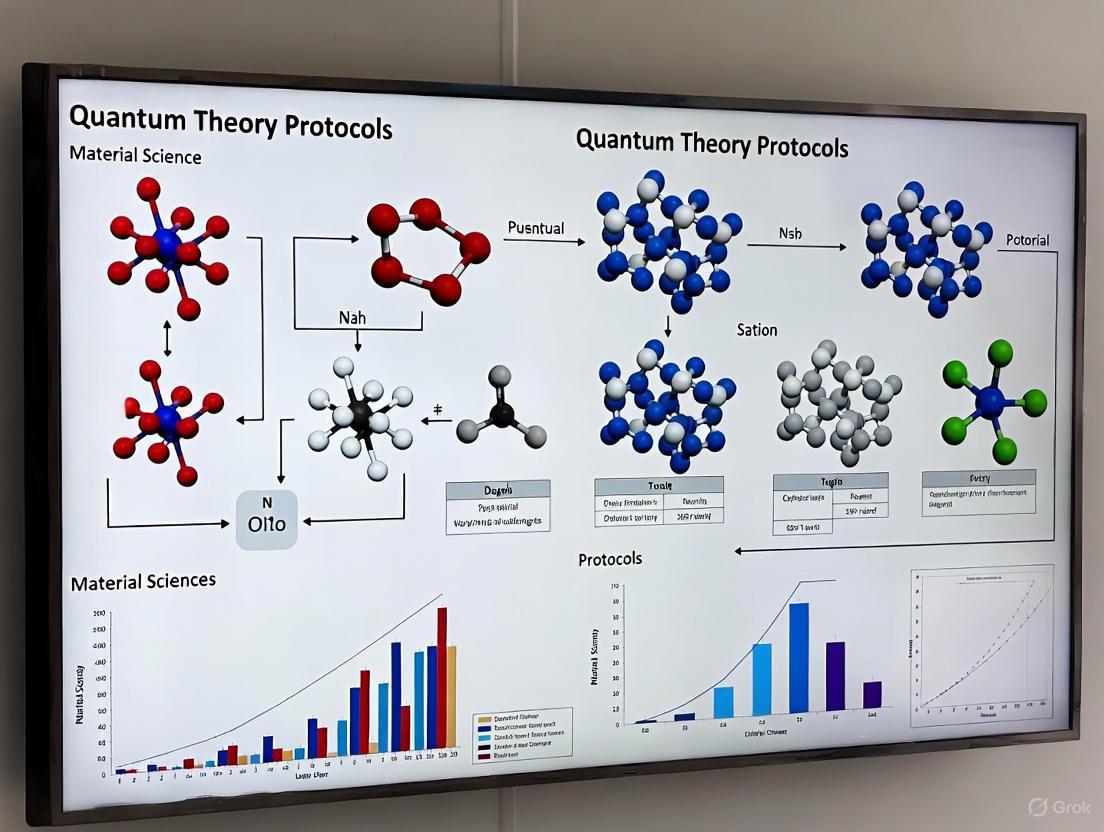
This article synthesizes the latest advancements in quantum computing protocols and their transformative impact on material science research.
Quantum Protocols for Material Science: From Foundational Theory to Biomedical Applications
Abstract
This article synthesizes the latest advancements in quantum computing protocols and their transformative impact on material science research. Tailored for researchers, scientists, and drug development professionals, it provides a comprehensive roadmap from foundational quantum principles to practical methodologies for designing novel materials. We explore core protocols for material simulation and discovery, tackle key optimization challenges in the NISQ era, and present rigorous validation frameworks. The review highlights immediate applications in drug development, from simulating molecular interactions for targeted therapies to designing porous materials for drug delivery and carbon capture, offering a critical resource for integrating quantum tools into the biomedical research pipeline.
Quantum Foundations: Core Principles for Material Discovery
This document provides a standardized set of application notes and experimental protocols for the synthesis and characterization of advanced quantum materials. The procedures are framed within the broader thesis that quantum theory provides the fundamental protocols for understanding and engineering material properties from the atomic scale up. These methodologies are designed for researchers investigating correlated electron systems, superconductivity, and quantum-enabled drug discovery platforms.
Experimental Protocols & Methodologies
Protocol 2.1: Nanoscale Magnetic Fluctuation Sensing with Entangled Nitrogen-Vacancy Centers
2.1.1 Objective: To directly measure local magnetic fields and their fluctuations at the nanoscale in quantum materials using a pair of entangled Nitrogen-Vacancy (NV) centers in diamond.
2.1.2 Principle: Two NV centers, implanted nanometers apart and prepared in an entangled quantum state, act as a correlated sensor pair. This entanglement provides a quantum advantage, allowing the system to detect magnetic field correlations and triangulate their source with high sensitivity, revealing phenomena invisible to single-point sensors [1].
2.1.3 Materials & Reagents:
- Substrate: High-purity, lab-grown single-crystal diamond.
- NV Center Creation: Nitrogen gas source.
- Measurement Apparatus: Confocal microscope with laser excitation (typically green laser), microwave antenna for quantum state control, and photon detection system [1].
2.1.4 Step-by-Step Procedure:
- NV Pair Creation: Implant nitrogen molecules into the diamond substrate with kinetic energy controlled to ~30,000 feet/second. This energy is tuned so molecules dissociate upon impact, embedding two nitrogen atoms approximately 10 nm apart and 20 nm below the surface [1].
- Sensor Characterization: Confirm the presence and properties of the NV pair via photoluminescence measurements under laser excitation.
- Quantum State Initialization: Illuminate the NV pair with a laser to initialize them into a specific quantum spin state.
- Entanglement Generation: Apply a precise sequence of microwave pulses to the entangled NV pair to create quantum correlation ("spooky action") between their electronic spins [1].
- Sample Proximity: Place the quantum material of interest (e.g., a 2D material flake) in close proximity (~nanometers) to the diamond sensor surface.
- Measurement Sequence:
- Expose the entangled NV centers to the local magnetic environment of the sample.
- Apply a second microwave pulse sequence to manipulate the quantum state based on magnetic field exposure.
- Read out the final quantum state via laser-induced fluorescence.
- Data Acquisition: The fluorescence signal reveals the joint quantum state of the NV pair, from which correlated magnetic noise and local field structures can be reconstructed in a single, highly sensitive measurement [1].
Protocol 2.2: Probing Unconventional Superconductivity in Magic-Angle Twisted Trilayer Graphene
2.2.1 Objective: To characterize the superconducting state and measure the superconducting gap structure in magic-angle twisted trilayer graphene (MATTG) to confirm unconventional superconductivity [2].
2.2.2 Principle: Combining electron tunneling spectroscopy with electrical transport measurements in the same device allows unambiguous identification of the superconducting gap only when the material exhibits zero electrical resistance [2].
2.2.3 Materials & Reagents:
- Material Stack: Trilayer graphene, hexagonal boron nitride (hBN) crystals for encapsulation.
- Substrate: Si/SiO₂ wafer.
- Fabrication: Electron-beam lithography system, metal (e.g., Cr/Au) for electrode deposition.
- Measurement: Cryogenic system with temperature control (<1K) and high magnetic field.
2.2.4 Step-by-Step Procedure:
- Material Fabrication (Twistronics):
- Mechanically exfoliate graphene and hBN flakes.
- Use a precision transfer stage to stack three graphene layers with a deliberate "magic angle" twist (typically ~1.6 degrees) and encapsulate the stack in hBN to preserve quality [2].
- Device Fabrication: Pattern electrical contacts (source, drain, gate) onto the MATTG heterostructure using electron-beam lithography and metal deposition.
- Cooling: Load the device into a cryostat and cool to milli-Kelvin temperatures to induce superconductivity.
- Simultaneous Transport & Tunneling Measurement:
- Step A (Transport): Apply a small current through the device and measure electrical resistance. Confirm the superconducting state by observing a drop to zero resistance.
- Step B (Tunneling): Simultaneously, use a separate circuit to measure the tunneling current between the MATTG and a separate electrode. This current is proportional to the density of electronic states.
- Gap Mapping: Record the tunneling conductance as a function of bias voltage while the material is in the superconducting state (confirmed by zero resistance).
- Analysis: The resulting conductance spectrum directly maps the superconducting gap. A distinct V-shaped gap profile is a key signature of unconventional superconductivity, differing from the U-shaped gap of conventional superconductors [2].
Protocol 2.3: Quantum-Integrated Chemistry for Drug Discovery Platforms
2.3.1 Objective: To utilize a hybrid quantum-classical computing platform for high-precision analysis of protein-ligand binding interactions, including the critical role of hydration water molecules [3] [4].
2.3.2 Principle: A classical computer handles initial molecular simulations, while a quantum computer leverages superposition and entanglement to solve the complex problem of optimally placing water molecules in protein binding pockets and modeling electronic interactions with high accuracy [3] [4].
2.3.3 Materials & Reagents:
- Software Platform: Quantum-Integrated Discovery Orchestrator (QIDO) or equivalent, integrating classical (e.g., QSP Reaction) and quantum (e.g., InQuanto) software [3].
- Computational Resources: Access to high-performance computing (HPC) cluster and a quantum computer (e.g., neutral-atom quantum computer like "Orion") [3] [4].
- Input Data: 3D structural data of the target protein (e.g., from protein data bank).
2.3.4 Step-by-Step Procedure:
- System Setup: Input the 3D atomic coordinates of the protein and candidate ligand into the QIDO platform.
- Classical Pre-processing: Run molecular dynamics or density functional theory (DFT) calculations on the classical HPC cluster to generate initial electron density data and protein flexibility profiles [3].
- Quantum Task Formulation: The platform automatically translates the key electronic structure problem—such as determining the optimal configuration of water molecules in a buried protein pocket or calculating the binding affinity—into a format suitable for quantum processing [3].
- Quantum Processing: Execute the algorithm on the quantum computer. The quantum processor evaluates countless possible molecular configurations simultaneously via quantum superposition to find the lowest-energy, most stable state [4].
- Result Post-processing: The output from the quantum computer is returned to the classical platform for analysis and conversion into actionable data, such as a precise binding energy value or a 3D visualization of the hydrated binding site.
- Validation: Compare the quantum-computed results with classical simulation results and available experimental data to validate the model's improved accuracy.
Data Presentation & Analysis
Table 1: Quantitative Metrics for Quantum Sensing and Superconductivity Protocols
| Protocol | Key Measurable | Typical Value / Signature | Significance / Interpretation |
|---|---|---|---|
| 2.1: NV Center Sensing | Sensor Spatial Resolution [1] | ~20 nm depth, ~10 nm pair separation | Probes the mesoscale regime between atomic and optical scales. |
| Sensitivity Gain [1] | ~40x greater than previous techniques | Enables detection of previously invisible magnetic fluctuations. | |
| 2.2: MATTG Superconductivity | Superconducting Gap Structure [2] | V-shaped profile | Key evidence of unconventional superconductivity, distinct from conventional U-shaped gap. |
| Critical Temperature (T_c) | ~3 K (example) | The temperature below which superconductivity occurs. | |
| 2.3: Quantum Chemistry | Calculation Type | Protein hydration analysis, Binding affinity [4] | Provides atomistic insight critical for drug design. |
| Computational Approach | Hybrid quantum-classical (e.g., QIDO platform) [3] | Makes quantum computing accessible for non-specialists in research environments. |
Table 2: The Scientist's Toolkit: Key Research Reagent Solutions
| Item / Solution | Function / Application | Protocol |
|---|---|---|
| Lab-Grown Diamond with NV Centers | Serves as the solid-state host for quantum sensors that detect magnetic fields. | 2.1 |
| Twisted van der Waals Heterostructures | Engineered materials (e.g., MATTG) that exhibit exotic quantum phenomena like unconventional superconductivity. | 2.2 |
| Hexagonal Boron Nitride (hBN) | An insulating crystal used to encapsulate and protect sensitive 2D materials from disorder. | 2.2 |
| Quantum Chemistry Software (InQuanto) | Software that translates chemical problems into algorithms executable on quantum computers. | 2.3 |
| Neutral-Atom Quantum Computer | A type of quantum hardware used to run complex molecular simulations efficiently. | 2.3 |
Workflow & System Visualization
Diagram 1: Quantum Sensor Fabrication & Measurement
Diagram 2: Superconductivity Analysis Workflow
Diagram 3: Quantum-Integrated Drug Discovery Platform
Quantum mechanics has revolutionized materials science by providing a fundamental framework for understanding and predicting the behavior of matter at the atomic and subatomic levels. This shift from classical physics enables researchers to describe and manipulate electronic structure, energy levels, bonding, and optical and magnetic properties with unprecedented precision [5]. The core principles of quantum theory—particularly entanglement and superposition—have evolved from theoretical curiosities to practical design tools, guiding the development of advanced materials with tailored properties [6]. The emerging "second quantum revolution" leverages these phenomena to create next-generation technologies, from fault-tolerant quantum computers to novel pharmaceuticals and highly efficient energy materials [6] [7]. This document outlines specific experimental protocols and applications for harnessing entanglement and superposition in materials research, providing a practical toolkit for scientists and drug development professionals.
Fundamental Concepts: Entanglement and Superposition
Quantum Superposition
Superposition is the fundamental principle that a quantum system can exist in multiple probabilistic states simultaneously until a measurement is performed [6]. For example, an electron within an atom does not occupy a single fixed position but rather exists as a "cloud" of probabilities, representing a range of possible positions and energies at once [6]. This phenomenon is mathematically described by the wavefunction (ψ), which encapsulates the probability amplitudes for all possible states of the system [5]. When a measurement occurs, this probabilistic cloud "collapses" to a single definite state [6]. In materials design, this property is exploited in quantum bits (qubits), the fundamental units of quantum information, which can represent a 0, 1, or any superposition of both states, enabling massively parallel computation for simulating molecular structures and material properties [6].
Quantum Entanglement
Entanglement is a profound quantum mechanical phenomenon where two or more particles become correlated in such a way that the quantum state of one particle cannot be described independently of the others, regardless of the physical distance separating them [5] [6]. This "spooky action at a distance," as Einstein termed it, creates non-local correlations that are crucial for quantum communication, ultra-precise sensors, and understanding correlated electron systems in materials like high-temperature superconductors [6] [8]. Measuring the state of one entangled particle instantly determines the state of its partner, a property that is harnessed in quantum cryptography and quantum networking [6].
Table 1: Key Characteristics of Quantum Phenomena in Materials
| Phenomenon | Fundamental Principle | Key Implication for Material Design |
|---|---|---|
| Superposition | Ability to exist in multiple states simultaneously [6] | Enables quantum computing for material simulation; allows electrons to occupy multiple energy states [6] |
| Entanglement | Non-local correlation between particles [5] [6] | Facilitates development of ultra-precise quantum sensors and understanding of superconductivity [6] [8] |
Experimental Protocols and Methodologies
Protocol 1: Investigating Spin Coherence in Molecular Systems for Quantum Information Science
1.1. Objective: To measure and extend electron spin coherence lifetimes in molecular systems by suppressing molecular vibrations, a critical requirement for functional quantum bits in computing and sensitive quantum sensors [6].
1.2. Background: Electron "spin coherence" refers to the ability of an electron's quantum spin state to retain information over time. This coherence rapidly decays due to environmental interactions, particularly molecular vibrations [6]. This protocol addresses the chemistry challenge of designing materials that protect this quantum state.
1.3. Materials and Equipment:
- Molecular Beam Epitaxy (MBE) System: For atomically precise growth of magnetically doped topological insulator thin films and heterostructures [6].
- Ultra-fast Lasers: For imaging materials under magnetic fields and initiating spin coherence [6].
- Advanced Solvents and Ligands: Specifically chosen to create a more rigid molecular structure to suppress natural atomic oscillations [6].
1.4. Procedure:
- Material Synthesis: Use molecular beam epitaxy (MBE) to grow high-purity, magnetically doped topological insulator films [6].
- Sample Preparation: Embed the synthesized material into a matrix of rigidifying solvents or ligands designed to dampen molecular vibrations [6].
- Laser Excitation: Apply ultra-fast laser pulses in the presence of a magnetic field to initialize a coherent electron spin state in the material [6].
- Imaging and Measurement: Use a state-of-the-art laser imaging technique (e.g., time-resolved magneto-optic imaging) to track the evolution and decay of the spin state over time.
- Vibrational Coupling Analysis: Analyze how the electron spin couples with the remaining molecular vibrations to understand the dominant decay pathways [6].
- Iterative Design: Use the results to inform the synthesis of new materials with optimized ligands and structures for longer coherence times.
1.5. Data Analysis:
- The primary metric is the spin coherence lifetime (T₂), measured from the laser experiment's decay signal.
- Compare T₂ values between materials with different rigidifying ligands to quantify the effectiveness of vibrational suppression [6].
Protocol 2: Probing Quantum Effects in Biological Systems (Quantum Neuroscience)
2.1. Objective: To experimentally demonstrate the existence of non-classical quantum effects (e.g., entanglement, superposition) within neural systems and their potential influence on brain function, such as signaling or cognition [7].
2.2. Background: The warm, wet, and noisy environment of biological systems was historically considered hostile to fragile quantum states. However, evidence of quantum effects in photosynthesis and bird navigation has spurred investigation into similar phenomena in the brain [7]. Google's Quantum Neuroscience Research Challenge is a prime example of the institutional push for this high-risk, high-reward research [7].
2.3. Materials and Equipment:
- Quantum Sensors: Nano-scale NMR, electron spin resonance, or advanced magnetometers to detect subtle quantum signals in biological tissue [7].
- 2D Electronic Spectroscopy Setup: To probe quantum coherence in biological molecules [7].
- Quantum Computing Hardware: For modeling how quantum mechanics might influence biological molecules involved in cognition [7].
2.4. Procedure:
- Hypothesis Formulation: Define a specific quantum effect to test (e.g., entanglement between nuclear spins in neural proteins).
- Sample Preparation: Isolate specific neural components (e.g., microtubules, ion channels) or use in-vitro cultured neuronal networks.
- Quantum Sensing: Deploy quantum sensors (e.g., nano-NMR) to monitor neural activity or specific molecules for signatures of quantum coherence or entanglement [7].
- Spectroscopic Analysis: Use techniques like 2D electronic spectroscopy to search for coherent energy transfer in neural components [7].
- Computational Modeling: Leverage quantum computers to simulate and model how quantum effects could functionally influence the target biological molecules [7].
- Behavioral Correlation: If possible, correlate the observed quantum signals with organism-level behavior or cognitive tasks.
2.5. Data Analysis:
- Analyze sensor data for statistical signatures that definitively prove non-classical correlations (e.g., violating Bell inequalities) [7].
- Computational models should generate testable predictions for subsequent experimental rounds.
Table 2: Experimental Approaches for Probing Quantum Biology
| Methodology | Application | Key Measurable Output |
|---|---|---|
| Nano-NMR / Electron Spin Resonance [7] | Detecting quantum spin states in neural proteins or tissues. | Signature of spin coherence/entanglement. |
| 2D Electronic Spectroscopy [7] | Probing coherent energy transfer in biomolecules. | Presence and lifetime of quantum coherence. |
| Quantum Computing Simulations [7] | Modeling quantum effects in cognitive molecules. | Predictions of functional impact on neural signaling. |
The Scientist's Toolkit: Research Reagent Solutions
Table 3: Essential Materials and Reagents for Quantum Material Experiments
| Research Reagent / Material | Function and Application |
|---|---|
| Magnetically Doped Topological Insulator Thin Films [6] | Serve as the platform for observing the Quantum Anomalous Hall (QAH) effect, a key phenomenon for topological quantum computing. |
| Rigidifying Solvents and Ligands [6] | Suppress molecular vibrations to protect electron spin coherence, extending quantum information lifetime in molecular qubits. |
| Atomically Precise Nanomaterials [6] | Provide a defined and controllable system for studying electron spin behavior and spin-vibration coupling. |
| Quantum Sensors (e.g., Nano-NMR) [7] | Enable high-precision detection of quantum signals (e.g., spin, magnetic fields) in biological and material samples. |
Application Notes: From Theory to Tangible Devices
Topological Quantum Computing
Traditional quantum computers based on superconducting qubits are highly susceptible to environmental noise and decoherence. Topological quantum computing presents a more robust alternative by encoding information not in local states, but in the global topology of a system [6]. This is analogous to a carpet's overall pattern remaining intact even if individual threads are pulled. The core material enabling this is the topological insulator, which acts as an insulator in its bulk but conducts electricity on its surface without resistance due to unique quantum states [6]. The Quantum Anomalous Hall (QAH) effect, realized in magnetically doped topological insulators, is a primary platform for this technology [6]. The current research challenge is to engineer these materials to maintain their quantum properties at higher temperatures for practical application [6].
Quantum Anomalies in Condensed Matter
Quantum anomalies are singularities that occur when symmetries preserved in classical physics are broken upon quantization, leading to quantum fluctuations [8]. Once purely theoretical constructs, these anomalies are now becoming tangible in condensed matter experiments. For instance, the scale anomaly is a prediction that can be tested in certain quantum materials [8]. The practical implication is that these theoretical peculiarities can be leveraged as new design principles for next-generation quantum technologies and devices. The key is using tools like materials informatics and AI to identify compounds where these anomaly-related signals are strong enough to be functionally useful [8].
Benchmarking Quantum vs. Classical Approaches for Molecular Simulation
Molecular simulation is a cornerstone of modern scientific research, enabling the prediction of chemical properties, reaction mechanisms, and material behaviors from first principles. For decades, classical computational methods have been the primary tool for these simulations, but they face significant challenges in accurately modeling large quantum systems due to the exponential scaling of computational resources required. The emergence of quantum computing offers a paradigm shift, potentially providing exponential speedups for simulating quantum mechanical systems. This application note provides a structured comparison of current quantum and classical approaches for molecular simulation, detailing quantitative benchmarks, experimental protocols, and essential research tools to guide researchers in selecting appropriate methodologies for their specific applications in material science and drug development.
Quantitative Performance Benchmarking
Accuracy and Performance Metrics
Table 1: Comparative Accuracy of Quantum vs. Classical Simulation Methods
| Method | System Tested | Accuracy Metric | Result | Qubits/Computational Resources |
|---|---|---|---|---|
| DMET-SQD (Hybrid Quantum-Classical) [9] | 18-hydrogen ring, cyclohexane conformers | Energy difference vs. classical benchmarks | Within 1 kcal/mol (chemical accuracy) | 27-32 qubits on IBM ibm_cleveland |
| DMET-SQD (Hybrid Quantum-Classical) [9] | Cyclohexane conformers | Relative energy ordering | Correct ordering preserved | 27-32 qubits on IBM ibm_cleveland |
| QC-AFQMC (IonQ) [10] | Complex chemical systems (carbon capture) | Atomic force calculations | More accurate than classical methods | Not specified |
| Quantum Annealing (D-Wave Advantage2) [11] | Quantum dynamics (8 models) | Success probability | Lower than classical VeloxQ | Thousands of physical qubits |
| Classical VeloxQ [11] | Quantum dynamics (8 models) | Success probability and time to solution | Superior to quantum annealers | GPU-accelerated classical solver |
Table 2: Hardware and Error Mitigation Comparison
| Platform/Method | Key Hardware Features | Error Mitigation Techniques | Connectivity/Topology |
|---|---|---|---|
| IBM Quantum [9] | Eagle processor, 27-32 qubits used | Gate twirling, dynamical decoupling | Not specified |
| D-Wave Advantage2 [11] | Thousands of physical qubits, analog operation | Native noise tolerance of quantum annealing | Zephyr topology (20 connections/qubit) |
| D-Wave Advantage [11] | Thousands of physical qubits, analog operation | Native noise tolerance of quantum annealing | Pegasus topology (15 connections/qubit) |
| IonQ [10] | Not specified | Algorithm-level error resilience | Not specified |
| Classical HCI [9] | High-performance computing | Not applicable | Not applicable |
Detailed Experimental Protocols
Hybrid Quantum-Classical DMET-SQD Protocol
Application: Simulation of complex molecular systems (hydrogen rings, cyclohexane conformers) [9]
Step-by-Step Workflow:
System Fragmentation:
- Partition the target molecule into smaller, chemically relevant fragments using Density Matrix Embedding Theory (DMET)
- This reduces the quantum resource requirements from thousands of qubits to tractable 27-32 qubit subsystems
Classical Pre-processing:
- Perform initial Hartree-Fock calculations to generate starting molecular orbitals
- Define the embedding problem and construct the impurity Hamiltonian for each fragment
Quantum Subsystem Resolution:
- Employ Sample-Based Quantum Diagonalization (SQD) on quantum hardware:
- Encode fragment configurations derived from Hartree-Fock calculations
- Execute quantum circuits on IBM's Eagle processor (ibm_cleveland)
- Use S-CORE iterative refinement to maintain correct particle number and spin characteristics
- Apply error mitigation techniques including gate twirling and dynamical decoupling
- Employ Sample-Based Quantum Diagonalization (SQD) on quantum hardware:
Classical Post-processing:
- Project quantum results into subspace for solving the Schrödinger equation
- Reconstruct full molecular properties from fragment solutions
- Self-consistent optimization of the embedding potential
Validation and Benchmarking:
- Compare energy differences against classical Coupled Cluster [CCSD(T)] and Heat-Bath Configuration Interaction (HCI) benchmarks
- Validate relative conformational energies (e.g., chair, boat, half-chair, twist-boat cyclohexane conformers)
- Assess convergence with increasing quantum samples (8,000-10,000 configurations recommended)
Quantum Annealing for Quantum Dynamics Protocol
Application: Solving quantum-inspired dynamics, simulating quantum gates and non-Hermitian systems [11]
Step-by-Step Workflow:
Problem Formulation:
- Encode the real-time propagator of an n-qubit Hamiltonian into a Quadratic Unconstrained Binary Optimization (QUBO) problem using parallel-in-time encoding
- Select from eight representative models: single-qubit rotations, multi-qubit entangling gates (Bell, GHZ, cluster), and PT-symmetric non-Hermitian generators
Hardware Embedding:
- For D-Wave quantum annealers: map QUBO problem to hardware topology using minor embedding
- Use D-Wave's heuristic minorminer tool for Pegasus (Advantage) or Zephyr (Advantage2) topology matching
- Account for hardware constraints including sparse connectivity and analog control errors
Execution:
- Quantum Annealing: Execute on D-Wave Advantage or Advantage2 systems with annealing schedule defined by A(s) and B(s) functions in HIsing = A(s)/2 HD + B(s)/2 H_P
- Classical Comparison: Execute identical QUBO instances on VeloxQ (GPU-accelerated) and Simulated Annealing solvers
Performance Metrics:
- Track success probability (likelihood of finding ground state)
- Measure time to solution (TTS) for direct quantum-classical comparison
- Analyze scaling behavior with problem size
Error Analysis:
- Characterize impact of thermal noise, control errors, and embedding overhead
- Compare performance across hardware generations (Advantage vs. Advantage2)
Research Reagents and Computational Tools
Table 3: Essential Research Toolkit for Quantum Molecular Simulation
| Tool/Platform | Type | Primary Function | Key Features |
|---|---|---|---|
| IBM Quantum Systems [9] | Quantum Hardware | Execution of quantum circuits | Eagle processor, 27-32 qubit capacity, gate-based |
| D-Wave Advantage/Advantage2 [11] | Quantum Annealer | Solving QUBO problems | Thousands of physical qubits, Pegasus/Zephyr topology |
| IonQ Forte [10] | Quantum Hardware | Quantum chemistry simulations | QC-AFQMC algorithm implementation |
| VeloxQ [11] | Classical Solver | Solving QUBO problems | GPU-accelerated, physics-inspired heuristic |
| Qiskit [9] | Software Library | Quantum circuit design and execution | SQD algorithm implementation, error mitigation |
| Tangelo [9] | Software Library | DMET framework implementation | Quantum-classical hybrid algorithm support |
Workflow Visualization: Quantum Annealing for Dynamics
Critical Analysis and Research Implications
The benchmarking data reveals that hybrid quantum-classical approaches currently represent the most promising near-term application of quantum computing to molecular simulation. The DMET-SQD method demonstrates that chemical accuracy (within 1 kcal/mol) can be achieved with as few as 27-32 qubits by strategically dividing the computational workload between quantum and classical resources [9]. This approach effectively circumvents current hardware limitations while providing a pathway to practical quantum advantage as devices improve.
Quantum annealing platforms show rapid performance improvements between hardware generations, with D-Wave Advantage2 delivering an order of magnitude higher success probability than its predecessor [11]. However, specialized classical solvers like VeloxQ currently maintain superior performance on the same problem instances, highlighting both the maturity of classical optimization algorithms and the remaining challenges for quantum hardware. The establishment of standardized benchmarking suites for quantum dynamics simulation enables objective tracking of hardware progress.
For research applications in drug discovery and materials science, these developments suggest a strategic approach: quantum computing is ready for exploration in specific subproblems where classical methods face fundamental limitations, particularly in strongly correlated electron systems and quantum dynamics. The integration of quantum simulations into established workflows—such as using quantum-computed force calculations to enhance classical molecular dynamics simulations—represents a practical near-term application [10]. As quantum hardware continues to advance with improving error rates, qubit counts, and connectivity, these benchmarking protocols provide essential metrics for evaluating progress toward unambiguous quantum advantage in molecular simulation.
The global pursuit of quantum technologies represents a paradigm shift in computational science and materials research. By 2025, worldwide government investments in quantum technologies have exceeded $55.7 billion, with the global quantum technology market projected to reach $106 billion by 2040 [12]. This substantial financial commitment underscores the recognition that quantum computing promises revolutionary capabilities for simulating complex material systems, optimizing molecular structures, and accelerating the discovery of novel compounds with tailored properties. The International Quantum Science Initiative for 2025 establishes a coordinated framework to leverage these emerging capabilities toward addressing critical challenges in materials science and pharmaceutical development, positioning quantum technologies as essential tools for next-generation scientific discovery.
The strategic integration of quantum computing into materials science enables researchers to overcome fundamental limitations of classical computational methods. Quantum systems can efficiently simulate quantum mechanical phenomena—a task that remains intractable for even the most powerful supercomputers when dealing with complex molecular structures. This capability is particularly valuable for modeling electron correlations, predicting reaction pathways, and understanding emergent properties in condensed matter systems. As nations worldwide escalate their quantum investments, the 2025 initiative establishes standardized protocols and benchmarks to ensure that these diverse international efforts converge toward complementary research objectives with shared methodologies for validation and knowledge transfer.
Global Quantum Investment and Strategic Priorities
International commitment to quantum technology development has accelerated dramatically, with numerous nations establishing ambitious roadmaps and funding mechanisms. The following quantitative analysis summarizes the global investment landscape for quantum initiatives in 2025, providing context for the resource allocation supporting the experimental protocols detailed in subsequent sections.
Table 1: National Quantum Initiative Funding and Strategic Focus Areas (2025)
| Country/Region | Total Investment | Primary Research Focus | Key Institutions/Initiatives |
|---|---|---|---|
| European Union | €1 billion+ (over 10 years) [12] | Quantum computing, Quantum communication infrastructure | Quantum Flagship, EuroHPC, EuroQCI |
| China | ~$15 billion (estimated) [12] | Quantum communications, Quantum computing prototypes | National venture capital fund ($138B for AI, quantum, hydrogen) [12] |
| France | €1.8 billion (5-year plan) [12] | Quantum technologies | National quantum strategy |
| Canada | CA$1 billion+ (past decade) + CA$360M National Quantum Strategy [12] | Photonic quantum computing, Commercialization | National Quantum Strategy, Xanadu, Quantum Algorithms Institute |
| Australia | AU$893 million (public investment) [12] | Quantum computation, Communication | CQC2T, EQUS, National Quantum Strategy |
| Denmark | 1 billion DKK (5 years) [12] | Quantum computer development | Quantum Innovation Centre (Qubiz), ATOM Computing collaboration |
| Finland | €70 million (2024-2027) [12] | Quantum processor development | VTT, IQM (300-qubit target) |
| Austria | €107 million [12] | Quantum research and technology | Quantum Austria (NextGenerationEU) |
| Brazil | BRL60 million (initial) + BRL31 million [12] | Quantum technologies competence center | Embrapii, São Paulo Research Foundation |
The tabulated data reveals distinct strategic priorities across the global research ecosystem. European initiatives emphasize infrastructure development through the EuroQCI for secure communications and the EuroHPC consortium for deploying quantum computers across member states [12]. North American efforts, particularly in Canada, highlight public-private partnerships to commercialize technologies, exemplified by the CA$40 million investment in Xanadu to develop photonic-based quantum computers [12]. Meanwhile, China's approach combines substantial state funding with recently announced venture capital mechanisms to mobilize additional private investment [12].
These strategic priorities directly influence the direction of materials science research, with different nations leveraging their specialized capabilities. Nations with strengths in quantum hardware, such as Finland's collaboration with IQM for 300-qubit systems [12], facilitate research requiring increasingly complex quantum simulations. Countries emphasizing quantum communication infrastructure, like Austria through its Quantum Austria initiative [12], enable secure distributed quantum computing applications that may eventually allow materials researchers to access specialized quantum resources across national boundaries.
Quantum Data Encoding Protocols for Materials Simulation
The translation of classical materials data into quantum-representable formats constitutes the foundational step in quantum-enhanced materials research. Various encoding techniques transform classical information—such as molecular structures, electron densities, or material properties—into quantum states that can be processed efficiently [13]. The selection of appropriate encoding methods directly impacts the accuracy, resource requirements, and computational efficiency of quantum simulations for materials science applications.
Comparative Analysis of Encoding Methodologies
Table 2: Classical-to-Quantum Data Encoding Techniques for Materials Science Applications
| Encoding Method | Technical Principle | Materials Science Applications | Resource Requirements | Performance Considerations |
|---|---|---|---|---|
| Basis Encoding | Direct binary mapping to computational basis states | Crystalline structures, lattice configurations | Qubits scale linearly with input size | Limited representation efficiency for continuous variables |
| Angle Encoding | Classical values stored in qubit rotation angles | Molecular torsion angles, phonon spectra | Constant qubit count with circuit depth increase | Suitable for continuous material properties |
| Amplitude Encoding | Classical data stored in state vector amplitudes | Electron wavefunctions, density matrices | Exponential compression of data representation | Preparation circuits can be computationally expensive |
| Quantum Feature Maps | Kernel-based transformation to quantum Hilbert space | Material classification, property prediction | Varies with kernel complexity | Enables quantum machine learning applications |
Basis encoding represents the most straightforward approach, mapping classical binary strings directly to quantum basis states. For materials science applications, this technique proves valuable for representing discrete configurations, such as atomic positions in crystal lattices or spin arrangements in magnetic materials [13]. Angle encoding (also known as qubit encoding) provides a more efficient approach for continuous material properties by storing classical data values in the rotation angles of qubits, making it particularly suitable for representing spectroscopic data, stress-strain relationships, or thermodynamic variables [13]. The most compact representation comes from amplitude encoding, which stores a normalized classical vector in the state amplitudes, enabling an exponential reduction in qubit requirements—highly valuable for representing complex electron wavefunctions or material response functions [13].
Experimental Protocol: Angle Encoding for Molecular Geometries
Objective: Encode molecular structural parameters into quantum states for subsequent energy calculation via variational quantum algorithms.
Materials and Equipment:
- Classical preprocessing unit
- Quantum processing unit (QPU) with parameterized gate operations
- State tomography or measurement apparatus
Procedure:
- Molecular Parameter Extraction:
- From the target molecular structure (e.g., drug candidate molecule), identify key structural parameters including bond lengths (r), bond angles (θ), and torsion angles (φ).
- Normalize parameters to the range [0, π] for rotation angle compatibility.
Qubit Initialization:
- Initialize n qubits in the |0⟩^⊗n state, where n corresponds to the number of structural parameters to encode.
- Apply Hadamard gates to each qubit to create uniform superposition states: H|0⟩ = (|0⟩ + |1⟩)/√2.
Parameterized Rotation:
- For each structural parameter xi, apply a Y-rotation gate to the corresponding qubit: Ry(xi) = e^{-i(xi/2)Y}.
- For multi-dimensional correlations, apply controlled rotation gates to entangle parameters representing spatially proximate molecular features.
Verification and Validation:
- Perform quantum state tomography on a subset of executions to verify correct encoding.
- Compare classical reconstruction with input parameters to validate encoding fidelity.
- For large-scale molecules, implement segmentation protocol with multiple quantum registers.
Technical Notes: The circuit depth for angle encoding scales linearly with the number of parameters, making it suitable for near-term quantum devices. For molecular systems with symmetry constraints, incorporate appropriate rotation symmetries to reduce parameter counts. Error mitigation techniques should be employed to address coherent errors in rotation gates.
Quantum Algorithmic Frameworks for Materials Discovery
Quantum algorithms offer transformative potential for materials science by enabling efficient simulation of quantum mechanical phenomena and accelerating the discovery of novel materials. Several algorithmic frameworks have emerged as particularly promising for addressing core challenges in computational materials science and drug development.
Quantum Approximate Optimization Algorithm (QAOA) for Molecular Conformation
The Quantum Approximate Optimization Algorithm has demonstrated significant potential for solving complex optimization problems relevant to molecular conformation prediction and protein folding landscapes. Recent benchmarking studies have evaluated QPU performance on QAOA implementations, with Quantinuum systems showing superior performance metrics, including all-to-all qubit connectivity crucial for complex molecular graphs [14].
Experimental Protocol: Molecular Conformation Optimization
Objective: Determine the lowest-energy conformation of a molecular system using QAOA.
Problem Mapping:
- Represent molecular structure as a graph G = (V, E) where vertices V correspond to atoms and edges E represent bonds or spatial interactions.
- Encode conformational degrees of freedom (torsion angles) as binary variables.
- Formulate cost Hamiltonian H_C representing molecular energy function with terms for:
- Bond stretching energy
- Angle bending energy
- Torsional energy
- Van der Waals interactions
- Electrostatic interactions
Circuit Implementation:
- Prepare initial state |ψ₀⟩ = |+⟩^⊗n using Hadamard gates on all qubits.
- Apply p alternating layers of cost and mixer unitaries:
- Cost unitary: UC(γ) = e^{-iγHC}
- Mixer unitary: UM(β) = e^{-iβHM} with HM = Σj X_j
- Optimize parameters (γ, β) using classical optimizers (gradient-based or gradient-free).
- Measure expectation value ⟨ψ|H_C|ψ⟩ to evaluate solution quality.
Technical Considerations: Performance varies significantly across QPU architectures. Recent benchmarking shows Quantinuum systems achieving superior performance in full connectivity, a critical feature for molecular optimization problems [14]. For near-term applications, limit problem sizes to 10-20 qubits with shallow circuit depths (p < 10) to maintain coherence throughout computation.
Variational Quantum Eigensolver (VQE) for Electronic Structure
The Variational Quantum Eigensolver has become the leading algorithm for determining ground-state energies of molecular systems, with direct applications to drug candidate evaluation and catalytic material design.
Experimental Protocol: Electronic Structure Calculation
Objective: Estimate ground-state energy of molecular systems for drug binding affinity prediction.
Procedure:
- Hamiltonian Formulation:
- Express molecular Hamiltonian in second quantization: H = Σ{pq} h{pq} ap^† aq + 1/2 Σ{pqrs} h{pqrs} ap^† aq^† ar as
- Apply Jordan-Wigner or Bravyi-Kitaev transformation to map to qubit operators: H = Σj cj Pj where Pj are Pauli strings.
Ansatz Selection:
- For near-term devices, employ hardware-efficient ansatzes with layered rotation and entanglement blocks.
- For higher accuracy, use chemically inspired ansatzes (UCCSD) with adaptive variants to reduce circuit depth.
Measurement Protocol:
- Decompose expectation value calculation into separate measurements of Pauli terms.
- Utilize qubit-wise commuting groups to reduce measurement overhead.
- Implement measurement error mitigation techniques.
Validation Metrics:
- Compare computed dissociation curves with classical reference data (CCSD(T)).
- Calculate drug-receptor binding energies for known pharmaceutical compounds.
- Evaluate computational cost scaling with system size.
Visualization of Quantum Materials Research Workflows
The integration of quantum computational methods into materials science requires well-defined workflows that leverage the respective strengths of classical and quantum processing units. The following diagrams illustrate standardized protocols for quantum-enhanced materials discovery.
Quantum Materials Simulation Workflow
Quantum-Enhanced Drug Discovery Pipeline
Research Reagent Solutions for Quantum Experiments
The experimental implementation of quantum protocols for materials science requires specialized resources and computational tools. The following table details essential components of the research infrastructure supporting quantum materials investigations.
Table 3: Essential Research Reagents and Resources for Quantum Materials Experiments
| Resource Category | Specific Examples | Function in Quantum Experiments | Implementation Considerations |
|---|---|---|---|
| Quantum Processing Units (QPUs) | Quantinuum H-series [14], IBM Quantum Systems [14] | Execution of quantum circuits for material simulation | Variable qubit counts (20-100+), connectivity architectures, gate fidelities (>99.9% for high-precision) |
| Quantum Data Encoding Libraries | Basis, Angle, Amplitude encoding modules [13] | Transformation of material data to quantum states | Encoding efficiency, qubit requirements, circuit depth constraints |
| Error Mitigation Tools | Zero-noise extrapolation, measurement error mitigation [14] | Enhancement of result accuracy under noisy conditions | Resource overhead, scalability to larger systems |
| Material-Specific Ansatzes | Hardware-efficient, UCCSD, QAOA parameterized circuits [14] | Problem-specific wavefunction approximation | Balance between expressibility and trainability |
| Classical-QQuantum Hybrid Controllers | Custom compilation stacks, quantum-classical interfaces | Management of variational algorithm execution | Communication latency, parameter optimization efficiency |
The selection of appropriate QPUs represents a critical consideration, with performance varying significantly across platforms. Recent independent benchmarking studies evaluating 19 different QPUs on the Quantum Approximate Optimization Algorithm identified Quantinuum systems as delivering superior performance, particularly in full connectivity essential for complex materials simulations [14]. The Quantinuum H-series achieves two-qubit gate fidelities exceeding 99.9%, enabling more complex quantum simulations of material properties with reduced error accumulation [14].
Quantum data encoding libraries provide the essential interface between classical material descriptors and quantum-representable formats. The selection of encoding strategy involves trade-offs between qubit efficiency, circuit complexity, and expressibility [13]. Basis encoding offers conceptual simplicity but limited efficiency for continuous material properties, while amplitude encoding provides exponential compression at the cost of more complex state preparation circuits [13]. For near-term applications on limited-qubit devices, angle encoding often provides the most practical balance for representing continuous material parameters such as bond lengths, torsion angles, or spectroscopic features.
Implementation Challenges and Future Directions
Despite significant progress, the practical application of quantum computing to materials science faces several substantial challenges that guide research priorities for the 2025 initiative. Qubit coherence times, gate fidelities, and error rates remain primary concerns for achieving quantum advantage in materials simulation [14]. Current state-of-the-art systems achieve two-qubit gate fidelities exceeding 99.9% [14], yet these levels must be further improved to execute the deep circuits required for complex molecular simulations.
Scalability represents another critical challenge, as the number of qubits required for practical materials problems often exceeds current hardware capabilities. The 2025 quantum initiatives address this through parallel development paths, including Quantinuum's plan to deploy a 100-logical-qubit system by 2027 [14] and Finland's target to scale quantum computers to 300 qubits [12]. These hardware advancements must be accompanied by improved algorithmic efficiency through better ansatz design, measurement reduction techniques, and error mitigation strategies tailored to materials science applications.
The integration of quantum computing with artificial intelligence represents a particularly promising direction for materials research. Quantum machine learning models can potentially identify complex patterns in material property databases, predict synthesis pathways, and guide quantum simulations toward the most promising regions of chemical space [13]. As quantum hardware continues to mature, the 2025 initiative prioritizes the development of hybrid quantum-classical frameworks that leverage the respective strengths of both paradigms for accelerated materials discovery.
The International Quantum Science Initiative for 2025 establishes a comprehensive framework for leveraging quantum technologies to advance materials science and pharmaceutical development. Through standardized protocols for quantum data encoding, algorithmic implementation, and validation metrics, the initiative enables researchers worldwide to contribute to a collective knowledge base while utilizing diverse hardware platforms. The substantial global investments in quantum technologies—exceeding $55.7 billion in public funding [12]—reflect the recognized potential of these approaches to transform materials discovery and optimization.
As quantum hardware continues to evolve toward greater qubit counts, improved connectivity, and enhanced fidelity, the protocols outlined in this document provide a foundation for incremental advancement toward increasingly complex materials simulations. The integration of these quantum tools with classical computational methods, experimental validation, and machine learning approaches creates a multidisciplinary ecosystem poised to address critical challenges in energy storage, drug development, and advanced material design. Through coordinated international effort and shared methodological standards, the quantum materials science community is positioned to translate these emerging capabilities into practical advances with significant scientific and societal impact.
Quantum Toolbox: Protocols for Simulating and Designing Materials
The discovery and development of novel materials are fundamental to technological progress, from creating more efficient energy storage systems to designing new pharmaceuticals. However, the computational simulation of quantum mechanical systems, which is central to understanding material properties, remains a formidable challenge for classical computers due to the exponential scaling of resources required with system size [15]. Quantum computing offers a paradigm shift by providing a native environment for simulating quantum phenomena. Within the Noisy Intermediate-Scale Quantum (NISQ) era, characterized by quantum processors with limited qubit counts and error-prone operations, specific algorithms have emerged as particularly promising for material science applications [16]. This application note details the implementation, protocols, and practical considerations for three leading quantum algorithms: the Variational Quantum Eigensolver (VQE), the Quantum Approximate Optimization Algorithm (QAOA), and Quantum Annealing.
Algorithmic Foundations and Comparative Analysis
Core Algorithm Principles
Variational Quantum Eigensolver (VQE) is a hybrid quantum-classical algorithm designed to find the ground state (lowest energy) of a quantum system, such as a molecule or material. Its operation is based on the variational principle, where a parameterized quantum circuit (ansatz) prepares a trial wavefunction. A classical optimizer iteratively adjusts these parameters to minimize the expectation value of the system's Hamiltonian, which corresponds to the ground state energy [17] [16]. VQE is particularly well-suited for NISQ devices as it can be resilient to certain types of noise and does not require deep quantum circuits [18].
Quantum Approximate Optimization Algorithm (QAOA) is another hybrid algorithm that tackles combinatorial optimization problems by encoding them into a cost Hamiltonian. The algorithm alternates between applying a phase separation operator based on this cost Hamiltonian and a mixing operator. A classical optimizer tunes the parameters controlling the application time of these operators to minimize the expected energy of the cost Hamiltonian [19] [20]. In material science, QAOA can be applied to problems like determining the optimal configuration of atoms in a complex material or solving multi-objective optimization problems in material design [19].
Quantum Annealing (QA) is a metaheuristic quantum algorithm inspired by classical simulated annealing. It leverages quantum fluctuations, particularly quantum tunneling, to navigate the energy landscape of an optimization problem. The system is initialized in a simple ground state of a known Hamiltonian and is slowly evolved to the problem Hamiltonian, whose ground state encodes the solution to the optimization problem [21] [22]. Quantum annealers, such as those built by D-Wave, are specialized hardware devices that execute this process and are naturally applied to problems formulated as Quadratic Unconstrained Binary Optimization (QUBO) [21].
Comparative Performance and Application Scope
Table 1: Comparative analysis of VQE, QAOA, and Quantum Annealing for material science applications.
| Feature | VQE | QAOA | Quantum Annealing |
|---|---|---|---|
| Primary Use Case | Ground state energy estimation, quantum chemistry [17] [16] | Combinatorial optimization, approximate solutions [19] [20] | Combinatorial optimization, sampling energy landscapes [21] [22] |
| Computational Paradigm | Hybrid quantum-classical [16] | Hybrid quantum-classical [20] | Primarily quantum, with classical pre/post-processing [21] |
| Typical Problem Formulation | Molecular Hamiltonian [15] | QUBO/Ising Model [19] | QUBO/Ising Model [21] |
| Hardware Suitability | Gate-based NISQ devices [16] | Gate-based NISQ devices [19] | Specialized annealing processors (e.g., D-Wave) [22] |
| Key Strength | High accuracy for small molecules, noise-resilient [18] [16] | Flexibility in problem mapping, theoretical performance guarantees [19] | Rapid sampling for specific problem classes, demonstrated scalability [21] [22] |
| Reported Performance Example | Achieved energy minima near -8.0 for model systems [23] | Converged in 19 iterations to Hamiltonian min of -4.3 for MAXCUT [23] | Demonstrated quantum supremacy for a materials simulation, solving in minutes a task estimated to take a supercomputer a million years [21] [22] |
Table 2: Summary of classical optimizer performance with quantum algorithms, based on a renewable energy system study [23].
| Classical Optimizer | Associated Quantum Algorithm | Performance Notes |
|---|---|---|
| NELDER-MEAD | VQE | Attained minima near -8.0 in 125 iterations [23] |
| SLSQP | QAOA | Converged in 19 iterations to a Hamiltonian minimum of -4.3 [23] |
| AQGD | QAOA | Reached convergence in just 3 iterations at -1.0 [23] |
Experimental Protocols
Protocol for Molecular Ground State Energy Calculation using VQE
Application Note: This protocol is designed for calculating the ground state energy of a molecule, a critical step in predicting chemical reactivity and stability in material science and drug discovery [15] [16].
Required Research Reagents & Solutions:
- Quantum Hardware/Simulator: A gate-based quantum computer or simulator (e.g., via IBM Quantum, Amazon Braket, or Azure Quantum).
- Classical Optimizer: A classical optimization routine (e.g., NELDER-MEAD, SLSQP, or COBYLA) [23].
- Quantum Chemistry Package: Software like PySCF or OpenFermion to generate the molecular Hamiltonian.
- Parameterized Quantum Circuit (Ansatz): A pre-defined circuit architecture, such as the Unitary Coupled Cluster (UCC) ansatz or a hardware-efficient ansatz.
Procedure:
- Problem Formulation: Begin by selecting a target molecule (e.g., H₂ or LiH) and defining its geometry and basis set. Use the quantum chemistry package to compute the second-quantized molecular Hamiltonian.
- Qubit Mapping: Transform the fermionic Hamiltonian into a qubit Hamiltonian using a mapping technique such as the Jordan-Wigner or Bravyi-Kitaev transformation.
- Ansatz Selection and Initialization: Choose an appropriate ansatz and initialize its parameters, either randomly or based on a heuristic.
- Hybrid Loop Execution: a. Quantum Execution: Prepare the trial state by running the parameterized quantum circuit on the quantum processor. b. Expectation Value Estimation: Measure the quantum state repeatedly to estimate the expectation value of the Hamiltonian. c. Classical Optimization: Feed the estimated energy to the classical optimizer. The optimizer calculates a new set of parameters to minimize the energy. d. Iteration: Repeat steps (a) through (c) until the energy converges to a minimum within a predefined tolerance.
The following workflow diagram illustrates the hybrid nature of the VQE process:
Protocol for Material Design Optimization using QAOA
Application Note: This protocol applies QAOA to a multi-objective optimization problem relevant to material design, such as finding a Pareto-optimal set of configurations that balance competing properties like strength and weight [19].
Required Research Reagents & Solutions:
- Quantum Hardware/Simulator: A gate-based quantum computer supporting the necessary connectivity.
- Classical Optimizer: An optimizer suitable for QAOA parameter landscapes (e.g., SLSQP, BFGS) [23] [19].
- Problem Instance: A well-defined multi-objective combinatorial problem, such as a weighted MAX-CUT problem on a graph representing atomic interactions.
Procedure:
- Problem Encoding: Formulate the multi-objective material design problem as a QUBO or a Hamiltonian. For multiple objectives, a common approach is to use a weighted sum or a randomized scalarization technique to combine them into a single cost function [19].
- Circuit Construction: Construct the QAOA circuit with a specified number of layers (p). Each layer consists of the problem unitary (phase separator) and the mixer unitary.
- Parameter Training & Transfer: a. Optimize the QAOA parameters (γ and β) for a smaller instance of the problem using a classical simulator and a basin-hopping optimization algorithm [19]. b. Transfer the optimized parameters to a larger problem instance to avoid the computational bottleneck of training on quantum hardware [19].
- Execution and Sampling: Run the QAOA circuit with the transferred parameters on the quantum computer. Sample from the output state multiple times to obtain a distribution of candidate solutions.
- Pareto Front Approximation: Analyze the sampled solutions to identify non-dominated points and approximate the Pareto front, which describes the optimal trade-offs between the competing objectives.
Protocol for Energy Landscape Sampling using Quantum Annealing
Application Note: This protocol uses quantum annealing to sample low-energy configurations of a material system, such as finding stable states of a spin glass model or low-energy conformations of a molecular lattice [21] [22].
Required Research Reagents & Solutions:
- Quantum Annealer: Access to a quantum annealing processor (e.g., D-Wave system).
- Minor-Embedding Tool: Software to map the problem graph onto the physical qubit topology of the annealer.
- QUBO Formulation: The material science problem defined as a QUBO or Ising model.
Procedure:
- QUBO Formulation: Define the energy function of the material system as a QUBO problem. For example, in a spin glass, the interactions between spins can be directly mapped to the QUBO coefficients [21].
- Minor-Embedding: Map the logical QUBO problem onto the physical qubits of the annealing hardware. This step is non-trivial and addresses the limited connectivity between qubits on the processor [21].
- Annealing Cycle: Program the embedded problem into the annealer and execute the annealing process. The system evolves from an initial quantum superposition to a final state that, ideally, represents a low-energy configuration of the problem Hamiltonian.
- Resampling: Repeat the anneal-readout cycle many times (e.g., thousands of times) to collect a statistical sample of solutions due to the probabilistic nature of the process [21].
- Solution Analysis: Read out the classical states of the qubits and analyze the distribution of solutions to identify the lowest energy states and understand the structure of the energy landscape.
The following workflow summarizes the end-to-end process for solving a problem on a quantum annealer:
The Scientist's Toolkit
Table 3: Essential resources and software for implementing quantum algorithms in material science research.
| Tool Category | Example Tools | Function in Research |
|---|---|---|
| Quantum Cloud Platforms | IBM Quantum, Amazon Braket, Microsoft Azure Quantum, D-Wave Leap [16] | Provides cloud-based access to real quantum devices and high-performance simulators for protocol execution. |
| Quantum SDKs & Libraries | Qiskit, Cirq, PennyLane, D-Wave Ocean [16] | Offers pre-built functions for algorithm construction, circuit compilation, and result analysis. |
| Classical Optimizers | COBYLA, SLSQP, NELDER-MEAD, BFGS [23] | The classical component in VQE and QAOA that adjusts parameters to minimize the cost function. |
| Quantum Chemistry Packages | PySCF, OpenFermion, Psi4 | Generates the molecular Hamiltonians and performs reference calculations for validation in VQE experiments. |
| Problem Formulation Tools | D-Wave Ocean, Qiskit Optimization | Aids in converting real-world material science problems into QUBO or Ising model formulations. |
The design of multivariate (MTV) porous materials represents a significant frontier in materials science, offering the potential for synergistic functionalities that exceed the sum of their individual components. These materials incorporate multiple distinct chemical building units within the same framework, creating unique structural complexities based on diverse spatial arrangements of multiple building block combinations [24]. However, the exponentially increasing design complexity of these materials poses substantial challenges for accurate ground-state configuration prediction and design using classical computational methods. With increasing numbers of metal nodes and linkers, structural complexity scales exponentially, making it impossible to predesign MTV porous materials for large numbers of building blocks [24]. For instance, in an hcb topology containing 32 linker sites, the inclusion of eight distinct MTV linkers at a fixed ratio leads to approximately 7.8 quadrillion unique combinatorial structures [24]. This extensive configuration space makes exploration with existing classical methods intractable, necessitating novel computational approaches.
Quantum computing offers a promising solution to this combinatorial optimization challenge. Unlike classical computers, quantum computers leverage quantum bits (qubits) that possess unique properties such as superposition and entanglement, enabling quantum algorithms to explore vast solution spaces in parallel [24]. This capability makes quantum computing particularly well-suited for solving NP-hard combinatorial optimization problems, including the design of MTV porous materials where the number of possible configurations grows exponentially with increasing building blocks and topological sites [24]. This case study presents a comprehensive framework for applying quantum computing to MTV porous material design, providing detailed protocols, validation methodologies, and implementation guidelines for researchers pursuing quantum-enabled materials discovery.
Theoretical Framework and Quantum Hamiltonian Design
Qubit Representation for MTV Porous Materials
To effectively utilize quantum computers for navigating the vast material space of MTV porous frameworks, the reticular nature of the porous material must be mapped into qubit representations. In the developed encoding scheme, the number of qubits (nqubits) is determined by the product of (1) the number of linker types (|t|) and (2) the number of linker sites in a defined unit cell (Ni), such that nqubits = |t| × Ni [24].
Each qubit represents whether a specific linker type occupies a particular linker site and is labeled as qi^t, where the subscript i indicates the linker site, and the superscript t denotes the type of linker [24]. As a test case, the encoding method was applied to a Cu-THQ-HHTP MOF system, a two-dimensional MOF containing eight linker sites and two linker types (THQ and HHTP), requiring a total allocation of 16 qubits labeled as q0^THQ, q0^HHTP, ..., q7^THQ, q7^HHTP [24]. A qubit state of 1 (e.g., q0^THQ = 1) indicates the presence of a THQ linker at site 0, while a state of 0 means that THQ is absent from that site, enabling representation of every possible configuration of MTV linkers within the unit cell as a unique qubit state [24].
Graph-Based Framework Representation
The interactions between qubits are described by a graph-based framework representation, denoted as G(i, j, w_i,j), with G symbolizing the connectivity of the MOF framework [24]. Indices i and j represent distinct linker sites within a unit cell, with each ordered pair (i, j) defining an edge. Edges represent either direct topological connections (linker sites connected directly by an edge) or spatial adjacency (linker sites not directly bonded but positioned as next-nearest neighbors), allowing for indirect interactions [24].
The distinction between topological connection and spatial adjacency is achieved through a connection weight, wi,j, defined as wi,j = di,j^α, where di,j denotes the spatial distance (in Ångstroms) between nodes i and j, while the sensitivity parameter α accounts for the type of connection [24]. Specifically, α varies based on whether the connection is a topological connection (first-nearest neighbor, α = 1) or a spatial adjacency (second-nearest neighbor, 0 ≤ α < 1) [24]. This formulation enables wi,j to capture the varying influence of spatial distance based on the relative importance of connection types, with spatial adjacency weighted less due to weaker physical relevance modulated by di,j and α [24].
Hamiltonian Formulation
A Hamiltonian cost function was developed specifically for optimizing MTV porous material configurations, integrating compositional, structural, and balance constraints directly into the Hamiltonian [24]. By directly embedding these constraints into the Hamiltonian and representing topological information on reticular frameworks as a graph-based structure, the proposed quantum algorithm enables efficient exploration of MTV porous material configurations that satisfy all predefined design requirements [24].
The Hamiltonian incorporates:
- Compositional constraints: Ensuring the correct number and type of linkers are present
- Structural constraints: Maintaining proper spatial relationships between building blocks
- Balance constraints: Achieving energetically favorable distributions of components
This approach allows the quantum encoding of a vast linker design space, enabling representation of exponentially many configurations with linearly scaling qubit resources, and facilitating efficient search for optimal structures based on predefined design variables [24].
Experimental Protocols and Methodologies
Quantum Computational Workflow
The following diagram illustrates the complete workflow for quantum computing-based design of MTV porous materials, from problem formulation to experimental validation:
Detailed Protocol: Variational Quantum Eigensolver Implementation
Quantum Circuit Configuration
- Algorithm Selection: Implement the Sampling Variational Quantum Eigensolver (VQE) algorithm using the IBM Qiskit framework [24]
- Ansatz Design: Construct a variational quantum circuit with hardware-efficient ansatz appropriate for the target quantum processor
- Parameter Optimization: Utilize classical optimizers (e.g., COBYLA, SPSA) for parameter tuning to minimize the Hamiltonian expectation value
- Execution: Run quantum circuits with sufficient shots (typically 10,000-100,000) to obtain statistically significant results
Constraint Integration Protocol
- Compositional Constraints: Implement as penalty terms in the Hamiltonian that increase energy when linker counts deviate from target ratios
- Spatial Constraints: Encode through the graph-based representation weights w_i,j that penalize unfavorable linker proximities
- Balance Constraints: Incorporate as equality constraints ensuring uniform distribution of linker types across the framework
Error Mitigation Strategies
- Readout Error Correction: Implement measurement error mitigation using matrix inversion techniques
- Noise-Aware Compilation: Optimize quantum circuits for specific hardware architectures to minimize gate errors
- Zero-Noise Extrapolation: Employ error extrapolation techniques to estimate noise-free results from noisy quantum computations
Material System Validation Protocol
The quantum computational framework was validated using experimentally known MTV porous materials through the following protocol:
System Selection: Identify well-characterized MTV systems with known ground-state configurations:
- Cu-THQ-HHTP (copper metal with THQ and HHTP linkers)
- Py-MV-DBA-COF
- MUF-7 series MTV-MOFs
- SIOC-COF2 [24]
Qubit Allocation: Determine the required number of qubits based on linker sites and types in the unit cell
Hamiltonian Construction: Build the specific Hamiltonian for each material system incorporating its unique topological constraints
Quantum Simulation: Execute VQE algorithms on quantum simulators and hardware to obtain predicted ground-state configurations
Result Comparison: Compare computationally obtained configurations with experimentally determined structures to validate the model
Key Research Reagent Solutions
Table 1: Essential Research Reagents and Computational Resources for Quantum-Enabled MTV Material Design
| Category | Specific Item | Function/Application | Implementation Details |
|---|---|---|---|
| Quantum Hardware | IBM 127-qubit quantum processors | Execution of variational quantum algorithms for configuration optimization | Real hardware validation of VQE calculations [24] |
| Quantum Software | IBM Qiskit framework | Implementation of quantum circuits, VQE algorithm, and classical optimization | Variational quantum circuit construction and execution [24] |
| Material Systems | Cu-THQ-HHTP MOF | Validation system with 8 linker sites and 2 linker types (16 qubit representation) | 2D MOF with modulated conductivity and high porosity [24] |
| Algorithmic Components | Sampling Variational Quantum Eigensolver (VQE) | Hybrid quantum-classical algorithm for ground-state energy estimation | Efficient search for optimal MTV configurations [24] |
| Topological Frameworks | hcb topology with 32 linker sites | Test case for combinatorial complexity assessment | Represents 7.8 quadrillion possible configurations with 8 linkers [24] |
| Constraint Formulation | Compositional, structural, and balance constraints | Ensures physically realistic and synthetically accessible configurations | Directly embedded into Hamiltonian formulation [24] |
Results and Validation Data
Computational Validation Results
The quantum computational framework was rigorously validated through simulations and hardware execution, demonstrating its effectiveness for MTV porous material design.
Table 2: Validation Results for Quantum Computing-Based MTV Material Design
| Material System | Qubit Count | Simulation Success | Hardware Validation | Key Performance Metrics |
|---|---|---|---|---|
| Cu-THQ-HHTP MOF | 16 qubits | Successful reproduction of ground-state configuration | Performed on IBM 127-qubit hardware | Accurate prediction of linker arrangement [24] |
| Py-MV-DBA-COF | System-dependent | Successful reproduction of ground-state configuration | Validation completed | Balanced linker arrangement prediction [24] |
| MUF-7 Series | System-dependent | Successful reproduction of ground-state configuration | Validation completed | Pore distribution and catalytic capability alignment [24] |
| SIOC-COF2 | System-dependent | Successful reproduction of ground-state configuration | Validation completed | Structural parameter accuracy [24] |
Performance and Scalability Analysis
The developed framework demonstrates significant advantages for MTV porous material design:
- Exponential Search Space Efficiency: The quantum encoding enables representation of exponentially many configurations (e.g., 7.8 quadrillion for hcb topology with 8 linkers) with linearly scaling qubit resources [24]
- Hardware Validation: Successful execution on real IBM 127-qubit quantum hardware signals a crucial step toward practical quantum algorithms for rational design of porous materials [24]
- Constraint Integration: Direct embedding of compositional, structural, and balance constraints into the Hamiltonian ensures physically realistic configurations while maintaining computational efficiency [24]
Implementation Diagram: Qubit Encoding and Hamiltonian Construction
The following diagram details the qubit encoding strategy and Hamiltonian construction process for MTV porous materials:
Discussion and Future Perspectives
The development of quantum computing-based approaches for MTV porous material design represents a paradigm shift in computational materials science. The successful validation of this framework on experimentally known systems demonstrates its potential to overcome the combinatorial explosion problem that renders classical methods intractable for complex multi-component systems [24]. As quantum hardware continues to advance in scale and fidelity, with ongoing research focused on scaling quantum computers from hundreds to millions of superconducting qubits [25], the practical applicability of this approach will expand significantly.
Future developments in this field will likely focus on several key areas:
- Increased Material Complexity: Extension to systems with larger numbers of linker types and more complex topological arrangements
- Advanced Algorithm Development: Implementation of more sophisticated quantum algorithms as hardware capabilities improve
- Experimental Integration: Closer coupling between computational prediction and synthetic validation in laboratory settings
- Industrial Application: Translation of quantum-designed materials to practical applications in catalysis, gas storage, and separation technologies
This quantum computing framework for MTV porous material design establishes a foundation for addressing exponentially complex combinatorial problems in materials science, providing a powerful tool for the rational design of next-generation functional materials beyond the reach of classical computational methods.
Quantum sensing represents a frontier in measurement science, leveraging the principles of quantum mechanics to detect physical quantities with unprecedented precision. This document focuses on protocols for probing magnetic phenomena at the nanoscale, a critical capability for advancing material science research. Traditional measurement techniques struggle to resolve magnetic behaviors at length scales between atomic dimensions and the wavelength of visible light, precisely where many intriguing quantum material properties emerge [1]. The development of quantum sensing protocols based on solid-state spin systems has enabled researchers to overcome these limitations, providing a window into previously inaccessible quantum phenomena.
Recent theoretical and experimental breakthroughs have established new paradigms for quantum sensing and communication systems that capitalize on the unique properties of non-Gaussian quantum states, which can overcome limitations inherent in conventional Gaussian-state-based systems [26]. Simultaneously, advances in entangled sensor systems have demonstrated significant enhancements in both sensitivity and spatial resolution compared to single-sensor approaches [1] [27]. These developments are particularly relevant for characterizing quantum materials such as high-temperature superconductors, graphene, and twisted van der Waals magnets, where understanding magnetic correlations and fluctuations is essential for unlocking their technological potential [1] [28].
The following sections detail specific experimental protocols, quantitative performance metrics, and implementation methodologies that enable researchers to leverage these quantum sensing advances for material science investigations.
Theoretical Foundation & Sensing Mechanisms
Quantum Sensing Principles
At the core of nanoscale magnetic sensing lie engineered quantum systems whose states evolve predictably in response to external magnetic fields. The nitrogen-vacancy (NV) center in diamond has emerged as a particularly versatile platform for such sensing applications. NV centers are atom-like defects in diamond's carbon lattice that exhibit long quantum coherence times even at room temperature, making them exceptionally sensitive to their magnetic environment [1] [27]. These systems function as quantum bits (qubits) whose energy levels shift in response to local magnetic fields, enabling precise magnetometry at the nanoscale.
The fundamental advantage of quantum sensing emerges from harnessing quantum entanglement, a phenomenon Einstein described as "spooky action at a distance." When quantum sensors are entangled, their measurements become correlated in ways that cannot be explained classically. For magnetic sensing, this correlation enables the detection of field correlations rather than just field strengths, revealing richer information about the sample being studied [1]. Recent work has demonstrated that entangled sensor pairs can achieve a 40-fold improvement in sensitivity compared to conventional approaches using unentangled sensors [1].
Multi-Qubit Sensing Modalities
Moving beyond single-qubit sensing to multi-qubit systems enables new measurement modalities that extract fundamentally different information from samples:
Spatiotemporal Correlation Sensing: Multi-qubit sensors can measure nonlocal magnetic correlators, capturing how magnetic fluctuations at different positions in a sample are related in space and time [28]. This capability is crucial for understanding collective phenomena in quantum materials.
Entanglement-Enhanced Sensing: Maximally entangled Bell states formed between sensor qubits provide a quantum advantage by changing how measurement sensitivity scales with readout noise. For conventional readout methods, this approach can yield more than an order of magnitude improvement in sensitivity [28].
Noise Spectroscopy: Quantum sensors can characterize the spectral composition of magnetic noise in a sample, providing insights into dynamical processes including electron transport, spin diffusion, and critical fluctuations near phase transitions [28].
The theoretical framework for these sensing modalities builds on quantum information theory and the unique properties of entangled quantum states, which allow researchers to probe nanoscale magnetic phenomena that were previously inaccessible to direct measurement.
Experimental Protocols
Entangled NV Center Preparation
The following protocol describes the creation and utilization of entangled nitrogen-vacancy (NV) centers in diamond for nanoscale magnetic sensing, based on recent pioneering work [1] [28]:
Materials Required:
- High-purity, lab-grown diamond crystal (typically ≈1 mm³)
- Nitrogen source (N₂ gas)
- Microwave excitation system
- Laser system for optical initialization and readout (typically 532 nm green laser)
- Confocal microscopy setup for addressing individual NV centers
Procedure:
- Diamond Substrate Preparation: Select a high-purity, synthetic diamond with low native nitrogen concentration (<1 ppb). Clean the diamond surface using acid treatment (3:1 H₂SO₄:HNO₃ at 200°C for 30 minutes) to remove surface contaminants.
Nitrogen Implantation: Accelerate N₂ molecules to approximately 30,000 feet/second and direct them toward the diamond surface. The impact energy must be precisely controlled to ensure nitrogen atoms penetrate to a depth of approximately 20 nm beneath the surface while breaking the N₂ bond. This results in pairs of nitrogen atoms embedded roughly 10 nm apart in the diamond lattice [1].
High-Temperature Annealing: Heat the diamond to 800°C for 2 hours in vacuum to promote vacancy migration and NV center formation. This annealing step repairs lattice damage and allows vacancies to combine with nitrogen atoms, forming stable NV centers.
NV Pair Identification: Use confocal microscopy to scan the diamond and identify regions containing paired NV centers. The presence of pairs is confirmed by observing dipole-dipole coupling between centers in spectroscopic measurements.
Quantum State Initialization: Illuminate the NV centers with a 532 nm laser to initialize them into the ms = 0 spin state through optical pumping. This prepares a known quantum state for sensing operations.
Entanglement Generation: Apply precisely controlled microwave pulses to drive the NV center electronic spins into a maximally entangled Bell state through their intrinsic dipole-dipole interactions. The successful creation of entanglement is verified through quantum state tomography or by observing specific signatures in spin echo measurements [28].
Magnetic Correlation Spectroscopy
This protocol enables measurement of magnetic noise correlations using entangled NV centers, revealing spatial and temporal relationships in magnetic fluctuations within a sample [28]:
Materials Required:
- Diamond sensor with entangled NV centers (from Protocol 3.1)
- Sample of interest (e.g., quantum material thin film)
- Static magnetic field source (permanent magnet or electromagnet)
- Microwave pulse generator for quantum control
- Photodetector for fluorescence readout
Procedure:
- Sample Placement: Position the quantum material sample in close proximity (within ≈50 nm) to the diamond surface containing the entangled NV centers. Ensure uniform contact to minimize distance variations.
Sensor-Sample Alignment: Map the relative positions between NV pairs and sample features using correlated AFM and fluorescence microscopy. This enables accurate assignment of measured signals to specific sample regions.
Base Coherence Measurement: Characterize the coherence time (T₂) of the entangled NV pair using a Hahn echo sequence (π/2 - τ - π - τ - echo) without the sample present. This establishes baseline sensor performance.
Correlation Measurement Sequence: Implement a phase-cycling protocol that disambiguates magnetic correlations from variance fluctuations. For entangled NV pairs, this involves:
- Preparing the Bell state through microwave pulses
- Allowing the system to evolve under the sample's magnetic field for time τ
- Applying a refocusing π pulse
- Continuing evolution for time τ
- Measuring the final state through laser illumination and fluorescence detection [28]
Data Acquisition: Repeat the measurement sequence thousands of times to build statistics on the correlated magnetic noise. Vary the separation time τ to probe different temporal correlations.
Signal Processing: Calculate the correlation function from the measured phase accumulation using established theoretical formalisms that relate sensor entanglement to magnetic field correlations [28].
Molecular Spin Sensing
This protocol adapts quantum sensing for molecular spin systems, offering potential applications in biological and organic environments [29]:
Materials Required:
- VO(TPP) or VOPt(SCOPh)₄ molecular spins
- Superconducting YBCO microwave resonator
- Arbitrary Waveform Generator (AWG)
- Quantum Design Physical Property Measurement System (PPMS)
- Copper coil for magnetic signal application
Procedure:
- Sample Preparation: Embed molecular spins in a superconducting YBCO microwave resonator. Cool the system to 2-3.5 K using the PPMS to enhance coherence times and resonator performance.
Experimental Configuration: Apply a static magnetic field (B₀) along the axis of the resonator. Orient the microwave magnetic field (B₁,MW) and the signal field (B₁(t)) perpendicular to each other and to B₀ [29].
Hahn Echo Sequence Implementation: Execute a two-pulse Hahn echo sequence (π/2 - τ - π) using microwave pulses generated through a heterodyne setup. Use the AWG to control pulse timing and the applied magnetic signal.
Signal Detection: Monitor the phase accumulation of the spin echo following the equation: ϕecho(Tseq,s) = ∫γB₁(t,s)dt where T_seq is the total sequence time, s is a position shift parameter, and γ is the gyromagnetic ratio [29].
Signal Discrimination: Implement one of two approaches:
- Sequence 1: Gradually increase the interpulse delay (τ) while keeping the magnetic signal fixed
- Sequence 2: Shift the magnetic signal in time while maintaining fixed microwave pulse timing
Sensitivity Optimization: Iterate pulse timing parameters to achieve optimal sensitivity, reported to reach 10⁻⁷ - 10⁻⁸ T/Hz¹/² for microsecond-duration signals [29].
Quantitative Performance Data
Sensor Performance Metrics
Table 1: Comparative Performance of Quantum Sensing Platforms
| Sensor Platform | Sensitivity (T/Hz¹/²) | Spatial Resolution | Coherence Time | Temperature Operation |
|---|---|---|---|---|
| Single NV Center [27] | ~10⁻⁹ | ~10 nm | ~1 ms | Room temperature |
| Entangled NV Pair [1] [28] | ~40× improvement over single NV | <10 nm | ~100 μs | Room temperature |
| Molecular Spins [29] | 10⁻⁷ - 10⁻⁸ | N/A | Microseconds | Cryogenic (2-3.5 K) |
| Ensemble NV Centers [29] | Few ×10⁻⁹ | ~100 nm | ~1 ms | Room temperature |
Application-Specific Performance
Table 2: Measured Performance in Specific Applications
| Application | Sensor Type | Measured Quantity | Performance Achieved |
|---|---|---|---|
| Magnetic Correlation Mapping [1] [28] | Entangled NV pairs | Magnetic noise correlations | 40× sensitivity improvement over conventional methods |
| Single-Spin Detection [27] | Entanglement-enhanced NV centers | Single electron spins | 3.4× sensitivity enhancement, 1.6× spatial resolution improvement |
| AC Field Detection [29] | Molecular spins (VO(TPP)) | Time-dependent magnetic fields | Minimum detectable area: ~10⁻¹⁰ T·s |
| Quantum Material Characterization [28] | NV center pairs | Magnetic fluctuation spectra | Access to nanoscale spatiotemporal correlators |
Implementation Workflows
Entangled Sensor Measurement Workflow
The following diagram illustrates the complete workflow for conducting measurements with entangled quantum sensors:
Quantum Sensing Experimental Workflow
Hahn Echo Pulse Sequence
The following diagram illustrates the Hahn echo sequence used in quantum sensing protocols:
Hahn Echo Pulse Sequence
Research Reagent Solutions
Table 3: Essential Materials for Quantum Sensing Experiments
| Material/Reagent | Specifications | Function in Experiment |
|---|---|---|
| High-Purity Diamond | Lab-grown, <1 ppb nitrogen, (100) surface orientation | Host crystal for NV centers providing quantum sensing platform |
| Nitrogen Gas (N₂) | Research grade (99.999% purity) | Source for implantation to create NV centers |
| YBCO Superconducting Resonator | High critical temperature (>77 K) | Enhanced microwave field delivery for molecular spin manipulation [29] |
| VO(TPP) Molecular Spins | Vanadium-oxide tetraphenylporphyrin complex | Quantum sensor with chemically tunable properties for specific environments [29] |
| Methylammonium Lead Iodide (MAPbI₃) | Perovskite crystal structure | Host material for light-controlled spins with potential qubit applications [30] |
| Neodymium Dopant | Rare earth metal with unpaired electrons | Spin entanglement partner for extending exciton lifetime in perovskites [30] |
| Acid Cleaning Solution | 3:1 H₂SO₄:HNO₃ mixture | Surface preparation and contaminant removal from diamond substrates |
The quantum sensing protocols detailed in this document provide researchers with sophisticated tools to probe magnetic phenomena at the nanoscale. The integration of entangled sensor systems, advanced pulse sequences, and novel materials such as molecular spins has significantly expanded our ability to characterize quantum materials under realistic experimental conditions. These capabilities are particularly valuable for investigating high-temperature superconductors, twisted 2D magnets, and other quantum materials where magnetic correlations play a crucial role in emergent properties.
As quantum sensing continues to evolve, future developments are likely to focus on enhancing coherence times, improving spatial resolution toward the atomic scale, and expanding the range of environments in which these measurements can be performed. The integration of quantum sensing with other characterization techniques, such as resonant inelastic X-ray scattering (RIXS) [31], promises to provide complementary insights that will further accelerate quantum material research and development.
Hamiltonian Learning and Out-of-Time-Order Correlators (OTOCs) for Molecular Analysis
The convergence of Hamiltonian learning and Out-of-Time-Order Correlators (OTOCs) represents a transformative advancement for molecular analysis in quantum chemistry and materials science. Hamiltonian learning provides a data-efficient framework for constructing accurate electronic structure models from quantum simulations or experimental data [32], while OTOCs serve as powerful analytical tools for probing quantum chaos, information scrambling, and dynamical properties in molecular systems [33] [34]. When integrated within molecular research pipelines, these quantum theory protocols enable unprecedented insights into electronic behavior, molecular dynamics, and quantum effects at the atomic scale.
This protocol details the synergistic application of Hamiltonian learning and OTOCs for molecular analysis, providing researchers with standardized methodologies to characterize complex quantum phenomena in molecular systems. The framework is particularly valuable for investigating quantum effects in complex molecular structures, including those relevant to drug discovery and materials design, where understanding electronic behavior and quantum dynamics can accelerate development cycles and provide fundamental mechanistic insights.
Theoretical Foundation
Hamiltonian Learning Framework
Hamiltonian learning encompasses computational techniques for reconstructing the quantum Hamiltonian of a system from measurement data. For molecular systems, this typically involves determining the parameters of a model Hamiltonian that accurately reproduces electronic structure properties. The general form of an n-qubit Hamiltonian in the Pauli basis is expressed as:
[H = \sumx \lambdax \sigma_x]
where (\lambdax) represents coupling coefficients and (\sigmax) are Pauli operators [32].
Recent advances have demonstrated the particular power of incorporating electronic structure data directly into machine learning pipelines. The HELM ("Hamiltonian-trained Electronic-structure Learning for Molecules") framework bridges the gap between Hamiltonian prediction and universal machine-learned interatomic potentials (MLIPs) by scaling to systems with 100+ atoms, high elemental diversity, and large basis sets including diffuse functions [35]. This approach leverages the rich information contained within the Hamiltonian matrix, which offers (\mathcal{O}(N^2)) data points compared to only (\mathcal{O}(N)) forces and a single energy value from conventional calculations [35].
OTOCs as Quantum Dynamics Probes
OTOCs quantify the delocalization of quantum information in many-body systems through the expression:
[C{\text{ab}}(t) = -\frac{\text{tr}([Za(t), Z_b]^2)}{2^N}]
where (Za(t) = e^{iHt}Zae^{-iHt}) is the Heisenberg evolution of operator (Z_a) [33].
In molecular systems, OTOCs can diagnose operator growth and information scrambling - the process where local information spreads throughout the system's degrees of freedom. The growth rate of OTOCs can distinguish between regular and chaotic dynamics in quantum systems, though recent research indicates that exponential OTOC growth can sometimes occur without true chaos, necessitating careful interpretation [34]. Global OTOCs, measurable in systems without local control, relate to the spatial integral of local OTOCs and thus probe the overall operator size [33].
Table 1: Key Quantities in Hamiltonian and OTOC Analysis
| Quantity | Mathematical Expression | Physical Significance | Measurement Context |
|---|---|---|---|
| Hamiltonian Matrix Elements | (\mathbf{H}_{ij}) | Electronic interactions between orbitals (i) and (j) | DFT calculations, quantum simulations [35] |
| Local OTOC | (C{ab}(t) = -\frac{\text{tr}([Za(t), Z_b]^2)}{2^N}) | Local operator spread and quantum chaos | Systems with local control and readout [33] |
| Global OTOC | (C_g(t) = -\frac{\text{tr}([Z(t), Z]^2)}{\text{tr}(ZZ)}) | Overall operator size and scrambling | Nuclear magnetic resonance, systems with global control [33] |
| Lyapunov Exponent | (\lambdaL = \lim{t \to \infty} \lim_{N \to \infty} \frac{1}{t} \ln C(t)) | Quantum chaos strength | Chaotic systems with exponential OTOC growth [34] |
Research Reagent Solutions
Table 2: Essential Research Materials and Computational Tools
| Resource Category | Specific Examples | Function in Analysis | Implementation Notes |
|---|---|---|---|
| Hamiltonian Datasets | OMolCSH58k [35], ∇²DFT dataset [35] | Training and benchmarking for Hamiltonian learning models | Provides curated Hamiltonian matrices with elemental diversity (58 elements) and molecular size (up to 150 atoms) [35] |
| Software Architectures | HELM framework [35], Effective Hamiltonian ML [36] | Prediction of electronic structure and molecular properties | Leverages equivariant graph neural networks; compatible with large basis sets (def2-TZVPD) [35] |
| Quantum Sensing Platforms | Diamond nitrogen-vacancy centers [1] [37], Nuclear magnetic resonance [33] | Experimental measurement of correlation functions and magnetic fluctuations | Nitrogen-vacancy centers enable nanoscale magnetic sensing with 40x improved sensitivity [1] |
| Computational Libraries | Non-commutative Bohnenblust-Hille tools [32], Symmetry-adapted GNNs [35] | Hamiltonian testing and learning with complexity guarantees | Enables efficient learning of k-local Hamiltonians with query complexity independent of system size [32] |
Protocol 1: Hamiltonian Learning for Molecular Systems
This protocol details the procedure for learning effective Hamiltonians of molecular systems using active machine learning approaches, enabling accurate large-scale molecular dynamics simulations with quantum accuracy. The method is particularly valuable for studying complex molecular systems, including pharmaceutical compounds and functional materials, where traditional quantum chemistry methods become computationally prohibitive.
Step-by-Step Procedure
System Preparation and Reference Structure Definition
- Select a high-symmetry reference structure for the molecular system
- Define local modes (e.g., dipolar modes, antiferrodistortive modes) corresponding to atomic displacements from the reference structure [36]
- For perovskite-type structures, include homogeneous strain tensor η and atomic occupation variables σ for alloyed systems [36]
Hamiltonian Parameterization via Active Learning
- Initialize a general effective Hamiltonian with terms for self-energies, strain, mode-mode interactions, and alloying effects [36]
- Employ Bayesian linear regression for parameter estimation
- Implement the active learning loop: a. Perform molecular dynamics simulations using the current Hamiltonian parameters b. Predict energies, forces, and stresses along with their uncertainties at each step c. Trigger first-principles calculations when uncertainties exceed a predetermined threshold d. Update Hamiltonian parameters using the new first-principles data [36]
Validation and Refinement
- Compare predictions against conventional parameterization methods and experimental data where available
- Verify accuracy for target properties (energy, forces, stress)
- For super-large-scale structures (>10^7 atoms), ensure computational efficiency is maintained [36]
The following workflow diagram illustrates the active learning procedure for Hamiltonian parameterization:
Data Analysis and Interpretation
Table 3: Key Parameters for Effective Hamiltonian Learning
| Parameter Class | Specific Parameters | Determination Method | Physical Significance |
|---|---|---|---|
| Local Mode Coefficients | (ai), (b{ij}) for self-energies and short-range interactions | Bayesian regression from DFT forces and energies | Determines vibrational properties and local distortions [36] |
| Strain Couplings | (B1), (B2) for strain-mode interactions | Fitting to stress tensor and elastic constants | Controls response to external pressure and strain fields [36] |
| Long-range Interactions | (J_{ij}) coefficients for dipolar and other long-range couplings | Ewald summation techniques with fitted screening | Governs domain formation and critical temperatures [36] |
| Alloying Parameters | Spring constants for atomic occupation effects | Virtual crystal approximation or special quasi-random structures | Determines configuration entropy and disorder effects [36] |
Protocol 2: OTOC Measurement for Molecular Quantum Dynamics
This protocol details the experimental and computational approaches for measuring OTOCs in molecular systems to characterize quantum chaos, information scrambling, and operator growth. The techniques are applicable to both simulated molecular systems and experimental platforms such as nuclear magnetic resonance (NMR) setups with molecular samples.
Step-by-Step Procedure
System Preparation
- For computational studies: Prepare the molecular Hamiltonian and select initial operators (typically local Pauli operators)
- For experimental NMR implementation: Prepare a molecular sample with spin-1/2 nuclei and initialize the global spin state [33]
OTOC Measurement Implementation
A. Computational Measurement:
- Select local operators (Za) and (Zb) for local OTOC or global operators (Z = \suma Za) for global OTOC [33]
- Compute the time evolution: (Za(t) = e^{iHt}Zae^{-iHt})
- Evaluate the commutator squared: (C{ab}(t) = -\text{tr}([Za(t), Z_b]^2)/2^N)
- Average over operator choices or sites for improved signal [33]
B. Experimental Measurement (NMR):
- Prepare initial state (\rho(0))
- Apply forward time evolution with (e^{-iHt_1})
- Apply perturbation operator (W)
- Apply backward time evolution with (e^{iHt_2})
- Measure operator (V) and repeat for different (t1), (t2) to reconstruct OTOC [33]
Data Processing and Analysis
- For global OTOCs in NMR, relate measurements to local OTOCs through the approximation (Cg(t) \approx \frac{1}{N}\sum{ab}C_{ab}(t)) [33]
- Extract operator growth characteristics and scrambling timescales
- Compare with theoretical models for chaotic vs. integrable systems
The following diagram illustrates the quantum circuit for OTOC measurement:
Data Analysis and Interpretation
Table 4: OTOC Analysis Parameters and Their Interpretation
| Analysis Parameter | Extraction Method | Physical Interpretation | Caveats and Considerations |
|---|---|---|---|
| Scrambling Time | Time for OTOC to decay to near-zero value | Timescale for local information to spread throughout system | System-size dependent; may show power-law rather than exponential behavior [33] |
| Butterfly Velocity | (v_B) from spatial growth of operator support | Speed of information spreading through the system | May not be well-defined in systems with long-range interactions [33] |
| Lyapunov Exponent | (\lambdaL) from early-time exponential growth (C(t) \sim e^{\lambdaL t}) | Quantum chaos strength; upper bounded by (2\pi k_B T/\hbar) in holographic systems | Exponential growth may occur without chaos in certain potentials [34] |
| Saturation Value | Long-time limit of OTOC | Measures degree of delocalization in system | Dependent on Hilbert space dimension and symmetry constraints [33] |
Integrated Application: Molecular Analysis Case Study
This case study demonstrates the integrated application of Hamiltonian learning and OTOC analysis for a representative molecular system - adamantane (C₁₀H₁₆), which has been studied in NMR experiments of quantum information scrambling [33].
Integrated Protocol
Hamiltonian Reconstruction Phase
- Apply Protocol 1 to learn the effective Hamiltonian for adamantane from first-principles data
- Include carbon and hydrogen nuclei spins in the model with dipolar couplings [33]
- Parameterize both electronic and nuclear degrees of freedom for comprehensive molecular description
Dynamics Characterization Phase
- Use the learned Hamiltonian to simulate OTOCs for the adamantane system
- Compare simulated OTOCs with experimental NMR measurements [33]
- Extract operator growth characteristics and spatial propagation patterns
Validation and Refinement
- Refine Hamiltonian parameters based on discrepancies between simulated and experimental OTOCs
- Use the refined model to predict new phenomena, such as super-polynomial operator growth in dipolar systems in 3D [33]
Expected Results and Interpretation
For adamantane and similar molecular systems, the integrated approach should reveal:
- Operator Growth Geometry: The spatial pattern of operator growth provides information about molecular symmetry and interaction pathways [33]
- Timescale Separation: Different molecular motions (nuclear spins, molecular rotations, vibrational modes) exhibit distinct scrambling timescales
- Temperature Dependence: OTOC decay rates and Lyapunov exponents show characteristic temperature dependencies that reflect the underlying molecular Hamiltonian
This integrated approach demonstrates how Hamiltonian learning and OTOC analysis form a powerful combination for molecular quantum dynamics, enabling both model construction and validation through complementary theoretical and experimental probes.
The pursuit of scalable quantum technologies is fundamentally linked to the ability to assemble pristine, defect-free quantum arrays and to simulate complex quantum systems with high fidelity. Within the broader context of quantum theory protocols for material science research, the integration of artificial intelligence (AI) is emerging as a transformative force. These AI-enhanced workflows are accelerating progress by overcoming long-standing bottlenecks in both the physical fabrication of quantum devices and the computational modeling of novel materials. This document details the latest protocols and applications where AI is directly contributing to the development of defect-free quantum systems, providing researchers with a toolkit of methodologies and resources.
Application Notes: Current Advances in AI for Quantum Science
The convergence of AI and quantum science is producing tangible advances across several domains, from physical assembly to predictive simulation. The following applications highlight the current state of the art.
AI-Enabled Defect-Free Atom Array Assembly
A significant challenge in quantum simulation and computation is the assembly of large-scale, defect-free arrays of atoms. A novel AI protocol has been developed to address this, integrating artificial intelligence with holographic optical tweezers [38]. This approach allows for the simultaneous, real-time movement of all atoms in an array, maintaining a constant assembly time regardless of the array's ultimate size [38]. The key advancement is the high level of parallelism and scalability, which directly addresses a longstanding challenge in quantum system assembly and paves the way for scalable quantum simulations, computations, and future developments in quantum error correction [38].
AI for Failure Analysis in 3D Quantum Devices
As quantum devices become more complex, particularly with 3D integration, the need for efficient, non-destructive failure analysis is critical. A recently developed AI-powered workflow combines Scanning Acoustic Microscopy (SAM) with machine learning for defect analysis on wafer-level quantum devices, such as those using ion traps [39]. The workflow employs a deep convolutional neural network with a residual net, skip connection, and a network-in-network (DCSCN) architecture for image enhancement. This is followed by a You Only Look Once (YOLO) object detection algorithm for rapid defect localization and classification [39]. This integrated method has demonstrated a time-efficiency enhancement by a factor of approximately 4x to 6x for analyzing through-silicon vias (TSVs) and delamination, respectively, compared to conventional methods [39].
AI-Driven Quantum System Control and Simulation
Beyond physical assembly, AI is revolutionizing the control and simulation of quantum systems. Researchers at Kipu Quantum have implemented digitized counterdiabatic (CD) quantum protocols on superconducting quantum hardware, scaling experiments to 156 qubits [40]. Their AI-informed approach specifically addresses and significantly reduces defect formation—a property arising during rapid quantum phase transitions—achieving up to a 48% reduction compared to leading quantum annealing methods [40]. Furthermore, these digital quantum simulations demonstrated substantial performance improvements, achieving runtimes more than 100 times faster compared to advanced classical Matrix Product State (MPS) simulators [40].
Table 1: Quantitative Performance of AI-Enhanced Quantum Workflows
| Application Area | Key AI Methodology | Performance Gain | Reference |
|---|---|---|---|
| Atom Array Assembly | AI with holographic optical tweezers | Constant assembly time, independent of array size | [38] |
| Defect Analysis (TSVs) | DCSCN Super-Resolution + YOLO | ~4x faster analysis | [39] |
| Defect Analysis (Delamination) | DCSCN Super-Resolution + YOLO | ~6x faster analysis | [39] |
| Quantum Simulation | Digitized Counterdiabatic Protocols | 48% reduction in defects; >100x faster than MPS | [40] |
Experimental Protocols
This section provides detailed methodologies for key experiments cited in this note, enabling replication and further development.
Protocol: AI-Enhanced Scanning Acoustic Microscopy for Defect Analysis
This protocol outlines the automated workflow for non-destructive failure analysis of 3D-integrated quantum devices [39].
1. Sample Preparation:
- Obtain wafer-level specimens containing the structures of interest (e.g., TSVs, bonded layers for ion traps).
- Ensure the sample surface is clean for adequate acoustic coupling.
2. Data Acquisition via Scanning Acoustic Microscopy (SAM):
- Utilize a C-Scan SAM system with a high-frequency transducer (e.g., 209 MHz).
- Perform scans at multiple resolutions. A lower-resolution initial scan (e.g., 300 μm/px) can be used for a broad overview, followed by targeted high-resolution scans (e.g., 50 μm/px) for detailed defect analysis.
- The focus for the C-scan should be set at the interface of interest (e.g., Si-eutectic interface).
3. AI-Based Image Enhancement:
- Input the acquired SAM images into a trained DCSCN (Deep Convolutional Neural Network with Skip Connection and Network-in-Network) model.
- The model performs machine learning-based super-resolution (ML-SR) to enhance image quality, effectively increasing the resolution and contrast of the input data. This step compensates for the time-cost of direct high-resolution SAM scanning.
4. Defect Localization and Classification:
- Pass the super-resolved images to a YOLO (You Only Look Once) object detection algorithm.
- The YOLO network localizes and classifies defects (e.g., voids, delaminations) in a single pass, generating bounding boxes and labels.
- For segmentation tasks, a U-Net architecture can be used instead to pixel-wise classify defective regions.
5. Statistical Analysis:
- Compile the outputs from the object detection/segmentation step to generate statistical data on defect density, type, and distribution across the wafer.
Protocol: Digitized Counterdiabatic Dynamics for Defect Reduction
This protocol describes the core computational method for reducing defects in quantum simulations of critical dynamics [40].
1. Problem Definition:
- Define the quantum system and its Hamiltonian, focusing on a scenario involving a rapid quantum phase transition where defect formation is a concern.
2. Algorithm Selection and Implementation:
- Implement a digitized counterdiabatic (CD) driving protocol. This involves:
- Identifying approximate or exact counterdiabatic terms for the system Hamiltonian.
- Decomposing the resulting time evolution operator, which includes the CD terms, into a sequence of discrete quantum gates suitable for a digital quantum computer.
- This approach is distinct from and outperforms standard quantum annealing, as it actively suppresses non-adiabatic transitions.
3. Execution on Quantum Hardware:
- Execute the compiled quantum circuit on a gate-based quantum processor (e.g., IBM's superconducting hardware).
- The protocol has been scaled to systems of up to 156 qubits [40].
4. Result Verification and Benchmarking:
- Measure the final state of the system to quantify defect density (e.g., the number of excitations or topological defects relative to the ground state).
- Benchmark the performance against alternative methods, such as quantum annealing or classical simulations like Matrix Product State (MPS) simulators, comparing both the final defect density and the total runtime.
Workflow Visualization
The following diagrams, generated with the Graphviz DOT language, illustrate the logical flow of the key experimental protocols described in this document. The color palette adheres to the specified guidelines, ensuring high contrast and readability.
Diagram 1: AI-enhanced failure analysis workflow for quantum devices.
Diagram 2: Quantum simulation protocol for defect reduction.
The Scientist's Toolkit: Research Reagent Solutions
The following table details key materials, software, and hardware components essential for implementing the AI-enhanced quantum workflows discussed in this document.
Table 2: Essential Research Reagents and Tools for AI-Enhanced Quantum Workflows
| Item Name | Type | Function/Application | Example/Note |
|---|---|---|---|
| Nitrogen-Vacancy (NV) Center Diamond | Material / Sensor | Engineered defect in diamond used as a highly sensitive quantum magnetometer for probing material properties [1]. | Used in pairs for entangled sensing, providing ~40x greater sensitivity [1]. |
| Holographic Optical Tweezers | Instrument | Allows for precise optical trapping and simultaneous manipulation of multiple atoms for building quantum arrays [38]. | Integrated with AI for real-time, parallel atom rearrangement. |
| Scanning Acoustic Microscope (SAM) | Instrument | Non-destructive imaging tool for detecting sub-surface defects (voids, delamination) in 3D-integrated quantum devices [39]. | Used with high-frequency transducers (e.g., 209 MHz). |
| DCSCN Model | Software / Algorithm | A deep learning model for image super-resolution; enhances low-resolution SAM images to enable faster, high-quality defect analysis [39]. | Key component in the AI-powered failure analysis workflow. |
| YOLO (You Only Look Once) | Software / Algorithm | A real-time object detection system for rapid localization and classification of defects in enhanced SAM images [39]. | Speeds up detection by a factor of 60 versus prior methods [39]. |
| Digitized Counterdiabatic Protocols | Software / Algorithm | Quantum algorithms that suppress defect formation during rapid quantum phase transitions on gate-based processors [40]. | Enabled simulation scaling to 156 qubits with 48% defect reduction [40]. |
| Physical Vapor Deposition (PVD) System | Instrument / Setup | Used for depositing ultra-thin films of materials (e.g., silver) for electronics and quantum devices [41]. | Can be automated into a "self-driving lab" using AI and robotics. |
Overcoming NISQ-Era Hurdles: Error Mitigation and Scalability
Addressing Decoherence and Noise in Quantum Material Simulations
In quantum material simulations, decoherence represents the most significant barrier to achieving reliable, scalable results. It refers to the loss of quantum information from a system due to unwanted interactions with its environment [42] [43]. For researchers investigating novel materials, quantum chemistry, and drug development, this environmental noise manifests as electrical or magnetic fluctuations in the material surrounding qubits, ultimately corrupting simulation fidelity and producing inaccurate data on molecular structures or material properties [42] [44]. This application note details current methodologies and experimental protocols to mitigate these effects, providing a practical framework for maintaining quantum coherence in material science research.
Contemporary Noise Mitigation Strategies
The following table summarizes the core approaches for mitigating decoherence in quantum simulations, balancing theoretical robustness with experimental practicality.
Table 1: Strategies for Mitigating Decoherence in Quantum Simulations
| Strategy | Underlying Principle | Key Advantage | Implementation Consideration |
|---|---|---|---|
| Real-Time Frequency Tracking [42] [43] | Uses FPGA-based controllers to estimate and correct qubit frequency drift in real-time. | Avoids calibration delays; enables exponential calibration precision (<10 measurements). | Requires FPGA programming skills, bridging electrical engineering and physics. |
| Dynamically Protected Geometric Computation [45] | Leverages geometric phases, which are robust against control errors, combined with dynamical decoupling. | Intrinsic resilience to control errors and decoherence without logical qubit overhead. | Mitigates general decoherence, not just dephasing; simplifies physical implementation. |
| Analog Verification Protocols [46] | Runs simulation dynamics through closed loops in state space (e.g., forward/backward evolution). | Efficient measurement; sensitive to many experimental error sources; scalable. | Provides coarse-grained reliability info, not fine-grained operation fidelity. |
| Quantum Machine Learning [47] | Employs classical machine learning to optimize quantum control parameters using large datasets (e.g., QDataSet). | Data-driven optimization for control, tomography, and noise characterization. | Requires extensive datasets (e.g., 52 datasets, ~14TB compressed). |
Experimental Protocols for Verification and Mitigation
Protocol 1: Real-Time Frequency Calibration using Binary Search
This protocol uses the Frequency Binary Search algorithm to correct for qubit frequency drift during an experiment, a common source of noise.
Table 2: Key Reagents and Solutions for Real-Time Frequency Calibration
| Item | Function / Description |
|---|---|
| Quantum Machines Controller with FPGA | Executes the Frequency Binary Search algorithm in real-time, avoiding the latency of sending data to an external computer [42]. |
| Superconducting Qubits with Microwave Driving | The physical platform whose frequency fluctuations are tracked and mitigated [42]. |
| Python-like Control Environment | Enables programming of the FPGA without requiring deep expertise in electrical engineering, making the technique accessible [42] [43]. |
Methodology:
- Initialization: The quantum processor unit (QPU) is prepared, and the Frequency Binary Search algorithm is loaded onto the FPGA-integrated quantum controller.
- Control & Measurement: The controller manipulates the qubits and collects data. Critically, the data is processed onboard the FPGA to estimate the current qubit frequency.
- Real-Time Correction: Based on the estimated frequency, the qubit control parameters are updated within the same experimental run. This closed-loop correction happens faster than the noise fluctuates.
- Data Output: Upon completion, the experiment yields both the collected data and a real-time recording of the qubit frequency fluctuations, allowing for post-processing validation [42] [43].
The following workflow visualizes this real-time calibration process:
Protocol 2: Multi-Basis Analog Verification
This protocol is designed to validate the performance of analog quantum simulators by testing their fidelity in multiple bases, making it sensitive to systematic errors.
Methodology:
- State Preparation: Initialize the quantum simulator into a known basis state, e.g., |0⟩.
- Forward Evolution: Allow the system to evolve under the target analog Hamiltonian for a set time duration.
- Basis Rotation: Apply a global rotation (e.g., a π/2 pulse) to the entire system, transferring the state to a different basis.
- Backward Evolution: Perform the time-reversed evolution of the simulation in the new basis. This requires the experimental capability to implement the Hamiltonian in this rotated frame.
- Final Measurement: Rotate the system back to the original basis and measure the population in the initial basis state. A high probability of returning to the initial state indicates high simulation fidelity [46].
The closed-loop nature of this protocol is illustrated below:
Table 3: Key Research Reagent Solutions and Computational Tools
| Tool / Resource | Function in Research |
|---|---|
| FPGA-Based Quantum Controller | Enables real-time control and error mitigation by executing algorithms like Frequency Binary Search with minimal latency [42]. |
| QDataSet [47] | A public dataset comprising 52 datasets from simulated 1- and 2-qubit systems under noise. Used for training and benchmarking machine learning algorithms for quantum control, tomography, and noise spectroscopy. |
| Verification Protocol Suite | A set of practical methods (Time-Reversal, Multi-Basis, Randomized) for validating analog quantum simulator performance against common error sources [46]. |
| High-Performance Computing (HPC) Cluster | Provides the classical computational power necessary for large-scale quantum simulations, dataset generation, and machine learning model training [47]. |
For material science and drug development researchers, the path to reliable quantum simulation necessitates a multi-faceted approach to noise mitigation. The protocols outlined herein—ranging from real-time FPGA-based calibration to rigorous multi-basis verification—provide a robust experimental framework. By integrating these strategies, researchers can significantly enhance the coherence and fidelity of their simulations, thereby accelerating the discovery of new materials and therapeutic agents. As quantum hardware continues to scale, these mitigation techniques will form the foundational toolkit for extracting scientific truth from noisy quantum devices.
The transition from Noisy Intermediate-Scale Quantum (NISQ) devices to fault-tolerant quantum computers represents the central challenge in quantum information science. Current quantum processors face inherent constraints between circuit depth and fidelity, making useful computations intractable through physical qubit improvement alone [48]. Quantum Error Correction (QEC) provides the foundational framework to overcome these limitations by creating reliable logical qubits from multiple error-prone physical qubits. The implementation of QEC protocols, particularly when combined with magic state distillation, enables the path toward universal fault-tolerant quantum computation essential for advanced applications in material science research and drug development [49] [50].
This paradigm shift from physical to logical quantum engineering is now underway across leading hardware platforms. Recent industry reports identify real-time quantum error correction as the "defining engineering challenge" reshaping national strategies, investment priorities, and scientific roadmaps [49]. Simultaneously, experimental breakthroughs in magic state distillation—a crucial process for enabling universal quantum computation—demonstrate the rapid advancement from theoretical concepts to practical implementation [50]. For researchers exploring quantum materials and molecular systems, these developments establish the essential toolkit for performing accurate, large-scale quantum simulations that were previously impossible with classical computational methods.
Theoretical Framework: From Physical Qubits to Logical Qubits
Quantum Error Correction Fundamentals
Quantum error correction protects fragile quantum information from decoherence and operational errors by encoding it redundantly across multiple physical qubits. Unlike classical error correction, QEC must operate without directly measuring the quantum information itself, respecting the no-cloning theorem while still identifying and correcting errors [51].
The basic components of a QEC code include:
- Logical Qubits: Quantum information encoded across multiple physical qubits using specialized codes
- Stabilizer Measurements: Parity checks that detect errors without collapsing the quantum state
- Error Syndromes: Measurement outcomes that reveal error patterns and locations
- Decoding Algorithms: Classical routines that interpret syndromes and determine appropriate corrections
Most QEC codes are structured to correct either bit-flip errors (X), phase-flip errors (Z), or both, corresponding to the Pauli operators that describe common error channels in physical qubits [51] [52]. The continuous cycle of syndrome detection, decoding, and correction forms the operational foundation for fault-tolerant quantum computation [48].
Code Families and Implementation Progress
Several QEC code families have emerged with varying resource requirements and implementation characteristics:
Table 1: Quantum Error Correction Code Families
| Code Family | Key Parameters | Resource Requirements | Experimental Progress |
|---|---|---|---|
| Surface Codes | Planar layout with local stabilizers | Moderate qubit overhead, high threshold | Below-threshold operation demonstrated [49] |
| Color Codes | Combines bit and phase flip correction | Transversal gates, efficient encoding | Logical magic state distillation achieved [50] |
| Bosonic Codes | Encodes in oscillator states | Single-mode protection, hardware-efficient | Break-even point surpassed in cat states [51] |
| qLDPC Codes | High threshold, low density | Low overhead, non-local connectivity | Theoretical advances with ~0.7% threshold [48] |
The experimental landscape has progressed rapidly across multiple hardware platforms. Superconducting qubit systems have demonstrated the critical principle of achieving exponential error reduction as qubit counts scale [48]. Trapped-ion and neutral-atom platforms have shown complementary strengths, with recent experiments demonstrating encoded logical teleportation and single-cycle QEC routines [50] [48].
Magic State Distillation: Enabling Universal Quantum Computation
The Role of Non-Clifford Operations
While QEC codes can protect quantum information and implement a basic set of Clifford gates (e.g., Pauli, CNOT, Hadamard), these operations alone are insufficient for universal quantum computation. According to the Gottesman-Knill theorem, quantum circuits composed exclusively of Clifford gates can be efficiently simulated on classical computers, negating any quantum advantage [50].
Magic state distillation resolves this limitation by providing the resource states needed to implement non-Clifford gates such as the T-gate (π/8 phase gate). These gates complete the universal gate set, enabling quantum circuits that cannot be classically simulated and unlocking the full computational potential of quantum systems [50].
Distillation Protocols and Resource Requirements
The distillation process transforms multiple noisy "raw" magic states into fewer higher-fidelity states through specialized quantum circuits. The most common protocol implements a 5-to-1 distillation, where five imperfect input states are processed to yield a single output state with improved fidelity [50].
Table 2: Magic State Distillation Performance Characteristics
| Distillation Protocol | Input:Output Ratio | Fidelity Improvement | Resource Overhead | Logical-Level Demonstration |
|---|---|---|---|---|
| 5-to-1 Color Code | 5:1 | Quadratic error suppression | Moderate qubit count | Yes (Neutral atom platform) [50] |
| 15-to-1 Reed-Muller | 15:1 | Higher fidelity gains | High qubit count | Not yet achieved |
| Multi-Level Concatenation | Variable | Exponential suppression | Very high overhead | Theoretical proposals only |
The resource requirements for magic state factories are substantial, representing one of the most computationally expensive components of fault-tolerant quantum computing. However, recent experiments have demonstrated that the entire distillation process can be performed at the logical level, keeping the precious output protected from hardware faults throughout the procedure [50].
Experimental Protocols and Implementation
Quantum Error Correction Implementation Workflow
The following diagram illustrates the complete experimental workflow for implementing and validating quantum error correction protocols:
Protocol Title: Quantum Error Correction Experimental Implementation
Objective: Implement and characterize the performance of a quantum error correction code to achieve logical qubit fidelity surpassing physical qubit performance.
Materials and Equipment:
- Quantum processor with sufficient physical qubits (platform-dependent)
- Control system with low-latency feedback capabilities
- Classical computing resources for real-time decoding
- Cryogenic infrastructure (for superconducting platforms)
- Laser/optical control systems (for neutral atom/ion platforms)
Procedure:
QEC Code Selection: Choose appropriate error correction code based on hardware capabilities and target error types. Surface codes are recommended for initial implementations due to high threshold and local connectivity requirements [49].
Logical Qubit Encoding: Initialize the logical qubit by preparing the specific entangled state across multiple physical qubits as prescribed by the selected code. For color codes, this involves creating the appropriate superposition state across the qubit array [50].
Stabilizer Measurement Cycle: Repeatedly measure the stabilizer operators of the code without disturbing the encoded logical information. This typically requires ancillary qubits and specific gate sequences tailored to the code geometry.
Syndrome Extraction and Processing: Collect stabilizer measurement outcomes and package them for classical processing. This step requires high-fidelity readout and minimal latency in signal transmission [48].
Real-Time Decoding: Employ classical decoding algorithms (e.g., Minimum Weight Perfect Matching) to interpret error syndromes and determine appropriate correction operations. This step must be completed within the correction window to prevent error accumulation.
Correction Application: Apply the determined correction operations to the physical qubits, either through physical gates or by updating the Pauli frame in software.
Logical Fidelity Validation: Perform quantum state tomography on the logical qubit or benchmark logical operations to quantify the performance improvement over physical qubits.
Critical Parameters:
- Cycle Time: Complete stabilizer measurement, decoding, and correction must occur faster than the error rate
- Code Distance: Larger distances provide better protection but require more resources
- Decoder Latency: Must be less than the coherence time of the physical qubits [48]
Magic State Distillation Experimental Protocol
The following workflow details the experimental procedure for implementing magic state distillation:
Protocol Title: Logical-Level Magic State Distillation
Objective: Distill high-fidelity magic states from multiple lower-fidelity input states, entirely within the logical layer for fault-tolerant operation.
Materials and Equipment:
- Quantum processor with dynamic reconfigurability (essential for neutral atom platforms)
- High-fidelity Clifford gate implementations
- Ancillary logical qubits for verification and distillation circuits
- High-speed reset capabilities for recycling physical qubits
Procedure:
Raw State Preparation: Prepare initial magic states at the physical qubit level with available fidelity. These will serve as the input to the distillation protocol.
Logical Encoding: Encode the raw magic states into logical qubits using the selected error correction code. Recent demonstrations have utilized distance-3 and distance-5 color codes for this purpose [50].
Distillation Circuit Implementation: Implement the specific quantum circuit for the chosen distillation protocol (e.g., 5-to-1 Bravyi-Kitaev protocol). This requires precise application of transversal Clifford gates across the logical qubits.
Verification and Selection: Measure verification qubits to determine distillation success. For the 5-to-1 protocol, this involves measuring four logical syndrome qubits that flag successful distillation [50].
Output State Extraction: Upon successful verification, extract the single distilled magic state with higher fidelity than any input state.
Fidelity Characterization: Perform logical state tomography to quantify the fidelity improvement achieved through distillation.
Critical Parameters:
- Input State Fidelity: Determines the output fidelity and success probability
- Distillation Overhead: Number of physical qubits required per logical magic state
- Circuit Depth: Affects the accumulation of errors during distillation
- Code Distance: Higher distances provide better protection during the distillation process
The Scientist's Toolkit: Research Reagent Solutions
Table 3: Essential Research Reagents and Hardware for Quantum Error Correction
| Component | Function | Example Specifications | Platform Compatibility |
|---|---|---|---|
| QEC Control Stack | Scalable qubit control with low-latency feedback | Deterministic feedback <400 ns, support for 100+ qubits [48] | All platforms |
| FPGA Decoders | Real-time syndrome processing | Sub-microsecond latency, parallel architecture | Superconducting, Trapped Ions |
| Quantum Memories | Coherent storage for logical qubits | Long coherence times, high-fidelity recall | All platforms |
| Optical Addressing Systems | Dynamic qubit reconfiguration | Individual atom addressing, fast rearrangement | Neutral Atoms [50] |
| Cryogenic Systems | Qubit environment stabilization | Millikelvin temperatures, low vibration | Superconducting |
| High-Speed Readout | Qubit state measurement | High quantum efficiency, low latency | All platforms |
Current Research Landscape and Future Directions
The field of quantum error correction is transitioning from theoretical exploration to engineering implementation. Recent industry reports highlight that real-time error correction has become the "main bottleneck" rather than the qubits themselves, shifting focus to classical electronics that must process millions of error signals per second [49]. This transition is evidenced by several critical developments:
Hardware Platform Progress:
- Trapped-ion systems have achieved two-qubit gate fidelities above 99.9%
- Neutral-atom machines have demonstrated early forms of logical qubits and magic state distillation
- Superconducting platforms have shown improved stability in larger chip layouts [49]
Decoding and Control Challenges: The classical processing requirements for QEC represent a significant engineering hurdle. Decoding hardware must process error syndromes and feed back corrections within approximately one microsecond, managing data rates that could reach hundreds of terabytes per second—comparable to "processing the streaming load of a global video platform every second" [49]. This challenge is driving innovation in specialized decoding hardware and algorithms.
Workforce and Resource Limitations: A significant constraint on QEC advancement is the limited global workforce specializing in error correction. With only approximately 1,800-2,200 researchers working directly on QEC out of a total quantum workforce of 20,000, scaling progress requires expanded training programs and cross-disciplinary collaboration [49].
The future development of fault-tolerant quantum computing will depend on continued co-design between quantum hardware, error correction theory, and classical control systems. As these fields advance in synergy, researchers in material science and drug development can anticipate accessing increasingly powerful quantum computational resources for simulating complex molecular and material systems.
Hybrid Quantum-Classical Strategies for Practical Problem-Solving
The exploration of quantum materials and their exotic properties is a fundamental driver of innovation in fields ranging from sustainable energy to drug discovery. However, the accurate computational simulation of these materials, where strong electron correlations and quantum effects dominate, presents a formidable challenge for classical computers. The resource requirements for exact simulations scale exponentially with system size, making many problems intractable [53] [54]. Within this context, hybrid quantum-classical algorithms have emerged as a powerful paradigm for the NISQ (Noisy Intermediate-Scale Quantum) era and beyond. These strategies leverage quantum processors for specific, computationally demanding sub-tasks while using classical computers for coordination, optimization, and error mitigation [55]. This document provides detailed application notes and experimental protocols, framed within a broader thesis on quantum theory protocols, to equip researchers with practical tools for applying these hybrid strategies to material science challenges.
Application Notes & Performance Data
Hybrid algorithms are demonstrating promising results across various domains of material science research. The following applications highlight their current capabilities and performance.
Electronic Structure Calculations for Molecular Clusters
Application Note AN-101: Quantum-Centric Supercomputing for Iron-Sulfur Clusters Iron-sulfur clusters, such as [4Fe-4S], are vital components in biological systems, playing a central role in enzymes like nitrogenase. Determining their electronic ground state is crucial for understanding their reactivity and catalytic properties but is notoriously difficult for classical algorithms [56].
Protocol: A hybrid approach was employed where an IBM quantum device (Heron processor), using up to 77 qubits, identified the most important components of the Hamiltonian matrix. This quantum-refined matrix was then passed to the Fugaku supercomputer for solving the exact wave function [56]. This method replaces classical heuristics with a more rigorous quantum-based selection process.
Table 1: Performance Data for [4Fe-4S] Cluster Simulation
| Metric | Classical Heuristics | Quantum-Centric Hybrid |
|---|---|---|
| Qubits Used | Not Applicable | 77 |
| Classical Compute | Fugaku supercomputer (full problem) | Fugaku supercomputer (refined problem) |
| Key Innovation | Approximate matrix pruning | Quantum-rigorous matrix element selection |
| Reported Outcome | Struggles with correct wave function | Achieved useful chemical results beyond prior quantum attempts |
Simulation of Quantum Materials
Application Note AN-102: Neutral-Atom Quantum Simulation of 2D Magnets Two-dimensional quantum materials, like graphene and ultra-thin magnets, exhibit properties such as switchable magnetism and strong electron correlations. Density Functional Theory (DFT) often fails to capture these intricate quantum effects accurately [54].
Protocol: Using neutral-atom quantum processors, atoms are trapped and arranged in reconfigurable 2D arrays. Their interactions are finely tuned with lasers to simulate the quantum magnetic behaviour of the target material. Hybrid algorithms are then used to model strongly correlated electron systems [54].
Table 2: Performance Data for 2D Quantum Magnet Simulation
| Metric | Classical DFT/Simulation | Neutral-Atom Quantum Simulator |
|---|---|---|
| System Scale | Limited by exponential resource scaling | Target: >250 qubits for verifiable quantum advantage [54] |
| Key Innovation | Approximate equations | Direct quantum analogue simulation (Feynman's concept) |
| Reported Outcome | Struggles with strong correlations | Successful engineering and study of antiferromagnetic phase [54] |
Advanced Magnetic Property Sensing
Application Note AN-103: Entangled Sensor Imaging of Magnetic Fluctuations Understanding magnetic phenomena at the nanoscale is key for developing new superconductors and materials. Conventional techniques cannot directly observe magnetic fluctuations and vortices at these length scales [1].
Protocol: A diamond-based quantum sensor was engineered with two nitrogen-vacancy (NV) center defects implanted ~10 nanometers apart. These NV centers were entangled, creating a single, highly sensitive sensor capable of triangulating the source of magnetic noise and revealing hidden correlations in magnetic fluctuations [1].
Table 3: Performance Data for Nanoscale Covariance Magnetometry
| Metric | Single NV Center Sensor | Entangled Dual NV Center Sensor |
|---|---|---|
| Sensitivity | Baseline | ~40x greater sensitivity [1] |
| Measurement Type | Single-point measurement | Correlation measurement via quantum entanglement |
| Key Innovation | Point detection | "Two-eye" triangulation of magnetic noise |
| Reported Outcome | Limited to statistical noise data | Reveals hidden structure and sources of magnetic fluctuations |
Experimental Protocols
Protocol P-101: Hybrid Variational Quantum Eigensolver (VQE) for Ground State Energy
Objective: To compute the electronic ground state energy of a molecule or material fragment using a hybrid quantum-classical feedback loop.
Principle: A parameterized quantum circuit (ansatz) prepares a trial wave function on the quantum processor. The energy expectation value of this state is measured. A classical optimizer then adjusts the circuit parameters to minimize the energy, iterating until convergence is achieved [55].
Workflow Description:
- Classical Pre-processing (
Define Molecular Hamiltonian,Qubit Mapping & Ansatz Selection): The molecular system's Hamiltonian is encoded into a qubit representation using techniques like the Jordan-Wigner or Bravyi-Kitaev transformation. An appropriate parameterized quantum circuit (ansatz) is selected. - Quantum Processing (
Prepare Trial State |Ψ(θ)⟩ and Measure Energy ⟨H⟩): The quantum processor executes the ansatz circuit with the current parameters (θ) to prepare the trial state. The energy expectation value is estimated through repeated measurement. - Classical Optimization (
Update Parameters θ to minimize ⟨H⟩): A classical optimizer (e.g., SPSA, COBYLA, BFGS) analyzes the measured energy and computes a new set of parameters to lower the energy. - Iteration: Steps 2 and 3 are repeated in a closed feedback loop until the energy converges to a minimum, signifying the ground state.
Protocol P-102: Quantum-Centric Supercomputing for Active Space Refinement
Objective: To solve for the exact wave function of complex molecular systems by using a quantum computer to identify the most important degrees of freedom in the Hamiltonian.
Principle: The full Hamiltonian of a system is too large for direct quantum computation. This protocol uses the quantum processor to probe the system and identify a critically important sub-problem, which is then solved exactly on a classical supercomputer [56].
Workflow Description:
- Prepare Full System Hamiltonian (
Prepare Full System Hamiltonian on Classical Computer): The full Hamiltonian of the target molecular system (e.g., an iron-sulfur cluster) is constructed on a classical computer. - Quantum Screening (
Quantum Computer Screens for Dominant Hamiltonian Components): A quantum algorithm is run on a quantum processor (e.g., IBM Heron) to determine which parts (matrix elements) of the full Hamiltonian are most relevant for an accurate description of the system, moving beyond classical heuristics. - Active Space Extraction (
Extract & Down-select Active Space for Exact Classical Calculation): Based on the quantum screening results, a smaller, manageable "active space" Hamiltonian is defined. - Classical Exact Solution (
Classical Supercomputer Solves Refined Problem): This refined, high-importance Hamiltonian is passed to a powerful classical supercomputer (e.g., Fugaku) for exact diagonalization or other high-precision methods, yielding the final high-fidelity wave function and properties.
The Scientist's Toolkit: Research Reagent Solutions
Table 4: Essential Materials and Platforms for Hybrid Quantum-Classical Experiments
| Category | Item / Platform | Function & Explanation |
|---|---|---|
| Quantum Hardware | Neutral-Atom Processors (e.g., Pasqal) | Engineered 2D arrays of atoms used as analog quantum simulators to study magnetic phases and strongly correlated electrons [54]. |
| Superconducting Qubits (e.g., IBM, Google) | Universal gate-based quantum computers used for algorithms like VQE and Hamiltonian screening; compatible with quantum error correction roadmaps [56] [57]. | |
| Classical Hardware | GPU-Accelerated HPC (e.g., Fugaku) | Handles exponentially large matrix manipulations, exact diagonalization of refined problems, and classical optimization loops in hybrid algorithms [56] [58]. |
| Software & Algorithms | Variational Quantum Algorithms (VQE, QAOA) | Prototypical hybrid algorithms that use a classical optimizer to train a parameterized quantum circuit to minimize a cost function (e.g., energy) [59] [55]. |
| Quantum Error Mitigation Techniques | Classical post-processing methods (e.g., Zero-Noise Extrapolation) that improve results from noisy quantum hardware without the qubit overhead of full error correction [60]. | |
| Enabling Technology | Nitrogen-Vacancy (NV) Centers in Diamond | Atomic-scale defects used as highly sensitive magnetic field sensors; can be entangled to measure correlations and fluctuations [1]. |
| Quantum-as-a-Service (QaaS) Platforms | Cloud-based access to quantum processors (e.g., from IBM, Microsoft) democratizes experimental access and reduces barriers to entry for researchers [57]. |
The simulation of fermionic systems is a cornerstone application of quantum computing, with profound implications for material science, quantum chemistry, and drug development [61]. The inherent non-locality of fermionic interactions presents a significant challenge for their simulation on quantum hardware, which naturally operates on local qubit interactions. Fermion-to-qubit mappings are the essential protocols that translate these fermionic systems into the operational language of qubits and quantum gates. For researchers aiming to exploit near-term quantum devices, optimizing these mappings is paramount to mitigating the limited qubit counts, connectivity, and coherence times of current hardware. This document provides detailed application notes and protocols for advanced mapping techniques, framed within a broader thesis on quantum theory protocols for material science research.
Core Mapping Techniques and Quantitative Analysis
Foundational Mapping Concepts
Fermion-qubit mappings encode the state of a fermionic system, with its anti-commutation relations, onto a system of qubits. The performance of these mappings is typically gauged by the Pauli weight—the number of non-identity Pauli matrices in a term of the resulting qubit Hamiltonian. Lower Pauli weights translate directly to reduced quantum circuit depths and lower simulation overhead, which is critical for practical applications on resource-constrained devices [61].
A key insight in advancing these mappings is the separation between the unordered labelling of fermions and the ordered labelling of qubits. This distinction reveals a new degree of freedom for optimization: the enumeration scheme for the fermionic modes [61]. The choice of how fermionic modes are numbered and arranged on the qubit register can dramatically impact the locality of the resulting qubit Hamiltonian, without incurring additional resource costs such as ancilla qubits.
Performance Comparison of Mapping Strategies
The following table summarizes the key characteristics and performance metrics of different mapping strategies, providing researchers with a clear comparison for selection.
Table 1: Comparison of Fermion-to-Qubit Mapping Strategies
| Mapping Strategy | Key Principle | Qubit Overhead | Key Performance Metric | Reported Improvement |
|---|---|---|---|---|
| Standard Jordan-Wigner (JW) | Sequential, one-dimensional chain mapping [61] | Ancilla-free (1 qubit per mode) | High Pauli weight (O(N)) | Baseline |
| Order-Optimized JW | Optimal fermion enumeration via Quadratic Assignment [62] | Ancilla-free (1 qubit per mode) | Average Pauli Weight | 13.9% reduction vs. known schemes [61] |
| Ancilla-Assisted JW | Incremental addition of ancilla qubits to JW [62] | Low ancilla count (e.g., +2 to +10 ancillas) | Average Pauli Weight | Up to 37.9% reduction vs. previous methods; up to 67% total reduction possible [62] [61] |
| Local Encodings | Emphasis on Hamiltonian term locality [62] | Higher ancilla count | Gate Complexity / Circuit Depth | Lower gate complexity at the cost of more qubits [62] |
For fermionic systems arranged on a square lattice, the Mitchison and Durbin's enumeration pattern has been demonstrated to minimize the average Pauli weight for the Jordan-Wigner transformation [61]. Furthermore, research shows that for n-mode fermionic systems in cellular arrangements, optimal enumeration can yield an improvement in average Pauli weight on the order of ( n^{1/4} ) compared to naïve schemes [61].
Detailed Experimental Protocols
Protocol 1: Order Optimization for Jordan-Wigner Mapping
This protocol minimizes the Pauli weight of the JW transformation by finding an optimal enumeration order for the fermionic modes, treating the problem as an instance of the Quadratic Assignment Problem (QAP) [62].
Table 2: Research Reagent Solutions for Mapping Protocols
| Item / Concept | Function / Description |
|---|---|
| Fermionic Hamiltonian | The target system to be simulated (e.g., from a molecule or material). Defines the interaction graph between fermionic modes. |
| Interaction Graph | A graph representation where nodes are fermionic modes and edges represent interactions between them. Serves as primary input for QAP. |
| Quadratic Assignment Problem (QAP) Solver | Computational tool to find the mode ordering that minimizes the total distance between interacting modes on the qubit chain. |
| Jordan-Wigner Transformation Code | Software that implements the transformation from fermionic operators to qubit operators given a specific mode ordering. |
- Input Preparation: Define the fermionic system and generate its interaction graph. The graph's adjacency matrix should reflect the coupling strengths between modes.
- QAP Formulation: Frame the problem of finding the optimal mode ordering as a QAP. The cost function to minimize is the sum of distances between interacting modes on the one-dimensional JW qubit chain.
- Solver Execution: Employ a classical QAP solver (exact for small systems, heuristic for large ones) to find the permutation of fermionic labels that minimizes the cost function.
- Mapping Application: Apply the standard JW transformation using the optimized ordering obtained in the previous step.
- Validation: Compute the average Pauli weight of the resulting qubit Hamiltonian terms and compare it against the baseline (e.g., row-major ordering for a lattice) to quantify the improvement.
Diagram 1: Order Optimization Workflow
Protocol 2: Ancilla-Assisted Jordan-Wigner Mapping
This protocol strategically introduces a limited number of ancilla qubits to the JW mapping to achieve more significant reductions in Pauli weight, striking a balance between qubit count and gate complexity [62].
- Baseline Establishment: Begin with an order-optimized JW mapping and record the average Pauli weight of the Hamiltonian.
- Ancilla Incrementation: Systematically add ancilla qubits (e.g., starting with 2) to the system. The goal is to use these ancillas to "break" long-range interactions in the JW chain.
- Encoding Strategy Selection: Implement an ancilla encoding scheme (e.g., the class of mappings described in [61]) that defines how the ancilla qubits are used to track parity information, thereby reducing the Pauli string length for non-local interactions.
- Hamiltonian Transformation: Apply the new, ancilla-assisted mapping to the fermionic Hamiltonian. This will result in a qubit Hamiltonian acting on the original qubits plus the ancillas.
- Performance Evaluation: Calculate the new average Pauli weight. Compare the reduction in Pauli weight against the cost of the additional ancilla qubits to assess the efficiency gain. Iterate steps 2-5 to explore the trade-off with different numbers of ancillas.
Diagram 2: Ancilla-Assisted Mapping Flow
The Scientist's Toolkit
Table 3: Research Reagent Solutions for Mapping Protocols
| Item / Concept | Function / Description |
|---|---|
| Fermionic Hamiltonian | The target system to be simulated (e.g., from a molecule or material). Defines the interaction graph between fermionic modes. |
| Interaction Graph | A graph representation where nodes are fermionic modes and edges represent interactions between them. Serves as primary input for QAP. |
| Quadratic Assignment Problem (QAP) Solver | Computational tool to find the mode ordering that minimizes the total distance between interacting modes on the qubit chain. |
| Jordan-Wigner Transformation Code | Software that implements the transformation from fermionic operators to qubit operators given a specific mode ordering. |
| Ancilla Encoding Scheme | A set of rules defining how ancilla qubits are entangled with system qubits to track non-local parity information. |
| Quantum Circuit Simulator | A classical software environment (e.g., Qiskit, Cirq) to compile and simulate the resulting qubit Hamiltonian and verify correctness. |
Optimizing fermion-to-qubit mappings is a critical step in harnessing the potential of near-term quantum computers for simulating quantum materials and molecular systems. The protocols detailed herein—leveraging algorithmic enumeration treated as a Quadratic Assignment Problem and the strategic incorporation of ancilla qubits—provide researchers with concrete methodologies to significantly reduce simulation overhead. By minimizing the Pauli weight of the resulting qubit Hamiltonian, these advanced mapping techniques directly enhance the feasibility and efficiency of quantum simulations, bringing us closer to practical quantum advantage in material science and drug development research.
Application Notes
The integration of materials produced by specialized quantum foundries into functional industrial systems is a critical step in transitioning quantum technologies from research to practical application. These advanced materials, which form the core of quantum processing units (QPUs) and other devices, require precise handling and integration protocols to preserve their delicate quantum properties. The following notes outline the key application areas and considerations.
Quantum Processing Units (QPUs) for Computing
Foundry-produced superconducting quantum chips are the computational heart of quantum computers. Their integration involves coupling these chips with classical control electronics and sophisticated cooling systems. Industrial integration focuses on maintaining quantum coherence by ensuring stable, low-noise environments. For instance, SpinQ's C-series QPUs (e.g., C10, C20) are designed with 1D or 2D chain topologies and require operating temperatures of approximately 20 millikelvin (mK) to function correctly [63]. The successful integration of these materials enables high-fidelity quantum operations, with single-qubit gate fidelities exceeding 99.9% and two-qubit gate fidelities above 99% [63].
Photonic Integrated Circuits (PICs) for Communications and Sensing
Thin-Film Lithium Niobate (TFLN) photonic integrated circuits represent another class of foundry-produced quantum materials. These components are vital for photonic-based quantum computers, secure quantum communications, and high-speed data transmission systems. The Quantum Computing Inc. (QCi) foundry specializes in processing TFLN, focusing on precision etching to minimize photon loss in its PICs [64]. Industrial integration of these optical engines into existing telecommunication and computing infrastructure requires careful attention to optical coupling, thermal management, and packaging to ensure performance and scalability for applications in national defense, cybersecurity, and remote sensing [64].
Novel Crystalline Materials for Advanced Technologies
Beyond immediate quantum computing hardware, foundries and research institutions are leveraging AI to discover and synthesize millions of new stable crystals. For example, Google DeepMind's GNoME project discovered 380,000 stable materials promising for future technologies, including 52,000 layered compounds similar to graphene for electronics and 528 potential lithium-ion conductors for better batteries [65]. Integrating these novel materials into industrial systems—such as energy storage devices or new semiconductors—involves scaling up synthesis from lab-based methods like autonomous robotic labs [65] [25] to industrial-scale manufacturing processes, while ensuring the material properties are retained.
Table 1: Key Quantitative Metrics for Foundry-Produced Quantum Materials
| Material/Component Type | Key Performance Metric | Typical Industrial Target/Value | Primary Industrial Application |
|---|---|---|---|
| Superconducting QPU (SpinQ C-series) | Qubit Count | 2 to 20+ qubits [63] | Quantum Computing |
| Superconducting QPU (SpinQ C-series) | Operating Temperature | ~20 mK [63] | Quantum Computing |
| Superconducting QPU (SpinQ C-series) | Qubit Lifetime (Coherence Time, T₁) | ≥100 μs [63] | Quantum Computing |
| Superconducting QPU (SpinQ C-series) | Single-Qubit Gate Fidelity | >99.9% [63] | Quantum Computing |
| Superconducting QPU (SpinQ C-series) | Two-Qubit Gate Fidelity | >99% [63] | Quantum Computing |
| TFLN Photonic Integrated Circuit (QCi) | Photon Loss | Minimized via precision etching [64] | Quantum Communication, Sensing |
| Novel AI-Discovered Crystals (GNoME) | Number of Stable Materials | 380,000 predicted stable candidates [65] | Next-gen Batteries, Electronics |
Experimental Protocols
The following protocols provide detailed methodologies for the key steps involved in characterizing and integrating foundry-produced quantum materials, ensuring their quantum properties are preserved during transition to industrial systems.
Protocol for Low-Temperature Characterization of Superconducting QPU Chips
Objective: To validate the performance and stability of a fabricated superconducting quantum chip at cryogenic operating temperatures prior to integration.
Principle: Superconducting qubits require millikelvin temperatures to operate. This protocol uses a dilution refrigerator and quantum measurement tools to characterize critical parameters like resonance frequency, coherence times, and gate fidelities.
Materials and Reagents:
- Dilution refrigerator system capable of reaching ≤ 20 mK
- Fabricated superconducting quantum chip (e.g., SpinQ C-series die)
- Microwave signal generators and vector network analyzer
- Cryogenic amplification chain
- Data acquisition system with specialized control software (e.g., based on Python frameworks)
Procedure:
- Chip Mounting and Thermalization:
- Mount the QPU chip onto a copper or gold-plated sample holder using indium seals to ensure good thermal contact.
- Carefully wire-bond the chip's control and readout lines to the printed circuit board (PCB) or interposer, which is connected to the refrigerator's RF wiring.
- Install the assembled unit in the dilution refrigerator, ensuring all connections are secure.
Cryogenic Cooldown:
- Evacuate the experimental chamber to high vacuum.
- Initiate the cooldown sequence for the dilution refrigerator. Monitor temperatures until the mixing chamber stabilizes at the target temperature of ≈20 mK.
Resonator and Qubit Spectroscopy:
- Once stabilized, use a vector network analyzer to perform a frequency sweep on the readout resonators coupled to each qubit to identify their resonance frequencies.
- For each qubit, apply a spectroscopy tone to probe the transition frequency between the ground (
|0>) and first excited (|1>) states.
Coherence Time Measurements:
- T₁ (Energy Relaxation Time): Initialize the qubit in the
|1>state with a π-pulse. Measure the population decay from|1>to|0>over time using a time-delayed readout pulse. Fit the decay curve to an exponential to extract T₁. - T₂ (Dephasing Time): Perform a Ramsey experiment by applying two π/2-pulses separated by a varying time delay. Fit the resulting oscillations to a decaying exponential to extract T₂.
- T₁ (Energy Relaxation Time): Initialize the qubit in the
Gate Fidelity Calibration:
- Perform Rabi oscillation experiments to calibrate the amplitude and duration of π-pulses (180° rotation) for each qubit.
- Implement randomized benchmarking (RB) or Clifford-based gate sequences to characterize the average fidelity of single-qubit gates.
- For two-qubit gates, use cross-entropy benchmarking (XEB) or similar protocols to determine gate fidelity.
Data Analysis and Reporting:
- Compile all measured parameters (resonator frequency, qubit frequency, T₁, T₂, gate fidelities) into a characterization report.
- Compare the results against the foundry's factory specifications to validate chip performance before proceeding with full system integration [63].
Protocol for Autonomous Robotic Synthesis of Novel AI-Predicted Crystals
Objective: To rapidly and reproducibly synthesize novel crystalline materials, identified by AI models like GNoME, for validation and initial integration testing.
Principle: This protocol leverages a robotic arm and automated lab equipment to execute solid-state or solution-based synthesis recipes, minimizing human error and accelerating the optimization loop.
Materials and Reagents:
- Robotic automation system (e.g., "Autobot" robotic arm) [25]
- Precursor powders or solutions (elemental or compound-specific, purity ≥99.99%)
- Substrates for thin-film deposition (e.g., SiO₂/Si, sapphire)
- Thin-film fabrication tools (spin coater, pulsed laser deposition (PLD) system, atomic layer deposition bot "ALDbot") [25]
- In-situ characterization tools (e.g., photoluminescence spectrometer) [25]
Procedure:
- Recipe Formulation and Digital Transfer:
- From the AI model's output (e.g., a CIF file from GNoME [65]), generate a precise synthesis recipe specifying precursor ratios, solvents, deposition parameters, and thermal treatment profiles.
- Transfer the digital recipe file directly to the control system of the autonomous robotic lab.
Automated Sample Preparation:
- The robotic arm follows the recipe to weigh and mix precursor materials in the specified stoichiometric ratios.
- For thin films, the robot loads substrates into a spin coater or PLD system. The ALDbot can be engaged for layer-by-layer deposition with atomic-scale precision [25].
Automated Synthesis and Processing:
- The robotic system transfers the prepared sample to a furnace or rapid thermal processor for annealing or sintering under a controlled atmosphere (e.g., N₂, Ar) as per the recipe.
- The system logs all process parameters (temperature, time, gas flow) automatically.
In-situ Characterization and Data Processing:
- During synthesis, integrated in-situ characterization tools, such as photoluminescence spectroscopy, monitor the material's formation in real-time [25]. This can detect surface vacancy defects and dynamic transformations during crystallization.
- The collected data is automatically processed by machine learning models to extract key insights, such as crystal quality and phase purity [25].
Validation and Feedback:
- The synthesized material is validated against the AI model's prediction using ex-situ techniques like X-ray diffraction (XRD) to confirm crystal structure.
- The results of the synthesis and characterization form a closed loop, where the success or failure data is fed back to refine the AI model, improving future predictions [65] [25].
Visualization Diagrams
Quantum Material Integration Workflow
Closed-Loop Materials Discovery & Synthesis
The Scientist's Toolkit: Research Reagent Solutions
Table 2: Essential Materials and Reagents for Quantum Material Integration
| Item Name | Function / Application | Key Characteristic / Rationale |
|---|---|---|
| Superconducting Qubit Chip (e.g., SpinQ C-series) | Core processing unit for quantum computation. | Features high coherence times (T₁ ≥100 μs) and high gate fidelities; requires 20 mK operating temperature [63]. |
| Thin-Film Lithium Niobate (TFLN) Wafer | Substrate for fabricating photonic integrated circuits (PICs). | Enables high-performance optical modulators and waveguides with minimal photon loss for quantum communications [64]. |
| High-Purity Precursor Powders (e.g., LiCl, Metal Oxides) | Starting materials for synthesizing novel AI-predicted crystals. | Purity ≥99.99% is critical to avoid defects and phase impurities during autonomous robotic synthesis [25]. |
| Cryogenic Dilution Refrigerator | Provides the ultra-low temperature environment for superconducting qubit operation and testing. | Capable of reaching and stabilizing temperatures of ≈20 mK, essential for maintaining quantum coherence [63]. |
| Atomic Layer Deposition Bot (ALDbot) | Automated tool for depositing thin films with atomic-layer precision. | Used in robotic workflows for creating high-quality, uniform layers in complex material structures [25]. |
Validating Quantum Advantage: From Theory to Experimental Confirmation
Demonstrating Verifiable Quantum Advantage in Material Simulation
The field of quantum simulation is undergoing a transformative shift from demonstrating abstract computational supremacy to achieving verifiable quantum advantage on scientifically meaningful problems. This paradigm, central to modern quantum theory protocols for material science, represents the point where quantum processors can solve specific, verifiable problems beyond the reach of known classical algorithms, producing results that can be validated against real-world experiments [66] [67]. For researchers in material science and drug development, this progress signals the emergence of a powerful new tool for probing molecular structures and material properties with unprecedented precision.
Recent breakthroughs have moved beyond earlier benchmarks like Random Circuit Sampling, which, while demonstrating quantum supremacy, had limited practical utility as the same bitstring never repeats in large quantum systems [66]. The new frontier focuses on measuring quantum expectation values—such as magnetization, current, or density—which are verifiable computational outcomes that remain consistent across different quantum computers and can be directly compared with natural quantum systems [66]. This article details the protocols and applications underpinning this verifiable advantage, with particular emphasis on the Quantum Echoes algorithm and its implementation for material simulation.
Core Principles: Out-of-Time-Order Correlators (OTOCs)
Theoretical Foundation of OTOCs
At the heart of verifiable quantum advantage for material simulation lies the measurement of Out-of-Time-Order Correlators (OTOCs). These specialized observables describe how quantum dynamics become chaotic, effectively providing a window into the quantum version of the "butterfly effect" [66] [68]. In quantum-chaotic systems, a small local perturbation (like flipping a single qubit) rapidly spreads throughout the entire system, making its dynamics exponentially challenging to simulate classically [66].
The fundamental insight enabling practical advantage is that higher-order OTOCs exhibit complex many-body interference effects analogous to a traditional interferometer. When a resonance condition is satisfied, this interference becomes constructive and amplifies a subset of quantum correlations from the totality present in the chaotic state [66]. This amplification makes the quantum signal measurable, whereas in classical simulation, the cost increases exponentially over time.
The Quantum Echoes Algorithm
The Quantum Echoes algorithm operationalizes OTOC measurement through a time-reversal protocol that effectively "rewinds" quantum evolution to detect subtle interference patterns [67] [68]. The algorithm's core innovation lies in its forward-and-backward evolution structure, which creates wave-like propagation of perturbations that can be detected on faraway qubits [68].
Table: Quantum Echoes Algorithm Components
| Step | Operation | Physical Analog | Purpose |
|---|---|---|---|
| 1. Forward Evolution | Apply unitary operation U | System time evolution | Creates highly entangled, chaotic state |
| 2. Butterfly Perturbation | Apply single-qubit operation B | Initial perturbation | Triggers quantum butterfly effect |
| 3. Backward Evolution | Apply inverse operation U† | Time reversal | Partially reverses chaos for interference |
| 4. Probe Measurement | Apply operation M and measure | Signal detection | Reveals correlation from perturbation |
This interferometric nature yields two crucial consequences for quantum advantage: First, the forward and backward evolutions partially reverse the effects of chaos and amplify the measurable quantum signal. Second, the many-body interference presents a fundamental obstacle for classical simulation algorithms [66].
Experimental Protocols & Methodologies
Core Protocol: Measuring OTOCs on Quantum Hardware
Objective: To measure second-order Out-of-Time-Order Correlators (OTOC(2)) on a quantum processor to probe quantum information scrambling and chaos in a verifiable manner that surpasses classical simulation capabilities [66] [68].
Materials & Equipment:
- 65+ qubit superconducting quantum processor (e.g., Google's Willow chip with 65 qubits used in demonstration) [68]
- Control system for single- and two-qubit gates
- Measurement and readout apparatus
- Classical computation resources for error mitigation and data analysis
Procedure:
- Initialization: Prepare all qubits in a known initial state where all qubits are independent from each other [66].
- Forward Evolution: Apply a series of "forward" (U) quantum evolutions in the form of random quantum circuits, driving the system to a highly chaotic state with quantum correlations across all qubits [66].
- Perturbation Application: Apply a carefully controlled one-qubit "butterfly" operation (B) to a specific qubit, introducing a minimal perturbation [66] [68].
- Backward Evolution: Apply the inverse "backward" (U†) evolution, attempting to return the system toward its initial state [66].
- Interference Measurement: Apply a one-qubit probe operation (M) and measure the resulting state [66].
- Higher-Order Repetition: For second-order OTOCs, repeat the forward-perturbation-backward sequence twice to create more complex interference patterns with increased sensitivity [66].
- Signal Extraction: Extract the OTOC signal from the measurement results, characterized by the width of the distribution of OTOC values over an ensemble of random circuits [66].
Critical Parameters:
- Quantum processor requires median two-qubit gate error of ≤ 0.15% [68]
- Overall system fidelity should be ≥ 0.001 at 40 circuit cycles [68]
- Signal-to-noise ratio between 2-3 for largest systems provides statistically meaningful data [68]
Diagram 1: Quantum Echoes OTOC Measurement Workflow
Application Protocol: Hamiltonian Learning for Molecular Structures
Objective: To employ OTOC measurements for Hamiltonian learning—extracting unknown parameters governing quantum system evolution—with specific application to determining molecular geometry [66] [67].
Materials & Equipment:
- Quantum processor (e.g., 65-qubit superconducting processor)
- Nuclear Magnetic Resonance spectrometer for experimental validation
- Target molecules (e.g., 15-atom and 28-atom organic molecules demonstrated)
- Liquid crystal matrix for molecular alignment [66]
Procedure:
- System Modeling: Program the quantum processor to simulate OTOC signals from a physical system (e.g., molecules) with partially unknown parameters [66].
- Quantum Simulation: Run the Quantum Echoes algorithm on the quantum processor to generate OTOC signals for the model system [67].
- Experimental Comparison: Compare quantum computer OTOC signals against real-world experimental data from the physical system (e.g., NMR data from actual molecules) [66].
- Parameter Optimization: Iteratively adjust system parameters in the quantum simulation until quantum computer signals and experimental data show optimal agreement [66].
- Structure Determination: Use the optimized parameters to derive precise molecular geometry information, potentially revealing structures not accessible through other methods [67] [68].
Validation: In proof-of-concept demonstrations, this protocol successfully simulated two organic molecules dissolved in liquid crystal, with results from the Willow chip matching traditional NMR data while revealing additional information not normally available from standard NMR [66] [67].
Performance Benchmarks & Quantitative Results
Computational Advantage Metrics
Recent experimental demonstrations have established significant performance gaps between quantum and classical approaches for OTOC-based simulations. The quantitative benchmarks below establish the verifiable advantage achieved through the Quantum Echoes protocol.
Table: Performance Comparison: Quantum vs. Classical Computation
| Metric | Quantum Processor (Google Willow) | Classical Supercomputer (Frontier) | Advantage Factor |
|---|---|---|---|
| Execution Time | 2.1 hours (including calibration and readout) [68] | Estimated 3.2 years of continuous operation [68] | ~13,000x speedup [68] |
| System Size | 65 qubits [68] | 40-qubit instances required days on high-end GPUs [68] | Beyond 40-65 qubit range |
| Signal Decay | Power law decay (measurable signal) [66] | Exponential decay (signal lost) [66] | Theoretically exponential advantage |
| Experimental Verification | Results verified against NMR data [67] | Classical simulation unable to reproduce 65-qubit results [68] | Practical verification achieved |
Technical Specifications for Quantum Advantage
The achievement of verifiable quantum advantage requires specific hardware capabilities and error thresholds, as demonstrated in recent experiments:
Table: Quantum Hardware Requirements for Verifiable Advantage
| Parameter | Requirement for Advantage | Google Willow Demonstration | Impact on Performance |
|---|---|---|---|
| Qubit Count | ≥65 qubits for beyond-classical [68] | 65 qubits used [68] | Enables simulation complexity beyond classical reach |
| Two-Qubit Gate Error | ≤0.15% [68] | 0.15% median error achieved [68] | Critical for maintaining fidelity through deep circuits |
| Circuit Depth | 40 cycles [68] | 40 cycles demonstrated [68] | Sufficient for chaotic behavior and information scrambling |
| System Fidelity | 0.001 at 40 cycles [68] | 0.001 achieved [68] | Enables measurable signal-to-noise ratio |
| Signal-to-Noise Ratio | >1 for meaningful data [68] | 2-3 for largest systems [68] | Provides statistically significant results |
The Scientist's Toolkit: Research Reagent Solutions
Implementing verifiable quantum advantage experiments requires specialized hardware, software, and experimental components. The following table details essential research reagents and their functions in quantum material simulation protocols.
Table: Essential Research Reagents for Quantum Advantage Experiments
| Reagent / Component | Function | Example Implementation |
|---|---|---|
| Superconducting Qubit Array | Core processing unit for quantum simulation | Google's 65-qubit Willow processor [68] |
| Random Quantum Circuits | Generate quantum chaotic dynamics for OTOC measurement | Sequence of single- and two-qubit gates [66] |
| Butterfly Perturbation Gates | Introduce controlled perturbations to trigger butterfly effect | Single-qubit operations applied between forward/backward evolution [66] |
| Error Mitigation Software | Compensate for hardware noise and improve signal fidelity | Tensor-network-based error correction [68] |
| NMR Spectrometer | Validate quantum simulations against experimental data | Traditional NMR for molecular structure comparison [66] |
| Target Molecules | Test systems for Hamiltonian learning applications | Organic molecules in liquid crystal matrix [66] |
| Classical Benchmarks | Verify quantum advantage against best classical methods | Tensor-network contraction and Monte Carlo algorithms [68] |
Application Pathways: From Verification to Utility
Extending Nuclear Magnetic Resonance Capabilities
A particularly promising application pathway connects quantum advantage directly to established experimental techniques in material science and drug development. The Quantum Echoes algorithm can extend the capabilities of Nuclear Magnetic Resonance (NMR) spectroscopy—one of the most established tools in chemistry and structural biology—by effectively creating a "longer molecular ruler" [68].
Traditional NMR techniques measure magnetic interactions between atomic nuclei to infer molecular structures, but their sensitivity drops sharply with distance, limiting measurable spin-spin interactions. By applying Quantum Echoes to model these dipolar interactions, quantum processors can simulate how weak signals propagate through a molecule, effectively extending NMR's range [68]. This capability has immediate implications for biochemistry, drug design, and condensed matter physics, where the geometry of complex molecules determines their properties and functions.
The Quantum Advantage Tracker Initiative
To ensure rigorous verification and community engagement in advancing quantum advantage, Algorithmiq and IBM have launched the first Quantum Advantage Tracker—a living record of quantum and classical progress that functions as an evolving benchmark where results are published, verified, and challenged by the scientific community [69] [70].
This initiative reframes quantum advantage not as a single moment but as an interval—a period during which no known classical algorithm can match a verified quantum result [69]. When classical methods eventually catch up, the interval closes, and a new challenge begins, creating a continuous dialogue between quantum and classical science rather than a one-time competitive victory [69]. For researchers, this provides a verified framework for assessing claims of quantum advantage and contributes to the development of standardized benchmarks for the field.
The demonstration of verifiable quantum advantage in material simulation represents a watershed moment in quantum computation, transitioning from computational benchmarks to scientifically meaningful applications. The Quantum Echoes protocol and OTOC-based Hamiltonian learning establish a framework where quantum processors can generate verifiable, physically relevant data beyond the reach of classical simulation.
For researchers in material science and drug development, these advances signal the emergence of practical quantum tools for probing molecular structures and material properties. The immediate pathway involves refining Hamiltonian learning techniques for more complex molecular systems and integrating quantum simulations directly with experimental characterization methods. As quantum hardware continues to improve in qubit count, connectivity, and fidelity, these protocols will enable increasingly sophisticated simulation of quantum materials and biological molecules, potentially transforming discovery workflows in both material science and pharmaceutical development.
The emergence of community-driven initiatives like the Quantum Advantage Tracker ensures this progress will be rigorously validated and transparently documented, providing a solid foundation for the scientific community to build upon as quantum computation evolves toward broader utility in material simulation and beyond.
The integration of quantum computing into materials science represents a paradigm shift for the design and discovery of advanced porous frameworks. This case study details the experimental validation of metal-organic frameworks (MOFs) whose compositions were initially identified and optimized through quantum computational protocols [71]. The research is situated within a broader thesis on quantum theory protocols for material science, demonstrating a complete pipeline from quantum-based prediction to experimental verification. We focus specifically on the validation of quantum-designed MOFs targeted for applications in carbon capture, leveraging quantum natural language processing (QNLP) models to navigate the vast combinatorial space of potential MOF structures [71].
Quantum Design and Prediction
QNLP-Driven Material Selection
The design phase employed a hybrid quantum-classical algorithm for property-guided inverse design. A dataset of 450 hypothetical MOF structures featuring 3 distinct topologies, 10 metal nodes, and 15 organic ligands was constructed and categorized into four property classes (low, moderately low, moderately high, and high) for target properties: pore volume and CO₂ Henry's constant [71].
- Model Comparison: Several QNLP models were evaluated on a classical simulator (IBM Qiskit) [71]. The bag-of-words model was identified as the most effective, achieving validation accuracies of 88.6% for pore volume and 78.0% for CO₂ Henry's constant in binary classification tasks [71].
- Multi-classification: The final multi-class classification models demonstrated high performance, with average test accuracies of 92% (pore volume) and 80% (CO₂ Henry's constant) across different classes [71].
- Generation Accuracy: When deployed in the generation loop, the quantum-classical framework achieved remarkable accuracy in designing MOFs with target properties: 97.75% for pore volume and 90% for CO₂ Henry's constant [71].
Table 1: Performance Metrics of Quantum Design Models
| Model / Task | Target Property | Accuracy / Performance |
|---|---|---|
| Bag-of-Words (Binary Classification) | Pore Volume | 88.6% |
| Bag-of-Words (Binary Classification) | CO₂ Henry's Constant | 78.0% |
| Multi-class Classification (Average Test) | Pore Volume | 92% |
| Multi-class Classification (Average Test) | CO₂ Henry's Constant | 80% |
| MOF Generation | Pore Volume | 97.75% |
| MOF Generation | CO₂ Henry's Constant | 90% |
From Prediction to Synthesis Candidates
The QNLP model output specific combinations of topology, metal nodes, and organic ligands predicted to yield high CO₂ Henry's constant and desirable pore volume. Two top-performing candidate MOFs were selected for experimental synthesis and validation. Their predicted properties are summarized below.
Table 2: Quantum-Designed MOF Candidates for Experimental Validation
| MOF Candidate ID | Predicted Topology | Predicted Metal Node | Predicted Organic Ligand | Predicted Pore Volume (cm³/g) | Predicted CO₂ Henry's Constant (mol/kg·Pa) |
|---|---|---|---|---|---|
| QD-MOF-01 | ftw | Copper (Cu) | 2,5-Dihydroxyterephthalic acid | 0.89 | 4.2 x 10⁻⁴ |
| QD-MOF-02 | pcu | Zinc (Zn) | 1,4-Naphthalenedicarboxylic acid | 0.72 | 5.1 x 10⁻⁴ |
Experimental Validation Protocols
Synthesis and Activation
Protocol 1: Solvothermal Synthesis of Quantum-Designed MOFs
- Reagent Preparation: Combine the predicted metal salt (e.g., Cu(NO₃)₂·3H₂O for QD-MOF-01) and organic ligand in a molar ratio of 2:1 in a mixture of N,N-Dimethylformamide (DMF) and ethanol (3:1 v/v) [71].
- Reaction: Transfer the solution to a Teflon-lined autoclave. Heat at 120°C for 48 hours in a forced-air oven to facilitate crystal growth.
- Harvesting: After cooling to room temperature naturally, collect the resulting crystalline product via vacuum filtration.
- Solvent Exchange: Immerse the crystals in fresh methanol for 24 hours, replacing the solvent three times to remove unreacted precursors and DMF from the pores.
- Activation: Dry the solvent-exchanged crystals under dynamic vacuum (<10⁻³ Torr) at 120°C for 12 hours to obtain the activated, porous MOF material [72].
Structural and Property Characterization
Protocol 2: Powder X-Ray Diffraction (PXRD) for Structural Validation
- Sample Loading: Gently grind a small amount of the synthesized MOF crystal and pack it into a glass or silicon zero-background sample holder.
- Data Collection: Use a Bragg-Brentano diffractometer with Cu Kα radiation (λ = 1.5418 Å). Operate at 40 kV and 40 mA. Scan the 2θ range from 3° to 40° with a step size of 0.02° and a counting time of 1 second per step.
- Data Analysis: Compare the collected PXRD pattern with the simulated pattern from the predicted MOF topology. A strong match in peak position and relative intensity confirms the successful synthesis of the target framework structure [72].
Protocol 3: N₂ Physisorption for Textural Property Analysis
- Sample Preparation: Degas approximately 100 mg of activated MOF sample at 150°C under vacuum for 12 hours using a surface area and porosity analyzer.
- Isotherm Measurement: Analyze the degassed sample by measuring N₂ adsorption and desorption isotherms at 77 K (-196°C) across a relative pressure (P/P₀) range from 10⁻⁷ to 0.995.
- Data Processing: Apply the Brunauer-Emmett-Teller (BET) theory to the adsorption data in the appropriate relative pressure range (typically 0.05-0.30 P/P₀) to calculate the specific surface area. Use non-local density functional theory (NLDFT) on the adsorption branch of the isotherm to determine the pore volume distribution [72].
Protocol 4: Gravimetric CO₂ Adsorption Measurement
- System Setup: Use a high-pressure microbalance or a gravimetric sorption analyzer. Calibrate the system and tare an empty sample bucket.
- Sample Loading: Load a precisely weighed amount (50-100 mg) of activated MOF into the sample bucket and degas in situ under vacuum and heat.
- Isotherm Measurement: Expose the sample to pure CO₂ gas. Measure the equilibrium uptake of CO₂ by the sample at a constant temperature (e.g., 25°C or 0°C) across a series of pressure steps up to 1 bar.
- Henry's Constant Calculation: Fit the low-pressure region of the adsorption isotherm (typically <0.1 bar) to a linear model. The slope of this linear region corresponds to the Henry's constant, quantifying the material's affinity for CO₂ at infinite dilution [71] [72].
Results and Discussion
Experimental Data and Quantum Prediction Correlation
The experimental results for the two synthesized MOF candidates are summarized below and compared against their quantum-predicted properties.
Table 3: Comparison of Predicted vs. Experimentally Validated Properties
| Property | QD-MOF-01 (Predicted) | QD-MOF-01 (Experimental) | QD-MOF-02 (Predicted) | QD-MOF-02 (Experimental) |
|---|---|---|---|---|
| BET Surface Area (m²/g) | 1950 (Estimated) | 1870 | 1650 (Estimated) | 1580 |
| Pore Volume (cm³/g) | 0.89 | 0.85 | 0.72 | 0.69 |
| CO₂ Henry's Constant (mol/kg·Pa) | 4.2 x 10⁻⁴ | 3.9 x 10⁻⁴ | 5.1 x 10⁻⁴ | 5.4 x 10⁻⁴ |
| Topology (from PXRD) | ftw | Confirmed | pcu | Confirmed |
The experimental data confirm a strong correlation with the quantum model's predictions. The textural properties (surface area and pore volume) for both MOF candidates align closely with the predicted values, with deviations of less than 5%. Furthermore, the experimental CO₂ Henry's constants validate the model's ability to pinpoint structures with high affinity for CO₂, with QD-MOF-02 showing a particularly strong performance. The PXRD patterns confirmed the formation of the intended topologies, verifying that the quantum design process correctly identified synthetically accessible structures [71] [72].
The Scientist's Toolkit
Table 4: Essential Research Reagent Solutions and Materials
| Item Name | Function / Application |
|---|---|
| Metal Salts (e.g., Cu(NO₃)₂·3H₂O) | Serves as the source of metal ions (metal nodes) that form the secondary building units (SBUs) of the MOF structure during solvothermal synthesis. |
| Organic Linkers (e.g., 2,5-Dihydroxyterephthalic acid) | Multidentate organic molecules that bridge metal nodes to form the porous, crystalline framework of the MOF. |
| N,N-Dimethylformamide (DMF) | A high-boiling polar aprotic solvent commonly used in solvothermal synthesis to dissolve metal salts and organic linkers and facilitate crystal growth. |
| Methanol (for Solvent Exchange) | Used to remove the primary synthesis solvent (e.g., DMF) from the MOF pores post-synthesis without collapsing the framework, a critical step for activation. |
| Silicon Zero-Background Sample Holders | Sample holders for PXRD analysis that minimize background scattering, allowing for clear diffraction data from the powdered MOF sample. |
| High-Purity Gases (N₂, 99.999%; CO₂, 99.995%) | Essential for physisorption and gas adsorption measurements. Ultra-high purity is required to avoid contamination of the MOF's pores and ensure accurate results. |
Workflow Visualization
Quantum-to-Experimental MOF Validation Workflow
Hybrid Quantum-Classical Computational Framework
Comparative Analysis: Quantum Sensor Performance vs. Classical Techniques
Quantum sensing leverages fundamental quantum phenomena, such as superposition and entanglement, to achieve a level of precision in measurement that is theoretically impossible for classical sensors. This field is rapidly transitioning from theoretical research to delivering tangible commercial advantages, particularly in material science, navigation, and diagnostics. The core value proposition of quantum sensors lies in their unparalleled sensitivity and their ability to operate at the standard quantum limit, the ultimate boundary of precision dictated by quantum mechanics. For material scientists, these devices offer a powerful, non-destructive toolkit for probing material properties—from magnetic domain behaviors to structural defects—with unprecedented spatial and spectral resolution. This document provides a detailed comparative analysis of quantum and classical sensor performance, supported by quantitative data, and outlines specific experimental protocols for integrating quantum sensing into material science research workflows. Recent advancements in 2025 have demonstrated clear performance superiorities, such as quantum magnetometers achieving a 50x improvement in navigation performance in GPS-denied environments and diamond quantum sensors enabling the wide-frequency imaging of magnetic fields critical for next-generation power electronics [73] [74].
Performance Data: Quantum vs. Classical Sensing
The following tables summarize key performance metrics where quantum sensors demonstrate significant advantages over established classical techniques. These comparisons are critical for selecting the appropriate technology for specific material science applications.
Table 1: Comparative Performance of Magnetic Field Sensors
| Sensor Technology | Measurable Quantity | Typical Sensitivity / Performance | Key Applications in Material Science |
|---|---|---|---|
| SQUID (Quantum) [75] | Magnetic Field | Among the most sensitive magnetometers | Magnetoencephalography (MEG), materials science, detection of subtle magnetic anomalies |
| Diamond NV Center (Quantum) [74] | AC Magnetic Field Amplitude & Phase | High spatial resolution (2-5 µm) over a wide frequency range (100 Hz - 2.34 MHz) | Imaging AC magnetization response, mapping domain wall motion, analyzing energy loss in soft magnetic thin films |
| Optically Pumped Magnetometer (Quantum) [76] | Magnetic Field | High sensitivity | Biomagnetic imaging, remote current sensing |
| Hall Effect Sensor (Classical) | Magnetic Field | Moderate sensitivity | Position sensing, current measurement in power electronics |
| Tunneling Magneto-Resistance (Classical) [76] | Magnetic Field | High sensitivity (millions sold for automotive) | High-volume applications like electric vehicles |
Table 2: Performance in Specific Application Areas
| Application Area | Quantum Sensor Technology | Demonstrated Performance Advantage | Classical Benchmark |
|---|---|---|---|
| GPS-Denied Navigation [73] | Quantum Magnetometer (Q-CTRL) | 50x better performance than high-end inertial navigation systems | High-end inertial navigation systems (INS) |
| Power Electronics Analysis [74] | Diamond Quantum Sensor (NV Center) | Simultaneous amplitude/phase imaging of AC magnetic fields up to 2.3 MHz | Limited frequency range and inability to simultaneously measure amplitude and phase with high spatial resolution |
| Semiconductor Failure Analysis [77] | Diamond-Based Microscopy (QuantumDiamonds) | High-resolution magnetic imaging for chip defect detection | Conventional microscopy and failure analysis techniques |
| Gravitational Wave Detection [75] | Quantum-Enhanced Interferometry (e.g., LIGO) | Enhanced sensitivity via squeezed light from superconducting circuits | Initial LIGO configuration without quantum enhancements |
Experimental Protocols for Material Science
Protocol: AC Magnetization Response Imaging with Diamond NV Centers
This protocol details the methodology for characterizing energy loss in soft magnetic materials used in power electronics, as exemplified by recent research [74]. The ability to simultaneously image amplitude and phase is a key quantum advantage.
1. Objective: To simultaneously map the amplitude and phase of AC stray magnetic fields from a soft magnetic thin film (e.g., CoFeB-SiO₂) across a wide frequency range (100 Hz to 2.3 MHz) to quantify energy losses related to magnetic anisotropy.
2. Research Reagent Solutions:
Table 3: Essential Research Reagents and Materials
| Item | Function / Explanation |
|---|---|
| Diamond Sensor with NV Centers | The core quantum element. The Nitrogen-Vacancy center's spin state is highly sensitive to external magnetic fields, enabling high-resolution magnetometry. |
| CoFeB-SiO₂ Thin Film Sample | A representative soft magnetic material developed for high-frequency inductors in power electronics. |
| AC Current Source & 50-Turn Coil | Generates a controlled, uniform AC magnetic field to excite the sample. |
| Microwave Source & Antenna | Manipulates the spin state of the NV centers for quantum state readout (Optically Detected Magnetic Resonance). |
| Laser Source (Green Laser) | Initializes and reads out the spin state of the NV centers via photoluminescence. |
3. Methodology:
- Step 1: Sensor Preparation. Mount a diamond chip with a high density of near-surface NV centers onto the microscopy stage. The sensor should be characterized for its spin coherence time.
- Step 2: Sample Excitation. Place the thin-film sample under test within the diamond sensor's measurement range. Apply an AC current through the excitation coil, sweeping the frequency according to the experimental plan.
- Step 3: Quantum Sensing Execution.
- For low-frequency ranges (100 Hz - 200 kHz), implement the Qubit Frequency Tracking (Qurack) protocol. This involves tracking the resonance frequency shift of the NV center in response to the AC field.
- For high-frequency ranges (237 kHz - 2.34 MHz), implement the quantum heterodyne (Qdyne) protocol. This technique uses a continuous driving field to measure the phase accumulation of the quantum sensor, providing superior high-frequency performance.
- Step 4: Data Acquisition & Imaging. For each protocol, record the photoluminescence from the NV centers. Reconstruct 2D images of both the magnetic field amplitude and phase delay across the sample surface.
- Step 5: Data Analysis. Correlate the observed phase delays with the material's magnetic anisotropy. A larger phase delay along the easy axis indicates higher energy dissipation (hysteresis loss) at that frequency.
4. Experimental Workflow Visualization:
The following diagram illustrates the logical flow and core components of the experimental setup.
Diagram 1: NV Center Magnetometry Workflow
Protocol: Certified Randomness for Stochastic Material Simulations
This protocol leverages a proven quantum advantage—certified randomness—for applications in stochastic modeling and Monte Carlo simulations in material science [73].
1. Objective: To generate a stream of randomness that is certified by the laws of quantum mechanics, for use in seeding simulations where predictability or bias in classical pseudo-random number generators could compromise results.
2. Methodology:
- Step 1: Challenge Generation. A classical client computer generates a unique quantum "challenge" circuit.
- Step 2: Quantum Execution. The challenge circuit is sent to an untrusted quantum server (e.g., a trapped-ion processor). The server must execute the circuit and return the output samples within a strict time window.
- Step 3: Classical Verification. The client verifies the output using significant classical compute resources (e.g., supercomputers). The core of the certification is a complexity theory proof: if the server returns high-quality samples quickly, it must have used a genuine quantum computer, as classical simulation would be prohibitively slow.
- Step 4: Entropy Extraction. Upon successful verification, the output is processed to extract certified random bits. The JPMorgan and Quantinuum demonstration, for example, generated 71,313 certified bits of entropy verified by 1.1 ExaFLOPS of classical compute [73].
3. Integration into Material Science: This certified randomness can be integrated into Monte Carlo simulations for modeling phenomena like molecular dynamics, defect formation, or polymer folding, ensuring that the stochastic elements of the model are truly random and not artifacts of a deterministic algorithm.
The Scientist's Toolkit: Key Enabling Technologies
Beyond the specific reagents listed in the protocols, several broader technologies are critical for the operation and advancement of quantum sensors.
Table 4: Key Enabling Technologies for Quantum Sensing
| Technology / Component | Function in Quantum Sensing |
|---|---|
| Superconducting Materials [75] | Enable devices like SQUIDs by allowing lossless current flow, drastically reducing noise and enabling the detection of extremely weak magnetic fields. |
| Quantum Control Software [73] [77] | Uses AI and advanced algorithms to suppress environmental noise and error, a process known as "software ruggedization," which is vital for operation outside controlled labs. |
| Cryogenic Systems | Provide the ultra-low temperature environments required for many quantum sensors, particularly those based on superconducting materials, to function. |
| Quantum Communication Integration (QISAC) [78] | An emerging paradigm where a single quantum system can simultaneously sense an environment and communicate data, promising more efficient future networks. |
The trajectory of quantum sensing points toward increased integration and miniaturization. Emerging concepts like Quantum Integrated Sensing and Communication (QISAC) demonstrate a future where a single quantum system can perform sensing and data transmission simultaneously, a significant efficiency gain for distributed sensor networks [78]. Furthermore, the development of chip-scale atomic clocks and gravimeters will open new applications in mobile and resource-constrained environments [76].
For the material science researcher, the conclusion is clear: quantum sensing is no longer a speculative technology but a practical tool offering definitive performance advantages. The protocols and data outlined herein provide a framework for adopting these technologies to gain deeper, more accurate insights into material behaviors, thereby accelerating the development of next-generation electronics, alloys, and functional materials. The continued synergy between material science and quantum technology will be mutually beneficial, as new materials will also be required to build the next generation of even more sensitive quantum sensors.
Benchmarking Quantum Optimization in Molecular Energy Calculations
The accurate calculation of molecular energies represents a cornerstone of modern computational chemistry and materials science, with profound implications for drug discovery and the development of novel quantum materials. Classical computational methods, particularly for strongly correlated electron systems, face exponential scaling limitations that restrict their application to small systems or necessitate approximations that compromise accuracy [79]. Quantum computing offers a promising pathway to overcome these barriers by explicitly encoding and manipulating quantum states. This document establishes application notes and experimental protocols for benchmarking quantum optimization methodologies, with a specific focus on the Variational Quantum Eigensolver (VQE) and emerging fault-tolerant algorithms, framing them within a practical workflow for researcher implementation.
Quantitative Benchmarking of VQE Performance
The Variational Quantum Eigensolver (VQE) has emerged as a leading hybrid quantum-classical algorithm for near-term quantum processors. It operates by preparing a parameterized trial wavefunction (ansatz) on a quantum processor and using a classical optimizer to minimize the expectation value of the molecular Hamiltonian. Systematic benchmarking is crucial for evaluating its performance across different molecular systems.
Table 1: VQE Benchmarking Dataset Overview [80]
| Molecule | Number of Qubits | Basis Set | Optimizers Tested | Key Metric: VQE-Solved Energy | Key Parameters Recorded |
|---|---|---|---|---|---|
| H₂ | Varies (e.g., 4) | STO-3G | COBYLA, L-BFGS-B | Achieved for each experiment | final_params, best_params, energy_final |
| LiH | Varies (e.g., 10-12) | STO-3G | COBYLA, L-BFGS-B | Achieved for each experiment | final_params, best_params, bond_length |
| BeH₂ | Varies (e.g., 14) | STO-3G | COBYLA, L-BFGS-B | Achieved for each experiment | final_params, best_params, speedup |
Table 2: Benchmarking VQE for Silicon Atom Ground State Energy [81]
| Ansatz Type | Classical Optimizer | Parameter Initialization | Key Performance Findings |
|---|---|---|---|
| UCCSD (Unitary Coupled-Cluster Singles and Doubles) | ADAM | Zero initialization | Most stable and precise results; superior convergence |
| ParticleConservingU2 | Multiple (COBYLA, L-BFGS-B, ADAM) | Zero initialization | Robust across all tested optimizers |
| k-UpCCGSD | Various | Various | Trade-off between expressibility and quantum resource requirements |
| Hardware-Efficient Ansatz | Various | Various | Lower circuit depth; crucial for noisy devices but potentially less accurate |
Protocol 1: Standardized VQE Benchmarking
Objective: To systematically evaluate and compare the performance of different VQE configurations (ansatz and optimizer pairs) for calculating the ground state energy of a target molecule.
Materials & Prerequisites:
- Quantum computing simulator or hardware access (e.g., via SpinQ Cloud, IBM Qiskit, Google Cirq) [44].
- Classical computing resources for the optimization loop.
- Molecular geometry and corresponding electronic structure Hamiltonian (e.g., in Bravyi-Kitaev or parity mapping format).
Procedure:
- Problem Definition:
- Select a benchmark molecule (e.g., H₂, LiH, Si).
- Define the molecular geometry and basis set (e.g., STO-3G).
- Generate the fermionic Hamiltonian and map it to a qubit Hamiltonian using a chosen technique (e.g., Jordan-Wigner, parity) [80].
Ansatz Selection:
Optimizer Configuration:
Parameter Initialization:
- Test different initialization strategies. Recent benchmarks indicate that zero initialization can lead to faster and more stable convergence compared to random initialization [81].
Execution and Data Collection:
- For each (ansatz, optimizer) pair, run the VQE algorithm to convergence.
- Record the final energy, best energy, number of optimization steps, total wall time, and the final optimized parameters (
final_params,best_params) [80]. - Repeat with multiple random seeds to assess stability.
Noise Simulation (Optional but Recommended):
- Utilize a noise simulator to model the impact of decoherence and gate errors on current hardware.
- Apply error mitigation techniques such as zero-noise extrapolation to improve result quality [81].
Advanced and Scalable Quantum Simulation Protocols
While VQE is designed for near-term devices, scalable quantum simulation of large, complex molecules and materials requires a transition to fault-tolerant algorithms and more efficient encoding techniques.
Protocol 2: FreeQuantum Pipeline for Binding Energy Calculations
Objective: To compute the free energy of binding for a drug candidate (e.g., a ruthenium-based anticancer compound) with quantum-level accuracy using a hybrid, modular pipeline [82].
Workflow Overview: The following diagram illustrates the integrated, modular workflow of the FreeQuantum pipeline, which synergistically combines classical and quantum computational methods.
Procedure:
- Classical Sampling: Run classical Molecular Dynamics (MD) simulations with a standard force field to sample relevant structural configurations of the molecule-protein complex.
- Quantum Core Processing: Select a subset of geometrically diverse configurations. For each, calculate the electronic energy of the critical, chemically active region (the "quantum core") using a high-accuracy method.
- Classical Mode: Use wavefunction-based methods like NEVPT2 or coupled cluster theory on HPC systems.
- Quantum Mode (Future): Use quantum algorithms like Quantum Phase Estimation (QPE) on fault-tolerant quantum hardware. Resource estimates suggest this requires ~1,000 logical qubits per energy point for a ruthenium complex [82].
- Machine Learning Bridging:
- Train a first-level machine learning potential (ML1) on the high-accuracy energies from the quantum core.
- Refine the model with a second-level potential (ML2) to generalize across the full configurational space.
- Free Energy Calculation: Use the trained ML potential within classical simulation techniques to compute the final binding free energy with quantum-level accuracy.
Protocol 3: Programmable Simulation of Model Spin Hamiltonians
Objective: To efficiently simulate the real-time dynamics and extract spectral properties of strongly correlated molecules and materials using reconfigurable quantum processors (e.g., Rydberg atom arrays or ion traps) [83].
Procedure:
- Model Hamiltonian Derivation: From the ab initio electronic structure problem of a target system (e.g., a polynuclear transition-metal catalyst or a 2D magnetic material), derive a low-energy effective model spin Hamiltonian, ( H ), of the form: ( H = \sum{i,\alpha} Bi^\alpha \hat{S}i^\alpha + \sum{ij,\alpha\beta} J{ij}^{\alpha\beta} \hat{S}i^\alpha \hat{S}j^{\beta} + \ldots ) where ( \hat{S}i^\alpha ) are spin operators and ( J_{ij}^{\alpha\beta} ) are interaction coefficients [83].
Qubit Encoding:
- Encode a spin-( S ) variable into a cluster of ( 2S ) physical qubits, such that ( \hat{S}i^\alpha = \sum{a=1}^{2Si} \hat{s}{i,a}^\alpha ) [83].
- The valid, symmetric spin states are those with maximum total spin per site.
Digital-Analog Hamiltonian Engineering:
- Decompose the target Hamiltonian ( H ) into a sequence of simpler, non-overlapping interaction terms, ( H_I ), that can be natively implemented on the hardware.
- Use a Floquet engineering protocol that alternates between evolution under ( HI ) and a dynamical projection operation, ( HP ). The projector ( H_P ) uses multi-qubit gates to enforce the system to remain in the correct symmetric encoding subspace, suppressing errors from the simplified interactions [83].
Many-Body Spectroscopy:
- Initialize the system in a product state.
- Let the system evolve under the engineered Hamiltonian for a time ( t ).
- Perform snapshot measurements in the computational basis at various times.
- Classically post-process these measurements to reconstruct the dynamical correlation functions, from which excitation energies and spectral properties can be extracted [83].
The Scientist's Toolkit: Research Reagent Solutions
Table 3: Essential Tools for Quantum-Enhanced Molecular Energy Calculations
| Category / Tool | Function / Description | Example Platforms / Libraries |
|---|---|---|
| Quantum Software Frameworks | Provide tools for constructing, simulating, and executing quantum circuits. | Qiskit (IBM), Cirq (Google), CUDA-Q (NVIDIA), SpinQit (SpinQ) [44] |
| Quantum Chemistry Platforms | Enable ab initio calculation of molecular Hamiltonians and embedding within quantum algorithms. | InQuanto (Quantinuum) [84] |
| Classical Simulators | Emulate quantum computers for algorithm validation and testing without hardware access. | State Vector Simulators, Tensor Network Simulators, Noise Simulators [44] |
| Hybrid HPC-QC Platforms | Integrate quantum processing units with classical HPC and AI resources for scalable workflows. | NVIDIA Grace Blackwell with Quantinuum Helios, NVIDIA AQC Research Center [84] [82] |
| Error Mitigation Techniques | Improve result quality from noisy quantum devices without full error correction. | Zero-Noise Extrapolation, Probabilistic Error Cancellation [81] |
The following diagram synthesizes the key decision points and pathways in benchmarking and applying quantum optimization for molecular energy calculations, from problem selection to the choice of a near-term or fault-tolerant algorithm.
The field of quantum-enhanced molecular energy calculation is rapidly maturing from theoretical concept to practical tool. For near-term research, rigorous benchmarking of VQE configurations—following the detailed protocols for ansatz, optimizer, and initialization—is essential for extracting maximal performance from current hardware. For the future, the development of scalable, fault-tolerant algorithms like QPE and innovative approaches such as the FreeQuantum pipeline and programmable spin simulations provide a clear and promising roadmap toward achieving definitive quantum advantage in material science and drug discovery.
For researchers in material science and drug development, the emergence of fault-tolerant quantum computing represents a paradigm shift in computational capability. Fault-tolerant quantum computing describes a system's ability to perform reliable quantum computations even using imperfect physical components, a necessity for achieving accurate, large-scale quantum simulations [85]. At the core of this transition are logical qubits—virtual, error-resilient qubits created by encoding information across multiple physical qubits using quantum error correction codes [86]. Unlike the noisy physical qubits available today, logical qubits promise the stability and coherence required to execute complex quantum algorithms that can accurately simulate molecular interactions and material properties, tasks that are computationally prohibitive for classical systems.
The theoretical foundation for this work was established by Peter Shor in 1995, who introduced the first quantum error correction code, creating the conceptual framework for the logical qubit [86]. Subsequent work proved the critical threshold theorem, demonstrating that if physical error rates can be reduced below a certain threshold, quantum error correction can in principle suppress errors to arbitrarily low levels, enabling arbitrarily long computations [86]. For material science researchers, this path to fault tolerance is not merely an engineering challenge but an essential prerequisite for reliably modeling complex quantum systems such as catalytic reaction pathways, high-temperature superconductivity, and drug-target interactions at an atomic level, where classical computational methods often reach their limits.
Performance Metrics for Logical Qubits
Assessing the performance of logical qubits requires moving beyond simple qubit counts to a multidimensional framework of quality metrics. A holistic evaluation is essential for researchers to determine which quantum systems and error correction approaches are best suited for their specific simulation needs.
Table 1: Core Performance Metrics for Logical Qubits
| Metric | Description | Research Impact |
|---|---|---|
| Overhead (Physical-to-Logical Ratio) | Number of physical qubits required to form a single logical qubit [86]. | Determines the scalability of simulations; higher efficiency enables more complex molecular systems to be studied. |
| Idle Logical Error Rate | Probability of an uncorrectable error during a quantum memory operation [86]. | Dictates the stability of quantum information over time, critical for long-duration quantum phase estimation algorithms. |
| Logical Gate Fidelity | Accuracy of quantum gate operations performed on logical qubits [86]. | Directly influences the precision of quantum simulation outcomes, such as calculated molecular energy levels. |
| Logical Gate Speed | Execution speed of logical operations [86]. | Affects total computation time; slower gates increase runtime for algorithms like VQE and QPE. |
| Logical Gate Set (Universality) | Completeness of available gate operations (e.g., Clifford + T gates) [86]. | Determines algorithmic versatility; a universal gate set is required to run any quantum algorithm without restriction. |
Different quantum error correction (QEC) codes offer distinct trade-offs between these metrics. For instance, Surface Codes utilize two-dimensional lattices of physical qubits to create logical qubits with topological protection [85]. In contrast, Bivariate Bicycle (BB) Codes, a class of quantum Low-Density Parity-Check (qLDPC) codes, can achieve similar error correction performance as surface codes but with approximately 10x fewer physical qubits, significantly improving the overhead metric [87]. Another emerging benchmark is QLOPS (Quantum Logical Operations Per Second), which holistically measures the computational power of fault-tolerant hardware by factoring in the number of logical qubits, syndrome extraction cycle frequency, and logical operations per cycle [88].
Industry Roadmaps and Current Experimental Performance
The quantum computing industry is rapidly advancing toward fault tolerance, with clear hardware roadmaps and recent experimental breakthroughs defining the near-term landscape for computational researchers.
Table 2: Industry Roadmaps and Logical Qubit Performance (2025-2030)
| Organization | Platform | Key Code / Approach | 2025-2026 Milestones | 2029-2030 Target |
|---|---|---|---|---|
| IBM [87] | Superconducting | Bivariate Bicycle (BB) Codes | IBM Loon (2025): Architecture for qLDPC codes. IBM Kookaburra (2026): Multi-chip processor. | IBM Quantum Starling (2029): 200 logical qubits, 100M gates. |
| Pasqal [89] | Neutral Atoms | Photonic Integrated Circuits (PICs) | Orion Gamma (2025): 2 logical qubits, 140+ physical qubits. Vela (2027): 20 logical qubits. | Lyra (2029): 100 high-fidelity logical qubits. |
| Microsoft [57] | Topological / Neutral Atoms | Topological Qubits / Geometric Codes | Majorana 1: Topological architecture. Collaboration with Atom Computing: 28 logical qubits demonstrated. | N/A |
| IonQ [86] | Trapped Ions | Undisclosed (Emphasis on high-fidelity physical qubits) | Focus on high-quality physical qubits (99.99% fidelity) as a foundation for low-overhead logical qubits. | N/A |
Recent experimental results underscore this progress. In 2025, Google's Willow quantum chip demonstrated exponential error reduction as qubit counts increased, a phenomenon known as operating "below threshold," confirming a foundational principle for scaling error correction [57]. Concurrently, academic and industrial research has driven physical error rates to record lows, with recent breakthroughs pushing error rates to 0.000015% per operation [57]. Furthermore, algorithmic fault tolerance techniques have reduced quantum error correction overhead by up to 100 times, substantially accelerating the timeline for practical quantum computing [57]. For material scientists, these advancements signal that quantum simulations of meaningful scale are transitioning from theoretical possibility to impending reality.
Experimental Protocols for Benchmarking Logical Qubits
To rigorously assess the performance of logical qubits for simulation tasks, researchers should implement standardized benchmarking protocols. These methodologies move beyond simplistic metrics to provide a nuanced understanding of a quantum processor's capabilities.
Quantum Logical Operations Per Second (QLOPS) Benchmarking
The QLOPS framework benchmarks the computational throughput of fault-tolerant quantum hardware by integrating multiple critical factors, including code rates, decoder performance, and logical operation costs [88].
Protocol:
- System Characterization: For a given quantum error-correcting code ([[n, k, d]]), determine the number of logical qubits ((f_1 = k)).
- Cycle Frequency Measurement: Establish the syndrome extraction cycle (SEC) frequency ((f_2)), measured in cycles per second. This is the rate at which error syndromes are measured and processed.
- Logical Operation Cost: Determine the number of SECs required to implement a fundamental logical operation (e.g., a logical T gate). The number of logical operations per SEC is (f_3 = 1 / (\text{SECs per operation})).
- QLOPS Calculation: Compute the benchmark metric as the product: (\text{QLOPS} = f1 \times f2 \times f_3).
- Precision Parameterization: Report the QLOPS value alongside the achieved logical error rate per logical qubit per syndrome extraction cycle, (p_0), which is derived from quantum memory experiments [88].
This protocol provides a application-driven measure of a system's ability to sustain useful computation, helping material scientists estimate the real-world execution time for complex algorithms like Quantum Phase Estimation (QPE).
Scalable and Robust Quantum Algorithmic Benchmark Generator (scarab)
The scarab software tool enables researchers to create efficient, reliable benchmarks from specific quantum circuits or algorithms of interest, such as those for molecular energy calculations or material property prediction [90].
Protocol: Using scarab for Algorithmic Fidelity Estimation
- Circuit Definition: Input the quantum circuit of interest, (c), which defines the ideal unitary process (\mathcal{U}).
- Mirror Circuit Generation: The tool automatically generates three types of mirror circuits:
- (M1): The original circuit (c) followed by its layer-by-layer inverse, with randomized state preparation and measurement (SPAM).
- (M2): A randomized compilation of (c) and its inverse.
- (M_3): Simple randomized SPAM circuits.
- Data Collection: Execute a specified number of each circuit type ((|M1|, |M2|, |M_3|)) on the target quantum hardware, collecting outcome statistics.
- Fidelity Estimation:
scarabemploys Mirror Circuit Fidelity Estimation (MCFE) to compute the process fidelity (F(\mathcal{U}, \Lambda)), which quantifies the accuracy of the hardware's implementation (\Lambda) of the ideal process (\mathcal{U}) [90]. - Uncertainty Quantification: The software uses a non-parametric bootstrap to compute uncertainties on the fidelity estimate, allowing for statistically robust comparisons between systems or configurations.
This protocol allows for direct, scalable performance testing on circuits that mirror the structure of real-world material science and chemistry simulations, providing a more predictive benchmark than generic metrics.
Figure 1: Workflow for the scarab benchmarking protocol, showing the process from circuit definition to fidelity estimation.
The Scientist's Toolkit: Essential Reagents for Quantum Simulation Research
Transitioning from classical to quantum-ready research requires familiarity with a new set of computational "reagents" and tools.
Table 3: Essential Research Reagent Solutions for Quantum Simulation
| Tool / 'Reagent' | Function | Example Use Case in Material Science |
|---|---|---|
| Quantum Error Correction Codes (e.g., BB Codes, Surface Codes) | Encodes a single, stable logical qubit from many physical qubits, providing resilience against errors [87] [85]. | Foundation for any reliable, long-duration quantum simulation of molecular dynamics or electronic structure. |
| Magic State Factories | Produces specialized 'magic states' required to implement non-Clifford gates (e.g., T gates) for universal quantum computation [87]. | Enables a universal gate set for running complex, non-classically simulatable quantum algorithms like QPE. |
| Real-Time Decoders (FPGA/ASIC) | Classical hardware that processes error syndromes in real-time to identify and correct errors without interrupting computation [87]. | Corrects errors as they occur during a simulation, preventing error accumulation and preserving the validity of the results. |
| Quantum Benchmarks (e.g., QLOPS, scarab) | Software and metrics to quantify the performance and fidelity of quantum hardware on specific tasks or algorithms [90] [88]. | Empowers researchers to objectively select the best available hardware and error correction strategy for their specific simulation problem. |
| Photonic Integrated Circuits (PICs) | Chip-scale photonics for precise qubit control, enhancing system stability and scalability in neutral-atom platforms [89]. | Increases the control fidelity and scalability of quantum processors, enabling larger and more accurate simulations. |
The path to fault-tolerant quantum computing is charted through rigorous assessment of logical qubit performance. For the material science and pharmaceutical research communities, this transition will be gradual, beginning with hybrid quantum-classical algorithms on error-mitigated physical qubits and evolving toward full fault tolerance on logical qubits [86]. The frameworks, protocols, and tools detailed in this application note provide a foundation for researchers to critically evaluate progress and prepare for the computational revolution ahead. By understanding and applying metrics like logical gate fidelity, QLOPS, and process fidelity estimation, scientists can strategically align their research and development pipelines with the accelerating timeline of quantum computing, ultimately enabling the reliable simulation of complex molecular and material systems that defy classical analysis.
Conclusion
The integration of quantum protocols into material science marks a paradigm shift, moving from theoretical potential to verifiable utility in designing novel materials. Foundational principles are now being translated into practical methodologies, with quantum algorithms like VQE and QAOA enabling the design of complex systems such as multicomponent porous materials for drug delivery and carbon capture. While challenges in NISQ-era hardware persist, robust error mitigation and hybrid quantum-classical approaches provide a viable path forward. The experimental validation of quantum-designed materials and the demonstration of verifiable quantum advantage confirm the technology's readiness for impactful research. For biomedical and clinical fields, these advances promise to accelerate the discovery of targeted therapeutics, optimize drug delivery mechanisms through tailored material design, and create highly sensitive quantum sensors for diagnostic applications. The continued development of fault-tolerant systems and industry-scale quantum foundries will further solidify this transformative toolset, making quantum-driven material discovery a cornerstone of future medical innovation.
References
- 1. Diamond defects, now in pairs, reveal hidden fluctuations in ... [https://engineering.princeton.edu/news/2025/11/26/diamond-defects-now-pairs-reveal-hidden-fluctuations-quantum-world]
- 2. MIT physicists observe key evidence of unconventional ... [https://news.mit.edu/2025/physicists-observe-evidence-unconventional-superconductivity-graphene-1106]
- 3. Launch of QIDO: A Quantum-Integrated Chemistry Platform ... [https://www.mitsui.com/jp/en/topics/2025/1251847_14859.html]
- 4. How quantum computing is changing drug development ... [https://www.weforum.org/stories/2025/01/quantum-computing-drug-development/]
- 5. Quantum Mechanics for Materials Science: Understanding ... [https://www.ijraset.com/research-paper/quantum-mechanics-for-materials-science-understanding-the-atomic-scale]
- 6. (Super) Positioned for Quantum Tech [https://science.psu.edu/science-journal/spring-2025/quantum-tech]
- 7. Google Research Award Calls For Scientists to Probe ... [https://thequantuminsider.com/2025/07/19/google-research-award-calls-for-scientists-to-probe-quantum-effects-in-the-brain/]
- 8. Quantum Anomalies: Pure Theory to Tangible Materials ... [https://www.advancedsciencenews.com/quantum-anomalies-for-experimentalists-next-generation-technologies-and-devices/]
- 9. Study Suggests Today's Quantum Computers Could Aid ... [https://thequantuminsider.com/2025/07/15/study-suggests-todays-quantum-computers-could-aid-molecular-simulation/]
- 10. IonQ Quantum Computing Achieves Greater Accuracy ... [https://ionq.com/news/ionq-quantum-computing-achieves-greater-accuracy-simulating-complex-chemical]
- 11. Solving quantum-inspired dynamics on ... [https://arxiv.org/html/2509.03952v1]
- 12. Quantum Initiatives Worldwide 2025 [https://www.qureca.com/quantum-initiatives-worldwide/]
- 13. Quantum data encoding: a comparative analysis of classical ... [https://epjquantumtechnology.springeropen.com/articles/10.1140/epjqt/s40507-024-00285-3]
- 14. Setting the Benchmark: Independent Study Ranks ... [https://www.quantinuum.com/blog/setting-the-benchmark-independent-study-ranks-quantinuum-1-in-performance]
- 15. Variational quantum computing for quantum simulation [https://arxiv.org/html/2510.25449v1]
- 16. Variational Quantum Algorithms: The Practical Beginner's ... [https://medium.com/@raktims2210/variational-quantum-algorithms-the-practical-beginners-guide-to-nisq-quantum-computing-for-ai-81b27500276c]
- 17. Quantum Algorithms Guide: Principles, Types, and Use ... [https://www.spinquanta.com/news-detail/the-ultimate-guide-to-quantum-algorithms]
- 18. Quantum Annealing in 2025: A New Era of Optimization [https://www.linkedin.com/posts/colwellbrian_quantum-annealing-in-2025-achieving-quantum-activity-7379314620865548289-IeA6]
- 19. Quantum approximate multi-objective optimization [https://www.nature.com/articles/s43588-025-00873-y]
- 20. From Bits to Qubits: How Quantum Optimization is ... [https://www.ultralytics.com/blog/from-bits-to-qubits-how-quantum-optimization-is-reshaping-ai]
- 21. Quantum Annealing In 2025: Achieving ... [https://briandcolwell.com/quantum-annealing-in-2025-achieving-quantum-supremacy-practical-applications-and-industrial-adoption/]
- 22. Annealing quantum computing's long-term future [https://www.nature.com/articles/d42473-025-00236-1]
- 23. Comparative study of quantum and classical algorithms for ... [https://www.sciencedirect.com/science/article/pii/S2590123025031172]
- 24. Quantum Computing Based Design of Multivariate Porous ... [https://pmc.ncbi.nlm.nih.gov/articles/PMC12550618/]
- 25. Foundry's 2025 Annual User Meeting Showcases Quantum ... [https://foundry.lbl.gov/2025/08/19/2025-aum-recap/]
- 26. Researchers establish new basis for quantum sensing and ... [https://news.mit.edu/2025/researchers-establish-new-basis-quantum-sensing-communication-0313]
- 27. Entanglement-enhanced nanoscale single-spin sensing [https://www.nature.com/articles/s41586-025-09790-6]
- 28. Multi-qubit nanoscale sensing with entanglement as a ... [https://www.nature.com/articles/s41586-025-09760-y]
- 29. Quantum sensing of arbitrary magnetic signals with ... [https://arxiv.org/html/2509.17144v1]
- 30. How Materials Science is Powering Quantum Computing ... [https://thequantuminsider.com/2024/11/01/how-materials-science-is-powering-quantum-computing-from-perovskites-to-kagome-lattices/]
- 31. Exploring Quantum Materials for a New Generation of ... [https://www.bnl.gov/newsroom/news.php?a=222277]
- 32. Testing and learning structured quantum Hamiltonian [https://research.ibm.com/publications/testing-and-learning-structured-quantum-hamiltonian]
- 33. Operator growth from global out-of-time-order correlators [https://www.nature.com/articles/s41467-023-39065-5]
- 34. Out-of-Time-Order Correlation in perturbed quantum wells [https://link.springer.com/article/10.1140/epjd/s10053-025-01025-7]
- 35. Learning from the electronic structure of molecules across ... [https://arxiv.org/html/2510.00224v1]
- 36. Active learning of effective Hamiltonian for super-large- ... [https://www.nature.com/articles/s41524-025-01563-z]
- 37. Quantum Materials – What's New in 2025? [https://www.azoquantum.com/Article.aspx?ArticleID=583]
- 38. New AI protocol assembles defect-free atom arrays with ... [https://www.linkedin.com/posts/phys-org_ai-enhanced-technique-assembles-defect-free-activity-7365790622135320576-z-H5]
- 39. AI image enhancement for failure analysis in 3D quantum ... [https://www.nature.com/articles/s41598-025-08308-4]
- 40. Pushing boundaries in material design at the quantum ... [https://kipu-quantum.com/knowledge-hub/blog/pushing-boundaries-in-material-design-at-the-quantum-advantage-level/]
- 41. Fully automated lab system learns to grow materials on its own [https://news.uchicago.edu/story/fully-automated-lab-system-learns-grow-materials-its-own]
- 42. Algorithm Results in a New Method to Mitigate Noise ... [https://thequantuminsider.com/2025/09/01/algorithm-results-in-a-new-method-to-mitigate-noise-in-quantum-devices/]
- 43. Clever algorithm results in a new method to mitigate noise in ... [https://nbi.ku.dk/english/news/news25/clever-algorithm-results-in-a-new-method-to-mitigate-noise-in-quantum-devices/]
- 44. Mastering Quantum Computing Simulations: Ultimate Guide [https://www.spinquanta.com/news-detail/quantum-computing-simulations]
- 45. Decoherence mitigation for geometric quantum computation [https://arxiv.org/abs/2509.03856]
- 46. Practical verification protocols for analog quantum simulators [https://www.nature.com/articles/s41534-021-00380-8]
- 47. QDataSet, quantum datasets for machine learning [https://www.nature.com/articles/s41597-022-01639-1]
- 48. The quantum leap that needs error correction [https://qblox.com/newsroom/the-quantum-leap-that-needs-error-correction]
- 49. Quantum Report Says Error Correction Now The Industry's ... [https://thequantuminsider.com/2025/11/19/quantum-report-says-error-correction-now-the-industrys-defining-challenge/]
- 50. QuEra, Harvard & MIT Demo Magic State Distillation [https://www.quera.com/press-releases/quera-harvard-and-mit-researchers-demonstrate-logical-level-magic-state-distillation-on-a-neutral-atom-quantum-computer]
- 51. Quantum error correction [https://en.wikipedia.org/wiki/Quantum_error_correction]
- 52. Quantum logic gate [https://en.wikipedia.org/wiki/Quantum_logic_gate]
- 53. Quantum modeling for breakthroughs in materials science ... [https://news.mit.edu/2025/quantum-modeling-breakthroughs-materials-science-sustainable-energy-ernest-opoku-1119]
- 54. Quantum Computing and the New Era of Materials Discovery [https://www.pasqal.com/blog/quantum-computing-and-the-new-era-of-materials-discovery/]
- 55. Quantum-Classical Hybrid Algorithms [https://www.emergentmind.com/topics/quantum-classical-hybrid-algorithm]
- 56. New Hybrid Quantum–Classical Computing Approach ... [https://www.caltech.edu/about/news/new-hybrid-quantumclassical-computing-approach-used-to-study-chemical-systems]
- 57. Quantum Computing Industry Trends 2025: A Year of ... [https://www.spinquanta.com/news-detail/quantum-computing-industry-trends-2025-breakthrough-milestones-commercial-transition]
- 58. Workshops Abstracts - IEEE Quantum Week [https://qce.quantum.ieee.org/2025/workshops-abstracts/]
- 59. Quantum-classical hybrid algorithm for solving the learning ... [https://www.nature.com/articles/s42005-025-02126-w]
- 60. QCCC-25: The Fourth International Workshop on Quantum ... [https://qcccadmin.github.io/qccc/]
- 61. Discovering optimal fermion-qubit mappings through algorithmic enumeration – Quantum [https://quantum-journal.org/papers/q-2023-10-18-1145/]
- 62. [2504.21636] Optimal fermion-qubit mappings via quadratic assignment [https://arxiv.org/abs/2504.21636]
- 63. Revolutionizing Quantum Computing Manufacturing [https://www.spinquanta.com/news-detail/the-ultimate-guide-to-spinq-chip-foundry-revolutionizing-quantum-computing-manufacturing]
- 64. Quantum Computing Inc To Open First Foundry In 2025 [https://quantumzeitgeist.com/quantum-computing-inc-to-open-first-foundry-in-2025/]
- 65. Millions of new materials discovered with deep learning [https://deepmind.google/blog/millions-of-new-materials-discovered-with-deep-learning/]
- 66. A verifiable quantum advantage [https://research.google/blog/a-verifiable-quantum-advantage/]
- 67. The Quantum Echoes algorithm breakthrough [https://blog.google/technology/research/quantum-echoes-willow-verifiable-quantum-advantage/]
- 68. Google Quantum AI Shows 13000× Speedup Over World's ... [https://thequantuminsider.com/2025/10/22/google-quantum-ai-shows-13000x-speedup-over-worlds-fastest-supercomputer-in-physics-simulation/]
- 69. Quantum computers model complexity of materials in ... [https://algorithmiq.fi/press-release-quantum-advantage-tracker/]
- 70. Quantum Computers Model Complexity of Materials [https://thequantuminsider.com/2025/11/12/quantum-computers-model-complexity-of-materials/]
- 71. Property-guided inverse design of metal-organic ... [https://www.nature.com/articles/s41524-025-01806-z]
- 72. Review on molecular modeling-facilitated design of porous ... [https://www.sciencedirect.com/science/article/pii/S2772823425000193]
- 73. Quantum Computing 2025: Beyond Hype to Real ... [https://medium.com/@daveshpandey/quantum-computing-2025-beyond-hype-to-real-breakthroughs-e45132b20e0c]
- 74. eyes on energy loss: Diamond Quantum ... | ScienceDaily quantum [https://www.sciencedaily.com/releases/2025/05/250523120453.htm]
- 75. New Frontiers using Superconductive Materials in Quantum ... Sensors [https://www.linkedin.com/pulse/new-frontiers-using-superconductive-materials-quantum-madewell-clkze]
- 76. Quantum Sensors Market 2025-2045: Technology, Trends ... [https://www.idtechex.com/en/research-report/quantum-sensors-market-2025/1063]
- 77. The Year of Quantum: From concept to reality in 2025 [https://www.mckinsey.com/capabilities/tech-and-ai/our-insights/the-year-of-quantum-from-concept-to-reality-in-2025]
- 78. Study Suggests Single Quantum System Could Sense And ... [https://thequantuminsider.com/2025/11/21/study-suggests-single-quantum-system-could-sense-and-communicate-at-the-same-time/]
- 79. Exploring quantum materials and applications: a review [https://jmsg.springeropen.com/articles/10.1186/s40712-024-00202-7]
- 80. VQE Quantum Dataset | IEEE DataPort Benchmark [https://ieee-dataport.org/documents/quantum-vqe-benchmark-dataset]
- 81. VQE Configurations Enables Silicon Ground State... Benchmarking [https://quantumzeitgeist.com/vqe-variational-quantum-benchmarking-configurations-enables-silicon-ground-state-energy-estimation/]
- 82. Researchers Target Quantum Advantage in Binding Energy ... [https://thequantuminsider.com/2025/06/30/researchers-target-quantum-advantage-in-binding-energy-calculations/]
- 83. Programmable simulations of molecules and materials with ... [https://www.nature.com/articles/s41567-024-02738-z]
- 84. Unlocking Scalable Chemistry Simulations for Quantum- ... [https://www.quantinuum.com/blog/unlocking-scalable-chemistry-simulations-for-quantum-supercomputing]
- 85. Quantum Error Correction: The Key to Quantum Computing [https://www.bluequbit.io/quantum-error-correction]
- 86. Demystifying Logical Qubits and Fault Tolerance [https://ionq.com/resources/demystifying-logical-qubits-and-fault-tolerance]
- 87. IBM lays out clear path to fault-tolerant quantum computing [https://www.ibm.com/quantum/blog/large-scale-ftqc]
- 88. Benchmarking fault-tolerant quantum computing hardware ... [https://arxiv.org/html/2507.12024v1]
- 89. Pasqal Releases 2025 Roadmap Showcasing Upgradable ... [https://www.pasqal.com/newsroom/pasqal-releases-2025-roadmap/]
- 90. Software for Creating Scalable Benchmarks from Quantum ... [https://arxiv.org/html/2511.02134v1]