Self-Consistent Field Methods: From Quantum Foundations to Drug Discovery Applications
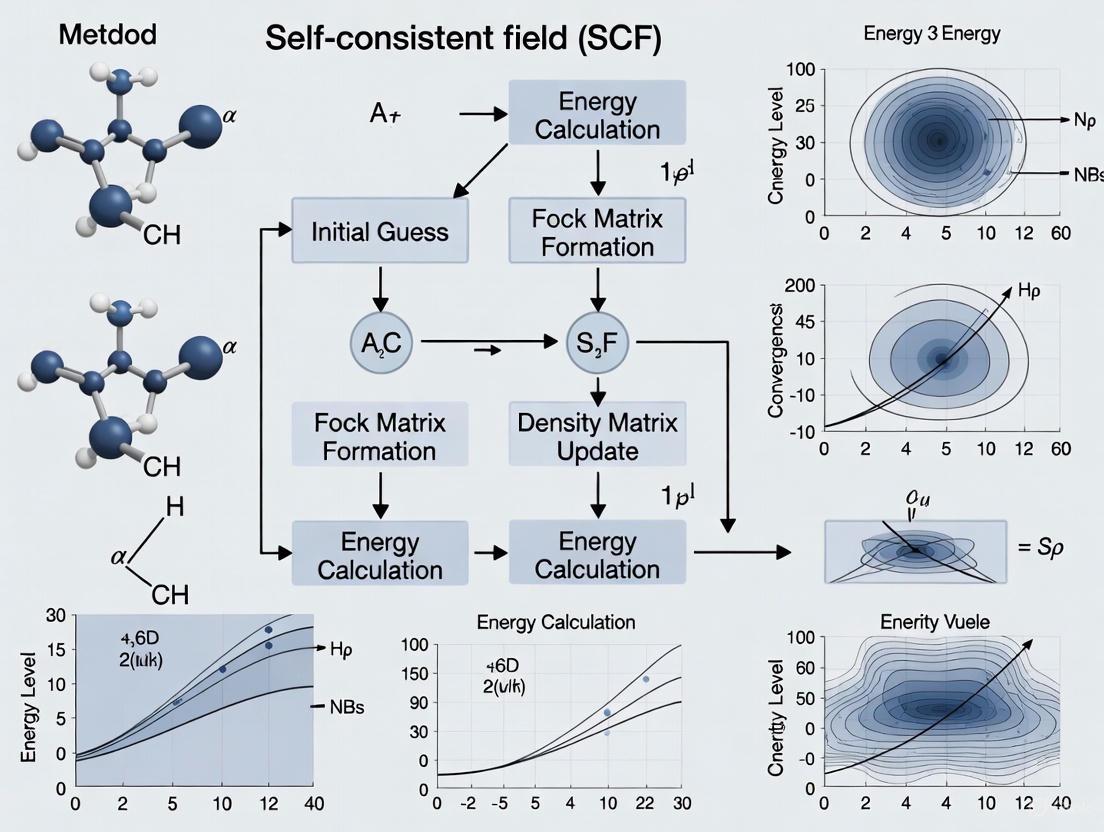
This comprehensive review explores self-consistent field (SCF) methods, fundamental computational techniques in quantum chemistry that iteratively solve the electronic structure of molecules.
Self-Consistent Field Methods: From Quantum Foundations to Drug Discovery Applications
Abstract
This comprehensive review explores self-consistent field (SCF) methods, fundamental computational techniques in quantum chemistry that iteratively solve the electronic structure of molecules. Tailored for researchers and drug development professionals, the article covers foundational SCF theory through Hartree-Fock and Density Functional Theory, practical applications in drug design for modeling protein-ligand interactions and reaction mechanisms, strategies for overcoming convergence challenges, and comparative analysis with other computational methods. By synthesizing current methodologies with emerging trends like quantum computing integration, this resource provides both theoretical understanding and practical implementation guidance for leveraging SCF in pharmaceutical research and development.
Quantum Foundations: Understanding the Core Principles of SCF Theory
The Schrödinger Equation and the Birth of Quantum Chemistry
The Schrödinger equation, formulated by Erwin Schrödinger in 1926, represents the quantum counterpart to Newton's second law in classical mechanics [1]. This partial differential equation governs the wave function of a non-relativistic quantum-mechanical system, enabling predictions about a system's behavior at the submicroscopic scale with remarkable accuracy [1] [2]. Its discovery was a landmark achievement that formed the foundational pillar for the entire field of quantum chemistry, providing the necessary theoretical framework to move beyond descriptive chemistry to a predictive, first-principles science of atoms and molecules [3].
This equation's significance extends beyond theoretical importance; it serves as the fundamental engine driving modern computational chemistry. The Schrödinger equation provides the mathematical basis for self-consistent field (SCF) methods, which include both Hartree-Fock theory and Kohn-Sham density functional theory [4] [5]. These methods represent the simplest, most affordable, and most widely-used electronic structure techniques, forming the computational backbone for research across chemistry, materials science, and drug development [6].
Historical Foundation: From Quantum Theory to Chemical Application
The origins of quantum chemistry date to a pivotal calculation performed by Walter Heitler and Fritz London in 1927 [3]. Through months of intensive pencil-and-paper mathematics, they successfully applied the newly formulated Schrödinger equation to describe the bonding between two hydrogen atoms, marking the first application of quantum mechanics to explain the enigmatic phenomenon of chemical bonding [3]. This breakthrough demonstrated that quantum theory could quantitatively address chemical problems, birthing an entirely new field.
Despite this promising start, the field immediately encountered a significant barrier. As Paul Dirac famously noted, quantum mechanics provided all that was necessary to explain problems in chemistry, but at a huge computational cost that made practical ab initio calculations for molecular systems nearly impossible to perform by hand [3]. This limitation persisted until the advent of digital computers, which eventually transformed quantum chemistry from a theoretical exercise into a practical tool.
A major milestone occurred in 1955 when W.C. Scherr, a graduate student of future Nobel laureate Robert S. Mulliken, performed the first-ever all-electron ab initio calculation of a molecule larger than hydrogen [3]. This calculation, which took two years to complete for a nitrogen molecule (comprising just two nuclei and fourteen electrons), demonstrated that quantum chemistry could yield accurate predictions for molecular systems beyond the simplest cases [3]. This breakthrough marked the beginning of quantum chemistry's evolution into an indispensable tool for modern chemical research.
Mathematical Foundation: The Schrödinger Equation and Its Formulations
Fundamental Equations
The Schrödinger equation exists in two primary forms essential for computational quantum chemistry. The time-dependent Schrödinger equation describes how quantum systems evolve:
$$i\hbar\frac{\partial}{\partial t}|\Psi(t)\rangle = \hat{H}|\Psi(t)\rangle$$
where $i$ is the imaginary unit, $\hbar$ is the reduced Planck constant, $\frac{\partial}{\partial t}$ is the partial derivative with respect to time, $|\Psi(t)\rangle$ is the quantum state vector, and $\hat{H}$ is the Hamiltonian operator [1].
For stationary states and most chemical applications, the time-independent Schrödinger equation is used:
$$\hat{H}|\Psi\rangle = E|\Psi\rangle$$
where $E$ represents the energy eigenvalues corresponding to the stationary states of the system [1]. This eigenvalue equation determines the allowed energy levels and electron distributions in atoms and molecules.
In the position-space representation for a single non-relativistic particle in one dimension, the equation becomes:
$$i\hbar\frac{\partial}{\partial t}\Psi(x,t) = \left[-\frac{\hbar^2}{2m}\frac{\partial^2}{\partial x^2} + V(x,t)\right]\Psi(x,t)$$
where $\Psi(x,t)$ is the wave function, $m$ is the particle mass, and $V(x,t)$ represents the potential energy [1].
Table 1: Key Mathematical Operators in the Schrödinger Equation
| Operator/Term | Mathematical Expression | Physical Significance |
|---|---|---|
| Hamiltonian ($\hat{H}$) | $\hat{H} = \hat{T} + \hat{V}$ | Total energy operator of the system |
| Kinetic Energy ($\hat{T}$) | $-\frac{\hbar^2}{2m}\nabla^2$ | Energy due to electron motion |
| Potential Energy ($\hat{V}$) | $V(x,t)$ | Energy from external potentials and electron interactions |
| Wave Function ($\Psi$) | $\Psi(x,t)$ | Probability amplitude containing all system information |
Physical Interpretation and Properties
The wave function solutions to the Schrödinger equation contain complete information about a quantum system. The square of the absolute value of the wave function at each point defines a probability density function [1]:
$$\Pr(x,t) = |\Psi(x,t)|^2$$
This probabilistic interpretation connects the abstract mathematics to physically observable phenomena, enabling the prediction of electron distributions, molecular properties, and spectroscopic behavior.
Two crucial mathematical properties make the Schrödinger equation particularly suitable for computational implementation:
Linearity: If $|\psi1\rangle$ and $|\psi2\rangle$ are solutions, then any linear combination $a|\psi1\rangle + b|\psi2\rangle$ is also a solution [1]. This permits the construction of complex wave functions from simpler components and enables the superposition principle that characterizes quantum systems.
Unitarity: The time-evolution operator $\hat{U}(t) = e^{-i\hat{H}t/\hbar}$ is unitary, preserving the normalization of the wave function over time [1]. This ensures conservation of probability in isolated quantum systems.
From Equation to Computation: The Self-Consistent Field Framework
Basis Set Expansion and the LCAO Approach
Practical application of the Schrödinger equation to molecular systems requires expanding molecular orbitals (MOs) as a linear combination of atomic orbitals (LCAO) [5]. In this approach, the molecular orbitals $\varphi_i(\vec{r})$ are expressed as:
$$\varphii(\vec{r}) = \sum{\mu=1}^M C{\mu i} \chi\mu(\vec{r})$$
where $C{\mu i}$ are the molecular orbital coefficients, $\chi\mu(\vec{r})$ are atomic orbital basis functions, and $M$ is the number of basis functions [5]. The atomic orbitals are typically chosen as Gaussian-type orbitals (GTOs), Slater-type orbitals (STOs), or numerical atomic orbitals (NAOs) [5].
The electron density, which plays a pivotal role in both Hartree-Fock and density functional theory, can be evaluated from the density matrix $P_{\mu\nu}$:
$$\rho(\vec{r}) = \sum{\mu\nu} P{\mu\nu} \chi\mu(\vec{r}) \chi\nu(\vec{r})$$
where the density matrix is constructed from the molecular orbital coefficients:
$$P{\mu\nu} = \sum{i=1}^{N} C{\mu i} C{\nu i}$$
with $N$ representing the number of occupied orbitals [5].
The Self-Consistent Field Equations
Minimization of the total electronic energy with respect to the molecular orbital coefficients within a finite basis set leads to the Roothaan-Hall equations for restricted closed-shell systems [5]:
$$\mathbf{FC} = \mathbf{SCE}$$
where $\mathbf{F}$ is the Fock matrix, $\mathbf{C}$ is the matrix of molecular orbital coefficients, $\mathbf{S}$ is the atomic orbital overlap matrix, and $\mathbf{E}$ is a diagonal matrix of orbital energies [4] [5].
The Fock matrix $\mathbf{F}$ is defined as:
$$\mathbf{F} = \mathbf{T} + \mathbf{V} + \mathbf{J} + \mathbf{K}$$
where $\mathbf{T}$ is the kinetic energy matrix, $\mathbf{V}$ is the external potential, $\mathbf{J}$ is the Coulomb matrix, and $\mathbf{K}$ is the exchange matrix [4]. In Kohn-Sham density functional theory, the exchange term is replaced by the exchange-correlation potential.
Table 2: Computational Methods Derived from the Schrödinger Equation
| Method | Theoretical Foundation | Key Features | Computational Cost |
|---|---|---|---|
| Hartree-Fock (HF) | Wavefunction theory | Mean-field approximation; exact exchange | $\mathcal{O}(N^4)$ |
| Density Functional Theory (DFT) | Hohenberg-Kohn theorems | Electron density as basic variable; approximate exchange-correlation | $\mathcal{O}(N^3)$ |
| Second-Order SCF (SOSCF) | Newton-Raphson method | Quadratic convergence; improved stability | $\mathcal{O}(N^3)$ |
| Linear-Scaling SCF | Sparse matrix algebra | Reduced computational cost for large systems | $\mathcal{O}(N)$ |
SCF Convergence Methods
The nonlinear nature of the SCF equations necessitates iterative solution strategies. Two primary approaches are implemented in modern quantum chemistry packages:
DIIS (Direct Inversion in Iterative Subspace): Extrapolates the Fock matrix using information from previous iterations by minimizing the norm of the commutator $[\mathbf{F},\mathbf{PS}]$, where $\mathbf{P}$ is the density matrix [4]. Variants include EDIIS and ADIIS for improved convergence in challenging cases.
SOSCF (Second-Order SCF): Implements a Newton-Raphson approach using the orbital Hessian to achieve quadratic convergence [4]. This method, particularly the co-iterative augmented Hessian (CIAH) implementation, can converge difficult cases more reliably than DIIS.
Additional techniques to facilitate SCF convergence include damping (mixing old and new density matrices), level shifting (increasing the energy gap between occupied and virtual orbitals), and fractional occupation schemes (smearing orbital occupations) [4].
Practical Implementation: Methodologies for Computational Research
Initial Guess Strategies
The choice of initial guess significantly impacts SCF convergence behavior. Several approaches are commonly implemented:
Superposition of Atomic Densities: Constructs the initial guess density by combining precomputed atomic densities or potentials [4]. This includes the 'minao', 'atom', and 'vsap' options in PySCF, with the latter using pretabulated atomic potentials to build the guess potential on a DFT quadrature grid.
Core Hamiltonian Guess: Diagonalizes the one-electron core Hamiltonian $\mathbf{H}_0 = \mathbf{T} + \mathbf{V}$, ignoring electron-electron interactions [4]. While simple, this approach performs poorly for molecular systems.
Chkpoint File Restart: Reads molecular orbitals from a previous calculation, potentially for a different molecular system or basis set [4]. This approach enables project-based workflows where simpler calculations bootstrap more complex ones.
Stability Analysis and Wavefunction Validation
Even converged SCF solutions may not represent the true ground state. Stability analysis detects whether a solution corresponds to a local minimum or a saddle point on the energy hypersurface [4]. Two types of instabilities are recognized:
Internal Instabilities: The solution represents an excited state rather than the ground state within the same variational space.
External Instabilities: The energy can be lowered by relaxing constraints on the wave function, such as transitioning from restricted to unrestricted Hartree-Fock [4].
Systematic stability analysis is essential for verifying that computed solutions represent physically meaningful states rather than mathematical artifacts.
Multiscale Coupling and Advanced Methodologies
Modern implementations extend beyond isolated molecules through multiscale methods that couple SCF quantum chemistry with coarser-grained models [7]. This framework self-consistently couples quantum mechanics with molecular mechanics (QM/MM) and even mesoscale simulations, enabling accurate modeling of complex environments such as solutions, proteins, and materials [7].
The Research Toolkit: Essential Components for SCF Calculations
Table 3: Essential Computational Research Reagents for SCF Methods
| Component | Function | Implementation Examples |
|---|---|---|
| Basis Sets | Atomic orbital expansions for molecular orbitals | cc-pVTZ, cc-pVQZ, minimal basis, effective core potentials |
| Exchange-Correlation Functionals | Electron interaction modeling in DFT | LDA, GGA (PBE, BLYP), meta-GGA, hybrid (B3LYP) |
| Integration Grids | Numerical integration for DFT functionals | Lebedev, Euler-Maclaurin for radial and angular integration |
| SCF Convergers | Algorithms for iterative solution | DIIS, SOSCF, damping, level shifting, fractional occupations |
| Initial Guess Generators | Starting points for SCF iterations | Superposition of atomic densities, core Hamiltonian, Hückel guess |
| Molecular Integrals | Fundamental interactions between basis functions | Electron repulsion integrals (ERIs), overlap, kinetic, nuclear attraction |
The Schrödinger equation's transformation from abstract mathematical formulation to practical computational tool represents one of the most significant developments in theoretical chemistry. Through the development of self-consistent field methods, this fundamental equation has become the cornerstone of modern computational chemistry, enabling in silico prediction of molecular structures, properties, and reactivities with remarkable accuracy.
The ongoing evolution of SCF methodologies—including linear-scaling algorithms, improved density functionals, robust convergence techniques, and multiscale coupling approaches—ensures that Schrödinger's equation remains as relevant today as when it was first derived. For researchers in drug development and materials design, these methods provide powerful tools for understanding and predicting molecular behavior, reducing reliance on trial-and-error experimentation, and accelerating the discovery of new therapeutic agents and functional materials.
As quantum computing emerges on the horizon, the Schrödinger equation may find new computational implementations that overcome current limitations, potentially enabling accurate quantum chemical calculations for systems that remain computationally intractable with classical computers. Regardless of the computational platform, the Schrödinger equation will continue to serve as the fundamental principle guiding our understanding and prediction of chemical phenomena.
The Born-Oppenheimer approximation represents one of the most fundamental concepts in quantum chemistry and molecular physics, enabling the practical solution of the Schrödinger equation for molecular systems. This approximation leverages the significant mass disparity between atomic nuclei and electrons to separate their motions, forming the foundational framework for nearly all computational chemistry methods. Within the context of self-consistent field (SCF) approaches, including Hartree-Fock and Kohn-Sham density functional theory, the Born-Oppenheimer approximation provides the critical starting point that makes these computational techniques feasible. This whitepaper provides an in-depth technical examination of the approximation's physical basis, mathematical formulation, and its indispensable role in modern computational chemistry, particularly for applications in drug development and molecular design where accurate electronic structure calculations are paramount.
In quantum chemistry, the fundamental goal is to solve the time-independent Schrödinger equation for molecular systems. However, the exact solution of this equation for systems with more than two particles presents formidable challenges due to the complex interactions between all electrons and nuclei. The Hamiltonian operator for a molecule containing M nuclei and N electrons includes kinetic energy terms for all particles and potential energy terms for all pairwise Coulomb interactions [8] [9]. The complexity of this many-body problem necessitates intelligent approximations to make computational tractability possible.
The Born-Oppenheimer approximation, proposed in 1927 by J. Robert Oppenheimer, then a 23-year-old graduate student working with Max Born, addresses this challenge by exploiting the significant mass difference between atomic nuclei and electrons [10]. This mass disparity, typically exceeding a factor of 1000, means that nuclei move much more slowly than electrons, allowing for a separation of their motions in the quantum mechanical treatment of molecules. The approximation has become so deeply embedded in quantum chemistry that it now serves as the starting point for virtually all electronic structure methods, forming the essential foundation upon which self-consistent field methods are built.
Physical Basis of the Approximation
Mass Disparity and Timescale Separation
The physical foundation of the Born-Oppenheimer approximation rests on the substantial mass difference between atomic nuclei and electrons. Even the lightest nucleus, the proton, possesses a mass approximately 1836 times greater than that of an electron [11] [12]. This mass disparity has direct implications for the dynamics of these particles through Newton's second law (F = ma). When subjected to the same mutual attractive Coulomb force (Ze²/r²), the acceleration of electrons is consequently much greater than that of nuclei [11].
This differential in acceleration leads to a natural separation of timescales for nuclear and electronic motion. Electrons effectively instantaneously adjust to any movement of the much heavier, slower nuclei. As a physical analogy, one might imagine a 100-yard dash between two individuals where one has an acceleration capability 2000 times greater than the other; the faster individual could literally run circles around the slower one [12]. In quantum mechanical terms, this separation means that for any fixed nuclear configuration, the electrons rapidly settle into their stationary states, effectively "experiencing" the nuclei as fixed potential energy sources.
Mechanical Model Illustration
A simple mechanical model helps illustrate this concept: consider two particles of dissimilar masses (m₁ >> m₂) connected by a spring to each other and with the heavier particle also attached to a fixed wall by another spring [12]. The motion of this coupled system will be dominated by the heavy particle, with the light particle essentially following the heavy one while executing rapid oscillations around it. Similarly, in molecules, electrons move rapidly within the average field created by the slowly moving nuclei, justifying their treatment as moving in the static field of fixed nuclear positions.
Mathematical Formulation
Molecular Hamiltonian and the Electronic Schrödinger Equation
The complete molecular Hamiltonian operator for a system with M nuclei and N electrons is given in atomic units as:
[ \hat{H} = -\frac{1}{2}\sum{i=1}^{N}\nablai^2 - \frac{1}{2}\sum{A=1}^{M}\frac{1}{MA}\nablaA^2 - \sum{i=1}^{N}\sum{A=1}^{M}\frac{ZA}{r{iA}} + \sum{i=1}^{N}\sum{j>i}^{N}\frac{1}{r{ij}} + \sum{A=1}^{M}\sum{B>A}^{M}\frac{ZAZB}{R_{AB}} ]
The Born-Oppenheimer approximation begins by neglecting the nuclear kinetic energy terms (the second term in the equation above), which corresponds to treating the nuclei as fixed in space [10] [11]. This simplification yields the electronic Hamiltonian:
[ \hat{H}{elec} = -\frac{1}{2}\sum{i=1}^{N}\nablai^2 - \sum{i=1}^{N}\sum{A=1}^{M}\frac{ZA}{r{iA}} + \sum{i=1}^{N}\sum{j>i}^{N}\frac{1}{r{ij}} ]
The subsequent electronic Schrödinger equation is then solved:
[ \hat{H}{elec}\Psi{elec} = E{elec}\Psi{elec} ]
where the electronic energy (E_{elec}) depends parametrically on the nuclear coordinates R [10] [8]. For each arrangement of the nuclei, one computes the electronic energy, generating a potential energy surface (PES) upon which the nuclei move.
Nuclear Schrödinger Equation and Potential Energy Surfaces
After solving the electronic problem, the total energy of the molecule is obtained by adding the nuclear-nuclear repulsion energy to the electronic energy:
[ E{total} = E{elec} + E{nuc} = E{elec} + \sum{A=1}^{M}\sum{B>A}^{M}\frac{ZAZB}{R_{AB}} ]
This total energy becomes the effective potential in the Schrödinger equation for nuclear motion:
[ [\hat{T}n + E{total}(R)]\phi(R) = E\phi(R) ]
where (\hat{T}_n) is the nuclear kinetic energy operator [10]. The solution of this equation provides the vibrational, rotational, and translational states of the molecule.
Table 1: Key Mathematical Components in the Born-Oppenheimer Approximation
| Component | Mathematical Expression | Physical Significance |
|---|---|---|
| Electronic Hamiltonian | (\hat{H}{elec} = -\frac{1}{2}\sumi\nablai^2 - \sumi\sumA\frac{ZA}{r{iA}} + \sumi\sum{j>i}\frac{1}{r{ij}}) | Determines electronic structure for fixed nuclear positions |
| Nuclear-Nuclear Repulsion | (E{nuc} = \sumA\sum{B>A}\frac{ZAZB}{R{AB}}) | Classical electrostatic repulsion between nuclei |
| Total Molecular Energy | (E{total} = E{elec} + E_{nuc}) | Forms potential energy surface for nuclear motion |
| Nuclear Wavefunction | ([\hat{T}n + E{total}(R)]\phi(R) = E\phi(R)) | Describes vibrational, rotational, and translational states |
Wavefunction Factorization
In the Born-Oppenheimer approximation, the total wavefunction of the molecule is approximated as a product:
[ \Psi{total} \approx \psi{electronic}(r,R) \cdot \psi_{nuclear}(R) ]
where r represents all electronic coordinates and R represents all nuclear coordinates [10]. This factorization signifies that the electronic wavefunction depends parametrically on the nuclear coordinates—it changes with nuclear arrangement but does not explicitly depend on nuclear momentum.
Computational Implementation
Workflow and Connection to Self-Consistent Field Methods
The practical implementation of the Born-Oppenheimer approximation in computational chemistry follows a well-defined workflow that enables the application of self-consistent field methods:
Diagram 1: Born-Oppenheimer and SCF Computational Workflow
Self-Consistent Field Methods Built on BO Approximation
Self-consistent field methods, including Hartree-Fock and Kohn-Sham density functional theory, fundamentally rely on the Born-Oppenheimer approximation [4] [9]. These methods express the electronic wavefunction as a single Slater determinant of molecular orbitals, which are themselves linear combinations of atomic orbitals (LCAO) [9]:
[ \psii = \sum{\mu} c{\mu i} \phi{\mu} ]
The optimization of these molecular orbitals leads to the Roothaan-Hall matrix equation [9]:
[ \mathbf{FC} = \mathbf{SC}\varepsilon ]
where F is the Fock matrix, C is the matrix of molecular orbital coefficients, S is the overlap matrix, and ε is a diagonal matrix of orbital energies. The Fock operator itself is a one-electron effective Hamiltonian that incorporates the average field of all other electrons [13]:
[ \hat{F}(i) = -\frac{1}{2}\nablai^2 - \sum{A=1}^{M}\frac{ZA}{r{iA}} + \sum{j=1}^{N} (2\hat{J}j - \hat{K}_j) ]
Here, (\hat{J}j) and (\hat{K}j) are the Coulomb and exchange operators, respectively, representing the electron-electron interactions in this mean-field approach [13].
Table 2: Computational Methods Relying on the Born-Oppenheimer Approximation
| Method | Key Equations | Approximation Level | Typical Applications |
|---|---|---|---|
| Hartree-Fock (HF) | (\hat{F}\varphii = \varepsiloni\varphi_i) | Mean-field, neglects electron correlation | Initial calculations, molecular properties |
| Density Functional Theory (DFT) | (\hat{F}{DFT} = -\frac{1}{2}\nabla^2 + \nu{eff}) | Includes approximate correlation | Ground state properties, reaction mechanisms |
| Post-HF Methods | Build on HF reference | Include electron correlation | Accurate thermochemistry, spectroscopy |
Complexity Reduction and Computational Efficiency
The computational advantage afforded by the Born-Oppenheimer approximation is substantial. Consider the benzene molecule (C₆H₆) with 12 nuclei and 42 electrons [10]. The full Schrödinger equation requires solving a partial differential equation in 162 variables (3×12 + 3×42). Using the Born-Oppenheimer approximation, one instead solves:
- An electronic problem in 126 variables for multiple fixed nuclear configurations
- A nuclear problem in 36 variables on the resulting potential energy surface
The computational complexity for solving eigenvalue equations increases faster than the square of the number of coordinates, making this separation enormously beneficial for practical computations [10].
Applications in Pharmaceutical Research
Molecular Property Prediction for Drug Development
The Born-Oppenheimer approximation enables the computational prediction of molecular properties essential to pharmaceutical research. By providing access to electronic wavefunctions and energies for fixed nuclear configurations, researchers can compute:
- Molecular electrostatic potentials crucial for understanding drug-receptor interactions
- Orbital energies relevant to reactivity and metabolism studies
- Vibrational frequencies used in spectroscopic characterization
- Solvation properties important for bioavailability prediction
Advanced applications include the high-fidelity prediction of drug solubility in supercritical CO₂ for pharmaceutical processing, where machine learning models trained on quantum chemical descriptors can achieve remarkable accuracy (R² = 0.9920) [14] [15]. Such predictions facilitate the development of green technologies in drug formulation and separation processes.
Potential Energy Surfaces and Reaction Pathways
In drug metabolism studies, the Born-Oppenheimer approximation enables the mapping of potential energy surfaces along reaction coordinates, providing insights into:
- Metabolic transformation pathways of pharmaceutical compounds
- Activation energies for enzymatic reactions
- Transition state structures for drug degradation pathways
- Conformational energy landscapes of flexible drug molecules
These applications rely critically on the separation of electronic and nuclear motion, allowing researchers to compute electronic energies at specific nuclear configurations along a reaction path.
Limitations and Breakdown of the Approximation
When the Approximation Fails
Despite its widespread success, the Born-Oppenheimer approximation has limitations and can break down in certain important scenarios:
- Conical intersections: Points where different electronic potential energy surfaces come close together or cross, particularly important in photochemistry
- Non-adiabatic processes: Reactions where electronic and nuclear motions become strongly coupled
- Light nuclei systems: Systems containing hydrogen or helium where the mass ratio is less extreme
- Charge transfer processes: Electron transfer reactions where electronic and nuclear timescales become comparable
In such cases, the approximation that electrons instantaneously adjust to nuclear motion becomes invalid, and more sophisticated treatments are necessary.
Beyond Born-Oppenheimer: Non-Adiabatic Dynamics
When the Born-Oppenheimer approximation breaks down, computational chemists employ non-adiabatic dynamics methods that explicitly account for couplings between electronic and nuclear motion. These methods include:
- Surface hopping approaches
- Multiple spawning techniques
- Exact factorization methods
- Mixed quantum-classical dynamics
These advanced techniques remain active areas of research and development in theoretical chemistry.
Research Reagents and Computational Tools
Table 3: Essential Computational Tools for Born-Oppenheimer-Based Calculations
| Tool Category | Specific Examples | Function in Research |
|---|---|---|
| Quantum Chemistry Software | PySCF [4], Q-Chem [9] | Solve electronic structure equations using SCF methods |
| Basis Sets | cc-pVTZ, 6-31G*, minimal basis [4] | Mathematical functions to represent molecular orbitals |
| Initial Guess Algorithms | 'minao', 'atom', 'huckel' [4] | Generate starting electron density for SCF procedure |
| SCF Convergence Accelerators | DIIS, SOSCF, damping, level shifting [4] | Ensure robust convergence of self-consistent field equations |
| Property Analysis Tools | SHAP analysis, sensitivity methods [14] | Interpret computational results and identify key determinants |
The Born-Oppenheimer approximation remains a cornerstone of modern computational chemistry, providing the fundamental framework that enables practical electronic structure calculations for molecules of relevance to pharmaceutical research and drug development. By separating the complex many-body problem into more tractable electronic and nuclear components, this approximation permits the application of self-consistent field methods that yield invaluable insights into molecular structure, properties, and reactivity.
While the approximation has known limitations, particularly in non-adiabatic processes, its proper implementation and understanding continue to drive advances in computational drug design, materials science, and molecular engineering. As computational power increases and algorithms become more sophisticated, the Born-Oppenheimer approximation will undoubtedly remain an essential component of the theoretical chemist's toolkit, continuing its nearly century-long legacy of enabling molecular quantum mechanics.
The Hartree-Fock (HF) method stands as a cornerstone in computational physics and chemistry, providing the fundamental framework for approximating the wave functions and energies of quantum many-body systems. This whitepaper traces the theoretical evolution from the initial Hartree method to the sophisticated Hartree-Fock formalism, framing this development within the broader context of self-consistent field (SCF) methods in computational chemistry research. We examine the core approximations, mathematical foundations, and algorithmic implementation of HF theory, highlighting its position as a specific instance of mean-field theory (MFT) where complex many-electron interactions are replaced by an effective one-body problem. The document further details practical methodologies, visualizes computational workflows, and discusses both the limitations of the standard HF approach and modern extensions that address electron correlation, including connections to dynamical mean-field theory (DMFT) and emerging quantum computing implementations. Designed for researchers, scientists, and drug development professionals, this guide provides both theoretical depth and practical insights essential for understanding electronic structure calculations.
The fundamental challenge in theoretical chemistry and computational materials science is solving the time-independent Schrödinger equation for many-electron systems. For a system comprising multiple nuclei and electrons, the non-relativistic electronic Hamiltonian (in atomic units) is expressed as [16]:
[
\hat{H} = -\frac{1}{2}\sumi \nablai^2 - \sum{i,I}\frac{ZI}{|\mathbf{r}i - \mathbf{R}I|} + \sum{i
The terms represent, respectively: the kinetic energy of electrons, the Coulomb attraction between electrons and nuclei, and the electron-electron repulsion. The Born-Oppenheimer approximation, which treats nuclei as fixed due to their greater mass, enables this separation [16]. While exact solutions exist for one-electron systems like hydrogen, the electron-electron repulsion term makes the Schrödinger equation analytically unsolvable for general multi-electron systems [17]. This complexity necessitates approximate methods, with mean-field approaches providing the most fundamental starting point.
Historical Foundation: From Hartree to Slater-Determinants
The Hartree Method and Self-Consistent Field Concept
In 1927, Douglas Hartree introduced a procedure he called the self-consistent field (SCF) method to calculate approximate wave functions and energies for atoms and ions [18]. His approach addressed the many-electron problem by decomposing it into effective one-electron equations. The initial Hartree method employed a simple approximation: the multi-electron wave function was written as a product of single-electron wave functions (orbitals), known as the Hartree product [18] [17]:
[ \Psi(\mathbf{r}1, \mathbf{r}2, \ldots, \mathbf{r}N) \approx \psi1(\mathbf{r}1)\psi2(\mathbf{r}2) \ldots \psiN(\mathbf{r}_N) ]
This ansatz assumes electrons are independent, interacting only via an average field. Each electron thus moves in the electrostatic field created by the nucleus and the average charge distribution of all other electrons. Hartree's key insight was that the final field computed from the charge distribution must be consistent with the assumed initial field—hence "self-consistent" [18]. The solution proceeded iteratively: an initial guess for the orbitals was used to calculate the potential, which was then used to solve for new orbitals, repeating until convergence [17].
The Fock Improvement: Incorporating Antisymmetry
Despite its conceptual breakthrough, the original Hartree method had a fundamental flaw: it failed to account for the quantum mechanical principle that electronic wave functions must be antisymmetric—their sign must change upon exchange of any two electrons, as required by the Pauli exclusion principle [18] [16].
In 1930, Slater and Fock independently identified this limitation and proposed the solution: replacing the simple Hartree product with a Slater determinant [18]. For an N-electron system, the Slater determinant is constructed from spin orbitals as [16]:
[ \Psi(\mathbf{r}1, \mathbf{r}2, \ldots, \mathbf{r}N) = \frac{1}{\sqrt{N!}} \begin{vmatrix} \chi1(\mathbf{x}1) & \chi2(\mathbf{x}1) & \cdots & \chiN(\mathbf{x}1) \ \chi1(\mathbf{x}2) & \chi2(\mathbf{x}2) & \cdots & \chiN(\mathbf{x}2) \ \vdots & \vdots & \ddots & \vdots \ \chi1(\mathbf{x}N) & \chi2(\mathbf{x}N) & \cdots & \chiN(\mathbf{x}_N) \end{vmatrix} ]
This determinant automatically satisfies the antisymmetry requirement—if two electrons occupy the same state, two rows become identical, making the determinant zero, thus enforcing the Pauli exclusion principle [16]. The combination of Hartree's SCF approach with the Slater determinant wave function became known as the Hartree-Fock method.
Table 1: Key Historical Developments in Early Mean-Field Theory
| Year | Researcher(s) | Contribution | Key Innovation |
|---|---|---|---|
| 1927 | Douglas Hartree | Hartree Method | Introduced self-consistent field concept; used product wavefunction |
| 1930 | Slater and Fock | Hartree-Fock Method | Incorporated antisymmetry via Slater determinant |
| 1935 | Hartree | Reformulation | Made theory more accessible for practical calculations [18] |
| 1950s | Various | Computational Implementation | Enabled by advent of electronic computers [18] |
Theoretical Framework: Hartree-Fock as Mean-Field Theory
Mean-Field Theory Foundations
Mean-field theory (MFT) is a powerful approximation method for studying high-dimensional random models by replacing all interactions to any one body with an average or effective interaction [19]. This approach transforms complex many-body problems into more tractable effective one-body problems by averaging over degrees of freedom [19]. In the context of electronic structure, MFT replaces the instantaneous Coulomb repulsion between electrons with an average potential, effectively causing each electron to experience the mean field created by all other electrons [18].
The formal basis for MFT is the Bogoliubov inequality, which provides an upper bound for the free energy of a system [19]. By minimizing this upper bound with respect to single-degree-of-freedom probabilities, one obtains effective one-body equations that form the foundation of mean-field approximations.
The Hartree-Fock Equations
Applying the variational principle to the Slater determinant ansatz yields the Hartree-Fock equations [18] [20]. For a closed-shell system, these take the form of one-electron eigenvalue equations:
[ \hat{f}(\mathbf{r}1) \chii(\mathbf{r}1) = \varepsiloni \chii(\mathbf{r}1) ]
where ( \hat{f} ) is the Fock operator, ( \chii ) are the spin orbitals, and ( \varepsiloni ) are the orbital energies [18]. The Fock operator consists of [20]:
[ \hat{f} = -\frac{1}{2}\nabla^2 - \sumI \frac{ZI}{|\mathbf{r} - \mathbf{R}I|} + \hat{V}{\text{HF}} ]
Here, the first term is the kinetic energy operator, the second represents electron-nucleus attraction, and ( \hat{V}_{\text{HF}} ) is the Hartree-Fock potential, which captures the average electron-electron interactions.
The Hartree-Fock potential contains two distinct terms [20]:
- Hartree Term (Coulomb operator): The classical electrostatic repulsion between electrons, representing the potential from the average charge distribution of all other electrons.
- Fock Term (Exchange operator): A non-local operator arising from the antisymmetric nature of the Slater determinant, accounting for the exchange interaction between electrons of parallel spin.
The exchange term eliminates the unphysical self-interaction contained in the Hartree term and creates an "exchange hole" around each electron—a region where same-spin electrons avoid each other due to the Pauli exclusion principle [20].
The Self-Consistent Field Procedure
The nonlinear nature of the Hartree-Fock equations (since the Fock operator depends on its own solutions) necessitates an iterative solution algorithm [18]:
Diagram 1: The Hartree-Fock self-consistent field (SCF) iterative procedure
This SCF cycle continues until the change in total electronic energy or density matrix between iterations falls below a predefined threshold, indicating convergence to a self-consistent solution [18].
Methodological Implementation and Computational Considerations
Basis Set Expansion
In practical implementations, the molecular orbitals are expanded as linear combinations of basis functions, typically atomic orbitals (LCAO - Linear Combination of Atomic Orbitals) [18] [20]:
[ \psii(\mathbf{r}) = \sum{\mu} c{\mu i} \phi\mu(\mathbf{r}) ]
The choice of basis set is critical for computational accuracy and efficiency. Two common approaches are:
- Localized Gaussian functions: Predominantly used for molecular systems, allowing efficient integral computation [20].
- Plane waves: Typically employed for periodic solid-state systems [20].
The basis set must be sufficiently complete to accurately represent the molecular orbitals, and convergence with respect to basis set size must be verified in practical applications [20].
Key Mathematical Formulations
Table 2: Core Equations in Hartree-Fock Theory
| Concept | Mathematical Expression | Physical Significance | ||
|---|---|---|---|---|
| Slater Determinant | ( \Psi = \frac{1}{\sqrt{N!}} \det(\chii(\mathbf{x}j)) ) | Ensures antisymmetry; encodes Pauli exclusion principle | ||
| Fock Operator | ( \hat{f} = -\frac{1}{2}\nabla^2 - \sumI \frac{ZI}{ | \mathbf{r}-\mathbf{R}_I | } + \hat{J} - \hat{K} ) | Effective one-electron Hamiltonian |
| Coulomb Operator | ( \hat{J}j(1)\chii(1) = \left[\int \frac{ | \chi_j(2) | ^2}{r{12}} d\mathbf{x}2\right] \chi_i(1) ) | Classical electrostatic repulsion |
| Exchange Operator | ( \hat{K}j(1)\chii(1) = \left[\int \frac{\chij^*(2)\chii(2)}{r{12}} d\mathbf{x}2\right] \chi_j(1) ) | Quantum mechanical exchange interaction |
The Scientist's Toolkit: Essential Computational Components
Table 3: Key Computational Components in Hartree-Fock Calculations
| Component | Function/Role | Implementation Notes |
|---|---|---|
| Basis Functions | Expand molecular orbitals; determine flexibility of representation | Gaussian-type orbitals (molecules) or plane waves (solids) |
| Initial Guess Generator | Provide starting orbitals for SCF procedure | From superposition of atomic densities or minimal basis calculation |
| Integral Evaluator | Compute one- and two-electron integrals | Most computationally demanding step; efficient algorithms critical |
| DIIS Extrapolator | Accelerate SCF convergence | Reduces number of iterations; essential for difficult cases |
| Density Fitter | Approximate electron density | Used in resolution-of-identity techniques to speed up calculations |
Limitations and Advanced Methodologies
Electron Correlation: The Fundamental Limitation
While Hartree-Fock theory incorporates exchange correlation through the antisymmetric wave function, it neglects Coulomb correlation—the tendency of electrons to avoid each other due to their mutual repulsion, regardless of spin [18] [20]. This limitation has several consequences:
- Systematic overestimation of electron energies: The HF method typically yields total energies that are higher than the true values [18].
- Inability to describe London dispersion forces: These weak intermolecular forces arise entirely from electron correlation effects [18].
- Poor description of bond breaking: Correlation becomes increasingly important as bonds stretch [20].
- Inaccurate band gaps in solids: HF often overestimates band gaps in insulating materials.
The Hartree-Fock energy forms an upper bound to the true ground-state energy (by the variational principle), with the difference from the exact solution termed the correlation energy [18].
Post-Hartree-Fock Methods
To address the correlation problem, numerous post-Hartree-Fock methods have been developed, which can be broadly categorized as [18]:
- Configuration Interaction (CI): Includes excited Slater determinants in the wave function.
- Coupled Cluster (CC): Uses exponential ansatz to incorporate excitations.
- Møller-Plesset Perturbation Theory: Treats correlation as a perturbation to the HF solution.
- Multiconfigurational SCF (MCSCF): Uses multiple determinants in the variational optimization.
These methods progressively improve accuracy but at significantly increased computational cost.
Connection to Dynamical Mean-Field Theory
For strongly correlated materials (e.g., transition metal oxides), where electron localization effects dominate, neither standard HF nor DFT with semi-local functionals provides adequate descriptions [21]. Dynamical Mean-Field Theory (DMFT) has emerged as a powerful approach that extends the static mean-field concept of HF to include energy-dependent (dynamical) correlations [21].
DMFT maps a lattice model onto an effective impurity model embedded in a self-consistent, frequency-dependent mean field [21]. When combined with DFT (DFT+DMFT), this approach has successfully described the electronic structure of various strongly correlated materials, including high-temperature superconductors [21]. Recent research has explored implementing DMFT impurity solvers on quantum computers, potentially offering more efficient solutions for large systems where classical methods struggle [21] [22].
Diagram 2: Methodological evolution from Hartree-Fock to modern approaches
The evolution from Hartree's initial self-consistent field concept to the sophisticated Hartree-Fock formalism represents a foundational development in computational quantum chemistry. As a specific implementation of mean-field theory, HF provides the conceptual framework for understanding electrons as moving in an average field while properly accounting for quantum statistics through the antisymmetric wave function. Despite its limitation in neglecting electron correlation, HF remains the starting point for most accurate electronic structure methods and continues to provide conceptual insights into chemical bonding and electronic behavior.
The self-consistent field paradigm established by Hartree and refined by Fock has proven remarkably enduring, extending beyond quantum chemistry to nuclear physics, condensed matter theory, and emerging applications in quantum computing. For researchers and drug development professionals, understanding the approximations, capabilities, and limitations of Hartree-Fock theory is essential for judicious application of computational methods and meaningful interpretation of their results. As computational power grows and methodological innovations continue, the HF foundation will undoubtedly remain central to addressing ever more challenging problems in molecular and materials design.
Slater Determinants and the Pauli Exclusion Principle
In computational chemistry, the accurate prediction of molecular structure and properties hinges on solving the many-electron Schrödinger equation. For multi-electron systems, a fundamental challenge arises from the indistinguishable nature of fermions and the constraints imposed by the Pauli Exclusion Principle. This principle, which states that no two fermions can occupy the same quantum state, is elegantly and efficiently embedded in quantum chemical calculations through the use of Slater determinants. Within the broader context of self-consistent field (SCF) methods, the Slater determinant provides the essential wavefunction ansatz that ensures physically meaningful solutions while facilitating computationally tractable models.
This article provides an in-depth examination of Slater determinants, detailing their mathematical formulation, role in enforcing antisymmetry, and central function in modern computational workflows like the Hartree-Fock-SCF method. We will explore how this foundational concept enables the treatment of complex molecular systems in research and drug development.
Theoretical Foundation
The Pauli Exclusion Principle and Wavefunction Antisymmetry
The Pauli Exclusion Principle is a key quantum mechanical principle that has profound implications for the electronic structure of atoms and molecules. For a wavefunction describing a system of multiple fermions, it requires that the wavefunction must be antisymmetric with respect to the exchange of any two identical fermions [23]. This means that if the coordinates (both spatial and spin) of two electrons are swapped, the total wavefunction must change sign [24]:
$$ \Psi(\mathbf{x}1, \mathbf{x}2, ..., \mathbf{x}i, ..., \mathbf{x}j, ..., \mathbf{x}N) = -\Psi(\mathbf{x}1, \mathbf{x}2, ..., \mathbf{x}j, ..., \mathbf{x}i, ..., \mathbf{x}N) $$
This antisymmetry property naturally enforces the Pauli principle: if two electrons were to occupy the exact same spin-orbital, the wavefunction would vanish, indicating such a configuration is impossible [23]. This fundamental symmetry requirement is the foundation upon which Slater determinants are built.
From Hartree Products to Slater Determinants
A naive first attempt at constructing a many-electron wavefunction is to use a simple product of one-electron spin-orbitals, known as a Hartree product [23]:
$$ \Psi{\text{Hartree}}(\mathbf{x}1, \mathbf{x}2) = \chi1(\mathbf{x}1)\chi2(\mathbf{x}_2) $$
However, this simple product is unsatisfactory for fermions because it is not antisymmetric under particle exchange [23]. The solution is to take a linear combination of all possible permutations of the electrons among the spin-orbitals, with the appropriate sign for each permutation. For a two-electron system, this leads to [23]:
$$ \Psi(\mathbf{x}1, \mathbf{x}2) = \frac{1}{\sqrt{2}}[\chi1(\mathbf{x}1)\chi2(\mathbf{x}2) - \chi1(\mathbf{x}2)\chi2(\mathbf{x}1)] $$
This expression can be elegantly written as a determinant [23]. For an N-electron system, this construction generalizes to the Slater determinant:
Formal Definition of the Slater Determinant
For an N-electron system, the Slater determinant is defined as [23]:
$$ \Psi(\mathbf{x}1, \mathbf{x}2, \ldots, \mathbf{x}N) = \frac{1}{\sqrt{N!}} \begin{vmatrix} \chi1(\mathbf{x}1) & \chi2(\mathbf{x}1) & \cdots & \chiN(\mathbf{x}1) \ \chi1(\mathbf{x}2) & \chi2(\mathbf{x}2) & \cdots & \chiN(\mathbf{x}2) \ \vdots & \vdots & \ddots & \vdots \ \chi1(\mathbf{x}N) & \chi2(\mathbf{x}N) & \cdots & \chiN(\mathbf{x}_N) \end{vmatrix} $$
This determinant formulation automatically ensures the required antisymmetry under particle exchange, as swapping the coordinates of two electrons corresponds to interchanging two rows of the determinant, which reverses its sign [23]. The factor of $1/\sqrt{N!}$ ensures proper normalization.
Table 1: Key Properties of Slater Determinants
| Property | Mathematical Expression | Physical Significance | ||
|---|---|---|---|---|
| Antisymmetry | Swapping $\mathbf{x}i \leftrightarrow \mathbf{x}j$ changes the sign of $\Psi$ | Enforces the Pauli Exclusion Principle | ||
| Normalization | $\langle \Psi \vert \Psi \rangle = 1$ with $1/\sqrt{N!}$ factor | Probabilities sum to one | ||
| Vanishing | $\Psi = 0$ if any $\chii = \chij$ | No two electrons in same quantum state | ||
| Indistinguishability | Probability density $ | \Psi | ^2$ invariant to particle labels | Electrons are fundamentally identical |
Slater Determinants in Self-Consistent Field Methods
The Hartree-Fock-SCF Framework
The Slater determinant forms the cornerstone of the Hartree-Fock (HF) method, one of the most fundamental ab initio quantum chemical approaches [25]. In the HF approximation, the many-electron wavefunction is represented by a single Slater determinant composed of the best possible set of spin-orbitals. The method operates within a self-consistent field (SCF) procedure [26]:
The goal is to find the set of molecular orbitals that minimize the energy of a single Slater determinant wavefunction for a given system [26]. The SCF procedure is responsible for finding the ground state as the global minimum of the one-determinant approximation of the electronic energy [26]. Recent methodological innovations have explored replacing the traditional SCF optimization with algebraic geometry approaches, which can locate not only the ground state but also low-lying excited states within the one-determinant framework [26].
Matrix Elements and the Electronic Energy
The expectation value of the electronic energy for a Slater determinant wavefunction reveals important physical insights. The electronic Hamiltonian can be separated into one-electron and two-electron components [23]:
$$ \hat{H}e = \sum{i}^{N} \hat{h}(\mathbf{r}i) + \frac{1}{2} \sum{i \neq j}^{N} \frac{e^2}{r_{ij}} $$
The expectation value of the one-electron operators for a Slater determinant wavefunction is simply the sum of the individual spin-orbital energies [23]:
$$ \langle \Psi0 | \hat{G}1 | \Psi0 \rangle = \sumi \langle \chii | \hat{h} | \chii \rangle $$
However, the two-electron electron-electron repulsion term introduces characteristic Coulomb and exchange contributions. The exchange term, which arises directly from the antisymmetric nature of the Slater determinant, has no classical analog and lowers the total energy by reducing electron-electron repulsion for electrons of parallel spin.
Table 2: Computational Methods Building on Slater Determinants
| Method | Wavefunction Ansatz | Treatment of Electron Correlation | Computational Scaling |
|---|---|---|---|
| Hartree-Fock (HF) | Single Slater determinant | None | $O(N^4)$ |
| Density Functional Theory (DFT) | Effective single determinant | Approximate, via functional | $O(N^3)$ |
| Post-Hartree-Fock Methods | |||
| Møller-Plesset (MP2) | Single determinant reference | Perturbative | $O(N^5)$ |
| Coupled Cluster (CCSD(T)) | Exponential ansatz on reference | High accuracy, "gold standard" | $O(N^7)$ |
| Multi-Reference Methods | Multiple determinants | Strong correlation | High/$O(e^N)$ |
Advanced Applications and Methodological Extensions
Beyond Hartree-Fock: Electron Correlation
While the single Slater determinant of Hartree-Fock theory provides a qualitatively correct description of molecular systems, it fails to capture electron correlation - the correlated motion of electrons that avoids their mutual repulsion [25]. This limitation has driven the development of post-Hartree-Fock methods that build upon the HF foundation:
- Configuration Interaction (CI): Constructs the wavefunction as a linear combination of Slater determinants representing excited electron configurations [25]
- Coupled Cluster (CC): Uses an exponential ansatz acting on the HF reference to generate a more sophisticated wavefunction [25]
- Perturbation Theory (MP2, MP4): Adds electron correlation as a perturbation to the HF Hamiltonian [25]
Among these, the Coupled Cluster with Single, Double, and perturbative Triple excitations (CCSD(T)) method is widely regarded as the "gold standard" for quantum chemical accuracy, though its high computational cost limits application to small and medium-sized molecules [25].
Integration with Machine Learning and Quantum Computing
Recent advances are reshaping how Slater determinants and SCF methods integrate into the broader computational landscape:
Machine Learning in Quantum Chemistry: The integration of machine learning with quantum chemical methods has enabled the development of data-driven tools that can identify molecular features correlated with target properties [25]. These approaches are being used to create more accurate and efficient potentials, and to accelerate the exploration of chemical space in drug discovery and materials design [25].
Quantum Computing: Algorithms such as the Variational Quantum Eigensolver (VQE) are being developed to solve electronic structure problems more efficiently than classical computers [25]. These approaches typically prepare and measure multi-qubit states that represent Slater determinants or their correlated extensions. While current hardware limitations restrict applications to small molecules, ongoing advances in quantum hardware are progressively expanding these capabilities [25].
Experimental Protocols and Computational Workflows
Standard Hartree-Fock-SCF Protocol
The following workflow outlines the key steps in a typical Hartree-Fock calculation using Slater determinants:
Research Reagent Solutions: Computational Tools
Table 3: Essential Computational Tools for SCF Calculations
| Tool Category | Specific Examples | Function in SCF Methodology |
|---|---|---|
| Basis Sets | Pople-style (6-31G*), Dunning (cc-pVDZ), Karlsruhe (def2-SVP) | Provide mathematical functions for expanding molecular orbitals |
| Integral Packages | Libint, ERD, McMurchie-Davidson | Compute electron repulsion integrals efficiently |
| SCF Solvers | DIIS, Energy-based direct minimization | Accelerate convergence of self-consistent field procedure |
| Geometry Optimizers | Berny, Baker, Eigenvector-following | Locate minima and transition states on potential energy surface |
| Quantum Chemistry Packages | Gaussian, GAMESS, ORCA, PySCF, Psi4 | Implement complete HF-SCF workflow with post-HF extensions |
Slater determinants provide the fundamental mathematical structure that enforces the Pauli Exclusion Principle in multi-electron quantum mechanical calculations. Their integration into the Hartree-Fock-SCF framework establishes the foundation for nearly all ab initio computational chemistry methods, from basic molecular orbital theory to sophisticated correlated approaches. As computational methodologies continue to evolve through integration with machine learning and quantum computing, the Slater determinant remains an essential conceptual and practical tool for researchers investigating molecular structure, reactivity, and properties in fields ranging from fundamental chemical physics to drug design and materials science. The ongoing refinement of SCF methodologies ensures that this cornerstone of computational quantum chemistry will continue to enable new discoveries across the molecular sciences.
The variational principle represents a fundamental mathematical concept that enables the solution of complex physical problems by finding functions that optimize the values of quantities dependent on those functions [27]. In computational chemistry, this principle provides the rigorous foundation for determining molecular properties by optimizing electronic wavefunctions. Its application is particularly crucial for self-consistent field (SCF) methods, which form the computational bedrock for predicting molecular structure, reactivity, and electronic properties in chemical systems.
This whitepaper examines the mathematical basis of variational principles and their role as the optimization engine behind computational methods. We explore how these principles drive the convergence of wavefunctions to energy minima, enable the calculation of molecular properties, and facilitate the treatment of both ground and excited states. By understanding these fundamental mathematical underpinnings, researchers can better leverage computational tools for drug design and materials development.
Mathematical Foundations of the Variational Principle
Core Theoretical Framework
The variational principle states that for any trial wavefunction Ψ, the expectation value of the Hamiltonian operator Ĥ provides an upper bound to the true ground state energy E₀:
<Ψ|Ĥ|Ψ> / <Ψ|Ψ> ≥ E₀
This inequality provides the mathematical basis for systematic improvement of wavefunction approximations [28]. The quality of the energy estimate depends entirely on the choice of trial wavefunction, with more flexible parameterizations capable of closer approach to the true ground state.
The fundamental optimization problem in variational quantum chemistry can be expressed as:
E = min〈Ψ|Ĥ|Ψ〉 subject to 〈Ψ|Ψ〉 = 1
This constrained optimization is typically solved using Lagrange multipliers, leading to the Hartree-Fock equations for mean-field theories or more complex eigenvalue problems for correlated methods [27].
Extensions to Excited States
While the fundamental variational principle applies specifically to ground states, several extensions enable the treatment of excited states:
- State-specific optimization: Targeting higher-energy roots of the secular equation
- State-average optimization: Minimizing average energy of multiple states simultaneously
- Variance minimization: Seeking wavefunctions that minimize the energy variance
Each approach presents distinct advantages and challenges for computational chemistry applications [29].
Variational Principles in Self-Consistent Field Methods
Hartree-Fock Theory as a Variational Method
The Hartree-Fock method represents the paradigmatic application of variational principles in computational chemistry. The approach seeks the single Slater determinant that minimizes the electronic energy, resulting in the self-consistent field equations:
Fψᵢ = εᵢψᵢ
where F is the Fock operator, ψᵢ are molecular orbitals, and εᵢ are orbital energies [26]. The SCF procedure alternates between building the Fock matrix from current orbitals and diagonalizing to obtain improved orbitals until self-consistency is achieved.
Recent methodological innovations have explored replacing the conventional SCF convergence with alternative optimization schemes. Algebraic geometry optimization coupled with multivariable Newton methods has demonstrated potential for locating both ground and excited states within the one-determinant approximation [26].
Beyond Single Reference: Multiconfigurational Methods
For systems with strong static correlation, single-determinant approaches prove inadequate. The Complete Active Space Self-Consistent Field (CASSCF) method extends the variational approach to multiconfigurational wavefunctions:
|Ψᴹᶜˢᶜᶠ〉 = Σᵢ Cᵢ|Φᵢ〉
where the Cᵢ coefficients and molecular orbitals are variationally optimized [30]. The CASSCF method partitions orbitals into inactive, active, and virtual spaces, with a full configuration interaction expansion within the active space. This approach maintains the variational property while providing a more balanced treatment of electron correlation.
Table 1: Comparison of Variational Methods in Computational Chemistry
| Method | Wavefunction Form | Variational Parameters | Strengths | Limitations |
|---|---|---|---|---|
| Hartree-Fock | Single determinant | Molecular orbitals | Size consistent, computationally efficient | Neglects electron correlation |
| CASSCF | Multiconfigurational | CI coefficients and orbitals | Handles static correlation, multireference systems | Exponential scaling with active space size |
| VMC | Jastrow-Slater | Jastrow, CI, and orbital parameters | Explicit correlation, favorable scaling | Stochastic optimization challenges |
| VQE | Parameterized quantum circuit | Quantum gate parameters | Suitable for NISQ devices, quantum advantage potential | Current hardware limitations, noise sensitivity |
Computational Implementation and Protocols
Energy Minimization Techniques
Energy minimization forms the core computational approach for variational methods. The stochastic reconfiguration method provides an efficient approach for optimizing complex wavefunctions in quantum Monte Carlo (QMC) applications [29]. The parameter variations Δp are computed according to:
Δp = -τS̅⁻¹g
where τ is a positive step size, S̅ is the overlap matrix, and g is the energy gradient. This approach enables stable optimization of thousands of parameters in Jastrow-Slater wavefunctions.
For state-average optimization required when treating states of the same symmetry, the minimization target becomes a weighted average:
Eˢᵃ = Σᵢ wᵢEᵢ with Σᵢ wᵢ = 1
This approach ensures balanced description of multiple states and prevents collapse to lower states during optimization [29].
Wavefunction Optimization Workflow
The following diagram illustrates the complete variational optimization workflow for molecular systems:
Advanced Optimization: Variance Minimization
As an alternative to direct energy minimization, variance minimization approaches can be employed, particularly for excited state targeting. The variance functional:
σ² = <Ψ|(Ĥ - E)²|Ψ> / <Ψ|Ψ>
possesses its minimum value of zero for exact eigenstates [29]. Modified functionals such as:
σ²ᵦ = <Ψ|(Ĥ - ω)²|Ψ> / <Ψ|Ψ>
with ω fixed during optimization steps, can improve stability. However, recent QMC studies have identified challenges with variance minimization, including state drifting during optimization and convergence to incorrect states [29].
Table 2: Optimization Methods in Variational Quantum Chemistry
| Method | Target Functional | Strengths | Weaknesses | Convergence Behavior | ||
|---|---|---|---|---|---|---|
| Energy Minimization | E[Ψ] = <Ψ | Ĥ | Ψ> | Variational guarantee, stable | May converge slowly, state collapse | Monotonic energy decrease |
| Variance Minimization | σ²[Ψ] = <Ψ | (Ĥ-E)² | Ψ> | Can target excited states | May drift from target state | Can exhibit state switching |
| State-Average Optimization | Eˢᵃ = ΣwᵢEᵢ | Balanced states, avoids collapse | Not fully variational for individual states | Simultaneous improvement of multiple states | ||
| Newton Method | E[Ψ] with exact Hessian | Quadratic convergence | Computationally expensive | Very fast near minimum |
Applications in Electronic Structure Theory
Ground State Properties
Variational principles enable the calculation of fundamental molecular properties including:
- Equilibrium geometries through energy minimization with respect to nuclear coordinates
- Vibrational frequencies via second derivatives of the variational energy
- Electronic properties including multipole moments and polarizabilities
- Reaction energies and barrier heights through energy differences
The variational guarantee ensures systematic improvability of these properties with increasingly sophisticated wavefunction ansatzes.
Excited State Methodologies
Treating excited states within variational frameworks requires specialized approaches:
State-Specific Optimization: Direct targeting of excited states through root-homing algorithms or initial guesses biased toward specific excitations.
State-Average Methods: Optimization of an average energy for multiple states ensures orthogonality and balanced description [29].
Time-Dependent Extensions: Linear response theory within variational frameworks enables efficient computation of excitation spectra.
The following diagram illustrates the excited state treatment workflow:
Research Reagent Solutions
Table 3: Essential Computational Tools for Variational Methods
| Tool Category | Specific Examples | Function | Application Context |
|---|---|---|---|
| Electronic Structure Packages | PySCF, CFOUR, Molpro | Implement SCF, CASSCF, CC algorithms | General quantum chemistry, method development |
| QMC Software | QMCPACK, CHAMP | Variational and diffusion Monte Carlo | High-accuracy correlation, solids, excited states |
| Quantum Computing Frameworks | Qiskit, Cirq, Pennylane | VQE algorithm implementation | NISQ device algorithms, quantum advantage |
| Optimization Libraries | SciPy, NLopt, Opt++ | General-purpose optimizers | Custom wavefunction optimization |
| Basis Set Libraries | Basis Set Exchange | Standardized Gaussian basis sets | Consistent calculations across methods |
Emerging Directions and Challenges
Quantum Computing and Hybrid Algorithms
The variational principle finds new expression in quantum computing through the Variational Quantum Eigensolver (VQE) algorithm [28]. This hybrid quantum-classical approach employs parameterized quantum circuits to prepare trial states, with classical optimization of parameters. The quantum variational formula:
E(θ) = min〈ψ(θ)|Ĥ|ψ(θ)〉
serves as the theoretical foundation for VQE and related algorithms [28]. Current challenges include barren plateaus in optimization landscapes and hardware noise effects, which active research seeks to address through adaptive ansatzes and error mitigation.
Methodological Innovations
Recent advances in variational methods include:
- Adaptive wavefunction approaches that dynamically expand Hilbert space
- Machine learning-inspired parameterizations using neural network quantum states
- Embedding techniques that combine high-level variational treatments with lower-level methods
- QED-extended variational methods for strong light-matter coupling environments [30]
These developments expand the applicability of variational principles to increasingly complex systems while maintaining the rigorous theoretical foundation that ensures reliability.
The variational principle provides the fundamental mathematical basis for energy optimization in computational chemistry, serving as the theoretical foundation for self-consistent field methods and beyond. Its rigorous formulation guarantees systematic improvability and connects electronic structure theory with practical computation. As methodological developments continue to expand the reach of variational approaches—from quantum Monte Carlo to quantum computing—this principle maintains its central role in enabling accurate predictions of molecular properties and behaviors. For researchers in drug development and materials design, understanding these foundations empowers more effective application of computational tools and critical evaluation of computational results.
Linear Combination of Atomic Orbitals (LCAO) and Basis Sets
The Linear Combination of Atomic Orbitals (LCAO) is a fundamental approximation in quantum chemistry that forms the cornerstone of modern computational electronic structure calculations. Introduced in 1929 by Sir John Lennard-Jones, this technique provides a framework for calculating molecular orbitals by representing them as quantum superpositions of atomic orbitals [31]. Within the context of self-consistent field (SCF) methods, the LCAO approach transforms the complex differential equations of quantum mechanics into tractable matrix equations that can be solved iteratively [9]. This methodology is indispensable for researchers investigating molecular properties, reaction energetics, and electronic behaviors in systems ranging from pharmaceutical compounds to advanced materials.
The LCAO approximation bridges the conceptual gap between atomic and molecular quantum states, allowing scientists to predict electronic distributions, bond formation, and spectroscopic properties. For drug development professionals, these computational approaches provide critical insights into molecular reactivity, stability, and intermolecular interactions without exclusive reliance on experimental screening. The effectiveness of any LCAO-based calculation depends critically on the choice of basis set—the collection of mathematical functions used to represent atomic orbitals—making understanding basis set selection crucial for obtaining accurate computational results in research applications [32].
Theoretical Foundation of LCAO
Mathematical Formalism
The fundamental principle of the LCAO method states that molecular orbitals can be expressed as linear combinations of atomic orbitals. Mathematically, the i-th molecular orbital, φi, is constructed from n atomic orbitals, χr:
[ \phii = c{1i}\chi1 + c{2i}\chi2 + c{3i}\chi3 + \cdots + c{ni}\chin = \sumr c{ri}\chir ]
where cri are the expansion coefficients that determine the contribution of each atomic orbital to the molecular orbital [31]. These coefficients are determined by solving the Schrödinger equation for the molecular system under the constraints of the variational principle, which ensures the optimal wavefunction for a given basis.
In the SCF approximation, this approach leads to the Roothaan-Hall matrix equation:
[ \mathbf{FC} = \boldsymbol{\varepsilon}\mathbf{SC} ]
where F is the Fock matrix representing the effective Hamiltonian, C is the matrix of molecular orbital coefficients, ε is a diagonal matrix of orbital energies, and S is the overlap matrix with elements Sμν = ⟨φμ|φν⟩ [9]. Solving this equation self-consistently provides both the molecular orbital coefficients and the associated energies that define the electronic structure of the system.
Connection to Self-Consistent Field Methods
The LCAO method is intrinsically linked to SCF methodologies, which iteratively solve the quantum mechanical equations for molecular systems. The SCF process begins with an initial guess of the molecular orbitals, constructs the Fock operator based on this guess, solves the Roothaan-Hall equations for new orbitals, and repeats until convergence is achieved [9]. This procedure ensures that the calculated electronic distribution is consistent with the potential field it generates.
For molecular systems, the core Hamiltonian is constructed using the LCAO approach, where matrix elements are computed between basis functions centered on different atoms. The quality of the final SCF solution depends critically on the completeness and quality of the underlying atomic basis set, making basis set selection a crucial step in computational modeling [33].
Basis Sets in Computational Chemistry
Basis Set Fundamentals and Types
Basis sets are collections of mathematical functions used to represent atomic orbitals in electronic structure calculations [32]. In the Hartree-Fock theory and related SCF methods, each molecular orbital is expressed as a linear combination of these basis functions, with coefficients determined iteratively during the calculation [32]. Ideally, an infinite basis set would provide an exact description of electron probability density, but practical computations require finite approximations that balance accuracy and computational efficiency [32].
The most frequently used basis functions in modern computational chemistry take the form of contracted Gaussians, which offer computational advantages in evaluating the multi-center integrals required in molecular calculations [32] [33]. From a chemical perspective, it is advantageous to treat valence orbitals differently from core orbitals since valence orbitals vary significantly with chemical bonding while core orbitals remain relatively unchanged [32].
Table 1: Common Basis Set Types in Computational Chemistry
| Basis Set Type | Description | Common Examples | Typical Applications |
|---|---|---|---|
| Minimal Basis | Uses minimum number of functions needed for each atom | STO-3G | Initial calculations, very large systems |
| Split-Valence | Treats valence and core electrons with different flexibility | 3-21G, 6-31G | Standard molecular calculations [32] |
| Polarized | Adds higher angular momentum functions | 6-31G(d), 6-31G* | Systems with polar bonds, accurate geometries |
| Diffuse | Includes spatially extended functions | 6-31+G, aug-cc-pVDZ | Anions, excited states, weak interactions [32] |
| High-Precision | Multiple polarization and correlation-consistent functions | cc-pVQZ, aug-cc-pV5Z | Benchmark calculations, spectroscopy |
Basis Set Selection and Optimization
Selecting an appropriate basis set requires careful consideration of the chemical system and properties of interest. For routine calculations on neutral organic molecules, split-valence basis sets like 6-31G provide a good balance between accuracy and computational cost [32]. When studying polar bonds or molecular geometries, adding polarization functions (e.g., 6-31G(d)) becomes necessary to accurately describe electron distribution deformations during bond formation [32].
For specific electronic states such as anions, highly excited states, or weakly bound complexes, diffuse functions are essential to properly describe the spatially extended electron densities [32]. Without sufficient flexibility for weakly bound electrons to localize far from the molecular framework, significant errors in energies and molecular properties can occur [32].
Basis set optimization follows systematic approaches where researchers often begin with a minimal basis set (e.g., STO-3G) and progressively use larger split-valence basis sets (e.g., 3-21G followed by 6-31G) to achieve converged results [32]. This stepwise approach helps identify convergence issues early while managing computational resources effectively.
Zhan et al. demonstrated that the 6-31+G(d) basis set is generally sufficient for calculating highest occupied molecular orbital (HOMO) and lowest unoccupied molecular orbital (LUMO) energies when the latter are negative, though this may not be economical for screening large datasets or large systems [32]. For calculating accurate reaction energetics and molecular properties, methods such as mPW1PW91/MIDIX+ provide both economical and reasonably accurate alternatives [32].
Experimental and Computational Methodologies
SCF Convergence Protocols
Achieving convergence in SCF calculations remains a significant challenge in computational chemistry. The SCF process involves iteratively solving for the electron density until the input and output densities converge within a specified threshold [9]. Convergence difficulties frequently arise from poor initial guesses, near-degenerate orbital energies, or complex electronic structures, and can arbitrarily cause calculations to fail or converge to high-energy states [34].
Advanced convergence acceleration techniques include:
- Improved Initial Guesses: Moving beyond the core Hamiltonian guess to methods like superposition of atomic densities (SAD), extended Hückel, or fragment orbitals provides better starting points [34].
- Damping and Level Shifting: These techniques modify the SCF procedure to avoid oscillatory behavior and occupation of high-energy virtual orbitals.
- Direct Inversion in Iterative Subspace (DIIS): This method extrapolates new density matrices from previous iterations to accelerate convergence.
- Second-Order Methods: Algorithms like quadratically convergent SCF provide robust convergence at increased computational cost per iteration.
For excited-state calculations, specialized methods like ΔSCF (delta SCF) target saddle points on the electronic Hamiltonian surface to model low-lying excitations, charge-transfer states, or core-hole excitations where time-dependent DFT often fails [34]. Implementing excited-state-aware SCF convergence methods using the Maximum Overlap Method (MOM), constrained DFT, or projection-based methods requires careful algorithmic design to ensure convergence to the desired electronic state [34].
Basis Set Implementation in DFT Calculations
In density functional theory calculations using the LCAO approach (DFT-LCAO), the key parameter is the density matrix, which defines the electron density [35]. For closed or periodic systems, this matrix is calculated by diagonalization of the Kohn-Sham Hamiltonian [35]. The electron density n(r) is constructed from the occupied eigenstates of the Kohn-Sham Hamiltonian:
[ n(\mathbf{r}) = \sum{\alpha} f\alpha |\psi\alpha(\mathbf{r})|^2 = \sum{ij} D{ij} \phii(\mathbf{r}) \phi_j(\mathbf{r}) ]
where fα is the occupation of level α, ψα are the Kohn-Sham orbitals, and Dij is the density matrix given by Dij = ∑α fα c*αi cαj [35].
The effective potential in DFT includes three contributions: the Hartree potential (VH[n]), the exchange-correlation potential (Vxc[n]), and the external potential (Vext) [35]. Numerical atomic orbitals with compact support typically form the basis functions in modern implementations:
[ \phi{nlm}(\mathbf{r}) = R{nl}(r) Y_{lm}(\hat{\mathbf{r}}) ]
where Ylm are spherical harmonics and Rnl are radial functions with compact support that vanish beyond a confinement radius [35].
Research Reagents and Computational Tools
Essential Computational Components
Table 2: Essential Components for LCAO-Based Computational Chemistry
| Component | Function | Representative Examples |
|---|---|---|
| Basis Sets | Mathematical representation of atomic orbitals | Gaussian-type orbitals, Slater-type orbitals, numerical atomic orbitals [32] [35] [33] |
| Pseudopotentials | Replace core electrons with effective potentials | Norm-conserving pseudopotentials, SG15, PseudoDojo [35] |
| Exchange-Correlation Functionals | Approximate quantum electron interactions | LDA, GGA (PBE), meta-GGA, hybrid (B3LYP) [35] |
| Solvation Models | Account for solvent effects | PCM, CPCM, SMD, Poisson-Boltzmann methods [34] |
| Integral Evaluation | Compute multicenter integrals | Libint (one- and two-electron integrals) [34] |
| Geometry Optimization | Locate minima and transition states | L-BFGS, internal coordinate methods [34] |
Software and Implementation Considerations
Modern quantum chemistry software leverages the LCAO approach within SCF methods to study molecular systems. Key considerations for researchers include:
- Grid Construction: Building and pruning DFT grids and evaluating atomic orbitals over them remains challenging in implementation [34].
- Implicit Solvation: Open-source implementations of models like PCM and CPCM exist but can be buggy and difficult to work with, representing a significant source of error in computational chemistry [34].
- Counterpoise Correction: Methods like Grimme's gcp correction address basis set superposition error but require careful implementation, with limited availability in Python interfaces [34].
- Thermochemical Analysis: Converting Hessian matrices into frequencies and thermochemistry requires careful treatment of vibrational and rotational motions, with a need for standardized implementations [34].
Ongoing developments in open-source quantum chemistry aim to address these challenges through modular, reusable components rather than monolithic implementations, making the construction and maintenance of DFT engines more manageable [34].
Applications in Pharmaceutical and Materials Research
Predictive Toxicology and Drug Development
In pharmaceutical research and predictive toxicology, LCAO-based methods provide crucial insights into molecular reactivity and properties. Reactivity indices derived from HOMO and LUMO energies depend critically on the quality of the basis set used in calculations [32]. Poorly converged calculations resulting from improperly chosen basis sets can lead to erroneous molecular structures characterized by artificially small HOMO-LUMO separations, potentially predicting highly reactive compounds where none exist [32].
The role of basis sets in computational toxicology underscores the importance of method validation and careful selection of computational parameters. For high-throughput screening of large compound libraries, balanced basis sets like 6-31+G(d) may provide sufficient accuracy while maintaining computational feasibility [32].
Advanced Spectroscopy and Materials Characterization
LCAO methods facilitate the prediction and interpretation of spectroscopic properties essential for molecular characterization. While current open-source packages have limited capabilities for predicting complex spectroscopic properties like nuclear magnetic resonance (NMR), electronic circular dichroism (ECD), and vibrational circular dichroism (VCD), these areas represent important development frontiers [34].
In materials research, LCAO approaches combined with density functional theory help interpret experimental spectra and characterize electronic structures. For example, researchers have employed high-resolution scanning transmission electron microscopy-electron energy loss spectroscopy (STEM-EELS) combined with inelastic channeling simulations based on LCAO-DFT to map fine structures in materials [36]. Such integrated computational and experimental approaches provide deep insights into material properties and behaviors.
Topological analyses of electron density functions and their Laplacians, obtained from LCAO electronic structure calculations using quantum theory of atoms in molecules and crystals (QTAIMAC), elucidate chemical bonding, orbital localization, and electronic transitions in complex systems including f-electron materials [36]. These methods reveal how basis functions centered not only on atomic nuclei but also on off-nucleus positions contribute to understanding molecular structure and bonding.
The Linear Combination of Atomic Orbitals method, integrated with self-consistent field methodologies, provides a powerful framework for computational chemistry that continues to drive innovations in pharmaceutical research, materials science, and molecular design. The careful selection and implementation of basis sets remains crucial for obtaining accurate, chemically meaningful results from quantum chemical calculations. As computational methods evolve, ongoing developments in basis set design, SCF convergence algorithms, and modular quantum chemistry software promise to enhance the accessibility, reliability, and applicability of these fundamental approaches. For research scientists and drug development professionals, understanding the principles and practices of LCAO and basis sets enables more informed computational strategies and more critical evaluation of computational results, ultimately supporting the advancement of molecular science and technology.
The Self-Consistent Field (SCF) method represents a cornerstone computational approach in electronic structure theory, enabling the solution of complex quantum mechanical equations for molecular and solid-state systems. This iterative computational procedure lies at the heart of modern computational chemistry, materials science, and drug development research, providing the foundational framework for Hartree-Fock (HF), Density Functional Theory (DFT), and related quantum chemistry methods. The essential concept involves iteratively refining an initial guess of the electron density or wavefunction until the input and output densities converge to a self-consistent solution, indicating that the electronic structure has reached a stable configuration consistent with the nuclear framework and electron-electron interactions.
Within computational chemistry research, SCF methods enable the prediction of molecular properties, reaction mechanisms, and spectroscopic parameters from first principles. For drug development professionals, these methods provide crucial insights into molecular interactions, binding affinities, and electronic properties that govern pharmaceutical activity. The convergence behavior and accuracy of SCF calculations directly impact the reliability of these predictions, making understanding of convergence methodologies essential for research applications.
Core Principles and Convergence Criteria
Fundamental SCF Equation
The SCF procedure aims to find a self-consistent electron density by iteratively solving the Kohn-Sham equations in DFT or the Roothaan-Hall equations in HF theory. The self-consistent error is quantified as the root mean square difference between input and output densities of each cycle operator, expressed mathematically as:
err = √[∫dx (ρ_out(x) - ρ_in(x))²] [37]
This error metric provides a numerical measure of convergence progress, with the calculation considered converged when this value falls below a predefined threshold.
Convergence Criteria and Numerical Quality
The convergence criterion for SCF iterations depends on the desired numerical quality and system size, with stricter criteria applied for higher precision calculations. The default criteria for different numerical quality settings scale with the square root of the number of atoms in the system (√N_atoms), as shown in Table 1. [37]
Table 1: Default SCF Convergence Criteria for Different Numerical Quality Settings
| Numerical Quality | Convergence Criterion |
|---|---|
| Basic | 1e-5 × √N_atoms |
| Normal | 1e-6 × √N_atoms |
| Good | 1e-7 × √N_atoms |
| VeryGood | 1e-8 × √N_atoms |
These system-size-dependent criteria ensure consistent accuracy across molecular systems of different sizes, with stricter thresholds required for properties demanding high precision, such as spectroscopic predictions or force calculations.
Charge Self-Consistency in Correlated Systems
In strongly correlated systems, charge self-consistency plays a crucial role in determining electronic structure properties. First-principles approaches like QSGW (Quasiparticle Self-consistent GW) and QSĜW (which includes vertex corrections via the Bethe-Salpeter equation) demonstrate how charge redistribution due to correlation effects can drive qualitative changes in electronic structure. This is particularly important for materials like TiSe₂ and CrBr₃, where real-space charge re-distribution significantly modifies the effective one-body potential and resulting electronic properties. [38]
SCF Methodologies and Algorithms
Convergence Methods
Multiple algorithmic approaches exist for achieving SCF convergence, each with distinct advantages for different molecular systems and electronic structure characteristics:
DIIS (Direct Inversion in the Iterative Subspace): This method uses linear combinations of previous Fock or Kohn-Sham matrices to accelerate convergence. It includes parameters for adaptable mixing, condition numbers for matrix stability, and handling of large expansion coefficients. [37]
MultiSecant: A quasi-Newton approach that can serve as an alternative to DIIS at similar computational cost per iteration, often beneficial for problematic convergence cases. [37]
MultiStepper: A flexible default method in many modern codes that automatically adapts mixing parameters during SCF iterations. It utilizes preset pathways (e.g., DFTB/default2023.inc) to optimize convergence behavior. [37]
TRAH (Trust-Region Augmented Hessian): A robust second-order approach that exploits the full electronic Hessian in combination with trust-region methods. This methodology demonstrates particular strength for systems with complicated electronic structures where standard DIIS approaches struggle, converging reliably toward local minima for restricted and unrestricted HF and DFT calculations. [39]
Advanced Convergence Techniques
For challenging systems with difficult convergence characteristics, several advanced techniques can be employed:
Damping: Applying reduced mixing parameters (0.075 default) to stabilize early iterations, with automatic adaptation during the SCF procedure. [37]
Level Shifting: Virtual orbital energy shifting to facilitate convergence in problematic systems. [40]
Occupational Smearing: Using the
Degeneratekeyword to slightly smooth occupation numbers around the Fermi level, ensuring nearly-degenerate states receive similar occupations. This is often automatically activated for problematic SCF convergence unless explicitly disabled. [37]Spin Handling: For open-shell systems, initial symmetry breaking between alpha and beta spin densities can be achieved through
VSplit(adding a constant to beta spin potential) orStartWithMaxSpin(occupying orbitals in maximum spin configuration). [37]
Implementation and Control Parameters
SCF Convergence Control
The SCF procedure is controlled through a comprehensive set of parameters that govern iteration behavior:
Table 2: Key SCF Control Parameters and Their Functions
| Parameter | Type | Default Value | Function |
|---|---|---|---|
| Iterations | Integer | 300 | Maximum number of SCF cycles |
| Mixing | Float | 0.075 | Initial damping parameter for potential update |
| Rate | Float | 0.99 | Minimum convergence rate; triggers corrective measures if slower |
| Eigenstates | Bool | Automatic | Use eigenstates vs P-matrix for density evaluation |
| PMatrix | Bool | Automatic | Alternative density evaluation method |
These parameters are typically specified in an SCF block within computational chemistry software input files, providing researchers with fine-grained control over convergence behavior. [37]
Initial Guess Strategies
The starting point for SCF iterations significantly impacts convergence behavior and can be controlled through the InitialDensity parameter:
- Rho: Sum of atomic densities (default approach)
- Psi: Construction of initial eigensystem by occupying atomic orbitals, followed by orthonormalization and density calculation
Additional strategies include spin flipping for specific atoms (SpinFlip) or regions (SpinFlipRegion) to distinguish between ferromagnetic and antiferromagnetic states, though this requires breaking symmetry for equivalent atoms. [37]
Workflow and Computational Pathways
Core SCF Iteration Workflow
The following diagram illustrates the fundamental SCF iterative procedure common to most quantum chemistry methods:
Advanced Convergence Algorithm
For systems exhibiting convergence challenges, specialized algorithms like the Trust-Region Augmented Hessian (TRAH) method provide robust convergence:
Research Reagent Solutions: Computational Tools
Successful implementation of SCF methodologies requires specialized computational tools and algorithms that function as "research reagents" in electronic structure calculations:
Table 3: Essential Computational Tools for SCF Research
| Research Reagent | Function | Implementation Examples |
|---|---|---|
| Density Initialization Algorithms | Generate starting electron density | Sum of atomic densities, occupied atomic orbitals |
| Fock/Kohn-Sham Builders | Construct effective Hamiltonian | Numerical integration, density matrix contraction |
| Eigensolvers | Solve Kohn-Sham equations | Davidson, Lanczos, LAPACK routines |
| Density Mixers | Stabilize iterative convergence | DIIS, Kerker mixing, Broyden methods |
| Convergence Accelerators | Speed up SCF iterations | TRAH, EDIIS, CDIIS, KDIIS |
| Basis Sets | Represent molecular orbitals | Gaussian-type orbitals, plane waves, numerical atomic orbitals |
| Pseudopotentials | Represent core electrons | Norm-conserving, ultrasoft, PAW potentials |
Troubleshooting and Optimization Strategies
Addressing Convergence Failures
SCF convergence failures represent common challenges in computational research, particularly for systems with metallic character, near-degeneracies, or complex electronic structures. Recommended strategies include:
Convergence Criterion Adjustment: Modifying
CriterionFactoror applyingModestCriterionfor acceptable convergence when strict thresholds cannot be met. [37]Electronic Temperature: Applying finite electronic temperature (
ElectronicTemperature) to smooth orbital occupations, particularly useful for metallic systems. [37]Forced Degeneracy Handling: Using
NoDegenerateto prevent automatic smoothing orLessDegenerateto limit smoothing range after partial convergence. [37]Alternative Algorithms: Switching from default
MultiSteppertoMultiSecantorDIISmethods, or implementing robust second-order methods like TRAH-SCF for particularly problematic systems. [37] [39]
Performance Optimization
Computational efficiency considerations for SCF calculations include:
Density Evaluation Method: Selecting between eigenstate and density matrix approaches based on system size and basis set characteristics. [37]
Mixing Adaptation: Leveraging automatic mixing parameter optimization while monitoring convergence rates. [37]
System-Specific Tuning: Adjusting
NVctrx(number of DIIS vectors),Condition(DIIS matrix condition number), and convergence thresholds based on molecular size and complexity. [37]
The Self-Consistent Field method remains a fundamental computational workhorse in theoretical chemistry and materials science, with iterative convergence at its core. Understanding the numerical criteria, algorithmic options, and troubleshooting strategies for SCF convergence enables researchers to reliably extract electronic structure information from quantum chemical calculations. Continued development of robust convergence methodologies, particularly for challenging systems with strong electron correlation or complex potential energy surfaces, represents an active research frontier with significant implications for predictive computational science across chemistry, materials research, and pharmaceutical development.
SCF in Practice: Implementation and Drug Discovery Applications
The Hartree-Fock (HF) method serves as the fundamental cornerstone of modern computational quantum chemistry, providing a theoretical framework for approximating the wave function and energy of many-electron systems in their stationary states [18]. As one of the earliest quantum chemical models developed shortly after the publication of the Schrödinger equation, HF theory transforms the intractable many-electron problem into a more manageable set of one-electron equations through a mean-field approximation [25] [18]. Despite its limitations in accounting for full electron correlation, the HF method establishes the essential reference point upon which most sophisticated electronic structure methods are built, including post-Hartree-Fock approaches and density functional theory (DFT) formulations [25] [16]. The practical implementation of HF theory for molecular systems was revolutionized by the Roothaan-Hall equations, which recast the original integro-differential equations into an algebraic matrix form amenable to computational solution [41] [42].
The significance of HF methodology extends throughout computational chemistry and drug development research, where it provides qualitative insights into molecular structure, particularly for organic molecules [43]. For research scientists investigating molecular systems, HF theory offers a balance between computational feasibility and quantum mechanical rigor, enabling the study of electronic properties that underlie reactivity, binding interactions, and spectroscopic characteristics [25]. This technical guide examines the mathematical foundation and computational implementation of the Fock operator and Roothaan-Hall equations, framing them within the broader context of self-consistent field methods essential for contemporary computational research.
The Fock Operator: Mathematical Foundation
Theoretical Development from the Electronic Schrödinger Equation
The fundamental challenge in computational quantum chemistry involves solving the electronic Schrödinger equation for many-electron systems. For a system with N electrons and M fixed nuclei under the Born-Oppenheimer approximation, the electronic Hamiltonian takes the form [44]:
$$ \hat{H}{elec} = -\frac{1}{2}\sum{i=1}^N \nablai^2 - \sum{i=1}^N\sum{A=1}^M\frac{ZA}{r{iA}} + \sum{i=1}^N\sum{j>i}^N\frac{1}{r{ij}} $$
The first term represents the kinetic energy of electrons, the second term describes electron-nucleus Coulomb attraction, and the third term accounts for electron-electron repulsion [16]. The complexity arises from the electron-electron repulsion term $(r_{ij}^{-1})$, which couples the coordinates of electrons i and j, making the equation non-separable [44].
The Hartree-Fock approximation addresses this challenge by replacing the instantaneous electron-electron repulsion with an average effective potential. This approach transforms the Hamiltonian into a separable form composed of one-electron Fock operators [16]:
$$ f(\mathbf{xi}) = h(\mathbf{xi}) + \sum{a}^{N/2}[2Ja(\mathbf{xi}) - Ka(\mathbf{x_i})] $$
Here, $f(\mathbf{xi})$ is the Fock operator for electron i with space-spin coordinate $\mathbf{xi}$, $h(\mathbf{xi})$ is the core Hamiltonian accounting for kinetic energy and nuclear attraction, while $Ja$ and $K_a$ represent the Coulomb and exchange operators, respectively [44].
Coulomb and Exchange Operators
The Coulomb operator $Ja(1)$ describes the average local repulsive potential experienced by an electron in spin orbital $\chii$ due to the charge distribution of another electron in spin orbital $\chi_a$ [44] [43]:
$$ Ja(1) = \int \psia^*(2)\frac{1}{r{12}}\psia(2)d\mathbf{r_2} $$
In contrast, the exchange operator $K_a(1)$ represents a non-local potential arising from the antisymmetry requirement of the wavefunction [44] [43]:
$$ Ka(1)\psii(1) = \left[\int \psia^*(2)\frac{1}{r{12}}\psii(2)d\mathbf{r2}\right]\psi_a(1) $$
The exchange term has no classical analogue and is a purely quantum mechanical consequence of the Pauli exclusion principle [44]. It significantly affects the energy of electrons with parallel spins and is responsible for ferromagnetic alignment in molecular systems.
Table 1: Components of the Fock Operator in Hartree-Fock Theory
| Component | Mathematical Form | Physical Interpretation |
|---|---|---|
| Core Hamiltonian | $h(1) = -\frac{1}{2}\nabla1^2 - \sumA\frac{ZA}{r{1A}}$ | Kinetic energy and nuclear attraction of an electron |
| Coulomb Operator | $Ja(1) = \int \psia^*(2)r{12}^{-1}\psia(2)d\mathbf{r_2}$ | Average repulsive potential from electron in orbital a |
| Exchange Operator | $Ka(1)\psii(1) = \left[\int \psia^*(2)r{12}^{-1}\psii(2)d\mathbf{r2}\right]\psi_a(1)$ | Non-local exchange potential due to antisymmetry |
Wavefunction Representation: Slater Determinants
The HF method represents the N-electron wavefunction as a single Slater determinant, which automatically satisfies the antisymmetry principle required for fermionic systems [44] [18]:
$$ \psi(\mathbf{x}1, \mathbf{x}2, ..., \mathbf{x}N) = \frac{1}{\sqrt{N!}} \begin{vmatrix} \chi1(\mathbf{x}1) & \chi2(\mathbf{x}1) & \cdots & \chiN(\mathbf{x}1) \ \chi1(\mathbf{x}2) & \chi2(\mathbf{x}2) & \cdots & \chiN(\mathbf{x}2) \ \vdots & \vdots & \ddots & \vdots \ \chi1(\mathbf{x}N) & \chi2(\mathbf{x}N) & \cdots & \chiN(\mathbf{x}_N) \end{vmatrix} $$
This antisymmetrized product of one-electron spin orbitals ($\chi_i$) ensures that the wavefunction changes sign upon exchange of any two electron coordinates and naturally incorporates the Pauli exclusion principle, as evidenced by the determinant vanishing if any two rows or columns are identical [44] [16]. For closed-shell systems, the restricted Hartree-Fock (RHF) approach employs doubly occupied spatial orbitals, each containing two electrons with opposite spins [41] [18].
Roothaan-Hall Equations: Matrix Formulation
Basis Set Expansion and Matrix Representation
The practical application of HF theory to molecular systems was enabled by the independent work of Roothaan and Hall in 1951, who introduced a finite basis set expansion to convert the integro-differential HF equations into a matrix form tractable by computational methods [41] [42]. The Roothaan-Hall approach expands each molecular orbital (MO) as a linear combination of atomic orbitals (LCAO), which serves as basis functions [42]:
$$ \psii(1) = \sum{\mu=1}^{K} c{\mu i}\phi{\mu}(1) $$
Here, $\psii$ represents the i-th molecular orbital, $c{\mu i}$ are the expansion coefficients to be determined, $\phi_{\mu}$ denotes the atomic basis functions, and K is the total number of basis functions [42]. This expansion transforms the Hartree-Fock equation into the Roothaan-Hall matrix equation [41]:
$$ \mathbf{FC} = \mathbf{SC}\epsilon $$
In this generalized eigenvalue problem, $\mathbf{F}$ is the Fock matrix, $\mathbf{C}$ is the matrix of molecular orbital coefficients, $\mathbf{S}$ is the overlap matrix of the basis functions, and $\epsilon$ is a diagonal matrix of orbital energies [41] [42]. The presence of the overlap matrix $\mathbf{S}$ distinguishes this from a standard eigenvalue problem, reflecting the non-orthogonality of the atomic basis functions [42].
Matrix Elements in the Roothaan-Hall Formalism
In the atomic orbital basis, the Fock matrix elements are constructed as [43]:
$$ F{\mu\nu} = H{\mu\nu}^{core} + J{\mu\nu} - K{\mu\nu} $$
The component matrices have specific forms:
Core Hamiltonian matrix: $$ H{\mu\nu}^{core} = T{\mu\nu} + V{\mu\nu} = \int \phi{\mu}(\mathbf{r})\left(-\frac{1}{2}\nabla^2\right)\phi{\nu}(\mathbf{r})d\mathbf{r} + \int \phi{\mu}(\mathbf{r})\left(-\sumA\frac{ZA}{|\mathbf{R}A-\mathbf{r}|}\right)\phi{\nu}(\mathbf{r})d\mathbf{r} $$
Coulomb matrix: $$ J{\mu\nu} = \sum{\lambda\sigma} P_{\lambda\sigma}(\mu\nu|\lambda\sigma) $$
Exchange matrix: $$ K{\mu\nu} = \frac{1}{2}\sum{\lambda\sigma} P_{\lambda\sigma}(\mu\lambda|\nu\sigma) $$
The density matrix $\mathbf{P}$ describes the electron distribution in the atomic orbital basis [43]:
$$ P{\mu\nu} = 2\sum{a=1}^{N/2} C{\mu a}C{\nu a} $$
For the restricted closed-shell case, while the two-electron integrals represent the electron-electron repulsion [43]:
$$ (\mu\nu|\lambda\sigma) = \iint \phi{\mu}(\mathbf{r}1)\phi{\nu}(\mathbf{r}1)\frac{1}{r{12}}\phi{\lambda}(\mathbf{r}2)\phi{\sigma}(\mathbf{r}2)d\mathbf{r}1d\mathbf{r}_2 $$
Table 2: Matrix Elements in the Roothaan-Hall Equations
| Matrix | Mathematical Expression | Physical Significance | |
|---|---|---|---|
| Overlap Matrix | $S{\mu\nu} = \int \phi{\mu}(1)\phi{\nu}(1)d\mathbf{r1}$ | Measure of basis function overlap | |
| Core Hamiltonian | $H{\mu\nu}^{core} = T{\mu\nu} + V_{\mu\nu}$ | Kinetic energy and nuclear attraction | |
| Density Matrix | $P{\mu\nu} = 2\sum{a=1}^{N/2} C{\mu a}C{\nu a}$ | Electron distribution in AO basis | |
| Two-Electron Integrals | $(\mu\nu | \lambda\sigma) = \iint \phi{\mu}(1)\phi{\nu}(1)r{12}^{-1}\phi{\lambda}(2)\phi{\sigma}(2)d\mathbf{r1}d\mathbf{r_2}$ | Electron-electron repulsion |
Computational Implementation: The SCF Procedure
The Self-Consistent Field Iterative Cycle
The solution to the Roothaan-Hall equations proceeds through an iterative self-consistent field (SCF) procedure because the Fock matrix depends on its own solution through the density matrix [44] [18]. This nonlinear problem requires an initial guess followed by cycles of refinement until convergence. The following diagram illustrates the SCF workflow:
SCF Iterative Procedure: The self-consistent field cycle for solving the Roothaan-Hall equations
Key Computational Steps
The SCF procedure involves several critical computational steps:
Initial Guess Generation: The process begins with an initial approximation of the density matrix or molecular orbital coefficients. Common approaches include using the core Hamiltonian (neglecting electron-electron repulsion), superposition of atomic densities, or results from semi-empirical methods [18].
Fock Matrix Construction: Using the current density matrix, the two-electron integrals are combined to form the Coulomb and exchange matrices, which are added to the core Hamiltonian to build the Fock matrix [43]. This step is typically the most computationally demanding due to the large number of two-electron integrals.
Solution of Roothaan-Hall Equations: The generalized eigenvalue problem $\mathbf{FC} = \mathbf{SC}\epsilon$ is solved to obtain new molecular orbital coefficients and energies [41] [42]. This is commonly performed by transforming to an orthogonal basis using methods such as Löwdin symmetric orthogonalization ($\mathbf{S}^{-1/2}$) to convert the problem to a standard eigenvalue form [42].
Density Matrix Update: A new density matrix is constructed from the occupied molecular orbital coefficients according to $P{\mu\nu} = 2\sum{a}^{N/2} C{\mu a}C{\nu a}$ for restricted closed-shell systems [43].
Convergence Check: The procedure iterates until the density matrix, orbital coefficients, or total energy change by less than a predetermined threshold between cycles, indicating a self-consistent solution has been reached [44] [18].
Convergence Techniques and Practical Considerations
Achieving SCF convergence can present numerical challenges in practice. Several techniques are employed to enhance convergence stability [18]:
- Damping/Linear Mixing: Combining a fraction of the new density with the previous iteration's density: $P{mix} = \alpha P{new} + (1-\alpha)P_{old}$
- Direct Inversion of the Iterative Subspace (DIIS): An extrapolation method that minimizes the error vector between successive iterations
- Level Shifting: Artificial raising of virtual orbital energies to prevent root flipping and occupation changes
The quality of the final HF solution heavily depends on the basis set completeness [18]. As the basis set approaches completeness, the solution converges to the Hartree-Fock limit, which represents the best possible energy achievable with a single Slater determinant [18].
Research Applications and Computational Tools
The Scientist's Toolkit: Essential Computational Components
Table 3: Essential Components for Hartree-Fock Calculations
| Component | Function | Implementation Examples |
|---|---|---|
| Basis Sets | Set of functions for expanding molecular orbitals | STO-3G, 6-31G*, cc-pVDZ, atomic orbitals [42] |
| Two-Electron Integrals | Compute electron repulsion terms | AOInts package, quantum chemistry packages [43] |
| Overlap Matrix | Measure of basis function overlap | $S{\mu\nu} = \int \phi{\mu}(1)\phi{\nu}(1)d\mathbf{r1}$ [42] |
| Density Matrix | Describes electron distribution in AO basis | $P{\mu\nu} = 2\sum{a=1}^{N/2} C{\mu a}C{\nu a}$ (restricted) [43] |
| Fock Matrix | Core of HF effective Hamiltonian | $F{\mu\nu} = H{\mu\nu}^{core} + J{\mu\nu} - K{\mu\nu}$ [43] |
| SCF Algorithm | Solves nonlinear HF equations iteratively | DIIS, damping, energy convergence criteria [18] |
Limitations and Extensions
The standard Hartree-Fock method possesses several limitations that impact its predictive accuracy for chemical applications [25] [16]:
- Electron Correlation Neglect: HF theory treats electrons as moving in an average field, neglecting their instantaneous correlations, which typically accounts for 0.3-1.0% of the total energy but up to 100% of binding energies in chemical bonds [25].
- Systematic Overestimation: HF tends to overestimate the relative stability of electronic structures with more localized electrons [25].
- Bond Dissociation Errors: The single-determinant nature of HF fails to properly describe bond dissociation processes [25].
- Dispersion Interactions: HF cannot capture London dispersion forces, which arise from correlated electron motion [18].
These limitations have motivated the development of numerous post-Hartree-Fock methods that incorporate electron correlation, including Møller-Plesset perturbation theory (MP2), coupled-cluster (CC) methods, and configuration interaction (CI) approaches [25]. Additionally, the HF method serves as the foundation for Kohn-Sham density functional theory (DFT), where the exchange term is replaced or supplemented with approximate exchange-correlation functionals [25] [16].
The Hartree-Fock methodology, particularly through the Roothaan-Hall matrix formulation, represents a pivotal advancement in computational quantum chemistry that enables practical electronic structure calculations for molecular systems. The Fock operator provides an elegant mean-field approach to the many-electron problem, while the Roothaan-Hall equations transform this theoretical framework into a computationally tractable form through basis set expansion and matrix algebra. Despite its limitations in electron correlation treatment, HF theory establishes the essential reference point and computational framework upon which most contemporary electronic structure methods are built. For researchers in computational chemistry and drug development, understanding the theoretical foundation and practical implementation of these core methodologies provides critical insights for selecting appropriate computational approaches and interpreting their results in the broader context of molecular modeling and design.
Density Functional Theory (DFT) as an SCF Approach
Self-consistent field (SCF) methods represent a cornerstone in computational quantum chemistry, providing the fundamental framework for solving the electronic structure of atoms, molecules, and materials. Within this category, both Hartree-Fock (HF) theory and Kohn-Sham Density Functional Theory (KS-DFT) share a common mathematical structure and computational approach [4] [18]. These methods describe electrons as independent particles moving within an effective potential field created by all other electrons, effectively reducing the complex many-body problem to a more tractable one-body problem. The "self-consistent" nature arises because the solution must be determined iteratively—the equations describing the system depend on their own solution, creating a feedback loop that continues until consistency is achieved between input and output parameters [18].
The significance of SCF methods extends across multiple scientific domains, from fundamental physics to applied drug design. In pharmaceutical development specifically, DFT has emerged as a transformative tool that enables precision design at the molecular level, systematically replacing traditional empirical trial-and-error approaches [45]. By elucidating the electronic nature of molecular interactions, DFT provides theoretical guidance for optimizing drug-excipient composite systems, with applications spanning solid dosage forms, nanodelivery systems, and biomembrane transport simulations [45]. The method's ability to solve the Kohn-Sham equations with quantum mechanical precision (approximately 0.1 kcal/mol) allows researchers to reconstruct molecular orbital interactions and predict reactive sites, substantially reducing experimental validation cycles in formulation development [45].
Theoretical Foundations of DFT
Fundamental Principles
Density Functional Theory is built upon several foundational theorems that distinguish it from other quantum mechanical approaches. The Hohenberg-Kohn theorem establishes the fundamental premise that all ground-state properties of a multi-electron system are uniquely determined by its electron density [45]. This revolutionary insight simplifies the computational challenge significantly—rather than working with the complex 3N-dimensional wavefunction (where N is the number of electrons), DFT operates using the 3-dimensional electron density, making calculations on larger, more chemically relevant systems feasible.
The Kohn-Sham equations introduce a practical framework for applying DFT by postulating that the exact ground-state density of the interacting system equals that of a specially constructed non-interacting system [45]. This approach leads to a set of single-particle equations:
[ \left[-\frac{1}{2}\nabla^2 + V{\text{ext}}(\mathbf{r}) + V{\text{H}}(\mathbf{r}) + V{\text{XC}}(\mathbf{r})\right] \psii(\mathbf{r}) = \epsiloni \psii(\mathbf{r}) ]
where the terms represent the kinetic energy, external potential, Hartree potential, and exchange-correlation potential, respectively. The Kohn-Sham orbitals, ψᵢ, are used to construct the electron density, while the eigenvalues, εᵢ, correspond to the orbital energies [45]. The exchange-correlation term encompasses both quantum mechanical exchange and correlation effects and represents the key challenge in DFT, as its exact form is unknown and must be approximated.
The SCF Iterative Procedure
The Kohn-Sham equations must be solved self-consistently because the Hamiltonian depends on the electron density, which itself is constructed from the Kohn-Sham orbitals. This creates a nonlinear problem that must be addressed through an iterative procedure [4] [18]. The SCF cycle typically follows these steps:
- Initial Guess: Generate an initial estimate of the electron density or molecular orbitals
- Fock/Kohn-Sham Matrix Construction: Build the effective Hamiltonian using the current density
- Matrix Diagonalization: Solve the Kohn-Sham equations to obtain new orbitals and energies
- Density Update: Construct a new electron density from the occupied orbitals
- Convergence Check: Assess whether the solution has converged based on changes in energy, density, or other criteria
- Density Mixing: Prepare the input for the next iteration if convergence is not achieved
This procedure continues until self-consistency is reached, meaning that the input and output densities (or energies) agree within a predetermined threshold [4]. The Fock matrix in this context can be understood as 𝐅 = 𝐓 + 𝐕 + 𝐉 + 𝐊, where 𝐓 is the kinetic energy matrix, 𝐕 is the external potential, 𝐉 is the Coulomb matrix, and 𝐊 is the exchange matrix [4].
Table: Key Components of the Kohn-Sham Equations
| Component | Mathematical Expression | Physical Significance | ||
|---|---|---|---|---|
| Kinetic Energy | -½∇² | Quantum mechanical kinetic energy of non-interacting electrons | ||
| External Potential | V({}_{\text{ext}})(𝐫) | Interaction with nuclear framework and external fields | ||
| Hartree Potential | V({}_{\text{H}})(𝐫) = ∫(ρ(𝐫′)/ | 𝐫-𝐫′ | )d𝐫′ | Classical electron-electron repulsion |
| Exchange-Correlation Potential | V({}{\text{XC}})(𝐫) = δE({}{\text{XC}})[ρ]/δρ(𝐫) | Quantum mechanical exchange and correlation effects |
Computational Implementation of DFT
Basis Sets and Discretization
To make DFT calculations computationally tractable, the Kohn-Sham orbitals are expanded in a finite set of basis functions, most commonly atom-centered Gaussian-type orbitals in molecular calculations [4]. This expansion transforms the differential Kohn-Sham equations into a matrix generalized eigenvalue problem:
[ \mathbf{F} \mathbf{C} = \mathbf{S} \mathbf{C} \mathbf{E} ]
where F is the Fock/Kohn-Sham matrix, C contains the molecular orbital coefficients, S is the overlap matrix of the basis functions, and E is a diagonal matrix of orbital energies [4]. The choice of basis set significantly impacts both the accuracy and computational cost of DFT calculations, with larger, more flexible basis sets generally providing higher accuracy at increased computational expense.
Initial Guess Strategies
The starting point for the SCF procedure critically influences its convergence behavior. Several systematic approaches for generating initial guesses have been developed, including [4]:
- 'minao': A superposition of atomic densities technique that projects minimal basis functions onto the orbital basis set
- 'atom': Superposition of atomic densities from spin-restricted atomic HF calculations with spherically averaged fractional occupations
- 'huckel': A parameter-free Hückel guess based on atomic HF calculations that builds a Hückel-type matrix diagonalized to obtain guess orbitals
- '1e': The one-electron (core) guess that ignores interelectronic interactions, typically poor for molecular systems
In practice, a previously converged wavefunction from a similar calculation often provides the most robust initial guess. Modern quantum chemistry packages like PySCF allow reading orbitals from checkpoint files or even projecting wavefunctions from different molecular systems or basis sets to initialize calculations [4].
Exchange-Correlation Functionals
The accuracy of DFT calculations depends almost entirely on the quality of the exchange-correlation functional approximation. These functionals form a hierarchical structure known as "Jacob's Ladder," progressing from simple to increasingly sophisticated approximations:
Table: Hierarchy of Exchange-Correlation Functionals in DFT
| Functional Type | Description | Representative Examples | Typical Applications |
|---|---|---|---|
| Local Density Approximation (LDA) | Depends only on local electron density | SVWN | Metallic systems, uniform electron gas |
| Generalized Gradient Approximation (GGA) | Incorporates density and its gradient | BLYP, PBE | Molecular properties, hydrogen bonding |
| Meta-GGA | Includes kinetic energy density | SCAN, TPSS | Solid-state systems, diverse molecular properties |
| Hybrid | Mixes HF exchange with DFT correlation | B3LYP, PBE0 | Reaction mechanisms, molecular spectroscopy |
| Double Hybrid | Incorporates second-order perturbation theory | DSD-PBEP86 | Excited states, reaction barriers |
The selection of appropriate functionals depends heavily on the specific research context. For pharmaceutical applications, GGA functionals are widely applied to molecular property calculations and hydrogen bonding systems, while hybrid functionals like B3LYP and PBE0 are preferred for reaction mechanisms and molecular spectroscopy [45]. Recent innovations include double hybrid functionals that incorporate second-order perturbation theory corrections, substantially improving the accuracy of calculations for excited-state energies and reaction barriers [45].
SCF Convergence Challenges and Solutions
Common Convergence Problems
SCF convergence issues frequently arise in specific chemical contexts, particularly for systems with [46]:
- Very small HOMO-LUMO gaps
- d- and f-elements with localized open-shell configurations
- Transition state structures with dissociating bonds
- Metallic systems with near-degenerate states at the Fermi level
- Non-physical calculation setups (high-energy geometries or incorrect spin multiplicities)
These challenging cases often exhibit oscillatory behavior during iterations or stagnate without reaching the convergence threshold. The convergence difficulties typically stem from complex electronic structures where small changes in the density lead to significant rearrangements in the effective potential.
Convergence Acceleration Techniques
Multiple mathematical approaches have been developed to improve and stabilize SCF convergence:
DIIS Method
The Direct Inversion in the Iterative Subspace (DIIS) method is the most widely used convergence accelerator [4]. It extrapolates the Fock matrix at each iteration using information from previous iterations by minimizing the norm of the commutator [𝐅,𝐏𝐒], where 𝐏 is the density matrix and 𝐒 is the overlap matrix [4]. Key parameters that can be tuned include:
- Mixing: The fraction of the computed Fock matrix added when constructing the next guess (default typically 0.2)
- N: The number of DIIS expansion vectors (default typically 10)
- Cyc: The number of initial SCF iterations before DIIS begins (default typically 5)
For difficult systems, more conservative parameters (e.g., N=25, Mixing=0.015) can enhance stability at the cost of slower convergence [46].
Second-Order SCF (SOSCF)
Second-order SCF methods employ the Newton-Raphson approach to achieve quadratic convergence near the solution [4]. These methods typically require fewer iterations than DIIS but involve more computationally expensive operations per iteration. The co-iterative augmented hessian (CIAH) method is one efficient implementation of SOSCF that is particularly valuable for challenging cases with small HOMO-LUMO gaps [4].
Alternative Techniques
When standard approaches fail, several alternative strategies can be employed:
- Damping: Reducing the step size between iterations by mixing a fraction of the previous density with the new calculated density [4]
- Level Shifting: Artificially increasing the energy of virtual orbitals to stabilize the SCF procedure [4]
- Fractional Occupations/Smearing: Distributing electrons across near-degenerate orbitals using finite-temperature occupation functions [4] [46]
- MESA Algorithm: An alternative convergence accelerator available in some quantum chemistry packages [46]
Practical Convergence Protocol
For researchers facing SCF convergence challenges, a systematic troubleshooting approach is recommended [46]:
- Verify the molecular geometry is physically reasonable with proper bond lengths and angles
- Confirm the correct spin multiplicity and electronic state description
- Begin with a better initial guess (e.g., from a fragmented calculation or previous result)
- Attempt calculation with a milder convergence accelerator (reduced mixing parameter)
- Apply smearing with a small electronic temperature, gradually reducing it in subsequent calculations
- Utilize level shifting as a last resort for particularly stubborn cases
DFT in Pharmaceutical Applications
Drug-Excipient Interactions
DFT calculations provide crucial insights into the molecular interactions between active pharmaceutical ingredients (APIs) and excipients in solid dosage forms. By calculating Fukui functions and molecular electrostatic potentials, researchers can identify reactive sites and predict compatibility issues before extensive laboratory testing [45]. These approaches are particularly valuable for Biopharmaceutics Classification System (BCS) II/IV drugs, where more than 60% of formulation failures originate from unforeseen molecular interactions between APIs and excipients [45].
Nanocarrier Design and Optimization
In nanodelivery systems, DFT enables precise calculation of van der Waals interactions and π-π stacking energy levels to engineer carriers with tailored surface charge distributions [45]. These calculations help optimize the binding affinity between drug molecules and nanocarriers, enhancing targeting efficiency and controlled release properties. The ability to model non-covalent interactions at quantum mechanical accuracy provides insights that guide the rational design of advanced delivery systems.
Solvation and Release Modeling
Combining DFT with implicit solvation models (e.g., COSMO) allows researchers to quantitatively evaluate polar environmental effects on drug release kinetics [45]. These approaches deliver critical thermodynamic parameters (e.g., ΔG) for controlled-release formulation development. Recent advances include modeling pH-responsive release mechanisms through protonation state calculations and predicting degradation pathways through reaction barrier calculations.
Advanced Methodologies and Future Directions
Multiscale Modeling Frameworks
The integration of DFT with other computational methods has created powerful multiscale frameworks for addressing complex pharmaceutical problems. The ONIOM scheme allows researchers to apply high-level DFT to the chemically active region of a system while treating the larger environment with less computationally expensive molecular mechanics methods [45]. This approach maintains accuracy while dramatically extending the accessible system size and simulation timescales.
Machine Learning Enhancements
Machine learning (ML) is rapidly transforming DFT calculations through several innovative approaches:
- ML-Potentials: Neural network potentials trained on DFT data can achieve near-DFT accuracy with significantly lower computational cost
- Property Prediction: Geometric deep learning models (GNNs) utilizing DFT-derived atomic charges can predict reaction yields and regioselectivity with high accuracy [45]
- Functional Development: Deep learning models are being used to approximate kinetic energy density functionals, as exemplified by the M-OFDFT approach [45]
These ML-augmented high-throughput DFT frameworks represent transformative tools for advancing the digitalization of molecular engineering in formulation science [45].
Emerging Theoretical Developments
Recent theoretical advances continue to expand DFT's capabilities in pharmaceutical applications:
- Time-Dependent DFT (TD-DFT): Enables investigation of excited-state properties relevant to photodegradation and spectroscopy [45]
- Long-Range Corrected Functionals: Improve description of charge-transfer processes and non-covalent interactions [45]
- Embedding Techniques: Allow selective high-accuracy treatment of specific regions within larger molecular assemblies
Table: Essential Computational Tools for DFT in Pharmaceutical Research
| Research Reagent | Function | Application Context |
|---|---|---|
| Basis Sets | Mathematical functions for expanding molecular orbitals | cc-pVTZ, 6-31G, aug-cc-pVDZ for different accuracy levels |
| Exchange-Correlation Functionals | Approximate electron interaction effects | B3LYP (general purpose), ωB97X-D (non-covalent interactions) |
| Solvation Models | Simulate solvent effects implicitly | COSMO, PCM for solubility and dissolution prediction |
| Structure Optimizers | Locate minimum energy configurations | Geometry optimization of API-excipient complexes |
| Frequency Analysis | Characterize stationary points and thermodynamics | Vibrational scaling factors for IR spectrum prediction [47] |
Density Functional Theory implemented through self-consistent field methods provides a powerful computational framework for addressing complex challenges in pharmaceutical formulation design. The method's ability to resolve electronic structures with quantum mechanical precision enables researchers to understand and predict molecular interactions that govern formulation performance and stability. While challenges remain in areas such as dynamic process simulation and solvent effects modeling, ongoing advances in functional development, multiscale approaches, and machine learning integration continue to expand DFT's capabilities. As these computational tools become increasingly sophisticated and accessible, they promise to accelerate the transition toward data-driven, rational formulation design, ultimately reducing development timelines and improving therapeutic outcomes.
Quantum Mechanics/Molecular Mechanics (QM/MM) Hybrid Methods
Quantum Mechanics/Molecular Mechanics (QM/MM) hybrid methods represent a cornerstone of modern computational chemistry, enabling the detailed study of chemical processes in complex biological and materials systems. These approaches seamlessly integrate the accuracy of quantum mechanics for describing electronic structure changes with the efficiency of molecular mechanics for treating large molecular environments. Since the seminal work of Warshel and Levitt in 1976, QM/MM methodologies have evolved into indispensable tools for simulating biochemical reactions, enzyme catalysis, and drug-target interactions [48] [49]. Within the broader context of self-consistent field (SCF) methods in computational research, QM/MM represents an extension of the SCF principle to multi-scale simulations, where the quantum region is optimized self-consistently within the influence of the classical environment [50]. This integration has created an entirely new branch of biological chemistry, complementing traditional in vivo and in vitro experiments with in silico investigations that provide atomistic insights previously unattainable through experimental means alone [48].
The fundamental strength of QM/MM lies in its balanced division of labor: QM methods (e.g., DFT, Hartree-Fock) handle the chemically active region where bond breaking/forming occurs, while MM force fields manage the extensive molecular environment [25]. This partitioning makes it feasible to study systems comprising hundreds of thousands of atoms while maintaining quantum accuracy where it matters most. For computational researchers focused on self-consistent field methodologies, QM/MM represents a natural progression from single-level quantum chemistry to embedded quantum-classical systems, where the wavefunction or electron density of the QM region must be determined self-consistently in the electrostatic potential of the MM environment [50] [49].
Theoretical Foundations and Methodological Framework
Fundamental Equations and Coupling Schemes
The QM/MM methodology partitions the total Hamiltonian of the system into three distinct components:
[ \hat{H}{total} = \hat{H}{QM} + \hat{H}{MM} + \hat{H}{QM/MM} ]
where (\hat{H}{QM}) describes the quantum region, (\hat{H}{MM}) represents the classical region, and (\hat{H}_{QM/MM}) handles the interactions between them [48]. The coupling term can be further decomposed:
[ \hat{H}{QM/MM} = \hat{H}{QM/MM}^{elec} + \hat{H}{QM/MM}^{vdW} + \hat{H}{QM/MM}^{bonded} ]
The electronic embedding scheme, which is the most physically rigorous approach, includes the MM point charges in the QM Hamiltonian:
[ \hat{H}{QM}^{EE} = \hat{H}{QM}^{0} - \sum{i}^{QM} \sum{j}^{MM} \frac{qj}{r{ij}} + \sum{A}^{QM} \sum{j}^{MM} \frac{ZA qj}{R_{Aj}} ]
where (qj) are MM point charges, (ZA) are QM nuclear charges, and (r{ij}) and (R{Aj}) represent electron-MM and nucleus-MM distances, respectively [49].
QM/MM Embedding Schemes
Table 1: Comparison of QM/MM Embedding Schemes
| Embedding Scheme | Description | QM Region Polarization | Computational Cost | Typical Applications |
|---|---|---|---|---|
| Mechanical Embedding (ME) | QM/MM interactions calculated at MM level | No | Low | Ground-state properties in non-polar environments |
| Electrostatic Embedding (EE) | MM point charges included in QM Hamiltonian | Yes | Medium | Chemical reactions, charged systems |
| Polarizable Embedding (PE) | MM environment includes polarizable force field | Yes, mutual | High | Spectroscopy, complex electrostatic environments |
The electrostatic embedding approach has emerged as the most widely used scheme due to its ability to account for polarization of the QM region by the MM environment, which is crucial for modeling chemical reactions in heterogeneous environments [49]. Recent implementations in packages like GROMOS allow users to choose between atomic or charge-group based cutoff schemes for including MM atoms within electrostatic embedding, providing enhanced control over the treatment of long-range interactions [49].
Boundary Treatments: The Link Atom Approach
For covalently bonded QM and MM regions, the link atom scheme provides a practical solution. This approach saturates the dangling bonds of the QM region with additional atoms (typically hydrogen). The link atoms are included in the QM calculation but do not interact with the MM region. The forces on link atoms are distributed to the QM and MM atoms they connect according to:
[ \vec{F}{QM} = \vec{F}{QM}^{0} + (1 - \lambda)\vec{F}{LA} ] [ \vec{F}{MM} = \vec{F}{MM}^{0} + \lambda\vec{F}{LA} ]
where (\lambda) is a weighting factor [49]. Alternative approaches include the scaled-position link atom method (SPLAM), frontier orbitals, and optimized effective core potentials, each with specific advantages for different chemical systems [48].
Computational Implementation and Workflow
The QM/MM simulation workflow follows a systematic procedure to ensure physical robustness and computational efficiency. The diagram below illustrates the core operational workflow:
System Setup Protocol
Initial Structure Preparation: Begin with high-resolution crystallographic coordinates from the Protein Data Bank. Add missing hydrogen atoms and assign protonation states appropriate for physiological pH [48].
QM Region Selection: Identify the chemically active region (typically 50-200 atoms) encompassing the reaction center, substrate molecules, and key catalytic residues. This choice is crucially dependent on the specific quantum process under investigation [48].
Classical Equilibration: Perform extensive MM molecular dynamics to equilibrate the full system, including explicit solvation and counterions, before initiating QM/MM simulations [48].
Boundary Definition: Apply the link atom scheme at covalent boundaries between QM and MM regions, typically placing link atoms along the C-C bond at a distance determined by specific scaling algorithms [49].
Self-Consistent Field Procedure in QM/MM
The SCF cycle within a QM/MM simulation extends the standard quantum chemical SCF procedure by including the electrostatic potential of the MM environment:
Initial Guess: Generate initial guess orbitals for the QM region in gas phase.
Electrostatic Embedding: Incorporate MM point charges into the QM Hamiltonian as one-electron terms.
SCF Cycle: Iteratively solve the modified Kohn-Sham or Hartree-Fock equations until convergence of the electron density.
Force Calculation: Compute forces on QM nuclei, MM atoms, and distribute forces from link atoms.
Dynamics Propagation: Update nuclear coordinates according to Newton's equations of motion [49].
This procedure must be repeated at each MD step, making QM/MM simulations significantly more computationally demanding than pure MM simulations.
Research Reagent Solutions: Computational Tools
Table 2: Essential Software Tools for QM/MM Simulations
| Software Tool | Type | Key Functionality | Typical Use Cases |
|---|---|---|---|
| GROMOS | MD Package | QM/MM interface with multiple embedding schemes, link atoms | Biomolecular simulations, enzyme catalysis [49] |
| CP2K/CPMD | QM/MM Code | Ab initio MD, advanced sampling | Reactive processes, metadynamics [48] |
| Gaussian 16 | QM Program | High-accuracy electronic structure methods | Benchmarking, parameter development [49] |
| ORCA | QM Program | Advanced DFT, correlated methods | Spectroscopy, reaction mechanisms [49] |
| DFTB+ | Semiempirical | Density functional tight binding | Large QM regions, long timescales [49] |
| xtb | Semiempirical | Extended tight binding methods | High-throughput screening, geometry optimization [49] |
Method Selection Guidelines
The choice of QM method in QM/MM simulations represents a critical balance between accuracy and computational cost:
Semiempirical Methods (DFTB, xtb): Enable simulation of larger QM regions (500-1000 atoms) and longer timescales (nanoseconds), but with reduced accuracy for reaction barriers and electronic properties [49].
Density Functional Theory: Offers the best balance for most applications, with hybrid functionals (e.g., B3LYP) providing reasonable accuracy for reaction energies and barrier heights [25] [51].
Wavefunction Methods (CCSD(T), MP2): Provide high accuracy for small QM regions, but computational cost typically restricts their use to single-point energy evaluations on MM-optimized structures [25].
Advanced Applications and Protocol Implementation
Enzyme Catalysis Investigation
The application of QM/MM to enzyme catalysis provides unprecedented insights into reaction mechanisms. The following diagram illustrates the complete workflow for an enzymatic study:
Detailed Protocol for Enzymatic Reaction Modeling:
System Preparation: Obtain the enzyme-substrate complex structure from PDB (code: XXXX). Add hydrogen atoms using REDUCE or similar tools, assigning appropriate protonation states to ionizable residues based on pKa calculations.
QM Region Selection: Define the QM region to include the substrate molecules, catalytic residues, and cofactors directly involved in bond cleavage/formation. Typical size: 80-150 atoms.
Equilibration Protocol:
- Perform 1000 steps of steepest descent minimization.
- Conduct 100 ps of MM-MD with positional restraints on protein heavy atoms.
- Execute 50 ps of unrestrained MM-MD to equilibrate the full system.
QM/MM Simulation:
- Employ electrostatic embedding with a cutoff of 10-12 Å for MM point charges.
- Use the B3LYP-D3/6-31G* level of theory for the QM region.
- Apply the CHARMM36 or AMBER ff19SB force field for the MM region.
- Utilize the link atom scheme with hydrogen atoms for covalent boundaries.
Reaction Pathway Analysis:
- Apply the nudged elastic band (NEB) method to locate approximate reaction paths.
- Refine transition states using microiterative optimizations.
- Calculate minimum energy paths and confirm transition states with frequency analysis.
Free Energy Calculations:
- Employ umbrella sampling along the reaction coordinate.
- Use 20-30 windows with harmonic force constants of 200-300 kJ/mol/Ų.
- Extract the potential of mean force using the weighted histogram analysis method (WHAM).
This protocol has been successfully applied to various enzymatic systems, including cytochrome P450 reactions, glycosyltransferases, and proteases, providing rate constants within 0.5-1.0 kcal/mol of experimental values when high-level QM methods are employed [48].
Drug-Target Interaction Studies
QM/MM approaches have revolutionized structure-based drug design by enabling accurate prediction of binding affinities for challenging target classes:
Case Study: Covalent Inhibitor Design for KRAS G12C
System Setup: Model the KRAS G12C protein with covalent inhibitor bound in the active site. Define the QM region to include the inhibitor, cysteine residue (Cys12), and key catalytic residues (total ~120 atoms).
Reaction Mechanism: Simulate the Michael addition reaction between the inhibitor's electrophilic group and the cysteine thiol using umbrella sampling to compute the free energy barrier.
Binding Affinity Prediction: Combine QM/MM energy decomposition with MM/PBSA to compute relative binding free energies for inhibitor variants.
Recent studies have demonstrated that this approach can predict binding affinities with accuracy superior to pure MM methods, particularly for covalent inhibitors where bond formation/breaking is central to the mechanism [52].
Current Challenges and Future Perspectives
Despite significant advances, QM/MM methodologies face several persistent challenges. The treatment of the QM-MM boundary remains problematic, particularly for systems with delocalized electronic structures or when the boundary cuts through conjugated systems [49]. The neglect of polarization in the MM region represents another limitation, though polarizable force fields are beginning to address this issue [49]. Long-range electrostatic effects pose additional difficulties, especially for charged systems, though recent developments in real-space multigrid approaches show promise [48].
The integration of machine learning with QM/MM represents the most exciting frontier. Neural network potentials trained on QM/MM data can approach quantum accuracy while maintaining molecular mechanics efficiency [25] [49]. Recent implementations in packages like GROMOS now include interfaces to neural network toolboxes such as Schnetpack, enabling these hybrid approaches [49].
As quantum computing technology matures, it offers the potential to dramatically accelerate the QM component of QM/MM simulations. Early demonstrations using variational quantum eigensolvers have successfully modeled small molecules, and as hardware advances, these approaches will likely extend to biomolecular systems [25] [53]. Companies like QSimulate and Qubit Pharmaceuticals are already developing quantum-informed simulation platforms that leverage these advances for drug discovery applications [52].
In the broader context of self-consistent field methods, QM/MM represents both an application and extension of SCF principles to multi-scale embedded systems. The continued refinement of these methodologies will further narrow the gap between computational results and experimental observations, solidifying QM/MM's role as an indispensable tool for computational chemistry research in the coming decades.
Modeling Protein-Ligand Interactions and Binding Affinities
Understanding protein-ligand interactions is a cornerstone of structural biology and computational chemistry, with profound implications for drug discovery. The binding affinity between a protein and a small molecule ligand dictates the pharmacological effect, making its accurate prediction a primary goal. This process is challenging as proteins are dynamic entities, and their inherent flexibility allows them to sample multiple conformations to perform their functions [54]. Ligand binding often stabilizes specific protein conformations, thereby modulating biological activity by altering the conformational landscape [54]. Computational methods to study these interactions range from physics-based simulations to modern deep-learning approaches, all operating within the broader theoretical framework of self-consistent field methods, which seek convergent, low-energy solutions for the complex system. This guide provides an in-depth technical overview of the predominant methods for modeling these interactions and predicting binding affinities.
Computational Methodologies
Molecular Dynamics (MD) Simulations
Molecular Dynamics simulations provide a dynamic view of the protein-ligand system by numerically solving Newton's equations of motion for all atoms over time. This method allows for the explicit study of the formation and decay of complexes in solution. A key application is the investigation of dissociation pathways using a predefined reaction coordinate (RC). For instance, the distance between the centers of mass of the ligand and the protein can serve as a reasonable RC [55].
Constrained MD and Thermodynamic Integration: To study rare events like ligand unbinding, the system can be biased along a reaction coordinate using a holonomic constraint. The free-energy profile along this pathway, crucial for understanding the thermodynamics and kinetics of the process, is computed via thermodynamic integration of the mean constraint force. The free-energy change ( \Delta G ) for a process along reaction coordinate ( \xi ) is given by: [ \Delta G = - \int{\xi1}^{\xi2} \langle F{\xi} \rangle \, d\xi ] where ( \langle F_{\xi} \rangle ) is the mean constraint force. From this profile, equilibrium constants and kinetic rates can be derived using transition-state theory [55].
Table 1: Key Quantitative Data from MD Studies of Insulin-Phenol Complex [55]
| Quantity | Value from Simulation | Experimental Reference |
|---|---|---|
| Dissociation Constant (Kd) | Calculated from free-energy profile | 0.2 - 0.36 mM |
| Ligand Lifetime (Upper Limit) | Computed from friction-corrected rates | < 10 ms |
| Simulation Timescale | Nanoseconds | Milliseconds (actual process) |
Deep Learning and Equivariant Generative Models
Traditional docking methods often treat proteins as rigid entities due to computational constraints, which can limit their accuracy when the protein undergoes significant conformational changes upon ligand binding [54]. To address this, new deep-learning methods like DynamicBind have been developed. DynamicBind is a deep equivariant generative model that performs "dynamic docking," efficiently adjusting the protein conformation from an initial apo-like state (e.g., predicted by AlphaFold) to a ligand-bound holo-like state [54].
Architecture and Workflow: DynamicBind uses an SE(3)-equivariant interaction network. During inference, the ligand is randomly placed around the protein. Over multiple iterations, the model updates the ligand's position and torsional angles, and simultaneously adjusts the protein's residue positions and side-chain chi angles. This approach learns a funneled energy landscape, enabling efficient sampling of large conformational changes, such as the DFG-in to DFG-out transition in kinases, which are challenging for conventional MD simulations [54].
Performance: Benchmarking on datasets like PDBbind and a Major Drug Target (MDT) set shows that DynamicBind outperforms traditional docking methods. It achieves a fraction of cases with ligand RMSD below 2 Å of 33% on PDBbind and 39% on the MDT set, and successfully reduces the pocket RMSD relative to the initial AlphaFold structure, even with large original deviations [54].
Physics-Based Binding Affinity Prediction
For predicting the effect of mutations on binding specificity, physics-based methods that rely on force fields are widely used. A comparative study evaluated three such methods on a system of designed armadillo repeat proteins (dArmRPs) with peptide ligands [56]:
- flex ddG (Rosetta): This approach calculates binding affinity changes upon mutation. It often uses the "backrub" method to generate an ensemble of structures near the initial complex. A limitation is that it typically keeps non-mutated regions fixed, potentially missing important long-range contributions [56].
- BBK* (Osprey): This accelerated algorithm bounds multisequence partition functions to approximate the binding affinity constant ( K_a ). The K* score is defined as the quotient of the partition functions for the bound and unbound states [56].
- PocketOptimizer: This method generates an ensemble of the bound state and finds the energetically optimal combination of side-chain rotamers and ligand position within the binding pocket [56].
Table 2: Comparison of Physics-Based Methods on dArmRP System [56]
| Method | Key Principle | Performance on Arg-binder (Pearson R) | Identified Biases |
|---|---|---|---|
| BBK* | Partition function approximation for bound/unbound states | > 0.86 | Slight over-prediction for His |
| flex ddG | (\Delta \Delta G) calculation from structural ensembles | 0.317 (structure-dependent) | Bias for large amino acids; performance varies with input structure |
| PocketOptimizer | Rotamer and ligand placement optimization | ~0.54 | Bias towards Arg and His in various pockets |
The study found that while these methods can show good correlation with experimental data (e.g., BBK* for Arg and His binders), they also exhibit specific biases, and their performance can be sensitive to the input structure used for the calculations [56].
Experimental Protocols and Methodologies
Protocol for Constrained MD Simulation
The following detailed methodology outlines the process for simulating ligand dissociation using constrained MD, as applied to the insulin-phenol complex [55]:
System Preparation:
- Obtain the initial coordinates of the protein-ligand complex (e.g., R6 insulin hexamer with phenol from PDB).
- Solvate the complex in an explicit solvent box (e.g., TIP3P water).
- Add ions to neutralize the system's charge.
- Energy-minimize the system to remove steric clashes.
- Equilibrate the system with positional restraints on protein and ligand heavy atoms, followed by unrestrained equilibration.
Reaction Coordinate (RC) Definition:
- Define the RC ( \xi ) as the distance ( R ) between the centers of mass (COM) of the ligand (phenol) and the protein (insulin hexamer).
Pathway Sampling (Slow-Growth Protocol):
- Apply a holonomic constraint to fix the COM distance ( R ).
- Perform a constrained MD simulation while slowly increasing ( R ) from its bound-state value to a value where the ligand is fully dissociated (e.g., 0.1 Å/ps). This provides an initial, approximate pathway.
Equilibrium Sampling (Umbrella Sampling):
- Using the pathway from step 3, select a series of windows along ( R ).
- For each window, run a separate, long MD simulation with the COM distance constrained to the window's central value. This allows the system to relax and sample equilibrium fluctuations at each point along the RC.
Mean Force and Free Energy Calculation:
- For each window, calculate the mean constraint force ( \langle F_{\xi} \rangle ) acting on the RC.
- Use the Weighted Histogram Analysis Method (WHAM) or thermodynamic integration to combine data from all windows and obtain the potential of mean force (PMF), or free-energy profile, ( G(\xi) ).
Kinetic and Thermodynamic Analysis:
- Identify the transition state from the maximum of the PMF.
- Calculate the dissociation rate constant ( k_{\text{off}} ) using transition-state theory, potentially corrected for internal friction.
- Compute the equilibrium dissociation constant ( Kd ) from the overall free energy change ( \Delta G = G{\text{unbound}} - G_{\text{bound}} ).
Protocol for Specificity Prediction with Physics-Based Methods
The general workflow for predicting how single-residue mutations in a peptide ligand affect binding specificity to a protein is as follows [56]:
Input Structure Preparation:
- Obtain a high-resolution crystal structure of the wild-type protein-peptide complex (e.g., PDB IDs 6SA8 or 5AEI for dArmRP).
- Remove the ligand and prepare the protein structure (e.g., add hydrogens, assign protonation states).
Ligand Mutation and Modeling:
- For each desired mutation at the variable peptide position, generate the mutated ligand structure in silico.
- For ensemble-based methods (flex ddG, PocketOptimizer), the ligand may need to be docked or positioned in the binding pocket as a starting point.
Calculation Execution:
- For flex ddG: Run the protocol, which often involves generating an ensemble of backbone and side-chain conformations (e.g., via backrub) around the mutation site and calculating the ( \Delta \Delta G ) of binding for each mutant.
- For BBK: Execute the algorithm, which computes the partition functions for the bound and unbound states for the wild-type and mutant sequences to derive a relative K score.
- For PocketOptimizer: Run the software to optimize the side-chain rotamers and ligand position for the mutant complex and output the resulting energy score.
Data Analysis:
- Collect the computed scores (( \Delta \Delta G ), K* score, or energy score) for all mutants.
- Correlate the predicted scores with experimentally determined binding affinities (e.g., KD values) using statistical measures like Pearson R or Spearman Rho to evaluate prediction accuracy.
The Scientist's Toolkit: Essential Research Reagents and Materials
Table 3: Key Reagents and Computational Tools for Protein-Ligand Studies
| Item Name | Function / Relevance | Specific Example / Note |
|---|---|---|
| Protein Data Bank (PDB) Structures | Provides initial atomic coordinates for simulations and docking. | Crystal structures of complexes (e.g., Insulin R6 hexamer, PDB IDs 6SA8, 5AEI for dArmRPs) [55] [56]. |
| Molecular Dynamics Software | Simulates the time evolution of the atomic-scale system. | GROMACS, AMBER, NAMD, CHARMM. Used for constrained MD and free-energy calculations [55]. |
| Docking & Scoring Software | Predicts the binding pose and affinity of a ligand. | GNINA, GLIDE, VINA; and dynamic docking tools like DynamicBind [54]. |
| Physics-Based Design Suites | Predicts binding affinity changes upon mutation. | Rosetta (for flex ddG), Osprey (for BBK*), PocketOptimizer [56]. |
| AlphaFold-Predicted Structures | Serves as apo-protein input when holo-structures are unavailable. | Used as the starting conformation in challenging docking scenarios with DynamicBind [54]. |
| Experimental Binding Affinity Data | Essential for validating computational predictions. | Data from Isothermal Titration Calorimetry (ITC) or Surface Plasmon Resonance (SPR) providing KD values for correlation [56] [57]. |
Workflow and Pathway Visualizations
Diagram 1: General Workflow for Protein-Ligand Modeling
Diagram 2: DynamicBind Dynamic Docking Pipeline
Diagram 3: Specificity Prediction for Ligand Mutants
Applications in Enzyme Catalysis and Reaction Mechanism Studies
Self-Consistent Field (SCF) methods, encompassing Hartree-Fock (HF) theory and Kohn-Sham Density Functional Theory (DFT), provide the fundamental quantum mechanical framework for modeling electronic structure in computational chemistry. These methods are indispensable for studying enzyme catalysis and reaction mechanisms, as they enable accurate computation of molecular structures, energies, and electronic properties critical for understanding biochemical transformations. This technical guide examines the application of SCF methodologies within computational enzymology, detailing specific protocols, key research tools, and recent advances that empower researchers to elucidate complex biological catalysis mechanisms with increasing accuracy and predictive power.
The integration of SCF methods with multi-scale modeling approaches has dramatically expanded their applicability to enzymatic systems, bridging the gap between rigorous quantum chemistry and biologically relevant timescales and system sizes. By providing detailed atomistic insights into transition states, reaction intermediates, and catalytic pathways, these computational techniques have become essential for researchers investigating enzyme function, mechanism, and inhibition in drug development and biotechnology applications.
Theoretical Foundation of SCF Methods
Core Principles and Mathematical Formulation
Self-Consistent Field methods are based on the variational principle, where the total electronic energy is minimized with respect to the molecular orbital coefficients. In the linear combination of atomic orbitals (LCAO) approach, molecular orbitals (φ) are expanded as:
[ \varphii(\vec{r}) = \sum{\mu=1}^{M} C{\mu i} \chi{\mu}(\vec{r}) ]
where (C{\mu i}) represents the molecular orbital coefficients, and (\chi{\mu}) are the atomic orbital basis functions [5]. This expansion leads to the Roothaan-Hall equations for restricted closed-shell systems:
[ \mathbf{F} \mathbf{C} = \mathbf{S} \mathbf{C} \mathbf{E} ]
where F is the Fock matrix, C contains the molecular orbital coefficients, S is the overlap matrix of the atomic orbitals, and E is a diagonal matrix of orbital energies [4] [5]. The Fock matrix itself depends on the density matrix P, creating the self-consistency requirement:
[ \mathbf{F} = \mathbf{H}^{core} + \mathbf{J} - \mathbf{K} = \mathbf{H}^{core} + \sum{\mu\nu} P{\mu\nu} \left[ (\mu\nu|\lambda\sigma) - \frac{1}{2} (\mu\lambda|\nu\sigma) \right] ]
where (\mathbf{H}^{core}) is the core Hamiltonian matrix, (\mathbf{J}) is the Coulomb matrix, and (\mathbf{K}) is the exchange matrix [13] [5]. The electron density is constructed from the density matrix as:
[ \rho(\vec{r}) = \sum{\mu\nu} P{\mu\nu} \chi{\mu}(\vec{r}) \chi{\nu}(\vec{r}) ]
with the density matrix elements given by (P{\mu\nu} = \sum{i}^{N} C{\mu i} C{\nu i}) for N occupied molecular orbitals [5].
Methodological Variations and Approximations
Several methodological variants of SCF theory have been developed to address different chemical systems and accuracy requirements:
- Restricted Hartree-Fock (RHF): Appropriate for closed-shell systems where α and β electrons are paired in the same spatial orbitals [5]
- Unrestricted Hartree-Fock (UHF): Used for open-shell systems, allowing different spatial orbitals for α and β electrons [58] [5]
- Density Functional Theory (DFT): Replaces HF exchange with exchange-correlation functionals, offering improved computational efficiency for many systems [25] [59]
- Hybrid Approaches: Combine exact HF exchange with DFT exchange-correlation functionals to improve accuracy [25]
The development of increasingly sophisticated density functionals, including generalized gradient approximation (GGA) and meta-GGA functionals, has significantly enhanced the applicability of DFT to enzymatic systems, particularly for transition metal-containing active sites [25] [5].
Figure 1: The Self-Consistent Field (SCF) iterative procedure for solving the Hartree-Fock or Kohn-Sham equations. The process begins with an initial guess for the density matrix and iteratively improves it until convergence criteria are met [4] [5].
Computational Approaches for Enzyme Systems
Multi-Scale Modeling: QM/MM Methods
The hybrid Quantum Mechanics/Molecular Mechanics (QM/MM) approach has emerged as the predominant methodology for simulating enzyme-catalyzed reactions [59] [58]. This multi-scale technique partitions the system into a QM region, containing the active site and reacting fragments, which is treated with SCF methods, and an MM region, comprising the protein scaffold and solvent, which is described by molecular mechanics force fields.
Key advantages of QM/MM for enzymatic systems:
- Enables accurate modeling of bond breaking/formation in the active site
- Incorporates electrostatic and steric effects of the protein environment
- Allows simulation of systems comprising thousands of atoms
- Provides realistic modeling of enzyme flexibility and dynamics
The electrostatic interaction between QM and MM regions presents a particular challenge, typically addressed through electronic embedding schemes where the MM partial charges are included in the QM Hamiltonian [58]. This approach allows the polarized electronic wavefunction of the QM region to respond to the electrostatic potential of the protein environment, significantly improving the accuracy of reaction energy profiles.
Advanced Sampling and Free Energy Calculations
Modern computational enzymology increasingly focuses on calculating free energy profiles rather than just potential energy surfaces, requiring enhanced sampling techniques:
- Umbrella Sampling: Applies biasing potentials along reaction coordinates
- Metadynamics: Uses history-dependent potentials to explore free energy surfaces
- String Methods: Optimize minimum free energy paths in high-dimensional spaces
These approaches, when combined with QM/MM potentials, allow for the calculation of activation free energies and reaction rates that can be directly compared with experimental kinetic data [58]. The inclusion of protein conformational fluctuations has proven essential for accurate modeling in many enzyme systems, as demonstrated in studies of fatty acid amide hydrolase (FAAH) and class A β-lactamases [58].
Research Tools and Computational Protocols
Table 1: Key Computational Tools for Enzyme Mechanism Studies
| Tool/Resource | Type | Primary Application | Capabilities |
|---|---|---|---|
| PySCF [4] | Software Package | Ab initio Quantum Chemistry | HF, DFT, Post-HF methods; Custom SCF development |
| EzMechanism [60] | Automated Tool | Mechanism Proposal | Catalytic rule matching; Hypothesis generation |
| M-CSA Database [60] | Knowledge Base | Mechanism Analysis | Curated enzyme mechanisms; Catalytic residue identification |
| QM/MM Packages [58] | Multi-scale Software | Enzyme Simulation | Combined quantum-classical dynamics; Reaction path analysis |
Detailed Protocol: QM/MM Study of Enzyme Reaction Mechanism
System Preparation:
- Obtain high-resolution crystal structure from PDB or generate via homology modeling
- Perform protonation state assignment for all ionizable residues using tools like PROPKA
- Solvate the system in explicit water molecules with appropriate ion concentration
- Execute extensive molecular dynamics equilibration (≥100 ns) of the MM system
QM/MM Setup:
- Partition system into QM and MM regions, typically including:
- Substrate molecules and cofactors
- Catalytic residues directly involved in chemical transformation
- Metal ions and coordinating ligands
- Waters potentially involved in proton transfer pathways
- Select QM method appropriate for the chemical transformation:
- DFT with hybrid functionals (B3LYP, ωB97X-D) for general reactivity
- High-level ab initio (CCSD(T), MP2) for benchmark accuracy
- Semi-empirical methods (DFTB, PM6) for extensive sampling
- Choose MM force field (CHARMM, AMBER, OPLS) compatible with the QM method
Reaction Path Exploration:
- Identify putative reaction mechanisms using knowledge-based tools like EzMechanism [60]
- Locate stationary points (reactants, products, intermediates) via geometry optimization
- Characterize transition states using frequency analysis (exactly one imaginary frequency)
- Validate mechanism through intrinsic reaction coordinate (IRC) calculations
- Compute free energy profiles using enhanced sampling techniques
Analysis and Validation:
- Calculate kinetic isotope effects for comparison with experiment
- Analyze electronic structure changes along reaction pathway
- Perform mutagenesis simulations in silico to test catalytic hypotheses
- Compare computed activation barriers with experimental kinetic data
Figure 2: Workflow for computational investigation of enzyme reaction mechanisms using QM/MM methods. The protocol progresses from system preparation through mechanism exploration to free energy calculation and experimental validation [59] [60] [58].
Key Applications in Enzyme Catalysis
Mechanism Elucidation and Catalytic Principles
SCF-based methods have revealed fundamental aspects of enzyme catalysis across diverse enzyme classes:
Cytochrome P450 Enzymes: QM/MM studies have elucidated the controversial mechanism of camphor hydroxylation, supporting a two-state rebound mechanism with competing triplet and quintet spin states [58]. These simulations identified the critical role of axial cysteine ligation in modulating the reactivity of Compound I intermediate.
Class A β-Lactamases: Computational investigations have clarified the acylation and deacylation mechanisms of antibiotic resistance enzymes, identifying Glu166 as the general base in the acylation reaction and explaining how mutations confer resistance [58].
Chorismate Mutase: QM/MM simulations provided atomistic details of the Claisen rearrangement, demonstrating significant transition state stabilization through hydrogen bonding and electrostatic interactions within the active site [58].
Fatty Acid Amide Hydrolase (FAAH): Mechanistic studies revealed the role of conformational fluctuations in catalysis, identifying the structural dynamics essential for the enzyme's serine-nucleophile activation [58].
Automated Mechanism Proposal with EzMechanism
The EzMechanism tool represents a recent advance in knowledge-based mechanistic prediction, employing catalytic rules derived from the Mechanism and Catalytic Site Atlas (M-CSA) [60]. The system:
- Encodes over 7,000 catalytic rules based on literature-curated mechanisms
- Identifies chemically feasible reaction steps in unknown active sites
- Generates complete mechanistic pathways by combining individual steps
- Provides hypotheses for experimental validation through mutagenesis or spectroscopy
This approach is particularly valuable in the initial stages of mechanism investigation, ensuring that researchers consider all plausible pathways derived from known enzymology before committing to computationally intensive free energy simulations [60].
Emerging Methodologies and Future Directions
Integration with Machine Learning and Automation
The field is rapidly evolving toward more automated and accurate simulation protocols:
- Neural Network Potentials: Machine-learned potentials trained on QM/MM data enable accurate molecular dynamics at quantum mechanical level of theory [25]
- Automated Reaction Discovery: Algorithms for systematic exploration of reaction coordinates and network analysis [25]
- High-Throughput Screening: Computational workflows for evaluating multiple enzyme variants or substrate specificities [61]
Enhanced Sampling and Quantum Effects
Recent methodological advances address longstanding challenges in reaction modeling:
- Reactive Quantum Mechanical Molecular Dynamics: Direct simulation of bond breaking/formation in dynamical simulations, as demonstrated in studies of isocyanide hydratase catalysis [62]
- Nuclear Quantum Effects: Inclusion of zero-point energy and quantum tunneling in enzyme kinetics, particularly important for hydrogen transfer reactions
- Multi-scale Free Energy Methods: Advanced sampling techniques that efficiently combine QM and MM descriptions for accurate barrier calculation [58]
Table 2: Comparison of Computational Methods for Enzyme Mechanism Studies
| Method | System Size Limit | Accuracy | Computational Cost | Key Applications |
|---|---|---|---|---|
| Semi-empirical QM [59] | ~1000 atoms | Low to Moderate | Low | Initial screening; Large-scale dynamics |
| Density Functional Theory [25] [59] | ~100 atoms | Moderate to High | Medium | Reaction mechanism; Electronic structure |
| Ab initio (MP2, CCSD(T)) [25] [59] | ~50 atoms | Very High | Very High | Benchmark calculations; Small active sites |
| QM/MM Methods [59] [58] | Entire enzyme | System-dependent | Medium to High | Complete enzyme mechanisms; Environmental effects |
Practical Considerations for Research Applications
Method Selection Guidelines
Choosing appropriate computational methods requires balancing accuracy and computational feasibility:
- For initial mechanism exploration: Semi-empirical QM/MM or automated tools like EzMechanism provide rapid hypothesis generation [60]
- For quantitative barrier predictions: DFT/MM with hybrid functionals and dispersion corrections offers the best balance of accuracy and efficiency [59] [58]
- For benchmark accuracy: CCSD(T)/MM calculations on DFT-optimized structures provide gold-standard energetics for critical steps [25]
- For extensive conformational sampling: QM/MM with semi-empirical methods or machine learning potentials enables longer timescale simulations [25]
Convergence and Validation Protocols
Robust computational studies require careful attention to technical details:
- SCF Convergence: Employ advanced techniques (DIIS, level shifting, damping) for challenging systems with small HOMO-LUMO gaps or high spin multiplicity [4]
- Basis Set Selection: Use polarized triple-zeta basis sets for geometry optimization, with larger basis sets for single-point energy corrections [5]
- QM Region Size: Conduct careful convergence tests to ensure the QM region is sufficiently large (typically 100-300 atoms) [59]
- Configuration Sampling: Employ multiple starting structures and extensive sampling to account for protein conformational heterogeneity [58]
- Experimental Validation: Always compare computational predictions with experimental kinetics, isotope effects, and mutagenesis data [59]
SCF methods, particularly when integrated with multi-scale QM/MM approaches and enhanced sampling techniques, provide powerful tools for elucidating enzyme reaction mechanisms with atomistic resolution. The continuing development of more accurate density functionals, automated mechanism discovery tools, and machine learning potentials promises to further expand the applicability of these methods in enzymology and drug discovery. As computational resources grow and methodologies refine, SCF-based simulations will play an increasingly central role in rational enzyme engineering, inhibitor design, and understanding the fundamental principles of biological catalysis.
Fragment-based drug design (FBDD) has evolved into a powerful strategy for developing novel therapeutics, particularly for challenging targets where traditional high-throughput screening often fails. This technical guide examines the integration of quantum mechanical (QM) methods into FBDD workflows, with particular emphasis on self-consistent field (SCF) methodologies and their applications in computational chemistry. Quantum mechanics provides precise molecular insights unattainable with classical methods, enabling researchers to characterize electronic structures, binding affinities, and reaction mechanisms with chemical accuracy. We explore key QM approaches including density functional theory (DFT), Hartree-Fock (HF) methods, quantum mechanics/molecular mechanics (QM/MM), and fragment molecular orbital (FMO) techniques, highlighting their implementation in automated structure generation and optimization. Through case studies, computational protocols, and specialized toolkits, this review demonstrates how quantum mechanical insights are revolutionizing fragment-based drug discovery for kinase inhibitors, metalloenzyme targets, and previously undruggable proteins.
Fragment-based drug design begins with identifying small, low molecular weight fragments (typically <300 Da) that bind weakly to biological targets, followed by systematic optimization into potent drug candidates [63] [64]. Unlike traditional high-throughput screening, FBDD efficiently explores chemical space with smaller compound libraries and can identify novel binding sites that might be overlooked by larger molecules [64]. The initial weak binding interactions (μM-mM range) are detected using sensitive biophysical methods including X-ray crystallography, NMR spectroscopy, and surface plasmon resonance [63] [64].
The integration of quantum mechanics has transformed FBDD by providing unprecedented accuracy in modeling fragment-target interactions [65] [66]. Quantum mechanical methods enable researchers to characterize electronic properties, binding energies, and reaction mechanisms essential for rational drug design [51]. Particularly significant is the role of self-consistent field methods, which form the computational foundation for solving the electronic Schrödinger equation in molecular systems [26] [51]. The time-independent Schrödinger equation, Hψ = Eψ, where H is the Hamiltonian operator, ψ is the wave function, and E is the energy eigenvalue, provides the fundamental framework for quantum chemical calculations in drug discovery [51].
This review examines the integration of quantum mechanical principles into fragment-based drug design, with specific focus on SCF methodologies, their implementation in automated structure generation platforms, and their application to challenging drug targets.
Quantum Mechanical Methods in FBDD
Theoretical Foundations
Quantum mechanical methods in drug discovery address the limitations of classical force fields, which treat atoms as point masses with empirical potentials and neglect crucial quantum effects [51]. The Born-Oppenheimer approximation, which assumes stationary nuclei and separates electronic and nuclear motions, provides the fundamental simplification that enables practical application of QM methods to molecular systems [51]. The electronic Hamiltonian in this framework is expressed as Hₑψₑ(r;R) = Eₑ(R)ψₑ(r;R), where Hₑ is the electronic Hamiltonian, ψₑ is the electronic wave function, r and R are electron and nuclear coordinates, and Eₑ(R) is the electronic energy as a function of nuclear positions [51].
Table 1: Key Quantum Mechanical Methods in Fragment-Based Drug Design
| Method | Theoretical Basis | Computational Scaling | Key Applications in FBDD | Limitations |
|---|---|---|---|---|
| Density Functional Theory (DFT) | Electron density ρ(r) via Kohn-Sham equations | O(N³) | Binding energy calculations, electronic properties, reaction mechanisms [51] | Accuracy depends on exchange-correlation functional; struggles with dispersion forces [51] |
| Hartree-Fock (HF) | Wave function approximation via Slater determinant | O(N⁴) | Molecular geometries, dipole moments, baseline electronic structures [51] | Neglects electron correlation; underestimates binding energies [51] |
| QM/MM | QM for active site, MM for surrounding protein | Varies with QM method | Enzymatic reactions, protein-ligand interactions in biological environment [65] | Boundary region artifacts; computational cost [65] |
| Fragment Molecular Orbital (FMO) | Divides system into fragments, calculates interactions | O(N²) | Large biomolecular systems, protein-ligand binding energy decomposition [65] | Approximation errors; fragment division sensitivity [65] |
| Semiempirical (GFN2-xTB) | Tight-binding quantum chemistry with parametrization | O(N²-N³) | Probe placement, structure optimization, large system sampling [67] | Parameter-dependent accuracy; less accurate than ab initio methods [67] |
The Self-Consistent Field Method in Drug Discovery
The Hartree-Fock method represents a foundational wave function-based quantum mechanical approach that employs the self-consistent field procedure to compute molecular electronic structures [51]. HF approximates the many-electron wave function as a single Slater determinant, ensuring antisymmetry to satisfy the Pauli exclusion principle [51]. The HF energy is obtained by minimizing the expectation value of the Hamiltonian: E_HF = ⟨Ψ_HF|H|Ψ_HF⟩, where E_HF is the Hartree-Fock energy, Ψ_HF is the HF wave function, and H is the electronic Hamiltonian [51].
The HF equations are expressed as f̂φᵢ = εᵢφᵢ, where f̂ is the Fock operator (effective one-electron Hamiltonian), φᵢ are molecular orbitals, and εᵢ are orbital energies [51]. These equations are solved iteratively through the self-consistent field method until convergence is achieved [51]. In FBDD, HF provides baseline electronic structures for small molecules and fragments, often serving as a starting point for more accurate methods [51]. Recent innovations include replacing the traditional SCF procedure with algebraic geometry optimization, which enables identification of both ground and excited states in molecular systems [26].
Despite its foundational importance, the HF method has significant limitations for drug discovery applications. Most critically, it neglects electron correlation, leading to underestimated binding energies—particularly problematic for weak non-covalent interactions like hydrogen bonding, π-π stacking, and van der Waals forces that are crucial in protein-ligand binding [51]. HF may underestimate binding affinity by 20-30% compared to correlated methods, affecting accurate ranking of ligand poses in docking studies [51]. Additionally, HF's computational scaling of O(N⁴) with the number of basis functions N makes it expensive for larger systems relevant to drug discovery [51].
Density Functional Theory
Density functional theory has emerged as a dominant quantum mechanical method in drug discovery due to its favorable balance between accuracy and computational efficiency [51]. Unlike wave function-based methods, DFT focuses on electron density ρ(r) as the fundamental variable, based on the Hohenberg-Kohn theorems which establish that the electron density uniquely determines ground-state properties [51]. The total energy in DFT is expressed as E[ρ] = T[ρ] + V_ext[ρ] + V_ee[ρ] + E_xc[ρ], where T[ρ] is kinetic energy, V_ext[ρ] is external potential, V_ee[ρ] is electron-electron repulsion, and E_xc[ρ] is the exchange-correlation energy [51].
The Kohn-Sham approach introduces a fictitious system of non-interacting electrons with the same density as the real system, with equations: -(ℏ²/2m)∇² + V_eff(r)φᵢ(r) = εᵢφᵢ(r), where φᵢ(r) are Kohn-Sham orbitals, εᵢ are their energies, and V_eff(r) is the effective potential [51]. These equations are solved self-consistently to obtain electron density and total energy.
In FBDD, DFT applications include modeling molecular properties, electronic structures, binding energies, and reaction pathways [51]. It calculates electronic effects in protein-ligand interactions, optimizes binding affinity in structure-based drug design, models transition states in enzymatic reactions, and predicts spectroscopic and ADMET properties [51]. DFT's efficiency enables analysis of systems with ~100-500 atoms, though accuracy depends on the exchange-correlation functional choice [51].
Computational Workflows and Implementation
Quantum-Assisted Fragment-Based Automated Structure Generation
The Quantum-assisted Fragment-based Automated Structure Generator (QFASG) represents a fully automated algorithm that constructs ligands for target proteins using a library of molecular fragments [67]. This method addresses limitations of deep learning approaches, which often lack interpretability and medicinal chemistry expertise, by implementing a quantum-informed fragment assembly strategy [67]. QFASG has demonstrated practical success in generating new low-micromolar inhibitors of CAMKK2 and ATM kinases [67].
The QFASG pipeline comprises several interconnected modules divided into non-iterative (probe placement) and iterative (structural growth) components [67]. Probe placement involves binding site identification, positioning based on pharmacophore analysis, fine-tuning using semiempirical extended tight-binding GFN2-xTB, and final probe selection [67]. The GFN2-xTB method enables accurate description of non-covalent binding without additional corrections, with accuracy comparable to other semiempirical methods but with superior speed [67].
The iterative structural growth phase includes fragment linking, conformer generation, alignment, rigid docking, and selection [67]. Linking rules encompass direct linkage, linker-mediated attachment, ring merging to form condensed systems, and aliphatic ring linkages for spiro-cycles [67]. Selection employs either calculated free binding energy from rigid docking or PLI-score (protein-ligand interaction score), with optional interaction fingerprint clustering to ensure diverse binding modes [67].
Diagram 1: QFASG Algorithm Workflow. The pipeline shows quantum-assisted fragment-based structure generation from initial binding site identification to final evaluation.
QM/MM Simulations for Protein-Ligand Systems
Quantum mechanics/molecular mechanics (QM/MM) approaches combine the accuracy of QM for the active site with the efficiency of MM for the protein environment [65]. This hybrid method is particularly valuable for studying enzymatic reactions and detailed ligand-binding interactions where electronic effects dominate [65]. In FBDD, QM/MM enables accurate modeling of fragment binding modes, covalent inhibition mechanisms, and metalloenzyme interactions that are poorly handled by classical force fields [65] [64].
Table 2: Experimental Protocols for QM Calculations in FBDD
| Protocol Step | Method Options | Parameters | Software Tools | Expected Output |
|---|---|---|---|---|
| System Preparation | Protein preparation, fragment parameterization | Protonation states, solvation effects | Gaussian, Qiskit, Chemistry42 [65] [51] | Prepared structures for QM calculation |
| Geometry Optimization | DFT, HF, GFN2-xTB | Basis set, convergence criteria | Gaussian, xtb package [67] [51] | Minimum energy structures |
| Binding Energy Calculation | FEP, QM/MM, FMO | Solvation model, dispersion corrections | Rowan Platform, Chemistry42 [65] [64] | Binding affinity estimates |
| Electronic Analysis | DFT, post-HF methods | Population analysis, orbital calculations | Gaussian, specialized QM software [51] | Molecular orbitals, charge distribution |
| Validation | Experimental comparison, method benchmarking | Statistical metrics, error analysis | Multiple software packages [65] [67] | Accuracy assessment |
Case Studies and Applications
Kinase Inhibitors: CAMKK2 and ATM Targets
Quantum-mechanical enhanced FBDD has demonstrated significant success in targeting kinases such as CAMKK2 (Calcium/Calmodulin-Dependent Protein Kinase Kinase 2) and ATM (Ataxia Telangiectasia Mutated) for cancer treatment [67]. CAMKK2 is a serine/threonine kinase overexpressed in multiple tumor types including prostate, breast, ovarian, gastric, and hepatic cancers [67]. It regulates the activity of CAMK1, CAMK4, and AMP-activated protein kinase (AMPK), playing significant roles in cancer cell growth [67]. ATM kinase is involved in DNA damage response and repair, protecting DNA from double-strand breaks induced by radio- and chemotherapy [67]. ATM inhibition sensitizes cancer cells, making it a promising target for solid tumors, glioblastoma, sarcoma, and lung, prostate, and colorectal cancers [67].
The QFASG algorithm was applied to generate new inhibitors for both targets, resulting in low-micromolar inhibitors designed through quantum-assisted fragment assembly [67]. These findings highlight the algorithm's potential in designing primary hits for further optimization and showcase QFASG as an effective tool in kinase drug discovery [67]. Major pharmaceutical companies including Merck, Pfizer, and AstraZeneca are conducting early-stage clinical trials of ATM inhibitors developed through similar fragment-based approaches [67].
Diagram 2: Kinase Inhibitor Design Workflow. The process shows quantum-informed fragment-to-lead optimization for kinase targets.
Metalloenzyme Inhibitors
Quantum mechanical methods are particularly valuable for designing metalloenzyme inhibitors where classical force fields often perform poorly [64]. Metalloenzymes frequently contain transition metal ions with complex electronic structures that require accurate quantum chemical treatment [64]. DFT and other QM methods enable precise characterization of metal-ligand interactions, coordination geometries, and reaction mechanisms essential for inhibitor design [64].
Fragment-based approaches to metalloenzyme inhibitors benefit from QM-derived binding energy calculations that account for charge transfer, polarization effects, and covalent bonding character [64]. These insights guide fragment optimization strategies, helping medicinal chemists prioritize modifications that enhance affinity and selectivity while maintaining favorable drug-like properties [64].
The Scientist's Toolkit
Table 3: Research Reagent Solutions for QM-Enhanced FBDD
| Tool Category | Specific Tools/Software | Function in FBDD | Key Features |
|---|---|---|---|
| Quantum Chemistry Software | Gaussian, Qiskit [65] [51] | Electronic structure calculations, binding energy estimation | DFT, HF, post-HF methods; quantum computing interface |
| Semiempirical Packages | GFN2-xTB (xtb package) [67] | Rapid geometry optimization, probe placement | Accurate non-covalent binding description; speed advantage |
| Fragment-Based Platforms | QFASG, Chemistry42 [67] | Automated structure generation, fragment assembly | Medicinal chemistry rules; protein-ligand interaction scoring |
| Hybrid QM/MM Tools | Various implementations [65] | Protein-ligand simulation with QM accuracy in active site | Balanced accuracy/efficiency; enzymatic reaction modeling |
| Cloud Computing Platforms | Rowan Platform [64] | Accelerated quantum chemical calculations | Machine learning-enhanced QM; reduced computational resources |
| Visualization & Analysis | RDKit, specialized analysis tools [67] | Conformer generation, structure alignment, RMSD calculation | Open-source cheminformatics; integration with workflows |
Emerging Technologies and Future Directions
The integration of quantum computing with FBDD represents a transformative future direction [65] [66]. Quantum computers have the potential to exponentially accelerate quantum mechanical calculations, enabling accurate treatment of larger molecular systems and more complex biological processes [65]. Major pharmaceutical companies and research institutions are actively exploring quantum computing applications for drug discovery [65].
Machine learning-enhanced quantum chemistry is another emerging frontier, combining the accuracy of QM with the speed of ML approaches [66] [64]. These methods enable rapid prediction of molecular properties, binding energies, and synthetic accessibility while maintaining quantum-level accuracy [66]. Platforms like Rowan leverage ML-accelerated quantum methods to make quantum chemical insights more accessible in drug design projects [64].
Future projections for 2030-2035 emphasize QM's transformative impact on personalized medicine and undruggable targets [65]. As computational power increases and algorithms refine, quantum mechanical methods will become increasingly integrated into standard FBDD workflows, enabling more efficient exploration of chemical space and more accurate prediction of binding affinities [65] [66].
Fragment-based drug design enhanced by quantum mechanical insights represents a powerful synergy between experimental screening and computational prediction. The integration of QM methods—particularly self-consistent field approaches like DFT and HF—provides unprecedented accuracy in modeling fragment-target interactions, guiding optimization strategies, and predicting key molecular properties. As computational technologies continue advancing, including quantum computing and machine learning acceleration, quantum mechanical approaches will become increasingly accessible and impactful in fragment-based drug discovery. The successful application of these methods to challenging targets like kinase and metalloenzyme inhibitors demonstrates their potential to address previously undruggable targets and accelerate the development of novel therapeutics.
SCF Methods in ADMET Property Prediction
The prediction of Absorption, Distribution, Metabolism, Excretion, and Toxicity (ADMET) properties represents a critical bottleneck in modern drug discovery. While Self-Consistent Field (SCF) methods form the computational foundation for solving electronic structure problems in quantum chemistry, their role in ADMET prediction has evolved alongside machine learning approaches that leverage molecular representations. Within computational chemistry research, SCF methodologies provide the theoretical framework for deriving molecular descriptors and properties that inform machine learning models. This technical guide examines how SCF principles and their conceptual extensions influence contemporary ADMET prediction paradigms, bridging fundamental quantum chemistry with practical pharmaceutical applications.
The significance of ADMET properties in drug development cannot be overstated—these parameters determine candidate safety, efficacy, and ultimately clinical success. Traditional SCF methods, including Hartree-Fock (HF) theory and Density Functional Theory (DFT), enable accurate calculation of molecular properties that correlate with ADMET behavior. Meanwhile, the self-consistency principle underpins advanced machine learning workflows that iteratively refine molecular representations and property predictions.
Theoretical Foundations of SCF Methods
Core SCF Principles and Algorithms
Self-Consistent Field methods are iterative computational approaches that solve the electronic structure problem by seeking convergence between input and output electron distributions. The fundamental SCF process involves:
- Initialization: A guess density matrix or molecular orbitals are generated using methods like superposition of atomic densities ('minao'), atomic calculations ('atom'), or parameter-free Hückel theory ('huckel') [4].
- Fock Matrix Construction: The Fock matrix F is built from kinetic energy, external potential, Coulomb, and exchange components: F = T + V + J + K [4].
- Matrix Diagonalization: The Roothaan-Hall equation F C = S C E is solved to obtain new molecular orbitals [4].
- Density Update: A new density matrix is constructed from the occupied orbitals.
- Convergence Check: The process repeats until the density or energy changes fall below a specified threshold [68].
The SCF fixed-point problem in Density Functional Theory can be expressed as ρ = D(V(ρ)), where V is the potential depending on the density ρ, and D(V) is the potential-to-density map [69]. This leads to the damped, preconditioned fixed-point iterations: ρ{n+1} = ρn + α P^{-1} (D(V(ρn)) - ρn), where α is a damping parameter and P^{-1} is a preconditioner [69].
Advanced SCF Methodologies
Beyond basic Hartree-Fock, several advanced SCF methodologies enhance computational capabilities:
- Complete Active Space SCF (CASSCF): A multiconfigurational approach that partitions orbital space into inactive, active, and virtual orbitals, providing superior description of multireference systems [30]. Recent extensions include polaritonic systems in quantum electrodynamics environments [30].
- Second-Order SCF: Methods like the co-iterative augmented hessian approach achieve quadratic convergence in orbital optimization [4].
- Algebraic Geometry Optimization: Emerging approaches replace traditional SCF with algebraic geometry and multivariable Newton methods to find both ground and excited states [26].
Table 1: Key SCF Algorithms and Their Convergence Properties
| Algorithm | Convergence Rate | Computational Cost | Typical Applications |
|---|---|---|---|
| DIIS | Linear to superlinear | Moderate | Most molecular systems |
| SOSCF (Newton) | Quadratic | High | Difficult convergence cases |
| Damping | Linear | Low | Initial cycles for stability |
| Level Shifting | Linear | Low | Small HOMO-LUMO gap systems |
| EDIIS/ADIIS | Superlinear | Moderate | Metallic systems, difficult cases |
SCF-Derived Descriptors in ADMET Prediction
Quantum Chemical Properties in ADMET Modeling
SCF calculations generate fundamental molecular properties that serve as critical descriptors in ADMET prediction models:
- Physicochemical Properties: logP, pKa, aqueous solubility, and molecular polarity derived from electron density distributions [70]
- Electronic Parameters: HOMO-LUMO energies, ionization potentials, and electron affinities that influence metabolic reactivity [68]
- Surface Properties: Molecular electrostatic potentials, polar surface areas, and hydrogen bonding capacity related to membrane permeability [70]
These quantum chemical descriptors enable the calculation of ADMET Risk scores, which extend Lipinski's Rule of 5 by incorporating "soft" thresholds for multiple physicochemical and ADMET properties [70]. The overall ADMETRisk combines absorption risk (AbsnRisk), CYP metabolism risk (CYPRisk), and toxicity risk (TOXRisk) [70].
Molecular Representations in Machine Learning
While traditional SCF calculations provide quantum chemical descriptors, modern ADMET prediction increasingly utilizes molecular fingerprints and graph representations:
- Extended-Connectivity Fingerprints (ECFP): Capture circular atom environments in molecular structures [71]
- Graph Neural Networks: Represent molecules as graphs with atoms as nodes and bonds as edges [72]
- Multimodal Representations: Combine multiple fingerprint types with quantum chemical properties [71]
Research demonstrates that gradient-boosted decision trees, particularly CatBoost, using combinations of ECFP, Avalon, and ErG fingerprints plus molecular properties, achieve state-of-the-art performance across multiple ADMET benchmarks [71]. Incorporating graph neural network fingerprints further enhances prediction accuracy [71].
Computational Workflows and Protocols
Integrated SCF-ML Prediction Pipeline
The following diagram illustrates the integrated workflow combining SCF calculations with machine learning for ADMET prediction:
Advanced ML Protocols for ADMET Endpoints
Recent advances incorporate specialized machine learning techniques to address challenges in ADMET prediction:
Bilinear Transduction with MPNNs: Integration of bilinear transduction into directed message-passing neural networks (D-MPNN) handles censored pharmaceutical data where exact values beyond measurement thresholds are unknown [73]. This approach shows improvements exceeding 100% for heavily censored datasets like CYP2C9 and CYP2D6 inhibition [73].
Graph-Based Modeling for CYP Isoforms: Graph Convolutional Networks (GCNs) and Graph Attention Networks (GATs) effectively model interactions with key cytochrome P450 enzymes (CYP1A2, CYP2C9, CYP2C19, CYP2D6, CYP3A4) responsible for metabolizing over 75% of clinically used drugs [72].
Multi-Task Learning: Simultaneous prediction of multiple ADMET endpoints leverages shared molecular representations and improves generalization [72].
Table 2: Key ADMET Prediction Endpoints and Modeling Approaches
| ADMET Endpoint | Key Molecular Properties | High-Performance Algorithms | Performance Metrics |
|---|---|---|---|
| Metabolic Stability (CYP) | HOMO energy, molecular orbitals, redox potential | GATs, D-MPNN with bilinear transduction | >100% improvement for censored data [73] |
| Solubility | logP, polar surface area, hydrogen bonding | Gradient-boosted trees with fingerprint combinations | R² > 0.8 on benchmark sets [71] |
| Toxicity (Ames, DILI) | Electrophilicity, reactive functional groups | Random forests with ECFP + quantum descriptors | Balanced accuracy > 0.75 [70] |
| Permeability (BBB) | Molecular weight, flexibility, polarity | SVM with hybrid descriptor sets | Classification accuracy > 80% [71] |
| Protein Binding | Molecular charge, hydrophobicity, size | GCNs with molecular graph representations | Mean absolute error < 0.3 log units [72] |
The Scientist's Toolkit: Research Reagents and Computational Solutions
Table 3: Essential Computational Tools for SCF and ADMET Research
| Tool/Software | Type | Key Functionality | Application in ADMET |
|---|---|---|---|
| ADMET Predictor | AI/ML Platform | Predicts 175+ ADMET properties, mechanistic PBPK simulations | Flagship platform for ADMET modeling with enterprise integration [70] |
| PySCF | Quantum Chemistry | Python-based SCF implementations (HF, DFT, CASSCF) | Molecular descriptor calculation, educational prototyping [4] |
| DFTK.jl | Density Functional Theory | SCF algorithms with density-mixing, preconditioning | Solid-state systems, material science applications [69] |
| Chemprop | Deep Learning | Directed Message Passing Neural Networks (D-MPNN) | State-of-the-art molecular property prediction [73] |
| Graph Neural Networks | Machine Learning | Graph convolutional networks, attention mechanisms | CYP isoform specificity prediction, explainable AI [72] |
Future Directions and Challenges
Current Limitations and Research Frontiers
Despite significant advances, several challenges remain in SCF methods for ADMET prediction:
- Electron Correlation: Traditional SCF methods like Hartree-Fock neglect electron correlation, requiring more computationally expensive post-Hartree-Fock methods for accurate results [68].
- System Size Limitations: SCF calculations become prohibitively expensive for large biomolecular systems relevant to drug metabolism [68] [30].
- Data Quality and Censoring: Pharmaceutical assay data often contains censored values beyond detection limits, complicating model training [73].
- Generalization to Novel Chemistries: Models trained on existing compounds may perform poorly on structurally novel scaffolds [72].
Emerging Methodologies and Integration Paradigms
Promising research directions include:
- Hybrid QM/MM with ML: Combining quantum mechanical calculations of active sites with molecular mechanics for surrounding protein environment [68].
- Explainable AI (XAI): Integrating attention mechanisms in graph neural networks to interpret predictions and build scientific trust [72].
- Transfer Learning: Leveraging large-scale molecular property datasets to improve performance on limited ADMET data [71] [73].
- Real-Time Prediction Pipelines: Enterprise-ready automation through REST APIs and Python wrappers for integration into drug discovery workflows [70].
The convergence of SCF-derived quantum chemical insights with modern machine learning represents a powerful paradigm for accelerating drug discovery and reducing late-stage attrition due to unfavorable ADMET properties.
The design of selective kinase inhibitors represents a significant challenge in modern computational drug discovery. Protein kinases constitute one of the largest protein families in the human genome, with over 500 members regulating crucial cellular processes including metabolism, transcription, cell cycle progression, and apoptosis [74] [75]. The high conservation of the ATP-binding site across the kinome makes achieving inhibitor selectivity particularly difficult, often leading to off-target effects and toxicity issues [74]. This case study examines the application of density functional theory (DFT) calculations to overcome these challenges, with particular emphasis on the theoretical framework of self-consistent field (SCF) methods that underpin modern quantum chemical approaches.
DFT has emerged as a powerful computational tool that provides an unrivaled balance between accuracy and computational cost for modeling molecular systems [76] [77]. Unlike traditional wavefunction-based methods, DFT utilizes the electron density as its fundamental variable, dramatically reducing computational complexity while maintaining accuracy for many chemical systems [77]. For kinase inhibitor design, DFT enables precise quantification of noncovalent interactions responsible for molecular recognition—including CH-π, π-π stacking, cation-π, hydrogen bonding, and salt bridge interactions—all critical for binding affinity and selectivity [76].
Theoretical Framework: Self-Consistent Field Methods in DFT
Foundations of Density Functional Theory
The theoretical foundation of DFT rests on the Hohenberg-Kohn theorems, which establish that all ground-state properties of a many-electron system are uniquely determined by its electron density n(r) [77]. This represents a significant simplification over wavefunction-based approaches, reducing the problem from 3N spatial coordinates (for N electrons) to just three coordinates. The practical implementation of DFT is primarily achieved through the Kohn-Sham equations, which map the interacting system onto a fictitious non-interacting system with the same electron density [77]:
[ \left[-\frac{1}{2}\nabla^2 + V{\text{eff}}(\mathbf{r})\right] \psii(\mathbf{r}) = \epsiloni \psii(\mathbf{r}) ]
where the effective potential ( V_{\text{eff}} ) is given by:
[ V{\text{eff}}(\mathbf{r}) = V{\text{ext}}(\mathbf{r}) + \int \frac{n(\mathbf{r}')}{|\mathbf{r}-\mathbf{r}'|} d\mathbf{r}' + V_{\text{XC}}n ]
The Kohn-Sham equations introduce an exchange-correlation potential ( V_{\text{XC}} ) that accounts for all quantum mechanical effects not captured by the classical electrostatic terms [77].
The Self-Consistent Field Method
The self-consistent field (SCF) method represents the computational algorithm for solving the Kohn-Sham equations [50]. The SCF procedure follows an iterative approach:
- Initial Guess: An initial electron density ( n_{\text{initial}}(\mathbf{r}) ) is constructed, typically from atomic orbitals or superposition of atomic densities.
- Potential Construction: The effective potential ( V_{\text{eff}} ) is built using the current electron density.
- Equation Solution: The Kohn-Sham equations are solved to obtain a new set of orbitals ( \psii ) and eigenvalues ( \epsiloni ).
- Density Update: A new electron density ( n_{\text{new}}(\mathbf{r}) ) is constructed from the occupied Kohn-Sham orbitals.
- Convergence Check: The process repeats until the difference between input and output densities falls below a predetermined threshold, indicating a self-consistent solution has been reached [50].
This SCF approach effectively handles the quantum mechanical many-body problem by transforming it into an iterative sequence of simpler one-electron problems.
Exchange-Correlation Functionals and Dispersion Corrections
A critical challenge in applying DFT to kinase inhibitor design lies in the approximation of the exchange-correlation functional. Traditional functionals often fail to adequately describe dispersion interactions (van der Waals forces), which are crucial for modeling protein-ligand interactions [76] [77]. This limitation has been addressed through the development of dispersion-corrected DFT methods, such as the D3 correction developed by Grimme [76].
The performance of various functionals differs significantly for modeling nonbonded interactions in kinase systems. Recent comprehensive benchmarking studies have evaluated multiple functionals across the entire "Jacob's ladder" classification, including (meta-)GGAs, (meta-)hybrid functionals, and double-hybrid functionals [76].
Computational Methodology for Kinase Inhibitor Design
Workflow for DFT-Based Inhibitor Design
The application of DFT calculations to kinase inhibitor design follows a systematic workflow that integrates multiple computational approaches. This methodology enables researchers to progress from initial target identification to optimized lead compounds with predicted high binding affinity and selectivity.
Structure-Based Design Strategy
Structure-based design begins with identification of a kinase target of therapeutic interest. For example, in non-small cell lung cancer (NSCLC), the epidermal growth factor receptor (EGFR) kinase with T790M mutation represents an important drug target [78]. The structure-based approach employs molecular docking virtual screening to identify hit compounds from a library of potential inhibitors, which are then optimized using DFT calculations [78].
Key steps in this process include:
- Active Site Identification: Determining binding pockets through analysis of co-crystalized inhibitor complexes
- Molecular Docking: Screening compound libraries against the target kinase using docking algorithms
- Hit Identification: Selecting template compounds with the highest binding affinities for further optimization [78]
Quantum Chemical Calculations
Geometry Optimization
DFT calculations begin with thorough geometry optimization of the kinase inhibitor molecules. Studies typically employ hybrid functionals such as B3LYP with basis sets like 6-311G* or 6-31G* to identify the optimum conformation of kinase inhibitors [79] [78]. This process ensures the molecular structure corresponds to a minimum on the potential energy surface, providing a realistic starting point for further analysis.
Interaction Energy Calculations
The accurate calculation of interaction energies between kinase inhibitors and key residues in the binding pocket is essential for predicting binding affinity. High-level theoretical methods, particularly the coupled cluster method with single, double, and perturbative triple excitations [CCSD(T)] at the complete basis set (CBS) limit, serve as the gold standard for generating reference data [76]. However, due to the computational expense of CCSD(T) for large systems, carefully benchmarked DFT methods provide a practical alternative.
Basis Set Selection
The choice of basis set significantly impacts the accuracy and computational cost of DFT calculations. The def2 series of basis sets (def2-SVP, def2-TZVP, def2-QZVP) offer a balanced approach, particularly when combined with density fitting techniques such as the resolution of the identity (RI) approximation [76]. Studies have demonstrated that def2-TZVP often provides an optimal balance for kinase inhibitor systems [76].
Benchmarking DFT Methods for Kinase-Inhibitor Interactions
Performance Evaluation of DFT Functionals
A comprehensive benchmarking study evaluating nine widely used DFT methods for modeling nonbonded interactions in kinase-inhibitor systems revealed significant variations in performance [76]. The study extracted 49 diverse nonbonded interaction motifs from 2139 kinase-inhibitor crystal structures and calculated reference interaction energies at the CCSD(T)/CBS level of theory.
Table 1: Performance of Selected DFT Functionals for Kinase-Inhibitor Interaction Energies
| Functional | Type | Basis Set | Mean Absolute Error (kcal/mol) | Computational Cost | Recommended Use |
|---|---|---|---|---|---|
| B3LYP-D3BJ | Hybrid | def2-TZVP | ~0.5-1.0 | Moderate | Standard screening |
| ωB97X-D3 | Range-separated hybrid | def2-TZVP | ~0.4-0.8 | Moderate-high | Accurate thermochemistry |
| B2PLYP-D3BJ | Double-hybrid | def2-QZVP | ~0.3-0.6 | High | High-accuracy validation |
| PWPB95-D3 | Double-hybrid | def2-QZVP | ~0.3-0.7 | High | Dispersion-dominated |
| M062X-D3 | Meta-hybrid | def2-TZVP | ~0.5-1.0 | Moderate | General purpose |
Basis Set Dependence and Approximations
The benchmarking study also systematically investigated the influence of basis set size on the accuracy of interaction energy calculations [76]. Results demonstrated that def2-TZVP generally provides an excellent compromise between accuracy and computational efficiency. For the highest accuracy requirements, def2-QZVP offers improved results but with significantly increased computational cost.
The use of approximations such as the resolution of the identity (RI), RIJK, and RIJCOSX can dramatically reduce computational time while maintaining accuracy, making DFT calculations feasible for the relatively large molecular systems encountered in kinase inhibitor design [76].
Experimental Protocol: DFT Calculations for EGFR Kinase Inhibitors
System Preparation and Optimization
This protocol outlines the specific methodology employed in designing 2,4-diaminopyrimidine derivatives as EGFRT790M kinase inhibitors [78]:
Compound Sourcing and Preparation:
- Obtain kinase inhibitor dataset from scientific literature or compound databases
- Sketch 2D structures using chemical drawing software (e.g., ChemDraw)
- Convert to 3D structures with appropriate protonation states at physiological pH
Geometry Optimization:
- Perform initial conformational search using molecular mechanics (MMFF94)
- Conduct DFT-based geometry optimization at B3LYP/6-311G* level of theory
- Verify absence of imaginary frequencies to ensure true energy minimum
Protein Preparation:
- Retrieve kinase structure from Protein Data Bank (e.g., EGFRT790M, PDB: 3IKA)
- Remove crystallographic water molecules except those involved in key interactions
- Add hydrogen atoms and assign appropriate protonation states
- Prepare binding site definition based on co-crystallized ligand location
Interaction Analysis and Validation
Molecular Docking:
- Perform docking simulations using optimized inhibitor structures
- Utilize scoring functions to rank binding affinities
- Validate docking protocol by redocking native ligand and calculating RMSD
DFT Interaction Energy Calculations:
- Extract binding motifs from docking poses
- Calculate interaction energies using dispersion-corrected DFT methods
- Employ B3LYP-D3BJ/def2-TZVP for optimal accuracy/efficiency balance
- Compare with higher-level methods where feasible for validation
Structure-Based Design:
- Identify key interactions between inhibitor and kinase binding site
- Modify template structure to enhance favorable interactions
- Design new derivatives with improved predicted binding affinity
ADMET and Properties Evaluation
- Drug-Likeness Assessment:
- Calculate physicochemical properties (molecular weight, logP, TPSA)
- Evaluate drug-likeness using Lipinski's Rule of Five and related guidelines
- Predict absorption, distribution, metabolism, excretion, and toxicity (ADMET) properties
- Assess synthetic accessibility for practical feasibility
Research Reagent Solutions
Table 2: Essential Computational Tools for Kinase Inhibitor Design with DFT
| Tool Category | Specific Software/Package | Function | Application in Workflow |
|---|---|---|---|
| Quantum Chemistry | ORCA, Gaussian, Q-Chem | DFT calculations, geometry optimization | Electronic structure analysis, energy computation |
| Molecular Modeling | Schrödinger Suite, AutoDock | Protein preparation, molecular docking | Structure preparation, binding pose prediction |
| Visualization | PyMOL, Chimera, Discovery Studio | Structure visualization, interaction analysis | Results interpretation, figure generation |
| Molecular Dynamics | GROMACS, AMBER, NAMD | Dynamics simulations, binding free energy | Solvation effects, conformational sampling |
| QSAR/ADMET | RDKit, SwissADME, admetSAR | Property prediction, toxicity assessment | Compound prioritization, lead optimization |
| Basis Sets | def2-SVP, def2-TZVP, def2-QZVP | Atomic orbital basis functions | DFT calculation accuracy determination |
Case Study: EGFRT790M Kinase Inhibitor Design
Application to Non-Small Cell Lung Cancer
A recent study demonstrated the successful application of DFT calculations in designing novel 2,4-diaminopyrimidine derivatives as EGFRT790M kinase inhibitors for treating non-small cell lung cancer [78]. The research began with virtual screening of 27 compounds, identifying a hit compound with a mole dock score of -136.377 kcal/mol. Through structure-based design, six new compounds were developed with improved binding affinities ranging from -138.255 to -140.552 kcal/mol, outperforming the reference drug AZD9291 (-118.872 kcal/mol) [78].
DFT calculations at the B3LYP/6-31G* level provided crucial insights into the electronic properties and interaction mechanisms of the designed inhibitors [78]. Subsequent molecular dynamics simulations confirmed the stability of the protein-ligand complexes, with binding free energy calculations revealing that van der Waals and electrostatic interactions provided the dominant contributions to binding [78].
Validation and Results
The designed compounds exhibited favorable drug-likeness and ADMET properties, with bioavailability scores of 0.55 and promising pharmacokinetic profiles [78]. This case demonstrates the power of integrating DFT calculations with structure-based design to develop potential therapeutic agents with improved binding affinity and optimized molecular properties.
DFT calculations, grounded in the theoretical framework of self-consistent field methods, provide an essential tool for kinase inhibitor design. The systematic benchmarking of functionals and basis sets enables researchers to select appropriate computational methods that balance accuracy and efficiency for specific applications. When integrated with structural biology, molecular docking, and molecular dynamics simulations, DFT-based approaches facilitate the rational design of kinase inhibitors with improved potency and selectivity. As computational resources continue to advance and methodological developments enhance the treatment of noncovalent interactions, DFT calculations will play an increasingly central role in accelerating kinase inhibitor discovery and optimization.
Convergence Challenges and Optimization Strategies for SCF Calculations
Common SCF Convergence Failures and Their Root Causes
The Self-Consistent Field (SCF) method is a cornerstone of computational chemistry, forming the fundamental algorithm for both Hartree-Fock (HF) theory and Kohn-Sham Density Functional Theory (KS-DFT) [4]. At its core, the SCF procedure iteratively solves the quantum mechanical equations for a system of electrons until the electronic energy and distribution become consistent with the potential they generate [4]. Achieving convergence in this iterative process is crucial for obtaining reliable predictions of molecular structure, reactivity, and properties. However, SCF procedures do not always converge smoothly. Understanding the root causes of these failures is essential for researchers and drug development professionals who rely on computational modeling to guide their experimental work. This guide provides an in-depth examination of the physical and numerical reasons behind SCF convergence failures, offering detailed methodologies for diagnosis and resolution within the broader context of advancing predictive modeling in computational chemistry [25].
The SCF Iterative Process and Convergence Fundamentals
The SCF procedure aims to find a set of molecular orbitals that satisfy the Hartree-Fock or Kohn-Sham equations for a fixed nuclear framework. The process begins with an initial guess of the electron density or molecular orbitals. This guess is used to construct the Fock (or Kohn-Sham) matrix, which is then diagonalized to obtain a new set of orbitals and a new electron density [4]. This cycle repeats until the difference between the input and output densities (or the associated energy) falls below a predefined threshold, at which point the calculation is considered converged.
The fundamental equation governing this process is the Roothaan-Hall equation: F C = S C E where F is the Fock matrix, C is the matrix of molecular orbital coefficients, S is the atomic orbital overlap matrix, and E is a diagonal matrix of orbital energies [4]. The Fock matrix itself depends on the electron density, making the equation non-linear and necessitating an iterative solution. The convergence of this process is not guaranteed and can be adversely affected by both the physical nature of the system under study and numerical instabilities in the computational procedure.
Physical Root Causes of SCF Convergence Failures
Small HOMO-LUMO Gap and Orbital Degeneracy
One of the most common physical reasons for SCF non-convergence is a small energy gap between the highest occupied molecular orbital (HOMO) and the lowest unoccupied molecular orbital (LUMO). A small HOMO-LUMO gap implies a system with high polarizability, where a small error in the Kohn-Sham potential can lead to a large distortion in the electron density [80]. This can manifest in two distinct ways:
- Occupation Oscillations: When two orbitals (ψ1 occupied and ψ2 unoccupied) are very close in energy, the SCF iteration can cause their relative energies to flip. In one iteration, ψ1 might be lower in energy and occupied, while in the next, ψ2 becomes lower, causing electrons to transfer. This can lead to a repetitive switching of orbital occupation numbers, preventing convergence. The signature is an oscillating SCF energy with a large amplitude (10⁻⁴ to 1 Hartree) and an incorrect final occupation pattern [80].
- Charge Sloshing: Even without changes in occupation, a small HOMO-LUMO gap can cause the overall shape of the electron density to oscillate wildly between iterations—a phenomenon known as "charge sloshing." This is characterized by an oscillating SCF energy with a smaller amplitude than in occupation oscillations, but the occupation pattern may remain qualitatively correct [80].
Systems with inherent degeneracy, such as open-shell transition metal complexes or symmetric conjugated systems like graphene sheets, are particularly prone to these issues [80] [81].
Problematic Initial Molecular Geometry
The initial geometry provided to an SCF calculation can be a significant source of convergence problems. If the molecular geometry is unphysical or far from the equilibrium structure, the initial guess for the electron density will be poor, making it difficult for the SCF procedure to find a stable solution [80] [82]. Common geometry-related issues include:
- Incorrectly Long Bonds: Stretching bonds too far can reduce the overlap between atomic orbitals, leading to a small HOMO-LUMO gap and the associated problems described above [80].
- Incorrectly Short Bonds: Pushing atoms too close together can cause the basis functions to become nearly linearly dependent, introducing numerical instabilities [80].
- Incorrect Symmetry: Imposing artificially high symmetry on a system whose electronic structure has a lower symmetry can result in a zero HOMO-LUMO gap and convergence failure, especially for methods like DFT that may not correctly describe strongly correlated electronic states [80].
A frequent user error is providing atomic coordinates in the wrong units (e.g., Ångströms instead of Bohrs), which effectively creates a nonsensical geometry [80] [82].
Inadequate Initial Guess
The SCF procedure is highly dependent on the quality of the initial guess for the electron density or molecular orbitals. A poor initial guess can set the iteration on a path toward divergence from the outset. Standard initial guesses include superposition of atomic densities (minao or atom in PySCF), superposition of atomic potentials (vsap), or a Hückel guess [4]. The one-electron (core) guess, which ignores electron-electron interactions, is generally considered unreliable for molecular systems [4]. For difficult systems, a better strategy is to obtain an initial guess from a previously converged calculation, either using a smaller basis set or a simplified model system, and then project it onto the target calculation [83] [4].
Table 1: Common Physical Causes of SCF Non-Convergence and Their Signatures
| Physical Cause | Underlying Reason | Characteristic Signature |
|---|---|---|
| Small HOMO-LUMO Gap | High electronic polarizability leading to large density changes from small potential errors. | Oscillating energy; charge "sloshing" [80]. |
| Occupation Oscillations | Frontier orbitals switching order in energy, causing electrons to move back and forth. | Large energy oscillations (>10⁻⁴ Hartree); wrong final orbital occupations [80]. |
| Unphysical Geometry | The starting structure is chemically unreasonable or far from equilibrium. | Poor initial guess; can trigger other issues like small gaps or linear dependence [80] [82]. |
| Incorrect Spin/Charge State | The specified electronic state does not match the physical system. | Convergence to a high-energy saddle point or oscillation [4]. |
Numerical and Technical Root Causes
Numerical Precision and Integration Grids
Numerical noise is a often-overlooked cause of SCF convergence failure. This noise can arise from an insufficiently accurate integration grid in DFT calculations or from overly loose integral evaluation cutoffs [80]. When present, it can prevent the SCF procedure from reaching a tight convergence criterion, typically manifesting as an oscillating energy with a very small amplitude (<10⁻⁴ Hartree) even though the orbital occupation pattern appears correct [80]. For systems containing heavy elements, the quality of the integration grid (e.g., the Becke grid) can be a critical factor [83].
Basis Set Linear Dependence
If the atomic orbital basis set is nearly linearly dependent, the overlap matrix S becomes ill-conditioned, leading to numerical instability during the matrix diagonalization step [83]. This problem is exacerbated in systems with closely-spaced atoms or when using diffuse basis functions, which can have significant overlap with many other basis functions in the system [80] [83]. The signature of this problem is a wildly oscillating or unrealistically low SCF energy (error > 1 Hartree) and a qualitatively wrong orbital occupation pattern [80]. Remedies include using atomic confinement potentials to reduce the range of diffuse functions or manually removing the most diffuse basis functions [83].
Inadequate Computational Parameters
Convergence failures can also stem from inappropriate settings in the SCF algorithm itself or in the broader calculation setup:
- Insufficient Bands (NBANDS): In plane-wave or other band-structure codes, not including enough electronic bands (unoccupied states) can cause convergence to fail, particularly for systems with f-orbitals or meta-GGA functionals [84].
- Insufficient k-point Sampling: For periodic systems, using too few k-points can lead to an inadequate description of the electron density, causing oscillations [83] [82].
- Overly Aggressive DIIS: The Direct Inversion in the Iterative Subspace (DIIS) method is a powerful accelerator, but if the DIIS subspace (the number of previous cycles used for extrapolation) is too large, it can destabilize convergence, especially for small systems [85] [83].
A Systematic Diagnostic Workflow
When faced with an SCF convergence failure, a systematic approach to diagnosis is crucial. The following workflow, summarized in the diagram below, guides the user through the identification and resolution process.
Diagram 1: A workflow for diagnosing SCF convergence failures based on the characteristics of the SCF energy oscillation.
Experimental Protocols for Challenging Systems
For certain classes of chemically challenging systems, standardized protocols can significantly improve the robustness of SCF convergence.
Protocol for Magnetic Calculations (e.g., with LDA+U) [84]: Magnetic systems, especially those with small energy differences between configurations, require a careful multi-step procedure to converge.
- Step 1: Run a spin-polarized calculation with
ICHARG=12andALGO=Normalwithout LDA+U to generate a reasonable charge density. It can be helpful to first run this step with a lowerENCUTand then restart with the desired cutoff. - Step 2: Restart from the resulting
WAVECAR, switch toALGO=All(Conjugate Gradient), and set a small time stepTIME=0.05(instead of the default 0.4). - Step 3: Restart again from the new
WAVECAR, add the LDA+U tags, and continue withALGO=Alland the smallTIMEstep.
Protocol for Meta-GGA Calculations (e.g., MBJ Functional) [84]: The modified Becke-Johnson (MBJ) functional can be difficult to converge. A step-wise approach is recommended.
- Step 1: Fully converge the system using a standard functional like PBE.
- Step 2: Restart from the PBE
WAVECARand converge using the MBJ functional with theCMBJparameter set to a fixed value, usingALGO=AllandTIME=0.1. - Step 3: Restart from the previous MBJ
WAVECARand perform a final convergence with the MBJ functional without a fixedCMBJparameter, allowing it to be computed self-consistently, withALGO=AllandTIME=0.1.
The Scientist's Toolkit: Research Reagent Solutions
This section details key "research reagents"—computational parameters and algorithms—that are essential for resolving SCF convergence issues.
Table 2: Essential Computational Parameters and Techniques for Resolving SCF Convergence Issues
| Tool / 'Reagent' | Function | Typical Usage / Value |
|---|---|---|
| Level Shift [85] [4] | Artificially increases the energy of virtual orbitals, stabilizing the SCF procedure by increasing the HOMO-LUMO gap. | A value of 0.1-0.5 Hartree can be effective for systems with small gaps. |
| Damping / Mixing [85] [83] | Slows the SCF update by mixing a fraction of the old Fock/density with the new. Reduces oscillations. | SCF Mixing 0.05 (more conservative) to 0.2 (default in ADF) [83]. |
| DIIS (Pulay) [85] [4] | Extrapolates a new Fock matrix from a linear combination of previous matrices to minimize the error vector. | Default subspace size is often 10. Can be reduced for stability or increased for tough cases [85]. |
| Smearing [84] [4] | Applies fractional orbital occupations based on an electronic temperature, helping to overcome gaps in difficult metallic systems. | ISMEAR = -1 (Fermi) or 1 (first-order Methfessel-Paxton) in VASP [84]. |
| SCF Convergence Criterion [85] | Defines the threshold for the commutator [F,P] error below which the calculation is considered converged. |
Default is often 1e-6. Can be relaxed to 1e-5 during geometry optimization to save time. |
| Improved Initial Guess [4] | Starts the SCF cycle closer to the final solution. vsap or chkfile from a smaller basis/template calculation. |
Using init_guess = 'chkfile' in PySCF to read orbitals from a checkpoint file [4]. |
Advanced Methods and Final Recommendations
For cases where standard damping and DIIS methods fail, more advanced SCF algorithms can be employed. The MultiSecant method is a quasi-Newton approach that can be as cost-effective per cycle as DIIS but with improved stability [83]. Second-Order SCF (SOSCF) methods, such as the Newton-Raphson or CIAH algorithms, offer quadratic convergence but require the construction and handling of the orbital Hessian, which is computationally more expensive per iteration [4]. The MESA method represents a modern approach that combines several acceleration techniques (ADIIS, fDIIS, LISTb, LISTf, LISTi, SDIIS) and dynamically selects the most effective one during the SCF process [85].
Finally, it is critical to perform a stability analysis on a converged wavefunction [4]. A calculation can converge to a saddle point (an unstable solution) rather than a true minimum. Stability analysis checks whether the energy can be lowered by perturbing the wavefunction, for example, by breaking spin symmetry (from RHF to UHF). If an instability is found, the calculation should be restarted from the perturbed wavefunction and re-converged to the true ground state.
In conclusion, SCF convergence failures are a common challenge in computational chemistry, but a methodical approach based on understanding their physical and numerical root causes can resolve most issues. By leveraging the diagnostic workflow and the toolkit of advanced methods outlined in this guide, researchers can overcome these hurdles to obtain reliable and accurate results for their drug discovery and materials design projects.
In computational chemistry, solving the electronic structure of molecules via Hartree-Fock (HF) or Kohn-Sham Density Functional Theory (KS-DFT) is fundamental to predicting chemical properties and behaviors. These methods rely on the self-consistent field (SCF) procedure, an iterative algorithm that refines an initial estimate of the electron density or density matrix until convergence is achieved [86] [87]. The choice of the initial guess is critical; a high-quality starting point can dramatically reduce the number of SCF iterations required, enhance convergence stability, and lower the computational cost for large systems and high-throughput calculations [88] [89]. This guide provides an in-depth examination of four prominent initial guess strategies—MinAO, Atom, Hückel, and VSAP—framed within the context of advanced computational research and drug development.
The SCF cycle is a nonlinear optimization problem where the Hamiltonian or Fock matrix depends on the electron density, which itself is constructed from the molecular orbitals. This interdependence necessitates an iterative process: starting from an initial guess, the system cycles through constructing a Hamiltonian, solving for new orbitals, and forming a new density until self-consistency is reached [86] [87]. The initial guess serves as the foundation for this process, and its quality directly influences the efficiency of the entire calculation. For researchers in drug development, where large molecular systems like protein-ligand complexes are routine, leveraging optimal initial guesses can translate to significant computational time savings and more robust modeling of electronic properties.
Theoretical Foundation of SCF Methods
The Kohn-Sham equations in DFT and the Roothaan-Hall equations in HF theory form the cornerstone of modern electronic structure calculations. In the KS-DFT framework, the electron density ( \rho(\mathbf{r}) ) is constructed from molecular orbitals [86]: [ \rho(\mathbf{r}) = \sum{\mu,\nu} \mathbf{D}{\mu\nu} \phi{\mu}(\mathbf{r}) \phi{\nu}(\mathbf{r}) ] where ( \mathbf{D} ) is the density matrix and ( \phi ) are the basis functions. Minimizing the total energy leads to a generalized eigenvalue problem [86]: [ \mathbf{H}[\rho] \mathbf{C} = \mathbf{S} \mathbf{C} \epsilon ] where ( \mathbf{H} ) is the Hamiltonian matrix, ( \mathbf{S} ) is the overlap matrix, ( \mathbf{C} ) contains the orbital coefficients, and ( \epsilon ) is the diagonal matrix of orbital energies.
The Hamiltonian is density-dependent, comprising the core Hamiltonian (( \mathbf{H}{\text{core}} )), the Coulomb matrix (( \mathbf{J} )), and the exchange-correlation matrix (( \mathbf{V}{\text{xc}} )) [86]. This dependency creates the SCF cycle: an initial density matrix ( \mathbf{D} ) is used to build ( \mathbf{H} ), which is then solved for new orbitals and an updated density ( \mathbf{D}' ), repeating until convergence [86]. The procedure's success hinges on the initial guess for ( \mathbf{D} ), with poor guesses leading to slow convergence, convergence to incorrect states, or outright SCF failure [89].
Initial guess strategies can be broadly categorized into several approaches, from simple one-electron models to more sophisticated superpositions of atomic data. The core Hamiltonian guess, for instance, diagonalizes the one-electron core Hamiltonian, completely neglecting electron-electron interactions. While exact for one-electron systems, it performs poorly for molecules as it crowds electrons onto the heaviest atoms and fails to reproduce atomic shell structure [90] [89].
Table 1: Summary of Common Initial Guess Methods
| Method Name | Theoretical Foundation | Key Characteristics | Primary Applications |
|---|---|---|---|
| MinAO | Superposition of Atomic Densities (SAD) | Sums pre-tabulated, spherically-averaged atomic density matrices; robust and widely used as default in many codes [90] [87]. | Standard initial guess for general basis sets; suitable for large molecules [90]. |
| Atom | Superposition of Atomic HF Calculations | Performs restricted atomic HF calculations for each atom type in the molecule to generate the initial density [87]. | Method-specific guess; alternative to pre-tabulated densities. |
| Hückel | Extended Hückel Theory | Uses an empirical Hamiltonian based on ionization potentials and the Wolfsberg-Helmholtz rule for off-diagonal elements [91] [89]. | Provides reasonable molecular orbitals; good for conjugated systems and real-space calculations [91]. |
| VSAP | Superposition of Atomic Potentials (SAP) | Superposes spherically-averaged atomic potentials to construct the initial Hamiltonian; offers correct atomic shell structure [90] [88]. | Accurate and transferable guess; works with internal and user-defined basis sets [90] [88]. |
| SADMO | Purified SAD | Diagonalizes the non-idempotent SAD density matrix to obtain natural orbitals, creating an idempotent density [90] [89]. | Provides guess orbitals for methods requiring them; improves upon SAD idempotency [90]. |
| GWH | Generalized Wolfsberg-Helmholtz | A simple approximation for the Hamiltonian off-diagonal elements using the core Hamiltonian and overlap matrix [90] [89]. | Historically used for open-shell systems; generally less accurate than SAD or SAP [90]. |
| Core | Core Hamiltonian | Diagonalizes the one-electron core Hamiltonian (kinetic energy + nuclear attraction) [90] [89]. | Simple but poor guess; can be a last resort for problematic systems [90]. |
Detailed Examination of Key Strategies
MinAO (Superposition of Atomic Densities)
Methodology and Workflow: The MinAO guess, more commonly known as the Superposition of Atomic Densities (SAD), constructs the initial molecular density matrix by summing pre-computed, spherically averaged atomic density matrices [90] [87]. These atomic densities are typically derived from configuration-averaged atomic calculations or calculations with fractional orbital occupations to ensure spherical symmetry [89]. In the implementation within codes like PySCF, this is the default "minao" option, which uses a minimal atomic orbital basis to construct the guess [87]. A related variant, AUTOSAD, generates these atomic densities on-the-fly via atomic calculations for each non-equivalent atom in the system, making it suitable for user-customized basis sets [90].
Performance and Applications: The SAD guess is generally robust and is the default in many major quantum chemistry packages, including PySCF, Q-Chem, and Gaussian [89]. Its key advantage lies in its reliability for large molecules and large basis sets [90]. However, the initial density matrix produced is non-idempotent, does not correspond to a single Slater determinant, and may not match the targeted spin or charge state of the molecular calculation [89]. Consequently, at least two SCF iterations are required to achieve convergence, and the first iteration's energy is non-variational [90]. For drug development researchers, SAD offers a reliable, "fire-and-forget" starting point for high-throughput screening of diverse molecular datasets.
Atom (On-the-fly Atomic Calculations)
Methodology and Workflow: The "Atom" guess, as implemented in PySCF, is a specific type of SAD guess that employs spin-restricted atomic Hartree-Fock calculations to generate the initial density matrix [87] [91]. Instead of relying on pre-tabulated data, it performs these atomic calculations for every unique atom in the molecular system during the setup of the SCF procedure. The resulting atomic densities or density matrices are then superimposed to form the initial guess for the molecule. This approach ensures that the initial guess is consistent with the specific quantum chemical method (HF) being employed.
Performance and Applications: This method shares the general characteristics of the SAD approach, including the production of a non-idempotent density matrix. Its primary advantage is that it does not require pre-tabulated atomic data, making it adaptable to any general basis set [87]. The computational overhead of the atomic calculations is typically negligible compared to the overall molecular SCF process. It serves as a robust, method-specific alternative to the standard MinAO guess.
Hückel (Extended Hückel Method)
Methodology and Workflow: The Extended Hückel method generates an initial guess by solving an empirical one-electron Hamiltonian [91] [89]. The diagonal elements of this Hamiltonian ( H{ii} ) are set to the negative of the valence-state ionization potentials (IPs) for the corresponding atomic orbital. The off-diagonal elements ( H{ij} ) are approximated using the Wolfsberg-Helmholtz formula [91] [89]: [ H{\mu\nu} = cx S{\mu\nu} (H{\mu\mu} + \frac{1}{2}H{\nu\nu}) ] where ( S{\mu\nu} ) is the overlap integral between basis functions, and ( c_x ) is a constant, typically 1.75 [90]. Traditionally, a minimal Slater-type orbital (STO) basis is used, though Gaussian-based codes often employ the STO-3G basis set for this purpose [89]. For all-electron, real-space calculations, core orbitals are often added as Slater orbitals with exponents determined by Slater's rules [91].
Performance and Applications: The Hückel guess provides qualitatively correct molecular orbitals, especially for π-conjugated systems, which is its historical strength [92] [91]. It yields an idempotent density matrix and directly provides guess orbitals, making it suitable for SCF algorithms that require initial orbitals [91]. Studies have shown that it offers a good balance of accuracy and reliability, sometimes outperforming a naive SAD guess based on exponential model densities [91] [89]. Its parameter-free variants have been shown to be highly competitive, offering less scatter in accuracy compared to other methods [88] [89]. For organic molecules and materials relevant to drug discovery, such as aromatic compounds and conjugated ligands, the Hückel guess can be an excellent starting point.
VSAP (Superposition of Atomic Potentials)
Methodology and Workflow: The VSAP (or SAP) guess constructs the initial Hamiltonian by superposing spherically averaged atomic potentials [90] [88]. These atomic potentials are derived from fully numerical, spherically symmetric atomic calculations, typically employing exchange-only Local Density Approximation (LDA) functionals [90] [89]. The matrix elements of this superimposed potential are then evaluated in the molecular orbital basis set, often using numerical quadrature on a molecular grid [90]. This constructed Hamiltonian is diagonalized to obtain the initial guess orbitals and density matrix.
Performance and Applications: The SAP guess has been demonstrated to be one of the most accurate initial guesses on average [88] [89]. Its key advantages include:
- Correct atomic shell structure, avoiding the problems of the core Hamiltonian guess [89].
- Production of an idempotent density matrix from the start [90].
- Availability for all elements and general basis sets, including user-defined ones [90]. It is particularly useful when other guesses fail, such as in systems with mixed basis sets or when the SAD guess is unavailable [90]. Benchmarking on a set of 259 molecules showed that "the proposed SAP guess is the best guess on average" [89]. For challenging systems in drug development, like those containing transition metals or complex electronic structures, VSAP can provide a critical convergence advantage.
Table 2: Performance Comparison of Initial Guess Methods
| Method | Typical Convergence Speed | Orbitals Produced? | Idempotent? | Transferability | Key Limitation(s) |
|---|---|---|---|---|---|
| MinAO (SAD) | Fast, reliable [90] | No (requires purification) [90] | No [90] [89] | High for standard basis sets [90] | Not available for general read-in basis sets; non-idempotent [90]. |
| Atom | Fast [87] | No | No | High for all internally defined and general basis sets [90] | Non-idempotent density. |
| Hückel | Good, consistent [91] [89] | Yes [91] | Yes [89] | Moderate (depends on parameters) | Accuracy can be limited in non-valence/minimal basis [89]. |
| VSAP (SAP) | Excellent, often the fastest [88] [89] | Yes [90] | Yes [90] | Very High (works with all basis sets) [90] | Requires potential evaluation on a grid [90]. |
| Core | Very Slow, unreliable [90] [89] | Yes | Yes | High | Incorrect shell structure; crowds electrons on heavy atoms [90] [89]. |
Experimental Protocols and Benchmarking
Benchmarking Methodology: The quantitative assessment of initial guess quality is typically performed by projecting the guess orbitals onto a set of precomputed, converged SCF solutions [88] [89]. The overlap between the guess and the converged orbitals serves as a direct metric of quality. Alternatively, researchers can monitor the number of SCF iterations or the computational time required to achieve convergence from a given guess, using a standardized SCF algorithm and convergence threshold [87].
Detailed Protocol for Performance Assessment:
- System Preparation: Select a diverse dataset of molecular structures, such as the 259-molecule set used in Lehtola's assessment, ranging from small diatomic molecules to medium-sized organometallic complexes [89].
- Reference Calculation: For each molecule, perform a highly converged SCF calculation (e.g., using the DIIS algorithm with a tight convergence threshold of ( 10^{-9} ) Ha on the energy or density change) to obtain the reference ground-state density matrix and orbital coefficients [87].
- Guess Generation: Generate the initial guess using the methods under investigation (MinAO, Atom, Hückel, VSAP) for the same molecular geometry and basis set (e.g., cc-pVDZ, cc-pVTZ) [87] [89].
- Quality Metric Calculation:
- Orbital Projection: For each guess, compute the projection of the guess orbitals ( | \psii^{\text{guess}} \rangle ) onto the converged canonical orbitals ( | \psij^{\text{conv}} \rangle ), summarized by a metric like the average overlap.
- SCF Convergence Tracking: Initiate an SCF process from each guess, using identical algorithms (e.g., DIIS) and convergence criteria. Record the number of iterations and the final energy.
- Data Analysis: Compare the average performance across the dataset for each guess method, identifying which strategy most consistently provides a starting point close to the converged solution.
The Scientist's Toolkit: Research Reagents and Computational Materials
Table 3: Essential Software and Computational Resources
| Item Name | Function / Purpose | Example Use Case |
|---|---|---|
| PySCF | An open-source quantum chemistry package that implements all-electron DFT and HF methods; offers a wide array of initial guess options [86] [87]. | Primary platform for testing and benchmarking different guess methods (e.g., scf.guess.minao, scf.guess.huckel) [87]. |
| Q-Chem | A comprehensive commercial quantum chemistry program with detailed documentation and robust implementations of SAD, SAP, and SADMO guesses [90]. | Running production calculations with the recommended SAP or SADMO guess for challenging systems [90]. |
| libxc | A library of exchange-correlation functionals for DFT used by many codes, including PySCF [87]. | Ensuring consistent functional definitions (e.g., BLYP) when generating training data or benchmarking [87]. |
| SCFbench Dataset | A public dataset of electron density coefficients specifically designed for developing and benchmarking DFT acceleration methods [86]. | Training machine learning models for density prediction or benchmarking traditional guess methods on a standardized set [86]. |
| DIIS Algorithm | The Direct Inversion in the Iterative Subspace method, the most widely used SCF convergence accelerator [87]. | Used as the standard SCF solver in benchmarking studies to isolate the effect of the initial guess [87]. |
Visualization of SCF Workflow and Method Selection
The following diagram illustrates the logical flow of the SCF process and the integration point for different initial guess strategies.
Diagram 1: SCF Workflow with Initial Guess Integration
The selection of an initial guess is a critical step that balances computational efficiency, robustness, and system-specific requirements. Based on current research, the following recommendations can be made:
- For standard systems with default basis sets, the MinAO/SAD guess remains a robust and reliable default [90].
- For user-defined basis sets or when SAD fails, AUTOSAD or the VSAP/SAP guess are highly recommended [90] [88].
- For achieving rapid and consistent convergence across a wide range of systems, the VSAP/SAP guess has been demonstrated to be the best performer on average [88] [89].
- When initial molecular orbitals are required (e.g., for direct minimization algorithms), the Hückel or SADMO guesses are appropriate choices [90] [91].
The frontier of initial guess generation is being reshaped by machine learning (ML). Recent works have demonstrated that neural networks can be trained to predict the electron density [86] or the density matrix [87] directly from atomic coordinates. These ML-based approaches show remarkable transferability to larger systems and different basis sets, potentially offering a universally transferable acceleration method for DFT [86]. For the computational chemist in drug development, staying abreast of these developments will be key to leveraging the full power of quantum chemical simulations in the design and optimization of novel therapeutic agents.
The Self-Consistent Field (SCF) method represents a cornerstone computational procedure in quantum chemistry, foundational to both Hartree-Fock (HF) theory and Kohn-Sham Density Functional Theory (KS-DFT). These theories form the bedrock for calculating the electronic structures of molecules and materials, enabling predictions of energy, reactivity, and properties [4]. The SCF procedure involves solving a nonlinear eigenvalue problem, expressed as F C = S C E, where F is the Fock matrix, C is the matrix of molecular orbital coefficients, S is the overlap matrix, and E is a diagonal matrix of orbital energies [4]. This equation must be solved iteratively, as the Fock matrix itself depends on the electron density derived from its solution.
A major challenge in SCF calculations is that the iterative process can suffer from slow convergence or even divergence, particularly for systems with complex electronic structures, such as metals, radicals, or extended systems with small HOMO-LUMO gaps [93] [94]. To overcome these limitations, acceleration techniques are essential. Among the most successful and widely used is the Direct Inversion in the Iterative Subspace (DIIS) method, pioneered by Peter Pulay [95]. This algorithm significantly enhances convergence rates by extrapolating a new Fock matrix from a linear combination of previous matrices, minimizing an appropriate error vector associated with each iteration. Its robustness and efficiency have made it a standard component in most major quantum chemistry software packages [96] [4]. This technical guide details the core principles, methodologies, and practical implementations of DIIS, framing it within the broader context of understanding and optimizing self-consistent field methods for computational research and drug development.
Mathematical Foundation of the SCF Problem and DIIS
The fundamental SCF procedure can be conceptualized as a fixed-point problem where the density ρ is given by ρ = D(V(ρ)), with V being the potential and D representing the potential-to-density map [69]. A naive, unaccelerated SCF cycle simply performs fixed-point iterations: ρ_{n+1} = D(V(ρ_n)). The convergence of this process is governed by the dielectric operator, and its success is not guaranteed [69].
The key insight behind DIIS is to leverage information from previous iterations to construct a better input for the next cycle. Instead of using the Fock matrix from the last iteration (F_n), DIIS forms an extrapolated Fock matrix (F_ext) as a linear combination of Fock matrices from m previous iterations [95] [97]:
The core of the algorithm lies in determining the coefficients c_i. This is achieved by minimizing the norm of an extrapolated error vector, e_ext = Σ_i c_i e_i, subject to the constraint that the coefficients sum to one (Σ_i c_i = 1) [95]. The choice of the error vector is critical. In Pulay's original Commutator-DIIS (C-DIIS), the error vector for iteration i is defined by the commutator of the Fock and density matrices in the orthonormal basis [95] [97]:
This commutator represents the orbital gradient in energy minimization. At self-consistency, the Fock and density matrices must commute, making the commutator a natural measure of the error [95]. The coefficients are determined by solving a system of linear equations constructed from the Lagrange multiplier method, leading to [97]:
Here, e_i · e_j is the dot product of error vectors, and λ is the Lagrange multiplier. Solving this equation provides the optimal coefficients c_i for the extrapolation [97].
Variants of the DIIS Algorithm
While Pulay's C-DIIS is highly effective, several variants have been developed to improve robustness or performance in challenging cases. The table below summarizes the core characteristics of these main DIIS flavors.
Table 1: Comparison of DIIS Algorithm Variants
| Algorithm | Full Name | Minimization Target | Key Characteristics | Typical Use Case |
|---|---|---|---|---|
| C-DIIS [95] [93] | Commutator-DIIS (Pulay's DIIS) | Norm of the commutator [F, P] |
Fast convergence near solution; can be an extrapolation. | Standard, general-purpose SCF. |
| EDIIS [93] [94] | Energy-DIIS | Approximate energy expression f_EDIIS |
Interpolation only; good for early iterations. | Combined with C-DIIS ("EDIIS+DIIS"). |
| ADIIS [94] [98] | Augmented Roothaan-Hall DIIS | Augmented Roothaan-Hall (ARH) energy function f_ADIIS |
Based on a quadratic energy function; often more robust than EDIIS for DFT. | Challenging convergence cases, often in "ADIIS+DIIS" combination. |
| QN-DIIS [93] | Quasi-Newton DIIS | Error from a quasi-Newton step | Uses an approximate Hessian; can outperform C-DIIS near convergence. | Metal complexes and other difficult systems. |
The Energy-DIIS (EDIIS) method constructs its coefficients by minimizing a special quadratic energy function, f_EDIIS, which is derived from the Optimal Damping Algorithm [94]. This approach is particularly effective in the initial stages of the SCF process when the system is far from convergence. However, as an interpolation-only method, its performance can diminish near the solution, where C-DIIS excels. Consequently, a hybrid "EDIIS+DIIS" approach is often employed, using EDIIS initially before switching to C-DIIS [94].
The Augmented Roothaan-Hall DIIS (ADIIS) uses the ARH energy function as its minimization target [94] [98]. The ARH function, f_ADIIS, is a second-order Taylor expansion of the total energy with respect to the density matrix. Tests have demonstrated that ADIIS is more robust and efficient than EDIIS, and the combination "ADIIS+DIIS" proves to be highly reliable and efficient for accelerating SCF convergence [94].
Another alternative is Quasi-Newton DIIS (QN-DIIS), which minimizes the error vector obtained from a quasi-Newton step [93]. This method uses an approximate Hessian to guide the convergence, avoiding the need for extra computational cost and storage. Benchmark calculations on organic polymers and transition metal complexes suggest that QN-DIIS can accelerate convergence more efficiently than C-DIIS, especially in the final stages close to the solution [93].
Practical Implementation and Workflow
Implementing DIIS requires integrating the extrapolation procedure into the standard SCF cycle. The following diagram and workflow outline the core steps for a typical C-DIIS implementation.
Diagram 1: SCF Cycle with DIIS Acceleration
Detailed Implementation Protocol
- Initialization: Begin with an initial guess for the density matrix
D₀. Common guess strategies include using a superposition of atomic densities (minao), a Hückel guess, or reading from a previous calculation (chkfile) [4]. - Standard SCF Step:
- Build Fock Matrix: Construct the Fock matrix
F_icorresponding to the current density matrixD_i. - Calculate Error Vector: Compute the error vector for the current iteration. In the orthonormal basis, this is
e_i = F_i D_i - D_i F_i. In the atomic orbital basis, it ise_i = F_i P_i S - S P_i F_i, wherePis the density matrix andSis the overlap matrix [95] [97].
- Build Fock Matrix: Construct the Fock matrix
- DIIS Extrapolation:
- Subspace Management: Store the current
F_iande_iin a limited-size subspace (e.g., the last 8-15 vectors). When the subspace is full, replace the oldest vector or the vector with the largest error norm [95] [97]. - Build and Solve DIIS Equations: Once a sufficient number of vectors (e.g., 2 or more) are stored, build the DIIS matrix
BwhereB_{kj} = e_k · e_j. Solve the linear system for coefficientsc_iand the Lagrange multiplierλ[97]. - Extrapolate: Form the extrapolated Fock matrix
F_ext = Σ c_i F_i.
- Subspace Management: Store the current
- Density Update: Diagonalize the extrapolated Fock matrix
F_extto obtain its eigenvectors (molecular orbitals) and eigenvalues (orbital energies). Construct a new density matrixD_{i+1}for the next iteration [97]. - Convergence Check: The procedure is considered converged when the largest element (or the root-mean-square) of the DIIS error vector falls below a cutoff threshold (e.g.,
10^{-5}to10^{-8}atomic units) and the change in energy between iterations is sufficiently small [95] [97].
The Scientist's Toolkit: Essential Components for DIIS
Table 2: Key Computational Reagents for DIIS-SCF Experiments
| Component / Tool | Function / Description | Implementation Notes |
|---|---|---|
Initial Guess (init_guess) |
Provides the starting electron density. | minao (superposition of atomic densities) is a robust default; chkfile restarts from a previous calculation [4]. |
Error Vector (e_i) |
Quantifies the deviation from self-consistency. | The commutator [F, P] is standard [95]. For unrestricted calculations, separate α and β error vectors may be needed [95]. |
| DIIS Subspace | Holds a limited history of Fock and error matrices. | Subspace size (DIIS_SUBSPACE_SIZE) is typically 8-15. Prevents memory bloat and avoids ill-conditioning [95]. |
| Linear Solver | Solves the DIIS system for coefficients c_i. |
Standard linear algebra libraries like LAPACK (e.g., DGESV) are used [97]. |
| Preconditioner / Damping | Stabilizes early SCF iterations. | Simple damping (damp=0.5) mixes the new and old Fock matrices before DIIS starts [4]. |
| Level Shifting | Increases HOMO-LUMO gap. | An optional tool to stabilize oscillations in small-gap systems [4]. |
Convergence Analysis and Advanced Considerations
The remarkable effectiveness of DIIS can be analyzed mathematically. In the framework of fixed-point iterations, the SCF procedure's convergence is governed by the eigenvalues of the Jacobian 1 - α P^{-1} ε^†, where ε^† is the dielectric operator [69]. DIIS can be interpreted as a projected quasi-Newton method that approximates the Newton step, leading to potentially superlinear convergence [96]. For linear systems, DIIS has been shown to be equivalent to the well-known GMRES solver [96].
Convergence is typically monitored using the RMS or maximum value of the DIIS error vector ([F, P]). Standard thresholds are 10^{-5} a.u. for single-point energies and 10^{-8} a.u. for more sensitive calculations like geometry optimizations and frequency analyses [95]. The following table lists convergence criteria and common solutions for problematic cases.
Table 3: SCF Convergence Diagnostics and Troubleshooting
| Criterion / Issue | Description | Potential Solution |
|---|---|---|
| RMS / Max Error | Primary measure of self-consistency. | Converged when value is below a set threshold (e.g., 10⁻⁵ a.u.) [95]. |
| Energy Change | Change in total energy between cycles. | Secondary convergence criterion [97]. |
| SCF Oscillations | Energy/density values cycle between limits. | Use damping in early cycles; switch to DIIS after a few iterations [4]. |
| DIIS Ill-conditioning | DIIS matrix becomes singular near convergence. | Automatically reset the DIIS subspace when detected [95]. |
| Convergence to Saddle Point | SCF converges but to an excited state. | Perform stability analysis to verify the solution is a true minimum [4]. |
For particularly difficult cases, such as systems with metallic character or symmetry breaking, alternative strategies may be necessary. These include using a level shift to artificially increase the HOMO-LUMO gap, employing fractional orbital occupations (smearing), or switching to a second-order SCF (SOSCF) solver that uses an approximate Hessian to achieve quadratic convergence [4].
Applications in Computational Chemistry and Drug Discovery
The DIIS method is not an isolated algorithm but a critical component enabling efficient electronic structure calculations across chemistry and materials science. Its role is particularly vital in computational drug discovery, where speed and reliability are paramount.
High-throughput virtual screening (HTVS) relies on rapidly evaluating thousands to millions of molecules against a protein target. Each evaluation requires one or more SCF calculations to determine the ligand's properties or its interaction energy. The acceleration provided by DIIS directly translates into faster screening cycles, making large-scale virtual screening projects computationally feasible [99]. Furthermore, advanced drug design workflows, like the DrugAppy framework, integrate multiple computational models—including SCF-based quantum mechanics (QM)—with artificial intelligence to identify and optimize novel drug candidates [100]. In such pipelines, the robustness of DIIS ensures that the underlying QM calculations converge reliably for a wide range of novel chemical entities, which may have challenging electronic structures that would otherwise cause simpler SCF procedures to fail.
Beyond standalone QM calculations, DIIS is also crucial in multi-scale simulation methods like QM/MM (Quantum Mechanics/Molecular Mechanics). These simulations study enzyme catalysis and drug binding mechanisms by treating the reactive core with QM and the surrounding protein environment with MM [99]. The QM region's SCF calculation, often accelerated by DIIS, must converge efficiently at every step of a molecular dynamics simulation, making the algorithm's performance indispensable for these computationally intensive and scientifically valuable modeling approaches.
Second-Order SCF (SOSCF) Methods for Problematic Systems
The Self-Consistent Field (SCF) method is a cornerstone of computational quantum chemistry, forming the basis for both Hartree-Fock (HF) theory and Kohn-Sham Density Functional Theory (KS-DFT). In these methods, the ground-state wavefunction is represented as a single Slater determinant of molecular orbitals (MOs), and the total electronic energy is minimized subject to orbital orthogonality constraints. This minimization leads to the SCF equation F C = S C E, where F is the Fock matrix, C is the matrix of molecular orbital coefficients, S is the atomic orbital overlap matrix, and E is a diagonal matrix of orbital eigenenergies [4]. The solution to this equation must be found iteratively, as the Fock matrix itself depends on the occupied orbitals.
For many chemical systems, particularly closed-shell organic molecules, conventional SCF algorithms such as Direct Inversion in the Iterative Subspace (DIIS) converge reliably [101]. However, problematic systems such as those with small HOMO-LUMO gaps, open-shell transition metal complexes, and strongly correlated systems often present severe challenges to these first-order convergence methods. These challenges manifest as oscillatory behavior, slow convergence, or complete failure to converge [102] [101]. It is within this context that Second-Order SCF (SOSCF) methods emerge as a powerful alternative, offering enhanced robustness for difficult cases by leveraging higher-order derivative information to achieve quadratic convergence.
The SOSCF Algorithm: Core Principles and Workflow
The fundamental limitation of first-order convergence methods is their reliance solely on the gradient of the energy with respect to the orbital rotations. In contrast, second-order methods utilize both the gradient and the Hessian (the second derivative) of the energy. This additional information allows for a more accurate prediction of the energy minimum, leading to a faster and more stable convergence profile.
The SOSCF algorithm implemented in packages like PySCF is known as the Co-iterative Augmented Hessian (CIAH) method [4]. This approach iteratively solves the Newton-Raphson equations for orbital optimization. The key advantage of CIAH is that it avoids the explicit construction and storage of the full Hessian matrix, which would be computationally prohibitive for all but the smallest systems. Instead, it uses an iterative subspace method to find the optimal orbital rotation step. The SOSCF procedure can be summarized by the following workflow, which illustrates the logical sequence of steps from initial guess to convergence check.
Diagram 1: The SOSCF convergence workflow, illustrating the integration of DIIS and second-order steps.
Key Mathematical Formulations
The SOSCF method seeks to minimize the electronic energy with respect to orbital rotations. The energy expansion up to second order is: [ E(\mathbf{x}) \approx E(0) + \mathbf{x}^\dagger \mathbf{g} + \frac{1}{2} \mathbf{x}^\dagger \mathbf{H} \mathbf{x} ] where (\mathbf{x}) is the vector of orbital rotation parameters, (\mathbf{g}) is the energy gradient vector, and (\mathbf{H}) is the energy Hessian matrix. The Newton-Raphson step is then found by solving the linear system: [ \mathbf{H} \mathbf{x} = -\mathbf{g} ] In the CIAH approach, this system is solved in a iterative subspace, which avoids explicit storage of (\mathbf{H}) and makes the method applicable to large systems [4].
Practical Implementation and Protocols
Activating SOSCF in Quantum Chemistry Codes
The specific commands to activate SOSCF vary between computational packages. The table below summarizes the protocols for two popular software suites, PySCF and ORCA.
Table 1: SOSCF Implementation Protocols in Quantum Chemistry Software
| Software | Activation Command / Code Snippet | Key Configurable Parameters |
|---|---|---|
| PySCF | mf = scf.RHF(mol).newton() [4] |
- max_cycle: Maximum SOSCF iterations.- max_stepsize: Maximum step size for stability. |
| ORCA | ! SOSCF [101] |
- SOSCFStart: Orbital gradient threshold to trigger SOSCF (default ~0.0033) [101].- SOSCFMaxIt: Maximum number of SOSCF micro-iterations. |
Recommended SCF Convergence Protocol for Problematic Systems
For reliably converging difficult systems like open-shell transition metal complexes, a combined strategy that uses a robust initial guess followed by a tailored SCF procedure is most effective. The following protocol outlines this step-by-step methodology.
Protocol 1: SCF Convergence for Challenging Transition Metal Systems
Initial Guess Generation:
- Superposition of Atomic Potentials (VSAP): Use the
'vsap'initial guess, which constructs a guess potential from pre-tabulated atomic potentials [4]. - Atom/Chk Guess: Perform a calculation on a simpler, related system (e.g., a closed-shell cation) and use its orbitals as the initial guess (
'chkfile') for the target system [4] [101]. - Hückel Guess: Employ the parameter-free Hückel guess, which uses on-the-fly atomic HF calculations to build a Hückel-type matrix [4].
- Superposition of Atomic Potentials (VSAP): Use the
SCF Algorithm Selection and Tuning:
- Begin with the default DIIS procedure. If convergence is slow or oscillatory, activate the SOSCF algorithm.
- In ORCA, use the
! SlowConvor! VerySlowConvkeywords to apply damping for initial stability, often in combination with! SOSCF[101]. - For pathological cases (e.g., metal clusters), increase the DIIS subspace size (
DIISMaxEq 15-40) and the maximum number of iterations (MaxIter 1500). A more frequent rebuild of the Fock matrix (directresetfreq 1) can also help overcome numerical noise [101].
Convergence Troubleshooting:
Essential Computational Reagents and Tools
Successful application of SOSCF methods requires careful selection of computational parameters and tools. The following table catalogs key "research reagents" for SCF calculations on problematic systems.
Table 2: Research Reagent Solutions for Advanced SCF Calculations
| Reagent / Tool | Function / Purpose | Example Use Case |
|---|---|---|
| Initial Guess: 'vsap' | Provides a robust starting density from atomic potentials [4]. | Default recommendation for DFT calculations on metallic systems. |
| Initial Guess: 'chk' | Restarts a calculation using orbitals from a previous, similar calculation [4]. | Converging a high-spin state by first converging a low-spin or closed-shell state. |
| Damping (!SlowConv) | Suppresses large oscillations in the initial SCF iterations by mixing old and new densities [101]. | Systems where the initial DIIS iterations show wild energy fluctuations. |
| Level Shifter | Stabilizes the SCF by increasing the energy of virtual orbitals [4]. | Systems with a very small or vanishing HOMO-LUMO gap. |
| TRAH Solver | A robust, automatic second-order converger used in ORCA [101]. | Default fallback in ORCA when the standard DIIS/SOSCF procedure struggles. |
Applications to Problematic Systems and Performance Analysis
SOSCF methods are indispensable for several classes of chemically relevant but computationally challenging systems.
Transition Metal Complexes and Clusters: Open-shell transition metal compounds are notoriously difficult to converge. For instance, MC-SCF calculations on endohedral manganese-silicon clusters (e.g., Mn(2)Si({12})) show strong static correlation effects, necessitating advanced active space methods. While the referenced study used Restricted and Generalized Active Spaces (RAS/GAS), the underlying convergence challenges in the orbital optimization are directly addressed by robust SCF convergers like SOSCF [102]. Empirical evidence suggests that for large iron-sulfur clusters, the only reliable convergence may require a combination of
!SlowConv, a large DIIS subspace, and frequent Fock matrix rebuilds [101].Systems with Small HOMO-LUMO Gaps: Conjugated systems, radicals, and systems with near-degeneracies possess small gaps between the highest occupied and lowest unoccupied orbitals. This near-degeneracy causes instability in first-order SCF methods. The quadratic convergence of SOSCF makes it particularly effective for these cases [4].
Pathological Cases: Certain systems, such as conjugated radical anions calculated with diffuse basis sets, can exhibit extreme convergence problems. One documented solution involves forcing a full rebuild of the Fock matrix in every iteration (
directresetfreq 1) combined with an early-starting SOSCF [101].
Convergence Metrics and Benchmarks
The performance of SCF algorithms is quantitatively assessed using specific convergence criteria. The table below defines the key metrics used to monitor SCF progress and judge convergence.
Table 3: Quantitative SCF Convergence Metrics and Thresholds
| Metric | Description | Common Convergence Threshold (TightSCF) |
|---|---|---|
| ΔE | Change in total energy between SCF cycles. | < 10^{-7} - 10^{-8} E_h |
| Root Mean Square (RMS) Density Change | RMS change in the density matrix elements. | < 10^{-7} - 10^{-8} |
| Maximum (Max) Density Change | Largest individual change in the density matrix. | < 10^{-6} - 10^{-7} |
| Orbital Gradient Norm | Norm of the energy derivative with respect to orbital rotations. Used to trigger SOSCF. | SOSCFStart ~10^{-3} - 10^{-4} |
In ORCA, the behavior after non-convergence is strictly defined. A "near SCF convergence" state is signaled if DeltaE < 3e-3, MaxP < 1e-2, and RMSP < 1e-3. If these conditions are not met, "no SCF convergence" is declared, and the program will halt single-point calculations to prevent the use of unreliable results [101].
Second-Order SCF (SOSCF) methods represent a critical advancement in the toolbox of computational chemistry, providing a robust and efficient pathway to converge the self-consistent field equations for problematic systems that defy standard algorithms. By leveraging second derivative information, SOSCF achieves quadratic convergence, offering a superior alternative to first-order methods like DIIS for challenging cases such as open-shell transition metal complexes, systems with small HOMO-LUMO gaps, and strongly correlated clusters. Their integration into modern quantum chemistry software, often as an automated fallback option, has significantly increased the reliability and scope of computational investigations. As research continues to push the boundaries towards larger and more electronically complex systems, the role of sophisticated convergence accelerators like SOSCF will remain indispensable in ensuring the production of physically meaningful and numerically reliable results.
Damping and Level Shifting Techniques for Stability
In the domain of computational chemistry, Self-Consistent Field (SCF) methods, including Hartree-Fock (HF) theory and Kohn-Sham Density Functional Theory (KS-DFT), form the cornerstone for determining the electronic structure of molecules and materials [6] [18]. The SCF procedure is an iterative algorithm that seeks a set of molecular orbitals where the field created by the electrons is consistent with the orbital solution itself [18]. A significant challenge in this process is SCF convergence failure, where iterations oscillate between values without settling to a consistent solution [6]. This instability is particularly prevalent in systems with complex electronic structures, such as those with degenerate or near-degenerate states, open-shell configurations, or in the initial stages of geometric optimization.
This technical guide focuses on two pivotal techniques—damping and level shifting—employed to stabilize the SCF process. These methods are essential for transforming a divergent or oscillatory iteration process into a convergent one, thereby ensuring the reliable calculation of molecular energies and properties. The effective application of these techniques is a critical practical skill for researchers conducting electronic structure calculations in fields like drug development and materials science [6] [103].
Theoretical Foundations of SCF Convergence
The SCF method involves repeated construction and diagonalization of the Fock (or Kohn-Sham) matrix to obtain improved orbitals until the electronic energy and density remain unchanged between cycles [18]. The Fock operator represents an effective one-electron Hamiltonian, which is itself a function of the total electron density [18]. This fundamental dependence is the source of the method's nonlinearity and potential instability.
The primary challenge arises because the new density constructed from the solution of one step is used to build the Fock matrix for the next. In systems with challenging electronic structures, this can lead to a positive feedback loop, causing the total energy to oscillate between two or more values rather than approaching a stable minimum. These oscillations are a manifestation of the iterative process attempting to find a fixed-point solution on a complex energy landscape. Damping and level shifting are computational algorithms designed to modify this iterative process, dampening these oscillations and guiding the calculation efficiently toward self-consistency.
Damping Techniques
Core Principles and Mechanisms
Damping is a stabilization technique that mixes a fraction of the electron density (or the Fock matrix) from the previous iteration with the newly calculated density from the current iteration. This simple mixing scheme reduces large, oscillatory steps in the iterative sequence. The core principle is to prevent the calculation from "overcorrecting" from one iteration to the next, which is a common cause of oscillation. The mixing is controlled by a parameter, often denoted as α (alpha), which determines the fraction of the new density used.
The mathematical operation for simple density damping can be represented as:
Pnew(mixed) = α * Pnew + (1 - α) * P_old
where P_new is the density matrix from the current diagonalization, P_old is from the previous iteration, and P_new(mixed) is the damped density used to build the next Fock matrix.
Implementation and Protocols
Damping is typically activated automatically when an SCF calculation exhibits signs of instability, such as energy oscillations. Most quantum chemistry packages like NWChem and Q-Chem provide input parameters to control this behavior [6] [103].
Table 1: Key Parameters for Damping in NWChem [103]
| Parameter | Function | Typical Value / Options |
|---|---|---|
dampon |
Energy threshold to activate damping. | 0.0 (default, meaning on from the start) |
dampoff |
Energy threshold to deactivate damping. | 0.0 (default) |
damp |
Number of initial iterations for which damping is applied. | 0 (default) |
nodamping |
Directive to turn off damping. | N/A |
Experimental Protocol for Applying Density Damping:
- Identify Oscillation: Monitor the SCF energy output. An oscillatory pattern in the energy values is a clear indicator.
- Initial Activation: If oscillations begin early, enable damping from the start of the calculation. In NWChem, this can be achieved by setting appropriate
damponanddampoffvalues or using thedampdirective [103]. - Parameter Selection: Begin with a moderate damping factor (e.g., α = 0.5, meaning equal mixing of old and new densities). If oscillations persist, increase the weight of the old density (e.g., α = 0.3).
- Deactivation: Once the calculation has stabilized and the energy begins a monotonic descent, damping can be turned off to prevent unnecessary slowing of final convergence.
Level Shifting Techniques
Core Principles and Mechanisms
Level shifting is a more sophisticated technique that directly modifies the Fock matrix to stabilize the iterative process. It works by artificially increasing the energy (shifting) of the unoccupied virtual orbitals relative to the occupied orbitals [103]. This modification has two key effects:
- It prevents the uncontrolled mixing of occupied and virtual orbitals that are close in energy, which is a primary driver of SCF oscillations.
- It effectively makes the SCF energy a Lyapunov function for the system, guaranteeing convergence to a local minimum.
The level-shifted Fock matrix in the molecular orbital basis can be represented as: F'ij = Fij F'ia = Fia F'ai = Fai F'ab = Fab + σ δ_ab where indices i,j refer to occupied orbitals, a,b to virtual orbitals, and σ is the level shift parameter. This formulation adds the shift σ only to the diagonal elements of the virtual-virtual block of the Fock matrix.
Implementation and Protocols
Level shifting is a powerful tool for forcing convergence in stubborn cases where damping alone is insufficient. Its implementation is controlled through specific job parameters.
Table 2: Key Parameters for Level Shifting in NWChem [103]
| Parameter | Function | Typical Value / Options |
|---|---|---|
lshift |
Defines the value of the level shift parameter (σ). | 0.5 (default, in atomic units) |
levlon |
Energy change threshold to activate level shifting. | 0.0 (default) |
levloff |
Energy change threshold to deactivate level shifting. | 0.0 (default) |
nolevelshifting |
Directive to turn off level shifting. | N/A |
Experimental Protocol for Applying Level Shifting:
- Application Scenario: Employ level shifting when damping has failed to resolve strong oscillations or when the calculation converges to an unphysical state.
- Parameter Choice: A default shift of 0.5 atomic units is often a good starting point [103]. For highly unstable systems, a larger shift (e.g., 1.0) may be necessary.
- Combined Use: Level shifting and damping can be used together for maximum stability. The level shift handles the orbital near-degeneracies, while damping controls large density changes.
- Post-Convergence Check: Since a large level shift can slightly alter the final convergence point, it is good practice to use the converged orbitals from a shifted calculation as the initial guess for a final SCF cycle with no shift or a very small shift.
Comparative Analysis and Strategic Application
Table 3: Comparison of Damping and Level Shifting Techniques
| Feature | Damping | Level Shifting |
|---|---|---|
| Mechanism | Mixes old and new density (or Fock) matrices. | Increases the energy of virtual orbitals in the Fock matrix. |
| Primary Effect | Smoothens large changes in the electron density. | Suppresses orbital mixing between occupied and virtual spaces. |
| Computational Cost | Very low (simple linear algebra). | Low (modification of the Fock matrix). |
| Convergence Speed | Can slow down final convergence if overused. | Can lead to slower convergence but is very robust. |
| Typ Use Case | Initial, mild oscillations in the SCF energy. | Strong oscillations or convergence to a saddle point. |
| Key Parameter | Damping factor / mixing parameter (α). | Level shift parameter (σ). |
Advanced Stabilization Workflows
For complex systems, a single technique may not suffice. The following workflow integrates damping, level shifting, and other SCF strategies into a robust protocol for achieving convergence.
The Scientist's Toolkit: Research Reagent Solutions
In computational chemistry, the "research reagents" are the software, algorithms, and basis sets used to perform the experiments.
Table 4: Essential Computational Tools for SCF Stabilization
| Tool / "Reagent" | Function in SCF Stabilization | Example Implementations |
|---|---|---|
| Damping Algorithm | Smoothens the SCF trajectory by mixing information from previous iterations. | Standard in NWChem [103], Q-Chem [6]. |
| Level Shifting Algorithm | Modifies the Fock matrix to prevent uncontrolled orbital mixing. | Standard in NWChem [103], MRCC [104]. |
| DIIS (Direct Inversion in Iterative Subspace) | An acceleration and convergence method that can be used alongside or instead of damping. | Q-Chem's SCF convergence algorithms [6]. |
| Advanced Initial Guess | Provides a better starting point for the SCF procedure, preventing early instability. | Q-Chem's initial guess options (e.g., core Hamiltonian, fragment-based guesses) [6]. |
| Auxiliary Basis Sets | Used in Density Fitting (DF) approximations to reduce computational cost and overhead, indirectly improving stability. | "cd basis" in NWChem for Coulomb fitting [103]; used in MRCC's DF-SCF code [104]. |
Damping and level shifting are indispensable techniques for ensuring the stability and success of SCF calculations in computational chemistry. Damping acts as a stabilizer for the electron density's path to self-consistency, while level shifting provides a direct means to control the orbital optimization landscape. Their strategic application, both individually and in concert, allows researchers to tackle systems with difficult electronic structures that would otherwise be intractable. As computational chemistry continues to drive innovation in drug development and materials science, mastering these foundational stabilization methods remains crucial for producing reliable and accurate results.
Fractional Occupations and Smearing for Metallic Systems
In computational chemistry and materials science, achieving self-consistent field (SCF) convergence presents a significant challenge, particularly for metallic systems. The fundamental difficulty stems from the discontinuous nature of the Fermi surface in metals, where electronic occupations abruptly jump from 1 to 0. This discontinuity leads to numerical instabilities that severely impede SCF convergence. Fractional occupation methods, commonly known as smearing techniques, address this challenge by replacing discrete occupation functions with continuous distributions, thereby dramatically improving convergence behavior [105].
Within the context of a broader thesis on understanding self-consistent field methods, smearing represents a crucial numerical stabilization technique that enables practical computation for metallic systems. This technical guide provides an in-depth examination of fractional occupation schemes, focusing specifically on their theoretical foundation, practical implementation, and critical considerations for researchers working with metallic systems in drug development and materials science.
Theoretical Foundation
The Fundamental Challenge in Metallic Systems
In periodic systems, the electron density is computed by integrating over the Brillouin zone (BZ):
[ n(\mathbf{r}) = \sumi \int\text{BZ} f{i\mathbf{k}} |\psi{i\mathbf{k}}(\mathbf{r})|^2 d\mathbf{k} ]
In practice, this integration is performed numerically over a finite set of k-points [105]. For insulating systems with a band gap, the density and derived quantities converge rapidly with k-point sampling. However, metals present a fundamental challenge: bands crossing the Fermi level are partially occupied, creating a discontinuity at the Fermi surface where occupations abruptly change from fully occupied (1) to unoccupied (0) [105]. This discontinuity necessitates prohibitively dense k-point sampling for convergence, making calculations computationally expensive and often numerically unstable.
Smearing as a Numerical Solution
Smearing techniques address this challenge by replacing the discontinuous integer occupation function with a smooth function that varies gradually from 1 to 0 near the Fermi level [105]. This modification transforms the variational internal energy functional (E[n]) into a free energy functional:
[ F[n] = E[n] - TS ]
where (S) represents the electronic entropy and (T) is an effective electronic temperature [105]. This approach effectively considers a system of non-interacting electrons at finite temperature, eliminating the discontinuous occupation behavior that plagues metallic SCF calculations.
Table 1: Comparison of Physical Systems Before and After Smearing Application
| Aspect | Original Metallic System (No Smearing) | System with Smearing Applied |
|---|---|---|
| Occupation Function | Discontinuous step function | Smooth, continuous function |
| K-point Convergence | Requires extremely dense sampling | Achieved with moderate sampling |
| Energy Functional | Internal energy (E[n]) | Free energy (F[n] = E[n] - TS) |
| Numerical Stability | Prone to charge sloshing | Significantly improved |
| Computational Cost | Prohibitively high for accurate results | Dramatically reduced |
Classification of Smearing Methods
Fermi-Dirac Smearing
The most physically intuitive smearing method employs the Fermi-Dirac distribution:
[ f{i\mathbf{k}} = \frac{1}{e^{(\epsilon{i\mathbf{k}} - \mu)/\sigma} + 1} ]
where (\epsilon{i\mathbf{k}}) is the energy, (\mu) is the chemical potential, and (\sigma = k\text{B}T) is the broadening parameter [105]. In this method, the broadening parameter directly corresponds to an electronic temperature. Fermi-Dirac smearing provides a physical interpretation but exhibits slower convergence of derived properties compared to more advanced methods.
Gaussian Smearing
Gaussian smearing replaces the delta function in the density of states with a Gaussian function [106]. This method often requires extrapolation to zero smearing for accurate total energies. The VASP documentation recommends Gaussian smearing with a small SIGMA (0.03-0.1 eV) as a safe default for unknown systems [106]. This method is particularly suitable for semiconductors and insulators where more aggressive smearing techniques may cause problems.
Methfessel-Paxton Smearing
The Methfessel-Paxton method represents a higher-order approach that can achieve more accurate total energy calculations for metals [106]. A distinctive characteristic of this method is that it may yield unphysical negative occupation numbers or values exceeding one [105]. However, it demonstrates significantly reduced dependence of free energy on smearing width, leading to more accurate forces and stresses—critical properties for structural relaxation and molecular dynamics.
Cold Smearing
Cold smearing, developed by Marzari et al., employs an asymmetric function that avoids negative occupation values while maintaining the beneficial convergence properties of the Methfessel-Paxton approach [105]. This method is particularly valuable for molecular dynamics simulations and structural optimizations where accurate forces are essential.
Table 2: Comparative Analysis of Smearing Methods for Metallic Systems
| Method | Key Mathematical Feature | Physical Interpretation | Optimal Application | Critical Considerations |
|---|---|---|---|---|
| Fermi-Dirac | Fermi distribution function | Electronic temperature | Finite-temperature properties | Broader width needed; slower force convergence |
| Gaussian | Gaussian broadening | Empirical broadening | General purpose; unknown systems | Requires extrapolation to σ→0 for precise energies |
| Methfessel-Paxton | Higher-order expansion | Minimized order-by-order error | Metallic relaxation, phonons | Possible negative occupations; unphysical densities |
| Cold Smearing | Asymmetric function | Optimized minimal variance | Metals: MD, structural relaxation | No negative occupations; excellent force accuracy |
Practical Implementation and Protocols
Parameter Selection Guidelines
Choosing appropriate smearing parameters requires balancing numerical efficiency with physical accuracy:
Metallic systems: For metals, Methfessel-Paxton or cold smearing is recommended with the largest possible broadening that keeps the entropy term (T*S) below 1 meV per atom [106]. A typical starting value is SIGMA = 0.2 eV [106].
Semiconductors and insulators: Gaussian smearing with a small broadening (0.01-0.05 eV) or the tetrahedron method (Blochl corrections) is appropriate [105]. Methfessel-Paxton smearing should be avoided for gapped systems as it can produce errors exceeding 20% in phonon frequencies [106].
Unknown systems: When system character is unknown, Gaussian smearing with SIGMA = 0.1 eV provides a safe default [106].
Workflow for Smearing Implementation
The following diagram illustrates a systematic workflow for implementing smearing in metallic system calculations:
Energy Extrapolation Technique
For Fermi-Dirac and Gaussian smearing, the extrapolated zero-smearing energy can be recovered using:
[ E_{\sigma \to 0}(\sigma) = \frac{1}{2} [E(\sigma) + F(\sigma)] ]
where (E(\sigma)) is the internal energy and (F(\sigma)) is the free energy [105]. This extrapolation enables calculations with larger smearing values (improving convergence) while maintaining accurate ground-state energy estimates. However, this technique does not apply to forces and stresses, which remain dependent on the chosen smearing width [105].
Validation and Convergence Assessment
Recent research emphasizes that commonly used smearing values may be too large for reliable results. A 2020 study demonstrated that a thermal smearing value of 0.005 Ha (0.136 eV), frequently employed in materials science, is often too large for obtaining reliable geometries, charges, and spin properties [107]. For cluster calculations, smearing values of 10⁻⁴ Ha or lower (down to Fermi occupancy) were necessary for convergent results [107].
Table 3: Smearing Parameter Recommendations for Different System Types
| System Type | Recommended Method | SIGMA Range | Convergence Criteria | Special Considerations |
|---|---|---|---|---|
| Simple Metals | Methfessel-Paxton or Cold | 0.1-0.4 eV | Entropy < 1 meV/atom | Monitor for negative occupations |
| Transition Metals | Cold Smearing | 0.05-0.2 eV | Force fluctuations < 0.01 eV/Å | 4f orbitals require care |
| Semiconductors | Gaussian | 0.01-0.05 eV | Total energy change < 1 meV | Avoid Methfessel-Paxton |
| Insulators | Tetrahedron Method | N/A | Density change < 10⁻⁶ e/ų | Use for final DOS calculations |
| Unknown Systems | Gaussian | 0.05-0.1 eV | Multiple criteria | Safe starting point |
The Scientist's Toolkit: Research Reagent Solutions
Table 4: Essential Computational Tools for Smearing Implementation
| Tool/Component | Function | Implementation Example |
|---|---|---|
| Smearing Function | Defines occupation distribution | Fermi-Dirac, Gaussian, MP, Cold |
| Broadening Parameter (SIGMA) | Controls smearing width | 0.01-0.5 eV, system-dependent |
| Entropy Monitoring | Tracks smearing effect | T*S term in OUTCAR (VASP) |
| k-point Grid | Brillouin zone sampling | 13×13×13 for Al with σ=0.43 eV |
| Extrapolation Routine | Recovers σ→0 energy | (E(σ) + F(σ))/2 |
| Force/Stress Validation | Checks property accuracy | Compare with σ→0 limit |
Advanced Considerations and Recent Developments
Current Research Insights
Recent investigations reveal significant pitfalls in common smearing practices. The widespread use of 0.005 Ha (1578.9 K equivalent temperature) often produces results divergent from true Fermi occupation outcomes, particularly for systems with localized d or f orbitals [107]. For lanthanide-graphene complexes, smearing values of 10⁻⁴ Ha or lower were necessary to obtain convergent total energies, metal-carbon distances, and electronic properties [107].
Emerging methods like the FEMION framework address the challenge of partially filled states in metals through thermal smearing as a fictitious electronic temperature, improving numerical stability while allowing extrapolation to the zero-temperature limit [108]. This approach demonstrates the ongoing evolution of smearing techniques for advanced applications.
Integration with SCF Convergence Algorithms
Smearing techniques complement other SCF convergence strategies, including:
Density mixing: Combining smearing with Kerker preconditioning or Pulay mixing addresses different aspects of SCF convergence [69].
Damping: Appropriate damping parameters (α) work synergistically with smearing to stabilize convergence [69].
Hybrid approaches: Modern quantum embedding methods like FEMION unify smearing treatment across metallic and insulating systems, enabling accurate simulations of catalytic surfaces [108].
Fractional occupation methods and smearing techniques represent indispensable components of the computational chemist's toolkit, particularly for investigating metallic systems relevant to drug development and materials science. When implemented with careful parameter selection and validation, these methods dramatically improve SCF convergence while maintaining physical accuracy. The ongoing development of advanced smearing protocols and their integration with emerging quantum embedding frameworks ensures continued enhancement in our ability to model complex metallic systems with predictive accuracy.
Self-Consistent Field (SCF) methods, including Hartree-Fock (HF) theory and Kohn-Sham Density Functional Theory (KS-DFT), are fundamental computational tools in quantum chemistry for determining electronic structure. In both approaches, the ground-state wavefunction is approximated as a single Slater determinant of molecular orbitals (MOs), and the total electronic energy is minimized iteratively [4]. This process requires solving the equation F C = S C E, where F is the Fock matrix, C contains the molecular orbital coefficients, S is the atomic orbital overlap matrix, and E is a diagonal matrix of orbital eigenenergies [4]. The Fock matrix itself depends on the electron density, making an iterative solution necessary.
A significant challenge arises because the SCF iterative process can converge to stationary points that are not the true ground state. A wavefunction solution is considered stable only if it represents a local minimum on the energy hypersurface, meaning any small variation in the wavefunction parameters increases the energy [4]. Stability analysis is therefore a critical procedure to verify that a converged SCF solution is not a saddle point or an excited state in disguise, ensuring the reliability of subsequent property predictions.
Theoretical Foundation of Instabilities
The Nature of SCF Instabilities
When the SCF equations are satisfied, the orbital gradient vanishes, which is a necessary condition for a stationary point. However, this condition does not distinguish between energy minima, maxima, or saddle points [4]. Instabilities occur when the energy can be lowered by a small perturbation of the wavefunction. These are formally identified by examining the eigenvalues of the electronic Hessian matrix, which contains the second derivatives of the energy with respect to wavefunction parameters. A negative eigenvalue indicates an instability, as the energy decreases along the corresponding eigenvector [4].
Classification of Instabilities
SCF instabilities are conventionally classified into distinct types based on the nature of the wavefunction perturbation [4]:
- Internal Instabilities: These occur when the energy can be lowered by mixing occupied and virtual orbitals within the same space of the original wavefunction (e.g., within the restricted Hartree-Fock formalism). This typically indicates convergence to an excited state rather than the ground state.
- External Instabilities: These occur when the energy can be lowered by relaxing the constraints imposed on the wavefunction, such as:
- Real → Complex: The wavefunction becomes complex, breaking time-reversal symmetry.
- Restricted → Unrestricted: The wavefunction breaks spin symmetry, allowing α and β spins to have different spatial orbitals.
- Closed-Shell → Open-Shell: The wavefunction changes to a different spin state.
Table: Classification of Wavefunction Instabilities
| Instability Type | Description | Wavefunction Constraint Broken |
|---|---|---|
| Internal | Convergence to an excited state; energy lowered by mixing occupied and virtual orbitals. | None; occurs within the original variational space. |
| External: Real → Complex | Energy lowered by allowing orbitals to become complex. | Preservation of real-valued orbitals. |
| External: Restricted → Unrestricted (RHF→UHF) | Energy lowered by allowing α and β spin orbitals to differ. | Spin-restriction (same spatial orbitals for α and β spins). |
| External: Closed-Shell → Open-Shell | Energy lowered by changing to a higher spin multiplicity. | Singlet spin pairing. |
Computational Protocols for Stability Analysis
The following section provides detailed, actionable methodologies for performing stability analysis in computational research.
Core Analytical Workflow
The fundamental process for stability analysis involves testing the converged wavefunction against various perturbations. The general workflow is as follows:
Detailed Procedural Steps
Step 1: Perform the Initial SCF Calculation
Begin by converging a standard SCF calculation using a chosen method (RHF, ROHF, or UKS). It is advisable to use a robust convergence algorithm. For difficult cases, consider enabling damping or level-shifting techniques during initial convergence [4] [46]. For instance, setting mf.damp = 0.5 and mf.diis_start_cycle = 2 in PySCF can provide initial stability.
Step 2: Execute the Formal Stability Analysis Using the converged wavefunction from Step 1, perform a stability analysis. This is implemented in quantum chemistry packages like PySCF, which can test for internal and external instabilities (e.g., real→complex and restricted→unrestricted). The analysis computes the eigenvalues of the electronic Hessian. If all eigenvalues are positive, the wavefunction is stable [4].
Step 3: Interpret Results and Identify Unstable Modes
- Stable Solution: If the analysis finds no negative eigenvalues, the wavefunction is a minimum, and you may proceed.
- Unstable Solution: The presence of negative eigenvalues confirms an instability. The corresponding eigenvector(s) define the "unstable mode" – the specific orbital rotation that will lower the energy.
Step 4: Perturb and Re-optimize If an instability is found, generate a new initial guess by perturbing the original wavefunction along the unstable mode. In practice, this can often be achieved by using the unstable wavefunction itself as an initial guess for a new SCF calculation in the destabilized formalism. For example, if a restricted wavefunction (RHF) shows a real→complex instability, start a new SCF using the RHF orbitals as an initial guess for a complex calculation. If an RHF shows a restricted→unrestricted instability, use the RHF density as the initial guess for a UHF calculation [4]. This process is reiterated until a stable solution is located.
Advanced Technique: State-Targeted Energy Projection (STEP)
For systems with strong multiconfigurational character, such as the NV⁻ center in diamond studied with CASSCF [109], conventional SCF may struggle. The STEP algorithm can be used to converge states of specific character. This involves:
- State Identification: Defining a target electronic state based on physical or chemical intuition (e.g., ( {(1)}^{3}A_2 ) for the NV⁻ center ground state) [109].
- Projection: Applying a projection operator to the Fock matrix to enforce convergence towards the state with the desired character.
- Re-optimization: Running the SCF procedure with the modified Fock matrix [110].
Case Study & Quantitative Analysis
The Nitrogen-Vacancy (NV⁻) Center in Diamond
The NV⁻ center is a model system for demonstrating the challenges of multiconfigurational electronic structure and the importance of state-specific methods. Its active space comprises four defect orbitals occupied by six electrons (a CAS(6e,4o)) [109]. The electronic states involved in its spin-polarization cycle are ( ^3A2 ), ( ^3E ), ( ^1E ), and ( ^1A1 ). A standard SCF calculation might incorrectly converge to a state that is a mixture of these pure group-theoretical states, denoted as ( \overline{(1)^1 A_1} ) [109].
Table: Electronic States and Methods for the NV⁻ Center in Diamond
| Electronic State | Symmetry | Multireference Character | Recommended Method |
|---|---|---|---|
| Ground State | ( ^3A_2 ) | Significant | SS-CASSCF (State-Specific) |
| Excited State | ( ^3E ) | Significant | SA-CASSCF (State-Averaged) |
| Singlet State | ( ^1E ) | Strong | SS-CASSCF followed by NEVPT2 |
| Singlet State | ( ^1A_1 ) | Strong | SS-CASSCF followed by NEVPT2 |
Key Findings: For accurate geometry optimization of a specific electronic state, state-specific CASSCF is required [109]. However, for calculating properties involving multiple states (e.g., excitation energies), a state-averaged CASSCF approach is necessary to provide a balanced description. Furthermore, dynamic correlation from the surrounding lattice, included via perturbative methods like NEVPT2, is critical for achieving quantitative accuracy comparable to experiment [109].
The Scientist's Toolkit: Essential Research Reagents
This section details the key computational tools and algorithms required for effective wavefunction stability analysis.
Table: Essential Computational Tools for Wavefunction Stability Analysis
| Tool Category | Specific Function/Algorithm | Role in Stability Analysis | Example Implementations |
|---|---|---|---|
| SCF Convergers | DIIS, ADIIS, EDIIS [4] [46] | Achieve initial SCF convergence for difficult systems. | PySCF, Q-Chem, ADF |
| Damping, Level Shifting [4] [46] | Stabilize early SCF iterations. | PySCF, ADF | |
| Second-Order SCF (SOSCF) [4] | Provides quadratic convergence near the solution. | PySCF (.newton()) |
|
| Stability Solvers | Internal/External Stability Check [4] | Diagnoses negative eigenvalues of the electronic Hessian. | PySCF, Q-Chem |
| Advanced Methods | State-Targeted Energy Projection (STEP) [110] | Forces convergence to a state with desired character. | Q-Chem |
| Maximum Overlap Method (MOM) [110] | Helps avoid variational collapse to lower states. | Q-Chem | |
| Post-SCF Models | Complete Active Space SCF (CASSCF) [109] | Handles strong static correlation in multiconfigurational systems. | PySCF, Q-Chem |
| Perturbative Corrections (NEVPT2) [109] | Adds dynamic electron correlation for quantitative accuracy. | Various |
Wavefunction stability analysis is an indispensable component of rigorous electronic structure calculations. It provides the definitive link between a mathematically converged SCF solution and a physically meaningful ground state wavefunction. For systems with multiconfigurational character, such as the NV⁻ center, moving beyond single-determinant SCF to multireference methods like CASSCF is necessary, accompanied by state-specific optimization and stability checks. By systematically applying the protocols and tools outlined in this guide—from basic stability checks to advanced state-targeting algorithms—researchers can confidently identify true ground states and ensure the reliability of their computational results in drug development and materials science.
In computational chemistry, the self-consistent field (SCF) method represents a cornerstone for solving the electronic structure problem in molecules, forming the foundation for both Hartree-Fock and Kohn-Sham density functional theory (DFT) calculations. The accuracy and feasibility of these calculations critically depend on the choice of basis set—a set of mathematical functions used to describe molecular orbitals. The basis set approximation, where molecular orbitals are expanded as linear combinations of atom-centered basis functions, introduces a fundamental trade-off between computational cost and accuracy [111]. As SCF methods iteratively solve for the electron density that generates its own effective potential, the quality of this solution is inherently limited by the flexibility and completeness of the chosen basis set.
The selection of an appropriate basis set presents a significant challenge for researchers. A basis set that is too small may yield inaccurate results, while an excessively large one can render calculations computationally prohibitive, particularly for large systems or high-throughput screening. This technical guide examines the hierarchy of basis sets, provides quantitative comparisons of their performance, and offers practical protocols for selection that balance accuracy with computational feasibility within the context of SCF-based research, particularly relevant to drug development applications.
Basis Set Fundamentals and Hierarchy
Basis Set Composition and Types
A basis set in quantum chemistry consists of atom-centered functions that approximate molecular orbitals. In the BAND software, for instance, single-determinant electronic wave functions are represented as linear combinations of numerical atomic orbitals (NAOs) augmented by Slater-type orbitals (STOs) [111]. The fundamental composition typically includes:
- Core Functions: Describe inner electron shells, often treated with frozen-core approximation to reduce computational cost
- Valence Functions: Describe chemically active electrons, with multiple functions ("zeta") providing flexibility
- Polarization Functions: Have higher angular momentum than valence orbitals, allowing orbital shape changes during bonding
- Diffuse Functions: Have small exponents, describing electrons far from the nucleus, important for anions and weak interactions
Two primary categories of basis functions dominate computational chemistry: Gaussian-type orbitals (GTOs) and Slater-type orbitals (STOs). GTOs are used in most popular quantum chemistry software (like Gaussian) due to computational advantages in integral evaluation, while STOs provide more accurate cusp behavior at nuclei but are computationally more demanding [112]. The vast majority of quantum chemistry calculations use GTOs due to their convenience and compatibility with most software packages [112].
Basis Set Hierarchy and Nomenclature
Basis sets follow a systematic hierarchy primarily defined by their level of completeness:
Table 1: Standard Basis Set Hierarchy from Minimal to Complete Basis Set Limit
| Basis Set | Description | Typical Composition | Best Use Cases |
|---|---|---|---|
| Minimal (SZ) | Single zeta | Minimal NAOs only [111] | Quick test calculations [111] |
| Double Zeta (DZ) | Two functions per atomic orbital | NAOs with split valence [111] | Pre-optimization of structures [111] |
| Double Zeta Polarized (DZP) | DZ plus polarization | Adds polarization functions [111] | Geometry optimizations of organic systems [111] |
| Triple Zeta Polarized (TZP) | Three functions per orbital plus polarization | Triple-zeta NAOs + polarization [111] | Best balance for most applications [111] [113] |
| Triple Zeta Double Polarized (TZ2P) | TZ with extra polarization | Enhanced description of virtual orbitals [111] | When good virtual orbital space needed [111] |
| Quadruple Zeta (QZ4P) | Four functions per orbital | Quadruple zeta + multiple polarization [111] | Benchmarking [111] |
This hierarchy represents a progression from computationally efficient but potentially inaccurate minimal basis sets toward the complete basis set (CBS) limit, where results become converged with respect to basis set size. The "zeta" designation refers to the number of basis functions used to represent each atomic orbital, with higher zeta levels providing greater flexibility to describe electron distribution.
Quantitative Assessment of Accuracy Versus Cost
Computational Cost and Energy Accuracy
The relationship between basis set size, computational accuracy, and resource requirements follows predictable trends, though the exact scaling depends on the electronic structure method and system size.
Table 2: Basis Set Performance Comparison for a (24,24) Carbon Nanotube [111]
| Basis Set | Energy Error (eV/atom) | CPU Time Ratio |
|---|---|---|
| SZ | 1.8 | 1.0 |
| DZ | 0.46 | 1.5 |
| DZP | 0.16 | 2.5 |
| TZP | 0.048 | 3.8 |
| TZ2P | 0.016 | 6.1 |
| QZ4P | Reference | 14.3 |
The data demonstrates diminishing returns: improving from DZ to DZP reduces error by approximately 65% with only a 1.67x increase in cost, while progressing from TZ2P to QZ4P provides minimal accuracy improvement at a substantial 2.34x computational penalty [111]. This highlights the importance of selecting a basis set appropriate for the desired precision level rather than automatically choosing the largest available.
For property-specific calculations, basis set sensitivity varies significantly. Band gaps calculated with DFT show particular sensitivity, where DZ bases often prove inaccurate due to poor description of virtual orbitals, while TZP bases capture trends effectively [111]. Properties like reaction energies benefit from error cancellation—the basis set error in energy differences between similar systems is often much smaller than errors in absolute energies [111].
System-Specific Considerations
The optimal basis set choice depends on both the chemical system and the electronic structure method:
- DFT calculations converge faster to the basis set limit than post-Hartree-Fock methods like coupled-cluster, making triple-zeta bases generally sufficient [113]
- Transition metal systems often require correlation-consistent basis sets with relativistic corrections (e.g., cc-pVnZ-DK3) for heavy elements [114]
- Non-covalent interactions and anionic systems need diffuse functions (e.g., aug-cc-pVXZ series) [112]
- Large biomolecules may necessitate practical compromises, potentially using smaller basis sets for initial sampling [115]
Diagram 1: Basis set selection workflow. This decision process integrates system characteristics, accuracy requirements, and computational constraints to recommend appropriate basis sets.
Practical Protocols for Basis Set Selection
Recommended Basis Sets by Application
For different computational objectives in drug discovery research, specific basis set families have emerged as standards:
General DFT Calculations: def2-TZVP or def2-TZVPP from the Karlsruhe family provide excellent performance for DFT [113]. The polarized atomic orbital (PAO) approach can reduce computational cost by factor of 200 for molecular dynamics simulations while maintaining accuracy [115]
Wavefunction Methods: Dunning's correlation-consistent series (cc-pVXZ) are preferred for coupled-cluster and MP2 calculations [113] [112]. aug-cc-pVTZ is often the minimum for accurate post-HF treatments
Geometry Optimizations: DZP or TZP bases offer the best compromise, with DZ sufficient for preliminary optimizations [111]. The frozen core approximation significantly accelerates calculations, especially for heavy elements [111]
Spectroscopic Properties: For NMR or optical spectra, TZ2P or larger bases provide better description of response properties. All-electron calculations (Core None) may be necessary for properties sensitive to core electrons [111]
Benchmarking Methodology
Establishing a systematic protocol for basis set assessment ensures reliable results while managing computational costs:
Initial Assessment: Begin with a representative model system that captures essential chemistry of your target
Basis Set Convergence Test: Perform single-point calculations with increasing basis set size (DZ → DZP → TZP → TZ2P → QZ4P) while monitoring target properties
Error Evaluation: Calculate relative errors using the largest feasible basis set as reference [111]
Cost Assessment: Record computational time, memory, and disk usage for each basis set
Optimal Selection: Choose the smallest basis set where (1) property changes are within acceptable error margins (<1-5% depending on application), and (2) computational cost aligns with project resources
For high-throughput screening of bimetallic catalysts, researchers have successfully used electronic density of states similarity as a descriptor to identify promising candidates before expensive characterization [116]. This approach demonstrates how strategic descriptor selection can reduce basis set dependence in screening workflows.
Advanced Considerations and Emerging Methods
Frozen Core Approximation
The frozen core approximation, where core orbitals remain fixed during SCF procedures, offers significant computational savings, particularly for heavy elements [111]. The approximation levels include:
- None: All-electron calculation, required for hybrid functionals and properties sensitive to core electrons [111]
- Small: Minimal frozen core, recommended for meta-GGA functionals and pressure optimizations [111]
- Medium/Large: Increasing core freezing, suitable for standard DFT on heavy elements [111]
The interpretation of Small, Medium, and Large frozen cores depends on the element. For hydrogen, no frozen core exists, while for carbon, all three options typically reference the same core (C.1s). For heavier elements like lead, these options correspond to different frozen core sizes [111].
Machine Learning and Adaptive Methods
Emerging approaches use machine learning to predict optimized basis sets tailored to chemical environments:
- Polarized Atomic Orbitals (PAOs): ML models predict optimal linear combinations of primary basis functions based on local atomic environments, reducing basis set size while maintaining accuracy [115]
- Descriptor-Based Selection: ML algorithms can recommend basis sets based on molecular descriptors, potentially automating selection processes [115]
- Transfer Learning: Models trained on small molecules can predict suitable basis sets for larger systems, reducing need for extensive benchmarking
These approaches show particular promise for large-scale molecular dynamics simulations, where they can maintain accuracy while reducing computational cost by orders of magnitude [115].
Table 3: Computational Tools for Basis Set Selection and Application
| Tool Category | Examples | Primary Function | Application Context |
|---|---|---|---|
| Basis Set Libraries | Basis Set Exchange, EMSL | Repository of standardized basis sets | Access to validated basis set definitions [112] |
| Quantum Chemistry Software | Gaussian, ORCA, Psi4, BAND | Implementation of SCF methods with basis set support | Performing actual calculations [111] [113] |
| Automated Selection Tools | QUALITY program, ML-based predictors | Assess basis set quality and recommend options | Objective basis set evaluation [117] |
| Descriptor Calculators | DRAGON, CODESSA, MOE | Calculate molecular descriptors for QSAR | Ligand-based drug discovery [118] |
| Visualization & Analysis | CDD Vault, Screening Assistant 2 | Data mining and visualization of HTS results | Analysis of computational screening data [119] |
Basis set selection remains a critical consideration in SCF-based computational chemistry, directly influencing both the accuracy and feasibility of research calculations, particularly in drug discovery contexts. The hierarchical nature of basis sets provides a systematic framework for balancing these competing demands. For most applications in pharmaceutical research, triple-zeta polarized basis sets (TZP) like def2-TZVP or TZP offer the optimal compromise, delivering chemical accuracy with reasonable computational cost. Emerging machine learning approaches promise to further optimize this balance by adapting basis sets to specific chemical environments, potentially revolutionizing basis set selection for high-throughput virtual screening and molecular dynamics simulations. As computational resources grow and methods advance, the strategic selection of basis sets will continue to play a fundamental role in extracting maximum insight from SCF-based calculations while managing computational expense.
Benchmarking SCF Methods: Accuracy, Limitations, and Complementary Approaches
The Hartree-Fock (HF) method represents a cornerstone in computational quantum chemistry, providing the fundamental framework for approximating solutions to the many-electron Schrödinger equation. As an instance of mean-field theory, this approach simplifies the complex many-electron problem by replacing instantaneous electron-electron repulsions with an average interaction field, effectively allowing each electron to move independently within this field [18]. The methodology, also known as the self-consistent field (SCF) method, employs an iterative algorithm where the solutions for the molecular orbitals are refined until consistency is achieved between the input and output potentials [18] [16]. Despite its theoretical elegance and historical importance, the HF method contains fundamental limitations that restrict its accuracy for predicting many chemical phenomena, particularly those dominated by electron correlation effects and dispersion forces.
Within the context of computational chemistry research, understanding these limitations is paramount for selecting appropriate methodologies and interpreting results accurately. The HF approximation typically recovers approximately 99% of the total electronic energy of a system; however, the missing 1% of correlation energy often dictates the outcome of chemical processes where energy differences are small, such as in reaction kinetics, molecular association, and spectroscopic properties [120]. This technical guide examines the theoretical origins of these limitations, quantifies their impact through comparative data, and outlines methodological approaches that have been developed to overcome these constraints within the broader framework of self-consistent field methods.
Theoretical Foundations of Hartree-Fock Limitations
The Electron Correlation Problem
In quantum chemistry, electron correlation refers to the tendency of electrons to avoid each other due to their Coulombic repulsion, leading to correlated motions that are not captured by the independent electron model in Hartree-Fock theory [121]. The HF method approximates the exact N-electron wavefunction as a single Slater determinant - an antisymmetrized product of one-electron orbitals [18]. While this approach satisfies the Pauli exclusion principle and accounts for Fermi correlation between electrons with parallel spins, it neglects Coulomb correlation, which arises from the instantaneous repulsion between all electrons regardless of their spin states [121].
Mathematically, the correlation energy is formally defined as the difference between the exact non-relativistic energy of a system and the Hartree-Fock energy:
[ E{\text{corr}} = E{\text{exact}} - E_{\text{HF}} ]
This definition, originally coined by Löwdin, highlights that the HF energy always represents an upper bound to the true energy [121]. In the HF framework, electrons interact only with the average field created by all other electrons, meaning their instantaneous positions remain uncorrelated. Consequently, the probability of finding two electrons close to each other is overestimated in HF theory, leading to an overestimation of the electron-electron repulsion energy and thus a less negative total energy [122].
Table 1: Types of Electron Correlation in Quantum Chemistry
| Correlation Type | Physical Origin | Description | Systems Where Important |
|---|---|---|---|
| Fermi Correlation | Pauli exclusion principle | Automatic in HF via Slater determinant antisymmetry | All systems |
| Coulomb Correlation | Electron-electron repulsion | Instantaneous correlation of electron positions; missing in HF | All systems, particularly dense electron regions |
| Dynamic Correlation | Rapid electron motion | Short-range correlations due to Coulomb hole | Systems with weak electron interactions |
| Static Correlation | Near-degeneracy of configurations | Multiple determinant contributions needed | Bond breaking, diradicals, transition metals |
The Dispervation Force Challenge
Dispersion forces, also known as London dispersion forces, represent a particularly problematic case of electron correlation that is completely absent in standard Hartree-Fock calculations [123]. These forces arise from quantum mechanical electron correlation between temporary fluctuating dipoles in adjacent atoms or molecules [123] [124]. In the HF mean-field approximation, these instantaneous dipole-induced dipole interactions average to zero because the method cannot capture the correlated electron motion that gives rise to them [125].
The fundamental issue is that dispersion interactions are inherently non-local correlation effects that depend on simultaneous fluctuations in electron density at different positions in space. Since HF theory models electrons as moving independently in an average field, it cannot account for these correlated fluctuations [123]. This failure has profound implications for modeling van der Waals complexes, molecular crystals, biological systems, and any molecular phenomena where non-covalent interactions play a decisive role [125].
The potential energy of dispersion interactions typically follows an ( R^{-6} ) dependence on the distance between interacting species, as shown in the approximate formula for two molecules:
[ E{ii} = -\frac{3\alpha1\alpha2}{2} \frac{I1I2}{I1+I_2} \frac{1}{r^6} ]
where ( \alpha1 ) and ( \alpha2 ) are polarizabilities, ( I1 ) and ( I2 ) are ionization potentials, and ( r ) is the separation distance [124]. This distinctive distance dependence makes dispersion forces particularly important at intermediate separations, yet rapidly diminishing at longer ranges.
Quantitative Assessment of Hartree-Fock Limitations
Magnitude of Correlation Energy
Although the correlation energy typically constitutes only about 1% of the total electronic energy, its magnitude is chemically significant, often comparable to bond energies and reaction barriers [120]. For example, in the helium atom, the correlation energy amounts to approximately 1.14 eV, which represents a substantial energy contribution considering the total ground state energy of -79.0 eV [122]. The percentage of correlation energy missing in HF calculations varies with system size and composition, but remains significant across all molecular classes.
Table 2: Quantitative Impact of Electron Correlation in Selected Systems
| System | HF Energy (au) | Exact/Correlated Energy (au) | Correlation Energy (au) | Percentage of Total Energy |
|---|---|---|---|---|
| Helium atom | -2.862 | -2.903 | -0.041 | 1.4% |
| Water dimer | -152.1 | -152.3 (est.) | -0.2 (est.) | ~0.13% |
| Benzene | -230.7 | -231.4 (est.) | -0.7 (est.) | ~0.30% |
The impact of missing correlation becomes particularly pronounced in systems with strong electron correlation, such as those with degenerate or near-degenerate orbitals, transition metal complexes, and bond dissociation processes. In these cases, the single-determinant approximation of HF breaks down qualitatively, not just quantitatively [121] [126].
Impact on Dispersion-Bound Complexes
The failure of HF to describe dispersion forces has dramatic consequences for predicting interaction energies in van der Waals complexes and supramolecular systems. For example, in the benzene dimer, a prototype for π-π stacking interactions, HF calculations yield repulsive potential energy surfaces, failing to capture the attractive nature of these interactions that are experimentally observed [123].
Recent research on dispersion-stabilized molecules has highlighted the significance of these interactions even in covalently bonded systems. For instance, in the hexaphenylethane derivative with tert-butyl substituents, dispersion interactions between bulky groups provide approximately 60 kcal/mol of stabilization energy, enabling the existence of a molecule with an unusually long C-C bond of 1.67 Å (compared to the canonical 1.54 Å) [123]. This stabilization energy, completely absent in standard HF calculations, exceeds typical covalent bond energies and plays a decisive role in molecular stability.
Table 3: Representative Dispersion Energy Contributions in Molecular Systems
| System/Interaction | Dispersion Energy Contribution | Experimental Manifestation |
|---|---|---|
| Methane-methane interaction | -7.8 kJ/mol | Close to enthalpy of vaporization (8.19 kJ/mol) [124] |
| Hydrophobic core residues in proteins | Significant cumulative stabilization | Protein folding stability [125] |
| tBu group interactions in hydrocarbons | ~60 kcal/mol in aggregate | Stabilization of long C-C bonds [123] |
| H···H contacts in crowded molecules | ~ -0.7 kcal/mol per contact | Short interatomic contacts below van der Waals radius [123] |
Methodological Approaches to Address HF Limitations
Post-Hartree-Fock Electron Correlation Methods
To overcome the limitations of the HF method, a hierarchy of post-Hartree-Fock methods has been developed that systematically recover portions of the missing correlation energy [121] [126]. These methods can be broadly categorized based on their approach to treating electron correlation:
- Configuration Interaction (CI): This approach expands the wavefunction as a linear combination of Slater determinants representing different electron configurations:
[ \Psi{\text{CI}} = c0 \Phi{\text{HF}} + \sum{i,a} ci^a \Phii^a + \sum{i>j, a>b} c{ij}^{ab} \Phi_{ij}^{ab} + \cdots ]
where ( \Phii^a ) represents singly-excited determinants, ( \Phi{ij}^{ab} ) doubly-excited determinants, etc. [122] The full CI (FCI) method includes all possible excitations and provides the exact solution within the given basis set, but its factorial scaling with system size limits practical applications [126].
- Møller-Plesset Perturbation Theory: This approach treats electron correlation as a perturbation to the HF Hamiltonian. The second-order correction (MP2) is particularly popular due to its favorable scaling (( N^5 )) and reasonable accuracy for many systems [125]. MP2 energy correction is given by:
[
E{\text{MP2}} = -\sum{i
where ( i,j ) and ( a,b ) denote occupied and virtual orbitals, respectively, and ( \epsilon ) are orbital energies [125].
Coupled Cluster (CC) Methods: These methods employ an exponential ansatz for the wavefunction (( \Psi{\text{CC}} = e^T \Phi{\text{HF}} )) and provide highly accurate correlation energies, with CCSD(T) often considered the "gold standard" for single-reference systems [123] [120].
Multi-Configurational Self-Consistent Field (MCSCF): For systems with strong static correlation, MCSCF methods optimize both the orbital coefficients and the configuration expansion coefficients simultaneously, providing a balanced treatment of near-degenerate states [126] [50].
Figure 1: Methodological approaches to address Hartree-Fock limitations in computational chemistry.
Dispersion-Corrected Methods and Density Functional Approaches
Given the particular challenge of modeling dispersion forces, several specialized approaches have been developed:
- Empirical Dispersion Corrections: These add an empirical R⁻⁶ term to the HF or DFT energy, such as in the popular DFT-D3 method [123]. The correction takes the form:
[ E{\text{disp}} = -\sum{A>B} \sum{n=6,8} \frac{Cn^{AB}}{R{AB}^n} f{\text{damp}}(R_{AB}) ]
where ( Cn^{AB} ) are dispersion coefficients for atom pairs, and ( f{\text{damp}} ) is a damping function to avoid singularities at short distances [123].
Explicitly Correlated Methods: These incorporate the interelectronic distance ( r_{12} ) directly into the wavefunction, leading to faster convergence with basis set size but more complicated integral evaluation [121].
Density Functional Theory (DFT) with Advanced Functionals: While standard DFT also struggles with dispersion forces, modern functionals (e.g., ωB97X-D, B3LYP-D3) include empirical or non-local dispersion corrections to address this limitation [120] [125].
Experimental Protocols for Assessing Electron Correlation Effects
Computational Analysis of Correlation Contributions
To quantitatively evaluate electron correlation effects in molecular systems, researchers employ systematic protocols comparing HF with post-HF methods:
Protocol 1: Correlation Energy Decomposition
- Perform HF calculation with a sufficiently large basis set to establish the reference energy
- Calculate the total energy using a correlated method (e.g., MP2, CCSD(T))
- Compute the correlation energy as ( E{\text{corr}} = E{\text{correlated}} - E_{\text{HF}} )
- Decompose correlation energy into individual orbital contributions using natural bond orbital analysis or similar techniques
- For dispersion-dominated systems, isolate the dispersion component using symmetry-adapted perturbation theory (SAPT) or similar approaches
Protocol 2: Potential Energy Surface Scans
- Generate potential energy surfaces for intermolecular interactions or bond dissociations using HF theory
- Repeat the scans using correlated methods
- Compare well depths, equilibrium distances, and asymptotic behavior
- Quantify the dispersion contribution as the difference between correlated and HF interaction energies at the minimum
Analysis of Dispersion-Stabilized Molecules
The study of dispersion-stabilized molecules provides direct experimental validation of correlation effects:
Protocol 3: Structural and Energetic Analysis of Crowded Molecules
- Synthesize molecules with bulky substituents (e.g., tert-butyl, adamantyl groups) positioned for optimal dispersion interactions [123]
- Determine molecular structure using X-ray crystallography or neutron diffraction, noting shortened H···H contacts below the sum of van der Waals radii
- Measure thermal stability using differential scanning calorimetry or thermogravimetric analysis
- Compute interaction energies between bulky groups using correlated methods (e.g., CCSD(T)) with appropriate basis sets
- Compare computed interaction energies with isodesmic reactions or other thermodynamic cycles to establish experimental validation
Table 4: Research Reagent Solutions for Studying Electron Correlation Effects
| Reagent/Method | Function | Application Examples |
|---|---|---|
| Coupled Cluster with Singles, Doubles, and Perturbative Triples (CCSD(T)) | "Gold standard" for correlation energy calculation | Benchmarking, small molecule accuracy [123] [120] |
| Second-Order Møller-Plesset Perturbation Theory (MP2) | Cost-effective correlation treatment | Initial scans, larger systems [125] |
| DFT with D3 Dispersion Correction | Practical inclusion of dispersion | Structure optimization, medium-sized systems [123] |
| Complete Active Space Self-Consistent Field (CASSCF) | Treatment of static correlation | Bond breaking, diradicals, transition metals [126] |
| Explicitly Correlated Methods (F12) | Faster basis set convergence | Accurate benchmark calculations [121] |
| Fragment Molecular Orbital (FMO) Method | Linear-scaling correlated calculations | Proteins, large systems [125] |
Figure 2: Workflow for assessing electron correlation effects in molecular systems.
The limitations of the Hartree-Fock method regarding electron correlation and dispersion forces represent fundamental challenges in computational quantum chemistry that have driven methodological developments for decades. While HF theory provides a mathematically elegant and computationally efficient framework for approximating the many-electron Schrödinger equation, its neglect of electron correlation effects, particularly the instantaneous Coulomb correlation and dispersion interactions, restricts its quantitative accuracy for many chemical applications.
The recognition of these limitations has spurred the development of sophisticated post-Hartree-Fock methods that systematically recover correlation energy, from perturbation theories and coupled cluster approaches to multi-configurational methods. For the specific case of dispersion forces, empirical corrections and advanced density functionals have enabled practical computation of these weak but chemically crucial interactions. Understanding these limitations and the solutions developed to address them remains essential for researchers applying computational methods to problems in drug development, materials design, and chemical physics, where accurate prediction of molecular interactions often depends on precisely those phenomena that lie beyond the Hartree-Fock approximation.
As computational power increases and methods evolve, the balance between cost and accuracy continues to shift, but the fundamental distinction between mean-field and correlated treatments of electron interactions remains a cornerstone concept in theoretical chemistry. The ongoing research into more efficient and accurate treatments of electron correlation ensures that this area will remain vibrant and essential to the advancement of computational chemistry.
In the framework of self-consistent field (SCF) methods within computational chemistry, Kohn-Sham Density Functional Theory (KS-DFT) has become a cornerstone for investigating the electronic structure of molecules and materials [127] [128]. Its total electronic energy is expressed as: $$E_\textrm{electronic} = T _\textrm{non-int.} + E _\textrm{estat} + E _\textrm{xc} ,$$ where ( T _\textrm{non-int.} ) is the kinetic energy of a fictitious system of non-interacting electrons, ( E _\textrm{estat} ) accounts for electrostatic interactions, and ( E _\textrm{xc} ) is the exchange-correlation energy [129]. The accuracy of KS-DFT calculations is predominantly governed by the approximation used for the unknown ( E _\textrm{xc} ) functional, which must capture complex electron-electron interactions beyond the mean-field approximation [130]. This guide provides an in-depth technical comparison of the accuracy of modern exchange-correlation (XC) functionals, equipping researchers with the knowledge to make informed choices for their specific applications, including drug development where predicting molecular interactions is paramount.
Theoretical Foundation of XC Functionals
The Hohenberg-Kohn theorems establish that the ground-state energy of a many-electron system is a unique functional of its electron density, ( n(\mathbf{r}) ) [77]. This reduces the problem of solving the 3N-dimensional many-electron wavefunction to finding the three-dimensional electron density. The Kohn-Sham approach reformulates this into a tractable problem of non-interacting electrons moving in an effective potential ( V\textrm{eff} ), which includes the exchange-correlation potential ( V\textrm{xc}(\mathbf{r}) = \delta E_\textrm{xc} / \delta \rho(\mathbf{r}) ) [77] [129].
The development of XC functionals is often conceptualized via "Jacob's Ladder," where each rung represents a higher level of theory incorporating more ingredients to achieve better accuracy [127].
- Local Density Approximation (LDA): The simplest functional, LDA approximates ( E\textrm{xc} ) at a point ( \mathbf{r} ) using the value for a homogeneous electron gas of the same density ( n(\mathbf{r}) ). Its exchange part follows ( E\textrm{x}^\textrm{hom}\sim\rho^{4 / 3}(\mathbf{r}) ), while correlation is derived from Quantum Monte Carlo (QMC) data [129]. While efficient, LDA tends to overbind, leading to underestimated bond lengths and lattice parameters [131].
- Generalized Gradient Approximation (GGA): GGA functionals improve upon LDA by including the density gradient ( \mathbf{\nabla} n(\mathbf{r}) ), introducing a density-gradient correction. The exchange enhancement factor ( f\textrm{x} ) is a function of the reduced density gradient ( s(\mathbf{r}) = |\mathbf{\nabla} n(\mathbf{r})| / [2 k\textrm{F}(\mathbf{r}) n(\mathbf{r})] ) [129]. Popular examples include PBE (Perdew-Burke-Ernzerhof) and LYP (Lee-Yang-Parr) correlation [130].
- meta-GGA: This tier incorporates the kinetic energy density of the Kohn-Sham orbitals in addition to the electron density and its gradient. This allows the functional to detect the local bonding character (e.g., metallic, ionic, or covalent) and suppress one-electron self-interaction errors [129].
- Hybrid Functionals: Hybrids mix a portion of exact (Hartree-Fock) exchange with GGA or meta-GGA exchange and correlation. A prominent example is B3LYP (Becke, 3-parameter, Lee-Yang-Parr), which is highly successful in quantum chemistry [130] [132].
- Double Hybrids and Machine-Learned Functionals: Double hybrids, like B2PLYP, incorporate a perturbative correlation contribution, but their high computational cost limits application to large systems [132]. Recently, machine learning (ML) has been employed to develop highly accurate functionals, such as NeuralXC and DM21, by training on high-level theoretical or experimental data [127] [129].
Comparative Accuracy of XC Functionals
The performance of an XC functional is highly system-dependent. The tables below summarize benchmark results for key material properties and system types.
Table 1: Functional Performance for Solid-State and Molecular Properties
| Functional Class | Example Functional | Band Gap Prediction | Lattice Constant | Reaction Energy | Dispersion Forces |
|---|---|---|---|---|---|
| LDA | VWN / LSDA | Severe Underestimation | Underestimated | Variable | Poor |
| GGA | PBE | Underestimation | Overestimated vs. LDA [131] | Moderate | Poor (without correction) |
| GGA | revPBE | - | - | - | Poor (without correction) |
| meta-GGA | revTPSS | Moderate | Good for Au clusters [132] | Good | Moderate |
| Hybrid | M06 | Good | Good | Good for catalysis [132] | Good |
| Hybrid | B3LYP | Moderate | - | Good for molecules [130] | Moderate |
| ML-Based | DM21mu | Good (e.g., ~1 eV for Si) [129] | - | High on training data | - |
| ML-Based | NeuralXC | High for target systems [127] | - | High for target systems | - |
Table 2: Performance for Specific Systems and Interactions (Mean Absolute Error Trends)
| System / Interaction | Recommended Functional(s) | Performance Notes |
|---|---|---|
| Magnetic Materials (e.g., L10-MnAl) | GGA (PBE) | Superior to LDA for electronic structure & magnetic moments [131] |
| Gold Nanoclusters (Aun, n=4-20) | M06, revTPSS | Good for structure & energetics; M06 better for full catalytic systems [132] |
| Biomolecules / Organics | B3LYP, M06, B97M-V | Accurate for bond energies, total energy, dipole moments [130] [132] |
| Surface Chemistry (Transition Metals) | MCML, VCML-rVV10 | Low error for chemisorption/physisorption; VCML-rVV10 includes vdW [129] |
| Van der Waals (Dispersion) | VCML-rVV10, B97M-V | Non-local vdW correction is critical for accurate description [129] |
| Strongly Correlated Systems | Hybrid 1-RDMFT, DMFA 1-RDMFT | Addresses static correlation error; outperforms standard hybrids [133] |
Table 3: Quantitative Accuracy for Molecular Properties (Mean Absolute Error)
| Functional | Total Energy (Ha) | Bond Energy (kcal/mol) | Dipole Moment (Debye) | Zero-Point Energy |
|---|---|---|---|---|
| New Ionization-Based [130] | Lowest MAE | Lowest MAE | Lowest MAE | Lowest MAE |
| B3LYP [130] | Moderate | Moderate | Moderate | Moderate |
| PBE [130] | Higher | Higher | Higher | Higher |
| Chachiyo [130] | Moderate | Moderate | Moderate | Moderate |
Experimental and Computational Protocols
Protocol: Benchmarking XC Functionals for Magnetic Materials
This protocol is derived from studies on the L10-MnAl compound [131].
- Computational Software: Vienna Ab initio Simulation Package (VASP).
- XC Functionals: Compare LDA (Ceperley-Alder parameterized by Perdew and Zunger) and GGA (Perdew-Burke-Ernzerhof - PBE).
- Geometry Relaxation: Converge ionic forces to below 0.01 eV Å⁻¹.
- Plane-Wave Cutoff: Set energy cutoff to 600 eV.
- Brillouin Zone Integration: Use a Monkhorst-Pack k-point mesh of 17×17×17.
- Property Calculation:
- Structural Parameters: Fully relax the crystal structure and compare the calculated lattice constants (a and c) with experimental data.
- Electronic Structure: Calculate the density of states (DOS) and band structure.
- Magnetic Properties: Compute the total and atom-projected magnetic moments.
- Validation: Compare the calculated equilibrium lattice parameters and magnetic moments with known experimental and high-level theoretical values to determine which functional (LDA or GGA) provides greater accuracy.
Protocol: Assessing XC for Catalytic Gold Nanoclusters
This protocol is based on research into subnanometric gold clusters (Auₙ, n=4–20) [132].
- Software: Quantum chemistry packages (e.g., Gaussian, ORCA) capable of running hybrid functionals.
- System Preparation: Construct initial 2D and 3D geometries for Auₙ clusters.
- XC Functional Screening: Test a set of functionals, including revTPSS, M06, B3LYP, and PBE.
- Calculation Steps:
- Geometry Optimization: Locate the minimum energy structure for each cluster size and functional.
- Energetic Analysis: Identify the planar-to-3D structural transition point for each functional by comparing the relative energies of 2D and 3D isomers.
- Property Validation: Calculate ionization potentials and bond lengths for small clusters (n=2–8) and compare against benchmark CCSD(T) data.
- Extended Applicability: Test the performance of the best-performing functionals for cluster structures on larger, more realistic catalytic systems involving organic molecules and dispersion interactions.
- Analysis: Select the functional that offers the best compromise between accuracy for the bare cluster and the broader catalytic system (e.g., M06).
Workflow for Functional Selection and Application
The diagram below outlines the logical decision process for selecting and applying an XC functional, from problem definition to result analysis.
The Scientist's Toolkit: Key Research Reagents and Computational Materials
Table 4: Essential Software and Computational "Reagents"
| Item Name | Function / Role | Example Use Case |
|---|---|---|
| VASP | A plane-wave DFT code for materials simulation. | Calculating electronic structure and magnetic properties of periodic solids (e.g., L10-MnAl) [131]. |
| Quantum Chemistry Packages (Gaussian, ORCA) | Molecular DFT codes with extensive functional libraries. | Studying molecular clusters, reaction mechanisms, and organic molecules [132]. |
| LibXC | A library providing ~200 XC functionals. | Systematic benchmarking of functional performance (e.g., in DFA 1-RDMFT) [133]. |
| Pseudopotentials / PAWs | Replace core electrons to reduce computational cost. | Essential for all plane-wave calculations to define the atomic potential. |
| Basis Sets (e.g., triple-zeta) | Set of functions to represent molecular orbitals. | Required for atomic-centered calculations; larger sets improve accuracy but increase cost [132]. |
| Integration Grid | Numerical grid for evaluating XC integral. | A finer grid is needed for accurate results, especially with large basis sets [128]. |
| Quantum Monte Carlo Data | Provides highly accurate benchmark energies. | Used for fitting and validating correlation functionals like LDA and ML models [130] [129]. |
Emerging Trends and Future Directions
The development of XC functionals is a rapidly advancing field. Two significant trends are:
- Machine-Learned Functionals: Supervised machine learning is being used to create functionals like NeuralXC, which are trained to lift the accuracy of baseline functionals towards more accurate methods while maintaining efficiency [127]. A key challenge is ensuring that functionals trained on molecular data, such as DeepMind's DM21, perform well for extended solids. Incorporating physical constraints like the homogeneous electron gas limit (as in DM21mu) has proven effective in creating more universal functionals [129].
- Hardware-Accelerated Algorithms: To enable larger simulations and generate big training datasets, significant effort is going into GPU-accelerated evaluation of XC functionals. Novel batched linear algebra algorithms can yield speedups of 1.4–5.2x for XC potential evaluation, facilitating the use of larger basis sets and integration grids [128].
These advancements, combined with a deeper theoretical understanding of strong correlation and the continued systematic benchmarking of functionals, are paving the way for a new generation of more accurate and computationally efficient XC approximations.
The computational prediction of molecular structure, properties, and reactivity relies primarily on two divergent philosophical approaches: quantum mechanics (QM), most frequently implemented via Self-Consistent Field (SCF) methods, and molecular mechanics (MM). This dichotomy represents one of the most fundamental tradeoffs in computational science—the balance between physical accuracy and computational tractability. SCF methods, including Hartree-Fock and Density Functional Theory (DFT), explicitly describe electrons and their quantum behavior by iteratively solving for a consistent electronic distribution. In contrast, molecular mechanics treats atoms as classical particles connected by springs, ignoring electronic structure entirely in favor of parameterized potential functions that can be evaluated rapidly. For researchers in drug discovery and materials science, understanding this tradeoff is not merely academic; it directly impacts which scientific questions can be reliably answered and at what computational cost. This whitepaper examines the technical foundations of this speed-accuracy tradeoff, presents quantitative comparisons across methodologies, and explores emerging hybrid and machine-learning approaches that seek to transcend these traditional limitations.
Theoretical Foundations and Computational Mechanisms
The Physical Basis of Molecular Mechanics
Molecular mechanics (MM), also known as forcefield methods, operates on a simplified classical physics model where molecules are represented as collections of balls (atoms) and springs (bonds). The total energy of a system is calculated as a sum of contributions from bonded interactions (bonds, angles, dihedrals) and non-bonded interactions (van der Waals, electrostatics). The functional form is typically simple, requiring evaluation of algebraic equations with pre-defined parameters. This simplicity makes MM exceptionally fast, typically scaling as O(N·lnN) with system size (N), enabling molecular dynamics simulations of millions of atoms over microsecond timescales. However, this speed comes with significant limitations: MM cannot describe electronic phenomena such as polarization, charge transfer, or bond formation/breaking, as electronic structure is not explicitly considered. Furthermore, accuracy is highly dependent on the parameterization of the forcefield, which can be unreliable for molecules with unusual structural features or functional groups not well-represented in training data [134].
The Quantum Mechanical Framework of SCF Methods
Self-Consistent Field methods form the computational backbone of modern quantum chemistry. The fundamental challenge of quantum chemistry mirrors the famous three-body problem in classical mechanics but with added complexity: modeling hundreds or thousands of interacting, delocalized quantum particles. The Born-Oppenheimer approximation simplifies this by separating nuclear and electronic motion, reducing the problem to finding the electronic ground state for fixed nuclear positions [134].
The most foundational SCF approach is the Hartree-Fock (HF) method, which approximates electron-electron interactions by having each electron interact with the average field of the others. This leads to an iterative procedure where an initial guess at the electronic wavefunction is refined repeatedly until the solution becomes self-consistent—typically requiring 10-30 cycles for convergence. The electronic orbitals are constructed as linear combinations of atom-centered basis functions, with the choice of basis set (e.g., double-zeta, triple-zeta) significantly impacting both accuracy and computational cost [134].
Density Functional Theory (DFT) has become perhaps the most widely used SCF method, offering improved accuracy over HF at reasonable computational cost by incorporating an exchange-correlation functional that approximates electron correlation effects. Nevertheless, SCF methods remain computationally demanding, with scaling typically between O(N²) and O(N³) and calculations on systems of 100-200 atoms potentially taking days on state-of-the-art computers [134].
Table 1: Fundamental Characteristics of SCF and MM Approaches
| Feature | SCF Methods | Molecular Mechanics |
|---|---|---|
| Theoretical Basis | Quantum Mechanics | Classical Newtonian Mechanics |
| Electronic Structure | Explicitly described via wavefunction or electron density | Not considered; effective potentials only |
| Computational Scaling | O(N²) to O(N³) | O(N·lnN) |
| System Size Limit | ~100-1,000 atoms | ~1,000,000+ atoms |
| Key Strengths | High accuracy, predictive for new systems, describes bond breaking/formation | High speed, enables long timescale MD simulations |
| Key Limitations | Computational cost, system size limitations | Cannot describe electronic effects, parameter-dependent |
Quantitative Comparison of Speed and Accuracy
The Pareto Frontier of Molecular Simulation
The competing demands of speed and accuracy in molecular simulation create what optimization theorists call a Pareto frontier—where improving one metric necessitates compromising the other. This tradeoff is vividly illustrated by benchmarking studies comparing the ability of different methods to predict molecular conformational energies. As shown in Figure 1 from Folmsbee and Hutchinson's data, MM methods execute in fractions of a second but produce poor accuracy (Pearson correlation coefficient < 0.5 for relative energy predictions). In stark contrast, high-level SCF methods like coupled-cluster theory achieve near-perfect accuracy (correlation > 0.95) but require hours or days per calculation. Intermediate approaches like semi-empirical methods and density functional theory occupy the middle ground, offering reasonable compromises for specific applications [134].
The consequences of these tradeoffs are particularly significant in drug discovery, where errors of just 1 kcal/mol in binding affinity predictions can lead to erroneous conclusions about relative drug efficacy. This precision requirement places enormous demands on computational methods, as many approximate approaches struggle to achieve this level of consistency across diverse molecular systems [135].
Performance Benchmarks Across Methodologies
Recent benchmark studies provide quantitative insights into the performance characteristics of various computational approaches. The "QUantum Interacting Dimer" (QUID) framework, containing 170 non-covalent systems modeling ligand-pocket motifs, offers particularly relevant data for drug discovery applications. Using complementary "gold standard" methods like Coupled Cluster and Quantum Monte Carlo as references, the QUID benchmarks reveal that several dispersion-inclusive DFT functionals can achieve accuracy within 0.5 kcal/mol of reference methods for interaction energies. However, semi-empirical methods and standard force fields showed significant limitations, particularly for non-equilibrium geometries where their simplified physical models struggle to capture the complex balance of non-covalent interactions [135].
Table 2: Representative Performance Metrics Across Computational Methods
| Method | Typical Time per Calculation | Accuracy (Pearson R²) | Effective System Size Limit |
|---|---|---|---|
| Molecular Mechanics | < 1 second | 0.3-0.5 | 1,000,000 atoms |
| Semi-empirical | Seconds to minutes | 0.6-0.8 | 10,000 atoms |
| Density Functional Theory | Minutes to hours | 0.8-0.95 | 1,000 atoms |
| Coupled Cluster | Hours to days | > 0.95 | 100 atoms |
Methodologies for Experimental Validation
Benchmarking Protocols for Method Evaluation
Robust evaluation of computational methods requires carefully designed benchmarking protocols. The QUID framework exemplifies this approach with its systematic construction of 42 equilibrium and 128 non-equilibrium dimer structures representing chemically diverse ligand-pocket motifs. These systems encompass the most frequent interaction types found in protein-ligand complexes: aliphatic-aromatic contacts, hydrogen bonding, and π-stacking interactions. The benchmark employs symmetry-adapted perturbation theory to characterize non-covalent interaction components and establishes a "platinum standard" reference by achieving tight agreement (0.5 kcal/mol) between completely different high-level methods: LNO-CCSD(T) and FN-DMC [135].
For SCF method validation, convergence tests are essential procedural requirements. These include cutoff-energy convergence tests, k-point convergence for periodic systems, and careful monitoring of SCF iteration convergence. Recent research demonstrates that optimizing charge-mixing parameters using Bayesian optimization can significantly reduce the number of SCF iterations required for convergence, potentially reducing simulation time by 25-50% while preserving accuracy across metallic, insulating, and semiconducting systems [136].
Emerging Machine-Learning Accelerated Workflows
The recent release of unprecedented datasets like Open Molecules 2025 (OMol25) is transforming validation paradigms. OMol25 contains over 100 million molecular snapshots with properties calculated at the ωB97M-V/def2-TZVPD level of theory, representing 6 billion CPU hours of computation. This massive resource enables training of machine learning interatomic potentials (MLIPs) that achieve DFT-level accuracy at approximately 10,000 times faster computational speeds. Performance evaluations show that models trained on OMol25, such as the eSEN and Universal Models for Atoms (UMA), achieve essentially perfect performance on standard molecular energy benchmarks, effectively matching high-accuracy DFT while being applicable to systems of previously impossible size and complexity [137] [138].
Diagram 1 of 2: Method Selection Workflow for Molecular Simulations. This flowchart guides researchers in selecting appropriate computational methods based on system requirements and constraints, highlighting the fundamental tradeoffs between SCF methods, molecular mechanics, and emerging machine-learning approaches.
Software and Algorithmic Solutions
Diagram 2 of 2: Computational Chemistry Software Ecosystem. This diagram categorizes essential software tools and datasets available for different computational approaches, from traditional SCF and MM packages to emerging machine learning potentials and benchmarking resources.
Table 3: Essential Research Resources in Computational Chemistry
| Resource Category | Representative Examples | Primary Function | Application Context |
|---|---|---|---|
| SCF Software | VASP, Gaussian, ORCA, PSI4 | Perform DFT/HF calculations | Electronic structure prediction, spectroscopy, reaction mechanisms |
| MM Software | AMBER, CHARMM, GROMACS, OpenMM | Molecular dynamics with forcefields | Protein folding, ligand binding, materials properties |
| ML Potentials | eSEN, UMA, EquiformerV2, MACE | Near-DFT accuracy with MM-like speed | Large system dynamics with quantum accuracy |
| Benchmark Datasets | OMol25, QUID, SPICE | Method training and validation | Forcefield parameterization, ML model training |
| Specialized NNPs | EMFF-2025 | Domain-specific applications | Energetic materials design with C/H/N/O elements |
The traditional dichotomy between accurate but slow SCF methods and fast but approximate molecular mechanics is being transcended by machine-learning approaches that learn potential energy surfaces from quantum mechanical data. Models like the Universal Model for Atoms (UMA) and specialized neural network potentials such as EMFF-2025 demonstrate that DFT-level accuracy can be achieved at computational costs approaching those of classical force fields. These approaches leverage massive datasets like OMol25 and sophisticated architectures that incorporate physical symmetries and constraints [138] [139].
For the practicing computational chemist or drug discovery scientist, these advances enable entirely new research paradigms. Systems previously inaccessible to quantum methods—such as entire protein-ligand complexes, complex electrochemical interfaces, or disordered materials—can now be simulated with confidence in the accuracy of the underlying potential energy surface. Nevertheless, appropriate method selection remains crucial, as the fundamental tradeoffs between computational expense and physical fidelity, though shifted, have not been eliminated. Understanding the theoretical foundations, validation methodologies, and performance characteristics of both traditional and emerging approaches empowers researchers to make informed decisions that maximize scientific insight within practical computational constraints.
The Hartree-Fock (HF) method provides a foundational wave function-based quantum mechanical approach, approximating the many-electron wave function as a single Slater determinant where each electron moves in the average field of all others [140]. However, this method possesses a significant limitation: its neglect of electron correlation, which refers to the instantaneous interactions between electrons beyond this mean-field approximation [140]. This neglect leads to underestimated binding energies and poor treatment of weak non-covalent interactions like hydrogen bonding, π-π stacking, and van der Waals forces [140]. Post-Hartree-Fock methods are designed to correct this deficiency. Among these, Møller-Plesset Perturbation Theory, particularly at second order (MP2), and Coupled-Cluster (CC) theory stand as two pivotal approaches for introducing electron correlation effects, bridging the accuracy-cost gap in computational chemistry and drug discovery research.
Theoretical Foundations
Møller-Plesset Perturbation Theory
Møller-Plesset Perturbation Theory (MP) improves upon the Hartree-Fock method by adding electron correlation effects through Rayleigh-Schrödinger perturbation theory (RS-PT) [141]. Its main idea was published as early as 1934 by Christian Møller and Milton S. Plesset. In MP theory, the unperturbed Hamiltonian is defined as the Fock operator, and the perturbation is the correlation potential [141]. The exact Hamiltonian operator is expressed as H = H₀ + λV, where λ is an arbitrary real parameter controlling the perturbation size. The perturbed wave function and energy are then expressed as power series in λ [141].
In the original formulation, the zeroth-order wave function is an exact eigenfunction of the Fock operator. The first-order MP energy correction equals the Hartree-Fock energy, making the first meaningful correlation correction appear at second order (MP2) [141]. For a closed-shell molecule, the MP2 energy correction is given by:
where 𝜑ᵢ and 𝜑ⱼ are occupied orbitals, 𝜑ₐ and 𝜑_b are virtual orbitals, and ε are the corresponding orbital energies [141]. The two terms represent direct and exchange contributions, respectively. This formulation makes MP2 one of the simplest and most useful levels of theory beyond the Hartree-Fock approximation [142].
Coupled-Cluster Theory
Coupled-Cluster (CC) theory employs a more sophisticated approach to electron correlation by expressing the wave function using an exponential ansatz: |Ψ⟩ = e^T |Φ₀⟩, where |Φ₀⟩ is the Hartree-Fock reference wave function and T is the cluster operator [143]. The cluster operator generates all possible excited determinants: T = T₁ + T₂ + T₃ + ..., where T₁ produces single excitations, T₂ double excitations, and so forth. This exponential form ensures the method's size-consistency, meaning the energy of two infinitely separated molecules equals the sum of their individual energies.
The most common CC approximation is CCSD, which includes all single and double excitations. For higher accuracy, CCSD(T) adds a perturbative treatment of triple excitations, often called the "gold standard" of quantum chemistry for its exceptional accuracy [144]. However, this accuracy comes at a steep computational cost: CCSD scales as O(N⁶), while CCSD(T) scales as O(N⁷), where N is the number of basis functions [143]. For core-level spectroscopy, even more expensive methods like CCSDT (O(N⁸)) and CCSDTQ (O(N¹⁰)) are sometimes necessary [143].
Table 1: Comparison of Key Post-HF Methods and Their Computational Scaling
| Method | Description | Computational Scaling | Typical Applications |
|---|---|---|---|
| MP2 | Second-order Møller-Plesset perturbation theory | O(N⁵) | Initial correlation treatment, large systems, database generation [141] [144] |
| MP3 | Third-order Møller-Plesset perturbation theory | Similar to iterative methods | Occasionally used, part of some composite methods [142] |
| MP4 | Fourth-order Møller-Plesset perturbation theory | Similar to (T) corrections | Quite common in G2/G3 thermochemical methods [142] |
| CCSD | Coupled-Cluster with Single and Double excitations | O(N⁶) iterative | High-accuracy predictions for medium systems [143] |
| CCSD(T) | CCSD with perturbative Triples | O(N⁷) | "Gold standard" for chemical accuracy [144] |
Methodologies and Protocols
Practical Implementation of MP2 Calculations
The MP2 methodology begins with convergence of the Hartree-Fock wave function, which provides the reference orbitals and orbital energies. The MP2 energy correction is then computed non-iteratively using these pre-computed molecular orbitals and their energies [141]. For closed-shell systems, the implementation involves transforming two-electron integrals from the atomic orbital basis to the molecular orbital basis, followed by evaluation of the double excitation amplitudes and subsequent energy computation.
For open-shell molecules, MP theory can be directly applied only to unrestricted Hartree-Fock (UHF) reference functions, but the resulting energies often suffer from severe spin contamination [141]. Alternative approaches like restricted open-shell MP2 exist to mitigate this issue. Local MP2 methods, which exploit the short-range nature of electron correlation, can significantly reduce computational cost for large systems [142].
Coupled-Cluster Calculation Workflow
The CCSD methodology involves an iterative procedure to determine the cluster amplitudes. The workflow begins with: (1) Hartree-Fock calculation for the reference wave function; (2) Initial guess for the T₁ and T₂ amplitudes (often from MP2); (3) Iterative solution of the CCSD equations until convergence of the amplitudes and energy; (4) For CCSD(T), computation of the non-iterative triples correction using the converged CCSD amplitudes.
For core-ionized states, as studied in core-electron binding energy (CEBE) predictions, the ΔCC approach explicitly optimizes the wavefunction of the core-ionized state to properly account for orbital relaxation effects [143]. The CEBE is calculated as the difference between energies of core-ionized and ground states (ΔE = Ecore-ionized - Eground). This approach significantly outperforms linear-response methods like TDDFT for core-level spectroscopy [143].
Composite Schemes and Cost-Reduction Strategies
Sophisticated composite schemes have been developed to achieve high accuracy at reduced computational cost. For instance, the G4(MP2) model uses MP2 as a key component for calculating correlation energies in a composite approach toward complete basis set limits [145]. Similarly, the correlation consistent Composite Approach (ccCA) provides a framework for high-accuracy thermochemical predictions.
A powerful strategy for reducing computational cost involves basis set extrapolation. As demonstrated in CEBE calculations, performing MP2 in a large basis set (or extrapolated to the complete basis set limit) and adding a (ΔCC - ΔMP2) correction evaluated in a small basis can quantitatively recover ΔCC energies in the CBS limit at significantly lower cost [143]. This approach effectively provides coupled-cluster accuracy for the price of MP2, reducing calculation times from hours to minutes [143].
Table 2: Experimental Protocols for Accurate Energy Calculations
| Protocol Step | MP2 Methodology | Coupled-Cluster Methodology | Key Parameters |
|---|---|---|---|
| Reference Calculation | Restricted/Unrestricted Hartree-Fock | Restricted/Unrestricted Hartree-Fock | Basis set, convergence criteria, SCF algorithm |
| Correction Calculation | Non-iterative evaluation of double excitations | Iterative solution of cluster equations | Convergence thresholds for amplitudes and energy |
| Basis Set Treatment | Direct calculation in target basis or CBS extrapolation | CBS extrapolation from series of basis sets | Basis set sequence (e.g., cc-pVDZ, cc-pVTZ, cc-pVQZ) |
| Cost Reduction | Local correlation methods | Composite schemes, dual-basis correction | Domain size (local MP2), active space selection (CC) |
Performance Comparison and Applications
Accuracy and Computational Cost
The performance trade-offs between MP2 and coupled-cluster methods are substantial. MP2 provides a good balance between cost and accuracy, typically recovering 80-90% of the correlation energy at a relatively modest O(N⁵) computational cost [141] [142]. However, it tends to overestimate binding energies and performs poorly for systems with significant static correlation.
Coupled-cluster methods, particularly CCSD(T), provide exceptional accuracy, often considered the "gold standard" for chemical applications, with errors typically below 1 kcal/mol for thermochemical properties [144]. However, this comes at a steep computational cost: CCSD scales as O(N⁶) and requires iterative solutions, while CCSD(T) scales as O(N⁷) [143]. A comparative study on core-electron binding energies demonstrated that ΔMP2 calculations have mean absolute errors of approximately 0.28 eV, while ΔCCSD achieves 0.123 eV relative to experimental values [143].
Systematic studies of MP perturbation theory have shown that it is not necessarily convergent at high orders - convergence can be slow, rapid, oscillatory, regular, highly erratic, or simply non-existent, depending on the precise chemical system or basis set [141]. The density matrix for MP2 wavefunctions can have occupation numbers greater than 2 or negative, indicating potential issues with the perturbation expansion [141].
Applications in Drug Discovery and Biochemistry
In drug discovery, quantum mechanics revolutionizes the field by providing precise molecular insights unattainable with classical methods [140]. MP2 and coupled-cluster methods play crucial roles in:
Biomolecular Interaction Energies: MP2 and CCSD(T) complete basis set limit calculations provide benchmark-quality interaction energies for DNA base pairs, amino acid pairs, and model complexes [144]. These datasets serve as critical benchmarks for validating more approximate methods.
Binding Affinity Predictions: Accurate modeling of protein-ligand interactions, particularly for non-covalent interactions like hydrogen bonding and dispersion forces, where electron correlation is essential [140].
Spectroscopic Property Prediction: Coupled-cluster methods, particularly EOM-CC (Equation-of-Motion Coupled-Cluster) variants, provide high-accuracy predictions of spectroscopic properties for comparison with experimental data [143].
Reaction Mechanism Elucidation: Modeling transition states and reaction pathways in enzymatic reactions, guiding inhibitor design [140].
For large biomolecular systems, both methods are often employed in QM/MM (quantum mechanics/molecular mechanics) frameworks, where the chemically active region is treated with high-level quantum methods while the remainder is described with molecular mechanics [140].
Research Reagent Solutions
Table 3: Essential Computational Tools for Post-HF Calculations
| Research Reagent | Function | Representative Examples |
|---|---|---|
| Electronic Structure Packages | Software implementing MP2 and CC algorithms | Q-Chem [142], Gaussian, PSI4 |
| Basis Sets | Mathematical functions for representing molecular orbitals | Pople-style (6-31G*), Dunning's cc-pVXZ (X=D,T,Q,5), core-valence sets |
| Geometry Optimization Tools | Algorithms for locating molecular energy minima | Berny optimization, geometry optimizers in major quantum packages |
| Benchmark Databases | Reference data for method validation | Hobza's database of MP2/CCSD(T) interaction energies [144] |
| High-Performance Computing Resources | Hardware for computationally intensive calculations | Computer clusters, cloud computing resources, GPGPU accelerators |
Workflow and Decision Pathways
The logical relationship between method selection, computational cost, and application requirements can be visualized through the following workflow:
Pathway for Method Selection in Computational Chemistry
This workflow illustrates the decision process researchers should follow when selecting between MP2 and coupled-cluster methods, balancing system size against accuracy requirements. The pathway emphasizes that for large systems, MP2 is often the only feasible choice, while for smaller systems requiring high accuracy, coupled-cluster methods are preferred. Composite methods provide a middle ground, offering high accuracy at reduced computational cost.
Validation Against Experimental Data and High-Level Theory
Within computational chemistry, the development of robust models is fundamentally anchored in their rigorous validation against experimental data and high-level theoretical methods. This process ensures that computational predictions are not merely abstract mathematical constructs but are grounded in physical reality, thereby making them reliable for research and development, particularly in critical fields like drug discovery and materials design [25] [146]. The self-consistent field (SCF) method, a cornerstone of quantum chemistry, provides the initial wavefunction and energy for more sophisticated calculations [50]. However, the accuracy of these initial SCF results is often limited, necessitating a hierarchical validation strategy that leverages both higher-level theories and empirical measurements to achieve chemical accuracy [25]. This guide details the protocols and standards for this essential validation process, framing it within the critical context of building trustworthy computational models.
Theoretical Foundations of Validation
The validation of computational chemistry methods operates on a multi-tiered theoretical framework. At the base, methods like Hartree-Fock (HF) and Density Functional Theory (DFT) provide computationally efficient solutions to the Schrödinger equation but suffer from known limitations, such as HF's neglect of electron correlation and DFT's functional-dependent accuracy [25] [50]. The SCF approach, central to both these methods, involves iteratively solving for the electron distribution until a consistent field is achieved [50].
To overcome the inherent limitations of these base methods, the field relies on high-level ab initio theories to serve as benchmark references. Among these, the coupled-cluster theory, particularly CCSD(T), is widely regarded as the "gold standard" of quantum chemistry for its high accuracy in describing electron correlation [25] [147]. Its primary drawback is computational expense, which traditionally restricted its application to small molecular systems [147]. Other advanced methods, such as configuration interaction (CI) and multiconfiguration SCF (MCSCF), are crucial for systems where a single determinant is insufficient, such as in transition states and excited states [25] [50].
The convergence of results from multiple computational approaches, especially when they align with experimental data, provides strong evidence for a model's validity. This multi-pronged strategy is essential for establishing confidence in predictions for novel systems where experimental data is absent.
Experimental Validation Protocols
This section provides detailed methodologies for key validation experiments, outlining the step-by-step process for benchmarking computational results.
Protocol 1: Validation of Reaction Mechanisms and Energetics
This protocol is designed to validate computationally predicted reaction pathways and their associated energy profiles.
- System Preparation: Define the initial molecular structures of reactants, proposed intermediates, and products using chemical intuition and literature data. Generate initial 3D coordinates using molecular builder software.
- Conformational Sampling: For flexible molecules, perform a conformational search using molecular mechanics or semi-empirical methods (e.g., GFN2-xTB) to identify low-energy conformers [25].
- Geometry Optimization: Optimize the geometries of all stationary points—reactants, products, and intermediates—using a density functional theory (DFT) method with a medium-sized basis set (e.g., B3LYP/6-31G*).
- Transition State Search: Locate the transition states connecting the optimized intermediates using specialized methods (e.g., QST2, QST3, or dimer). Verify each transition state by confirming it has exactly one imaginary vibrational frequency.
- Frequency Calculation: Perform vibrational frequency calculations on all optimized stationary points at the same level of theory as the optimization to:
- Confirm minima (no imaginary frequencies) or transition states (one imaginary frequency).
- Obtain thermochemical corrections (zero-point energy, enthalpy, entropy) to calculate Gibbs free energies at the target temperature.
- High-Level Single Point Energy Calculation: Take the optimized DFT geometries and perform a single-point energy calculation using a high-level method such as CCSD(T) with a large basis set (e.g., cc-pVTZ) [147]. This step incorporates high-level electron correlation energy at the DFT geometry.
- Energy Combination and Validation: Combine the high-level single-point energy with the thermochemical corrections from Step 5 to obtain the final Gibbs free energy. Validate the computed reaction energy profile by comparing the activation energies (ΔG‡) and reaction energies (ΔG) against experimentally determined kinetics (e.g., rate constants) and calorimetric data.
Protocol 2: Validation of Molecular Properties for Drug Design
This protocol focuses on validating computed molecular properties that are critical for pharmaceutical applications, such as pKa and binding conformations.
- System Selection: Identify a series of molecules with well-established experimental data for the target property (e.g., a congeneric series with measured pKa values).
- Conformer Ensemble Generation: For each molecule, use replica exchange molecular dynamics (REMD) to thoroughly explore the conformational landscape. REMD is uniquely powerful for climbing potential energy barriers and identifying conserved conformations, such as the reverse beta-turn in peptide drug design [146].
- Geometry Optimization and Solvation: For the dominant conformers identified via REMD, perform a high-level geometry optimization in both the gas phase and solution.
- pKa Calculation:
- For the optimized geometry of the protonated and deprotonated species, calculate the gas-phase free energy difference using a high-level method.
- Compute the solvation free energy difference for the two species using a reliable solvation model, such as the SMD (Solvation Model based on Density) [146].
- Combine the gas-phase and solvation energy differences into a thermodynamic cycle to compute the absolute pKa.
- Validation and Refinement: Compare the calculated pKa values against the experimental data for the training set. Statistically assess the accuracy (e.g., mean absolute error) and refine the protocol by testing different functionals or solvation models if necessary.
Protocol 3: Cross-Domain Validation for Foundation Force Fields
This protocol validates machine-learning interatomic potentials (MLIPs) designed for broad chemical transferability, using a multi-head replay framework [148].
- Multi-Head Model Pre-training: Pre-train a foundation MLIP (e.g., based on an enhanced MACE architecture) on a large, diverse dataset of inorganic crystals, molecular systems, and surface chemistries. The model should employ a multi-head output, where each head corresponds to a different level of theory (e.g., PBE-DFT, CCSD(T)) or chemical domain [148].
- Dataset Curation for Fine-Tuning: Assemble multiple high-quality, domain-specific datasets. These should include:
- Materials datasets (e.g., inorganic crystal energies and elastic moduli).
- Molecular datasets (e.g., small organic molecule energies and forces from CCSD(T)).
- Surface chemistry datasets (e.g., adsorption energies on catalytic surfaces).
- Multi-Head Replay Fine-Tuning: Fine-tune the pre-trained model on the curated datasets using a replay strategy to prevent catastrophic forgetting. The multi-head architecture allows for simultaneous learning from datasets with potentially inconsistent levels of theory [148].
- Cross-Domain Benchmarking: Evaluate the performance of the model's "main" head (e.g., the PBE-DFT head) on all held-out test sets from different chemical domains. Key metrics include energy and force errors for molecules and materials, and property prediction errors for bulk moduli and adsorption energies [148].
- Validation Against Experiment: The final step is to validate the model's predictions of macroscopic, experimentally accessible properties (e.g., infrared spectra, equations of state, phase stability) against actual laboratory measurements to confirm its real-world predictive power.
Table 1: Key Quantitative Benchmarks for Computational Method Validation
| Validation Metric | Target Accuracy (Chemical Accuracy) | High-Level Theory Benchmark | Common Experimental Reference |
|---|---|---|---|
| Atomization Energy | ±1 kcal/mol | CCSD(T)/CBS [147] | Heats of formation from calorimetry |
| Reaction Barrier Height | ±1 kcal/mol | CCSD(T)/CBS [25] | Kinetic isotope effects, rate constants |
| pKa Value | ±0.5 pH units | CCSD(T) with implicit/explicit solvation [146] | Potentiometric titration |
| Binding Affinity | ±1.0 kcal/mol | DLPNO-CCSD(T) [25] | Isothermal Titration Calorimetry (ITC) |
| IR Vibrational Frequencies | ±10-30 cm⁻¹ | CCSD(T) anharmonic frequencies [147] | Fourier-Transform IR (FTIR) spectroscopy |
Visualization of Workflows
The following diagrams illustrate the logical relationships and workflows for the core validation protocols described in this guide.
Hierarchical Model Validation Strategy
Multi-Head MLIP Validation
The Scientist's Toolkit
This section details the essential computational reagents and resources required to perform the validation protocols outlined in this guide.
Table 2: Key Research Reagent Solutions for Computational Validation
| Research Reagent | Function in Validation | Specific Examples & Notes |
|---|---|---|
| High-Level Theory Codes | Provides benchmark-quality energies and properties for validating lower-level methods. | CFOUR, MRCC, Molpro; Used for CCSD(T) and other post-Hartree-Fock calculations [147]. |
| Density Functional Theory (DFT) Packages | Workhorse for geometry optimization, frequency calculations, and initial screening. | Gaussian, ORCA, Q-Chem; Selection of functional (e.g., ωB97X-D) and basis set is critical [25]. |
| Machine Learning Potential Architectures | Enables fast, accurate simulations of large systems while preserving quantum accuracy. | MACE, MEHnet; Trained on high-level theory data for CCSD(T)-level accuracy at lower cost [148] [147]. |
| Solvation Models | Models the effect of a solvent environment, crucial for predicting solution-phase properties like pKa. | SMD (Solvation Model based on Density) is currently among the most reliable for pKa prediction [146]. |
| Molecular Dynamics Engines | Samples conformational space and models thermodynamic properties. | GROMACS, AMBER; Replica Exchange MD (REMD) is key for drug design applications [146]. |
| Curated Benchmark Datasets | Provides standardized data for training and testing computational models across chemical domains. | Materials Project, QM9, ANI; Datasets should include diverse molecules, crystals, and surfaces [148]. |
Multi-Configuration SCF (MCSCF) for Multi-Reference Systems
The Multi-Configuration Self-Consistent Field (MCSCF) method represents a cornerstone in quantum chemistry for investigating molecular systems where single-reference wavefunction approximations prove inadequate. Within the broader context of self-consistent field methods, MCSCF bridges the gap between single-determinant Hartree-Fock theory and more sophisticated correlation treatments, providing a mathematically rigorous framework for handling static electron correlation and degenerate electronic states. This technical guide examines MCSCF's theoretical foundations, practical implementation, and applications, with particular relevance for researchers tackling complex electronic structures in drug development and materials science.
Traditional Hartree-Fock theory approximates the electronic wavefunction using a single Slater determinant, which fails dramatically for molecular ground states that are quasi-degenerate with low-lying excited states or in bond-breaking situations [149]. The MCSCF approach addresses these limitations by employing a linear combination of configuration state functions (CSFs) or configuration determinants to approximate the exact electronic wavefunction, simultaneously optimizing both the CSF coefficients and the molecular orbital coefficients [149]. This dual optimization enables MCSCF to generate qualitatively correct reference states for molecules exhibiting strong multi-reference character, serving as crucial starting points for higher-level correlation methods like multireference configuration interaction (MRCI) or multi-reference perturbation theories such as CASPT2 [149].
Theoretical Foundations of MCSCF
Basic Mathematical Formulation
The MCSCF wavefunction is expressed as a linear combination of configuration state functions:
[|\Psi{\text{MCSCF}}\rangle = \sum{I}^{N{\text{det}}} c{I} | \Phi_I \rangle]
where (cI) represents the coefficient for Slater determinant (\PhiI), and (N{\text{det}}) is the number of determinants [150]. In MCSCF calculations, both the coefficients (cI) of the CSFs/determinants and the basis function coefficients in the molecular orbitals are variationally optimized to obtain the total electronic wavefunction with the lowest possible energy [149].
The MCSCF energy can be formulated as:
[E = \sum{tu}^{\mathbf{A}} f^{\mathrm{c}}{tu} \, D{tu} + \frac{1}{2} \sum{tuvw}^{\mathbf{A}} (tu|vw)\, \overline{D}{tu,vw} + E{\mathrm{c}} + E_{\mathrm{nuc}}]
where (f^{\mathrm{c}}{pq} = h{pq} + \sum{i}^{\mathbf{C}} [2 (pq|ii) - (pi|iq)]) represents the closed-shell Fock matrix elements, and ((pq|rs)) denotes the MO two-electron integrals in chemists' notation [150]. The indices (t, u, v, w) refer to active orbitals, while (E{\mathrm{c}}) represents the closed-shell energy and (E{\mathrm{nuc}}) the nuclear repulsion energy. The reduced density matrices (RDMs) are defined as (D{tu} = \sum{IJ} cI cJ \langle \PhiI | \hat{E}{tu} | \PhiJ \rangle) for the one-body term and (D{tu,vw} = \sum{IJ} cI cJ \langle \PhiI | \hat{E}{tu,vw} | \Phi_J \rangle) for the two-body term [150].
The Active Space Concept
A fundamental concept in MCSCF methods is the partitioning of molecular orbitals into three subsets:
- Core orbitals ((\mathbf{C})): Doubly occupied in all configurations and not optimized
- Active orbitals ((\mathbf{A})): Partially occupied orbitals where electrons are correlated
- Virtual orbitals ((\mathbf{V})): Unoccupied orbitals in all configurations [150]
This partitioning allows for a systematic approach to capturing electron correlation by focusing computational resources on the electronically most important regions of the wavefunction.
Table 1: Orbital Subspace Definitions in MCSCF Calculations
| Orbital Type | Occupancy | Optimization | Role in Wavefunction |
|---|---|---|---|
| Core | Doubly occupied in all configurations | Optional | Represent inner-shell electrons |
| Active | Variable occupancy | Always optimized | Capture static correlation |
| Virtual | Unoccupied in all configurations | Optimized | Provide flexibility for orbital relaxation |
Illustrative Example: H₂ Bond Dissociation
The hydrogen molecule provides a compelling demonstration of MCSCF necessity. At equilibrium geometry, Hartree-Fock describes H₂ reasonably well with a bond length of 0.735 Å (experimental: 0.746 Å) and bond energy of 350 kJ/mol (experimental: 432 kJ/mol) [149]. However, at large separations, the HF wavefunction incorrectly describes dissociation to H⁺ + H⁻ rather than H· + H· [149].
The MCSCF solution introduces an antibonding orbital ((\varphi2 = N2(1sA - 1sB))) and constructs a multi-configurational wavefunction:
[\Psi{\text{MC}} = C1\Phi1 + C2\Phi_2]
where (\Phi1) represents the ground configuration ((\varphi1))² and (\Phi2) represents the doubly-excited configuration ((\varphi2))² [149]. This approach correctly describes bond dissociation, with (C1 \approx 1) and (C2 \approx 0) near equilibrium, and (C1 \approx C2) at large separations.
MCSCF Method Variants and Implementation
Complete Active Space SCF (CASSCF)
The Complete Active Space SCF (CASSCF) method represents a particularly important MCSCF approach where the linear combination of CSFs includes all that arise from distributing a specific number of electrons (active electrons) among a particular set of orbitals (active orbitals) [149]. This full-optimized reaction space approach, denoted as CASSCF(n,m) for n electrons in m orbitals, generates all possible electron configurations that can be formed from the active orbitals, equivalent to a full configuration interaction (FCI) procedure within a subset of molecular orbitals [151]. For example, CASSCF(11,8) for NO distributes 11 valence electrons across all configurations constructible from 8 molecular orbitals [149].
Restricted Active Space SCF (RASSCF)
As the number of CSFs increases rapidly with the number of active orbitals, computational costs can become prohibitive. The Restricted Active Space SCF (RASSCF) method addresses this by constraining the excitation levels within the active space [149]. RASSCF partitions the active space into subspaces, typically allowing only single and double excitations from a strongly occupied subset or restricting the number of electrons in another subset, significantly reducing the number of CSFs while maintaining accuracy for target properties [149].
Optimization Algorithms and Convergence
MCSCF implementations employ sophisticated optimization algorithms to simultaneously converge both CI coefficients and orbital rotations. Two primary approaches dominate modern implementations:
Second-order methods build and diagonalize the full orbital Hessian, yielding quadratic convergence typically achieved in 3-4 iterations for well-behaved systems [152]. However, computational requirements grow significantly with molecular size.
First-order methods approximate second derivatives, reducing computation time per iteration but requiring more iterations overall [152]. Convergence acceleration techniques like L-BFGS often improve performance, making first-order methods preferable for larger systems [152].
The following diagram illustrates the two-step MCSCF optimization procedure:
Diagram 1: MCSCF Optimization Workflow (14 words)
Convergence difficulties may indicate an inadequately chosen active space, particularly when two weakly occupied orbitals have similar energy importance but only one is included in the active set [152]. For nearly degenerate electronic states, state-averaged calculations can prevent root-flipping during optimization [152].
Practical Implementation and Active Space Selection
Active Space Selection Strategies
Selecting an appropriate active space represents the most critical step in MCSCF calculations. The following strategies are commonly employed:
Default selection: Choosing orbitals around the Fermi level matching the specified number of orbitals and electrons. This approach often proves unsatisfactory and may lead to poor convergence [151].
Manual selection based on visual analysis: Specifying active space orbitals as a list of molecular orbital indices after visualizing localized orbitals [151]. This approach benefits from chemical intuition but requires experience.
Symmetry-based selection: Specifying the number of orbitals in each symmetry group, particularly useful for systems with high symmetry [151]. This can be combined with natural orbital analysis from lower-level calculations.
Automated selection: Using algorithms like AVAS (Automated Selection of Active Spaces) or DMET-CAS (Density Matrix Embedding Theory) to select active spaces based on atomic orbital targets [151]. These methods systematically identify chemically important orbitals with minimal user intervention.
Table 2: Active Space Selection Strategies in MCSCF
| Strategy | Methodology | Advantages | Limitations |
|---|---|---|---|
| Default | Selects orbitals near Fermi level | Minimal user input | Often yields poor active spaces |
| Visual Analysis | Manual selection after orbital visualization | Leverages chemical intuition | Requires expertise and time |
| Symmetry-Based | Distributes orbitals by irreducible representation | Systematic for symmetric systems | Limited to molecules with symmetry |
| Automated (AVAS/DMET) | Algorithmic selection based on target AOs | Reproducible, minimal bias | May not align with chemical intuition |
Spin State Control
MCSCF wavefunctions can be tailored to specific spin states by adjusting the number of alpha and beta electrons in the active space. For example, starting from a Sz=0 RHF calculation, triplet states can be targeted by specifying an active space with different alpha and beta electron counts (e.g., 5 alpha and 3 beta electrons) [151]. For transition metal systems with open d-shells, calculations often begin with single-reference maximum-Sz states before switching to more complicated low-spin states in CASSCF [151].
Orbital Freezing Techniques
To reduce computational effort, orbitals can be frozen during optimization. Users may specify the number of lowest orbitals to freeze or provide a list of specific orbital indices (0-based) encompassing occupied, virtual, or active orbitals [151]. This technique must be distinguished from the frozen keyword of FCI solvers, which controls orbitals constrained to be doubly occupied [151].
Computational Protocols and Software Implementations
Research Reagent Solutions: Computational Tools
Table 3: Essential Computational Tools for MCSCF Calculations
| Tool Category | Specific Examples | Function/Purpose |
|---|---|---|
| Electronic Structure Packages | PySCF, MOLPRO, Forte | Provide MCSCF/CASSCF implementations with various features and active space choices |
| Active Space Selection | AVAS, DMET-CAS | Automate identification of relevant orbitals for active space |
| Orbital Visualization | JMol, Molden | Generate visual representations of molecular orbitals for manual active space selection |
| Wavefunction Analysis | Natural orbital analysis, Density matrix analysis | Assess wavefunction quality and orbital occupations |
Input Structure and Key Parameters
MCSCF calculations require careful specification of several parameters:
Orbital subspace definitions specify the numbers of frozen core, closed-shell, active, and virtual orbitals per irreducible representation [152]. Frozen orbitals remain fixed during optimization, while closed-shell orbitals are doubly occupied but optimized [152].
State specification defines the number of electrons, total symmetry, and spin multiplicity for target states [152]. Multiple states can be optimized simultaneously using state-averaged procedures with optional weighting schemes [152].
Convergence control parameters include energy and gradient thresholds for both CI and orbital optimization steps, with typical energy convergence settings around 10⁻⁸ Hartree [150].
The following diagram illustrates the orbital partitioning logic in a typical MCSCF calculation:
Diagram 2: MCSCF Orbital Space Partitioning (10 words)
Sample Input and Output Analysis
A typical CASSCF calculation for the CO molecule with CAS(6,6) and cc-pCVDZ basis set demonstrates the MCSCF iterative process [150]. The output typically shows alternating CI and orbital optimization steps, with energy convergence criteria often set to 10⁻⁸ Hartree [150]. Successful calculations show monotonic energy decrease through iterations, with both CI and orbital steps contributing significantly to energy lowering in early iterations [150].
Applications and Advanced Extensions
Traditional Chemical Applications
MCSCF methods excel in treating chemical phenomena involving degenerate or nearly degenerate electronic states:
Bond dissociation processes, where single-reference methods fail catastrophically at separation distances [149].
Transition metal complexes with open d-shells and significant near-degeneracy effects [151] [25]. These systems commonly exhibit strong multireference character that necessitates MCSCF treatment.
Excited electronic states and photochemical processes, particularly when studied with state-averaged approaches [25]. MCSCF provides balanced description of multiple electronic states simultaneously.
Diradicals and polyradical systems where electron correlation plays a dominant role in determining electronic structure [153].
Emerging Applications: Strong Light-Matter Coupling
Recent methodological extensions have expanded MCSCF applications to cutting-edge research domains. The QED-CASSCF method extends complete active space self-consistent field theory to polaritonic systems, where molecules strongly interact with quantized electromagnetic fields in optical cavities [154]. This approach enables investigation of field-induced effects on multireference chemical processes, demonstrating how strong light-matter coupling can manipulate electronic structure in ways inaccessible through traditional chemistry [154].
Connection to High-Level Correlation Methods
MCSCF wavefunctions serve as reference states for more accurate correlation treatments. Multireference configuration interaction (MRCI) includes all single and double excitations from multiple reference configurations, while multireference perturbation theories like CASPT2 provide computationally efficient alternatives [153]. These hybrid variational-perturbational approaches can capture both static and dynamic correlation effects, generating highly accurate results for entire potential energy surfaces and multiple electronic states [153].
The Multi-Configuration Self-Consistent Field method represents an essential component in the computational chemist's toolkit for investigating molecular systems with significant multi-reference character. By providing a framework for simultaneous optimization of configuration coefficients and molecular orbitals, MCSCF generates qualitatively correct reference states that properly describe bond dissociation, excited states, and degenerate electronic situations. While active space selection remains a challenge, methodological advances in automated selection algorithms and robust optimization techniques continue to expand MCSCF's applicability to larger and more complex systems. As computational resources grow and methods evolve, MCSCF approaches will remain crucial for accurate prediction of molecular properties in drug development, materials design, and fundamental chemical research, particularly through their role as reference wavefunctions for higher-level correlation methods.
This technical guide examines the performance of self-consistent field (SCF) methods and advanced computational approaches across atomic, molecular, and biomolecular systems. SCF methods form the foundational framework for quantum chemical calculations, but their applicability and accuracy vary significantly across different system types and sizes. With recent advances in machine learning (ML) and neural network potentials (NNPs), the computational chemistry landscape is rapidly evolving, enabling high-accuracy simulations at unprecedented scales. This review synthesizes current methodologies, performance benchmarks, and experimental protocols, providing researchers with a comprehensive reference for selecting appropriate computational strategies for their specific system requirements. The integration of quantum chemistry, molecular mechanics, and machine learning is narrowing the gap between computational results and experimental observations, driving innovation in drug discovery, materials science, and biomolecular engineering.
Self-consistent field (SCF) methods represent a cornerstone of computational quantum chemistry, providing the theoretical foundation for determining the electronic structure of molecular systems. At its core, the SCF approach iteratively solves the quantum mechanical equations for a system until the solution remains unchanged between iterations, indicating a self-consistent solution has been reached [155]. The most prominent SCF methods include Hartree-Fock (HF) theory and its derivatives, Density Functional Theory (DFT), and their various hybrid implementations [25].
The fundamental challenge in computational chemistry lies in the balance between accuracy and computational cost, which becomes increasingly problematic as system size grows from simple atoms to complex biomolecules [155] [25]. For small molecules and atoms, highly accurate methods such as Coupled Cluster with Single, Double, and perturbative Triple excitations (CCSD(T)) can be employed, but these become computationally prohibitive for systems exceeding a few dozen atoms [147]. Biomolecular systems comprising thousands to millions of atoms require alternative strategies, typically involving multi-scale modeling that combines quantum mechanical accuracy with molecular mechanics efficiency [156] [25].
Recent advancements have transformed this landscape through the integration of machine learning with traditional computational approaches. Neural network potentials (NNPs) trained on high-quality quantum chemical data can achieve density functional theory (DFT)-level accuracy at a fraction of the computational cost, enabling precise simulations of large biomolecular systems that were previously intractable [137] [138]. The Open Molecules 2025 (OMol25) dataset, for instance, provides over 100 million molecular snapshots calculated with DFT-level accuracy, serving as training data for next-generation ML models that can simulate systems with up to 350 atoms [137].
This review systematically evaluates the performance of SCF and related computational methods across the spectrum of chemical systems, from single atoms to complex biomolecules, providing quantitative comparisons, detailed methodological protocols, and visualization of computational workflows to guide researchers in selecting appropriate approaches for their specific applications.
Computational Methods and Theoretical Background
Quantum Chemical Foundations
The theoretical foundation for computational chemistry begins with the time-independent Schrödinger equation, which describes the behavior of molecular systems at the quantum level [155]:
Where Ĥ is the Hamiltonian operator, Ψ represents the wavefunction, E denotes energy eigenvalues, and r and R encompass electronic and nuclear spatial coordinates, respectively [155]. Solving this equation exactly is only feasible for the simplest systems, necessitating approximations that form the basis of computational quantum chemistry.
The Born-Oppenheimer approximation, which separates nuclear and electronic motions, enables the solution of the electronic Schrödinger equation for fixed nuclear positions [155]. This leads to the concept of potential energy surfaces, which describe how energy varies with molecular geometry and serve as the foundation for understanding molecular structure, reactivity, and dynamics.
Self-Consistent Field Methodologies
SCF methods implement iterative approaches to solve the electronic structure problem. The Hartree-Fock method represents the simplest wavefunction-based SCF approach, treating electrons as independent particles moving in an average field created by other electrons [25]. While computationally efficient, HF neglects electron correlation, limiting its accuracy for many chemical applications [25].
Density Functional Theory (DFT) addresses this limitation by focusing on electron density rather than wavefunctions, incorporating electron correlation through exchange-correlation functionals [25]. Modern DFT implementations, particularly range-separated and hybrid functionals such as ωB97M-V, provide an excellent balance between accuracy and computational efficiency for medium to large molecular systems [138].
For systems requiring the highest accuracy, post-Hartree-Fock methods including Møller-Plesset perturbation theory (MP2), Configuration Interaction (CI), and Coupled Cluster (CC) theory provide increasingly accurate treatment of electron correlation [25]. The CCSD(T) method is widely regarded as the "gold standard" of quantum chemistry, offering chemical accuracy but with computational costs that scale steeply with system size [147].
Advanced and Multi-Scale Approaches
Beyond traditional quantum chemical methods, several advanced approaches enable the study of complex systems:
Hybrid QM/MM Methods: Combine quantum mechanical accuracy for a chemically active region with molecular mechanics efficiency for the surrounding environment, making them ideal for biomolecular systems such as enzyme active sites [25].
Semi-Empirical Methods: Simplify the quantum mechanical treatment by parameterizing certain integrals based on experimental data, providing a middle ground between accuracy and computational cost for large systems [157] [25].
Machine Learning Potentials: Neural network potentials trained on high-quality quantum chemical data can achieve DFT-level accuracy with dramatically reduced computational requirements, enabling large-scale simulations with quantum mechanical precision [137] [138] [147].
Fragment-Based Approaches: Methods such as the Fragment Molecular Orbital (FMO) approach and ONIOM enable quantum mechanical treatment of large systems by dividing them into smaller fragments [25].
Performance Across System Types
Small Molecules and Atoms
For small molecular systems and individual atoms, high-level quantum chemical methods provide exceptional accuracy but vary significantly in computational requirements.
Table 1: Performance of Computational Methods for Small Molecules and Atoms
| Method | Accuracy | Computational Cost | Key Applications | Limitations |
|---|---|---|---|---|
| CCSD(T) | High (chemical accuracy) | Very High (O(N⁷)) | Benchmark calculations, reaction barriers | Limited to <50 atoms |
| DFT (Hybrid Functionals) | Medium-High | Medium | Geometry optimization, property prediction | Functional dependence, delocalization errors |
| Hartree-Fock | Low-Medium | Low | Initial guess generation, educational use | No electron correlation |
| Semi-Empirical | Low | Very Low | Large-scale screening, molecular dynamics | Parameter dependence, limited transferability |
The CCSD(T) method remains the gold standard for small molecules, achieving accuracy comparable to experimental measurements [147]. Recent work by MIT researchers has demonstrated that neural networks trained on CCSD(T) data can capture this high level of accuracy while potentially extending to larger systems than traditionally possible with direct CCSD(T) calculations [147].
DFT methods, particularly those employing modern hybrid functionals such as ωB97M-V, provide an excellent balance of accuracy and efficiency for most small molecule applications [138]. Recent benchmarks show that well-parameterized DFT functionals can reproduce CCSD(T) results for many molecular properties with errors of only a few kcal/mol [25].
Medium-Sized Molecular Systems
As molecular size increases to several dozen atoms, computational constraints become more significant, necessiding careful method selection.
Table 2: Performance of Computational Methods for Medium-Sized Molecules
| Method | System Size Range | Accuracy Metrics | Computational Requirements | Optimal Use Cases |
|---|---|---|---|---|
| DFT with Medium Basis Sets | 50-200 atoms | ~1-3 kcal/mol for energies | Hours-days on multi-core CPUs | Organic molecules, transition metal complexes |
| Neural Network Potentials (Pre-trained) | 50-500 atoms | Near-DFT accuracy | Seconds-minutes for single-point calculations | High-throughput screening, molecular dynamics |
| Semi-Empirical with ML Corrections | 100-1000 atoms | Varies with parameterization | Minutes-hours on single GPU | Conformational sampling, preliminary geometry optimization |
| Fragment-Based Quantum Methods | 100-5000 atoms | Near-QM accuracy for local properties | Hours-days on HPC clusters | Biomolecular fragments, supramolecular systems |
For medium-sized systems, DFT remains the workhorse method, though computational costs increase substantially with system size [25]. The development of neural network potentials such as Meta's eSEN and UMA models has created new opportunities for maintaining high accuracy while dramatically reducing computational requirements [138]. These models, trained on datasets like OMol25, can achieve DFT-level accuracy while being 10,000 times faster, enabling simulations that were previously impractical [137].
Semi-empirical methods offer another pathway for studying medium-sized systems, particularly when combined with machine learning corrections. Recent implementations have leveraged GPU acceleration to enable efficient computation of systems with thousands of basis functions [157].
Biomolecular Systems
Biomolecular systems present unique challenges due to their size, complexity, and the importance of environmental effects.
Table 3: Performance of Computational Methods for Biomolecular Systems
| Method | Typical System Size | Accuracy Limitations | Sampling Capabilities | Key Biomolecular Applications |
|---|---|---|---|---|
| Classical MD with Standard Force Fields | 10,000-1,000,000 atoms | Force field parameterization | Microseconds-milliseconds | Protein folding, ligand binding, conformational changes |
| QM/MM | QM: 50-200 atoms; MM: Unlimited | QM region size limitation | Nanoseconds-microseconds | Enzyme mechanisms, photochemical processes |
| Neural Network Potentials (OMol25-trained) | 100-350 atoms per fragment | Training data coverage | Nanoseconds (enhanced sampling) | Ligand-protein interactions, reaction pathways in enzymes |
| Chemical Language Models | Full proteins (unlimited) | Sequence/structure validity | N/A (generative) | Protein design, antibody-drug conjugate generation |
Biomolecular simulations have been revolutionized by advances in molecular dynamics (MD) methods, which predict atomic motions based on Newtonian physics [156]. Classical MD simulations employing molecular mechanics force fields can handle systems of millions of atoms, reaching timescales of microseconds to milliseconds with specialized hardware [156]. However, these methods lack quantum mechanical accuracy for describing chemical reactions and electronic properties.
The QM/MM approach addresses this limitation by combining quantum mechanical treatment of a chemically active region (such as an enzyme active site) with molecular mechanics treatment of the surrounding environment [25]. This enables accurate modeling of bond breaking and formation while maintaining computational feasibility for large biomolecular systems.
Recent advances in machine learning have introduced new capabilities for biomolecular simulation and design. Neural network potentials trained on comprehensive datasets like OMol25 can model complex biomolecular interactions with DFT-level accuracy but at greatly reduced computational cost [137] [138]. Additionally, chemical language models can now generate entire biomolecules atom-by-atom, including novel protein sequences and antibody-drug conjugates with validated structures [158].
Experimental Protocols and Methodologies
High-Accuracy Quantum Chemical Calculations
Protocol 1: CCSD(T) Benchmark Calculations
For systems where maximum accuracy is required, follow this CCSD(T) protocol:
- Initial Geometry Optimization: Perform geometry optimization at the DFT level using a hybrid functional (e.g., ωB97M-V) with a triple-zeta basis set (e.g., def2-TZVPP).
- Frequency Calculation: Compute harmonic frequencies at the same level of theory to confirm the structure is a minimum (no imaginary frequencies) or transition state (exactly one imaginary frequency).
- Basis Set Selection: For the CCSD(T) calculation, use a correlation-consistent basis set (cc-pVDZ or cc-pVTZ for elements up to Ar; cc-pVnZ-PP for heavier elements).
- Energy Calculation: Perform the CCSD(T) energy calculation on the optimized geometry. If using a smaller basis set for CCSD(T) than for geometry optimization, apply a basis set superposition error (BSSE) correction.
- Extrapolation: For maximum accuracy, perform calculations with multiple basis set sizes and extrapolate to the complete basis set (CBS) limit.
The recent MEHnet architecture developed by MIT researchers provides an alternative approach, using a CCSD(T)-trained neural network to predict multiple electronic properties with high accuracy while dramatically reducing computational requirements [147].
Neural Network Potential Training and Application
Protocol 2: Training Neural Network Potentials on Quantum Chemical Data
The development of accurate neural network potentials follows a systematic process:
- Dataset Curation: Collect diverse molecular configurations representing the chemical space of interest. The OMol25 dataset provides an exemplary model with 100 million molecular snapshots calculated at the ωB97M-V/def2-TZVPD level of theory [137] [138].
- Architecture Selection: Choose an appropriate neural network architecture. Equivariant architectures such as eSEN (equivariant Self-Enhancing Network) and UMA (Universal Model for Atoms) have demonstrated state-of-the-art performance [138].
- Training Strategy: Implement a two-phase training approach:
- Phase 1: Train a direct-force prediction model for 60 epochs
- Phase 2: Remove the direct-force prediction head and fine-tune using conservative force prediction for 40 epochs [138]
- Validation: Evaluate model performance on held-out test sets using multiple metrics including energy and force errors, and validate against experimental data when available.
- Deployment: Integrate the trained model into molecular simulation packages for geometry optimization, molecular dynamics, and property prediction.
Biomolecular Simulation with QM/MM
Protocol 3: QM/MM Simulations of Enzyme Catalysis
For studying chemical reactions in biomolecular environments:
- System Preparation: Obtain the initial protein structure from experimental sources (PDB) or computational predictions (AlphaFold). Add missing residues, hydrogen atoms, and determine appropriate protonation states.
- Solvation and Equilibration: Solvate the system in a water box, add counterions, and perform classical energy minimization and equilibration.
- QM Region Selection: Identify the chemically active region (substrate, catalytic residues, cofactors) for QM treatment, typically comprising 50-200 atoms.
- QM/MM Setup: Define the QM/MM boundary, using link atoms if necessary. Specify the QM method (typically DFT with a medium-sized basis set) and MM force field parameters.
- Reaction Pathway Sampling: Use enhanced sampling techniques such as umbrella sampling or metadynamics to explore the reaction coordinate and determine activation energies and reaction mechanisms.
Visualization of Computational Workflows
Multi-Scale Computational Chemistry Framework
Neural Network Potential Development Pipeline
Table 4: Computational Tools and Resources for Different System Types
| Resource | Type | Key Function | Applicable System Types |
|---|---|---|---|
| OMol25 Dataset | Training Dataset | 100M+ molecular snapshots with DFT-level accuracy | Small to medium molecules, biomolecular fragments |
| UMA (Universal Model for Atoms) | Neural Network Potential | Unified model trained on multiple datasets | Broad applicability across elements and system types |
| eSEN Architecture | Neural Network Framework | Equivariant potential with conservative forces | Molecular dynamics, property prediction |
| Chinium | Quantum Chemistry Package | Grand-canonical SCF optimization | Electronic structure calculations |
| GFN2-xTB | Semi-Empirical Method | Fast approximate quantum calculations | Large system screening, geometry optimization |
| AlphaFold2 | Structure Prediction | Protein structure from sequence | Biomolecular systems |
| Chemical Language Models | Generative Models | Atom-by-atom biomolecule generation | Protein design, antibody-drug conjugates |
The performance of computational chemistry methods varies significantly across different system types, from single atoms to complex biomolecules. For small systems, high-level quantum chemical methods like CCSD(T) provide exceptional accuracy but become computationally prohibitive as system size increases. Medium-sized systems benefit from density functional theory and emerging neural network potentials, which offer an excellent balance between accuracy and computational efficiency. For large biomolecular systems, multi-scale approaches combining quantum mechanics with molecular mechanics, along with machine learning potentials, enable realistic simulations of biologically relevant processes.
The field is undergoing rapid transformation through the integration of machine learning with traditional computational approaches. Datasets such as OMol25 and architectures like UMA and eSEN are extending the reach of quantum mechanical accuracy to systems and timescales previously inaccessible. Chemical language models now enable the generative design of complex biomolecules, opening new possibilities for drug discovery and protein engineering.
As these computational methods continue to evolve, they promise to further narrow the gap between computational prediction and experimental observation, accelerating discovery across chemistry, materials science, and drug development. Researchers should consider the specific requirements of their system—size, accuracy needs, and properties of interest—when selecting computational approaches, leveraging the growing toolkit of methods and resources now available.
Self-Consistent Field (SCF) methods form the cornerstone of modern computational chemistry, enabling the prediction of molecular structure, reactivity, and properties from first principles. The foundational equation of non-relativistic quantum chemistry is the time-independent Schrödinger equation, which is solved for the electronic degrees of freedom for fixed nuclear positions via the electronic Hamiltonian [159]. SCF approaches approximate the many-electron wavefunction as an antisymmetrized product of one-electron functions (molecular orbitals) and determine the optimum set of orbitals by variationally minimizing the energy [159]. The computational cost of these methods, typically expressed using Big O notation that describes how execution time increases with system size (N), represents a critical practical constraint on their application. This guide examines the scaling relationships of predominant SCF methodologies, from O(N²) to O(N⁴) and beyond, providing researchers with a framework for selecting appropriate methods based on their computational feasibility and accuracy requirements.
Theoretical Foundations of SCF Methods
The SCF Approximation
In the SCF approximation, each electron is considered to move within an average field created by all other electrons. The wavefunction takes the form of a Slater determinant, and the optimum molecular orbitals are obtained by solving the Roothaan-Hall equations [159]:
F C = ε S C
where F is the Fock matrix, C is the matrix of molecular orbital coefficients, ε is the orbital energy matrix, and S is the overlap matrix of the atomic orbitals. This procedure is iterative: an initial guess of the molecular orbitals is used to calculate an average field, from which new orbitals are obtained by solving the eigenvalue equations, repeating until convergence is achieved [159].
The LCAO Approximation and Basis Sets
The second key approximation in practical SCF calculations is the Linear Combination of Atomic Orbitals (LCAO) approach, where molecular orbitals are expanded in a finite set of atom-centered basis functions {φ_μ} [159]:
ψi = Σμ cμi φμ
The choice of basis set significantly impacts both accuracy and computational cost. Standardized, atom-centered Gaussian basis sets are predominantly used, with larger basis sets providing greater accuracy at increased computational expense [159].
Computational Scaling of Electronic Structure Methods
Formal and Practical Scaling of SCF Methods
Table 1: Computational Scaling of Electronic Structure Methods
| Method | Formal Scaling | Practical Scaling | Key Computational Bottlenecks |
|---|---|---|---|
| Hartree-Fock (HF) | O(N⁴) | O(N²) - O(N³) | Two-electron integral evaluation, Fock matrix construction |
| Density Functional Theory (DFT) | O(N³) | O(N) - O(N³) | Exchange-correlation integration, for hybrid functionals: exact exchange |
| Complete Active Space SCF (CASSCF) | O(M!) [M = active space size] | Exponential (active space dependent) | Full CI in active space, orbital optimization |
| Coupled Cluster (CCSD(T)) | O(N⁷) | O(N⁷) | Amplitude equations, perturbative triples |
| GW Approximation | O(N⁴) | O(N³) - O(N⁴) | Green's function calculation, self-energy evaluation |
The formal scaling of many SCF algorithms is O(N⁴), growing with the fourth power of system size, which is slower than the cheapest conventional correlated methods that scale as O(N⁵) or worse [159]. However, algorithmic advances can reduce the SCF cost to O(N) in favorable cases, enabling application to molecules previously considered beyond the scope of ab initio quantum chemistry [159].
For Hartree-Fock and hybrid DFT calculations, the computation of the Hartree-Fock exchange term presents a particular challenge. While direct SCF algorithms with pre-screening can achieve scaling around N¹.⁵, perfect linear scaling remains elusive in practice [160].
Advanced Methods and Their Scaling Relationships
Post-Hartree-Fock methods address electron correlation directly and offer greater accuracy but with significantly increased computational cost. Coupled Cluster with Single, Double, and perturbative Triple excitations (CCSD(T)) is widely regarded as the benchmark for precision in quantum chemistry but has steep scaling with system size, confining its routine use to small or medium-sized molecules [25].
The GW approximation for calculating charged excitations traditionally scales as O(N⁴) with system size, though low-order scaling implementations have reduced this to O(N³) through techniques like the space-time method [161]. Quasiparticle self-consistent GW (qsGW) provides a non-empirical procedure to find an optimal starting point but is typically an order of magnitude more expensive than eigenvalue-only self-consistent GW (evGW) [161].
Multiconfigurational methods like Complete Active Space SCF (CASSCF) represent the state-of-the-art for systems dominated by static correlation. The CASSCF wavefunction is obtained by choosing active electrons and computing all possible excitations within the active space, equivalent to a Full Configuration Interaction (FCI) expansion within that space [30]. With current computational facilities, CASSCF can be applied to active spaces with up to 20 electrons in 20 orbitals [30]. The scaling is formally exponential with active space size, presenting the primary computational bottleneck.
Algorithmic Advances for Improved Scaling
Linear-Scaling and Reduced-Order Algorithms
Several innovative approaches have been developed to reduce the scaling of SCF methods:
Chain-of-Spheres Exchange (COSX): A semi-numerical integration algorithm for Hartree-Fock exchange that can achieve near-linear scaling, providing speed-ups of up to two orders of magnitude compared to traditional implementations for extended basis sets [160].
Density Fitting (Resolution-of-the-Identity): Approximates the electron density using an auxiliary basis set, reducing two-electron integrals to two- and three-index integrals and lowering the formal scaling by an order of magnitude [160].
Split-RI-J: Combines the Almlöf and Ahmadi concept with the RI-J approximation, particularly efficient for large and accurate basis sets [160].
These algorithms enable highly efficient and accurate SCF calculations including nonlocal Hartree-Fock exchange for large molecules [160].
Fragmentation and Embedding Methods
Fragment-based and multi-scale quantum mechanical techniques offer practical strategies for handling large systems:
Fragment Molecular Orbital (FMO) approach: Enables localized quantum treatments of subsystems [25].
ONIOM (Our own N-layered Integrated molecular Orbital and molecular Mechanics): Combines different levels of theory for different parts of a system [25].
Effective Fragment Potential (EFP) model: Describes environmental effects using simplified potentials [25].
These frameworks are especially useful in modeling enzymatic reactions, ligand binding, and solvation phenomena, where both quantum detail and large-scale context are essential [25].
Experimental Protocols for SCF Calculations
Standard SCF Workflow
The following diagram illustrates the generalized SCF procedure implemented in quantum chemistry codes:
QED-CASSCF for Strong Light-Matter Coupling
Recent methodological extensions have adapted SCF methods for novel environments. The QED-CASSCF approach extends CASSCF theory to polaritonic systems where molecules strongly interact with light in quantum-electrodynamics (QED) environments [30]. The implementation follows a restricted-step second-order optimization scheme [30].
Protocol for QED-CASSCF Calculations:
Active Space Selection: Choose active electrons and orbitals to include the most correlated orbitals [30].
Multideterminantal Expansion: Generate all possible excitations of active electrons within the active space [30].
Orbital Optimization: Variationally minimize energy with respect to both molecular orbital-rotation parameters and configuration interaction coefficients using a second-order optimization scheme [30].
Field Interaction: Include coupling between molecular states and the electromagnetic field vacuum fluctuations in the Hamiltonian [30].
This method enables investigation of field-induced effects on the electronic structure of multiconfigurational processes, such as those occurring in optical cavities [30].
Table 2: Key Software and Computational Resources for SCF Calculations
| Resource | Type | Primary Function | Notable Features |
|---|---|---|---|
| ORCA | Electronic Structure Package | General-purpose quantum chemistry | Efficient COSX and RI-J algorithms, application to large systems [160] |
| Q-Chem | Electronic Structure Package | Advanced SCF methodologies | Reduced-scaling algorithms, O(N) performance in favorable cases [159] |
| Gaussian-type Basis Sets | Mathematical Functions | Expansion of molecular orbitals | Atom-centered, standardized sets of varying size and accuracy [159] |
| Auxiliary Basis Sets | Mathematical Functions | Density fitting in RI approximations | Designed for specific primary basis sets to maintain accuracy [160] |
| Pseudospectral Methods | Numerical Integration | Efficient exchange term evaluation | Related to Friesner's pioneering pseudo-spectral approach [160] |
Computational scaling from O(N²) to O(N⁴) and beyond represents both a fundamental theoretical characteristic and a practical limitation of self-consistent field methods in computational chemistry. While formal scaling relationships provide important guidelines for method selection, algorithmic advances continue to push the boundaries of applicability through linear-scaling approximations, fragmentation approaches, and specialized hardware implementations. The development of methods like QED-CASSCF demonstrates how SCF methodologies continue to evolve to address new scientific challenges at the intersection of chemistry, physics, and materials science. As computational power increases and algorithms become more sophisticated, the systematic understanding of scaling relationships will remain essential for researchers selecting appropriate methods for their specific applications.
Conclusion
Self-consistent field methods represent a cornerstone of computational chemistry, providing the essential quantum mechanical framework for accurate molecular modeling in drug discovery. From the foundational Hartree-Fock method to sophisticated Density Functional Theory approaches, SCF techniques enable precise prediction of electronic structures, binding affinities, and reaction mechanisms crucial for rational drug design. While challenges remain in computational cost, convergence stability, and complete electron correlation treatment, ongoing advancements in algorithm optimization, hybrid QM/MM methods, and quantum computing integration promise to expand SCF applications to previously intractable biological systems. The future of SCF in biomedical research points toward increasingly accurate modeling of 'undruggable' targets, enhanced personalized medicine through patient-specific molecular simulations, and accelerated drug development cycles via high-throughput quantum mechanical screening. As computational power grows and methods refine, SCF approaches will continue to bridge quantum theory with pharmaceutical innovation, ultimately transforming how we understand and manipulate molecular interactions in therapeutic development.
References
- 1. Schrödinger equation [https://en.wikipedia.org/wiki/Schr%C3%B6dinger_equation]
- 2. Schrodinger equation | Explanation & Facts [https://www.britannica.com/science/Schrodinger-equation]
- 3. The Evolution of Quantum Chemistry: From Pencil and ... [https://www.arturorobertazzi.it/2023/02/the-evolution-of-quantum-chemistry-from-pencil-and-paper-to-quantum-computing/]
- 4. Self-consistent field (SCF) methods [https://pyscf.org/user/scf.html]
- 5. An Overview of Self-Consistent Field Calculations Within ... [https://pmc.ncbi.nlm.nih.gov/articles/PMC7179435/]
- 6. 4.1 Overview‣ Chapter 4 Self-Consistent Field ... [https://manual.q-chem.com/5.3/Ch4.S1.html]
- 7. Multiscale methods framework: self-consistent coupling ... [https://pubs.rsc.org/en/content/articlelanding/2018/cp/c7cp05585d]
- 8. 3.1: The Born-Oppenheimer Separation of Electronic and ... [https://chem.libretexts.org/Bookshelves/Physical_and_Theoretical_Chemistry_Textbook_Maps/Quantum_Mechanics__in_Chemistry_(Simons_and_Nichols)/03%3A_Nuclear_Motion/3.01%3A_The_Born-Oppenheimer_Separation_of_Electronic_and_Nuclear_Motions]
- 9. 4.2.1 SCF and LCAO Approximations [https://manual.q-chem.com/5.2/Ch4.S2.SS1.html]
- 10. Born–Oppenheimer approximation [https://en.wikipedia.org/wiki/Born%E2%80%93Oppenheimer_approximation]
- 11. 10.1: The Born-Oppenheimer Approximation [https://chem.libretexts.org/Bookshelves/Physical_and_Theoretical_Chemistry_Textbook_Maps/Book%3A_Quantum_States_of_Atoms_and_Molecules_(Zielinksi_et_al)/10%3A_Theories_of_Electronic_Molecular_Structure/10.01%3A_The_Born-Oppenheimer_Approximation]
- 12. 9.1: The Born-Oppenheimer Approximation Simplifies ... [https://chem.libretexts.org/Bookshelves/Physical_and_Theoretical_Chemistry_Textbook_Maps/Physical_Chemistry_(LibreTexts)/09%3A_Chemical_Bonding_in_Diatomic_Molecules/9.01%3A_The_Born-Oppenheimer_Approximation_Simplifies_the_Schrodinger_Equation_for_Molecules]
- 13. 9.7: The Self-Consistent Field Approximation (Hartree-Fock ... [https://chem.libretexts.org/Bookshelves/Physical_and_Theoretical_Chemistry_Textbook_Maps/Book%3A_Quantum_States_of_Atoms_and_Molecules_(Zielinksi_et_al)/09%3A_The_Electronic_States_of_the_Multielectron_Atoms/9.07%3A_The_Self-Consistent_Field_Approximation_(Hartree-Fock_Method)]
- 14. High-Fidelity Prediction of Drug Solubility in Supercritical ... [https://www.sciencedirect.com/science/article/pii/S0928098725003197]
- 15. High-fidelity prediction of drug solubility in supercritical ... [https://pubmed.ncbi.nlm.nih.gov/41077161/]
- 16. Hartree Fock method: A simple explanation [https://insilicosci.com/hartree-fock-method-a-simple-explanation/]
- 17. Hartree-Fock Equations are Solved by the Self-Consistent ... [https://chem.libretexts.org/Courses/Pacific_Union_College/Quantum_Chemistry/08%3A_Multielectron_Atoms/8.03%3A_Hartree-Fock_Equations_are_Solved_by_the_Self-Consistent_Field_Method]
- 18. Hartree–Fock method [https://en.wikipedia.org/wiki/Hartree%E2%80%93Fock_method]
- 19. Mean-field theory [https://en.wikipedia.org/wiki/Mean-field_theory]
- 20. 2.3 Hartree Fock theory [https://web.ornl.gov/~pk7/thesis/pkthnode13.html]
- 21. Dynamical mean field theory for real materials on a ... [https://www.nature.com/articles/s41524-025-01772-6]
- 22. Efficient Quantum Implementation of Dynamical Mean Field ... [https://arxiv.org/abs/2508.05738]
- 23. Slater determinant [https://en.wikipedia.org/wiki/Slater_determinant]
- 24. 8.6: Antisymmetric Wavefunctions can be Represented by ... [https://chem.libretexts.org/Courses/Grinnell_College/CHM_364%3A_Physical_Chemistry_2_(Grinnell_College)/08%3A_Multielectron_Atoms/8.06%3A_Antisymmetric_Wavefunctions_can_be_Represented_by_Slater_Determinants]
- 25. Advancing predictive modeling in computational chemistry ... [https://link.springer.com/article/10.1007/s44371-025-00363-0]
- 26. Replacing the Emblematic Self-Consistent-Field Part in ... [https://chemrxiv.org/engage/chemrxiv/article-details/68793b4b23be8e43d6c67a71]
- 27. Variational principle [https://en.wikipedia.org/wiki/Variational_principle]
- 28. Quantum Variational Formula Explained with Examples [https://www.spinquanta.com/news-detail/quantum-variational-formula-explained-with-examples]
- 29. Variational Principles in Quantum Monte Carlo [https://pmc.ncbi.nlm.nih.gov/articles/PMC7365558/]
- 30. A Complete Active Space Self-Consistent Field approach ... [https://arxiv.org/html/2503.16417v3]
- 31. Linear combination of atomic orbitals [https://en.wikipedia.org/wiki/Linear_combination_of_atomic_orbitals]
- 32. Linear Combination of Atomic Orbitals - an overview [https://www.sciencedirect.com/topics/pharmacology-toxicology-and-pharmaceutical-science/linear-combination-of-atomic-orbitals]
- 33. 11.2: Gaussian Basis Sets [https://chem.libretexts.org/Courses/Pacific_Union_College/Quantum_Chemistry/11%3A_Computational_Quantum_Chemistry/11.02%3A_Gaussian_Basis_Sets]
- 34. Open-Source Projects We Wish Existed - Rowan Scientific [https://rowansci.com/blog/open-source-projects-we-wish-existed]
- 35. DFT: LCAO — | QuantumATKX-2025.06 Documentation [https://docs.quantumatk.com/manual/DFTLCAO.html]
- 36. Linear combination of atomic orbitals Research Papers [https://www.academia.edu/Documents/in/Linear_combination_of_atomic_orbitals/MostDownloaded]
- 37. Self Consistent Field (SCF) — BAND 2025.1 documentation [https://www.scm.com/doc/BAND/Accuracy_and_Efficiency/SCF.html]
- 38. Importance of charge self-consistency in first-principles ... [https://www.nature.com/articles/s41524-021-00676-5]
- 39. Robust Convergence of Self-Consistent-Field-Methods [https://www.kofo.mpg.de/en/research/molecular-theory-and-spectroscopy/helmich-paris/convergence-of-scf-methods]
- 40. On methods for converging self-consistent-field iterations [https://www.sciencedirect.com/science/article/abs/pii/0009261482830108]
- 41. Roothaan equations [https://en.wikipedia.org/wiki/Roothaan_equations]
- 42. Roothaan-Hall equations [https://www.schulz.chemie.uni-rostock.de/storages/uni-rostock/Alle_MNF/Chemie_Schulz/Computerchemie_2/ro-hall.html]
- 43. 4.2.2 Hartree-Fock Theory [https://manual.q-chem.com/5.3/Ch4.S2.SS2.html]
- 44. T>T: Hartree Fock Theory in 100 Lines [https://adambaskerville.github.io/posts/HartreeFockGuide/]
- 45. Application of Density Functional Theory to Molecular ... [https://www.mdpi.com/1422-0067/26/7/3262]
- 46. SCF Convergence Guidelines for ADF - SCM [https://www.scm.com/doc/ADF/Rec_problems_questions/SCF.html]
- 47. CCCBDB Vibrational Frequency Scaling Factors [https://cccbdb.nist.gov/vsfx.asp]
- 48. Hybrid Quantum Mechanics / Molecular Mechanics (QM ... [https://www.cecam.org/workshop-details/hybrid-quantum-mechanics-molecular-mechanics-qmmm-approaches-to-biochemistry-and-beyond-612]
- 49. A Robust and Versatile QM/MM Interface for Molecular ... [https://pmc.ncbi.nlm.nih.gov/articles/PMC11804165/]
- 50. Self Consistent Field - an overview [https://www.sciencedirect.com/topics/physics-and-astronomy/self-consistent-field]
- 51. Quantum Mechanics in Drug Discovery: A Comprehensive ... [https://www.mdpi.com/1422-0067/26/13/6325]
- 52. Quantum techniques offer a glimpse of next-generation ... [https://www.drugdiscoverynews.com/quantum-techniques-offer-a-glimpse-of-next-generation-medicine-16815]
- 53. Exploring the Role of Quantum Computing in Advancing ... [https://quantum2025.org/iyq-event/exploring-the-role-of-quantum-computing-in-advancing-drug-discovery/]
- 54. DynamicBind: predicting ligand-specific protein ... [https://www.nature.com/articles/s41467-024-45461-2]
- 55. MD Simulation of Protein-Ligand Interaction [https://pmc.ncbi.nlm.nih.gov/articles/PMC1302723/]
- 56. Evaluation of Physics‐Based Protein Design Methods for ... [https://pmc.ncbi.nlm.nih.gov/articles/PMC12202725/]
- 57. Experimental and computational models to understand ... [https://www.sciencedirect.com/science/article/pii/S2772417424000050]
- 58. Applications and Advances of QM/MM Methods in ... [https://www.sciencedirect.com/science/article/abs/pii/S1574140008000091]
- 59. A practical guide to modelling enzyme-catalysed reactions [https://pmc.ncbi.nlm.nih.gov/articles/PMC3371381/]
- 60. EzMechanism: an automated tool to propose catalytic ... [https://www.nature.com/articles/s41592-023-02006-7]
- 61. Modern computational methods for rational enzyme ... [https://www.sciencedirect.com/science/article/pii/S2667109322005280]
- 62. Reactive Quantum-Mechanical Molecular Dynamics ... [https://chemrxiv.org/engage/chemrxiv/article-details/67b908db6dde43c908eac7f9]
- 63. Fragment-based drug discovery: A graphical review [https://www.sciencedirect.com/science/article/pii/S2590257125000215]
- 64. Fragment-Based Drug Design - Rowan Scientific [https://rowansci.com/topics/fragment-based-drug-design]
- 65. Quantum Mechanics in Drug Discovery: A Comprehensive ... [https://pubmed.ncbi.nlm.nih.gov/40650102/]
- 66. Quantum mechanical-based strategies in drug discovery [https://www.sciencedirect.com/science/article/pii/S0959440X24000976]
- 67. Quantum-assisted fragment-based automated structure ... [https://www.frontiersin.org/journals/chemistry/articles/10.3389/fchem.2024.1382512/full]
- 68. Mastering Self-Consistent Field in Computational Chemistry [https://www.numberanalytics.com/blog/mastering-self-consistent-field-computational-chemistry]
- 69. Self-consistent field methods - DFTK.jl [https://docs.dftk.org/stable/guide/self_consistent_field/]
- 70. ® - Simulations Plus - Machine Learning- ADMET ... Predictor ADMET [https://www.simulations-plus.com/software/admetpredictor/]
- 71. [2310.00174] ADMET through combinations of... property prediction [https://arxiv.org/abs/2310.00174]
- 72. Advancing ADMET for major CYP450 isoforms... prediction [https://biomedical-engineering-online.biomedcentral.com/articles/10.1186/s12938-025-01412-6]
- 73. ICML Integrating Bilinear Transduction with Message Passing Neural... [https://icml.cc/virtual/2025/51200]
- 74. Quantitative Structure–Activity Relationship Modeling of ... [https://pmc.ncbi.nlm.nih.gov/articles/PMC6151389/]
- 75. Large-scale comparison of machine learning methods for ... [https://jcheminf.biomedcentral.com/articles/10.1186/s13321-023-00799-5]
- 76. An Assessment of Dispersion-Corrected DFT Methods for ... [https://pmc.ncbi.nlm.nih.gov/articles/PMC11154270/]
- 77. Density functional theory [https://en.wikipedia.org/wiki/Density_functional_theory]
- 78. a structure-based approach with DFT calculation, drug ... [https://link.springer.com/article/10.1007/s43994-023-00099-6]
- 79. Structure-based design and activity modeling of novel ... [https://www.sciencedirect.com/science/article/pii/S2468227620302416]
- 80. What are the physical reasons if the SCF doesn't converge? [https://mattermodeling.stackexchange.com/questions/8635/what-are-the-physical-reasons-if-the-scf-doesnt-converge]
- 81. What is the accuracy of scf=qc when convergence criteria ... [https://chemistry.stackexchange.com/questions/5175/what-is-the-accuracy-of-scf-qc-when-convergence-criteria-is-lowered]
- 82. How to solve SCF convergence issues when running a ... [https://www.bragitoff.com/2023/03/how-to-solve-scf-convergence-issues-when-running-a-dft-hf-calculation-solved/]
- 83. Troubleshooting — BAND 2025.1 documentation - SCM [https://www.scm.com/doc/BAND/Troubleshooting/Trouble_Shooting.html]
- 84. Troubleshooting electronic convergence - VASP Wiki [https://vasp.at/wiki/Troubleshooting_electronic_convergence]
- 85. SCF — ADF 2025.1 documentation - SCM [https://www.scm.com/doc/ADF/Input/SCF.html]
- 86. Towards A Universally Transferable Acceleration Method ... [https://arxiv.org/html/2509.25724v1]
- 87. Predicting the One-Particle Density Matrix with Machine ... [https://pmc.ncbi.nlm.nih.gov/articles/PMC11171273/]
- 88. An assessment of initial guesses for self-consistent field ... [https://arxiv.org/abs/1810.11659]
- 89. Assessment of Initial Guesses for Self-Consistent Field ... [https://pmc.ncbi.nlm.nih.gov/articles/PMC6727215/]
- 90. 4.4.2 Initial Guess Types [https://manual.q-chem.com/5.4/sect_guess.html]
- 91. Extended Hückel and Slater's rule initial guess for real ... [https://www.sciencedirect.com/science/article/abs/pii/S2210271X15001176]
- 92. Hückel method [https://en.wikipedia.org/wiki/H%C3%BCckel_method]
- 93. Self-Consistent Field using Direct Inversion in Iterative ... [https://www.sciencedirect.com/science/article/abs/pii/B9780128005361000046]
- 94. Accelerating self-consistent field convergence with the ... [https://pmc.ncbi.nlm.nih.gov/articles/PMC2830258/]
- 95. 4.5.3 Direct Inversion in the Iterative Subspace (DIIS) [https://manual.q-chem.com/5.4/sect_diis.html]
- 96. An analysis for the DIIS acceleration method used in ... [https://link.springer.com/article/10.1007/s10910-011-9863-y]
- 97. The DePrince Research Group [https://www.chem.fsu.edu/~deprince/programming_projects/diis/]
- 98. Accelerating self-consistent field convergence ... - DukeSpace [https://dukespace.lib.duke.edu/items/91a62831-52df-4f8e-a948-f7402714c612]
- 99. A Review on Applications of Computational Methods in ... [https://www.mdpi.com/1420-3049/25/6/1375]
- 100. DrugAppy – An end-to-end deep learning framework for ... [https://www.sciencedirect.com/science/article/pii/S0010482525015549]
- 101. SCF Convergence Issues - ORCA Input Library [https://sites.google.com/site/orcainputlibrary/scf-convergence-issues]
- 102. A Complex Challenge to MC-SCF Theory [https://pmc.ncbi.nlm.nih.gov/articles/PMC9658461/]
- 103. Density Functional Theory (DFT) - NWChem [https://nwchemgit.github.io/Density-Functional-Theory-for-Molecules.html]
- 104. Overview of Developments in the MRCC Program System [https://pmc.ncbi.nlm.nih.gov/articles/PMC11874011/]
- 105. Occupation Methods - QuantumATK [https://docs.quantumatk.com/manual/technicalnotes/occupation_methods/occupation_methods.html]
- 106. Smearing technique - VASP Wiki [https://vasp.at/wiki/Smearing_technique]
- 107. Thermal smearing in DFT calculations: How small is really ... [https://www.sciencedirect.com/science/article/abs/pii/S2352492820326064]
- 108. Quantum Many-Body Simulations of Catalytic Metal Surfaces [https://arxiv.org/html/2508.13036v1]
- 109. Accurate and convergent energetics of color centers ... [https://www.nature.com/articles/s41524-025-01813-0]
- 110. Chapter 4 Self-Consistent Field Ground-State Methods [https://manual.q-chem.com/6.3/chap_scf.html]
- 111. Basis set — BAND 2025.1 documentation [https://www.scm.com/doc/BAND/Accuracy_and_Efficiency/Basis_Set.html]
- 112. What considerations must be made when selecting a basis ... [https://mattermodeling.stackexchange.com/questions/13987/what-considerations-must-be-made-when-selecting-a-basis-set]
- 113. Could Someone Give me Advice on Optimizing Basis Set ... [https://forum.psicode.org/t/could-someone-give-me-advice-on-optimizing-basis-set-selection-for-calculating-reaction-energies/3108]
- 114. Population analysis and the effects of Gaussian basis set ... [https://www.frontiersin.org/journals/chemistry/articles/10.3389/fchem.2023.1152500/full]
- 115. Machine Learning Adaptive Basis Sets for Efficient Large ... [https://pmc.ncbi.nlm.nih.gov/articles/PMC6096449/]
- 116. High-throughput computational-experimental screening ... [https://www.nature.com/articles/s41524-021-00605-6]
- 117. QUALITY: A program to assess basis set quality [https://www.sciencedirect.com/science/article/pii/S0010465598000630]
- 118. Predicting Biological Activities through QSAR Analysis and ... [https://pmc.ncbi.nlm.nih.gov/articles/PMC3445294/]
- 119. Data Mining and Computational Modeling of High ... [https://pmc.ncbi.nlm.nih.gov/articles/PMC6181121/]
- 120. Electron Correlation - an overview [https://www.sciencedirect.com/topics/chemistry/electron-correlation]
- 121. Electronic correlation [https://en.wikipedia.org/wiki/Electronic_correlation]
- 122. 10.9: Correlation Energy and Configuration Interaction [https://chem.libretexts.org/Bookshelves/Physical_and_Theoretical_Chemistry_Textbook_Maps/Book%3A_Quantum_States_of_Atoms_and_Molecules_(Zielinksi_et_al)/10%3A_Theories_of_Electronic_Molecular_Structure/10.09%3A_Correlation_Energy_and_Configuration_Interaction]
- 123. Dispersion stabilized molecules [https://en.wikipedia.org/wiki/Dispersion_stabilized_molecules]
- 124. Dispersion Force - an overview [https://www.sciencedirect.com/topics/engineering/dispersion-force]
- 125. The Importance of Dispersion and Electron Correlation in ... [https://pmc.ncbi.nlm.nih.gov/articles/PMC2737261/]
- 126. 6.2 Electron correlation and post-Hartree-Fock approaches [https://fiveable.me/computational-chemistry/unit-6/electron-correlation-post-hartree-fock-approaches/study-guide/uTuhO6yfiyCbUeYZ]
- 127. Machine learning accurate exchange and correlation functionals of the electronic density - PubMed [https://pubmed.ncbi.nlm.nih.gov/32665540/]
- 128. Efficient Algorithms for GPU Accelerated Evaluation of the ... [https://chemrxiv.org/engage/chemrxiv/article-details/688435b723be8e43d60f1497]
- 129. Exchange-correlation Functionals | Johannes Voss [https://stanford.edu/~vossj/project/xc-functionals/]
- 130. Introducing a new correlation functional in density functional theory | Scientific Reports [https://www.nature.com/articles/s41598-024-68655-6]
- 131. Investigating the influence of exchange correlation ... [https://www.sciencedirect.com/science/article/abs/pii/S0921452625000432]
- 132. Selecting the Most Suitable DFT-XC Functional for Consistent Modeling of Subnanometric Gold Clusters in Catalytic Systems [https://www.mdpi.com/2073-4344/15/11/1083]
- 133. [2504.08155] Benchmarking and contrasting exchange- ... [https://arxiv.org/abs/2504.08155]
- 134. Quantum Chemistry in Drug Discovery - Rowan Scientific [https://rowansci.com/publications/quantum-chemistry-in-drug-discovery]
- 135. Extending quantum-mechanical benchmark accuracy to ... [https://www.nature.com/articles/s41467-025-63587-9]
- 136. Simple approach to more efficient density functional theory ... [https://www.sciencedirect.com/science/article/abs/pii/S2352214325000115]
- 137. A Record-Breaking Dataset to Train AI Models has Launched [https://newscenter.lbl.gov/2025/05/14/computational-chemistry-unlocked-a-record-breaking-dataset-to-train-ai-models-has-launched/]
- 138. Exploring Meta's Open Molecules 2025 (OMol25) & Universal ... [https://www.rowansci.com/blog/exploring-open-molecules-2025]
- 139. EMFF-2025: a general neural network potential for ... [https://www.nature.com/articles/s41524-025-01809-w]
- 140. Quantum Mechanics in Drug Discovery - PubMed Central - NIH [https://pmc.ncbi.nlm.nih.gov/articles/PMC12249871/]
- 141. Møller–Plesset perturbation theory [https://en.wikipedia.org/wiki/M%C3%B8ller%E2%80%93Plesset_perturbation_theory]
- 142. 5.2 Møller-Plesset Perturbation Theory [https://manual.q-chem.com/4.3/sect-mp.html]
- 143. Getting Coupled-Cluster Accuracy for the Price of MP2 [https://ischemist.com/writings/research/core-binding-energy-predictions]
- 144. Benchmark database of accurate (MP2 and CCSD(T) ... [https://pubs.rsc.org/en/content/articlelanding/2006/cp/b600027d]
- 145. Critical Benchmarking of the G4(MP2) Model ... [https://chemrxiv.org/engage/chemrxiv/article-details/60c74da9337d6c77b7e27e16]
- 146. Inside the Laboratory: How Computational Approaches ... [https://www.spectroscopyonline.com/view/inside-the-laboratory-how-computational-approaches-can-improve-understanding-of-molecular-behavior]
- 147. New computational chemistry techniques accelerate the ... [https://news.mit.edu/2025/new-computational-chemistry-techniques-accelerate-prediction-molecules-materials-0114]
- 148. Cross Learning between Electronic Structure Theories for ... [https://arxiv.org/html/2510.25380v1]
- 149. Multi-configurational self-consistent field [https://en.wikipedia.org/wiki/Multi-configurational_self-consistent_field]
- 150. MCSCF: Multi-Configuration Self-Consistent Field - Forte [https://forte.readthedocs.io/en/latest/methods/mcscf.html]
- 151. Multi-configuration self-consistent field (MCSCF) [https://pyscf.org/user/mcscf.html]
- 152. The MCSCF program MULTI [https://www.molpro.net/manual/doku.php?id=the_mcscf_program_multi]
- 153. Multireference Method - an overview [https://www.sciencedirect.com/topics/chemistry/multireference-method]
- 154. A Complete Active Space Self-Consistent Field Approach ... [https://pmc.ncbi.nlm.nih.gov/articles/PMC12288015/]
- 155. Computational Tools for the Study of Biomolecules [https://www.sciencedirect.com/science/article/abs/pii/B9780444636836000204]
- 156. Molecular dynamics simulation for all - PMC - PubMed Central [https://pmc.ncbi.nlm.nih.gov/articles/PMC6209097/]
- 157. Acceleration of semi-empirical electronic structure theory ... [https://chemrxiv.org/engage/chemrxiv/article-details/678e35ecfa469535b9c804c4]
- 158. Chemical language models can generate biomolecules atom ... [https://pubs.rsc.org/en/content/articlehtml/2025/dd/d5dd00107b]
- 159. 4.2.1 SCF and LCAO Approximations [https://manual.q-chem.com/5.3/Ch4.S2.SS1.html]
- 160. Efficient, approximate and parallel Hartree–Fock and ... [https://www.sciencedirect.com/science/article/abs/pii/S0301010408005089]
- 161. Low-Order Scaling Quasiparticle Self-Consistent GW for ... [https://www.frontiersin.org/journals/chemistry/articles/10.3389/fchem.2021.736591/full]