The Digital Microscope: How AI is Revolutionizing the Way We See Molecules
From designing life-saving drugs to creating new materials, scientists are no longer just looking through microscopes—they're building digital worlds atom by atom.
Article Navigation
Imagine trying to solve a billion-piece, three-dimensional jigsaw puzzle where the pieces are constantly vibrating, and the picture on the box is blurry. For decades, this was the challenge of molecular modelling: predicting the intricate, twisted, and folded shapes of proteins, the workhorse molecules of life. Getting this shape wrong means failing to understand diseases, designing ineffective drugs, and hitting dead ends in research.
Today, a revolution is underway. Powered by artificial intelligence and colossal computing power, new techniques in molecular modelling are not just refining our view; they are shattering previous limits of accuracy and speed. We are entering an era where we can predict the structure of nearly any protein with stunning accuracy, simulate the dance of drugs binding to their targets in exquisite detail, and design entirely new molecules from scratch. This isn't just an upgrade; it's a new way of seeing the invisible engine of biology itself.
Key Insight
AI-powered molecular modelling has transformed a process that once took years of laboratory work into one that can be completed in minutes with comparable accuracy.
From Wires to Intelligence: The Key Concepts
Molecular modelling has evolved through distinct phases, each building on the last.
The Static Era (Classical Mechanics)
The earliest models were like rigid Tinkertoy constructions. Scientists used basic physics—representing atoms as balls and bonds as springs—to calculate a molecule's energy and find its most stable, low-energy shape. While useful for small molecules, this "molecular mechanics" approach was too simplistic for the fluid complexity of large biological systems.
The Dynamic Era (Simulation)
The next leap was realizing that molecules are not static; they wiggle, shake, and dance. Molecular Dynamics (MD) simulations entered the scene, using powerful supercomputers to calculate the forces between every atom in a system over time. This allowed researchers to create a "movie" of a protein's movement, watching how it breathes, flexes, and interacts with other molecules. While powerful, MD is computationally monstrous, often limited to simulating millionths of a second of real-time activity.
The Intelligent Era (Machine Learning)
The latest paradigm shift replaces pure brute-force calculation with pattern recognition. AI-driven modelling, particularly using deep learning neural networks, trains on vast databases of known protein structures. Instead of calculating physics from first principles, these systems learn the hidden rules of how a string of amino acids (the protein's sequence) dictates its final 3D fold. It's like teaching an AI the grammar of protein language by showing it every book ever written. The most famous example of this is DeepMind's AlphaFold.
A Deep Dive into AlphaFold 2: The Experiment that Changed Everything
In 2020, the London-based AI company DeepMind stunned the scientific world. Their system, AlphaFold 2, achieved unprecedented accuracy in predicting protein structures—a problem considered unsolved for 50 years. Let's break down how it worked.

Fig. 1: Visualization of protein structure prediction showing the transition from sequence to 3D structure.
Methodology: A Step-by-Step Guide to Digital Folding
The AlphaFold 2 system didn't use a single trick but was a masterpiece of integrated AI engineering.
-
Input: The Amino Acid Sequence
The process starts with the one-dimensional sequence of amino acids that make up the target protein (e.g., M-S-K-G-E-E...).
-
Multiple Sequence Alignment (MSA)
The system scours genetic databases to find evolutionarily related sequences. If two amino acids in different species have co-evolved (changed together through millennia), it's a strong clue they are close neighbors in the 3D structure. This provides evolutionary constraints.
-
Processing with a Transformer Network (Evoformer)
The heart of AlphaFold 2 is a novel neural network architecture called the Evoformer. It takes the MSA data and processes it, building up a graph of relationships between residues. It simultaneously reasons about spatial distances and the chemical angles of bonds.
-
Structure Module
The refined information from the Evoformer is passed to a second part of the network, the Structure Module. This part is tasked with actually building the 3D atomic coordinates. It starts with a rough initial guess and iteratively refines it, constantly checking its progress against the constraints learned by the Evoformer.
-
Confidence Scoring
Crucially, AlphaFold 2 outputs a per-residue confidence score (pLDDT) from 0-100. This tells researchers which parts of the prediction are highly reliable (often the core of the protein) and which are uncertain (often flexible loops on the surface). This honesty was key to its adoption.
-
Output: A 3D Atomic Model
The final output is a complete, accurate 3D model of the protein, ready for researchers to download and analyze.
Results and Analysis: A Paradigm Shift
The results were not just good; they were transformative. In the Critical Assessment of protein Structure Prediction (CASP) competition, the gold standard for testing prediction methods, AlphaFold 2 achieved a median score of 92.4 out of 100 on the most difficult targets. A score above 90 is considered competitive with experimental methods like X-ray crystallography.
"The AlphaFold 2 system represents the most significant contribution AI has made to advancing scientific knowledge to date."
Performance Comparison
| Method | Median GDT_TS Score | Category |
|---|---|---|
| AlphaFold 2 (DeepMind) | 92.4 | AI/Deep Learning |
| Best Non-AI Method | 65.0 | Physics-Based Simulation |
| AlphaFold 1 (2018) | 68.5 | AI/Deep Learning |
| Metric | AlphaFold 2 Prediction | Experimental Structure (Cryo-EM) | Difference |
|---|---|---|---|
| Root Mean Square Deviation (RMSD) | - | - | 1.6 Å |
| Confident Residues (pLDDT > 90) | 83% | - | - |
| Time to Generate Model | ~30 mins | Several Weeks/Months | - |
| Technique | Typical Hardware | Approx. Time per Model | Key Limitation |
|---|---|---|---|
| AlphaFold 2 | ~20 GPUs | Minutes to Hours | Requires evolutionary data (MSA) |
| Molecular Dynamics (MD) | Supercomputer Cluster | Days to Months | Timescale (nanoseconds) |
| X-ray Crystallography | Synchrotron Facility | Weeks to Years | Protein must be crystallized |
Scientific Importance
- Democratizing Structural Biology: Instead of spending years on difficult lab experiments, a scientist can now get a highly accurate model of their protein of interest in minutes.
- Accelerating Drug Discovery: Understanding a disease-related protein's structure is the first step in designing a drug to block it. AlphaFold is dramatically speeding up this process.
- Unlocking the "Dark" Proteome: There are thousands of proteins whose structures are unknown because they are too unstable to study in the lab. AI can now illuminate these dark corners of biology.
The Scientist's Toolkit: Essential Reagents for the Digital Lab
While AI runs on code and data, the field still relies on a synergy between digital prediction and physical validation. Here are the key "reagents" in a computational scientist's toolkit.
A worldwide, open-access repository of over 200,000 experimentally determined protein structures. This is the essential training data for AI systems like AlphaFold and the benchmark for validating new models.
Vast collections of genetic sequences from countless organisms. Used to perform the Multiple Sequence Alignment (MSA), providing the evolutionary constraints that guide AI folding.
The mathematical rulebooks that define how atoms interact in simulations. They parameterize the energy of bonds, angles, and electrostatic interactions, allowing MD software to calculate atomic movements.
The "user interface" for structural biology. This software turns coordinate data into beautiful, manipulable 3D models that scientists can rotate, color, and analyze to form hypotheses.
Conclusion: A New Era of Discovery
The advent of AI-powered molecular modelling marks the end of the beginning. Tools like AlphaFold are not the finish line but the starting pistol for a new race. Scientists are no longer constrained by what they can see physically; they are limited only by the questions they can imagine.
The next frontiers are already being explored: predicting how multiple proteins assemble into complexes, modelling interactions with DNA and drugs, and even designing de novo—from nothing—proteins that have never existed in nature to perform tasks like capturing carbon or breaking down plastics. We are building a digital mirror of the molecular world, and in it, we are finding the keys to some of humanity's greatest challenges in health, energy, and materials science. The invisible has never been so clear.
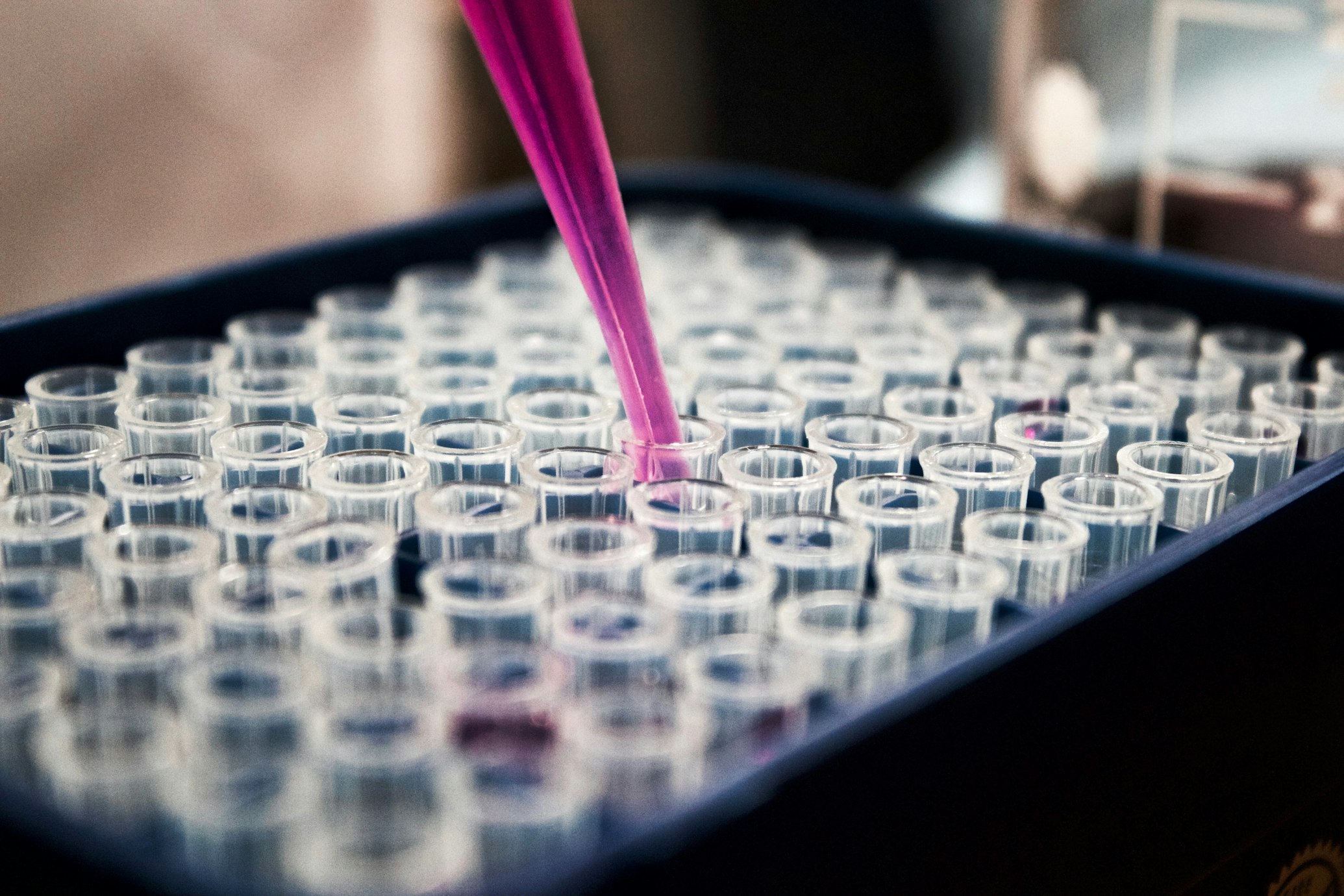
Fig. 2: The future of molecular modelling includes de novo protein design and complex molecular interactions.
References
References to be added here.