The Green Glow Revolution
How Carbon Dots Are Lighting Up Science Sustainably
When almond resin meets microwaves, science unlocks a fluorescent wonder with 61% quantum yield—outshining traditional dyes sustainably.
Introduction: The Accidental Stars of Nanotechnology
In 2004, scientists purifying carbon nanotubes stumbled upon fluorescent carbon nanoparticles—a serendipitous discovery rivaling penicillin 1 . Today, these carbon dots (CDs)—nanoscale carbon particles (<10 nm) with dazzling optical properties—represent a sustainability revolution.
Unlike toxic semiconductor quantum dots laden with heavy metals, green fluorescent CDs derive from almond resin, food waste, or plant biomass, merging eco-friendliness with cutting-edge applications from cancer imaging to anti-counterfeiting inks 1 4 6 . Their rise marks a paradigm shift toward green nanotechnology, where low-cost, biodegradable precursors replace hazardous chemicals without compromising performance.

1. Key Concepts: Why Green CDs Are a Scientific Game-Changer
1.1 Structural Brilliance Simplified
Carbon dots are classified into three types:
- Carbon Dots (CDs): Amorphous, no quantum confinement.
- Carbon Quantum Dots (CQDs): Crystalline, size-dependent fluorescence.
- Graphene Quantum Dots (GQDs): Layered graphene sheets with strong quantum effects 5 .
What sets them apart? A carbon core surrounded by surface functional groups (–OH, –COOH) that dictate their optical behavior. When doped with elements like nitrogen or phosphorus, their fluorescence intensifies and shifts across the spectrum 8 .
1.2 Optical Superpowers
- Tunable Fluorescence: Emission color adjusts from blue to near-infrared via surface chemistry or size control.
- Anti-Photobleaching: Resist degradation under UV light (unlike organic dyes).
Fluorescence Mechanisms in Green CDs
| Mechanism | Description | Impact on Emission |
|---|---|---|
| Quantum Confinement | Size-dependent bandgap tuning | Smaller dots → blue shift |
| Surface States | Defect sites from functional groups | Governs QY; defect passivation boosts it |
| Molecular Fluorescence | Fluorophores in carbon matrix | Enables red/NIR emission |
1.3 Green Synthesis: Waste-to-Wealth Approach
Top-down methods (e.g., chemical oxidation) break large carbon sources (graphite, agro-waste) into nanoparticles. Bottom-up methods (e.g., hydrothermal, microwave) carbonize small molecules from biomass:
- Plant Sources: Betel leaves, almond resin, or fruit waste provide carbon and self-doping elements (N, P) 6 .
- Microwave Synthesis: Rapid (minutes), energy-efficient, and scalable—e.g., almond resin + 350 W microwaves → CDs in 5 hours 4 .
| Method | Precursors | Conditions | QY (%) | Advantages |
|---|---|---|---|---|
| Hydrothermal | Abelmoschus manihot | 220°C, 4 hours | 30.8 | Low-cost; simple equipment |
| Microwave | Almond resin + honey | 210°C, 5 hours | 61.0 | Speed; high QY |
| Calcination | Gynostemma | 300°C, 2 hours | 8.5 | No solvents needed |
2. Spotlight Experiment: Almond Resin CDs for Live-Cell Nuclear Imaging
Why this experiment? It exemplifies green synthesis's potential to outperform conventional dyes in biomedical applications.
2.1 Methodology: From Tree Trunk to Fluorescent Probe
- Purification:
- Crude almond resin (from Prunus dulcis) boiled in 80% ethanol to deactivate enzymes.
- Centrifuged (5,000 rpm) and dialyzed (100 Da membrane) to remove impurities 4 .
- Microwave Synthesis:
- 2 g purified resin + 10 mL water heated at 210°C (350 W microwave, 5 hours).
- Conjugated with honey for surface passivation.
- Characterization:
- TEM for size (3–10 nm).
- Photoluminescence (PL) spectroscopy for emission profiles.
- Cytotoxicity tests on human cells 4 .
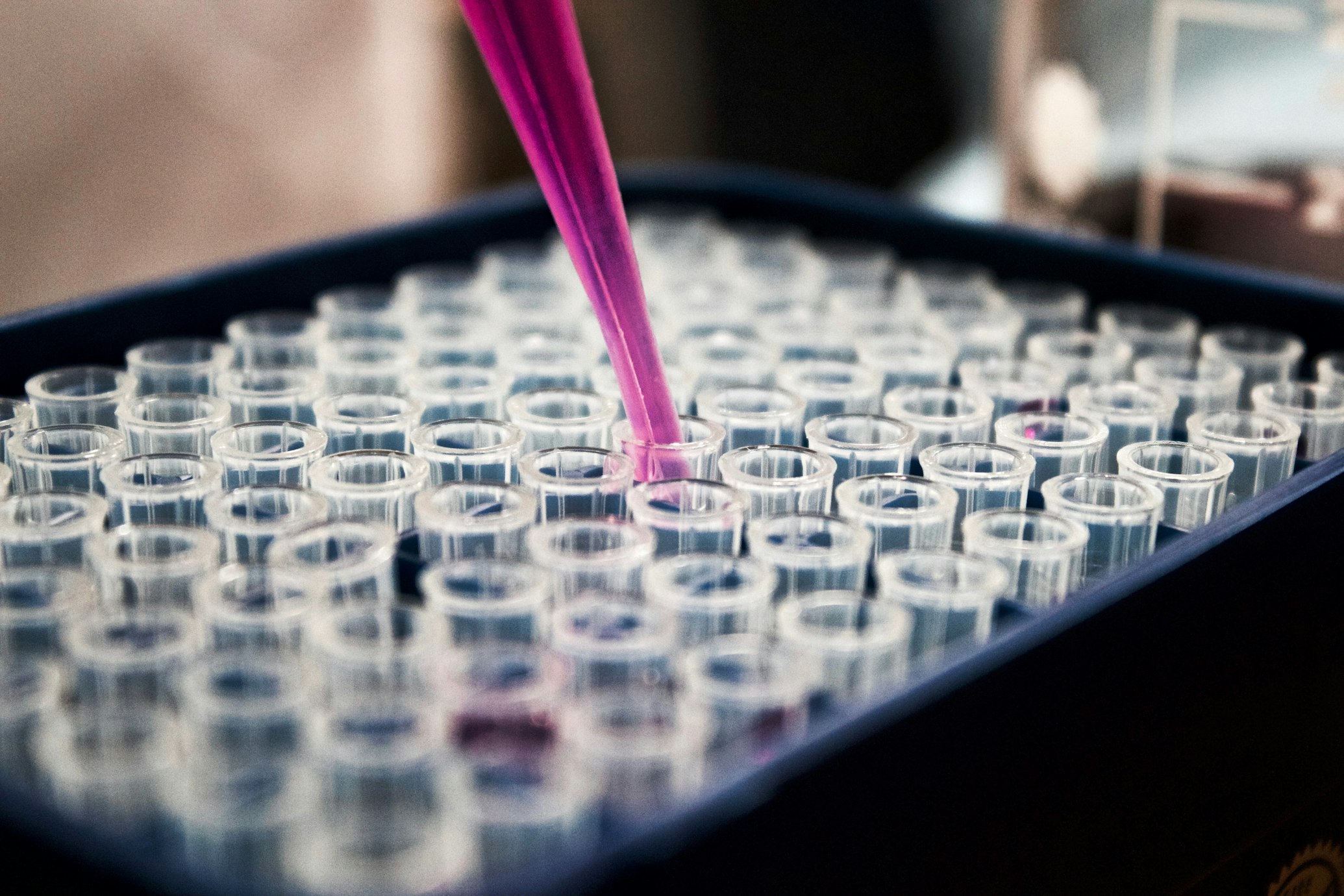
2.2 Breakthrough Results
- Quantum Yield: 61%—among the highest reported for green CDs.
- Nuclear Targeting: CDs penetrated live cells within 15 minutes, illuminating nuclear membranes/nucleoli without toxic ligands.
- Photostability: Fluorescence persisted for >12 hours under laser irradiation.
- Low Cytotoxicity: 95% cell viability at 100 μg/mL doses 4 .
| CD Concentration (μg/mL) | Cell Viability (%) | Observation |
|---|---|---|
| 25 | 99.8 ± 1.2 | No morphological changes |
| 50 | 98.1 ± 0.9 | Normal proliferation |
| 100 | 95.3 ± 1.5 | Mild metabolic slowdown |
| 200 | 82.4 ± 2.1 | Reduced adhesion; no apoptosis |
3. The Scientist's Toolkit: Essential Reagents for Green CD Research
| Reagent/Material | Role in CD Synthesis | Example in Practice |
|---|---|---|
| Plant Biomass | Sustainable carbon source; self-doping | Almond resin (N-rich), betel leaf (antioxidants) |
| Passivating Agents | Enhance QY by reducing surface defects | Honey (creates amphiphilic surfaces) |
| Dialyzers | Purify CDs by molecular weight cutoff | 100–500 Da membranes remove large particles |
| Microwave Reactor | Enables rapid, uniform heating | 5-hour synthesis at 210°C 4 |
| Oxidizing Agents | Used in top-down methods to break carbon sources | HNO₃ for waste tea residue 6 |
4. Applications: Where Green CDs Are Making Waves
Biomedical Frontiers
- Bioimaging: Green CDs' low toxicity and tunable emission enable real-time tracking of cellular processes. Almond resin CDs achieved multicolor nucleus imaging without transfection agents 4 6 .
- Drug Delivery: CDs loaded with anticancer drugs (e.g., aloe-emodin) accelerate chronic wound healing via pH-responsive release 4 .
Environmental & Industrial Tech
- Security Inks: Betel leaf-derived CDs form fluorescent inks for banknote anti-counterfeiting—visible only under UV .
- WLEDs: CDs from pyrogallic acid emit green light (520 nm); combined with UV chips, they create warm white LEDs for indoor lighting (color temp: 4,323 K) 7 .
Quantum Yield Comparison
Conclusion: The Bright (and Green) Future
Green CDs epitomize sustainability meeting innovation: turning almond resin, fruit waste, or fallen leaves into high-value nanomaterials. Challenges remain—e.g., standardizing QY across batches—but advances in microwave synthesis and surface engineering are accelerating clinical translation. As research expands into in vivo theranostics and solar cells, these eco-friendly nanoparticles promise to illuminate science's path toward a greener future 4 9 .
"In the tiniest carbon dots, we find the brightest promise: science that serves both people and the planet."
