The Phasor Plot: Mapping Light's Mysteries in Multifrequency Fluorometry
Decoding the secret language of molecules through the precise measurement of fluorescence lifetimes
Introduction: Time's Hidden Language, Spoken in Light
Imagine if we could decode the secret language of molecules—watching how they move, interact, and change in real-time within living cells. This isn't science fiction but the remarkable capability of modern fluorescence spectroscopy. At the heart of this capability lies multifrequency phase and modulation fluorometry, a powerful technique that measures the fleeting moments when molecules emit light after being excited.
These fluorescence lifetimes, typically lasting nanoseconds to picoseconds, provide a wealth of information about the molecular environment, including changes in temperature, pH, viscosity, and molecular interactions 1 .
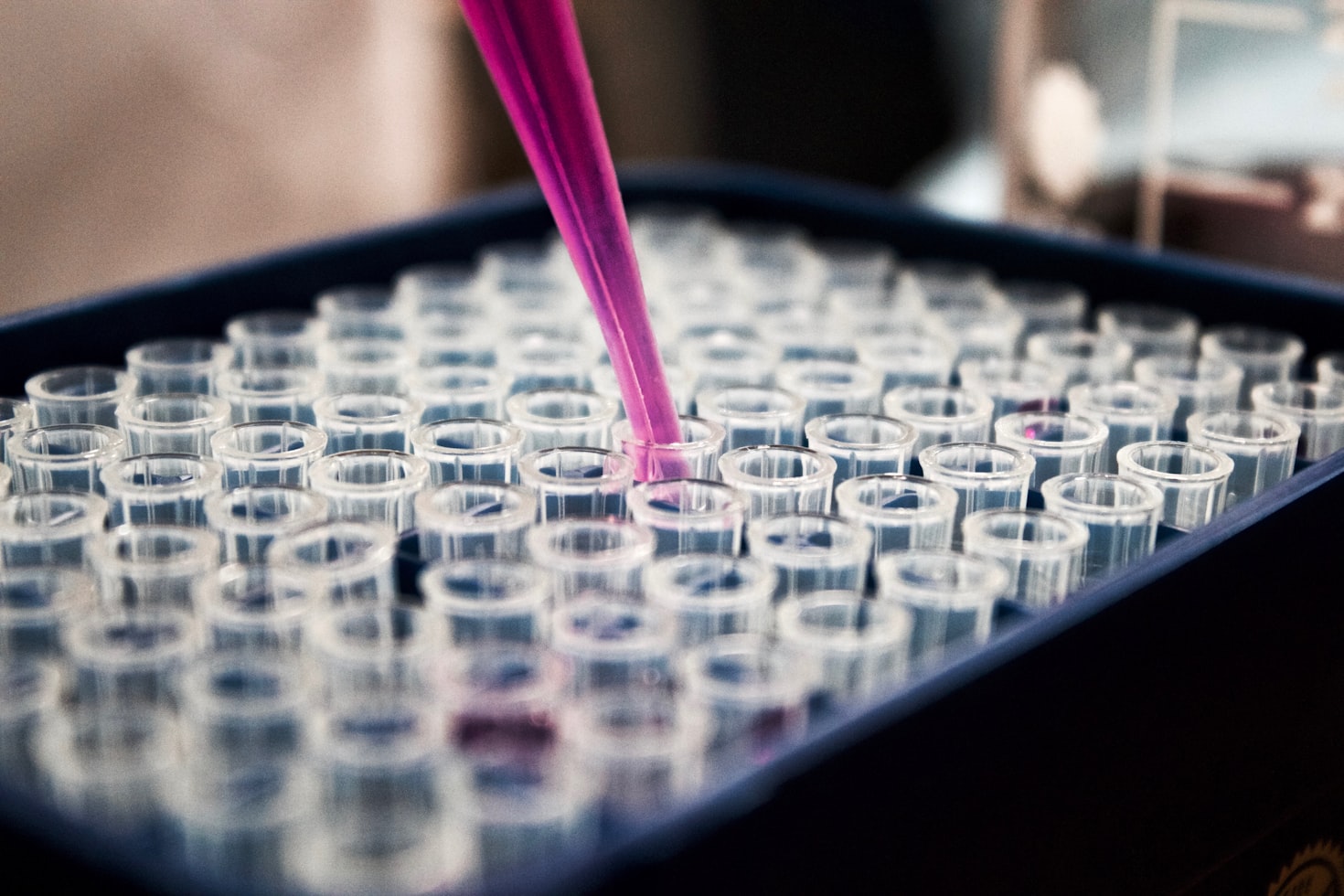
What makes multifrequency fluorometry particularly fascinating is its ability to uncover hidden complexities within samples that appear uniform to the naked eye. Unlike conventional fluorescence methods that primarily measure color and intensity, this technique captures the precise timing of light emission, offering insights into processes like energy transfer, molecular binding, and structural changes that would otherwise remain invisible 2 .
The Basics: How Multifrequency Phase Fluorometry Works
Fluorescence Lifetime
When a molecule absorbs light, it enters an excited state—a higher energy condition that typically lasts for just nanoseconds (billionths of a second) before the molecule returns to its ground state, emitting a photon of light in the process. This duration isn't fixed; it varies depending on the molecule's immediate environment 1 .
Frequency Domain vs. Time Domain
Time-domain fluorometry uses short pulses of light to excite molecules, then directly measures the gradual decay of emitted light over time. Frequency-domain methods use continuously modulated light and measure phase shift and demodulation of the emitted light 2 .
Key Mathematical Relationships
| Parameter | Symbol | Relationship | Physical Meaning |
|---|---|---|---|
| Phase Shift | φ | tan(φ) = ωτₚ | Time delay of emission relative to excitation |
| Modulation Ratio | M | M = (1 + ω²τₘ²)^{-½} | Reduction in intensity variation of emission |
| Angular Frequency | ω | ω = 2πf | Speed of modulation oscillation |
| Phase Lifetime | τₚ | τₚ = tan(φ)/ω | Lifetime calculated from phase shift |
| Modulation Lifetime | τₘ | τₘ = √(1/M² - 1)/ω | Lifetime calculated from demodulation |
The multifrequency advantage comes from measuring phase and modulation across a continuous range of frequencies, typically from 10 MHz to 500 MHz or higher. This comprehensive approach enables researchers to detect multiple decay components and excited state processes that would be invisible at a single frequency 1 .
The Phasor Approach: A Graphical Revolution
Introduced by Jameson et al. in 1984 and revitalized in recent years, the phasor approach transforms complex numerical data into intuitive visual representations 2 .
The phasor approach represents each measurement as a point on a two-dimensional plot using coordinates:
- G = M cos(φ) (x-coordinate)
- S = M sin(φ) (y-coordinate)
Where M is the modulation ratio and φ is the phase shift 2 . For a fluorophore with a single exponential decay, its phasor point always falls on a semicircle known as the "universal circle".

Resolving Mixtures
For a mixture of fluorophores with different lifetimes, the phasor point falls inside the universal circle at a location determined by the weighted average of the individual components 2 .
Applications
The phasor approach is excellent for detecting heterogeneity, identifying energy transfer (FRET), resolving spectral overlaps, and monitoring chemical reactions without complex mathematical models 2 .
A Landmark Experiment: Phasor-FSTM Super-Resolution Imaging
In 2025, a team of researchers published a groundbreaking study that combined phasor analysis with super-resolution imaging—a technique they called Phasor-FSTM (phasor-based fluorescence spatiotemporal modulation) 3 . Their work addressed a significant challenge in microscopy: traditional multicolor super-resolution imaging requires multiple lasers and detection channels, leading to technical complexities and phototoxicity.
Methodology Overview
Light Source
A single 635-nm pulsed laser divided into three beams—one reference signal and two excitation beams (Gaussian-shaped and doughnut-shaped) 3 .
Scanning System
The Gaussian and doughnut beams were temporally delayed but spatially overlapped when scanning the sample 3 .
Detection
A highly sensitive photomultiplier tube (PMT) detected emitted photons, processed by a time-correlated single photon counting (TCSPC) module 3 .
Performance Characteristics
| Parameter | Performance | Significance |
|---|---|---|
| Resolution | ~λ/5 (~130 nm for 635 nm light) | Surpasses diffraction limit (~250 nm) |
| Imaging Duration | >20 minutes | Enables extended observation of live cells |
| Number of Colors | 2-4 simultaneously | Multiple targets visualized concurrently |
| Excitation Wavelength | Single (635 nm) | Simplified optical design |
| Laser Power | Microwatt output power | Reduced phototoxicity and photobleaching |
Breakthrough Achievement
The system accomplished multicolor super-resolution imaging using only a single-wavelength laser for excitation and a single detection channel, dramatically simplifying the equipment needed 3 .
The Scientist's Toolkit: Essential Research Reagents
To conduct multifrequency phase and modulation fluorometry, researchers rely on specialized tools and reagents. The table below highlights key components used in experiments like the Phasor-FSTM study and their functions.
| Reagent/Equipment | Function | Example Applications |
|---|---|---|
| Fluorescent Dyes with Distinct Lifetimes | Labeling specific cellular structures; must have similar spectra but different lifetimes | Multicolor imaging without spectral overlap; Phasor-FSTM 3 |
| Time-Correlated Single Photon Counting (TCSPC) | Precisely records photon arrival times with picosecond accuracy | Fluorescence lifetime imaging; time-resolved spectroscopy 3 |
| Modulated Light Sources | Provides sinusoidally modulated excitation for frequency domain measurements | Phase and modulation measurements; LED/laser diodes preferred for direct modulation 4 |
| Reference Scatterers | Non-fluorescent samples that scatter light for instrument calibration | Determining instrument response function; phase shift calibration 1 |
| Lifetime Standards | Compounds with well-characterized, stable fluorescence lifetimes | Instrument calibration; validation of lifetime measurements 1 |
Probe Selection
For Phasor-FSTM, researchers need dyes with similar excitation/emission spectra but sufficiently different lifetimes. Common choices include cyanine dyes with variations in their chemical structure 3 .
Instrument Calibration
Researchers must regularly characterize their system's instrument response function (IRF) using reference scatterers like gold nanoparticles or non-fluorescent solutions 3 .
Beyond the Lab: Real-World Applications and Future Directions
Cellular Biology
Researchers employ these techniques to study protein interactions, membrane dynamics, organelle communication, and cellular metabolism 2 .
Medical Diagnostics
Phase fluorometry can detect subtle changes in tissues associated with disease, providing potential diagnostic indicators 2 .
Drug Discovery
Pharmaceutical researchers use these methods to study drug-target interactions and screen potential therapeutics 1 .
Environmental Science
The techniques help analyze complex environmental samples like dissolved organic matter in water and soil compositions 2 .
Future Directions
Improved Light Sources
Advances in laser diode and LED technology continue to expand available excitation wavelengths and modulation frequencies 4 .
AI Integration
Machine learning algorithms are increasingly applied to analyze complex phasor plots and extract subtle patterns 2 .
Miniaturization
Efforts to shrink frequency domain instruments into portable devices could bring sophisticated fluorescence analysis to clinical settings 4 .
Conclusion: The Light Ahead
Multifrequency phase and modulation fluorometry represents a fascinating convergence of physics, chemistry, and biology—all through the precise measurement of light's temporal behavior.
What began as a specialized technique for studying molecular decays has evolved into a powerful tool for probing complex biological systems, leading to breakthroughs like the Phasor-FSTM method that simplifies super-resolution microscopy while enhancing its capabilities 3 .
The phasor approach, with its elegant graphical representation, has democratized fluorescence lifetime analysis, making it accessible to researchers across disciplines. As Jameson et al. envisioned decades ago, this model-free method allows scientists to "see" molecular complexities without getting bogged down in mathematical fitting procedures 2 .
As light sources, detectors, and computational methods continue to advance, multifrequency fluorometry will undoubtedly reveal new aspects of the molecular world that remain hidden today. The technique's ability to distinguish multiple processes simultaneously, without physical separation, makes it increasingly valuable in our era of systems biology and complex materials science.
Perhaps most exciting is the potential for these technologies to transition from research labs to practical applications—from diagnosing diseases earlier to monitoring environmental changes more sensitively. As we continue to decode the secret language of molecules spoken through light, we open new windows into the intricate workings of life itself.