Research Articles
Benchmarking Quantum Chemistry: A Practical Guide to Wave Function Theory vs. Density Functional Theory
This article provides a comprehensive analysis of benchmark studies comparing Wave Function Theory and Density Functional Theory for researchers and drug development professionals.
Beyond the Gold Standard: A Practical Guide to ab initio Methods for Transition Metal Complexes in Drug Discovery
Accurately modeling transition metal complexes (TMCs) is critical for advancing drug discovery and catalytic design, but their complex electronic structures present unique challenges for computational methods.
From Heitler-London to Modern Computations: The Evolution and Renaissance of Valence Bond Theory
This article provides a comprehensive analysis of the Valence Bond (VB) theory, tracing its evolution from the foundational Heitler-London quantum mechanical model of the hydrogen molecule to its modern, computationally...
From Approximation to Accuracy: How Quantum Computing is Revolutionizing Computational Chemistry and Drug Discovery
This article explores the transformative integration of quantum computing methods with classical computational chemistry, a synergy that is overcoming longstanding accuracy barriers in molecular simulation.
Validating Quantum Chemical Methods with Spectroscopic Data: A Modern Guide for Computational Chemists and Drug Developers
This article provides a comprehensive framework for validating quantum chemical methods against experimental spectroscopic data, a critical step for ensuring reliability in computational chemistry and drug discovery.
Validating Chemical Methods with Quantum Information Theory: From Foundations to Drug Discovery
This article explores the transformative intersection of quantum information theory (QIT) and chemical computation, providing researchers and drug development professionals with a roadmap for validating and enhancing computational methods.
Orbital and Particle Correlation in Drug Discovery: A Comparative Analysis of Methods and Applications
This article provides a comprehensive analysis of orbital and particle correlation, essential quantum phenomena in computational drug discovery.
Measuring Strong Electron Correlation: A 2025 Guide to Diagnostic Tools, Computational Methods, and Validation
This article provides a comprehensive analysis of modern approaches for identifying, measuring, and comparing strong electron correlation across diverse quantum systems.
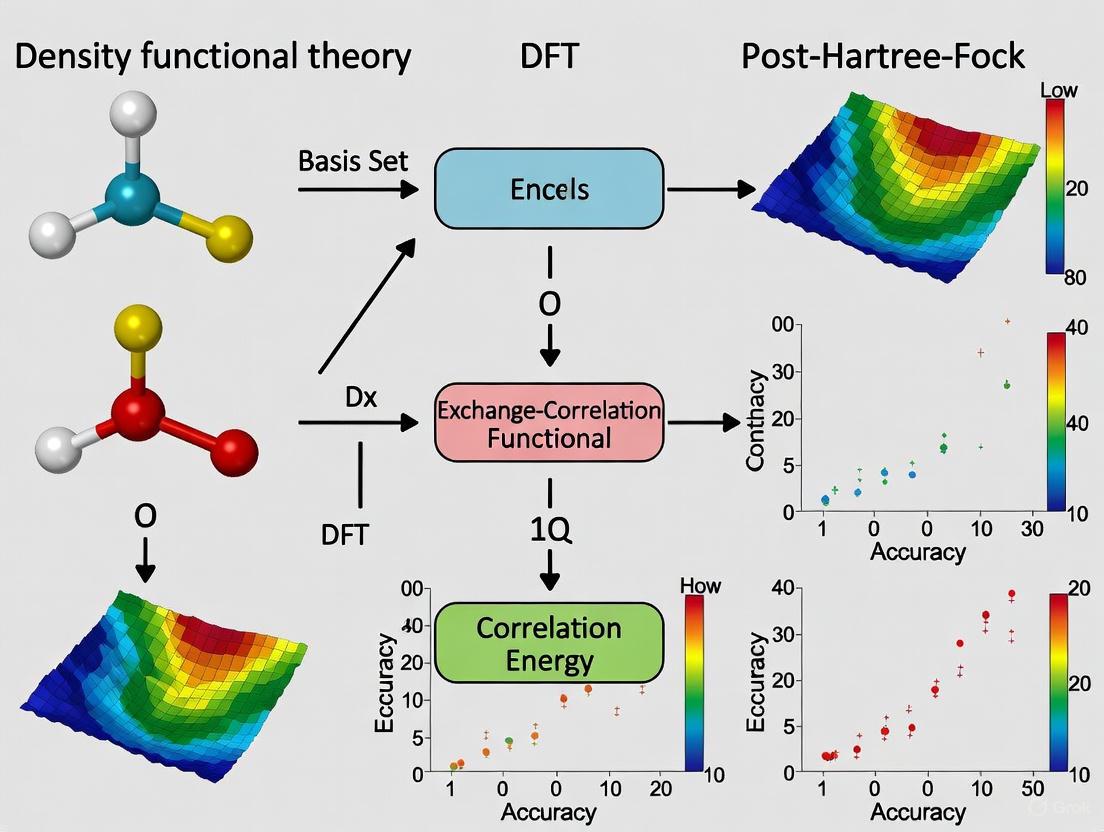
DFT vs Post-Hartree-Fock: A Practical Guide to Accuracy in Computational Chemistry and Drug Discovery
This article provides a comprehensive comparison of Density Functional Theory (DFT) and post-Hartree-Fock (post-HF) methods, focusing on their accuracy for researchers and professionals in drug development.
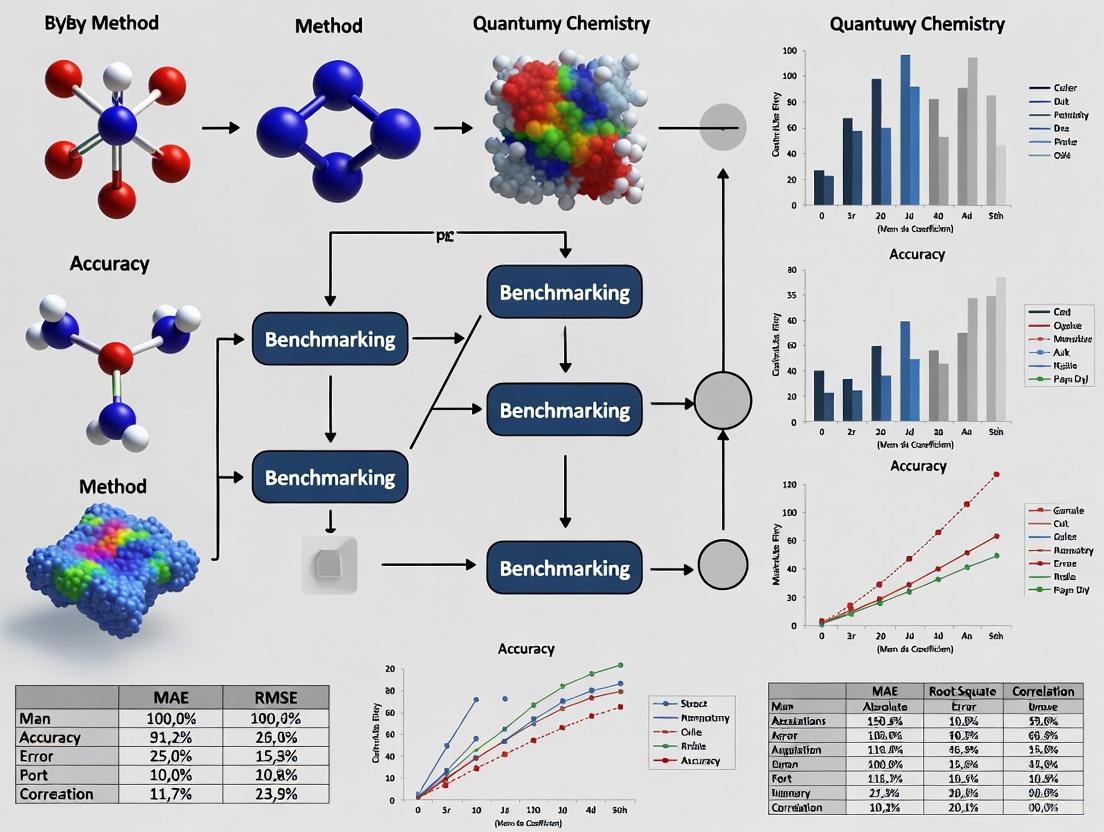
Navigating Quantum Chemistry Benchmarks: From Theory to Drug Discovery Applications
This article provides a comprehensive guide to quantum chemistry method accuracy benchmarking, essential for researchers and drug development professionals.