Research Articles
Beyond the Blackbody: Planck's Law as a Foundational Tool in Modern Thermal Radiation Science
This article provides a comprehensive exploration of Planck's Law, from its quantum origins to its cutting-edge applications and limitations in modern science.
Quantum Protocols for Material Science: From Foundational Theory to Biomedical Applications
This article synthesizes the latest advancements in quantum computing protocols and their transformative impact on material science research.
From Quantum Theory to Photochemical Applications: How Planck's Law Drives Modern Biomedical Innovation
This article explores the foundational role of Planck's theory in understanding and controlling photochemical reactions, with a specific focus on applications relevant to drug development and biomedical research.
From Classroom to Kibble Balance: A Comprehensive Guide to Measuring Planck's Constant
This article provides a comprehensive overview of methods for measuring the Planck constant, a fundamental quantity in physics crucial for the International System of Units (SI).
Beyond E=hf: Applying Planck's Constant in Modern Quantum Chemistry Calculations for Drug Discovery
This article provides a comprehensive guide for researchers and drug development professionals on the practical application of Planck's constant (h) in quantum chemistry calculations.
From Quantum Theory to Therapeutics: Applying Planck's Formula in Modern Molecular Spectroscopy
This article explores the profound and practical connections between Planck's quantum theory and contemporary molecular spectroscopy, with a special focus on applications in pharmaceutical research and drug development.
Electromagnetic Field Quantization: From Quantum Theory to Biomedical Applications
This article provides a comprehensive exploration of electromagnetic field quantization, bridging fundamental quantum theory with practical applications in biomedical research and drug development.
From Quantum Theory to Photochemical Control: How Planck's Legacy is Revolutionizing Modern Chemistry and Biomedicine
This article explores the profound and expanding role of Planck's quantum theory in modern photochemistry, tracing its journey from a foundational concept to a pivotal tool for driving and controlling...
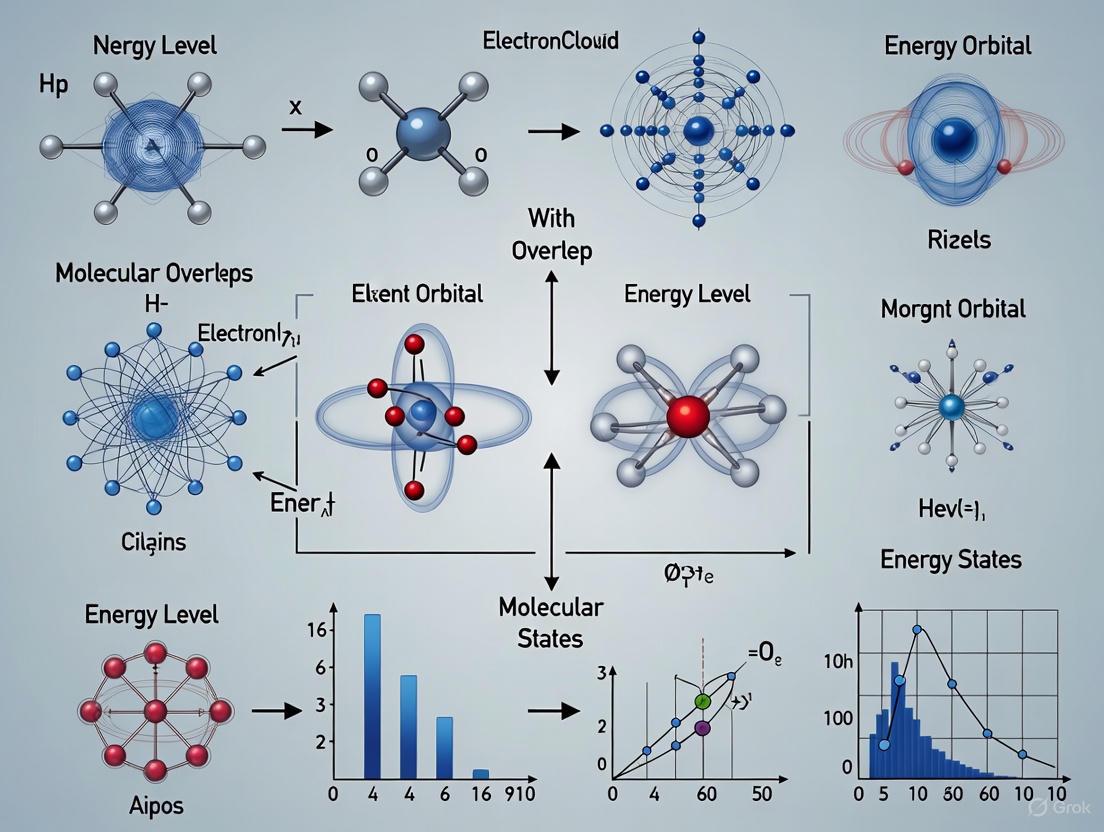
Quantum Mechanics in Chemistry: From Theoretical Foundations to Drug Discovery Applications
This article provides a comprehensive overview of the role of quantum mechanics in modern chemistry, tailored for researchers and professionals in drug development.
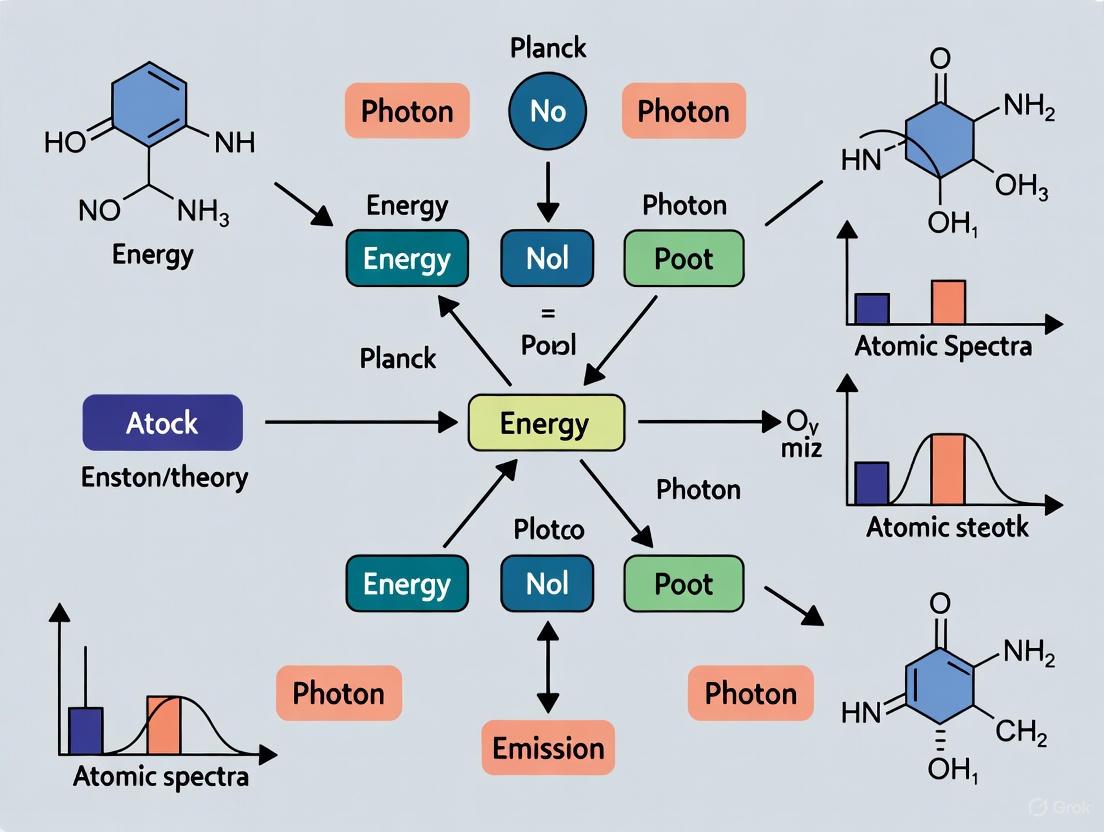
From Quantum Hypothesis to Molecular Design: How Planck's Theory Decodes Atomic Spectra for Modern Drug Discovery
This article explores the foundational role of Max Planck's quantum theory in explaining atomic spectra and its critical applications in contemporary drug discovery.