Research Articles
Fermionic Antisymmetry: Overcoming Computational Challenges in Quantum Simulations
The antisymmetric nature of fermionic wavefunctions presents a fundamental and persistent challenge in computational physics and quantum chemistry, hindering the simulation of systems ranging from drug molecules to novel materials.
Solving Strong Correlation in Quantum Chemistry: From Theory to Drug Discovery Applications
Strong electron correlation remains a fundamental challenge in quantum chemistry, hindering accurate predictions for crucial systems like transition metal catalysts, photochemical processes, and novel materials.
Solving the Electron Correlation Problem: From Quantum Materials to Drug Discovery
Accurately solving the many-electron Schrödinger equation remains a central challenge across physical sciences and drug development.
Quantum Chemical Prediction of Spectroscopic Data: From Theory to Biomedical Applications
This article provides a comprehensive overview of the rapidly evolving field of quantum chemical (QC) prediction of spectroscopic data, tailored for researchers, scientists, and drug development professionals.
Adiabatic Potential Energy Surfaces: From Theoretical Foundations to Biomedical Applications
This comprehensive review explores adiabatic potential energy surfaces (PES) as fundamental frameworks for understanding molecular quantum dynamics.
Vibronic Coupling in Non-Adiabatic Dynamics: From Theory to Biomedical Applications
This article provides a comprehensive overview of non-adiabatic chemical dynamics driven by vibronic coupling, a fundamental process where electronic and nuclear motions are intimately coupled.
Wave Function Compression in Quantum Chemistry: Advanced Techniques for Accelerating Drug Discovery
This article provides a comprehensive overview of wave function compression techniques, a critical frontier in computational quantum chemistry for tackling the exponential scaling of electron correlation problems.
Effective Hamiltonian Methods and Embedding Techniques: A 2025 Guide for Computational Drug Discovery
This article provides researchers, scientists, and drug development professionals with a comprehensive overview of embedding techniques and effective Hamiltonian methods.
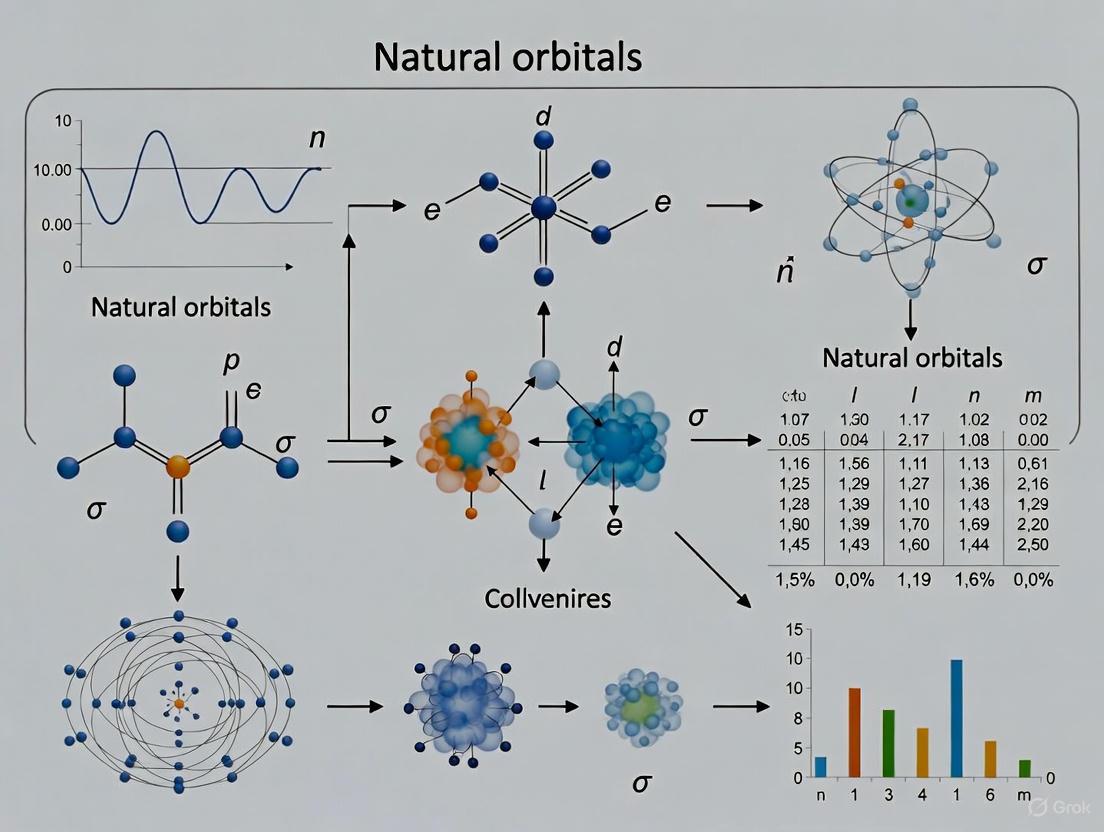
Natural Orbitals: Simplifying Electronic Structure for Advanced Drug Discovery
This article explores the transformative role of Natural Orbitals (NOs) and their functionals in simplifying complex electronic structure problems, with a specific focus on applications in rational drug design.
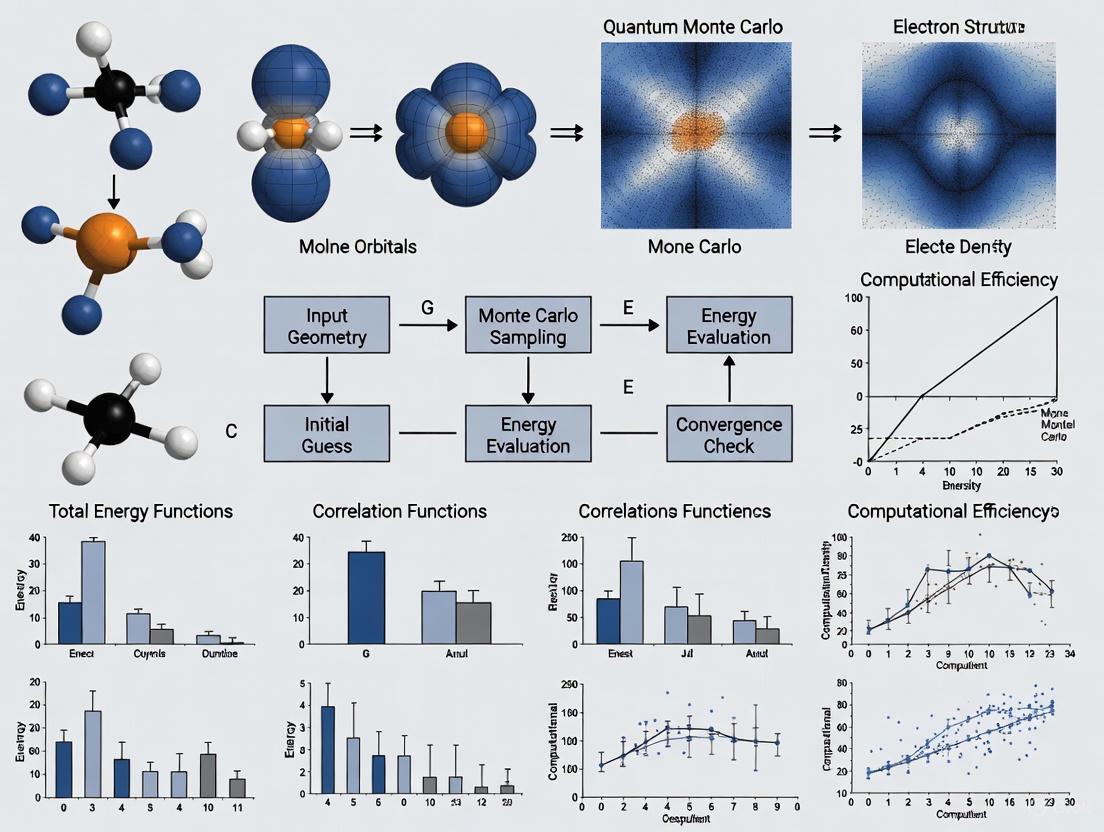
Quantum Monte Carlo in Electronic Structure: From Fundamental Theory to Breakthroughs in Drug Discovery
This article provides a comprehensive exploration of Quantum Monte Carlo (QMC) methods for electronic structure calculations, targeting researchers and professionals in computational chemistry and drug development.