Research Articles
Quantum Computing for Complex Biomolecular Problems: From Theory to Clinical Impact
This article explores the transformative role of quantum computing in solving strong correlation problems, a long-standing challenge in computational chemistry and drug discovery.
Quantum Information Theory in Chemistry: Unveiling Electron Correlation and Enabling Computational Breakthroughs
This article explores the rapidly evolving synergy between quantum information theory (QIT) and quantum chemistry, a frontier promising to redefine our understanding and computation of molecular systems.
Orbital vs Particle Correlation: A Guide to Electron Correlation Methods for Computational Drug Discovery
This article provides a comprehensive exploration of electron correlation, dissecting the distinct perspectives of orbital and particle-based correlation.
Beyond Hartree-Fock: A Practical Guide to Post-Hartree-Fock Methods for Accurate Molecular Calculations in Drug Discovery
This article provides a comprehensive overview of post-Hartree-Fock (post-HF) methods, essential for achieving high-accuracy quantum chemical predictions in molecular calculations.
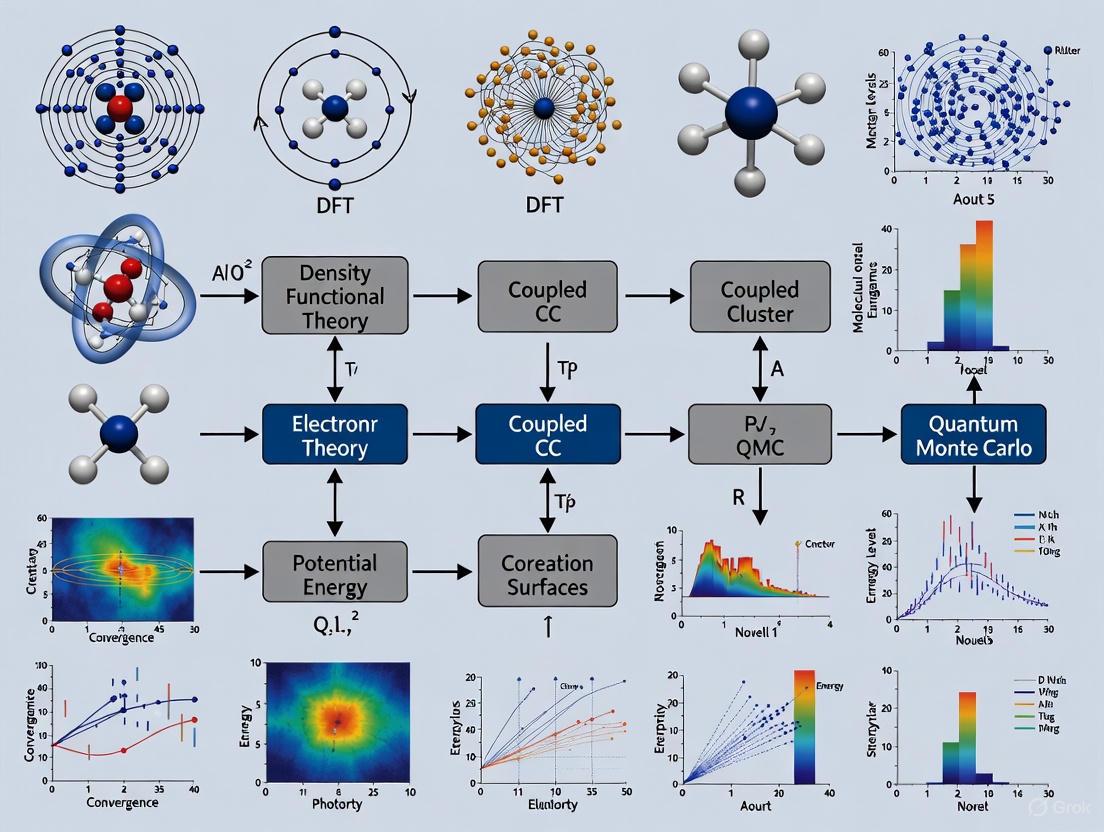
Beyond Single-Reference Models: Advanced Quantum Chemistry Methods for Strongly Correlated Systems
Strong electron correlation presents a significant challenge in quantum chemistry, rendering standard density functional theory (DFT) and single-reference wavefunction methods inadequate for systems like open-shell transition metal complexes, diradicals, and...
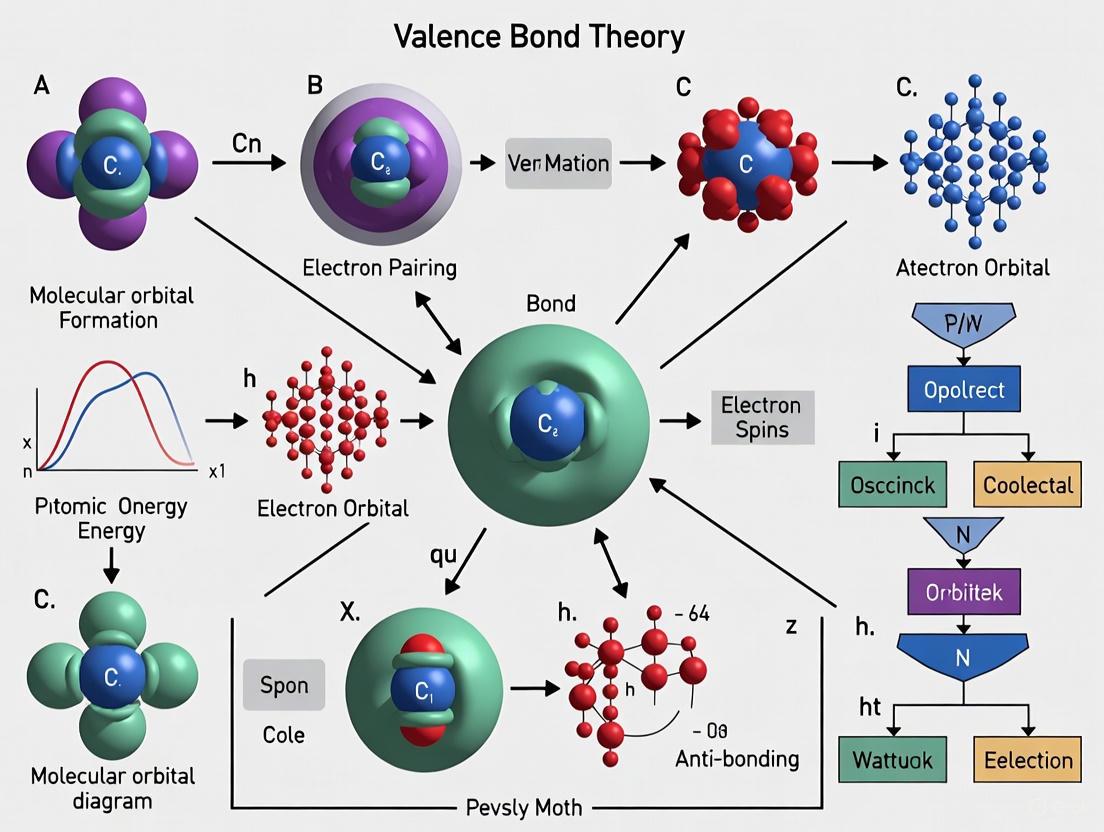
Modern Valence Bond Theory: Computational Implementation and Applications in Chemistry and Drug Discovery
This article provides a comprehensive overview of the modern computational implementation of Valence Bond (VB) theory, tracing its evolution from foundational concepts to its current state as a powerful tool...
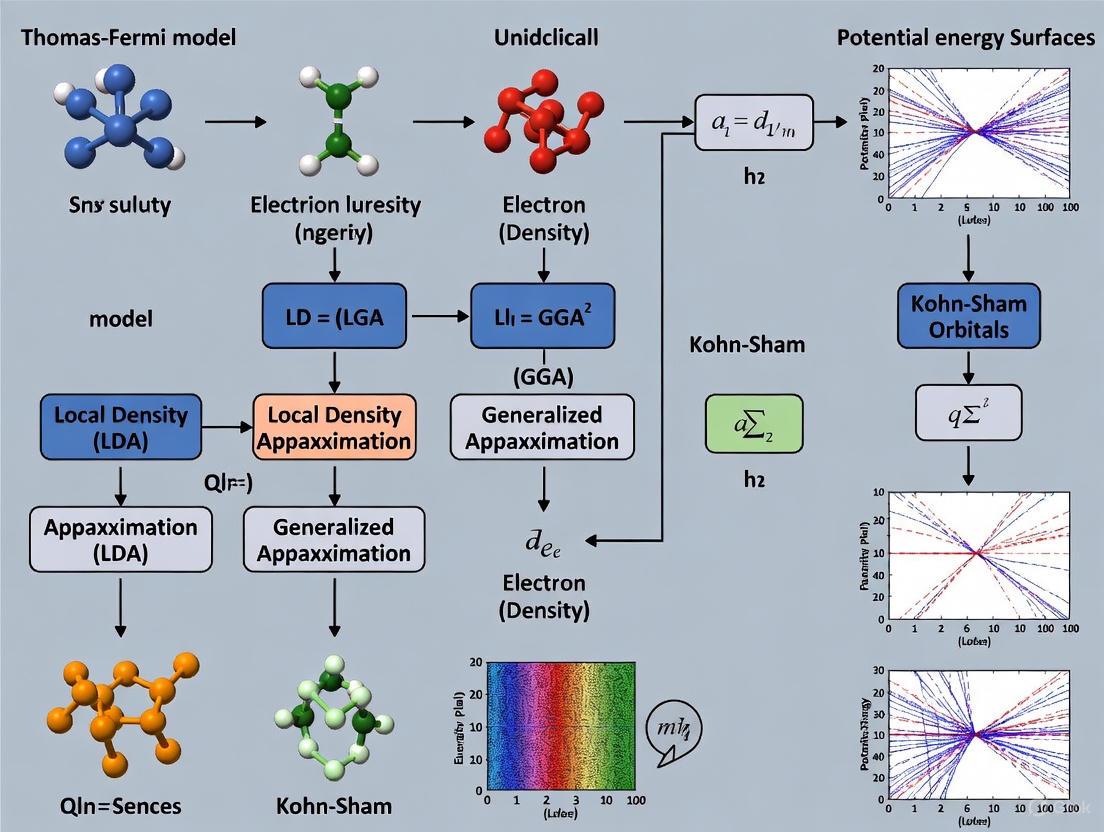
From Thomas-Fermi to Modern Applications: The Evolving Landscape of Density Functional Theory
This article provides a comprehensive overview of the development of Density Functional Theory (DFT) from its origins in the Thomas-Fermi model to its current status as a cornerstone of computational...
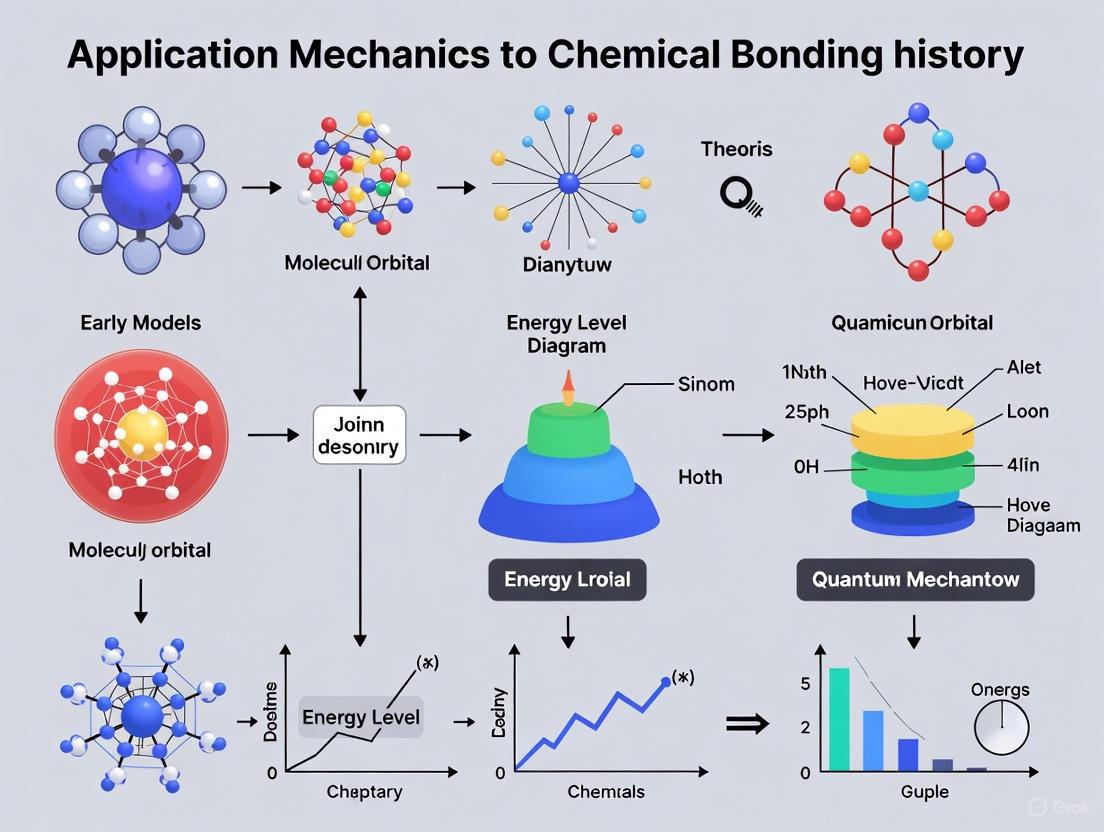
From Theory to Therapy: A Century of Quantum Mechanics in Chemical Bonding and Drug Discovery
This article explores the transformative century-long journey of quantum mechanics (QM) from a revolutionary theoretical framework to an indispensable tool in modern drug discovery.
From Hydrogen to Hypervalence: How the Heitler-London Model Shapes Modern Theoretical Chemistry and Drug Discovery
This article explores the enduring impact of the Heitler-London (HL) model on modern theoretical chemistry.
The Born-Oppenheimer Approximation: From 1927 Quantum Breakthrough to Modern Biomedical Applications
This article explores the historical development and enduring impact of the Born-Oppenheimer (BO) approximation, a cornerstone of quantum chemistry proposed in 1927.